
How we research, rate, and review
Where our facts come from, and the process each mushroom goes through before it earns a page.
Why sourcing matters here
Fungal names change. Folklore spreads faster than fact, and a confident blog post is not a verified record.
On a site where a claim can send someone foraging, the difference between a good source and a bad one is not academic.
So every profile is built from references that each do one job well. We lean on each only for what it is truly authoritative about.
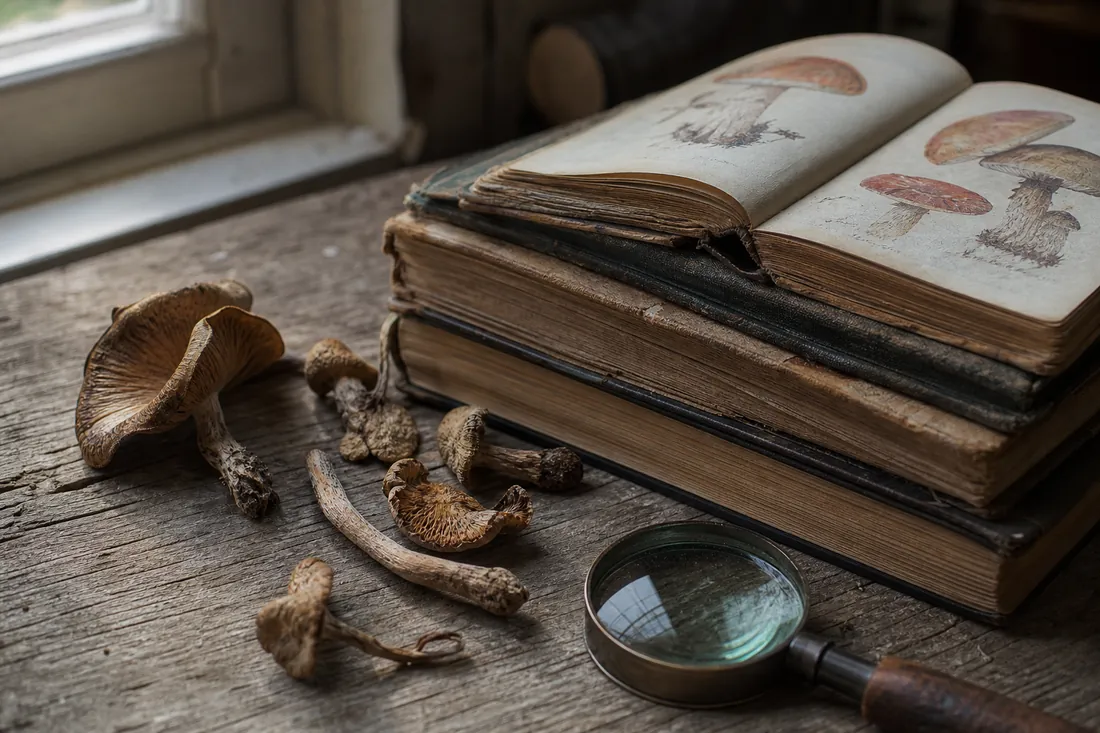
Where folklore ends and evidence begins
Plenty of mushroom lore is charming and wrong. The old line that any mushroom you can peel is safe to eat has put people in the hospital.
We do not repeat a claim because it is popular, since every safety and medicinal statement must trace to a named source and conflicting evidence gets the cautious reading.
Four steps from specimen to page
Taxonomy first
We fix the accepted scientific name and family against MycoBank and Index Fungorum before writing anything.
Identification features
Cap, gills or pores, stem, spore print, habitat, and smell are described from field guides and vetted observations.
Edibility and lookalikes
We document dangerous lookalikes for every edible and rate conservatively when any risk exists.
Expert review
A mycologist checks each safety-critical page and dates the review before it publishes.
What each kind of source is good for
No single reference answers every question. We match the source to the claim.
| Source type | Authoritative for | How we use it |
|---|---|---|
| Nomenclature databases | Accepted names, synonyms, family | Fix taxonomy before writing |
| Vetted observation networks | Range, season, habitat | Confirm where and when a species appears |
| Peer-reviewed papers | Toxins, medicinal claims | Ground safety and health statements |
| Poison control bodies | Symptoms, first aid | Write the emergency guidance |
Reading a citation on our pages
Where a profile makes a specific safety or medicinal claim, it points to where that claim comes from. A citation you can trust names its source, not just its conclusion.
When you check any source, look for:
- A named publication or institution, not an anonymous page
- A date, so you can judge whether it is current
- A scope that actually covers the claim being made
No source replaces your own caution
These references make our pages accurate. They cannot replace in-person verification of a real mushroom in your hands.
Read the safety disclaimer