
Mushroom Identification Guide: Edibility, Lookalikes, Safety
Field marks, lookalikes and a safety rating on every page.


 Choice edible
 Edible
 Caution
 Medicinal
 Inedible
 Poisonous
The whole index
How many of our 94 mushrooms are safe to eat?
16 are rated edible. 12 more carry a caution. 53 are poisonous.
 Choice edible
- 1112%
 Edible
- 55%
 Caution
- 1213%
 Medicinal
- 89%
 Inedible
- 55%
 Poisonous
- 5356%
Start with these six
See all 94 species


How to read a profile
Read a profile in ten seconds
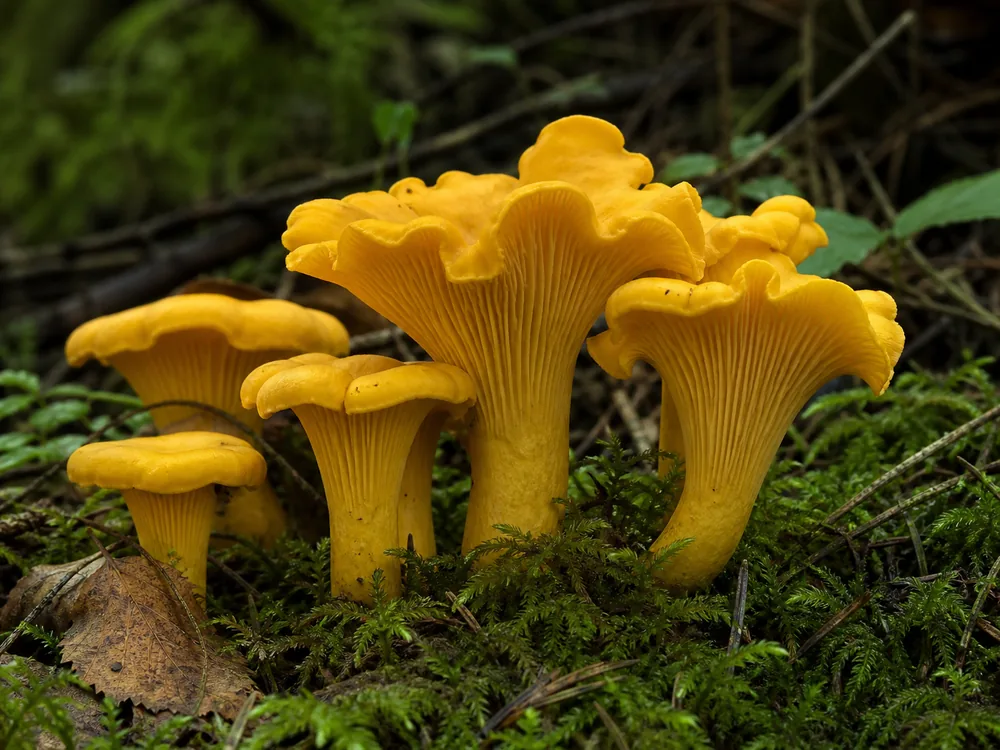
Chanterelle
Cantharellus cibarius
Choice edible - Cap
- Golden to egg-yellow, 3-10 cm
- Underside
- Shallow, forked ridges
- Stem
- Solid, tapering downward
- Spore print
- Pale yellow to cream
- Season
- Summer through fall
- Dangerous lookalike
- Jack O'LanternPoisonous
- Safety rating
The rating and the check to make before eating
- Field marks
Cap, underside and stem as you will see them
- Spore print
A colour swatch to hold your own print against
- Season
When it fruits in the recorded range
- Dangerous lookalike
The mushroom to rule out, with its own rating
Lookalike check
Chanterelle or Jack O'Lantern?
Chanterelle
Choice edible 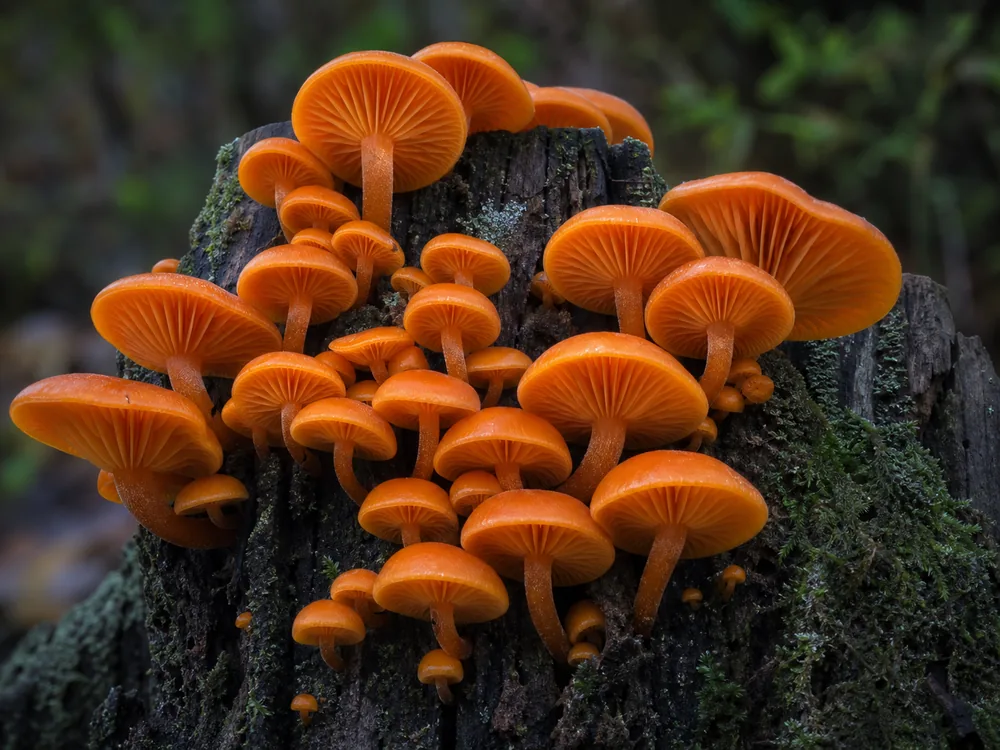
Jack O'Lantern
Poisonous Blunt ridges keep chanterelle possible. Thin true gills stop the food decision.
| Blunt false gills, forked ridges | Underside | Sharp true gills, crowded blades |
|---|---|---|
| Usually single or scattered from soil | Growth | Dense clusters on wood or buried roots |
| Pale inside, solid stem | Flesh | Orange inside, often softer |
- 94species profiles
- 233guides and articles
- 6safety ratings
In season
What fruits in October

In season together
When the lookalikes fruit too
 Caesar's Mushroom
Choice edible, August to December
southern Europe
 Death Cap
Poisonous, July to November
Britain and Ireland
Caesar's Mushroom
Choice edible, August to December
southern Europe
 Fly Agaric
Poisonous, August to November
Britain and Ireland
 The Blusher
Caution, June to October
Britain and Ireland
Death Cap
Poisonous, July to November
Britain and Ireland
Months as recorded in each profile.

Coming soon
Your pocket mushroom index.
Planned for the app: log your finds, check lookalikes offline and get a season alert for your area.
The app is not available yet. Until it launches, every profile and tool here works in your browser.
See what the app will do


Safety questions
Short answers to safety questions
Does cooking make a death cap safe?
No. Ordinary cooking and other food preparation do not break down amatoxins, so a cooked death cap stays deadly.
Deadly Mushrooms: Fatal Species and the Toxins Behind ThemCan someone feel better and still be poisoned?
Feeling better does not mean the poison is gone. In amatoxin poisoning, the stomach symptoms can ease while liver injury, clotting problems, and kidney injury go on.
Mushroom Poisoning Symptoms: Why the Clock MattersShould I make the person vomit?
Do not make the person vomit unless a poison specialist or clinician tells you to. Vomiting can cause choking, or it can send stomach contents into the lungs.
Mushroom Poisoning First Aid: Call Before Symptoms StartWhat should I do if a pet eats a wild mushroom?
Call a vet or an animal poison service right away. Do not make the pet vomit or give it human medicine unless the vet tells you to.
Mushroom Poisoning First Aid: Call Before Symptoms StartSpotted a wrong field mark?
When you report an error through the contact page, we check it against the sources the page cites and correct the page wherever it is wrong. Safety corrections come before everything else, including new content.
- The page
- The field mark
- Your source
Think someone ate a poisonous mushroom? Call Poison Control at 1-800-222-1222.
What to do