What is a bitter bolete?
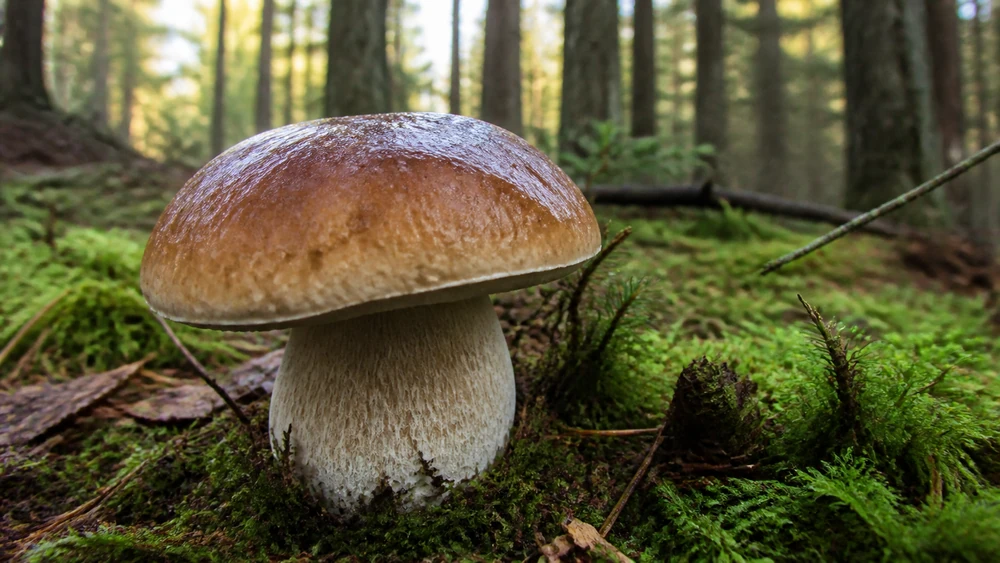
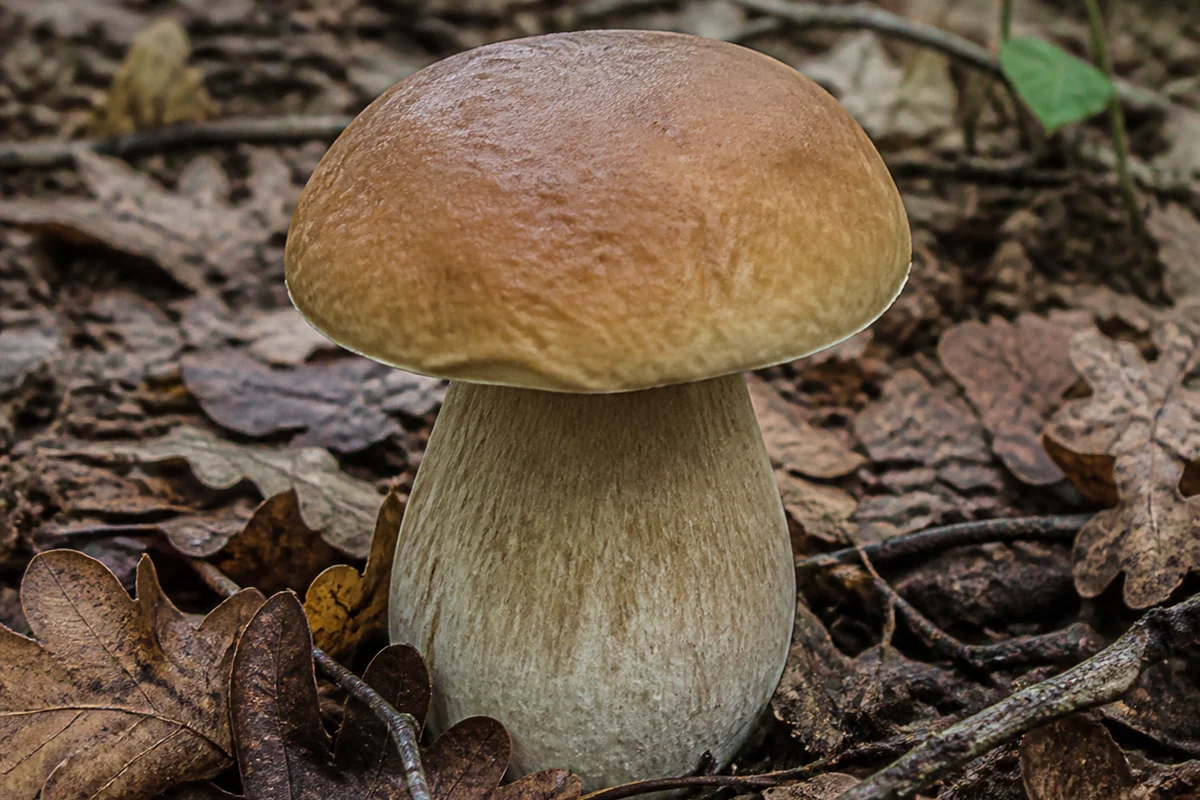
A bitter bolete is a pale brown bolete with a smooth domed cap, a stout pale stem and a pore surface that turns pink as it ages.
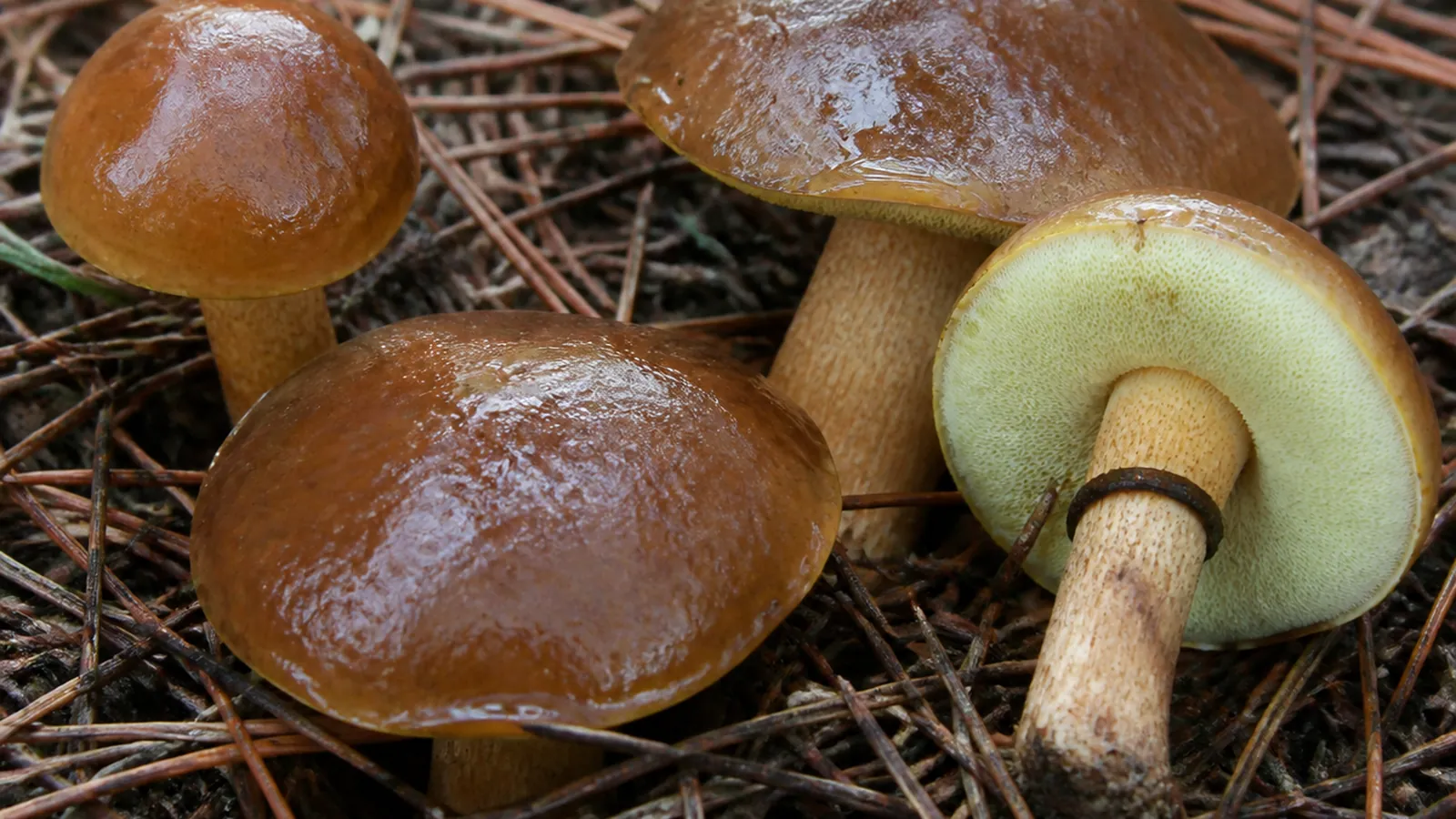
From above it is an ordinary brown bolete. Check the underside and stem rather than relying on the brown cap.
The name is not an exaggeration or a matter of taste. Guides that disagree about almost everything else agree that this is one of the most bitter things in a temperate wood.
It is inedible rather than poisonous, which is a distinction this site usually makes in the other direction. Most pages here explain why a mushroom that looks tempting is dangerous, and this one explains why a mushroom that is completely safe is still a problem.
The cap is worth handling before anything else, because it is slightly velvety when dry and slightly tacky after rain.
Neither of those separates it from anything, and both make it feel like a good bolete in the hand.
How do you identify a bitter bolete?
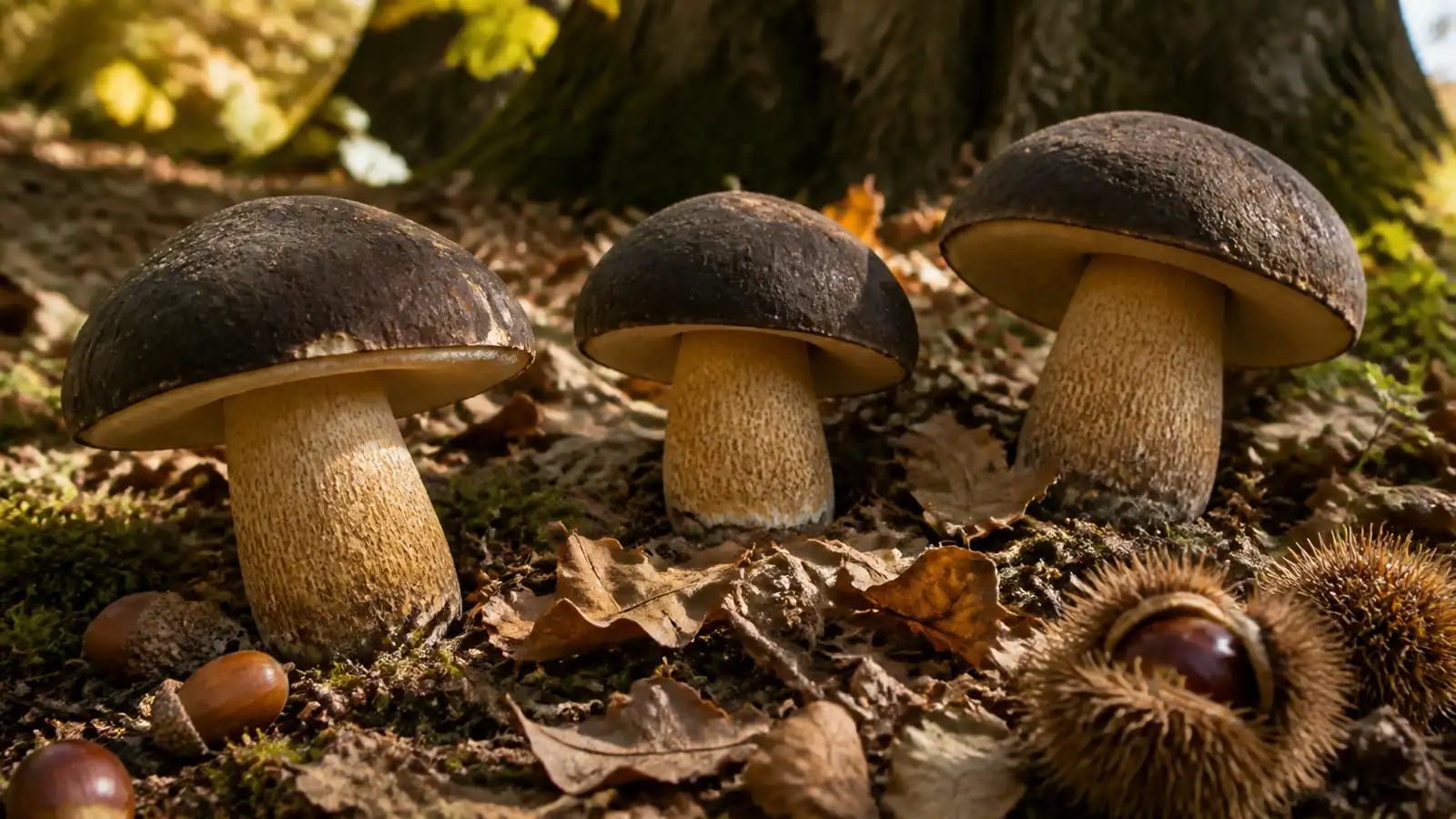
Pale tan to warm brown, smooth and slightly velvety when dry, 6 to 12 cm across and occasionally 18 cm, domed at first and flattening with age.
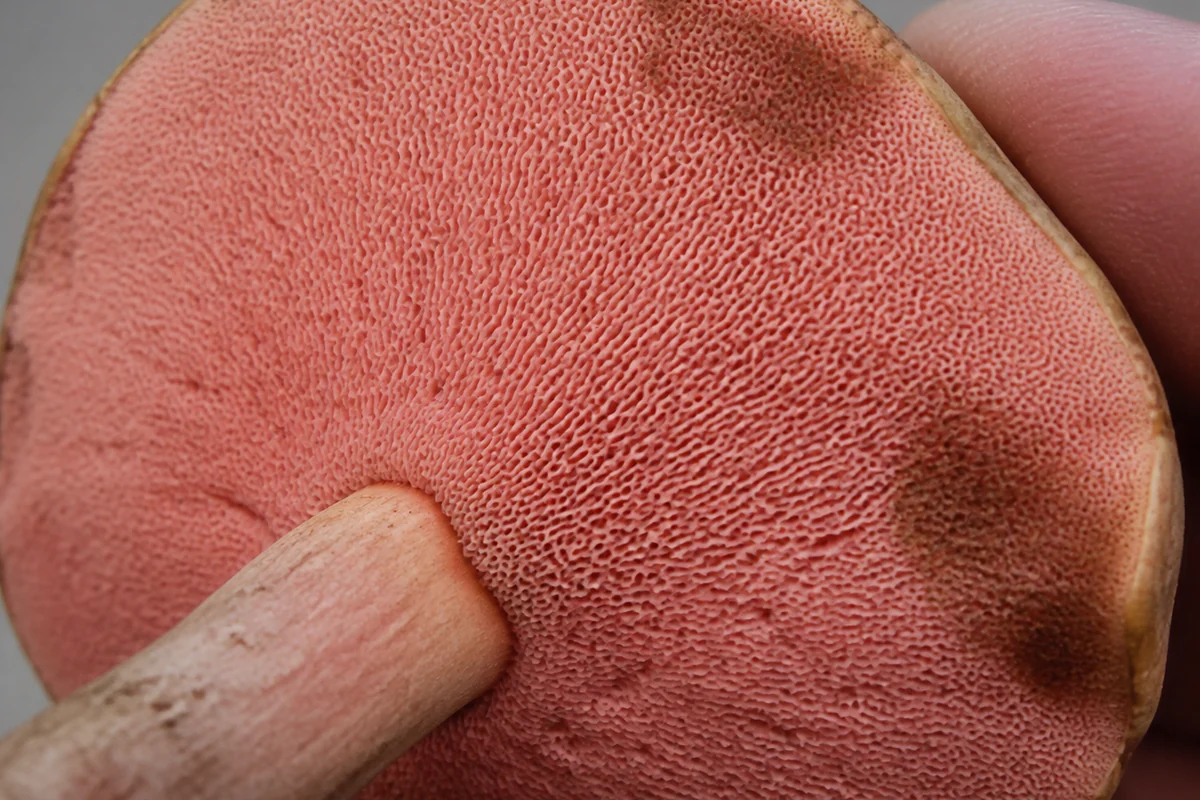
No gills. The underside is a fine pore surface, cream at first and turning a distinct coral pink with age, bruising brown where handled.
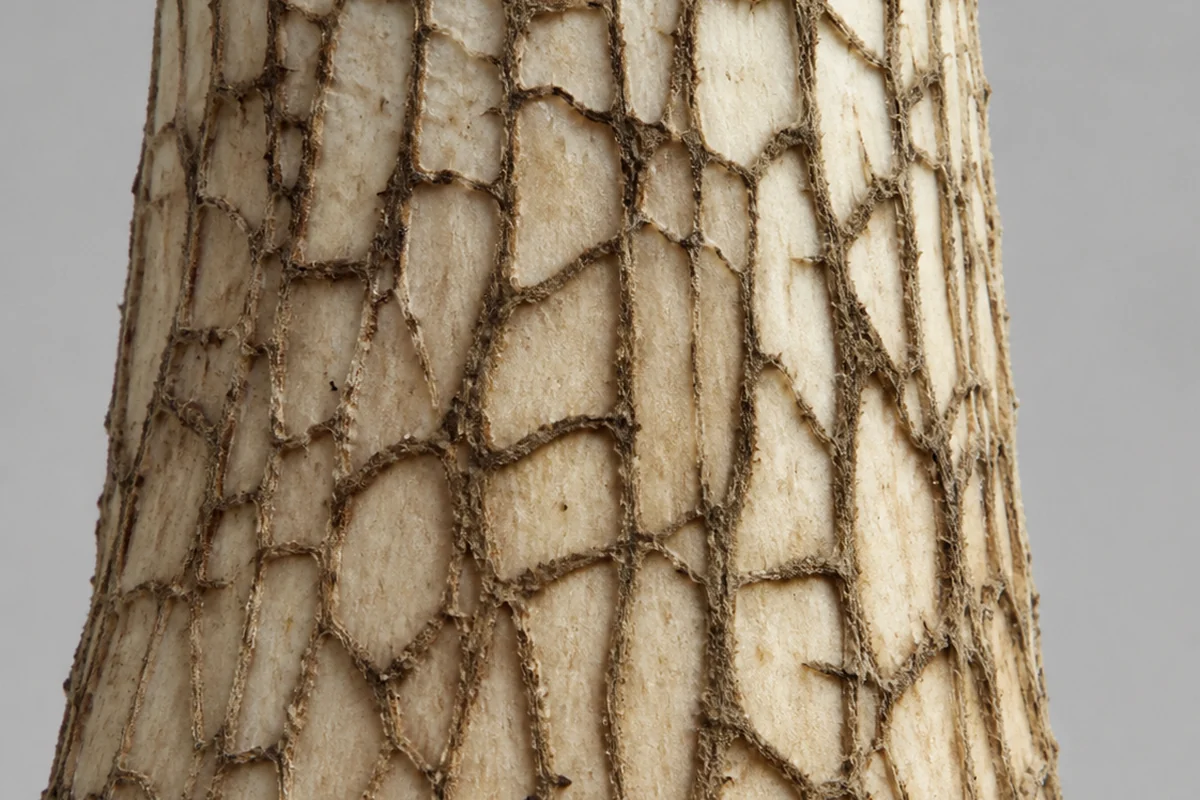
Pale and thickening toward the base, 4 to 8 cm tall and 10 to 18 mm across, carrying a coarse raised dark brown net over its upper part.
White, firm and unchanging when cut, with little smell and an overwhelmingly bitter taste.
Two characters settle it and both are on the parts people look at last. The pore surface and the stem net do all the work here, and the cap contributes almost nothing.
The net is not a pattern printed on the stem. It is a raised ridged structure, so it can be felt with a thumb as well as seen, and it stays readable on a specimen that has dried out or been rained on.
Age matters more here than for most identifications, because the deciding character develops.
A very young bitter bolete has cream pores and can be genuinely hard to separate from a young porcini on color alone, which is exactly when the stem net has to carry the decision.
| Character | Bitter bolete | Note |
|---|---|---|
| Cap | 6 to 12 cm, pale tan to brown | Occasionally to 18 cm |
| Pores | Cream then coral pink | Bruise brown when pressed |
| Stem net | Coarse, raised, dark brown | Visible at every age |
| Cut flesh | White, unchanging | No blueing |
| Spore print | Clay pink | Not olive brown |
Checking a bolete does not have to damage it. A look at the pore surface and a thumb run over the top of the stem take a couple of seconds and leave a perfectly good mushroom perfectly good.
That matters because the alternative people fall into is cutting every cap in half, which slows the picking down enough that they stop doing it.
Taste is the confirmation of last resort rather than the test.
A nibble of a tiny piece, spat out without swallowing, settles it beyond argument, and it is worth saying that structure should have settled it already.
The reason to put taste last is not danger, since this mushroom is harmless. It is that a taste test trains nothing, and somebody who reaches for it first never learns to read the two characters that would have answered the question from across a clearing.
How do you tell a bitter bolete from a porcini?
The only confusion that matters is with the porcini, and it is not a beginner's error.

The porcini page carries the full character comparison and the position it takes is the right one, which is that visible structure should settle this rather than taste.
Three things separate them and none of them is the cap. Porcini pores are white then yellow-olive where these turn pink, a porcini net is fine and pale where this net is coarse and dark, and a porcini spore print is olive brown where this one is clay pink.
Other brown boletes are in the mix too and most of them are harmless disappointments rather than problems.
The brawny bolete and the bronze bolete both have their own pages here, and between them they show how wide the range of outcomes is inside one family.
The bitter beech bolete is a separate bitter species with its own page, and it blues when cut where this one does not.
None of the confusions in this direction is dangerous. These distinctions matter when choosing mushrooms for a meal.
Note
A bitter bolete is not poisonous. The reason to learn it is that it is undetectable in a basket and unrescuable in a pan, so the only place to catch it is at the point of picking.
Where do bitter boletes grow?
The bitter bolete is mycorrhizal, trading minerals from the soil for sugars from living tree roots, and it works mainly with broadleaf trees.
Oak and beech are the usual partners, and it also turns up with conifers in some regions, which puts it in the same woods as the boletes people are hoping to find.
- Partner trees
- Mainly oak and beech, sometimes conifers
- Habit
- Usually solitary, occasionally in small groups
- Season
- August to November in Britain and Ireland
- Ground
- Acidic soils and woodland litter

Growing alone rather than in troops is part of why it catches people. A single brown cap in oak litter is exactly the shape of a good find, and there is no group of obviously wrong ones beside it to raise a question.
Its season sits inside the porcini season rather than beside it. Both run through late summer and autumn in the same woods, so the overlap is complete rather than partial.
Acidic ground suits it, which is the same preference several of the good boletes have. That shared taste in soil is part of why the two turn up in the same few hundred metres rather than in different woods.
It is commoner in northern Europe than in Britain and Ireland, where it is an occasional find.
That regional difference is worth knowing, because a guide written in Scandinavia treats this species as a routine nuisance and a British one as an occasional surprise.
What happens if you cook a bitter bolete?
One cap is enough to ruin a large dish, and that is the practical fact this whole page rests on.
The bitterness does not cook out. Frying concentrates it, drying concentrates it, and pickling covers it without removing it.

That asymmetry is what makes the handling rule different from every other page here. There is no safe quantity argument to fall back on and no preparation that fixes it afterwards.
Check every cap before it joins the others, because a basket cannot be un-mixed.
Why the basket is the wrong unit
Tip
Clear each bolete on its own. Cut the stem, look at the pores and the net, and only then put it in the basket with the others, because a basket cannot be un-mixed later.
Dried mixes are where the damage is worst and least expected. A single cap dried alongside a season's porcini spreads its bitterness through everything the mix is later used in, and by then the specimen itself is unrecognizable.
So the doubtful ones want their own bag from the moment they are picked.
A separate bag costs nothing and keeps a question open until there is time and light to answer it properly.
Some traditions do use it deliberately, dried and ground in very small amounts as a bitter seasoning. That is a different use from eating it as a mushroom, and it depends on the dose being tiny.
Nothing about that changes the advice for anybody picking boletes for dinner. A bitter bolete in the basket is a loss, and the only reliable moment to prevent it has already passed by the time the pan is hot.
Is there any medicinal use?
There is no medicinal use of the bitter bolete and no clinical literature behind it.
It appears occasionally in laboratory work on bitter compounds, which is a chemistry interest rather than a health claim.
Can bitter boletes be cultivated?
The bitter bolete cannot be cultivated, for the same reason as every mushroom that lives on living tree roots.
Nobody would try in any case. A crop nobody can eat has no market, and the species is common enough where it occurs that no shortage exists to solve.
Is there any nutritional information?
No nutritional figures are worth reporting for this species.
Nutrition tables describe foods, and a mushroom that cannot be eaten in any useful quantity is not one.
The only number that matters here is a ratio, which is one bitter cap against however many good ones were in the pan.
Why is the bitter bolete not a Boletus?
The bitter bolete used to sit in Boletus alongside the porcini, and the split that moved it is the reason the spore print matters. Tylopilus is separated on pink spores, and the pink in the mature pore surface is the same pigment showing through from the spores developing inside.
Key takeaway
The pink pores and the pink print are not two characters. They are one character seen at two stages, which is why the pores only turn pink as the mushroom matures.
That is a useful thing to know rather than a piece of trivia, because it explains why a young specimen is harder. The spores have not developed yet, so the character that names the genus has not appeared.
Tylopilus is a genus of its own with members across Europe, Asia and North America, and bitterness runs through a good number of them.
That is a useful pattern rather than a rule, because a pink-pored bolete is more often a disappointment than a find, and it is worth checking rather than assuming.
Genus splits in the boletes have followed spores and microscopic structure rather than appearance for a long time now, and the practical effect is that mushrooms which look alike often sit far apart.
So the porcini and the bitter bolete are not close relatives that happen to differ in flavor. They are members of different genera that happen to look alike from above.
Frequently Asked Questions
Is the bitter bolete poisonous?
How do you tell a bitter bolete from a porcini?
Can you cook the bitterness out of a bitter bolete?
How much does it take to ruin a dish?
Is it safe to taste a bolete to check?
Why are the pores pink?
Sources & References
- Tylopilus felleus, Bitter Bolete mushroom Field description used for the cap and stem dimensions, the coarse brown stem net, the cream to pink pore sequence, the brown bruising, the clay pink spore print, the unchanging white flesh, the oak and beech habitat, the August to November season, and the statement that cooking enhances the bitterness.
- Tylopilus felleus General account used for the statement that the species is not poisonous but is considered inedible because of its bitterness, and for the point that a single specimen can spoil a dish while boiling, drying and pickling fail to remove the bitter compounds.