
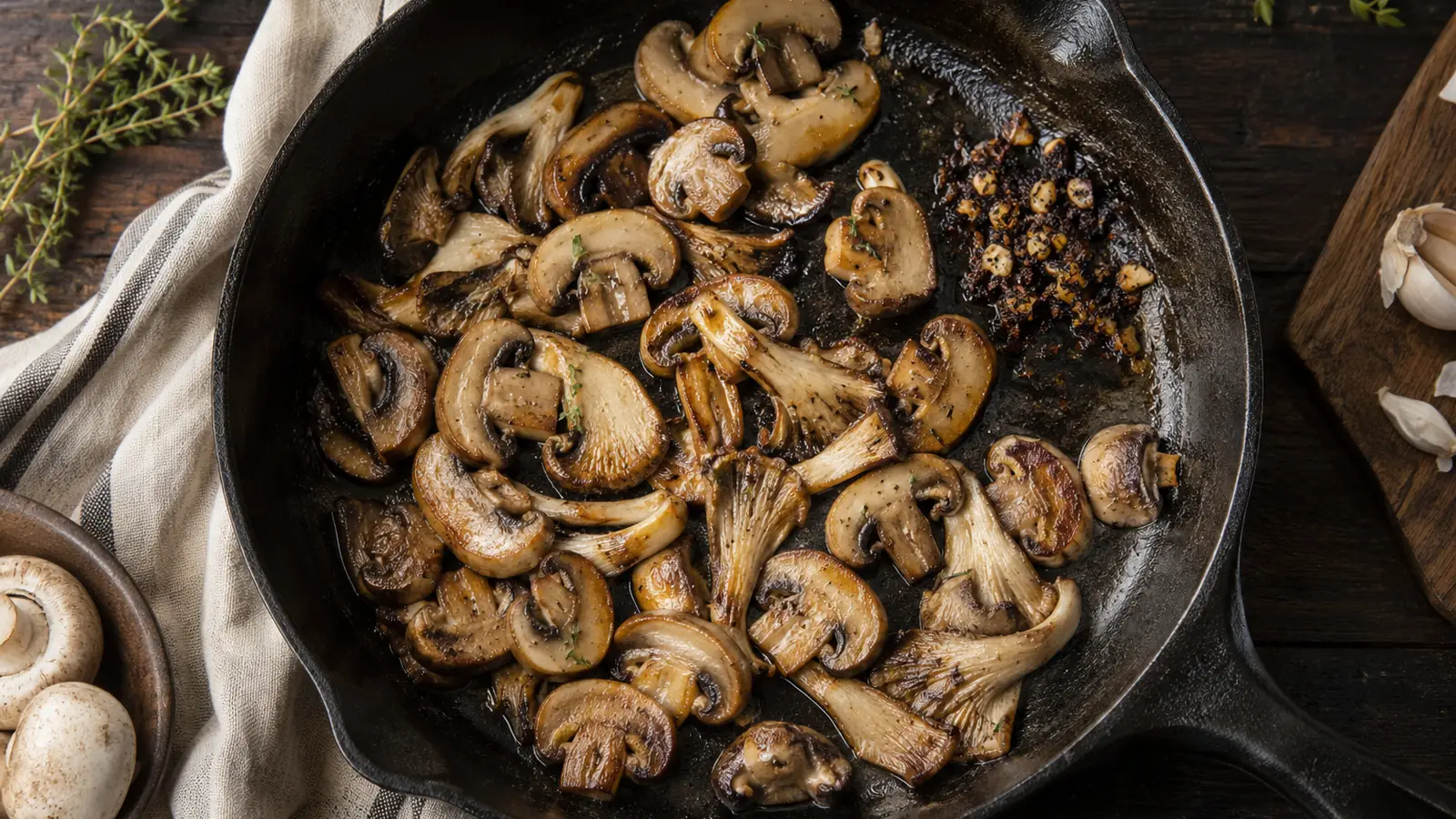
If your mushrooms taste bitter, notice when the flavor appeared. Their type, age or dried form may explain a mild bitter note, while blackened garlic, scorched fat or burned pan residue can make a sound dish acrid. Taste cannot prove safety, so identity, storage and visible spoilage stay separate checks.
If your mushrooms taste bitter, the mushrooms themselves are only one possible cause. Their species, age or dried form may carry a bitter note, but blackened garlic, scorched fat and burned pan residue can create the same complaint after cooking. We can narrow the cause down by asking when you first noticed the bitterness. Taste cannot tell anyone whether a mushroom is safe, so this diagnosis starts only once you know what mushroom you bought or harvested and how you stored it.
When did the bitter taste appear?
The stage at which the flavor changed is your strongest clue. If a rehydrated slice already tastes bitter before it reaches the pan, no change to your sautéing can explain that flavor. If the mushrooms taste normal at first and the bitterness shows up after the garlic darkens or black specks form in the pan, the cooking fat now carries the likely source. Batches that change after several days in the fridge raise a different question, about quality and storage.
| When you notice it | What probably deserves attention first | What the clue does not prove |
|---|---|---|
| Before cooking or just after rehydrating | Mushroom type, age, dried form or product quality | That the mushroom is spoiled or poisonous |
| As garlic, butter or pan residue darkens | Scorched aromatics, fat or fond | That the mushroom itself was bitter |
| After storage or in leftovers | Storage time, temperature, moisture and visible spoilage | That a normal taste would make the food safe |
You do not need to pin down one bitter molecule at the stove. You do need to separate the ingredient's own flavor, heat damage and storage history, because each one leads to a different decision. You can balance or dilute a mild edge from a known, sound mushroom. Nothing restores burned oil, and mushrooms with mold, decay or a questionable storage history do not become acceptable because another ingredient covers the taste.
Bitterness From the Mushroom Itself
Known edible mushrooms do not all share one flavor profile. Species, maturity, fresh or dried form and processing all shift the balance among savory, sweet, earthy, bitter and astringent sensations.
One trained sensory study treated bitterness as one of several measurable mushroom flavors, separate from spoilage. In its commercial samples, dried mushrooms leaned more toward bitter, burnt and astringent notes, while fresh samples leaned more toward umami, sweet and earthy notes. That result explains why a dried porcini broth or mushroom powder can taste sharper than the fresh mushroom. It does not mean every dried product will be bitter, and it does not clear any product as safe.
Age Changes Some Mushrooms More Than Others
As a fruiting body matures, its texture and flavor can both drift away from what you expected. That change differs by species, so no general kitchen article can give you one age rule for every mushroom. Older hedgehog mushrooms are one example, because their delayed bitter note is part of how that mushroom ages and how cooks prepare hedgehogs. Young cultivated oyster mushrooms, dried shiitake and mature hedgehogs are not interchangeable ingredients just because all three are fungi.
When a packaged product has always had a light bitter edge, your best comparison is the same product cooked more simply. Rehydrate or cook a small portion without a strongly flavored sauce, then compare it with the bitter dish. That comparison suits an already identified culinary mushroom from a trusted source. It is never a reason to nibble an unknown wild specimen.
Bitterness From the Pan
Mushrooms release water as they heat. During that wet phase, the pan may look gray and steamy, but steaming explains soft texture and weak browning far better than a sharp bitter taste. Once the water boils off, the surface gets hotter and browning comes more easily. At that point you need to tell deep brown mushroom surfaces and golden fond apart from blackened residue.
When you sauté mushrooms, the released water has to leave the pan before the exposed surfaces can brown. Crowding the pan slows that evaporation, but crowding on its own does not make the mushrooms taste bitter.
Garlic Often Burns After the Mushrooms Stop Steaming
Minced garlic has far less mass than a mushroom slice, so it can go from fragrant to black while the mushrooms still look fine. The University of Wyoming Extension garlic guidance describes burned garlic as black and bitter, and recommends low heat or adding it later when several ingredients cook together. Mushrooms that tasted fine until the garlic darkened give you a more specific answer than "the mushrooms went bitter." The oil spreads that scorched flavor across the pan, so picking out one black fragment may not save the dish.
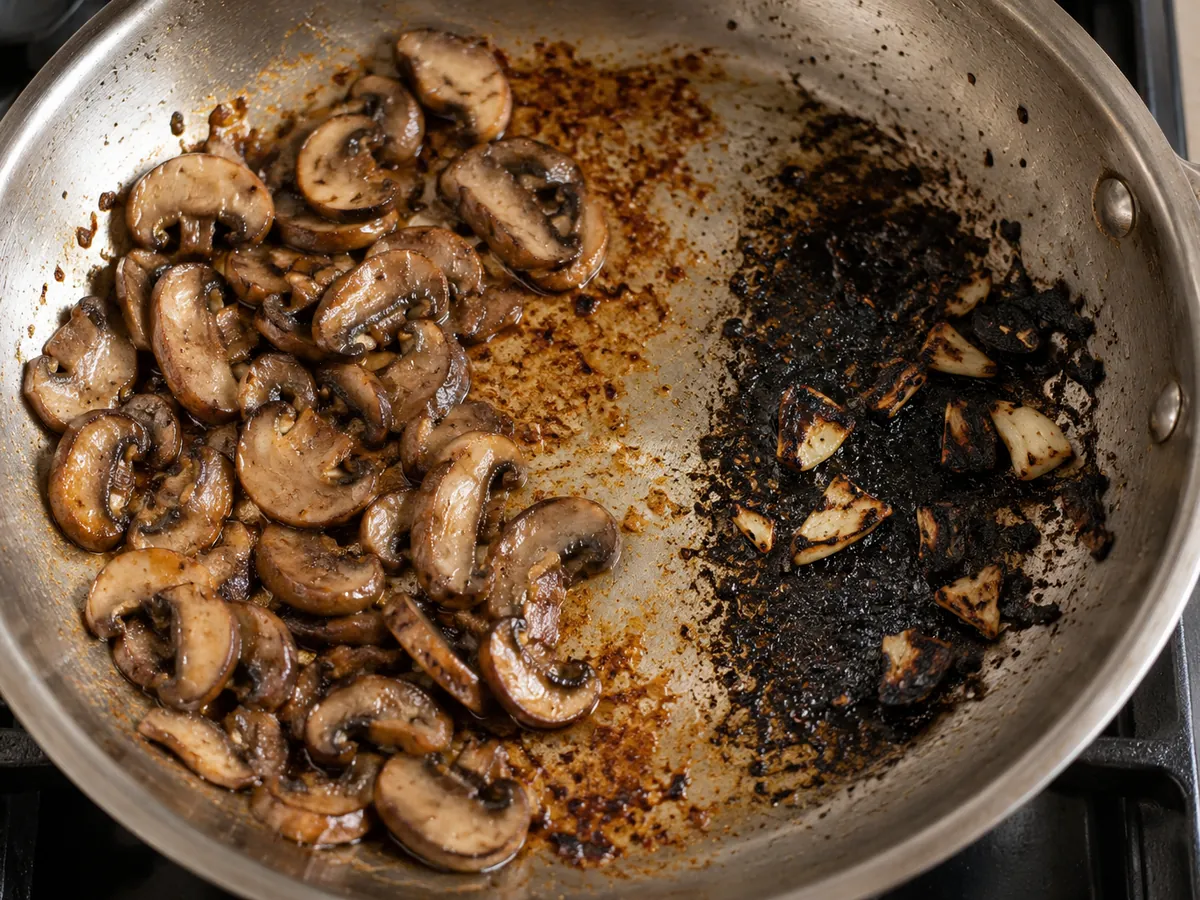
Black butter solids, charred herbs and burned spices can do the same thing. We have no reason to blame one ingredient without evidence. Still, the smallest pieces and the darkest parts of the pan reach the burning stage first, so look there before anywhere else.
Warning
Brown is not the same as burned
Golden or deep-brown surfaces can add savory flavor. If the pan contains black specks, acrid smoke or black garlic, stop before adding stock, cream or sauce that would carry those flavors through the whole dish.
Can you fix bitter mushrooms?
Fixing the dish makes sense only after you have ruled out unidentified mushrooms, spoilage and unsafe storage. From there, the cause tells you whether you can soften the taste or need to restart part of the dish.
Balancing a Mild Mushroom Note
When a known, sound mushroom adds only a mild bitter edge, more neutral ingredients can lower its concentration. Adding more unsalted stock to a soup, or more mushrooms and rice to a concentrated mixture, changes the ratio without pretending the bitter material has gone. Fat, salt and savory ingredients can change how the finished dish tastes to you. Use them to finish an otherwise sound dish, and never to cover mold, a sour smell or a mushroom you cannot identify.
Go easy with acid. Small amounts may brighten a heavy sauce, but they can also make a sharp dish taste sharper, so lemon is no cure-all for bitter mushrooms.
Diluting a Concentrated Sauce
Reduction intensifies everything already in the pan. If a mushroom sauce tasted balanced before it boiled down, add back a little unsalted liquid first. Taste again before you reach for salt, cheese or another strong ingredient. Here, less concentration can solve more than extra seasoning, because you are correcting a ratio and the flavor compound itself stays the same.
Scorched Fat and Garlic Need a Clean Pan
Once blackened garlic or butter has flavored the oil, sugar, cream and stock may hide part of the bitterness, but they cannot return the fat to its earlier state. Starting that part of the dish again usually wastes fewer ingredients than building a bigger sauce around a burned base.
Key takeaway
Match the response to the cause
Balance a mild note from a known sound ingredient. Dilute an over-reduced sauce. Restart scorched fat or aromatics. Discard mushrooms when identity, storage or visible spoilage is the unresolved problem.
Are bitter mushrooms safe to eat?
Bitterness is a flavor observation and gives you no home safety test. Bitter mushrooms may be a sound but less pleasant ingredient, while food that tastes normal may still have sat in unsafe storage. Penn State Extension's selection and storage guidance recommends choosing mushrooms free from spots and decay, refrigerating them and avoiding trapped moisture in a plastic bag. If your mushrooms are slimy, moldy, decayed or smell suspicious, you already have a reason to throw them out without tasting another piece.
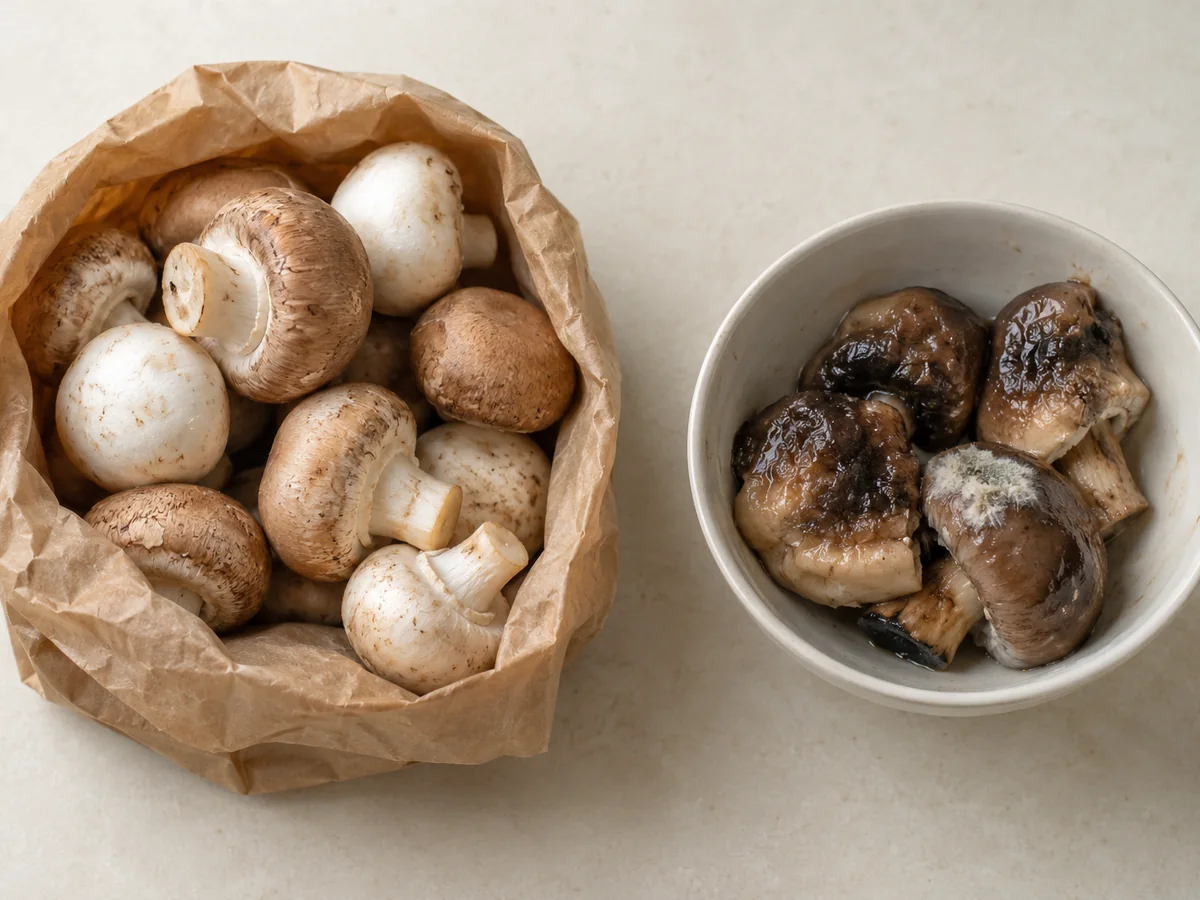
Our eyes and nose can find some reasons to throw food away, but they cannot certify that it is safe. The FDA's storage guidance warns that food can make you sick even when it does not look, smell or taste spoiled, because the bacteria that cause illness differ from ordinary spoilage organisms. So storage history counts even when the mushrooms look fine. Perishable food left out for more than two hours, or more than one hour above 90°F, falls outside the FDA's stated room-temperature limit.
Wild Mushrooms Need an Identity First
For an unknown wild mushroom, a bitter taste does not identify the species, and a mild taste does not clear it for eating. Penn State also notes that cooking or drying does not destroy all mushroom toxins. That limit stops anyone from misusing the rest of this article. We can troubleshoot the flavor of mushrooms already known as culinary ingredients, but we cannot turn taste into identification.
Warning
Do not taste an unidentified mushroom to judge safety
Keep the specimen, any packaging and meal remnants away from further eating. If someone develops symptoms after eating a wild or unknown mushroom, contact emergency services or poison control, and do not wait for the flavor to explain the exposure.
Storing fresh mushrooms with room for moisture to escape keeps their quality longer, before these defects appear. Careful storage cuts avoidable waste, but it still does not replace dates, temperature control and a known source.
Keeping the Next Batch Balanced
Start with mushrooms you can name and a storage history you trust. If the product is a known edible and its preparation allows it, cook a small piece plainly before the rest goes into a large sauce or risotto. Then decide whether the bitter note belongs to the ingredient.
Clean the mushrooms without leaving their surfaces dripping wet. Drier surfaces shorten the steamy stage, so you can see more clearly when the released liquid gives way to browning. Let most of that water leave before delicate minced garlic goes into the hottest part of the pan. That gives the mushrooms time to brown while cutting the garlic's time in the heat.
Keep the browned mushrooms separate until you have tasted them. If they taste balanced, fold them into the larger dish. When the pan has scorched, the problem stays in one place and does not spread through every serving.
All of this leaves you with a working rule. Mild bitterness can belong to a known ingredient, while acrid bitterness usually points you to the pan. Safety stays a separate decision, based on identity, storage and condition.


