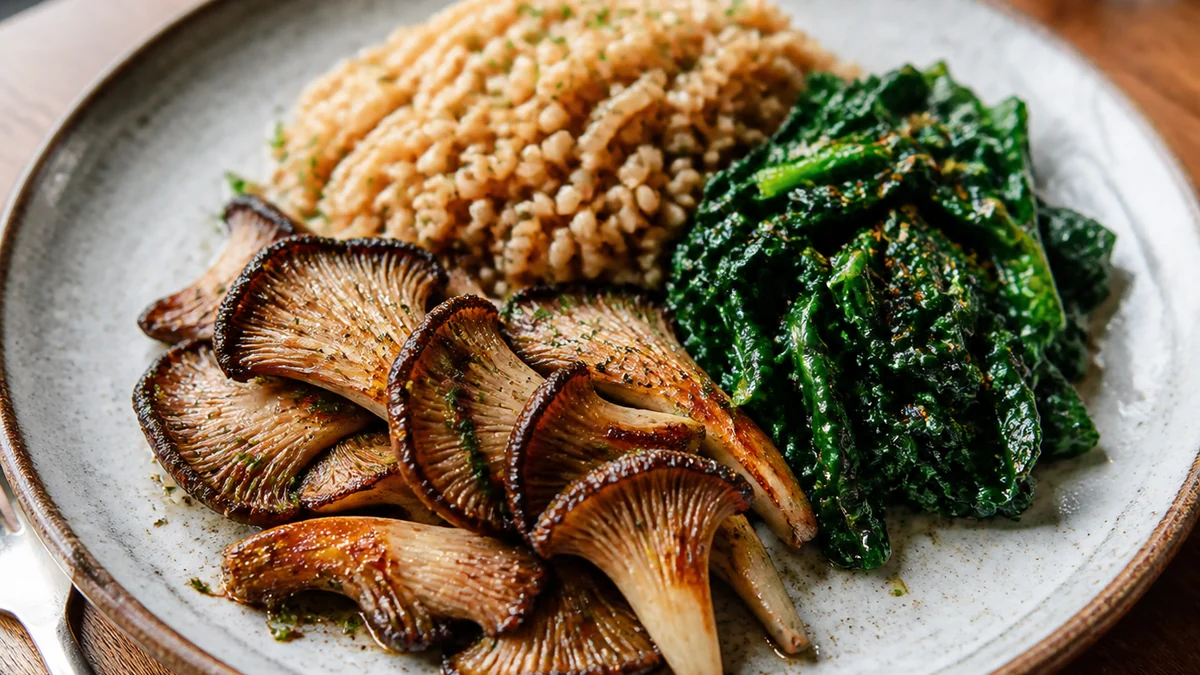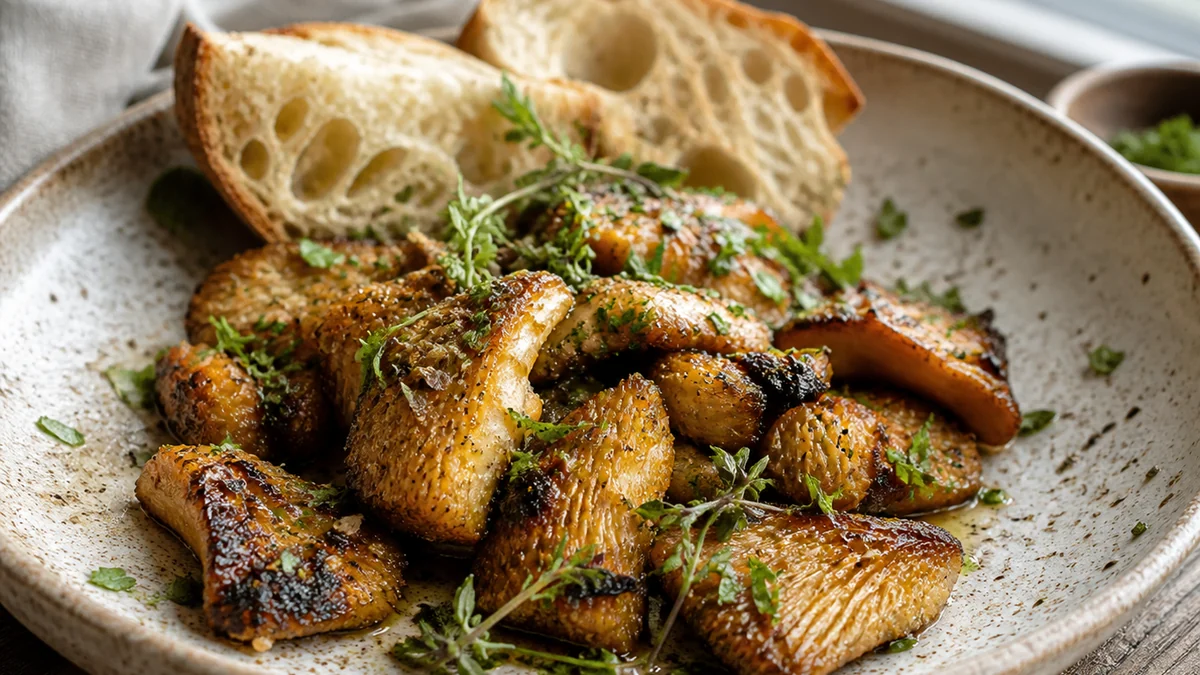
The spines under a hedgehog cap lengthen and darken with age and are the first part to turn bitter, so read them before cooking. Young mushrooms with short pale spines go in whole, older ones want the spines scraped off, and the dense flesh takes a harder sear than a chanterelle would survive.
Turn a hedgehog mushroom over. The underside is covered in soft pale spines that hang down like the pile on a cheap carpet, and that surface is where every decision about cooking it gets made.
Nobody looks at it. People buy hedgehogs by the cap, cook them by the cap, and then report that they came out bitter.
The spines are the clock
Gills, pores, spines. Most mushrooms use one of the first two and this one uses the third.
That last fact is the one that matters in a kitchen, and almost nothing written about the species says it.
Spines are what put this mushroom in its own genus, described on our hedgehog mushroom profile, and in a kitchen they work as a gauge rather than a curiosity.

The spines are also why hedgehogs have a reputation for being foolproof, since no dangerous mushroom shares that underside in the places they grow.
There is a second reason to care about them beyond bitterness. The spines are the part that sheds, so a basket with loose spines in the bottom has been handled hard or picked a while ago, and both are worth knowing before you pay for it.
Inspect the spines when deciding how to prepare an older specimen.
Cooking MushroomsHow to Cook Cauliflower Mushroom Without Trapping GritReading the spines
There are two states, and you can read them at arm's length.
| Young | Old | |
|---|---|---|
| Spine length | Short, a few millimetres | Long, sometimes half a centimetre |
| Color | Pale cream | Darkening toward tan or brown |
| Attachment | Firm | Shed at a touch |
| What to do | Cook whole, spines on | Scrape the spines first |
Attachment is the quickest of those four to check. A thumb drawn across the underside either leaves it intact or leaves you holding spines.

A young hedgehog needs nothing done to its underside at all, since the spines are short, hold no grit worth worrying about and carry no bitterness yet.
An older one is a different proposition, and the spines say so before you taste anything.
Color on top is worth a glance and no more. A hedgehog cap runs from cream to a deep apricot with age and with sun, and neither end of that range tells you anything reliable about the underside.
Cap size is a poor guide by comparison. Hedgehogs vary enormously in size within a single flush, so a large cap is often a young mushroom that grew well rather than an old one.
Why they turn bitter
An older hedgehog mushroom can leave a bitter taste even after cooking.
Key takeaway
The bitterness in a hedgehog mushroom concentrates in the spines rather than the cap flesh. Scraping them off an older specimen removes most of it in a single pass, and nothing else you do in the pan will.
It develops with age and faster in dry weather. A basket picked after a fortnight without rain will taste sharper than the same spot picked after a wet week.
Cooking does not remove it, because heat softens the peppery edge that even a young hedgehog has while the bitterness of an old underside survives anything you do to it.
Raw is worse again, which our page on eating hedgehog mushrooms raw covers properly. Peppery and bitter is the honest description at any age.
Weather explains most of the variation between two baskets from the same wood, since dry spells concentrate whatever is in the spines and a flush that came up after heavy rain is milder at the same apparent age.
Bitterness also travels. A single old hedgehog cooked with a dozen young ones will make the whole pan taste faintly sharp, which is why sorting matters more than it does with most species.
That is the whole diagnosis. A hedgehog that tasted bad was almost certainly an old one cooked with its spines on, and the fix takes half a minute.
Cooking MushroomsHow to Cook Black Morels: Halve Them, Never Slice ThemGrit in the spines
How do you clean a hedgehog mushroom, then, when the part that catches debris is a forest of soft spines? Woodland debris gets in there and stays, and a brush is no use at all.
Only the last of those needs water, and it is the case worth avoiding at the point of picking rather than at the sink.
The scrape in the second step is worth a picture, because the angle is the whole trick and it is not obvious from a description.
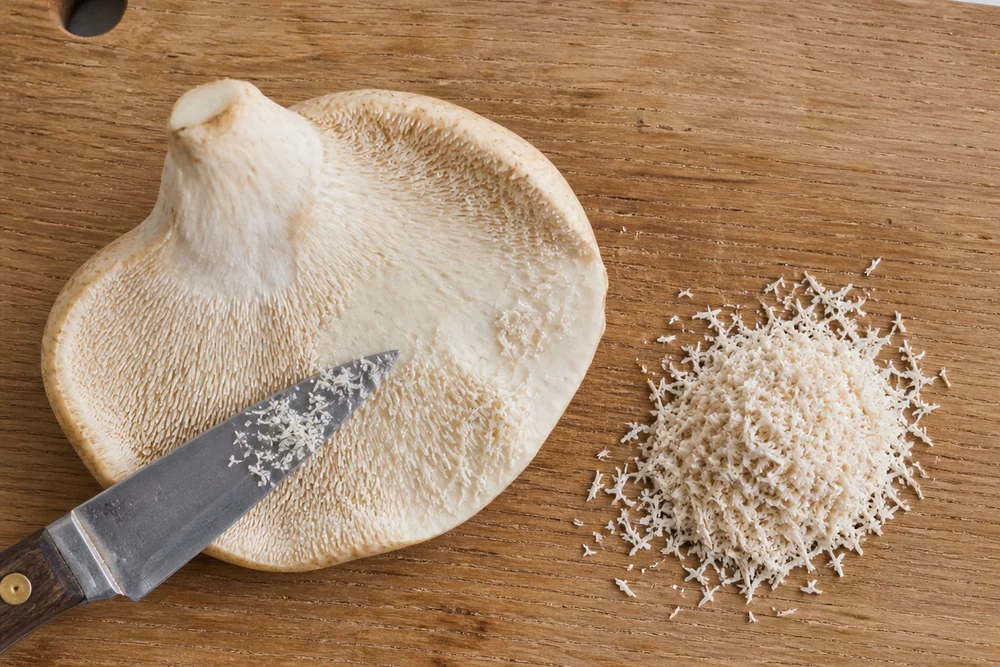
Of those five steps the second is the one people resist, and it is the one worth doing. It solves the grit and the bitterness together, which is unusual value for thirty seconds of work.
Our guide to cleaning mushrooms makes the general case against water. A hedgehog is dense enough to be a partial exception, though a rinse cannot reach between the spines any better than a brush can.
Three things make a hedgehog easier to clean than most autumn mushrooms:
- The cap surface is dry and smooth, so nothing sticks to it.
- The stem is solid, so there is no hollow collecting debris.
- The only problem area comes off with a knife in half a minute.
Salt water is worth mentioning because foragers reach for it with other species. It does nothing useful here, since hedgehogs rarely carry insects and the flesh takes up the water it sits in.
Losing spines during handling is normal rather than damage, since they shed easily on any specimen past its first few days and a basket with loose spines in the bottom is telling you about its age.
It takes more heat than a chanterelle
People are told hedgehogs are a chanterelle substitute, and in flavor that is fair. In the pan it understates them badly.
The third step is where the difference from a chanterelle shows, because three untouched minutes is longer than a chanterelle would survive.
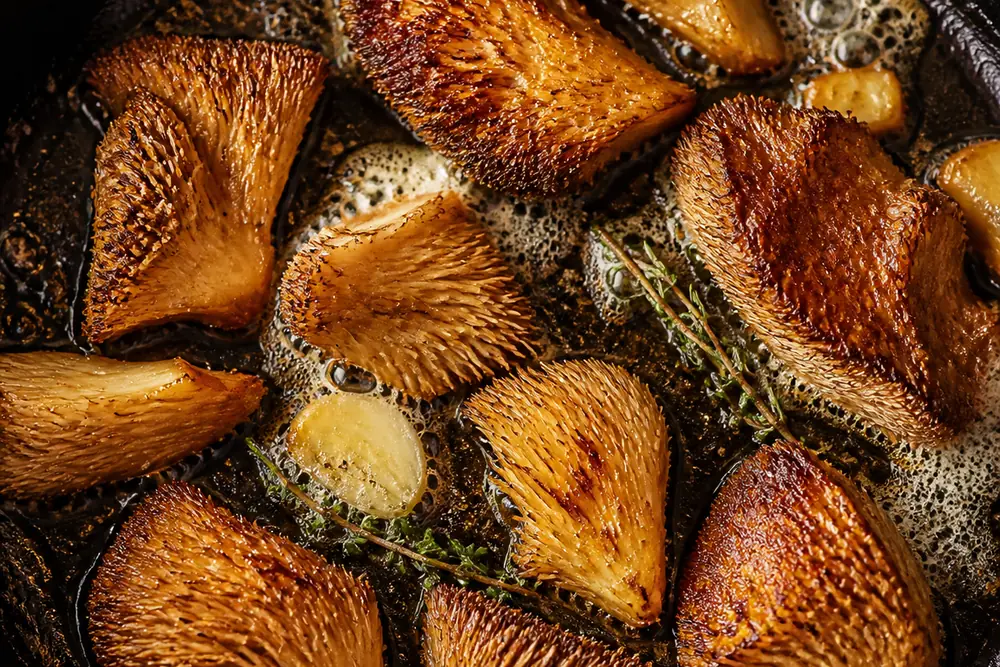
The flesh is denser and noticeably drier than a chanterelle of the same size, so less water goes into the pan, browning starts sooner and the pan stays hot.
Fat choice matters less here than with a thin mushroom. Butter tastes better and oil takes more heat, and because a hedgehog is not going to burn while you wait, either works.
They also survive liquid in a way chanterelles do not, since twenty minutes in a braise leaves a hedgehog still recognizable while the golden chanterelle is long gone.
Crowding is the one failure worth naming. Hedgehogs release less water than most woodland mushrooms, so a full pan does not flood the way a full pan of chanterelles would, but the pieces still need contact with metal and a heap of them will not get it.
Roasting suits them as well as a pan does, and better for a large quantity. Twenty minutes at a high heat with one turn produces the same firm browned result without standing over anything.
Cooking ahead works too, which is worth knowing during a good autumn. A pan of hedgehogs cooked on the day of picking reheats the next evening with very little loss.
Cooking MushroomsHow to Cook Black Truffle Without Losing Its AromaWhat they taste like
Sweet and nutty, with a faint pepper behind it.
There is a reason the two get confused in the first place, and it is not only the color. They fruit in the same woods at the same time of year and often within a few meters of each other.
The chanterelle comparison holds for flavor, with a chanterelle fruitier and a hedgehog nuttier, and neither stronger than the other.
The pepper is worth expecting rather than fearing. It sits in the background of a young mushroom and softens further with heat, and it is a completely different sensation from the bitterness of an old underside.
There is one pairing worth arguing for specifically. Hedgehogs and eggs suit each other better than hedgehogs and almost anything else, because the egg carries the sweetness and the mushroom supplies the bite the egg has not got.
What they suit follows from the firmness rather than the flavor:
- Seared as a side, which is where the texture shows best.
- Folded into an omelette or scrambled eggs at the end.
- In a cream sauce for pasta, where they hold their shape.
- In a short braise, unlike almost any other woodland mushroom.
Quantity is generous by wild-mushroom standards, since a hundred and fifty grams a head is a reasonable side portion and that is not a sentence you could write about morels.
Strong spice buries them, as it does most autumn mushrooms. Cream, butter, thyme, garlic and a splash of white wine are the treatments that let them through.
Anyone eating them through a whole season will find the figures on our hedgehog mushroom nutrition record. Outside it, hedgehog mushroom substitutes works through what comes closest.
Cutting them up
Size varies wildly within a single flush.
Sorting by size takes a minute and saves the pan. Tip the basket onto a board, make three piles, and the rest of the decision makes itself.
Small hedgehogs go in whole and that is the best version of them. The cap keeps its shape, the stem stays attached, and you get a browned exterior around a firm middle.
Anything above about four centimetres across wants halving or quartering. A large cap cooked whole browns on the outside and steams in the middle, which is the one way to make this mushroom disappointing after you have got the spines right.
Cut through the stem rather than pulling it off, since it is solid, often off-center, and browns as well as the cap does.
Do not slice them thin.
The whole argument for hedgehogs over chanterelles is that they hold a firm bite, and a two-millimetre slice throws that away for nothing.
Stems are worth keeping whole rather than trimming. Unlike most gilled mushrooms the hedgehog stem is as good as the cap, and cutting it away is a habit carried over from species where it is not.
Three cuts cover a mixed basket:
- Whole for anything under about three centimetres.
- Halved through the stem for the middle range.
- Quartered for the big ones, which are commoner than people expect.
Uniformity matters more than the exact size, since a pan of mixed pieces always has some overdone and some pale whatever you do about the heat.
Buying and keeping them
Turn every single one over before you commit to a basket. It is the only check that tells you anything.
The last two lines are what make this a species worth learning rather than merely a safe one.
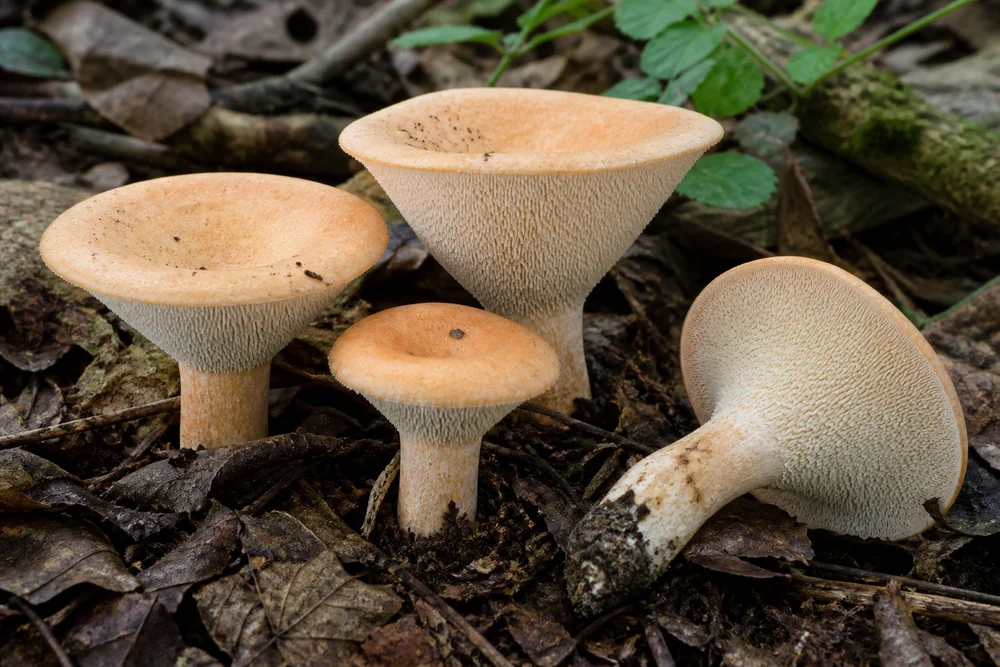
Keeping is where they beat almost every autumn mushroom, and it is worth planning around.
They keep well for something picked off a forest floor. A week in a paper bag in the fridge is realistic, and ten days is not unheard of for firm young ones.
Drying is the one preservation route that disappoints. The texture that makes them worth picking does not come back after rehydration, and freezing them cooked is a better use of a surplus.
Buying them is easier than most wild mushrooms for the same reason, since a greengrocer who stocks them can keep them a week and that is why they turn up where chanterelles never do.
Insects mostly leave them alone, which is a genuine advantage over porcini and most boletes. A wormy hedgehog is rare enough to be worth remarking on.
Price is the other reason they are worth knowing about, since hedgehogs are rarely as expensive as morels or porcini and a good spot produces a lot of them.
One thing they do that no other autumn mushroom on this site manages is survive being cooked twice. A pan browned on the day of picking, refrigerated and reheated the next evening comes back close enough that nobody at the table would guess.
The season is autumn, and our page on autumn foraging season covers when to start looking in a given region. For the container question and what freezing does to them, storing hedgehog mushrooms has the detail.
Sources & References
- Hydnum repandum, the hedgehog mushroom (Fungi Atlas) Species reference used for the toothed hymenium of soft decurrent spines in place of gills, the pale apricot cap, the dense flesh and the autumn habit in mixed woodland.
- Hedgehog Mushrooms (Forager Chef) Cook and forager reference used for the concentration of bitterness in the spines of older specimens, the practice of scraping them, the unusual fridge life and the rarity of insect damage.
- Hydnum and Cantharellus in the kitchen (Mushroom Expert) Reference used for the comparison with chanterelles on flesh density and water content, which underlies the claim that hedgehogs take more heat.