What makes a morel safe to eat?
Morel searches usually start with timing, trees, and soil temperature. Eating them safely starts somewhere else, with a knife cut from cap tip to stem base.
True morels are spring Morchella mushrooms with a hollow interior and a cap attached to the stem. A mushroom with folds, chambers, or an uncertain cut surface fits the false morel warning signs and should not be cooked.
A good morel ID has two steps. First prove the mushroom is a true morel, then cook it thoroughly.
That second step matters because morels are edible with caution. They are not a raw garnish and not a mushroom to taste in the field.
Morels are prized because they are hard to farm and short in season. A few weeks each spring is the whole window in most places.
That scarcity drives the excitement, and the excitement is exactly when careful people get sloppy. The knife cut is the habit that keeps the thrill safe.
Morel safety has two separate gates. First, the mushroom must be a true morel. Second, it must be cooked through. Passing the first gate does not let you skip the second.
| Gate | Pass | Stop |
|---|---|---|
| Interior | One clean hollow chamber | Cottony, chambered, layered, or folded inside |
| Cap attachment | Cap attached near the stem base | Cap hanging loose like a skirt |
| Surface | Pits and ridges like a honeycomb | Brain-like folds or smooth lobes |
| Cooking | Fully heated and browned or simmered | Raw, undercooked, or only warmed |
How do you confirm a true morel?
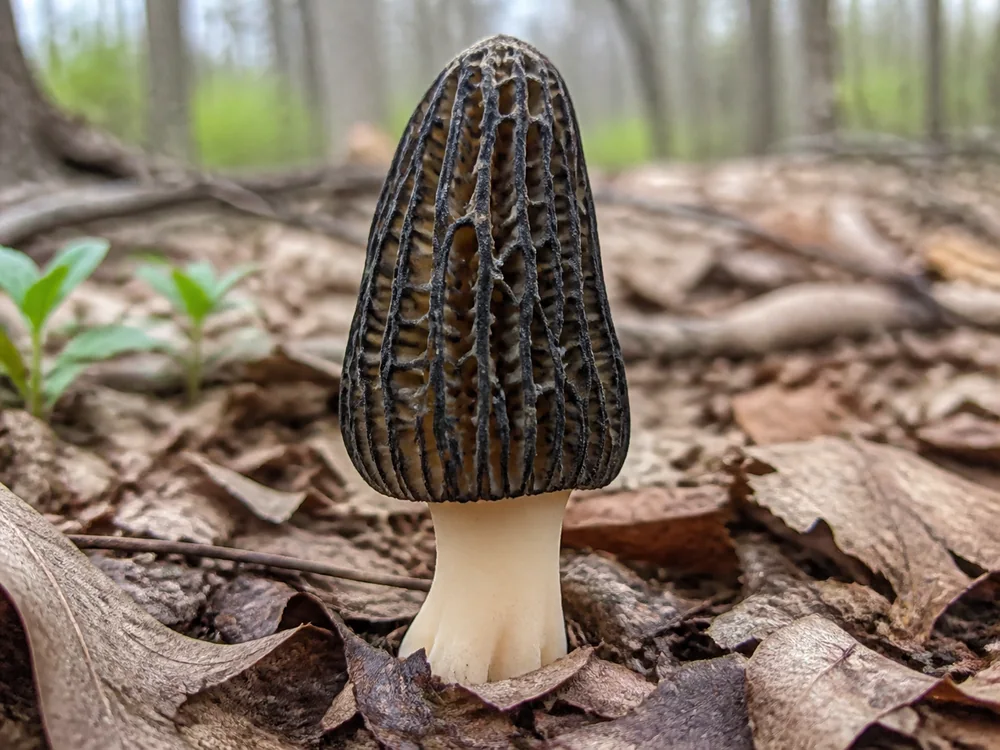
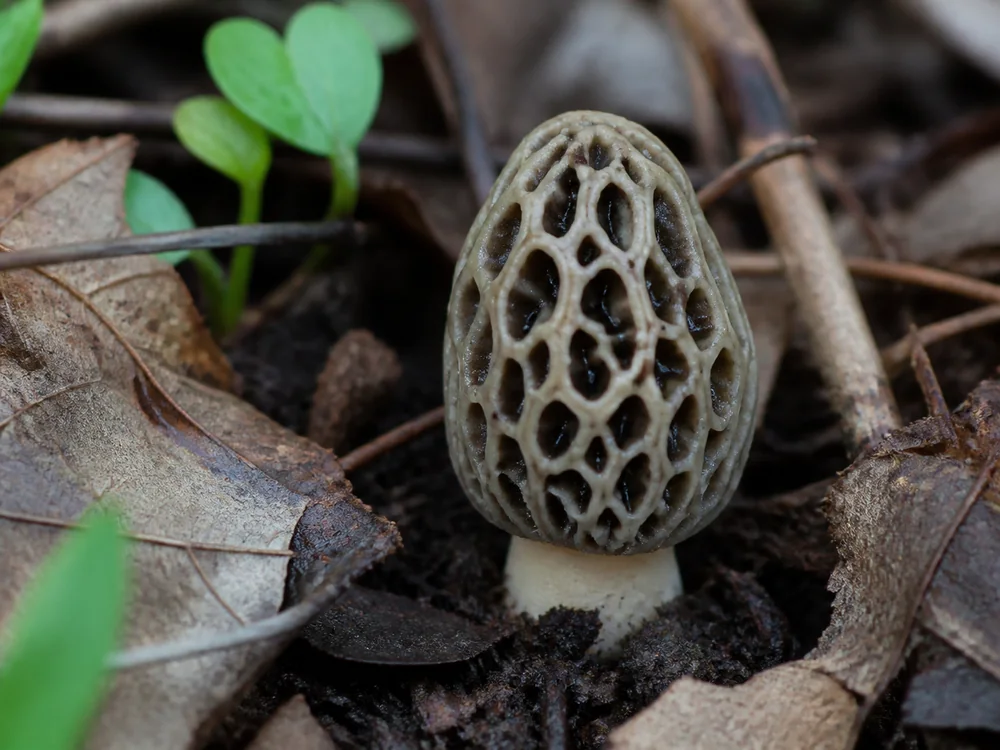
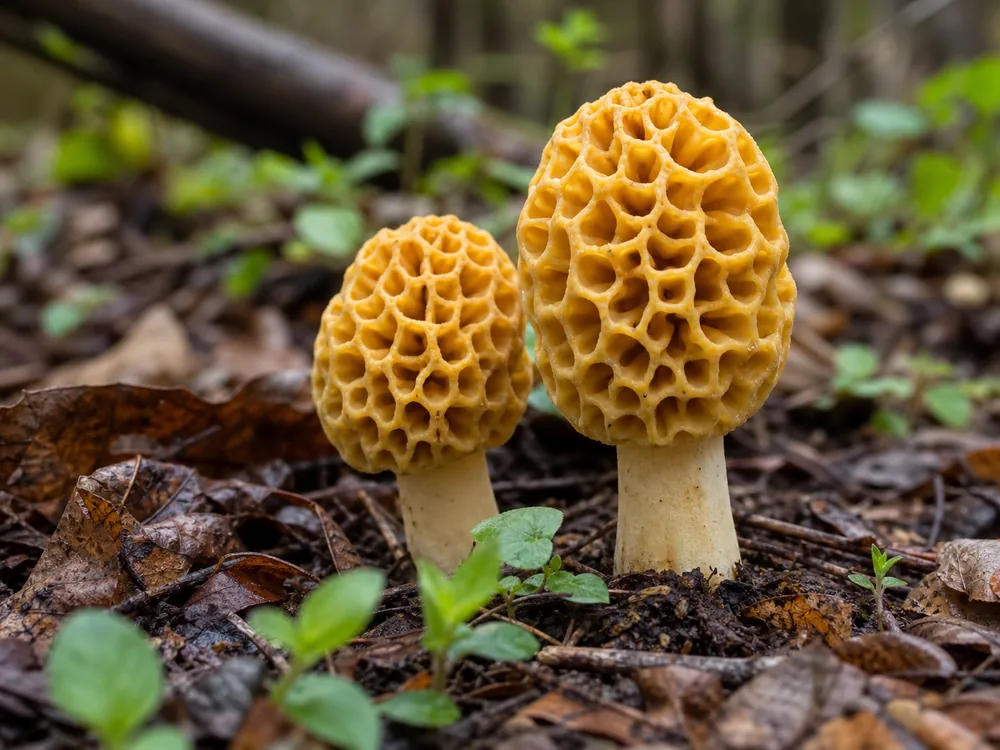
Honeycombed: a network of ridges and pits over the cap surface. The cap is fully attached to the stem near its base.
No gills, the pitted honeycomb surface bears the spores.
White, hollow, the cap and stem form one continuous hollow chamber.
Thin, brittle, hollow throughout, earthy smell.
Slice the mushroom lengthwise before it goes into a basket with dinner in mind. A true morel is hollow from the cap tip through the stem.
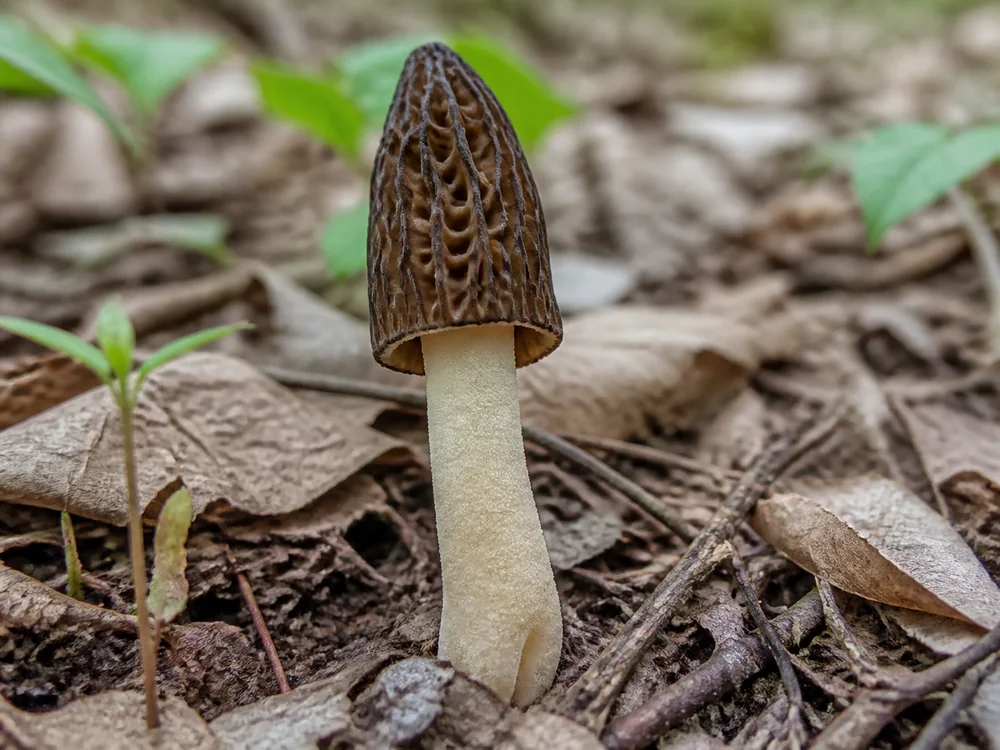
The outside should show a honeycomb pattern of pits and ridges. The cap should connect to the stem near the base, not hang loose like a skirt.
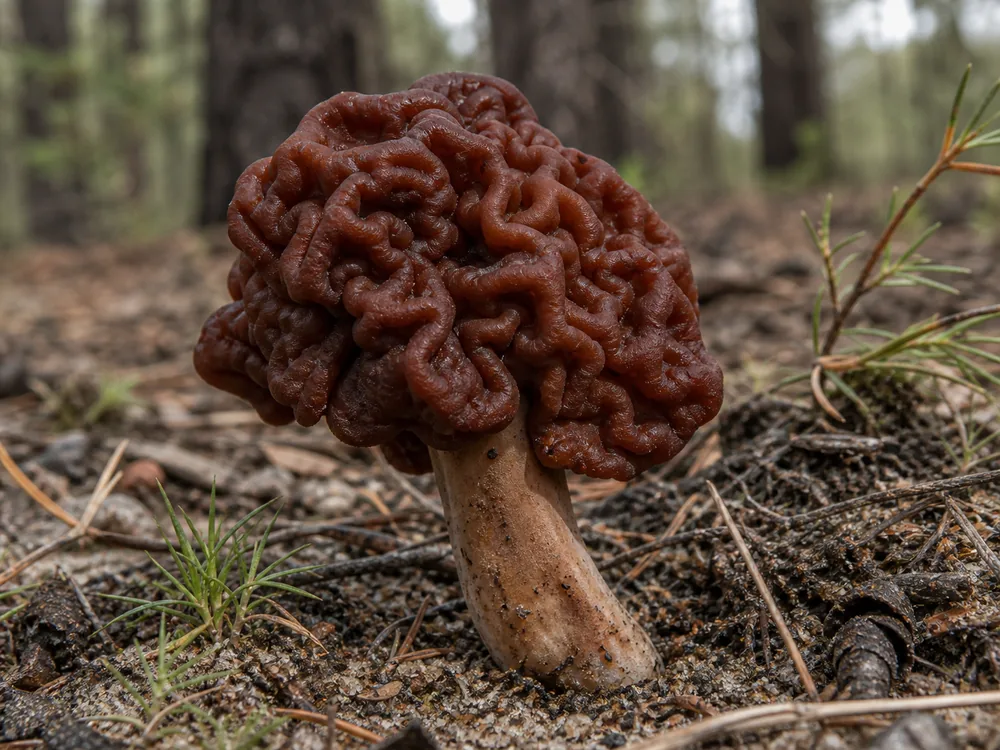
Now check what does not belong. A cottony center, separate chambers, a free-hanging cap, or a wrinkled brain-like surface points away from true morel. Discard that mushroom.
True morels come in a few shades, from pale gray and tan to yellow and dark brown. Color shifts with age and species, so it is a weak clue on its own.
The half-free morel is worth knowing. Its cap hangs partly loose from the stem, sitting between a true morel and a false one, so treat a skirt-like cap with extra care.
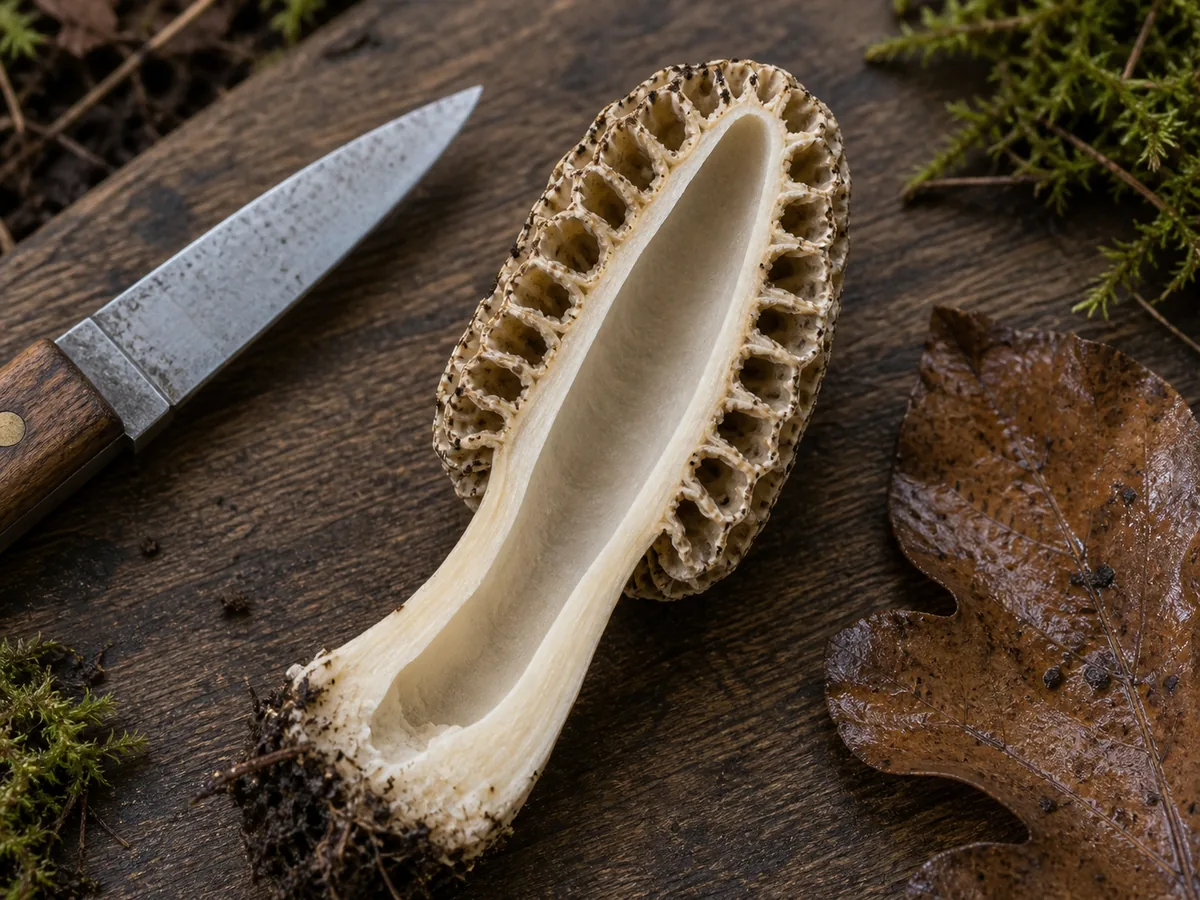
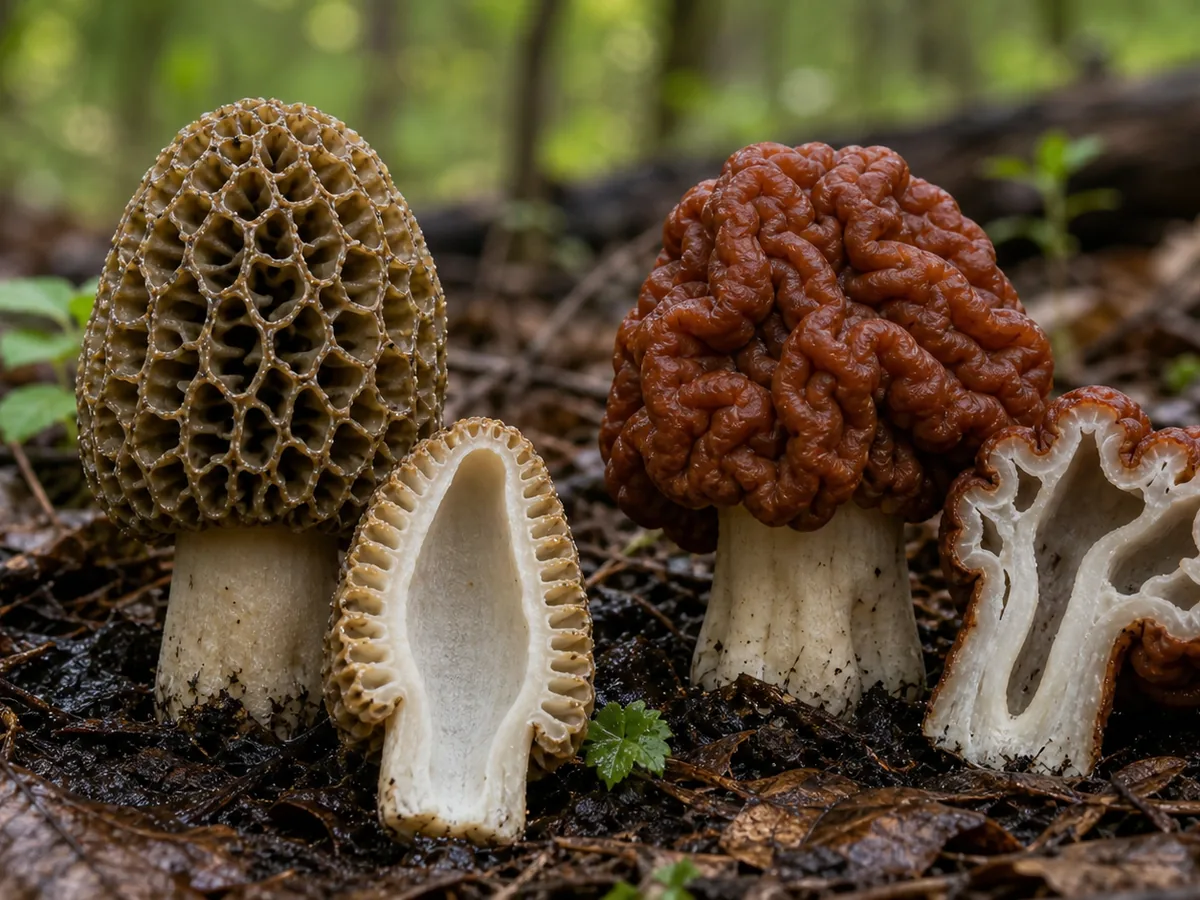
Cut it open first. One clean hollow chamber from cap tip to stem base is what separates a true morel from a dangerous copy.
The cut comes first
Which false morels must you rule out?
Morels have one dangerous counterfeit, and the difference is settled with a knife rather than a field guide.
Cut the specimen from cap to base. A true morel is hollow from the tip of the cap all the way through the stem, one continuous empty chamber.
A false morel is not hollow. Its interior is packed with cottony fiber or divided into chambers, and its cap looks folded or brain-like rather than pitted.
Verpa species add a second trap. The cap hangs free from the stem like a thimble instead of being fused along its length, so check where the cap attaches before you decide.
Gyromitra poisoning has killed people who cooked it thoroughly, so treat every non-hollow specimen as a discard rather than a cooking problem.
How do you clean and cook morels safely?
Cut morels lengthwise, rinse out grit and insects, then dry them well. Wet morels steam before they brown.
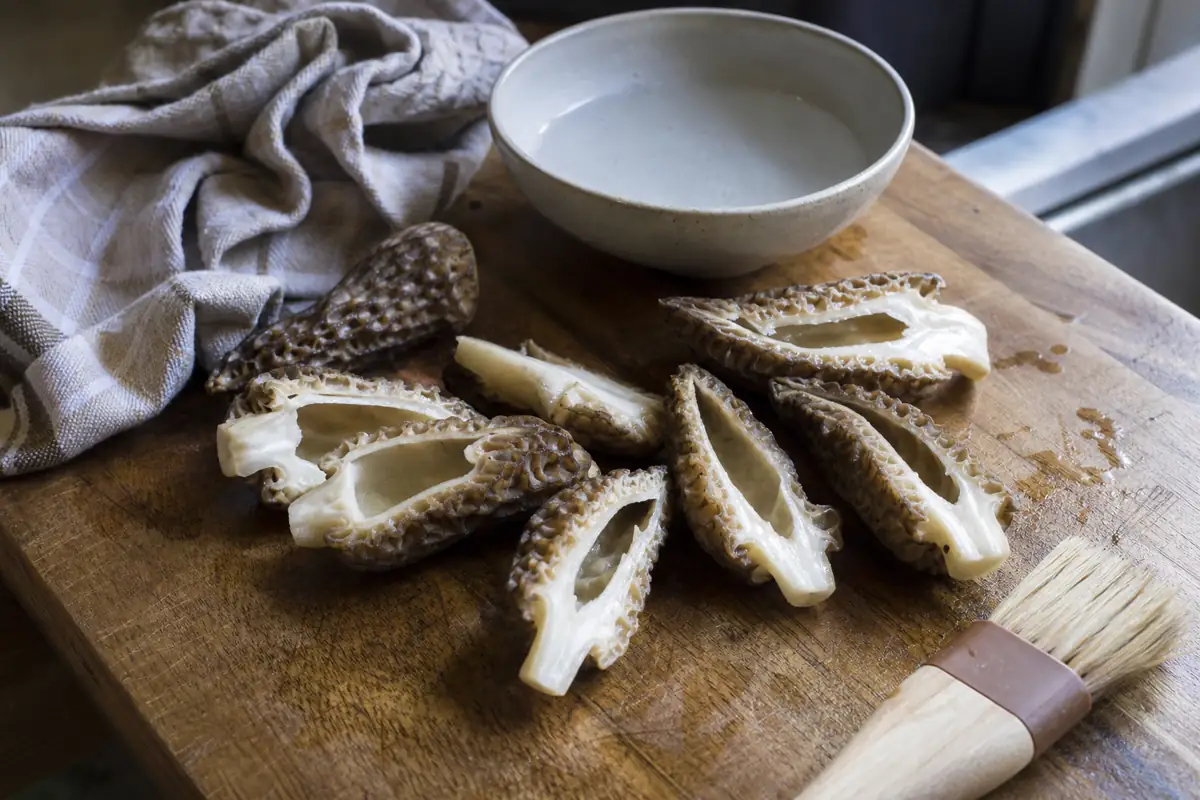
Cook them thoroughly. Butter is classic, but the safety point is heat through the whole mushroom, not a quick warm-up.
Try a small portion first, especially if you have not eaten morels before. Skip heavy alcohol with the meal. Morel cooking steps matter after ID, while substitutes are safer when fresh morels are not available.
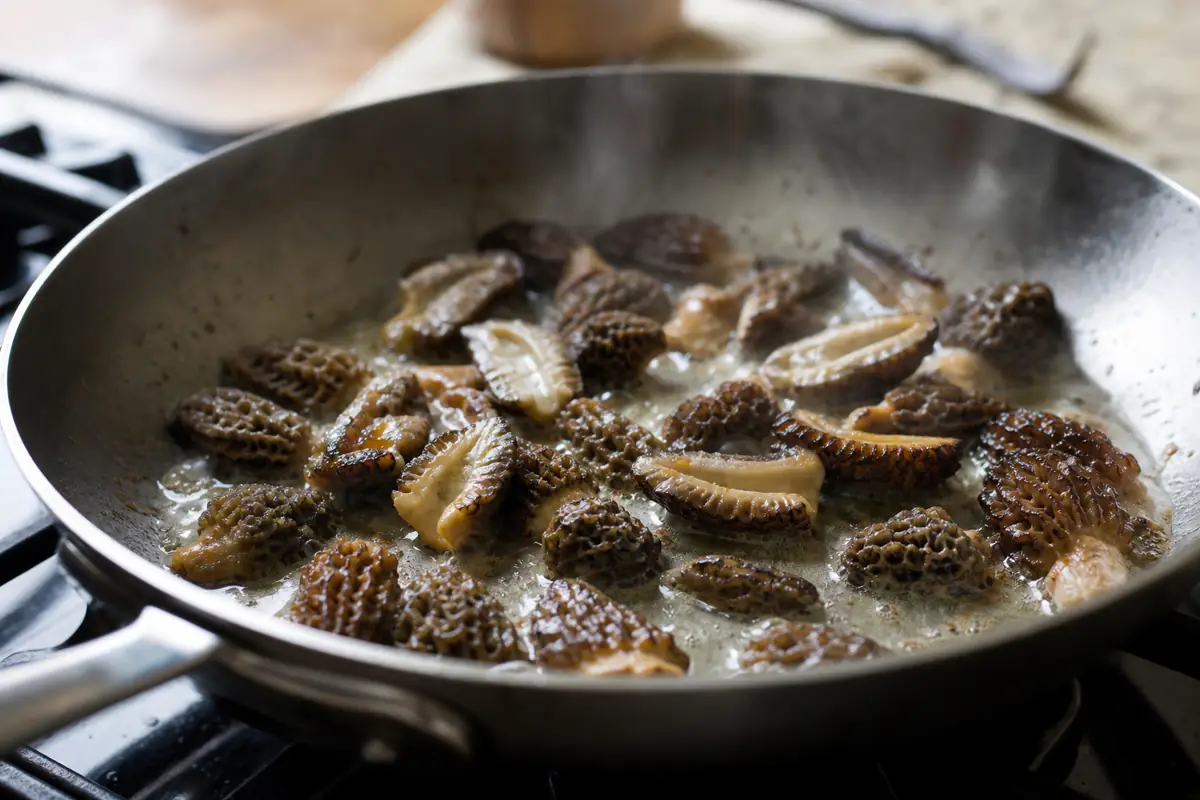
Dried morels store well and rehydrate into a rich, meaty bite. Save the strained soaking liquid for sauces, since it holds a lot of flavor.
Morels shine with simple partners like butter, cream, eggs, and spring greens. Their hollow shape catches sauce, which is part of why cooks prize them.
The raw-morel question deserves its own boundary. If you are asking whether a morel can be eaten raw, the answer is no. Raw morel safety matters because even true morels have caused illness when served raw or undercooked.
A good pan method leaves no cool center. Halved morels should soften, lose their raw springy bite, and pick up light browning or simmer fully in a sauce.
Tip
Halve morels and swish them in lightly salted water for a few minutes to float out hidden insects, then pat them fully dry before the pan.
Morels are hollow and their pits collect grit and insects, so halving them lengthwise before cooking is about cleaning as much as portioning. A brief swirl in salted water flushes the chambers, then drain them well.
Long soaking is the mistake to avoid, because the sponge structure holds the water and it steams in the pan instead of browning.
Drying suits them better than almost any other mushroom. A dried morel rehydrates close to its original texture and the soaking liquid is worth keeping for the sauce, provided you leave the grit behind in the bottom of the bowl.
Where do morels show up in spring?
Morels fruit in spring when soil warms and moisture holds. Search hardwood edges, old apple orchards, dying elm areas, ash and cottonwood bottoms, and recent burn sites where local rules allow collecting.
The patch can change fast. A site that is perfect for a few days may dry out or get picked over by the weekend.
Carry them in a breathable basket or mesh bag. A closed plastic bag sweats the mushrooms and speeds up spoilage.
Dying and recently dead elms are a classic hotspot, along with ash, cottonwood, and old apple trees. The year after a forest fire can also bring a big flush on burned ground.
South-facing slopes warm first, so they often fruit before shaded north sides. Following the warm-up uphill can stretch a short season by a week or two.
Do not let a good tree override a bad cut. False morels can appear in the same spring woods, and mixed baskets happen when hunters trust habitat more than structure.
Use location as a search clue only. Once a mushroom is in hand, the hollow interior, cap attachment, and pitted surface own the safety call.
Note
A place that produced morels last year can produce false morels this year. Cut every specimen, even from a familiar patch.
Can you grow morels reliably?
Morels are not a reliable beginner crop. Outdoor kits may produce a small flush, but most home growers get better results learning oysters or shiitake before trying morels.
Morels have a complex life cycle that is hard to control indoors. They form a survival structure in the soil before fruiting, and getting that step to repeat on demand still stumps most growers.
Outdoor spawn scattered in the right soil sometimes produces a small spring flush after a year or more. Treat any harvest as a bonus, not a plan.
That difficulty is why fresh morels remain expensive and seasonal. If a seller offers cheap cultivated morels year-round, ask more questions before assuming they are the same wild-style spring mushroom.
Try morel kits as an experiment.
Keep expectations low for the first year.
Promise a spring harvest from a packet of spawn.
Skip the cut test because the mushroom came from a managed patch.
Morels resist cultivation in a way most edible species do not. The fungus alternates between a free-living stage and a partnership with tree roots, and nobody has reliably reproduced the trigger that tips it into fruiting.
Outdoor spawn kits sold for garden beds mostly fail.
They can colonize the ground and then produce nothing for years, because colonization was never the hard part. Indoor commercial production exists in China and works, but the methods are closely held and have not transferred to home growing.
Are morels medicinal?
Morels are not a medicinal mushroom on this site. Treat them as a seasonal food with real safety conditions, not as a health product.
The main health issue is preparation. CDC and FDA outbreak notes show why raw or undercooked true morels deserve caution even when they are not false morels.
What do cooked morels add?
Cooked morels can add iron, copper, and vitamin D. The word cooked matters. Nutrition does not offset the risk of eating them raw or underdone.
Cooked morels are low in calories and the hollow flesh is light, so a full basket cooks down to a modest plate.
The nutrition is a side benefit. People hunt morels for the flavor, not the vitamin count.
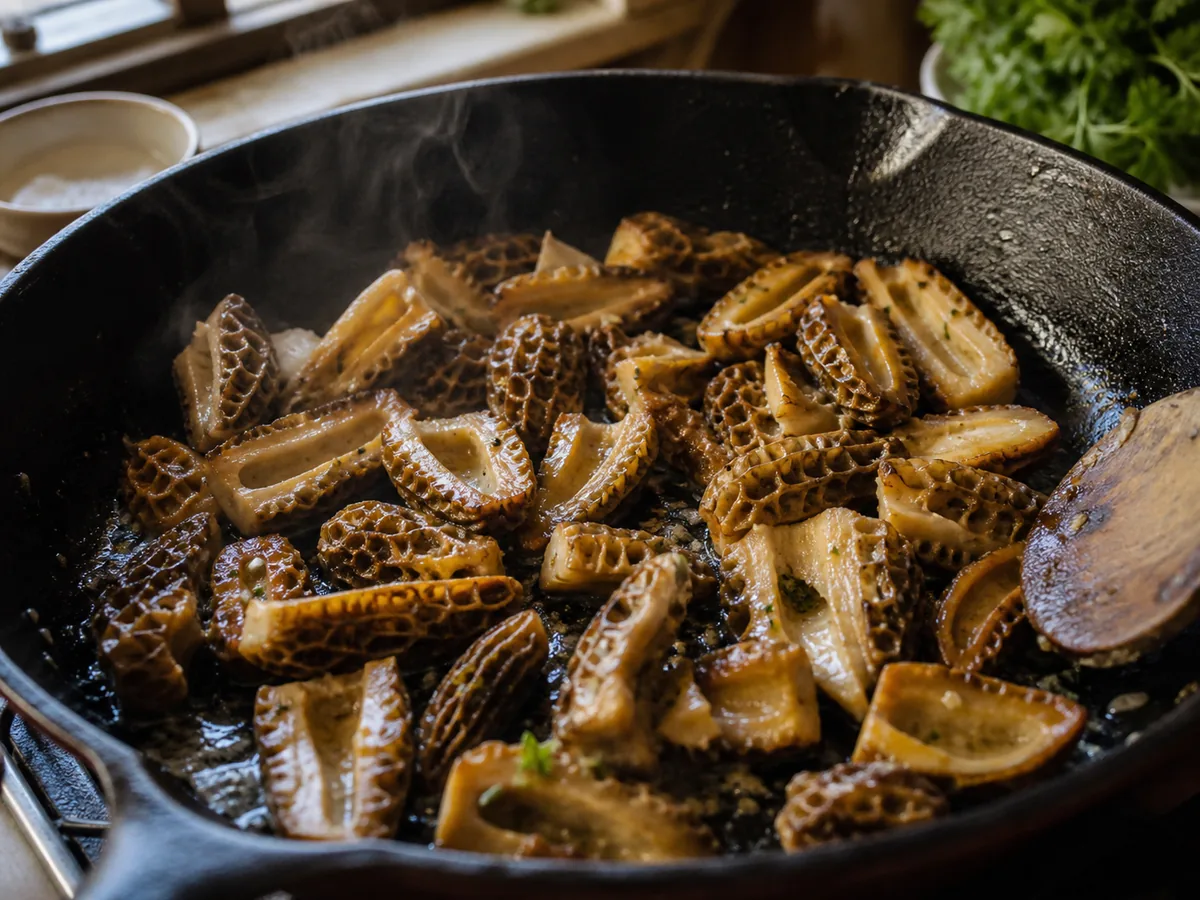
If nutrition is the goal, easier cultivated mushrooms are more reliable. Morels are a short-season flavor food that still asks for careful ID and cooking.
The final field decision stays simple. A true morel must pass the cut test before the kitchen, and a cooked morel must pass the heat test before the plate.
If either test feels uncertain, choose a safer ingredient. The spring hunt can wait for the next clean hollow mushroom.
That rule protects both safety and flavor. A rushed morel is more likely to carry grit, insects, raw centers, or a bad lookalike into the pan.
Taxonomy & Naming
Genus Morchella. The common name covers a species complex rather than one organism.
Yellow morels are usually Morchella americana or Morchella esculenta, and they pale from gray toward tan as they mature. Black morels sit under names like Morchella angusticeps and darken along the ridges instead.
Half-free morels are their own group, with the cap skirt attached only partway down the stem.
DNA work over the last two decades has split and renamed most of these repeatedly, so older guides and newer keys often disagree on which name belongs to the morel in your hand.
None of that changes the kitchen decision. Every true morel is hollow, every true morel needs thorough cooking, and the species name matters more to a mycologist than to a forager.
Morel ID and cooking questions
Can you eat morels raw?
How do I tell a true morel from a false morel?
Should I soak morels before cooking?
Can I drink alcohol with morels?
When is morel season?
Where should I look for morels?
Sources & References
- MushroomExpert Yellow morel cap attachment, hollow structure, spring habitat, and common North American ecology.
- CDC MMWR Morel-associated outbreak data, raw morel association with illness, and cooking implication.
- FDA True morel and false morel risk context after the 2023 outbreak investigation.
- Michigan Department of Natural Resources True morel pits, hollow interior, false morel warning, and cooking guidance.