Michigan's morel season runs from late April into mid June and climbs the state at roughly 100 miles a week, so the southern tier is finishing about the time the Upper Peninsula starts. Set your own start week from soil near 50 degrees at four inches, then work dead elm, ash killed by emerald ash borer, old orchards, and last year's burns.
Michigan morels run from late April into mid June, and the state does not open all at once. The season starts along the Indiana and Ohio border and climbs north, so a hunter in Berrien County and a hunter outside Marquette are close to a month apart.
Michigan State University Extension puts that movement at 100 miles or more per week.
That single figure turns a vague statewide range into something you can plan around. Watch what people 100 miles south of you are finding, then start walking your own woods about a week later.
How Michigan's morel season moves north
Key takeaway
Track the season by latitude, not by the date. Finds reported about 100 miles south of you preview your own woods by roughly a week, and that lead time beats any published Michigan calendar.
Michigan runs close to 400 miles from the Ohio line to the tip of the Keweenaw. At 100 miles a week the fruiting front needs about four weeks to cross all of it, which is why the Michigan DNR gives the state's fruiting period as late April until mid June rather than a single month.
The extra weeks inside that window belong to the places where the front stalls.
Lake Michigan and Lake Huron stay cold through April and much of May, and that cold water holds shoreline air back. A county on the water can sit a week behind a county 40 miles inland at the same latitude, so a lakeshore hunter following an inland friend's report arrives to bare ground.
Aspect does the same thing inside one woodlot.
A south-facing bank warms first, while a shaded north slope or a cold creek bottom on the same forty acres can run a week later, which is why a single property often produces longer than its regional window suggests.
Snowmelt sets the earliest possible date at the top of the state. After a heavy winter the eastern Upper Peninsula can still be holding snow in shaded stands while southern counties are already picking.
Tracking the front gives you a preview. Waiting for a date gives you a coin flip.
When morels come up in each part of Michigan
Find your band below, then treat its start week as the week you begin checking rather than the week morels appear.
Each bar sits where it does for a local reason. Heavy clay through mid-Michigan holds cold far longer than the sand to the north, the Lake Michigan and Lake Huron shorelines run behind inland counties at the same latitude, snowpack lingers in shaded Upper Peninsula conifer stands, and elevation in the Huron and Porcupine mountains closes the state out.
Every Michigan start-date chart shares one weakness. It describes an average spring, and Michigan springs are frequently not average.
A cold, wet April pushes every row back by a week or more. An early warm stretch does the opposite and can compress two bands into the same weekend, which is how a southern hunter and a mid-Michigan hunter end up competing for the same woods.
County lines are the wrong unit for picking a start week.
Holland and Ann Arbor sit within about half a degree of latitude of each other, and the lakeshore town still starts a week later, because distance from cold water moves your date more than a few miles of northing do.
Festival weekends are the trap this creates. The National Morel Mushroom Festival in Boyne City lands in mid May every year, and the mushrooms do not read the schedule, so the festival can fall a week before or a week after the local flush.
By the second week of June the front has passed the Mackinac Bridge and the southern half of the state is finished. That is the point to stop driving north and start watching for chanterelle season in Michigan, which opens in July.
The ground has to warm before anything pushes
Soil temperature decides your start date more reliably than any calendar.
Michigan hunters generally begin probing once the soil four inches down holds near 50 degrees for several days running.
- Soil trigger
- Near 50 degrees at four inches, held several days
- Night floor
- Overnight lows above 40 degrees, so growth does not stall
- Rain that counts
- A soaking rain that reaches the top few inches of soil
- Front speed
- About 100 miles per week northward, per MSU Extension
- Statewide window
- Late April to mid June, per the Michigan DNR
Air temperature is the number people quote, and it is the one that misleads them. A warm afternoon does very little to ground that spent the night near freezing, so the overnight low matters as much as the daytime high.
Rain has the same problem. A shower that darkens the leaf litter and dries by noon never reaches the fungus, while a slow overnight soaking that wets the top few inches does.
Three readings are enough to make the call before you commit to a drive.
- Soil at four inches, taken in shade rather than on a sunny bank
- The overnight lows from the last three nights, not the forecast high
- How long it has been since rain that lasted more than an hour
A soil thermometer belongs in the same foraging kit as your knife and mesh bag, and it costs less than the gas for one wasted drive.
Expect a lag once all three readings line up. Morels answer a warm soaking over several days, so the weekend after the rain usually beats the morning after it.
That lag is why the morning-after trip disappoints so often. Give the ground a few days, and give it longer when the nights behind the rain stayed cold.

Which morel you find tells you where the season stands
Michigan's morels arrive in a set order, and knowing your place in that order tells you how many weekends are left.
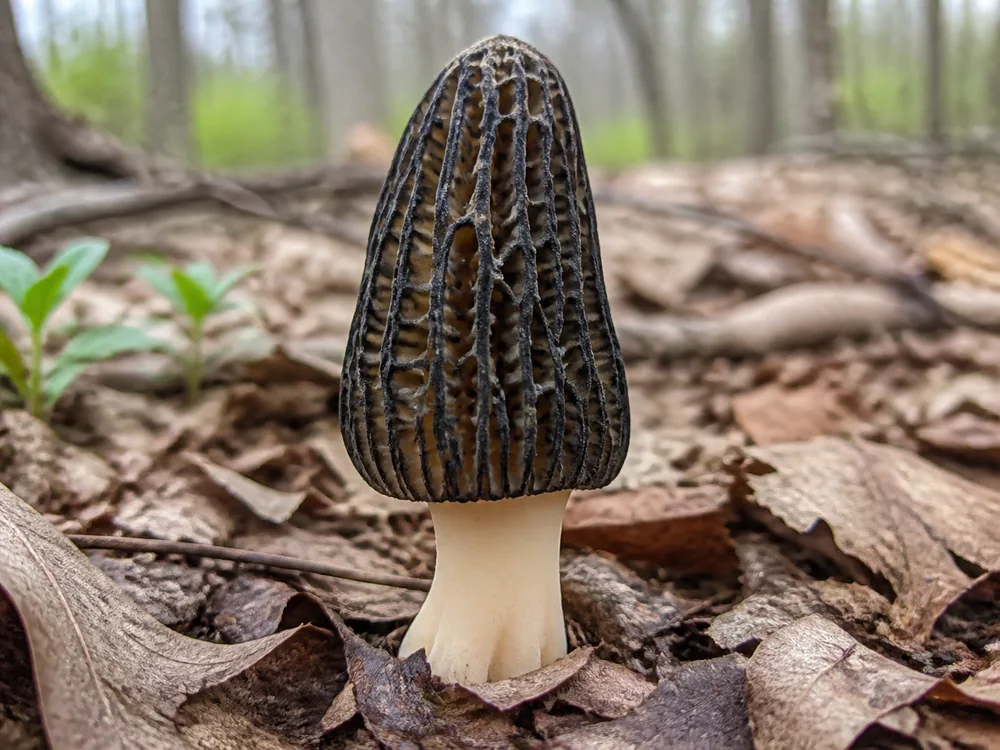 First upBlack morelPushes while the trilliums are still short
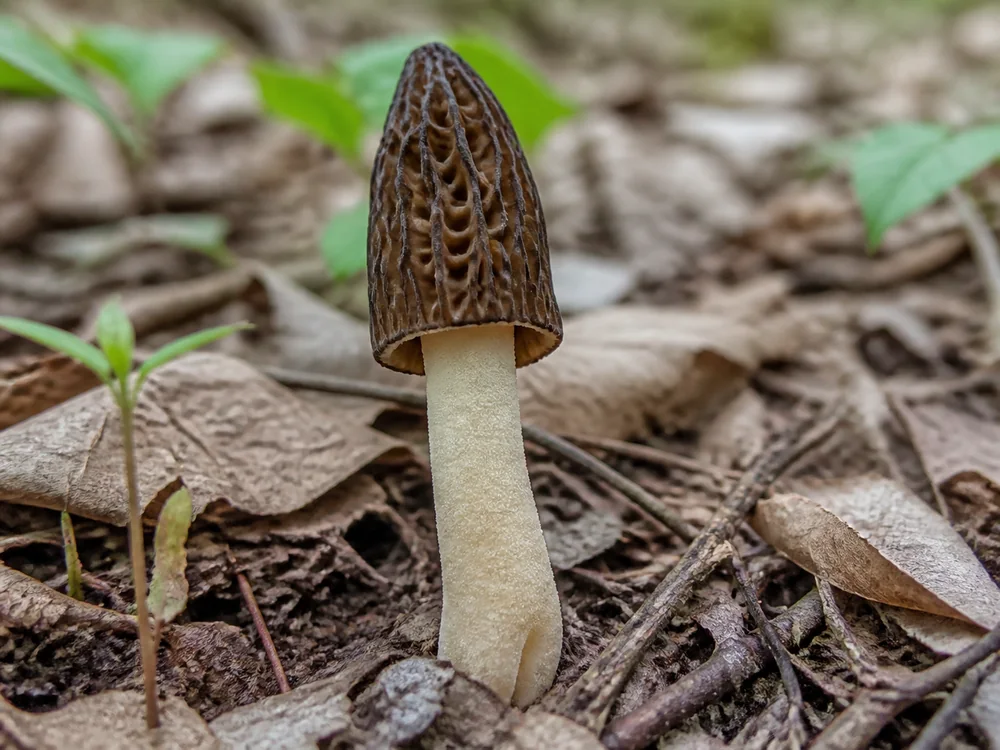 Middle of the runHalf-free morelCap hangs loose below where it joins the stem
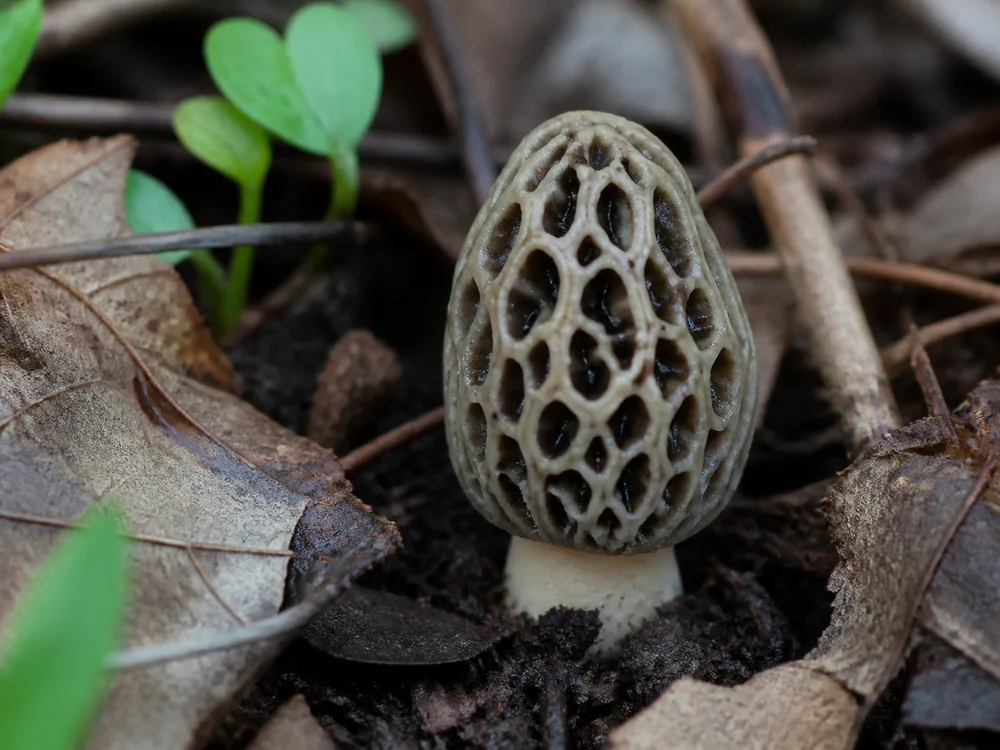 Early to middleGray morelThe young form most people find first
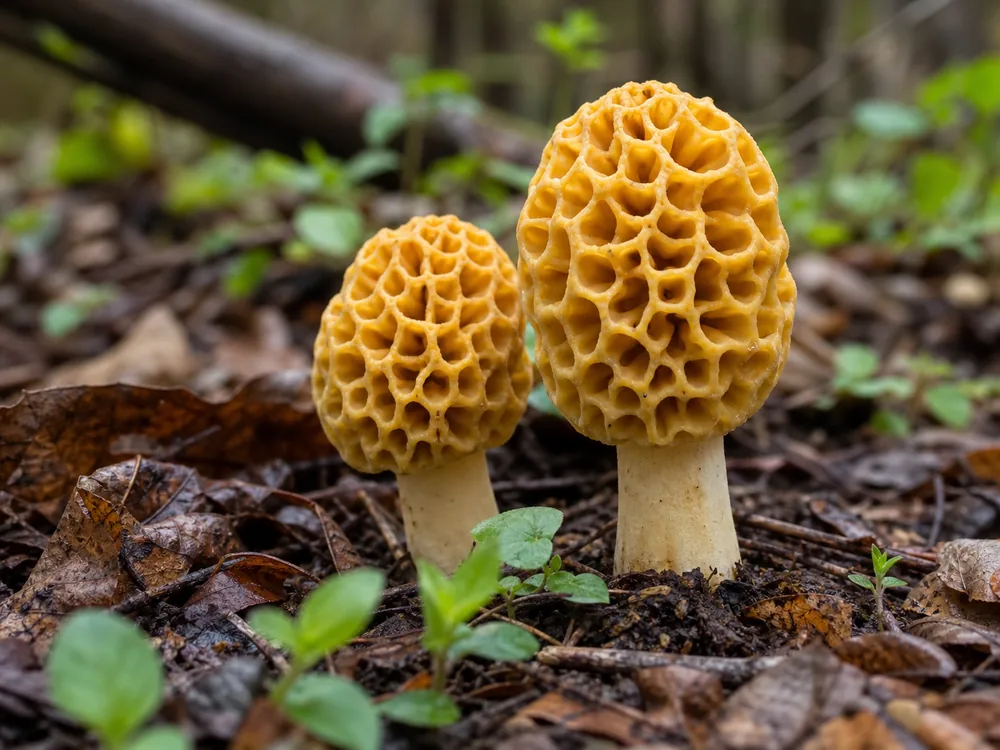 Last and largestYellow morelRuns into early June in the north
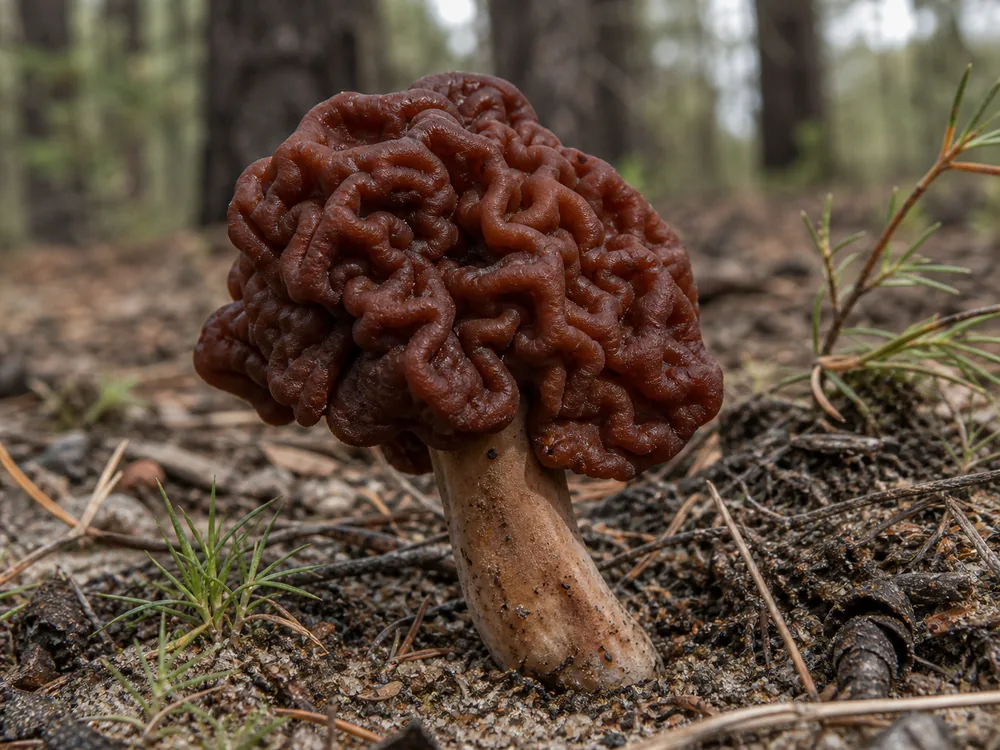 Same weeks, never edibleFalse morelWrinkled and lobed, with no honeycomb pits
Half-frees in the bag are the useful signal, because they mean the biggest yellows are still ahead of you.
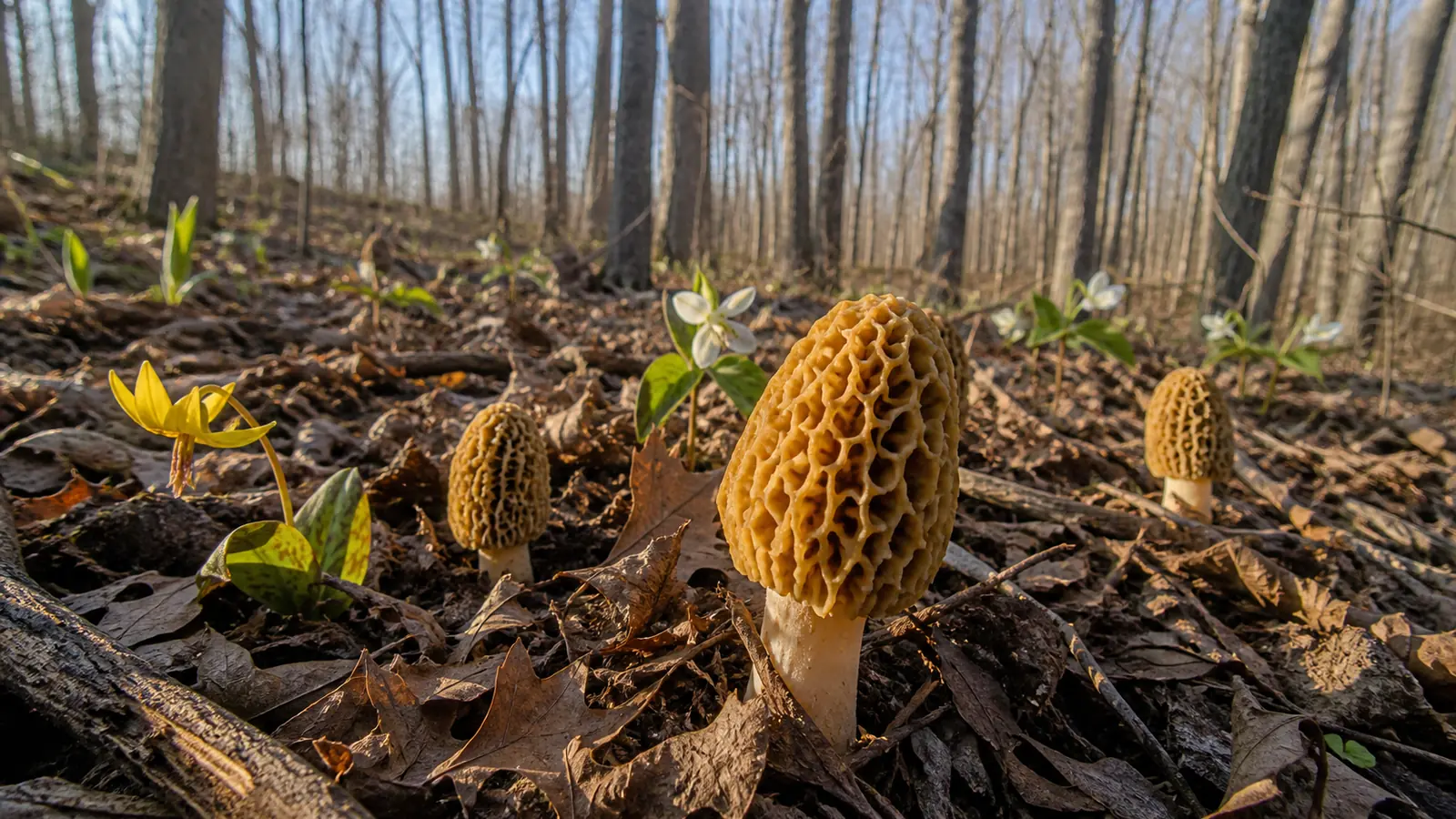
MSU Extension gives the sequence as black morels first, then gray and yellow, with half-free morels mixed through the middle. True Michigan morels commonly stand two to six inches tall on a cream-colored stalk.
Black morels are the ones that catch people out. They push while the woods still look like winter, so a hunter waiting for green undergrowth has already lost the first week of their own season.
Half-free morels are the honest midpoint of the run.
The cap attaches around its upper portion and the lower edge hangs loose like a skirt, which is a different structure from the fully joined cap of a yellow.
If every morel you find is a yellow with drying edges, your local run is closing. That is the week to drive an hour north instead of walking the same woodlot again.
ForagingMushroom foraging laws in the UK: what is actually legalWhere morels grow in Michigan woods
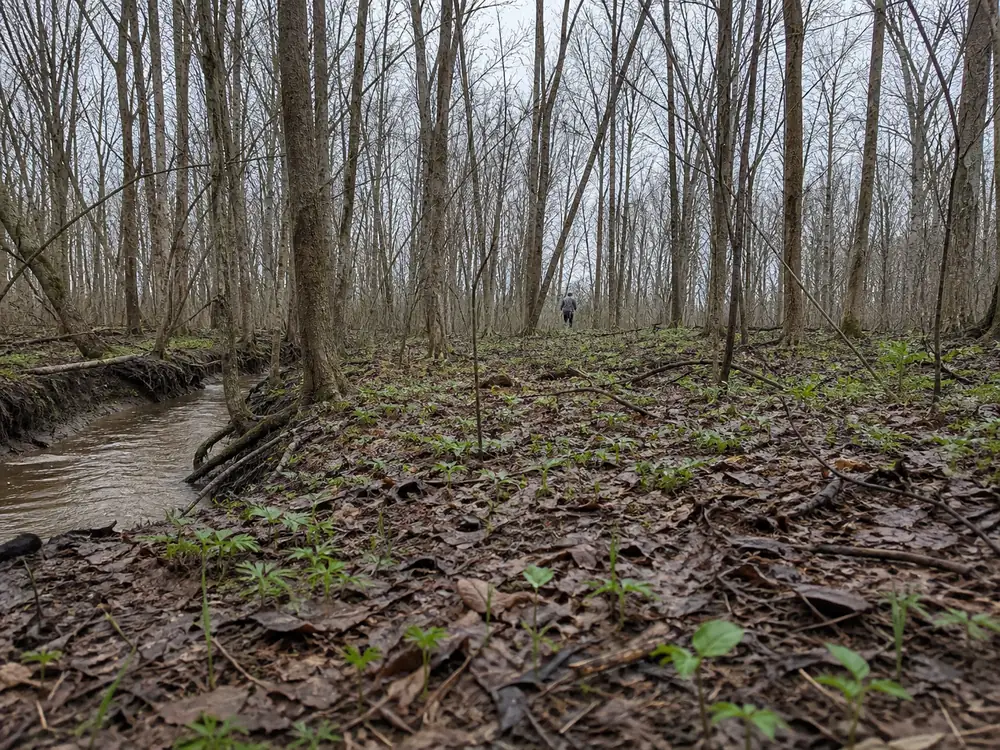
Walk trees, not acres. Across most of Michigan the highest-value target is a dying or recently dead American elm, and MSU Extension notes that morels frequently associate with elm, especially in the spring after Dutch elm disease kills it.
An elm in that one productive year reads clearly from thirty feet away.
The bark slips off in long strips, the crown is bare, and the root flare sits open above the leaf litter.
Ash redrew this map. Emerald ash borer was first found in southeastern Michigan in 2002, and the standing dead ash it left behind gives much of the state a second host worth circling.
The rest of the Michigan list is worth walking in roughly this order.
- Old farm orchards, especially apple trees left standing at an abandoned homestead
- Aspen and poplar stands on sandy ground through the northern Lower Peninsula
- Beech-maple and oak forests, which MSU Extension names as reliable morel ground
- Creek bottoms and river floodplains, where soil stays damp after the uplands dry
Habitat only helps once you know the mushroom, and Michigan's true morels are the same handful of species from Monroe to Ontonagon.
An elm's productive window is short. The tree usually gives one or two strong springs after it dies, then the flush moves on, so a stand that carried you two seasons ago can be finished while the trunk is still standing.
That is why a Michigan route needs new dead trees added to it every spring. Marking five reliable elms and returning to them for a decade is how a good spot quietly becomes a bad one.
Terrain narrows the search further.
South-facing edges warm first in April, then the advantage flips to shaded bottoms by late May once the open ground has dried out.

Burn sites run on their own calendar
A fire resets the ground, and MSU Extension notes that burned areas of every size, from a campfire ring to a forest fire, frequently produce heavy morel crops. In northern Michigan that usually means black morels in jack pine country the spring after the burn.
The DNR removed the hard part of this. Its Mi-Morels map plots recent burns on state land, so finding last year's fire is no longer a matter of rumor.
- Red dots mark wildfires
- Orange dots mark prescribed burns
- Brown squares mark DNR customer service centers
- The map favors burns larger than about ten acres from the previous year
Burn ground is slow walking and deserves an honest warning.
Loose ash, blowdown, and standing dead timber make the footing bad, and a burn that looked ideal on the map can produce nothing at all.
Burn ground also has a short life. The heavy crop generally arrives the first spring after the fire and falls away sharply from there, so a two-year-old burn is a much weaker bet than a fresh one.
What you may carry out is settled law rather than etiquette. Morels picked on Michigan public land are for personal use and may not be sold, and the DNR asks hunters to cut stems with a knife, carry finds in a mesh bag, and never rake the forest floor.
Selling changes the picture completely, because commercial wild-mushroom sale in Michigan runs through state forager certification rather than any hunting permit. Federal, county, and private ground each set their own terms, and the wider shape of US foraging law is worth reading before a long drive.

What to check before you eat a Michigan morel
False morels come up in the same Michigan woods, in the same weeks, and that overlap is exactly what makes them dangerous.
Warning
Gyromitra and Verpa species share Michigan's morel season and its habitat, and their gyromitrin converts to monomethylhydrazine in the body. Illness begins 6 to 48 hours after the meal, untreated cases have progressed to seizures and coma, and Michigan health guidance is that no false morel should be eaten.
The cap surface is the first read. Michigan health guidance describes true morel caps as pitted with hollows, while a false morel is ridged, wrinkled, waved, or smooth without any real pits.
A lengthwise cut adds evidence but cannot settle identification by itself. A true morel sliced from cap tip to stem base is one hollow chamber, and a false morel is filled with cottony tissue or broken into separate chambers.
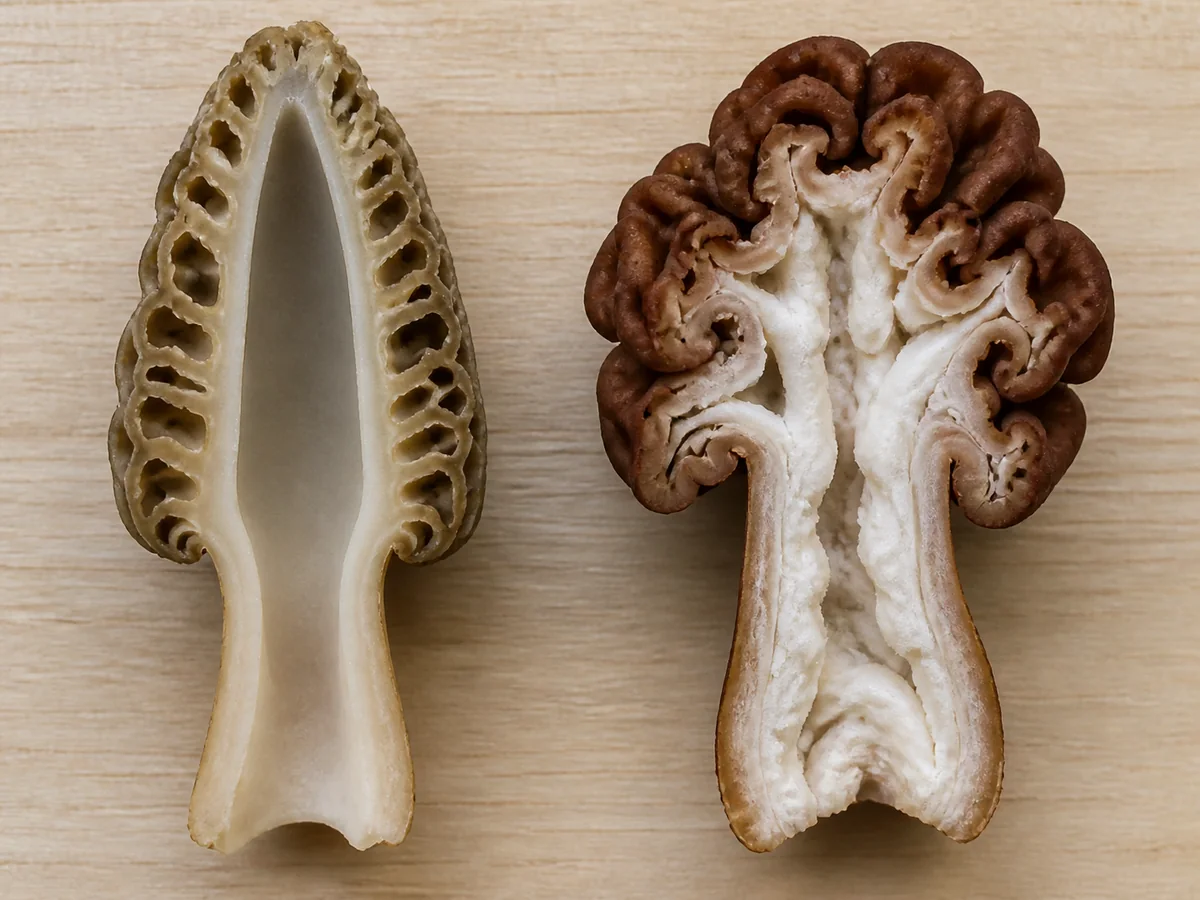
Attachment is the third check on a true morel.
The bottom edge of the cap joins the stem near its base rather than hanging free.
Verpa bohemica adds a second problem in Michigan, because it comes up early and fools people who are rushing. Its cap hangs from the very top of the stem like a thimble, so the edge is loose almost the whole way around rather than joined halfway down as on a half-free morel.
Correct identification is not the last hazard. MSU Extension warns that raw morels cause stomach upset even when the mushroom is right, and a few people react badly to well-cooked morels that everyone else at the table tolerates.
Cook a small portion the first time you eat morels from a new spot, and skip alcohol with that meal. If symptoms arrive hours later rather than minutes later, treat that delay as the warning it is and call Poison Control at 1-800-222-1222.
Sources & References
- May Is Morel Month in Michigan (E2755), Michigan State University Extension
- Morel Mushroom Hunting, Michigan Department of Natural Resources
- False Morels vs. True Morels, Michigan Department of Health and Human Services
- Identifying Wild Michigan Mushrooms That Are Safe to Eat, Michigan State University Extension