Every item on a mushroom foraging gear list does one of three jobs: keeping a find identifiable, keeping it edible, or keeping you out of trouble. A basket is worth carrying because it stops crushing and lets warm air escape, not because it reseeds the woods. A twenty-nine year Swiss study found that neither cutting nor pulling reduced future harvests, while trampling the forest floor cut fruit body numbers by about thirty percent, so the knife is a cleaning tool rather than a conservation one. Buy a hand lens first; most of the rest is already in the house.
Most foraging gear lists are ranked by price, which tells you nothing about whether you need any of it.
Rank them by job instead. Every item that keeps turning up on those lists does one of three things, and once you can name the job you can substitute the item, or skip it.
What is foraging kit actually for?
Three jobs. Nothing else on any gear list is doing real work.
Spelled out, those three jobs are narrower than they sound:
- Keeping a find identifiable means it arrives whole, unmixed, and still attached to where it grew and what it grew under.
- Keeping a find edible means it is not crushed, not sweating, and not sitting next to something that is rotting.
- Keeping you out of trouble means water, covered legs, a charged phone and somebody who knows where you went.
Carry what you need for the walk as well as the harvest, including protection from weather and a way to find your route back.
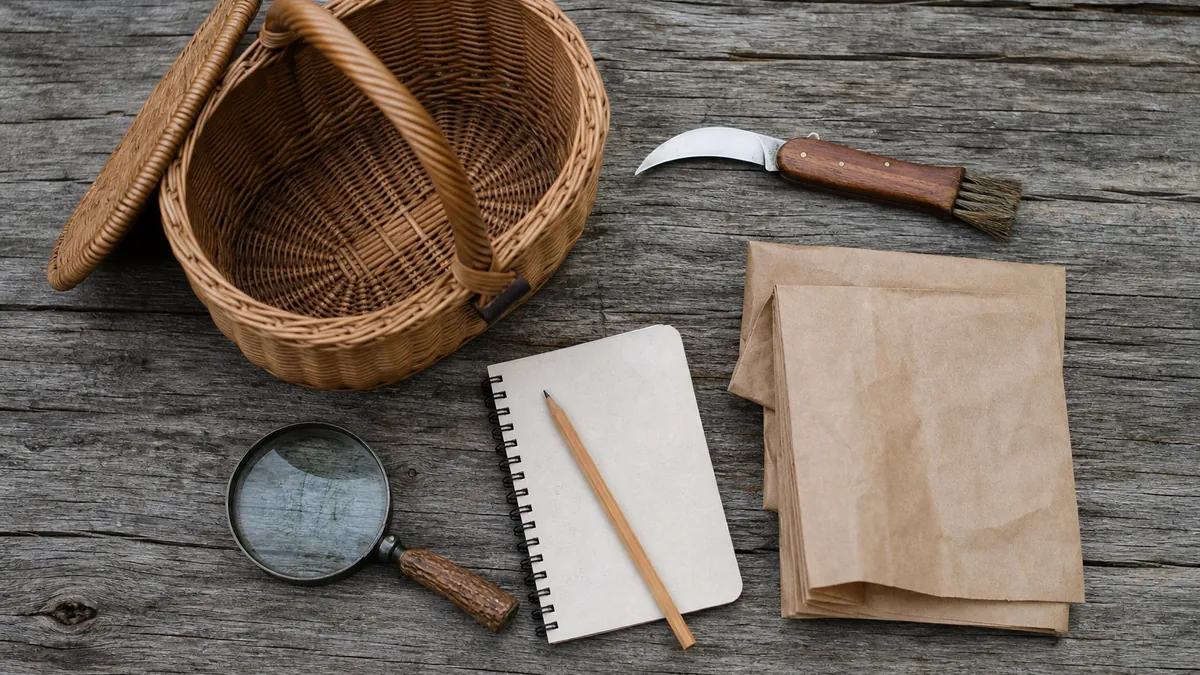
| Item | Job it does | Free substitute |
|---|---|---|
| Basket or rigid box | Keeps finds edible and intact | Any open box or a small crate |
| Paper bags | Keeps finds identifiable and apart | Lunch bags from a kitchen drawer |
| Knife | Keeps soil out of the basket | Any paring knife |
| Hand lens | Keeps a find identifiable | None worth having |
| Phone camera | Keeps the record | Already in your pocket |
| Water and long socks | Keeps you out of trouble | Already in the house |
That middle column is the whole argument. The third one is why most beginner shopping turns out to be unnecessary, since almost every row has something in it already sitting in a kitchen drawer.
Anything that does none of those three jobs is a preference rather than a requirement. That is not an argument against owning it, only against buying it before you have been out a few times.
ForagingMushroom foraging laws in France: what the five liter rule meansWhy a basket rather than a bag?
For two solid reasons, plus a third that people repeat constantly and nobody checks.
The solid ones are crushing and air: a rigid container means the bottom layer arrives whole rather than as paste, and an open weave lets warm damp air leave instead of collecting.
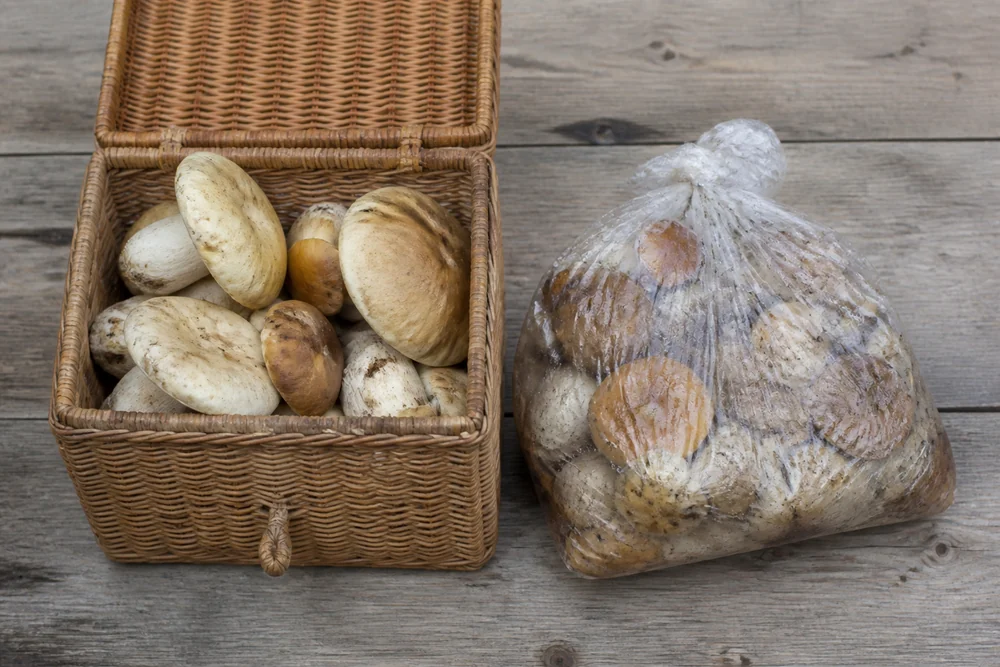
The third reason is the one you will hear most often, which is that a basket reseeds the woods as you carry mushrooms through them. That claim is folklore rather than a finding, and there is no study behind it.
Choose a basket for the practical handling benefits rather than an unsupported claim about spore dispersal.
Any open rigid container does the same two jobs, whether that is a crate, a bread basket or a cardboard box in the back of a car.
Weight is the part nobody mentions. A full basket of boletes is heavier than it looks by the second mile, and a shallow container carried on the forearm is easier to live with than a deep one carried by a single handle.
Tip
A shallow basket beats a deep one for the same reason a shallow tray beats a deep one at home. Depth is what crushes the bottom layer, and a wide shallow container carries the same weight without stacking it.
Does it matter whether you cut or pull?
This is the oldest argument in foraging, and it has actually been tested.
A Swiss study ran from 1977 to 2003 across two forest sites, systematically harvesting fungi and comparing methods. Neither cutting nor pulling reduced future fruit body yields, and neither reduced species richness over twenty-nine years.

What the same study did find is the part nobody argues about. Trampled plots produced roughly thirty percent fewer fruit bodies than untrampled ones, every year of the study.
So the knife is not a conservation tool and never was, and its real job is keeping soil out of the basket so the rest of the haul stays clean.
Check the named source and the conditions behind those four figures.
That result is worth sitting with, because it inverts the usual argument. The thing foragers police in each other turns out not to matter, and the thing nobody mentions, which is a group of people walking in circles around a productive patch, is the measurable one.
There is a second reason the trampling number is the useful one. A knife decision is made once per mushroom and a route decision is made once per visit, so the route is the choice with real leverage over a season.
The practical consequence is a habit rather than a purchase. Stay on hard ground where you can, approach a patch from one side rather than circling it, and stop worrying about which end of the mushroom you touched.
ForagingMushroom foraging laws in Germany: protected species and small quantitiesWhy carry separate bags inside the basket?
Because a mixed basket forgets exactly the things you most need it to keep.
Tip a mixed basket out at home and you have lost which mushroom came from under which tree. For anything you are not completely sure about, that is exactly the information that would have settled it.
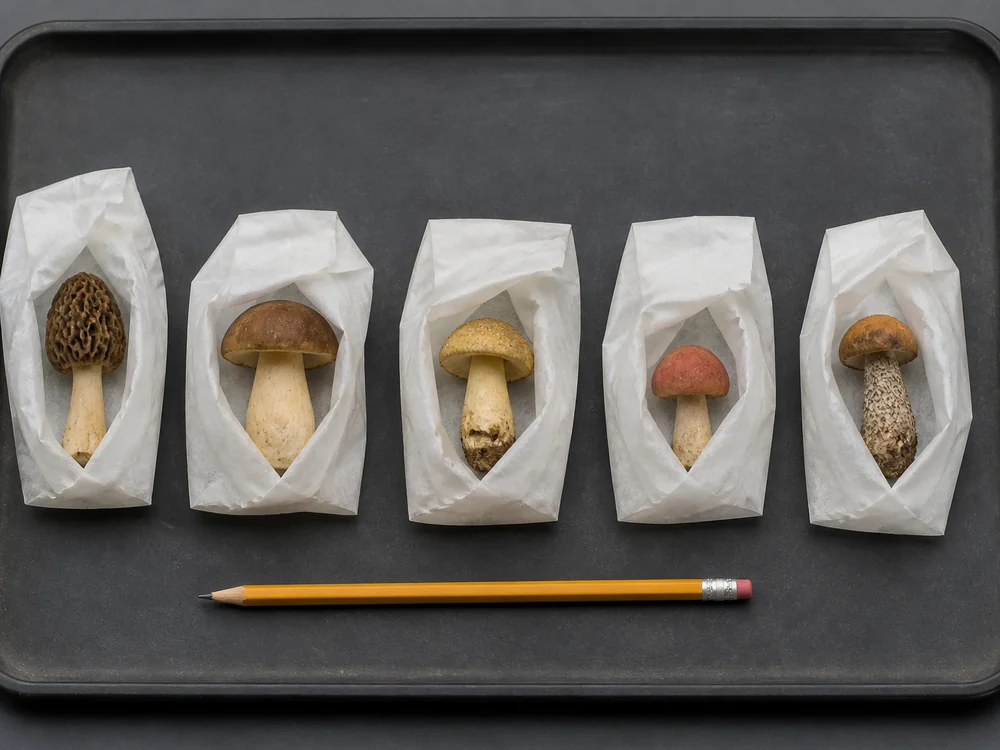
Four habits make the whole thing work, and none of them cost anything:
- One bag per species
- Keeps an identification checkable after the walk.
- One bag per patch
- Keeps the host tree attached to the find.
- A pencil line on the bag
- Costs nothing and survives being wet.
- One bag for the doubtful
- Keeps an uncertain find away from a certain one.
One more thing belongs in the same category as the bags, which is a pencil rather than a pen. Ink stops working on a wet paper bag at exactly the point in the afternoon when you most want to write on one.
The second reason is contamination in the ordinary sense. One soft, wet or infested mushroom rolling loose will mark whatever it touches, and separating them means losing one bag rather than a basket.
The bag habit also changes how you pick, because reaching for a new bag is a half second pause in which you ask what this one actually is.
Paper is what makes this work rather than plastic. A paper bag breathes, takes a pencil note, and goes straight onto the kitchen table as a sorted pile when you get home, which is where storing a foraged basket picks the job up.
What do you need to identify something in the field?
Less than you think, though one item on the list has no substitute worth having.
A ten times hand lens is the cheapest thing on any foraging list and the one that changes the most. It resolves whether gills are attached or free, whether a surface carries the fine pores of a bolete or the blunt ridges of something else, and whether a stem is truly smooth.

Ridges against gills is the standard case, and the chanterelle and jack-o-lantern comparison is the one worth having looked at before you need it. A golden chanterelle has blunt ridges that are part of the cap, and at arm's length that looks identical to the thin separate blades of the things it is confused with.
Every item on that list is something a phone can capture, provided you use it as a camera rather than as an oracle, because an identification app generates suggestions and a suggestion is not a decision.
Digging the base out is the habit most beginners never form, and it is the one that matters most. A cap and stem photographed where they stood will not show a volva, a bulb or a rooting base, and those are precisely the features that separate a good dinner from a hospital admission.
Habitat, host tree, smell and what the flesh did when it was cut are all things you will not remember by the evening, and none of them are recoverable from a photograph.
ForagingMushroom foraging laws in the UK: what is actually legalWhat goes wrong on an ordinary walk?
Not mushrooms. That is why the second half of any honest kit has nothing to do with them.
Foraging takes you off paths by definition, because the paths are where everybody else already looked. That means wet ground, deep litter, brambles and standing water, all of it while you are looking down.

Four things cover almost all of it, and none of them are foraging equipment:
- Water, because a slow walk in humid woodland dehydrates people who feel like they are barely moving.
- Long socks pulled over trousers, which is the cheapest tick measure there is.
- A charged phone, for the map rather than for the camera.
- A first aid pouch small enough that you never leave it behind, holding plasters, tweezers and tape.
Ticks are the most common thing foragers actually come home with, and knowing the symptoms worth acting on matters for the basket in the same way. Long socks over trousers and a check when you get in cost nothing and cover most of it.
Daylight is the other one. Hours spent looking at the ground is exactly how people lose track of both the time and the direction they came from, and a phone with charge left in it solves both.
Warning
Tell somebody where you are going and roughly when you will be back. It is free, it takes ten seconds, and it is the single most useful item in this entire article.
What should you wear?
Clothing is the part of a kit list that gets skipped. It does more of the third job than anything you can buy.
Waterproof boots come first, because productive ground is wet ground almost by definition and there is no version of this where you stay on dry paths.
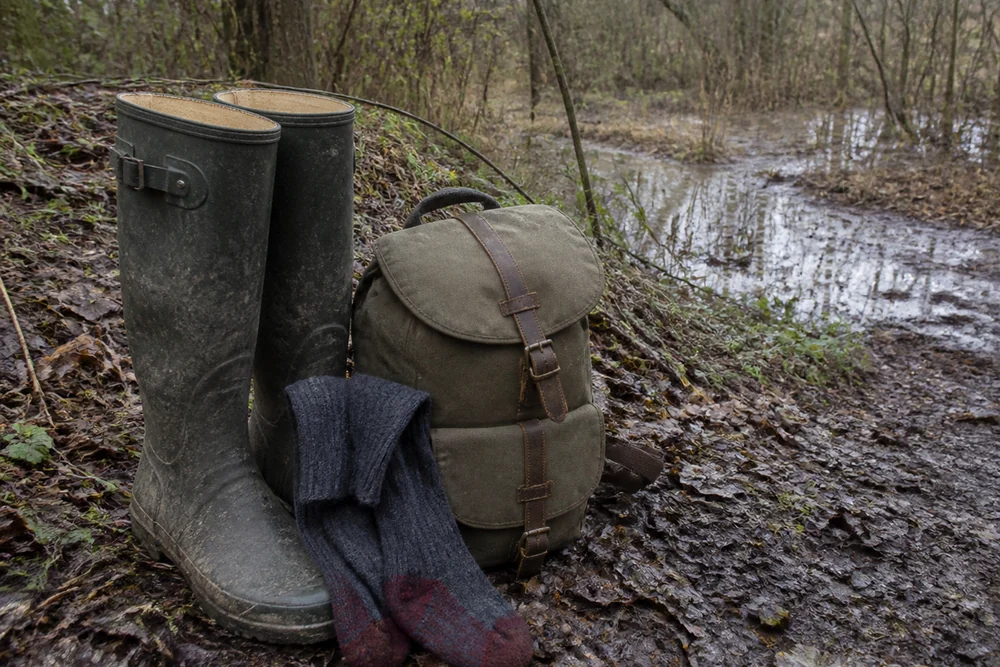
Long trousers tucked into socks do the tick work, and they do it better than any spray because they are a barrier rather than a deterrent.
Layers matter more here than in ordinary walking. You cover very little ground and stand still for long stretches, which cools you in a way a steady walker never experiences.
Wear boots you are willing to get properly wet
Tuck trousers into long socks in tick country
Carry one more layer than a walk of the same length would need
Wear anything you would mind tearing on brambles
Rely on repellent alone where ticks are common
Dress for the temperature at the car park, which is not the temperature under a closed canopy
Cotton is the material to avoid in all of this, because it holds water against you for hours and a foraging pace never generates enough heat to dry it out again.
Gloves are the one genuinely optional item. They help in brambles and nettles and they cost you the fingertip feel that tells you whether a cap is firm or going soft.
What should you buy first?
Almost nothing, in this order.
Buy the hand lens. It costs less than a coffee, there is no substitute for it, and it is the item that most changes what you can determine while standing in a wood.
Everything else on a first season list is either in your kitchen or can wait:
- Already yours: a paring knife, paper lunch bags, a pencil, a water bottle, long socks and a phone.
- Worth a small spend: a hand lens, and a shallow rigid container if you have nothing open in the house.
- Can wait a season: a specialist curved knife with a brush, a dedicated foraging pack, and a dehydrator for drying a haul.
- Can wait indefinitely: anything sold as a foraging kit in one box.
Key takeaway
The order is lens, container, bags, knife. A beginner who buys in that order spends very little and never carries something whose job they cannot name, which is the whole point of reading a gear list by function.
One thing genuinely is worth spending on later, once you know you will keep going. A dehydrator changes what a good day is worth, because it turns a heavy autumn into a shelf instead of a fridge full of things that have to be eaten this week.
Everything else on the specialist end of the market is convenience. A curved knife with a brush in the handle is a nice object and does exactly what a paring knife and a dry pastry brush already do.
None of this makes the walk work. What to look for and how to be sure of it is the beginner's routine, and the kit only exists to keep that routine honest.
Sources & References
- Mushroom picking does not impair future harvests: results of a long-term study in Switzerland Peer reviewed long-term study by Egli and colleagues in Biological Conservation, used for the finding that systematic harvesting from 1977 to 2003 reduced neither future fruit body yields nor species richness whether mushrooms were cut or pulled, and for the separate finding on trampling.
- Mushroom picking does not impair future harvests (Conservation Evidence summary) Independent research summary used to confirm the study design across two Swiss sites and the reported reduction of roughly thirty percent in fruit body numbers on trampled plots.
- Tickborne Diseases: Preventing Tick Bites (US Centers for Disease Control and Prevention) Public health agency guidance used for the tick prevention measures recommended here, including covering the lower leg in tick habitat and carrying out a full body check after time in leaf litter and undergrowth.