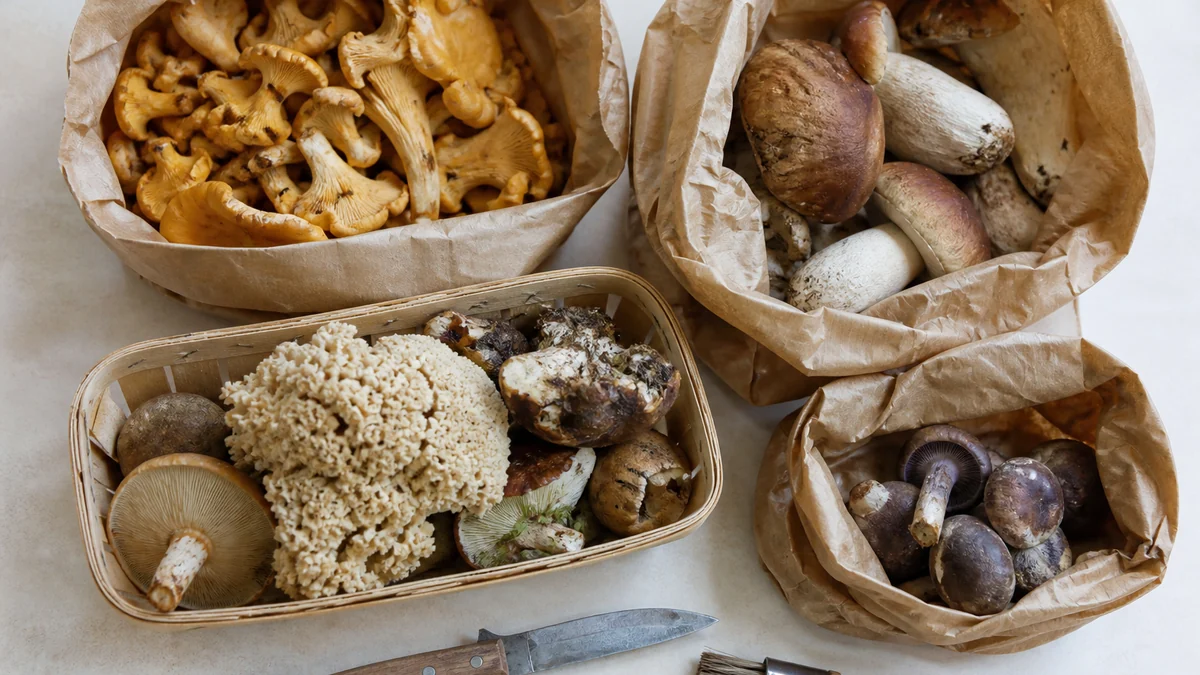
German federal nature protection law allows taking wild fungi carefully in small quantities for personal use. Ceps, chanterelles, morels and several boletes are specially protected species, and a basket is lawful because the species protection ordinance carries an exemption for small amounts for own use. Truffles and Caesar's mushroom sit outside that exemption. Practice has settled at roughly 500 grams to two kilograms per person per day, and collecting is prohibited in nature reserves.
German forests are open to walk in, which is why almost everybody assumes the mushrooms are open too.
The rules run the other way round. The species most people are actually hunting are legally protected, and a basket of chanterelles is lawful only because the protection order carries an exception underneath it.
- The permission
- Federal nature protection law allows taking wild fungi carefully, in small quantities for personal use.
- The protection
- Ceps, chanterelles and morels are among the specially protected species.
- The exemption
- The species protection ordinance allows those to be taken in small amounts for own use.
- The exceptions
- Truffles and Caesar's mushroom sit outside that exemption.
- The working figure
- Practice has settled between roughly 500 grams and two kilograms per person per day.
Is mushroom picking legal in Germany?
Yes, with a condition attached to every part of it.
Federal nature protection law permits anybody to take wild fungi from the wild carefully and in small quantities for personal need, at places that are not subject to an entry prohibition.
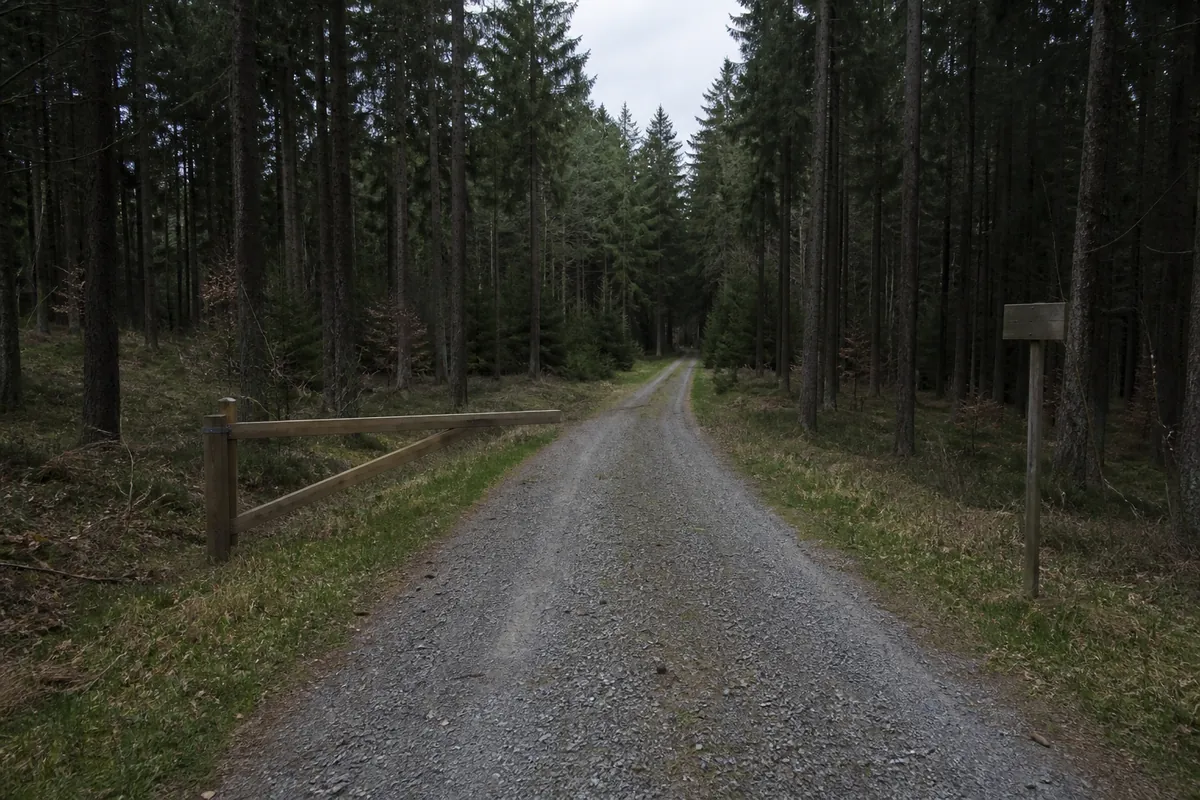
Those are genuinely two permissions, and they come from different statutes. Entry to forests is governed by the individual state forest laws, while picking is governed by federal nature protection law with a species ordinance on top.
So a wood can be open to you and closed to your basket, which is a combination British and American readers rarely expect.
That structure is different again from the French arrangement, where the mushrooms belong to the landowner and a volume presumption does the work. Germany protects the mushrooms rather than the ownership, and then makes room for you.
ForagingMushroom foraging laws in France: what the five liter rule meansWhat does the federal law actually permit?
The wording is short and it sets a standard rather than a number, which is the source of most of the confusion around it.
Taking must be careful, it must be in small quantities, and it must be for personal need. Each of those three words is doing work that a kilogram figure cannot do.
| What the provision allows | What it does not allow |
|---|---|
| Taking fungi by hand for your own kitchen | Raking or disturbing the forest floor |
| A quantity for a meal or two | Filling containers for a freezer season |
| Picking where entry is permitted | Picking where entry is prohibited |
| Personal need, including your household | Selling, or picking to supply anybody |
Put the same distinction the other way round and it becomes a list of habits rather than of categories.
Take mushrooms by hand, for your own kitchen
Stop at a quantity a household will actually eat
Leave small specimens and close the ground back over
Rake or scrape the forest floor to find more
Fill containers for a freezer season
Sell any of it, or pick to supply anybody
Careful taking is the phrase that rules out the tools. A rake through the moss finds more mushrooms and it damages the ground that produces them, which is exactly what the word was put there to prevent.
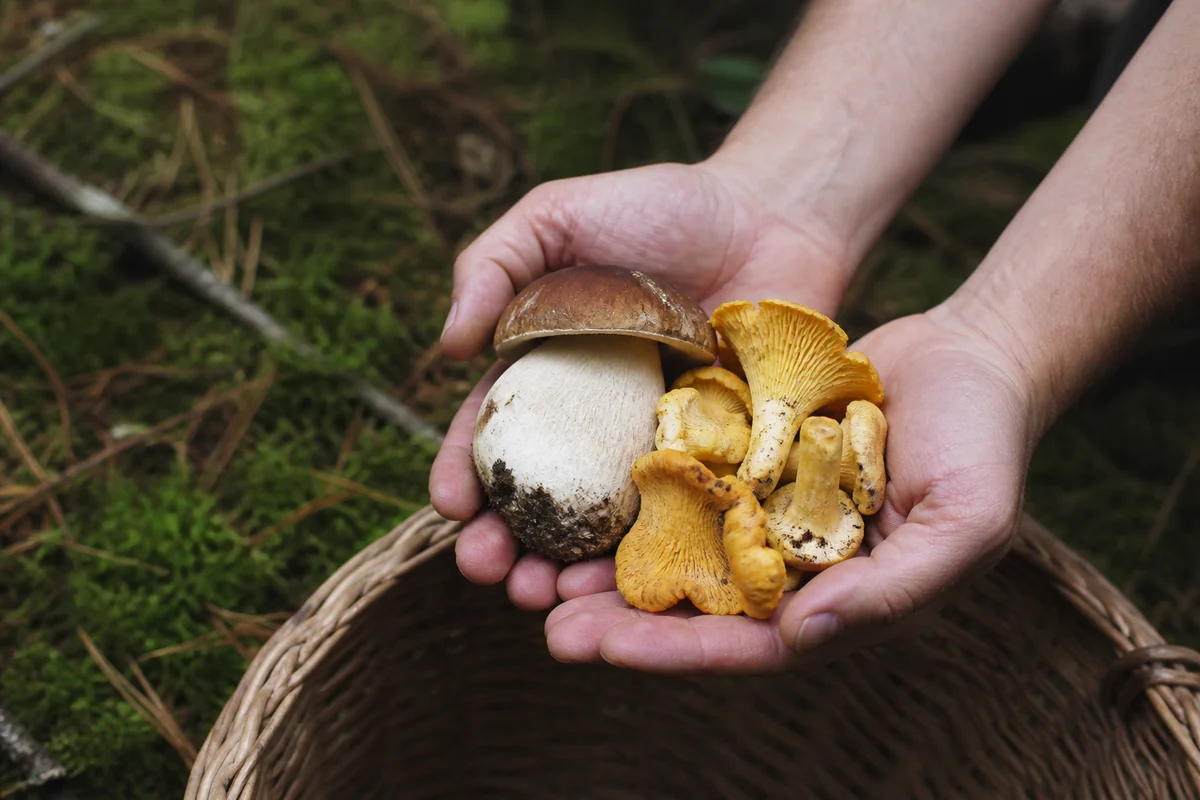
That image is the standard, and it is worth checking where the standard actually comes from.
The rule is commonly called the hand-bouquet rule, after the amount a person can gather in one hand, and that is a picture rather than a measurement.
Personal need covers your own household. It does not stretch to picking for a restaurant, a market stall or a friend who is paying, and none of those becomes acceptable because the amount was small.
The commercial line matters more in Germany than the quantity does, because a commercial picker has left the exemption rather than exceeded a number.
That is worth holding onto if somebody offers to buy what you found. A sale converts a lawful afternoon into something the protection order has no exception for.
Which mushrooms are protected in Germany?
This is the part that reverses what most readers expect.
The specially protected list is not a set of rarities nobody would recognize. It contains the species a German picker actually goes out for.
That inverts the mental model most foragers carry from elsewhere, where protection attaches to the mushroom nobody has heard of and the common edibles are free.
The reason is collection pressure rather than rarity. A species that millions of people go out for every autumn needs a rule whether or not it is scarce, and Germany wrote that rule at the species level.
It is a defensible way to do it. The alternative is a national quantity that ignores which mushroom is in the basket, which is what most other countries ended up with.

- Ceps, including the porcini group
- Chanterelles
- Morels
- Birch bolete and orange birch bolete
- Braetling and Schweinsohr
Two things make that list surprising rather than obvious.
- Every species on it is a common edible rather than a rarity
- Several are the first mushrooms a German beginner is taught
Protection would normally mean hands off. The reason a German basket is lawful at all is an exemption written into the species protection ordinance, which allows these to be taken in small amounts for the picker's own use.
Key takeaway
An exemption is a hole cut in a prohibition. It is narrower than a freedom, because the surrounding rule still exists and the hole is defined by the conditions written into it.
That is a meaningfully different legal position from a general freedom, because a freedom is yours until somebody takes it away and an exemption is a hole in a prohibition.
The practical consequence is about attitude rather than paperwork. Somebody picking under an exemption has a good reason to stay well inside it, because the surrounding rule is a protection order rather than a courtesy.
That framing also explains a difference visitors notice on the ground. German pickers are often visibly careful about leaving small specimens and covering the ground back over, and the habit is downstream of the legal position rather than of politeness.
None of the listed species is rare in the ordinary sense. They are protected because they are heavily collected, which is a different reason from scarcity and produces a different rule.
Which mushrooms may not be picked at all?
Two species fall outside the exemption.
Truffles are the first, and they are protected without the personal-use hole underneath them, so the quantity argument never begins at all. German truffles are also genuinely uncommon, and the species that do occur have attracted enough interest that the protection is not theoretical.
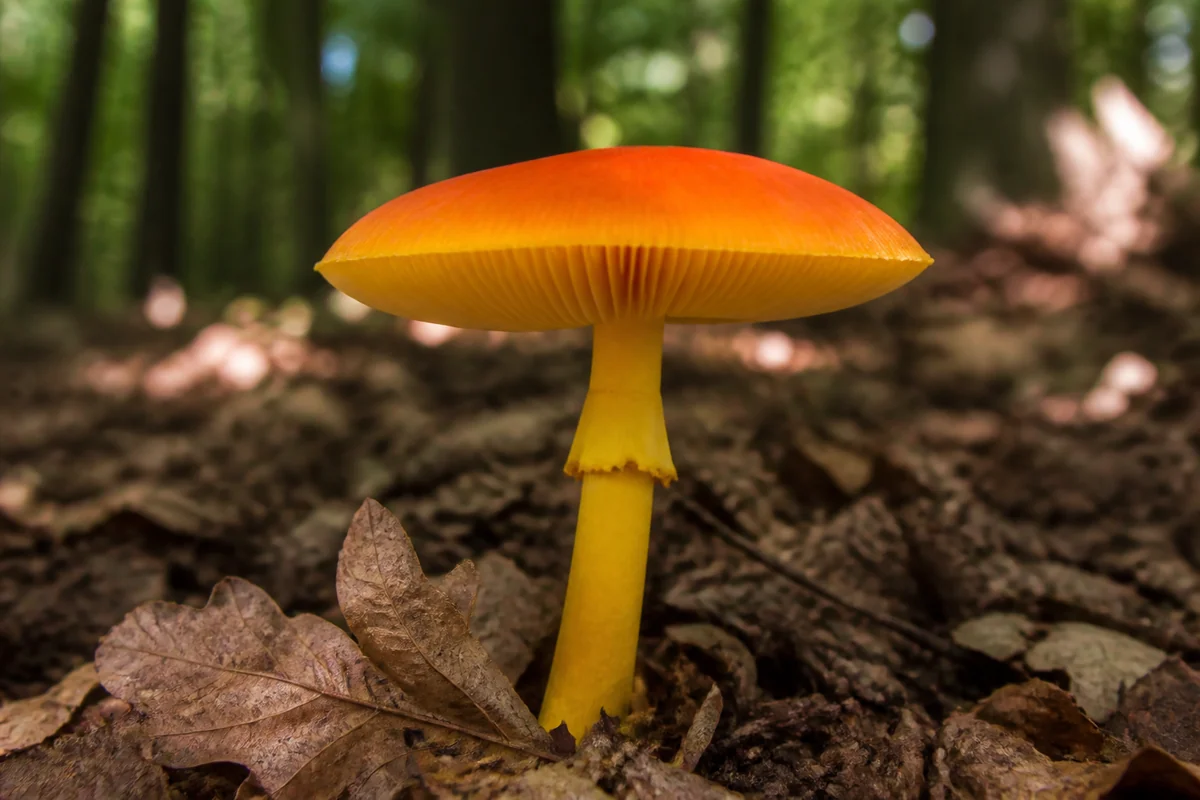
The second is Caesar's mushroom, which is common enough around the Mediterranean to be a market species and rare enough in Germany to be protected outright.
Warning
Protected and prohibited are not the same word. A protected species with an exemption may be picked in small amounts for your own use, and a protected species without one may not be picked at all, however few you take.
Check the exceptions even if neither species is a familiar find.
It is worth knowing anyway, because meeting one is exactly the moment a picker reaches for a basket without thinking. A striking orange Amanita in a German oak wood is a photograph and a record rather than a find.
ForagingMushroom foraging laws in the UK: what is actually legalHow much counts as a small quantity?
The honest answer is that the statute does not say. The number everybody quotes comes from practice rather than from the text.
That is unusual enough to be worth pausing on. A reader who searches for a German mushroom limit will find a confident figure on every page, and none of those pages is quoting a law.
The gap between the first two figures is the whole problem, because it is a factor of four and it is not written down anywhere binding.
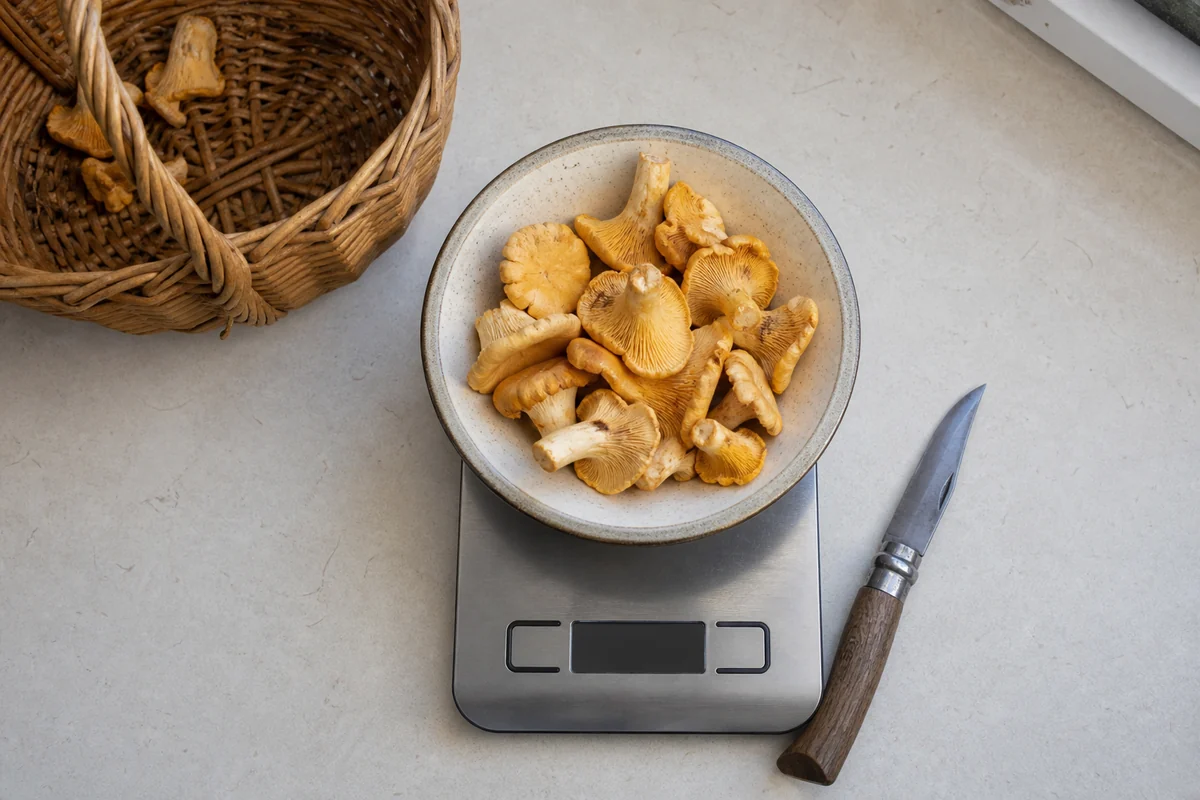
Weighing a single batch at home is worth doing once. Most pickers overestimate what they carry, and a basket that felt substantial in the wood is often well under a kilogram on a scale.
What has developed is a working range of roughly 500 grams to two kilograms per person per day, and the states interpret the same federal wording differently, so the figure that applies to you depends on where you are standing.
That variation is not a loophole. It reflects the fact that a qualitative standard was written on purpose, so that a forest under pressure and an empty one are not held to the same number.
Going past the working range does not automatically produce a fine.
What it does is remove the easy answer, because a picker with four kilograms is no longer obviously within a rule that is defined by modesty. The burden of looking reasonable moves from the ranger to the picker.
Reported penalties reach five thousand euros, and serious breaches involving protected species carry criminal exposure rather than an administrative fine.
Those upper figures are not what an ordinary Sunday looks like. They exist for organized collecting, which in practice means several people, crates and a vehicle, and that is the pattern the numbers were written for.
A single walker with a basket is in a different conversation entirely, and the worst realistic outcome is being asked to tip some of it back out.
What are people actually picking in Germany?
Three names carry most of the German season, and all three sit inside the personal use exemption rather than outside it.
Steinpilze are the prize, coming up under spruce and beech from late summer, and they are the species the small-quantity argument is usually about.
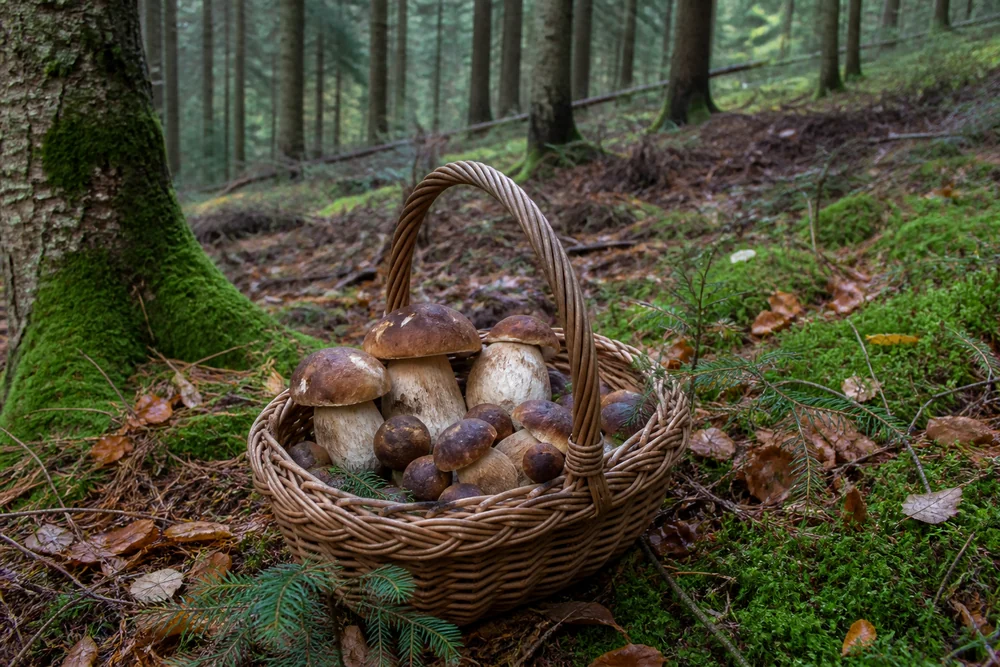
Maronenröhrlinge are the workhorse of a German autumn. They are commoner than Steinpilze and far more likely to fill a basket, and Golden Pfifferlinge run through the summer on the same ground.
Anything on that list is worth carrying the right basket and lens for, since none of it is settled by a phone photograph.
Notice what is not on that list. The two species this page has already excluded are not obscure edge cases, and a picker who works through the list above will never approach either of them.
That is the ordinary German experience of this law, in which a protection regime that sounds severe on paper and touches almost nothing that anybody actually carries home.
ForagingMushroom foraging rules in Colorado: permits, limits and closed groundWhere is picking prohibited outright?
Some ground removes the whole discussion. It is signposted, which is more than can be said for most of the rules on this page.
Collecting is prohibited in nature reserves. The exemption, the working range and the hand-bouquet standard all stop at that boundary, and the boundary is marked at the entrances.
Four things are worth reading before you start looking down rather than ahead.
Three things end the discussion outright rather than limiting it.
- A nature reserve or national park boundary
- An entry prohibition posted for a compartment
- Enclosed private ground that is not open forest
National parks work the same way as reserves and are usually more strictly managed, which catches visitors who have driven a long way to reach one.
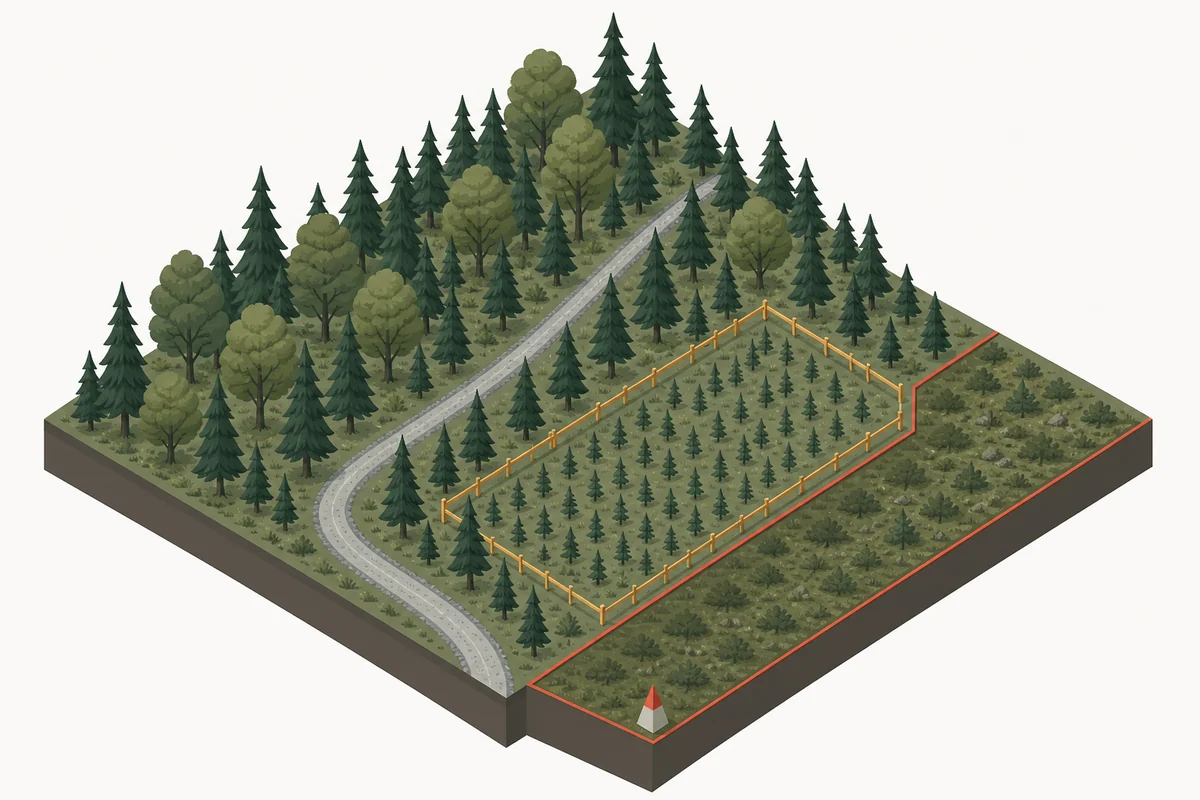
The softer cases are worth a moment. Fenced private woodland and young plantations are often closed to entry rather than to picking, which reaches the same result by a different route.
A compartment can also be closed temporarily for forestry work or for wildlife reasons. That closure is posted rather than mapped, so it is only visible to somebody who reads the entrance rather than the app.
Timber operations are the common case in autumn, and they close ground for days at a time in exactly the weeks a picker most wants to be there.
How does Germany compare with its neighbours?
Germany starts from a restriction where its neighbours start from ownership or from freedom, and the outcome is closer than the wording suggests.
French forest law asks whose forest this is and then sets a volume, while Germany asks what species this is and declines to set a number at all. British law asks neither and looks at purpose instead.
What the three have in common is that none of them says anything about the basket once it is indoors, and in German kitchens a Steinpilz haul is worth more dried than fresh.
A picker who learns one of the three and travels will get the first question wrong every time. The answers converge on ordinary personal picking, and they diverge sharply the moment anything is unusual about the species, the quantity or the ground.
What should you check before a German mushroom walk?
The check is short, and it runs in the opposite order from the one people actually use.
Start with the ground rather than with the basket. Picking less does not remove a reserve restriction. Check the designation before leaving home.
Four checks cover it, and they run from the ground upward rather than from the basket down.
Then think about the basket. A quantity that a person can carry comfortably in one hand-held container, taken by hand without disturbing the ground, is inside the standard on any reading of it.
Two habits make that easier to hold to. Carry one basket rather than a rucksack, and stop when it is full rather than when the wood runs out.
Neither is a legal requirement, but both can help clarify your plans before a disagreement starts.
The habit that keeps a picker clear is modesty rather than arithmetic. Somebody who takes enough for two meals and leaves the small ones has never had to know which state figure applied to them.
A picker who does all of that has satisfied every layer this page describes without once having to know which state figure applied.
From there the questions stop being German ones. Use the beginner's routine to decide what is worth picking and how to check its identity.
Sources & References
- Pilze sammeln, Rechtsvorschriften (jagdrecht.de) Legal practice summary used for the permission to take wild fungi carefully for personal consumption, the specially protected species list of Steinpilz, Pfifferling, Braetling, Birkenpilz, Rotkappe, Schweinsohr and Morchel with the personal-use exemption, the exclusion of Trueffel and Kaiserling, the practical range of 500 grams to two kilograms, the prohibition on collecting in nature reserves, the governing of forest entry by state forest laws, and the reported fines reaching five thousand euros.
- Wann, wo und wie viel Pilze darf man sammeln (anwalt-suchservice.de) Second legal source used to confirm that the federal provision sets a qualitative standard of small quantities for personal need rather than a statutory weight, and that the states interpret that wording differently.
- Verbotene Pilzarten und Bussgelder (news.de) Consumer reporting used as a cross-check on the hand-bouquet framing, the description of the permitted amount as enough for one or two meals, and the practical quantity figures cited by authorities.