A Germany field plan for tree partners, rain lag, personal-use limits, protected fungi, lookalike evidence, Pilzberatung, and poison response.
Mushroom foraging in Germany usually peaks after dependable late-summer and autumn rain, but the useful season changes with altitude, drought, forest type, and tree partners. The legal limit also comes from personal need, species protection, and the exact forest rule rather than one national kilogram number.
Build the trip around a small tree-and-moisture circuit. Then keep any lawful collection modest, preserve the whole base, and take uncertain material to a qualified Pilzberatung service instead of the kitchen.
Which trees should you search under in Germany?
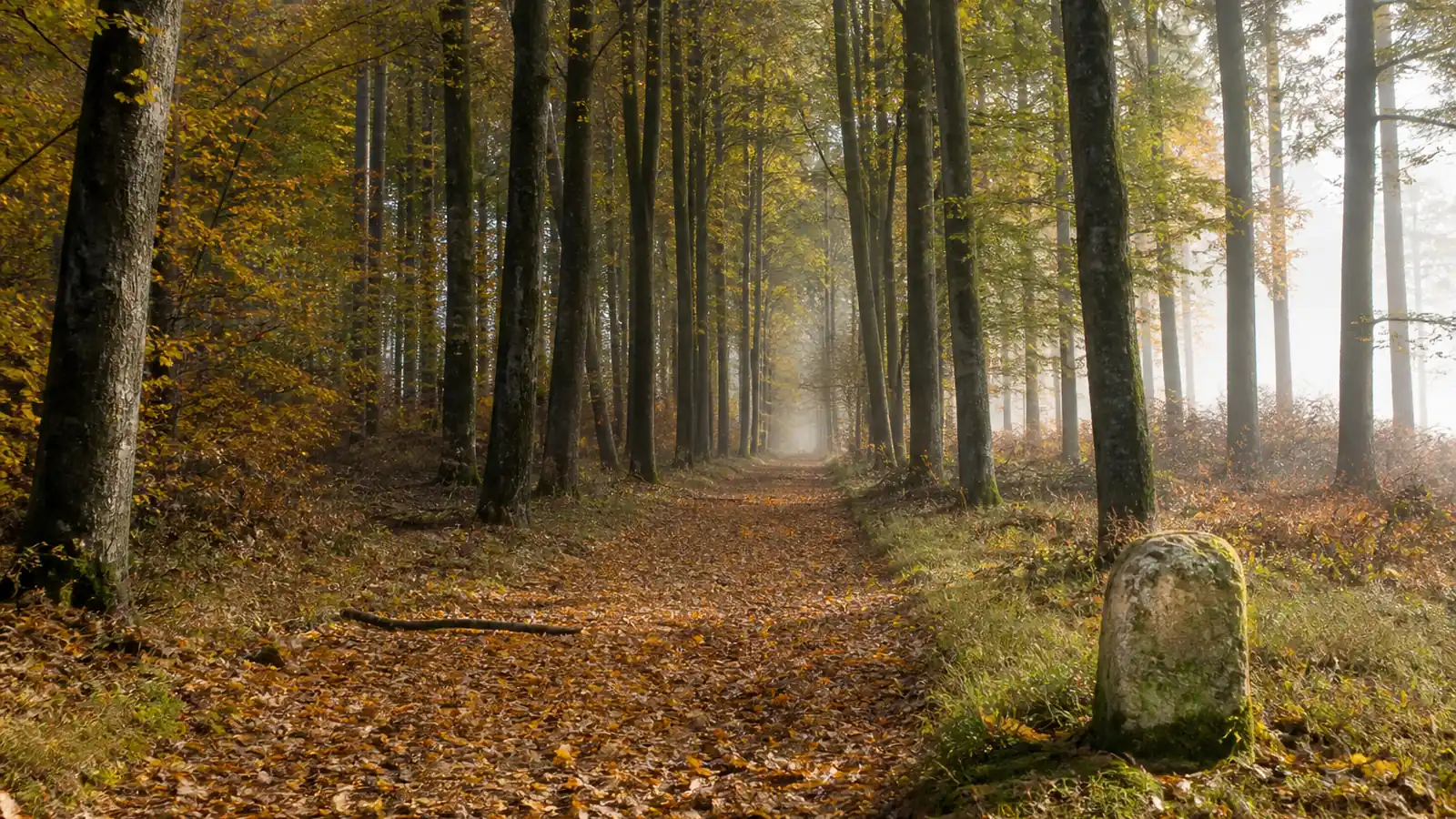
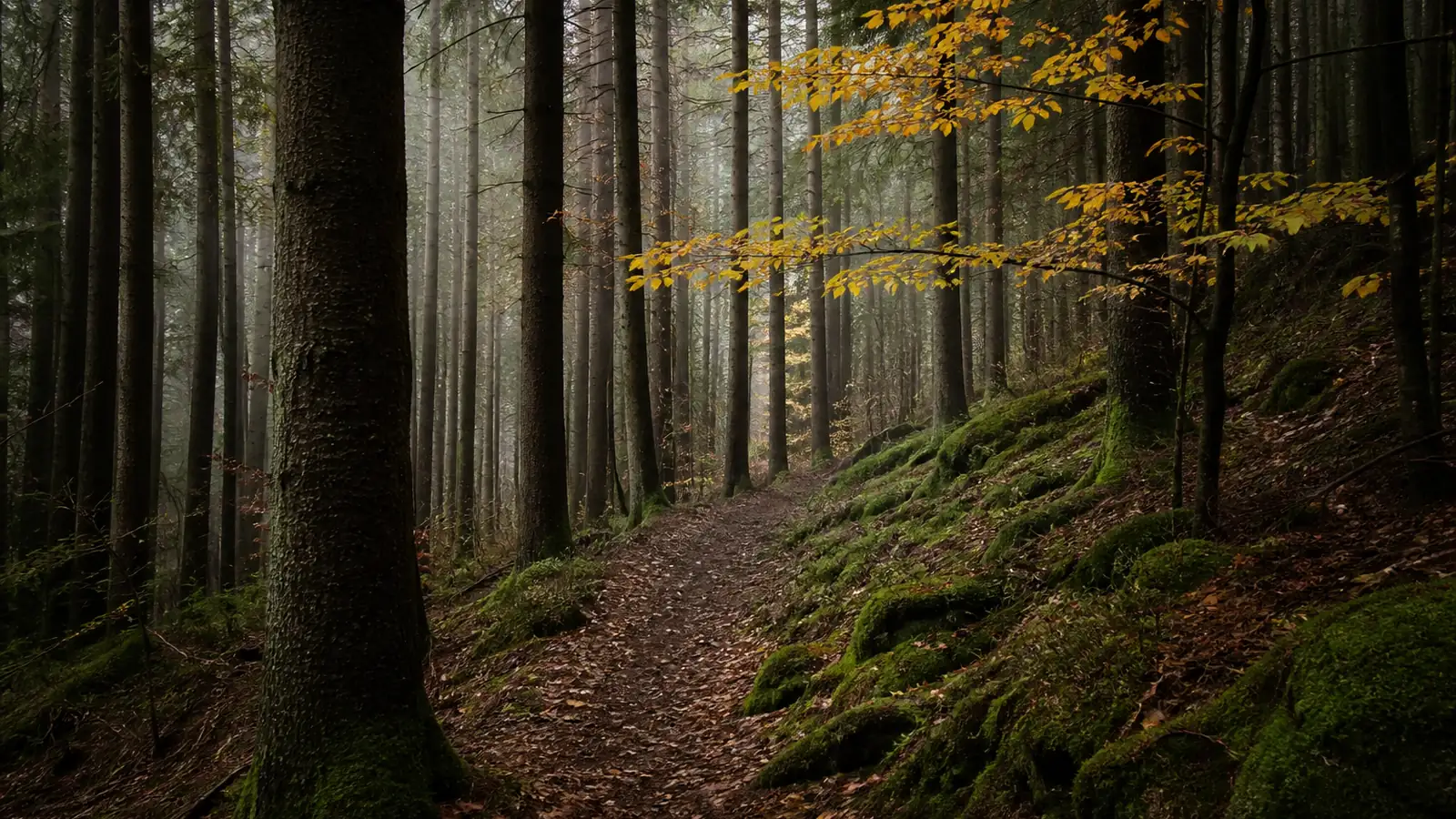
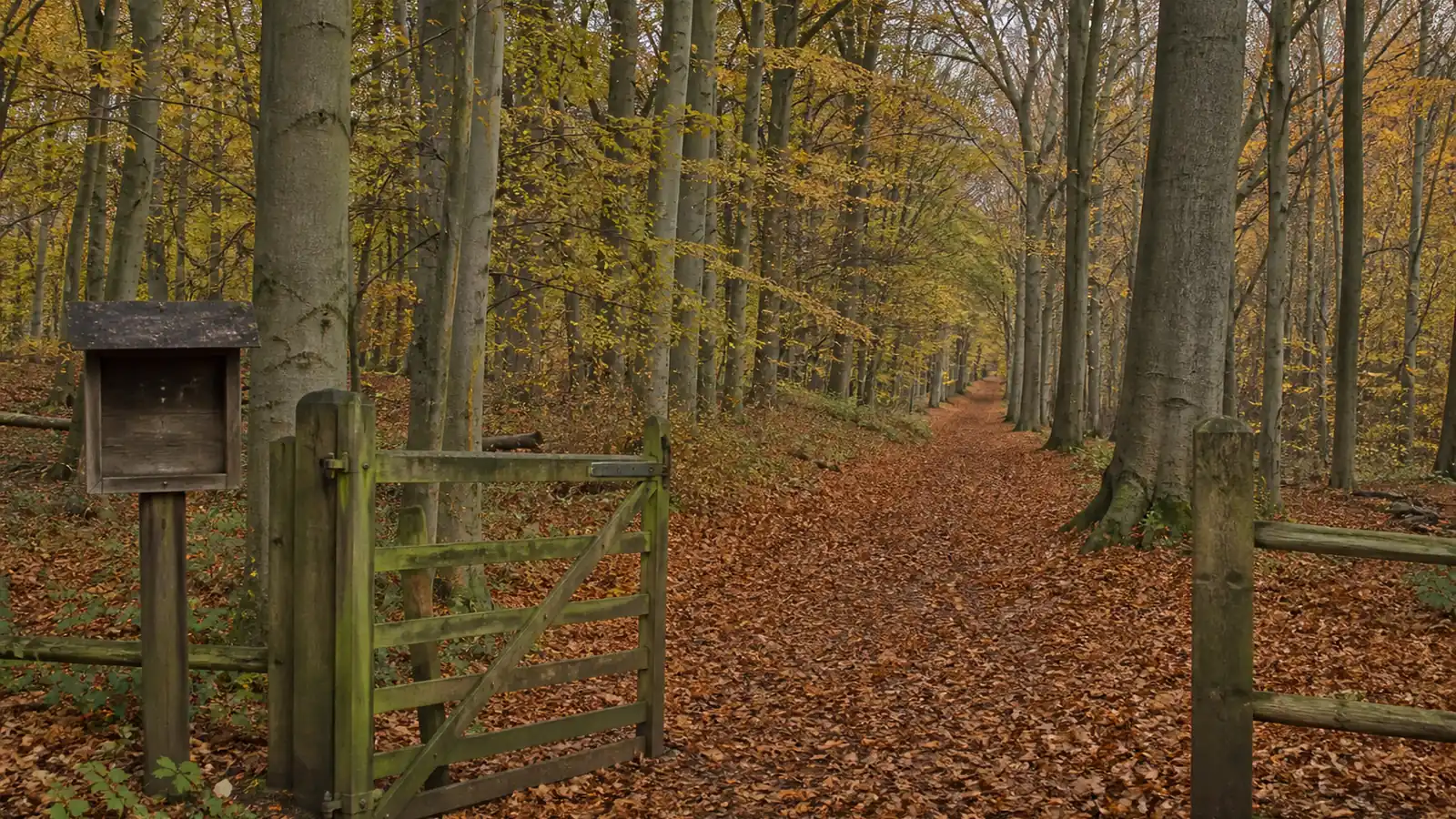
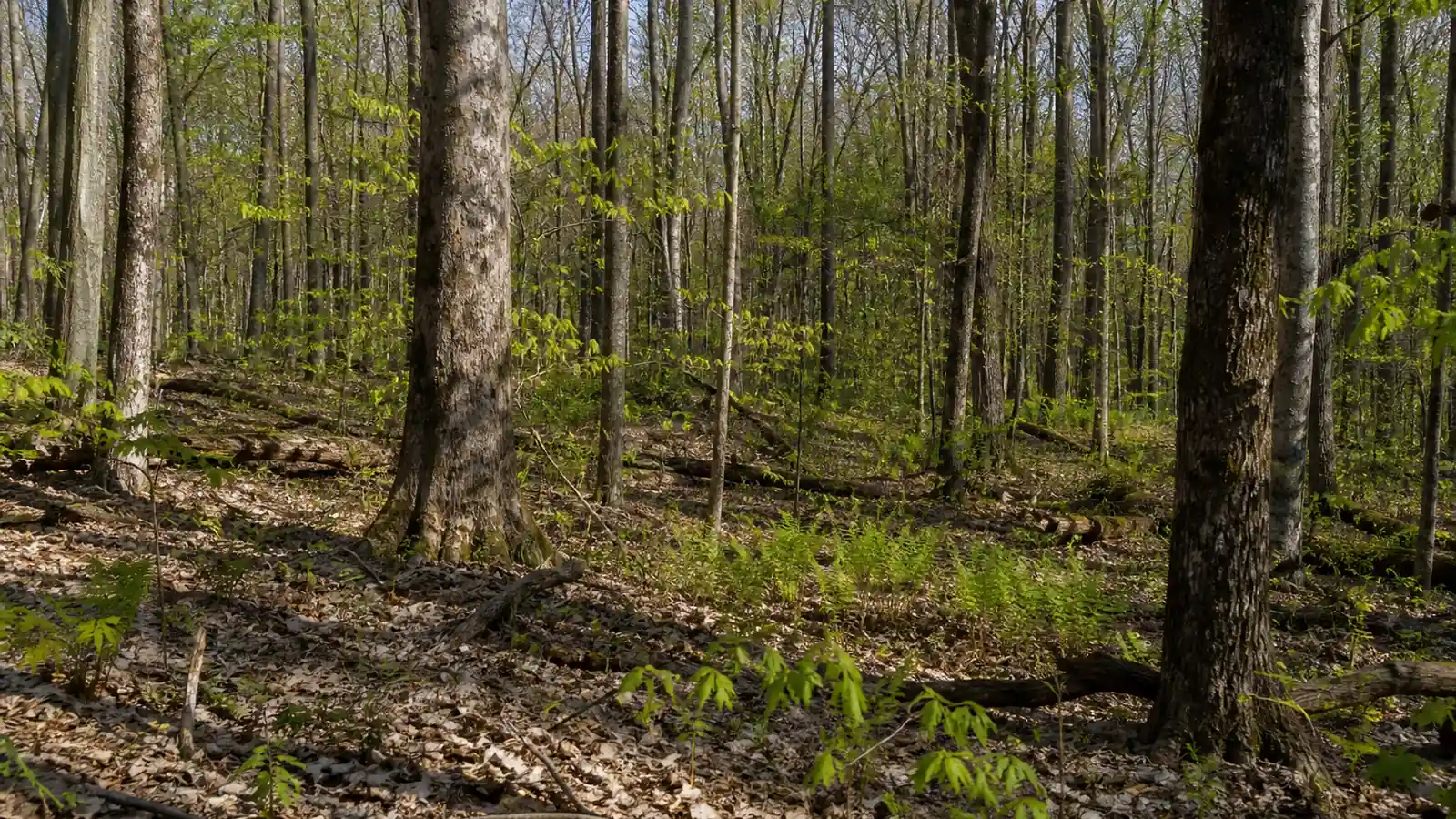
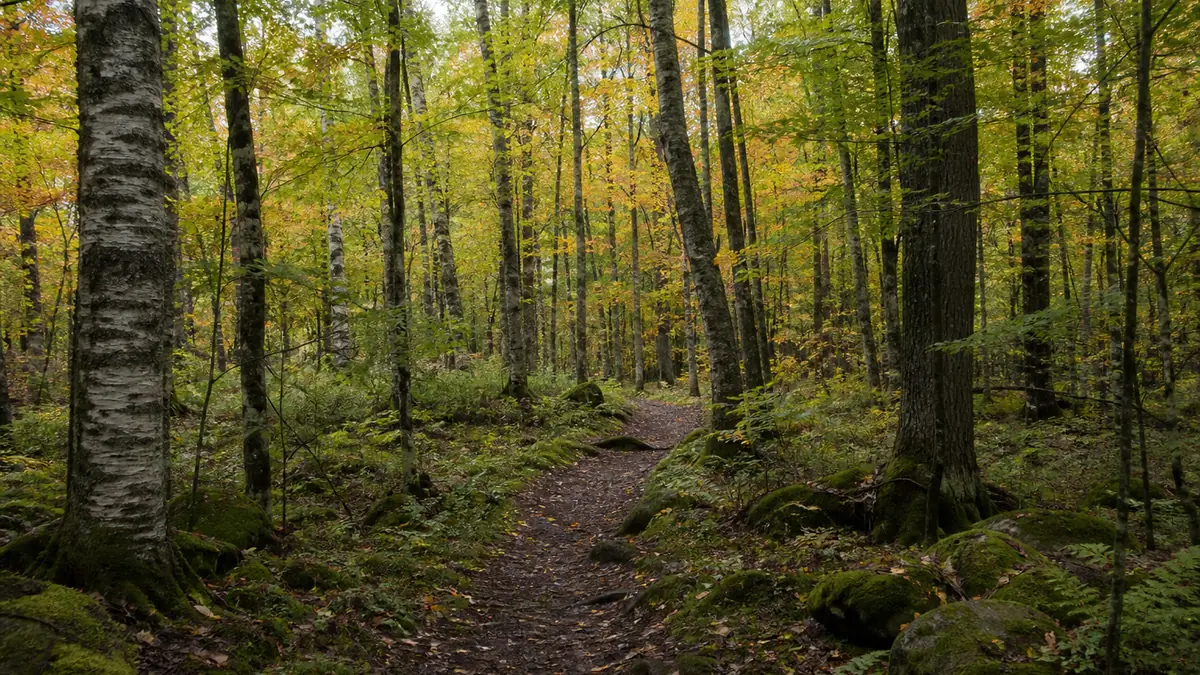
Many prized forest mushrooms live in mycorrhizal relationships with trees, so the canopy provides a stronger starting point than cap color. A spruce stand, beech slope, pine edge, and birch clearing offer different search questions even when they share the same rainfall.
Name the tree first when planning the search.
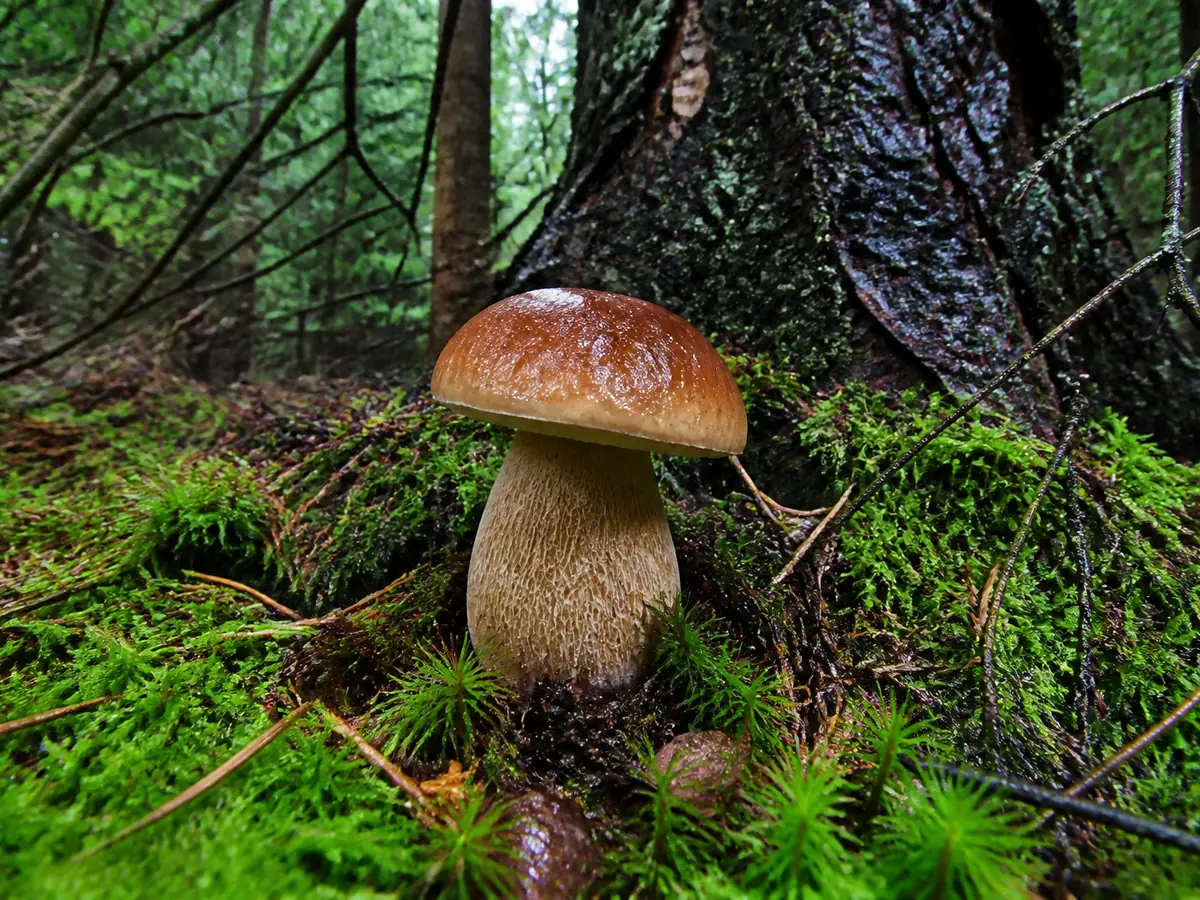
Porcini candidates beneath spruce or beech still require full identification, but the tree partner makes the route more precise.
- Choose a loop that crosses no more than three main tree communities.
- Check moisture beneath needles or leaves at each transition.
- Record soil, moss, slope, aspect, and whether the mushroom arises from soil or wood.
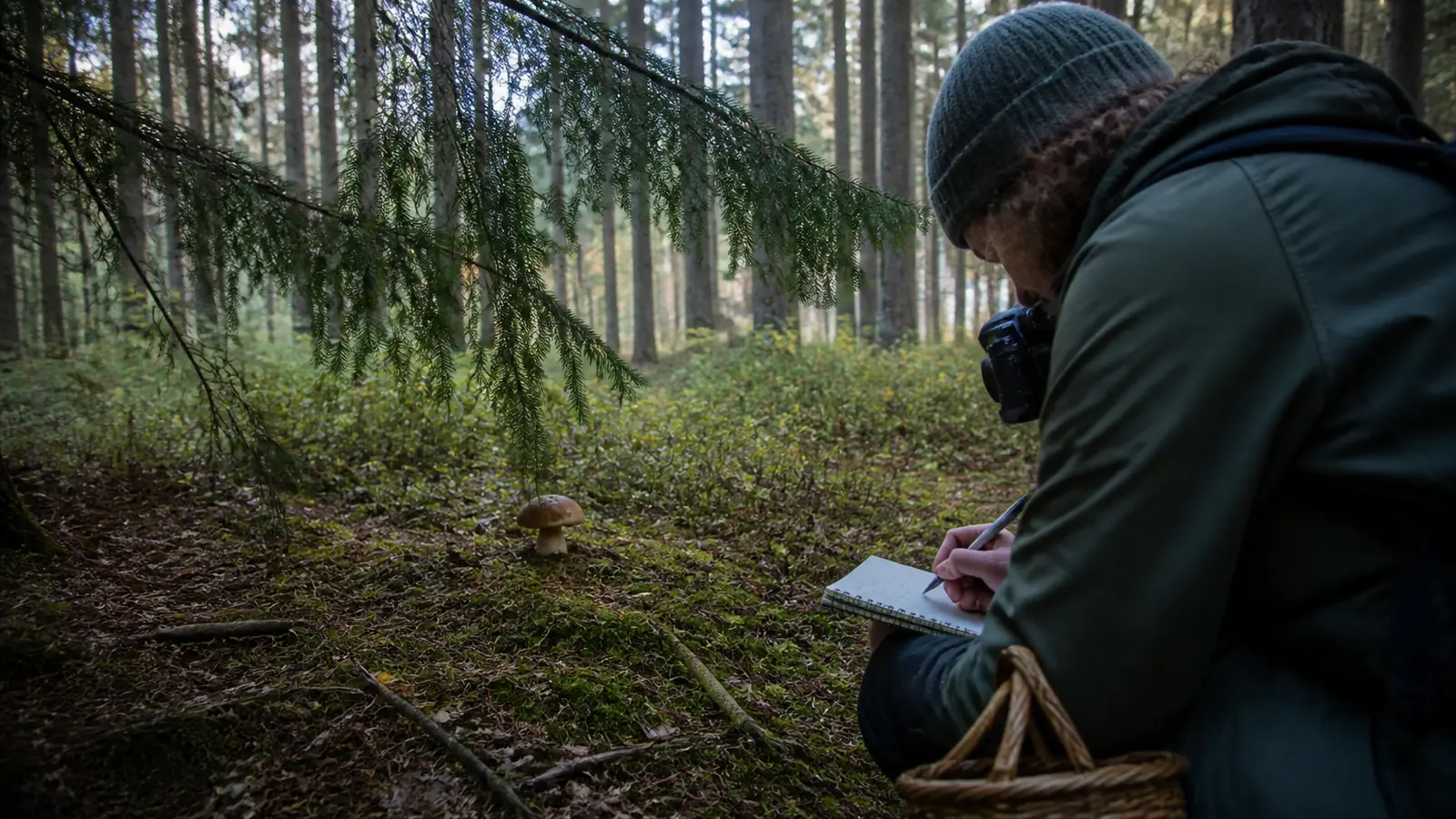
- Photograph the whole growth pattern before collecting anything.
One storm does not prove that fruiting has begun. A dry summer can leave deep soil short of water, while a windy ridge may lose surface moisture faster than a shaded hollow only a short walk away.
Give rainfall time to move through the habitat, then test the ground.
- Cool moist lower litter supports a careful search.
- A wet surface over dry soil suggests the first storm has not reset the site.
- Waterlogged ground calls for a better-drained slope or later visit.
- Hard dry moss and brittle litter justify a redirect rather than a longer walk.
Chanterelle candidates grow from soil with trees and have blunt, forked ridges, while false chanterelles and jack-o'-lantern-like fungi present different gills and attachments. The useful field question combines underside, substrate, base, growth pattern, and tree context.
Turn the tree list into a repeatable circuit
Begin at a mapped transition rather than in the middle of a uniform forest. A beech-spruce boundary, birch edge beside pine, or damp oak hollow lets one walk compare several tree partners without covering a large area.
Give each segment one substrate job.
Search soil and litter for mycorrhizal candidates, then inspect stumps and fallen wood separately for attached fungi. This prevents a buried-root cluster from being grouped with mushrooms that truly arise from soil.
A small circuit improves the evidence per kilometer because every change in tree, moisture, and substrate is deliberate.
Record a dry segment as carefully as a productive one. Drought may affect sandy pine ground before a shaded beech hollow, while dense needles can appear damp on top and remain dry below.
Return to the same marked circuit after new rain.
Repeated observations show whether a fruiting followed the storm, lagged several days, or failed because lower soil never recovered. That site history is more reliable than a report from another forest district.
ForagingMushroom foraging laws in France: what the five liter rule meansWhen is Pilzsaison in Germany?
Germany's broad Pilzsaison is associated with autumn because moisture and cooler temperatures often align, but altitude and substrate spread the actual window. Higher forests can lag behind lowland sites, and dead-wood fungi may appear during mild wet periods outside the main flush.
Note
Change elevation or substrate when the evidence changes. Do not repeat the same dry lowland route because a calendar says September should be productive.
Compare the lower litter at the old stop with the proposed higher or shadier route.
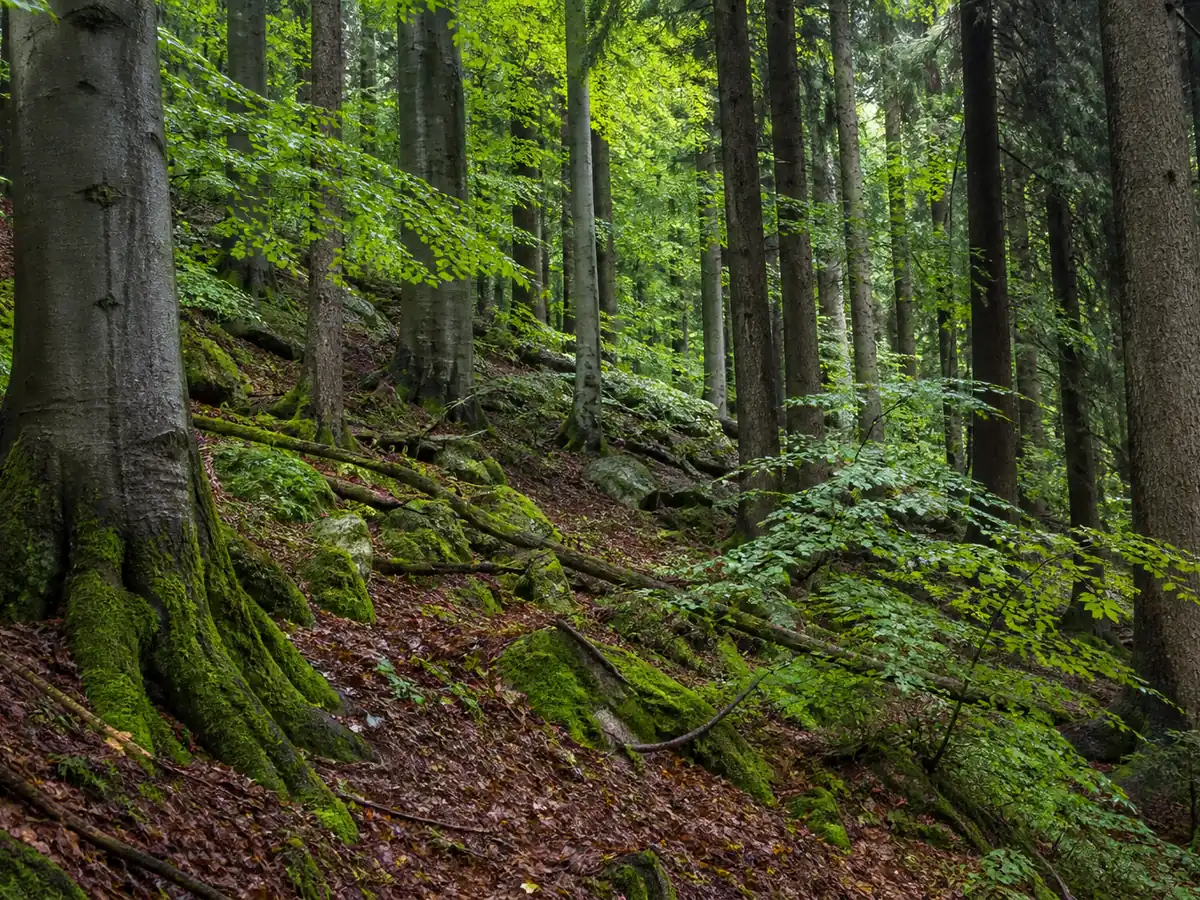
Seasonal site conditions matter more than one weekend.
Heat, drought, wind, frost, and repeated rain can open or close separate habitats within the same Bundesland.
- After summer rain, check shaded mixed forest before exposed sandy pine ground.
- During early autumn, compare lowland beech and oak with cooler upland spruce.
- After frost, inspect specimen condition before treating any find as reviewable.
- In mild winter weather, scan sound dead wood without rolling large logs.
Old and frost-damaged mushrooms lose color, texture, underside structure, and odor. They may remain useful observations, but incomplete evidence should not become a food candidate.
Return records improve the next trip. Note rain dates, ground moisture, tree community, altitude, species candidates, and empty stops so the route follows the forest rather than social-media enthusiasm.
ForagingMushroom foraging laws in Germany: protected species and small quantitiesHow much are you allowed to pick in Germany?
Germany's commonly discussed Handstrauß rule permits small quantities of certain wild products for personal need where access and other law allow it. It does not establish one national kilogram quota for every forest and every species.
Warning
Do not convert a state agency's practical estimate of one or two kilograms into federal permission. Local forest rules, reserves, protected species, owner rights, and commercial purpose can impose a stricter result.
The checklist separates those legal questions before any quantity is removed.
All four answers must support the same collection decision before a mushroom enters the basket.
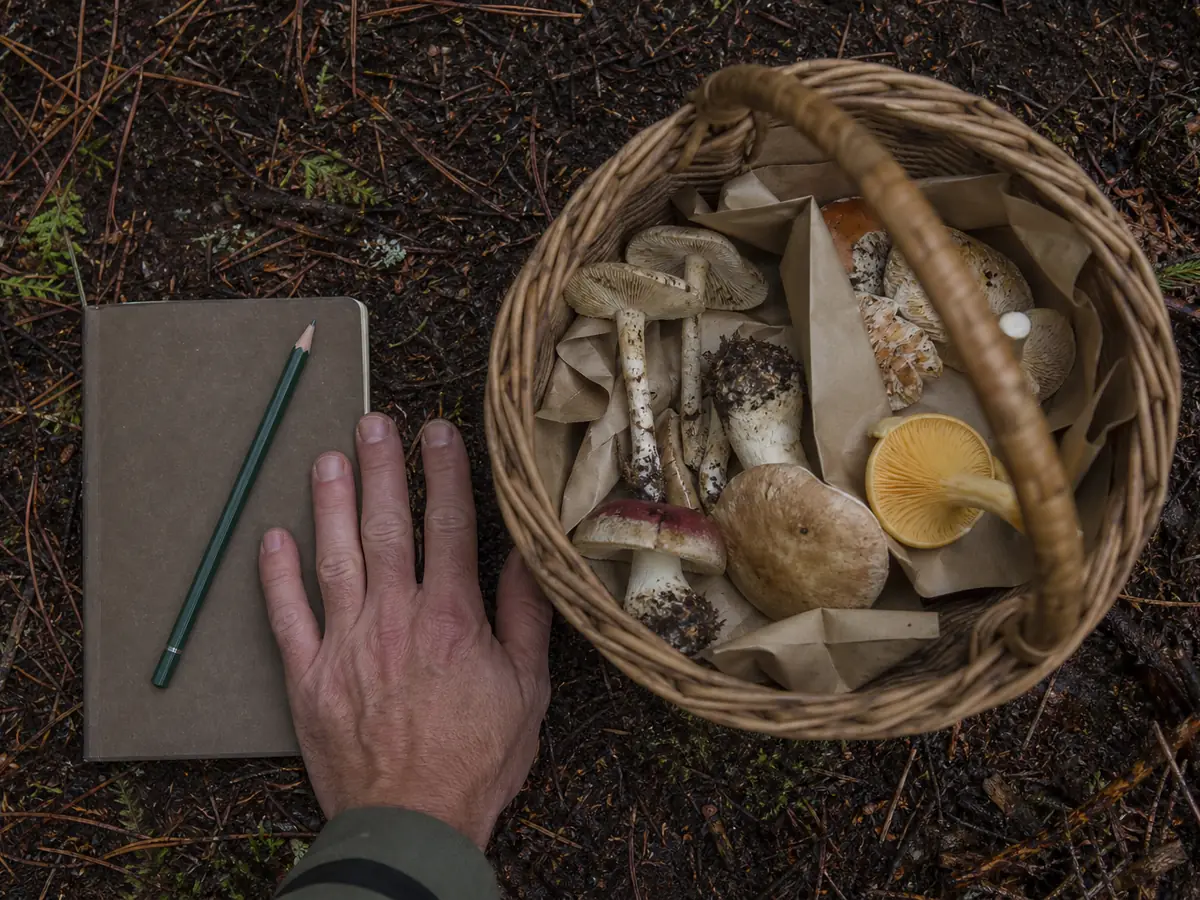
Some popular fungi, including certain porcini, chanterelles, and morels, can have limited personal-use exceptions despite species protection, but the exception has conditions.
Other protected fungi cannot be taken. A personal-use purpose does not override that protection.
Run the protected-species screen separately
First ask whether general access and personal collection are permitted. Then ask whether the candidate species receives special protection and whether any narrow exception applies to that exact species, amount, and purpose.
Do not reverse those questions because a general personal-use statement cannot make a protected mushroom collectable, and a limited species exception cannot open a reserve or private parcel that otherwise prohibits removal.
Place and species must both allow the action before a mushroom leaves the ground.
When identification is uncertain, protection status is uncertain too. Photograph the candidate in place and leave it rather than collecting first and hoping a later name creates permission.
Local signs may respond to heavy pressure, fire risk, research, habitat damage, or temporary forestry work. Follow the current restriction even when a general federal or state summary appears less strict.
Commercial intent requires another check because quantity is not the only difference.
Sale, restaurant supply, repeated organized harvest, and collecting on behalf of a business can trigger permits, owner agreements, tax, and food-safety obligations that do not apply to a small personal basket.
| LEGAL QUESTION | CURRENT SOURCE | FIELD ACTION |
|---|---|---|
| Who manages the forest? | Owner, municipality, state forest agency, or federal authority | Follow the exact manager's notice |
| Is the species protected? | Current federal and state protection guidance | Leave it unless a valid exception clearly applies |
| Is the amount personal? | Local guidance and actual household need | Keep it small and never collect to a quota |
| Is the purpose commercial? | Permit office and food-law authority | Obtain required permission before collection |
Unclear authority means observe and leave.
Public entry, an open trail, or the absence of a sign does not resolve every taking and conservation rule. The current property restriction still controls.
- Identify the exact forest parcel.
- Read current signs and official online notices.
- Check reserve boundaries and protected species.
- Ask the responsible office when the rule is unclear.
- Save the source and date with the field plan.
How do you separate lookalikes in the field?
A first impression should create a list of possibilities, not a meal decision. Work through character groups while the specimen is still attached and the habitat remains visible.
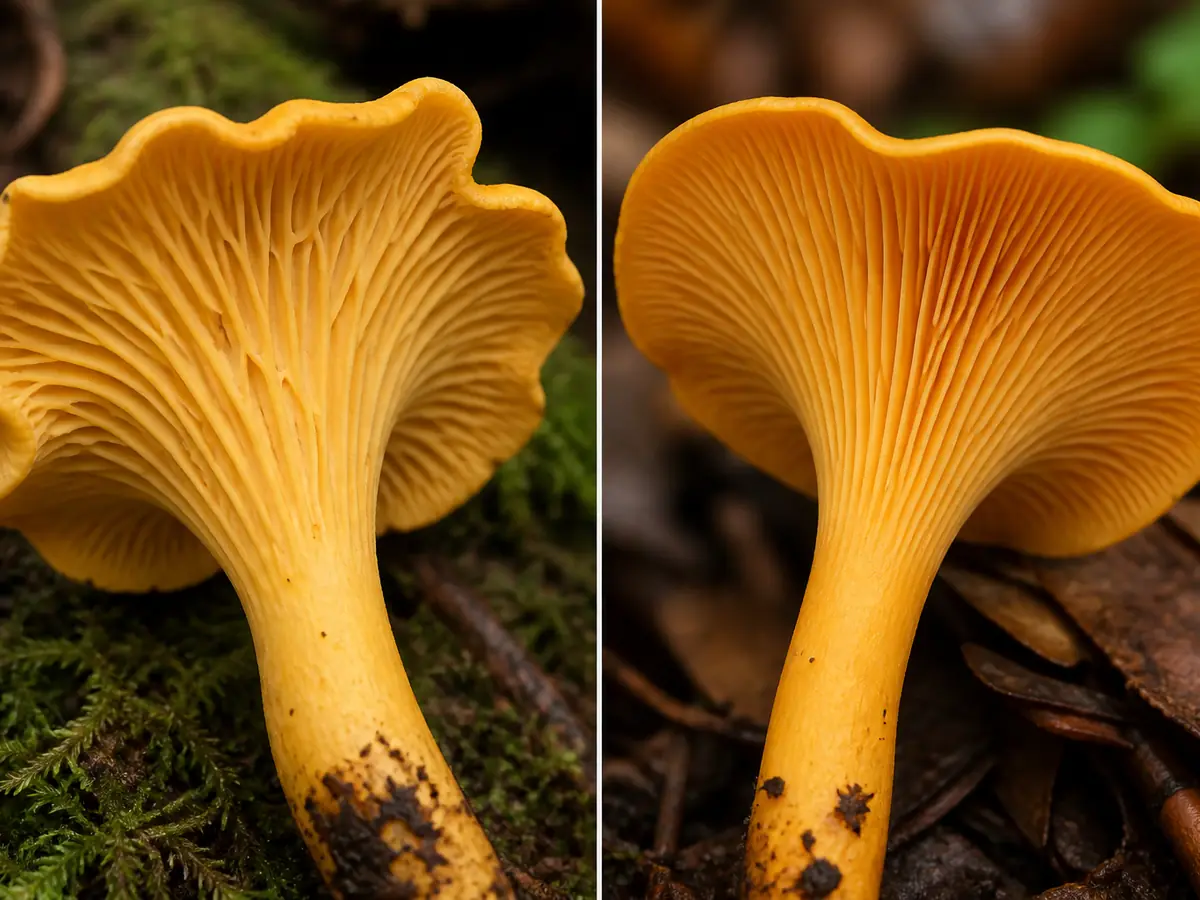
The whole character set controls the comparison.
Cap color can fade, bruise, darken with water, or overlap across unrelated species.
- Ridges versus true gills.
- Pores versus gills or teeth.
- Soil versus visible or buried wood attachment.
- Complete stem base, ring, volva, veil remnants, and bruising.
- Single fruit body versus tuft, ring, troop, or shelf.
Young death caps can appear as pale buttons before all characters are obvious. Digging or lifting the full base where collection is legal matters because the saclike volva may remain buried.
Buried roots can make wood-growing clusters appear to rise from soil. Trace the attachment carefully without destroying the site, and leave the candidate when the connection cannot be established.
No single rule such as insect damage, silver tarnish, smell, peeling skin, or cooking color can prove safety.
Folk tests are especially dangerous because deadly species can pass them.
ForagingMushroom foraging laws in the UK: what is actually legalWhat does a Pilzberatung reviewer need to see?
German Pilzberatung services can provide local assessment, but a reviewer needs intact material. A bag of separated caps or a phone image taken from above may omit the decisive feature.
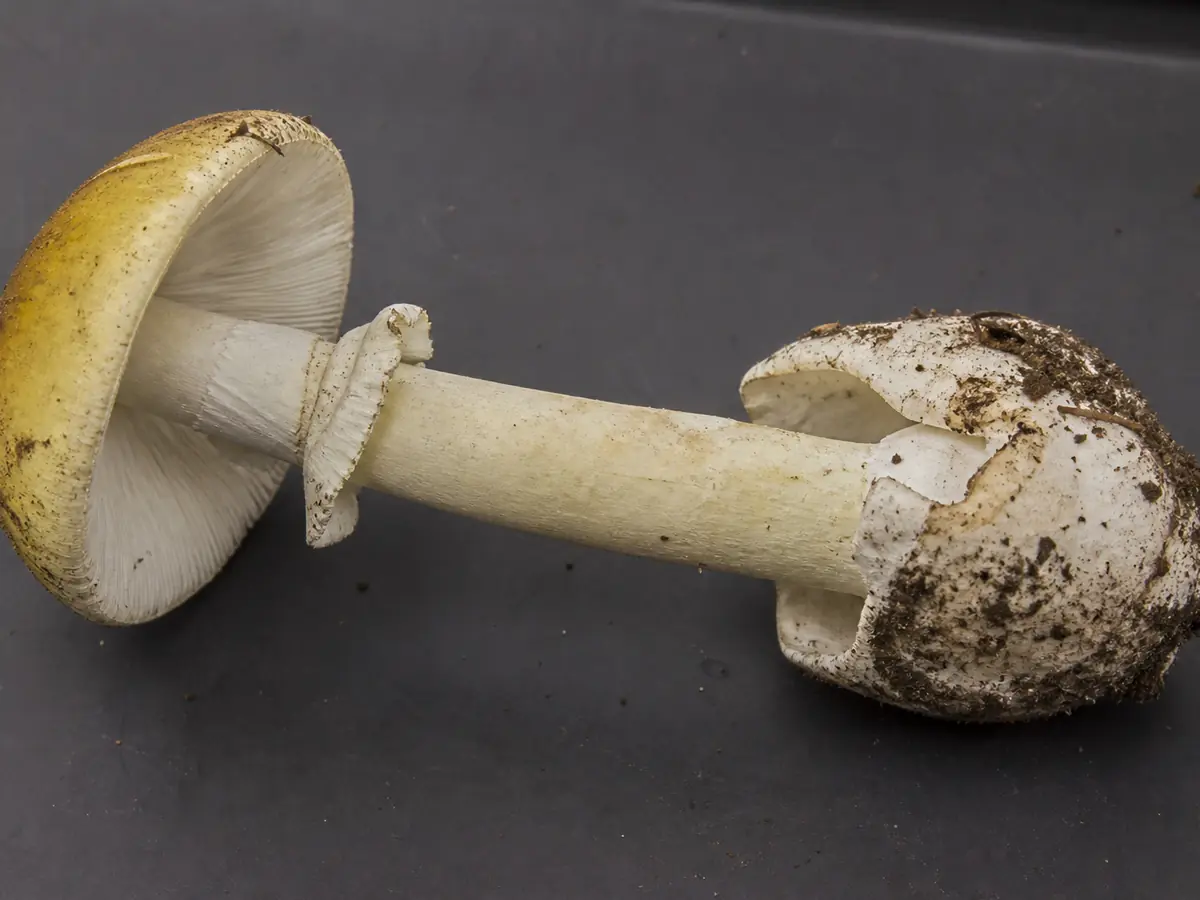
Preserve those structures with a repeatable field sequence before consultation.
Missing evidence cannot be restored during consultation.
Choose sound mature examples, so very young, old, moldy, waterlogged, or crushed specimens stay out of food.
Avoid plastic bags because they trap moisture, accelerate deterioration, and mix broken fragments. A rigid basket with paper separation protects both the specimen and the reviewer.
- Record date, location, altitude, tree, substrate, and recent weather.
- Keep unknowns apart from every intended food collection.
- Photograph the complete basket before cleaning.
- Confirm when and where the local consultation service operates.
Remote groups and apps can help generate questions, but they should not replace foraging safety rules for an incomplete wild mushroom. Use the local reviewer who can handle the entire specimen and compare regional lookalikes.
Arrange consultation before the specimen deteriorates. Note opening hours and bring only intact material that can still be matched to its photographs and field card.
Ask which characters ruled out the most dangerous local alternatives, then keep that explanation with the record rather than relying on memory.
Which gates must a mushroom pass before eating?
The final result combines five independent gates. The forest must allow collection, the species must not be prohibited, the quantity must remain personal and modest, the specimen must be sound, and qualified assessment must support the identity.
One failed gate rules out food use.
A correct habitat cannot repair a missing base, and careful cooking cannot neutralize every toxin.
Complete legal observation
DocumentKeep the habitat and specimen record even when nothing is taken
Better moisture at another legal stop
RedirectChange tree community or elevation without lowering the standard
Protection, permission, or identity unclear
LeaveUncertainty does not support collection or food
Symptoms after a wild-mushroom meal
CallContact a poison center or emergency medical service immediately
Death caps cause most fatal mushroom poisoning in Germany according to the Federal Institute for Risk Assessment. Severe mushroom poisoning symptoms can begin after an apparent delay, so waiting for them to become dramatic is unsafe.
Do not induce vomiting or attempt a home remedy unless medical specialists instruct it. Different toxins need different treatment, and an early symptom-free interval does not prove that the meal was safe.
Tell responders that wild mushrooms were eaten and provide the exact timeline immediately.
Keep the forest record, photographs, uncooked material, cleaning waste, leftovers, and cooking notes available. Package remnants separately so specialists can see which material came from the same collection.
List every diner and the portion each person ate.
Do not wait for all diners to develop symptoms because pieces from a mixed dish can differ. A poison center or emergency clinician can decide whether symptom timing, suspected species, and dose require observation or treatment.
After the emergency, do not use any remaining mushrooms from the trip. Preserve only what specialists request for identification and discard the rest according to their instructions.
- Observe
- The site is sensitive, protected, or legally unclear
- Collect
- A small personal quantity is lawful and the sound whole specimen is reviewable
- Consult
- The field record and intact material are ready for Pilzberatung
- Leave
- Any legal, protection, condition, or identity gate fails
- Call
- Symptoms or suspected ingestion involve an unknown wild mushroom
Contact a poison center or medical service immediately after symptoms or suspected dangerous ingestion. Preserve uncooked specimens, scraps, photographs, meal times, symptom times, and the names of everyone who ate the dish.
Sources & References
- Bundesportal, Pilze sammeln Personal-use, commercial, and protected-species rules.
- BfR, Pilzverwechslungen können lebensgefährlich sein Death-cap and poison-response guidance.
- Bundesportal, Pilzberatung Local consultation services.