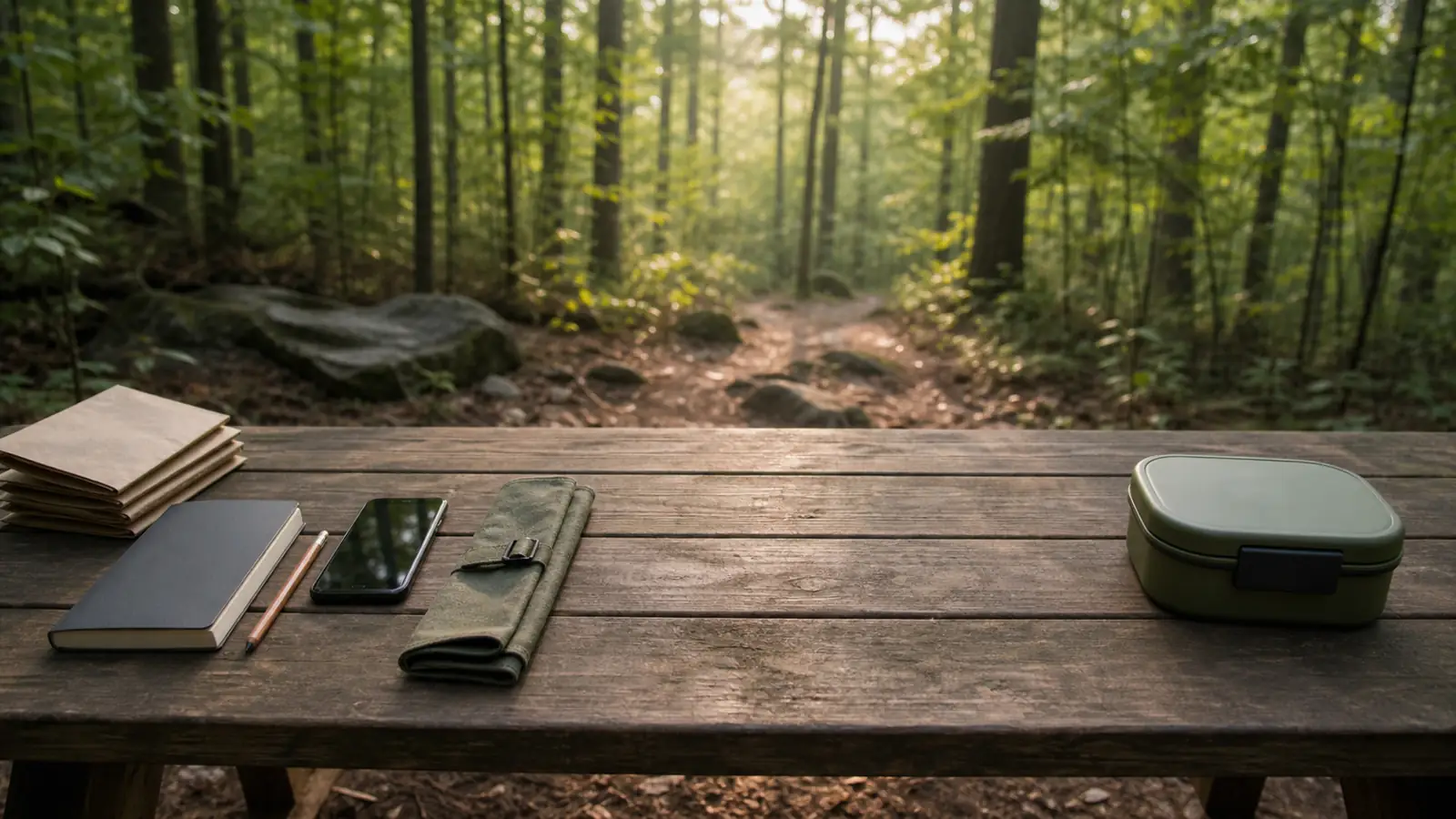
Do not eat a wild mushroom until you can name it to species, rule out the dangerous lookalikes, and explain every feature that led you there.
Should this mushroom enter the basket?
The safest first answer is no until the ID is strong enough to survive questions. A wild mushroom should stay in the woods if you cannot name it to species, rule out the dangerous lookalikes, and explain the features that led you there.
That rule protects the meal from guesswork even when an app, color match, or confident photo points in one direction. None of those shortcuts makes a wild mushroom safe.
- Identify to species, not to a broad group.
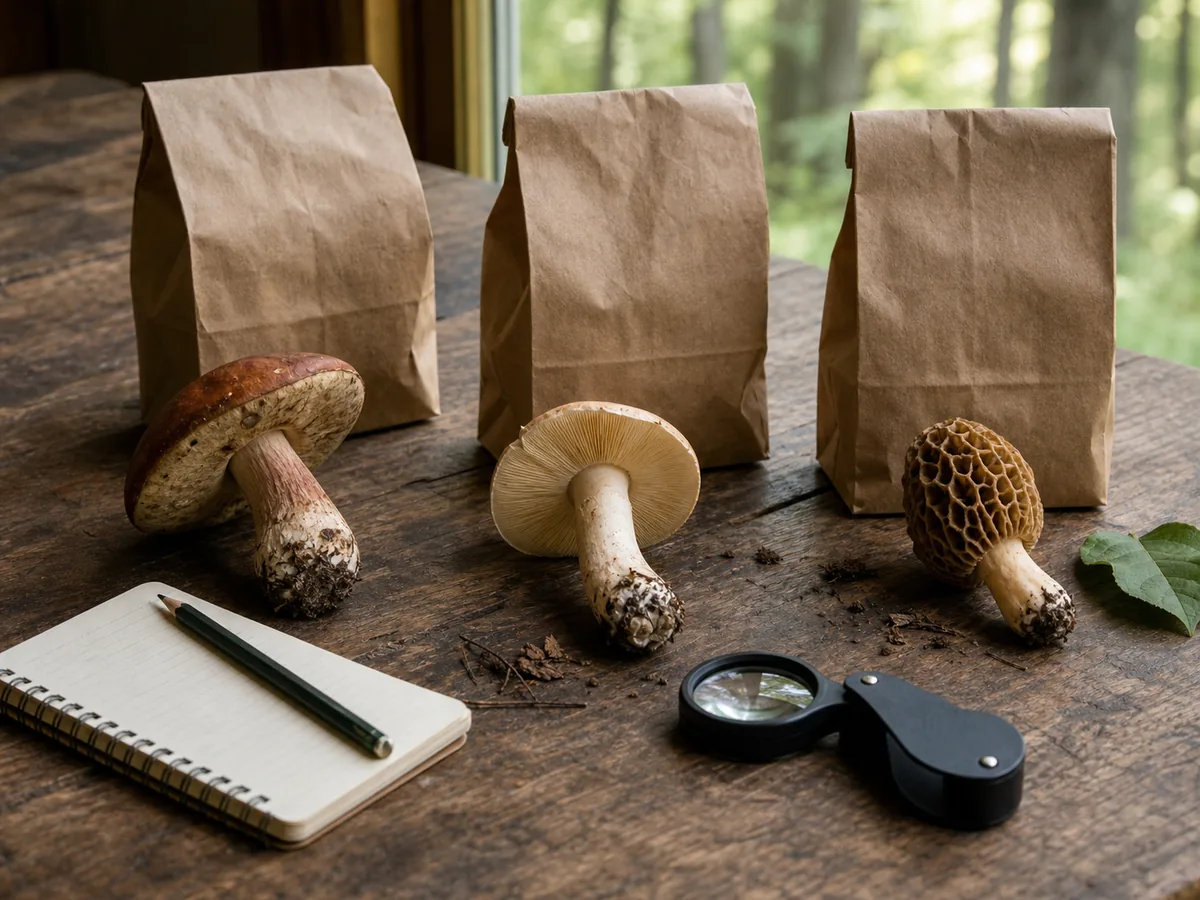
- Keep each species in its own paper bag.
- Photograph the cap, underside, stem, base, and habitat before cleaning.
- Keep one whole specimen intact until the ID is settled.
- Eat only one new wild species at a time, cooked, in a small portion.
Which features must agree?
A safe identification needs a stack of evidence that includes the whole stem base beginners often leave in the ground.
| Feature | What to check | Why it matters |
|---|---|---|
| Underside | Gills, pores, teeth, or false gills | Orange lookalikes often split here |
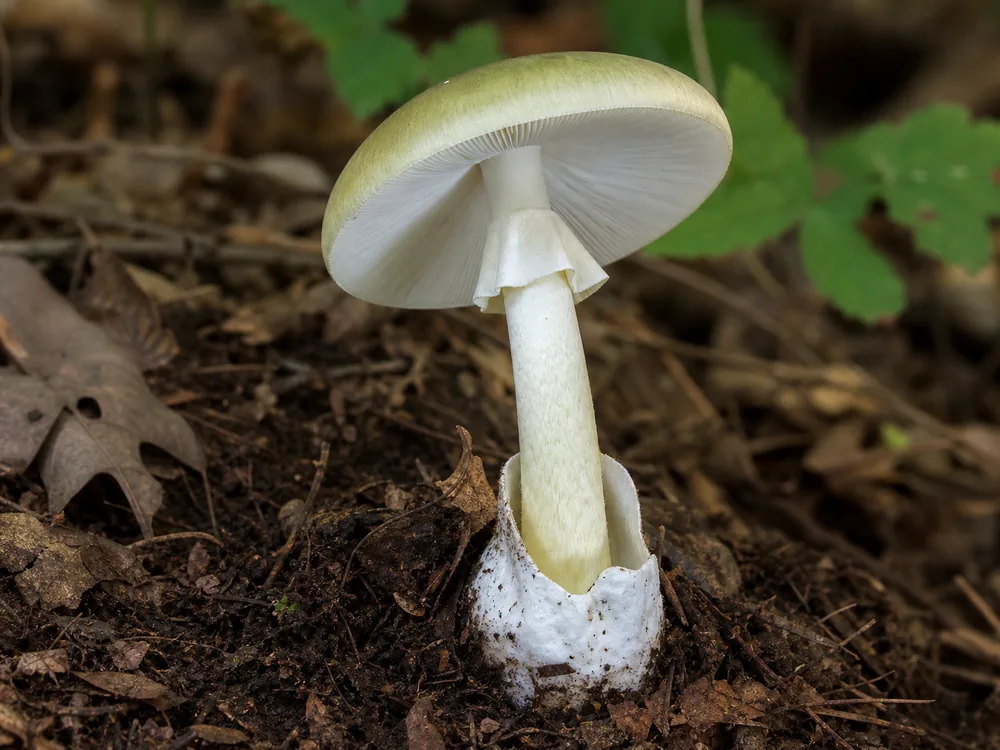
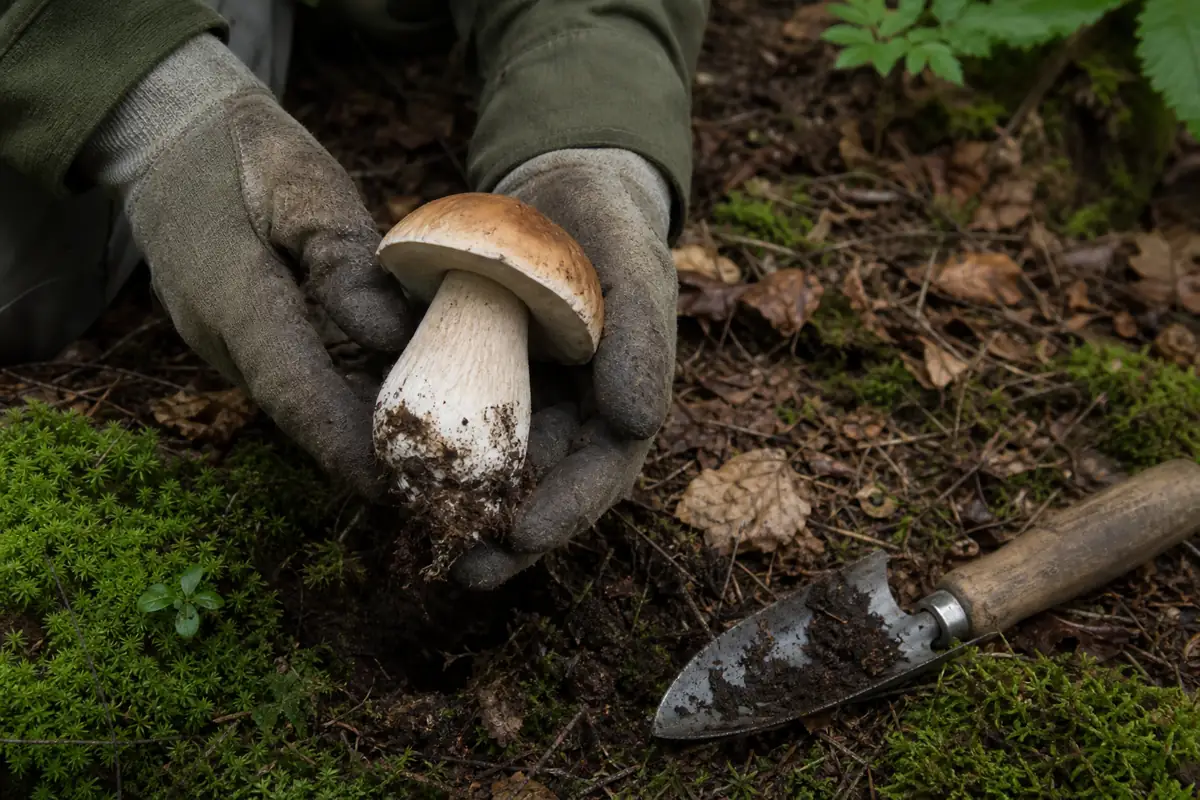
| Stem base | Cup, bulb, rooting base, cluster point, or rooting stem | Deadly Amanitas hide key traits low in soil |
| Habitat | Soil, wood, lawn, mulch, or specific trees | The same color can mean different species in different places |
| Spore color | White, pink, brown, black, or purple-brown | A spore print can separate close groups |
| Condition | Young, mature, old, waterlogged, or insect-eaten | Old edible mushrooms can still be poor food |
The base is the feature people damage before they ever get a chance to check it.
Learn the danger set first
Study the mushrooms that should stop you before you study the mushrooms you want to eat. Start with the death cap and other white-gilled Amanitas because delayed symptoms can make early poisoning feel harmless.
False morels deserve the same early attention. A true morel meal depends on one hollow chamber, while false morel risk starts when the interior is folded, cottony, or chambered.
Orange mushrooms need underside work before color feels safe. A chanterelle lesson should compare blunt false ridges with sharp orange gills.
Build the reject list before the dinner list by naming the feature that would prove each hoped-for identification wrong.
Warning
Cooking does not make a poisonous mushroom safe. Heat helps some edible species, including true morels, but it does not fix amatoxins in death caps or gyromitrin risk in false morels.
What should you do after possible poisoning?
Call Poison Control at 1-800-222-1222 in the US, or call emergency services right away. Do this even before symptoms start when a dangerous species is possible.
Save leftovers, trimmings, photos, and one uncooked specimen if you have it. Delayed vomiting, diarrhea, severe cramps, confusion, jaundice, or unusual weakness after a wild mushroom meal matches mushroom poisoning symptoms and needs expert help, not home monitoring.
Waiting because the first hours feel normal is dangerous when serious poisonings can include a quiet period before liver injury appears.
How should beginners use photos?
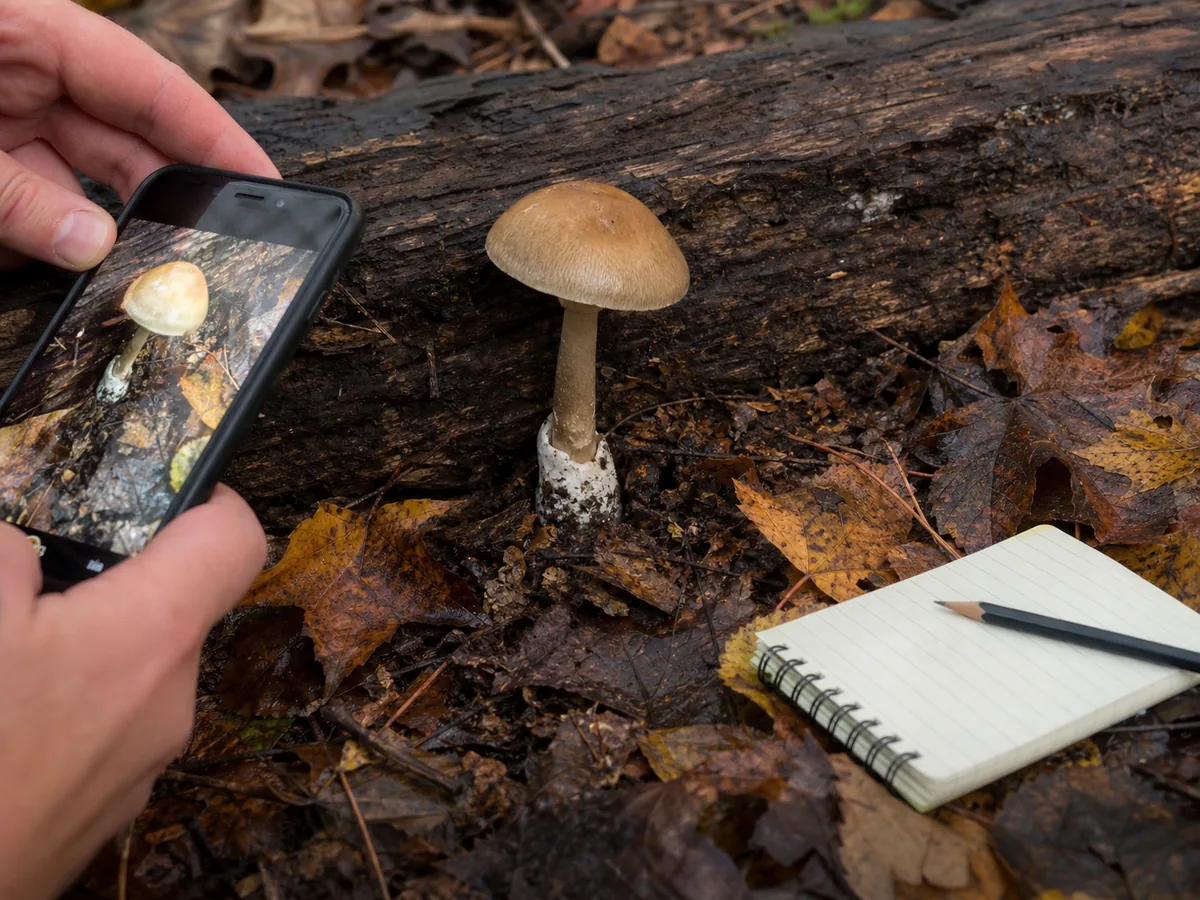
Photos are notes, not a verdict. Take one photo in place before picking, one from the side, one of the underside, and one of the base after you lift the whole mushroom.
Good photos help an expert see the decision trail. A cleaned pile on a cutting board loses the tree, soil, growth pattern, base, and age of the mushroom.
Apps can suggest a direction, but they cannot smell the mushroom or feel whether gills are attached. Treat every app result as a question to test with a field guide, a local club, or an expert foray.
What belongs in a beginner kit?
A safe kit only needs to keep specimens whole, separate, labeled, and protected from crushing.
- Small knife or trowel for lifting the base.
- Wax bags or paper bags for separate species.
- Pencil and labels because wet ink fails.
- Field notebook for trees, soil, weather, and patch notes.
- Hand lens for gill edges, pores, and surface hairs.
- Rigid container for fragile mushrooms.
- Phone photos tied to bag labels.
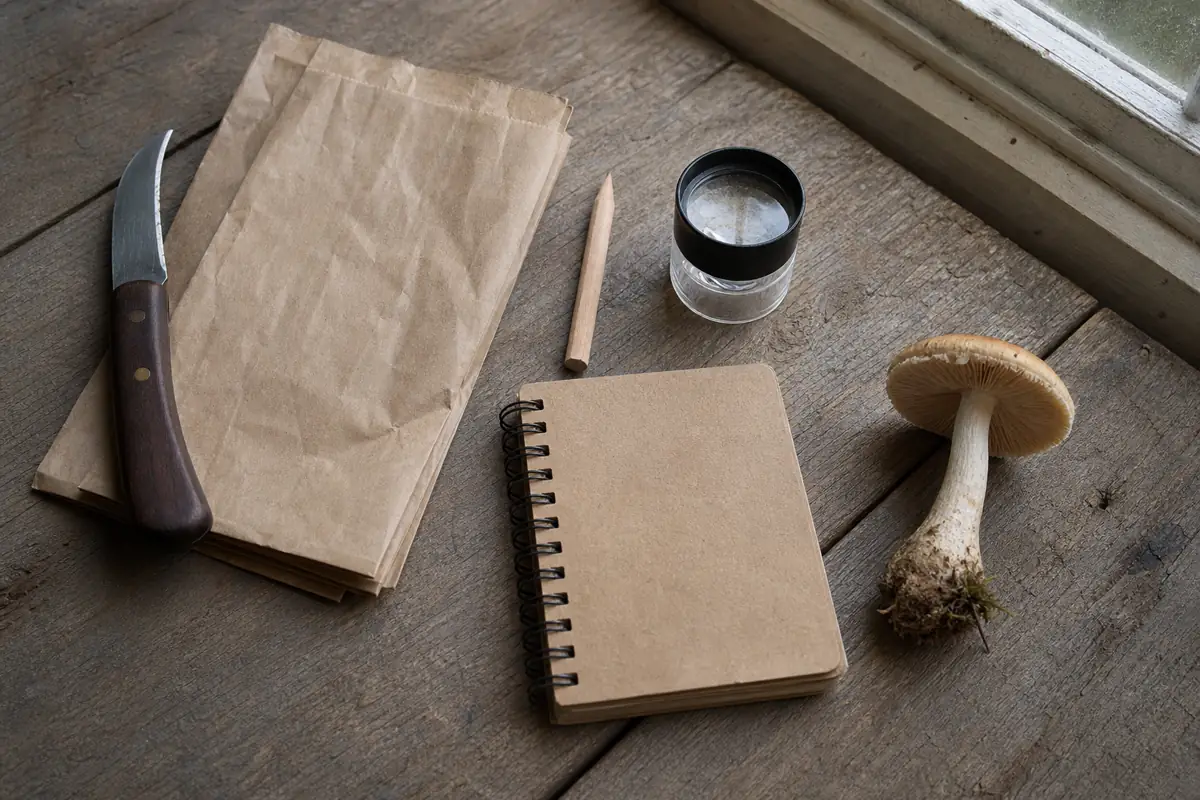
The paper bags do more work than the knife, because they keep two specimens from turning into one uncertain find.
Note
A mixed basket breaks the chain of evidence. Keep edible candidates separate from unknowns until the ID is settled.
Keep evidence intact between the patch and home
Put each species candidate in its own paper bag as soon as it leaves the ground. Write the bag number before the next specimen is picked so the habitat photo and the physical mushroom cannot drift apart.
Keep one complete specimen with its base, stem, underside, and cap intact for every bag.
Heat and compression can erase useful characters during the walk home. Carry bags upright in a rigid basket, keep them out of direct sun, and move wet specimens into dry paper before condensation softens the surface.
Record the tree, substrate, growth pattern, and nearby specimens at the patch because those details cannot be reconstructed at the kitchen counter.
When a fall mushroom trip produces several similar brown or orange species, assign separate bag numbers before comparing them. One label for the entire basket creates a mixed batch that no later photograph can untangle.
Take one final bag photograph at the trailhead with the written number visible beside intact specimens, stem bases, undersides, and any separately wrapped suspect for later expert review. That image closes the gap between field photographs and the kitchen layout if a paper label falls out during transport.
Do not rely on photo order alone because phones can sort images by edited time, cloud sync, or a different camera.
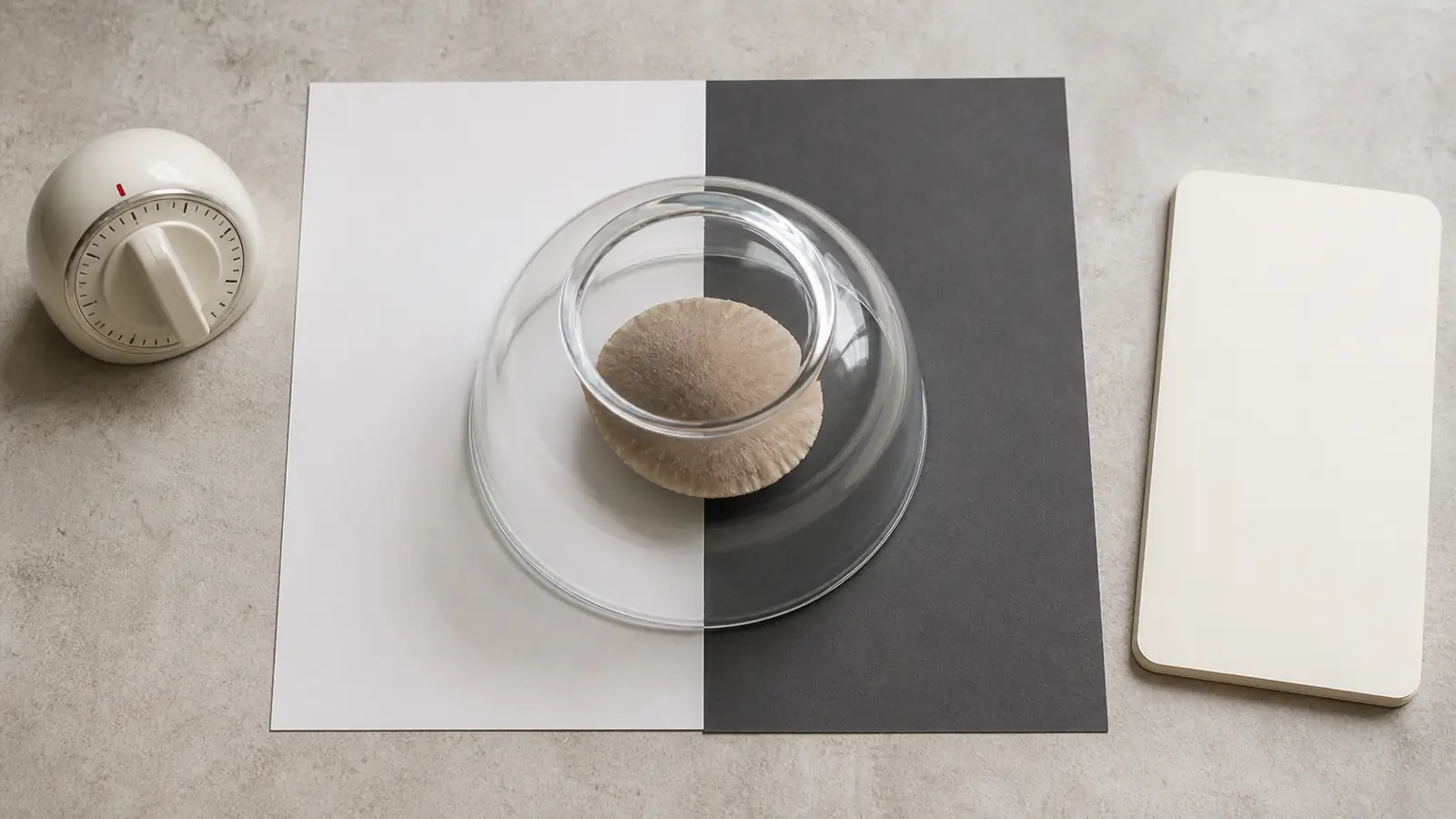
IdentificationHow to Take a Spore Print You Can Actually ReadWhat happens at the kitchen counter?
The field ID is not the last check. At home, lay out one species at a time and remove any mushroom that looks older, damaged, waterlogged, or different from the rest.
Even within a safe species, reject old, waterlogged, insect-damaged, different-looking, or fragmented individuals that cannot be traced to a whole specimen.
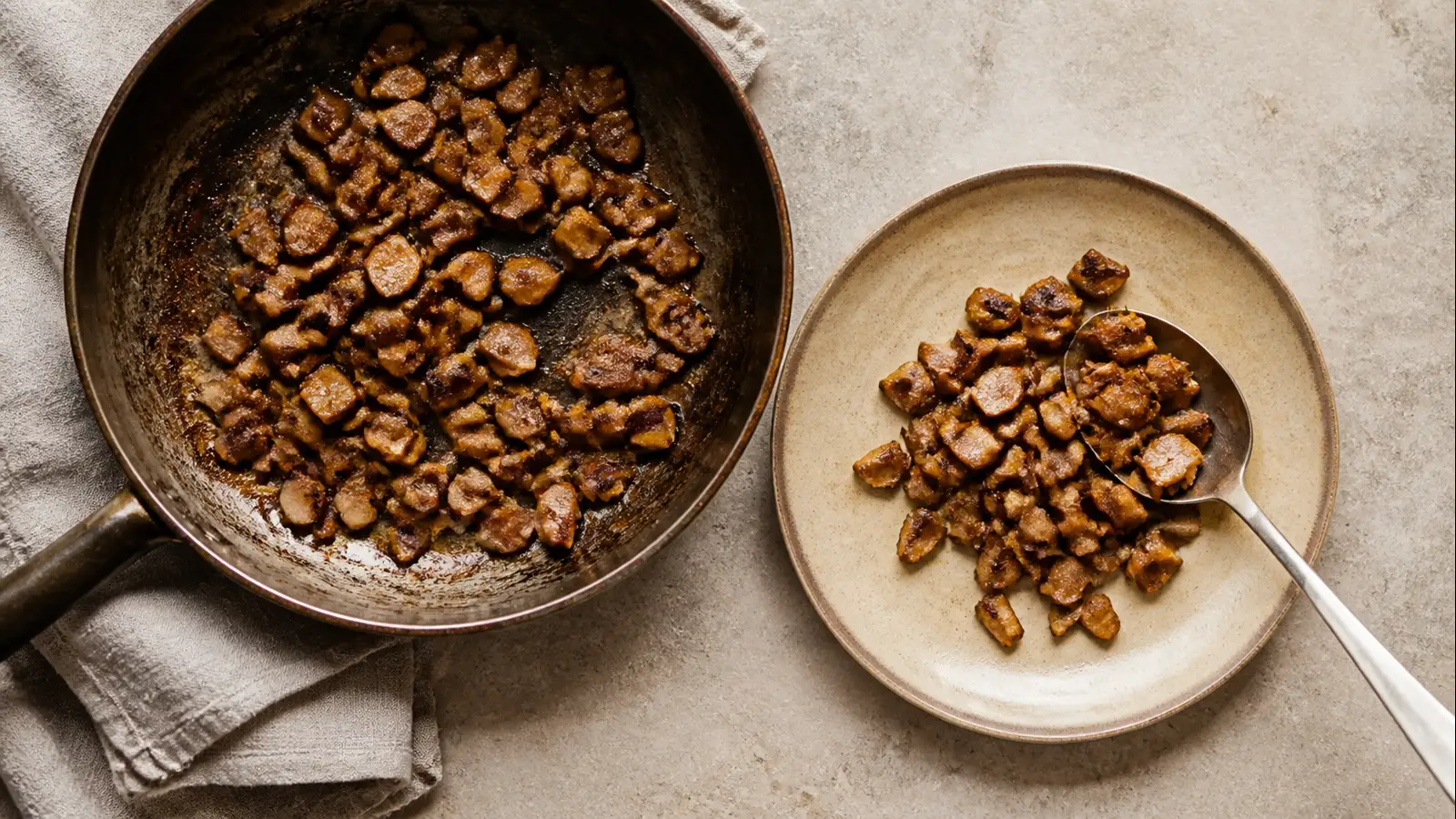
Use three passes at the counter, confirming species, checking condition, and applying any special preparation. True morels need that final preparation because raw or undercooked morels can cause illness.
Land rules and dirty sites
Safety also includes land rules because parks may ban picking, public lands may limit quantity, and private property still requires permission.
Roadside mushrooms can collect pollutants, while lawns and mulch may carry pesticides, herbicides, or pet waste. Mushrooms from those dirty sites belong in study notes rather than dinner.
Beginner field practice works best with a narrow species list and no pressure to cook the same day. Beginner-friendly mushrooms belong in that practice stage, before a basket becomes dinner.
Practice before eating
Do several no-eat trips first. Pick, photograph, print, compare, and throw the mushrooms away after study.
No-eat practice removes pressure from a weak identification while teaching local trees, seasons, and lookalikes faster than polished photographs.
A safer study loop moves from species names to mushroom edibility, then to the exact species and its lookalikes before the mushroom reaches a pan.
Give a group one shared stop rule
Before a group starts picking, agree that one unresolved specimen keeps the whole questionable batch out of food. This rule prevents the most confident voice from turning uncertainty into dinner.
Give one person responsibility for bag labels and another for habitat photographs instead of assuming everyone recorded the same patch.
At the end of the trip, match every bag number to its photographs before specimens are combined or cleaned. A bag without a matching habitat record remains a study specimen even when the cap looks familiar.
Let any participant stop the food decision without defending the choice.
Group confidence can rise simply because several people repeat the same guess. A shared stop rule keeps the decision tied to the underside, base, habitat, condition, and dangerous alternatives instead of a vote.
Cooking guideHow to Cook Morels Safely and Brown Them WellWho should you not serve?
Do not serve wild mushrooms to guests without telling them exactly what they are. People deserve the chance to decline, especially children, pregnant people, older adults, and anyone with a sensitive stomach.
Do not mix a first-time wild mushroom with alcohol, heavy seasoning, or several other wild foods. If symptoms appear, you need the cause to be easy to trace.
Do not pressure anyone to taste a mushroom because confidence belongs to the person eating as well as the person who picked it.
Study dangerous mushroom lookalikes before deciding a wild mushroom is edible because one contradictory feature should stop the meal.
How do you decide enough is enough?
A good field decision has a stopping point. Once a specimen fails one major feature, you do not keep searching for comforting details.
This matters with edible mushrooms that people want badly, like chanterelles and morels. The stronger the desire to eat it, the more useful a written stop rule becomes.
A plain stop rule rejects a batch for a missing base, wrong underside, wrong habitat, bad odor, mixed fragments, old condition, or one unexplained specimen.
How should a first wild meal work?
A first wild meal should be boring on purpose. Cook one species, keep the portion small, skip alcohol, and avoid hiding the mushroom under heavy sauce.
That simple meal protects the person eating and protects the identification trail. If someone reacts badly, you know which mushroom, which cooking method, and which serving size mattered.
Do not serve a mixed wild mushroom dish as a beginner flex. Mixed dishes are for people who can identify every species separately and explain why each one belongs.
What records should you keep?
Keep a field note with the date, place, habitat, tree association, photographs, and the person who confirmed every mushroom you eat.
Those notes help you learn local patterns. They also help if someone gets sick later and an identifier needs more than a memory of a brown cap.
A saved photo set plus a leftover specimen can change the speed of expert help. A cleaned plate of cooked mushrooms rarely can.
Which references back up the rules?
These field rules follow the same cautious line used by Poison Control and the North American Mycological Association. Both sources treat expert identification, lookalike risk, and delayed symptoms as central safety issues.
Use those references as safety limits, while a local club or extension expert can still reject a specimen that does not fit the region or season.