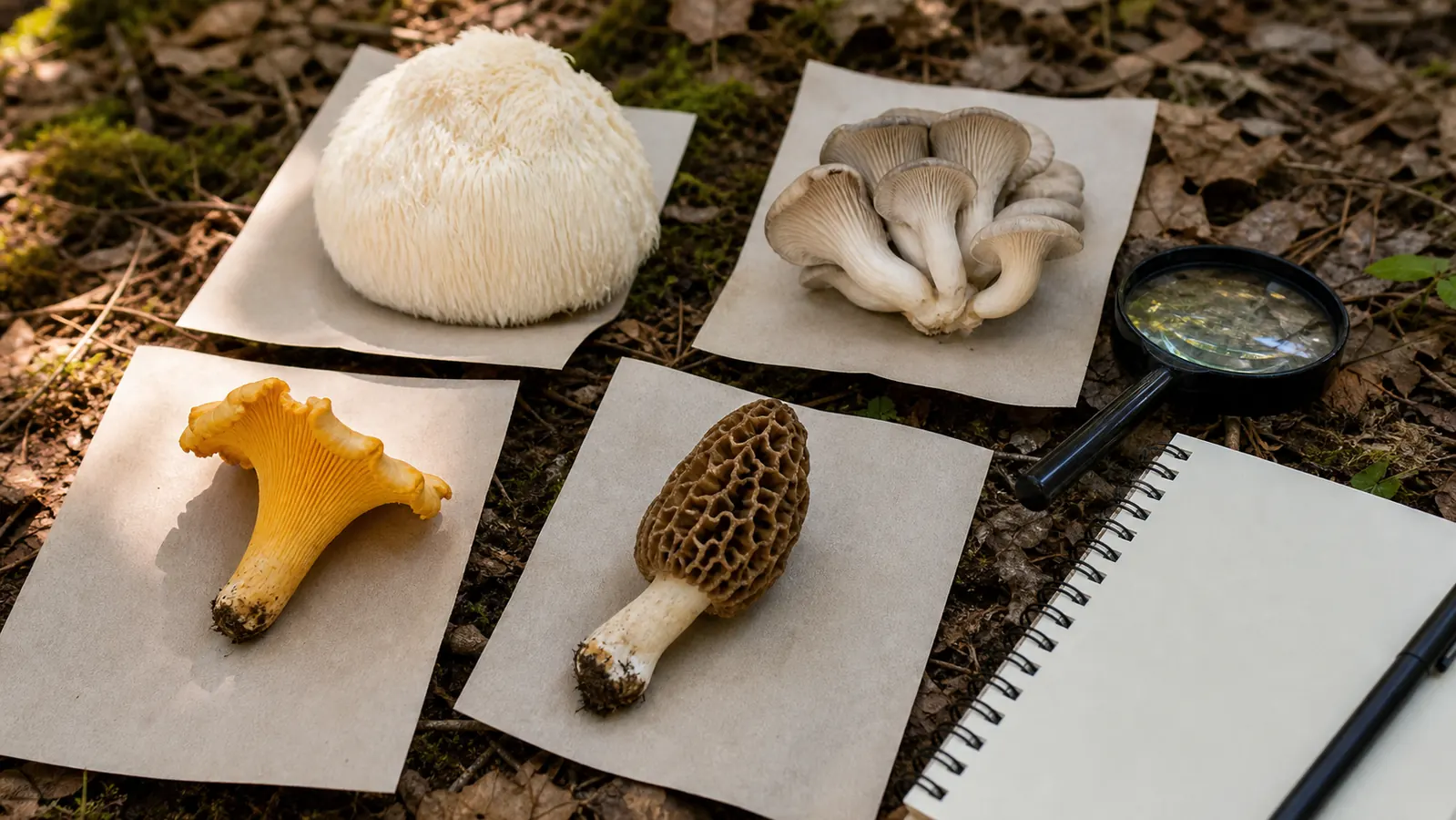
Lion?s mane is the clearest first field-study group because hanging teeth and hardwood growth provide several independent clues. Oyster mushrooms teach substrate and gill direction, chanterelles require a careful underside check, and morels belong later because the interior must be cut and inspected.
The best first mushroom to study has a structure you can describe from several angles, a habitat you can verify, and a short list of dangerous alternatives. Lion's mane and oyster mushrooms give a new forager the clearest early lessons, while chanterelles and morels belong later because they require closer underside or internal checks.
Start with structure, not popularity
A famous edible is not automatically a good first wild mushroom because popularity rewards flavor and tradition, while a useful learning species rewards repeatable evidence. You should be able to name the substrate, describe the underside, retain the whole base, and state which feature would disprove your identification.
| Group to study | Strong first clue | Habitat check | Feature that stops the identification |
|---|---|---|---|
| Lion's mane | White mass with hanging teeth | Attached to hardwood | Smooth pores, gills, or a normal cap |
| Oyster mushroom | Overlapping shelves with gills running downward | Dead or dying hardwood | Central stem, bright orange flesh, or growth from soil |
| Chanterelle | Blunt forked ridges under a wavy cap | Soil near living trees | Thin blade-like gills or a dense cluster on wood |
| Morel | Pitted honeycomb cap | Spring soil habitat | Brain-like folds or a chambered, cottony interior |
These clues remain starting points because reliable identification requires agreement among shape, attachment, substrate, season, and internal structure while every serious lookalike is ruled out.
The safest learning order also depends on where you live because a species common in an eastern hardwood forest may be scarce in a dry western region, and local toxic species change the comparison set. Use this order to choose what to study, then confirm the local species list with a regional field guide, mushroom club, or experienced identifier.
Key takeaway
Choose one group for several outings. Repeated observations of young, mature, wet, dry, and aging specimens teach more than a basket filled with unrelated mushrooms.
What makes a good local study species?
Choose a fungus that fruits often enough for repeated observation in a legal, accessible place. Seeing young, mature, wet, dry, fresh, and aging specimens teaches which features stay stable and which change with weather.
The useful species also exposes several independent characters without specialist equipment.
A beginner should be able to inspect the substrate, overall growth form, underside, attachment, complete base, flesh, odor, and spore deposit, then explain how those observations fit together. A bright cap with no reliable underside or habitat evidence makes a poor first lesson even when the species is famous.
The dangerous-alternative list must be short enough to study honestly and separated by features available in the field. If the nearest lookalikes require microscopy, chemical reagents, or DNA to distinguish, keep that group as a photography subject rather than a first edible target.
Because a prized basket creates pressure to resolve uncertainty in favor of eating, decide the rejection features before the trip, write them in the field notes, and let any conflict return the specimen to the study category.
Build a rejection card before the outing
Write the candidate group at the top of a small card, followed by the habitat and structures that must be present. Below them, list the observations that would end the identification, such as true gills where ridges are expected, growth from soil when the species requires wood, or a chambered interior where the mushroom should be hollow.
The rejection list should be specific enough that another person can repeat it from the same specimen.
For an oyster study, the card might require hardwood attachment, overlapping shelves, pale decurrent gills, and a short lateral stem, while orange flesh, a central stem, pores, or toothed undersides stop the name. The card does not identify the mushroom by itself, but it prevents the appealing cap shape from erasing contradictory evidence.
Photograph the completed card beside the specimen record and leave the mushroom uncollected when any required feature is hidden, damaged, or unresolved. An honest unknown teaches more than a confident name built from missing evidence.
Lion's mane gives the clearest first lesson
Lion's mane does not have a cap, gills, or pores because its fresh fruiting body forms a white to cream mass covered in soft hanging teeth. Those teeth are the spore-bearing surface, and they become longer and more obvious as the mushroom develops.
Because Hericium species fruit from hardwood trunks, wounds, stumps, and fallen logs, a white toothed mass on soil, mulch, or conifer wood needs another explanation before the lion's mane name fits.
Several closely related Hericium species share the tooth-like structure, but bear's head tooth and coral tooth branch more openly than the compact pom-pom form usually sold as lion's mane. A beginner can learn the group while still recording the exact branching pattern needed for a species-level identification.
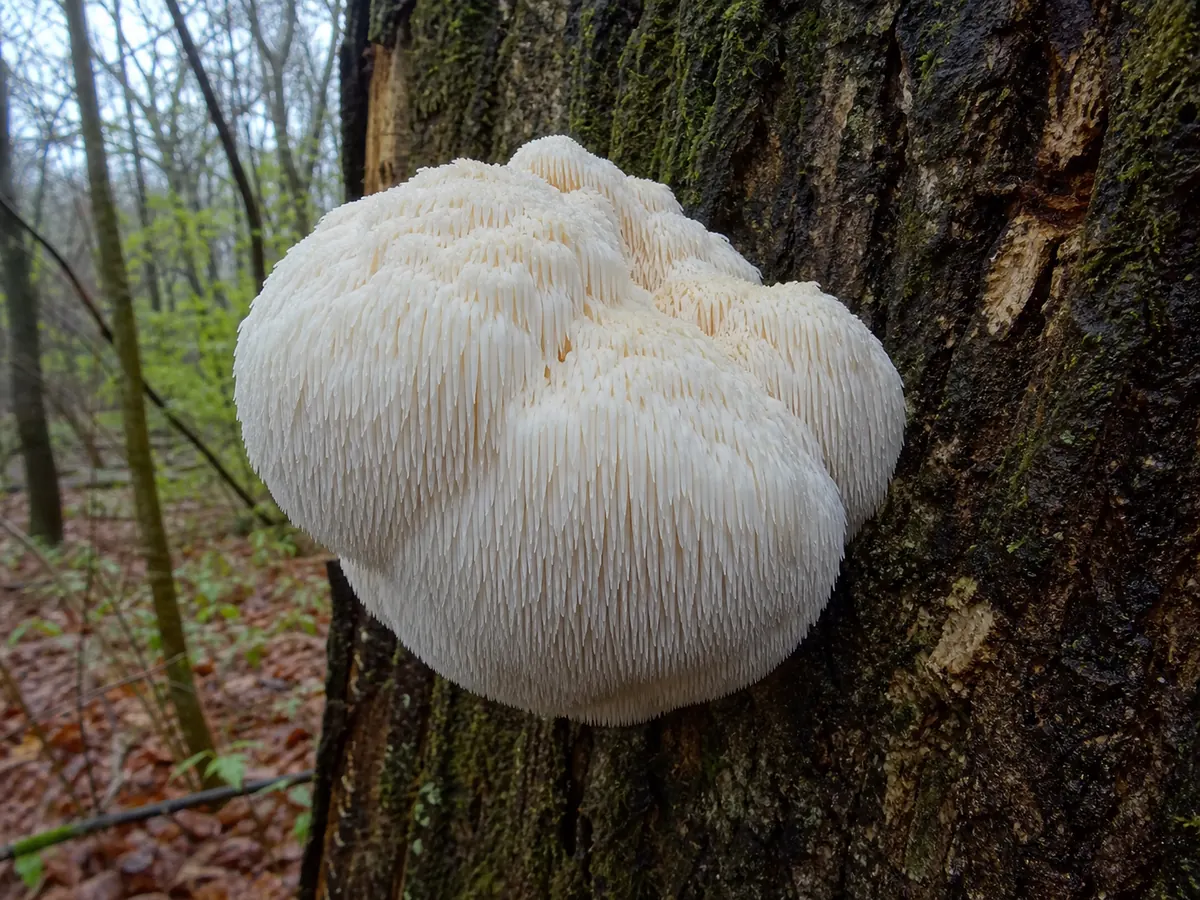
Age changes the useful field marks because fresh tissue is white and resilient, cream coloring can still be normal, and deep yellow or brown patches, a wet surface, insects, or a sour smell indicate an old specimen that should remain in the woods.
Even a distinctive shape does not settle whether a specimen should be eaten because you still need permission to collect, a clean site away from treated timber and road runoff, and local confirmation for a first find. Lion's mane is useful for study because its structure teaches careful observation without asking you to separate two nearly identical gilled caps.
ForagingWhen Is Oyster Mushroom Season?Oyster mushrooms teach substrate and cluster shape
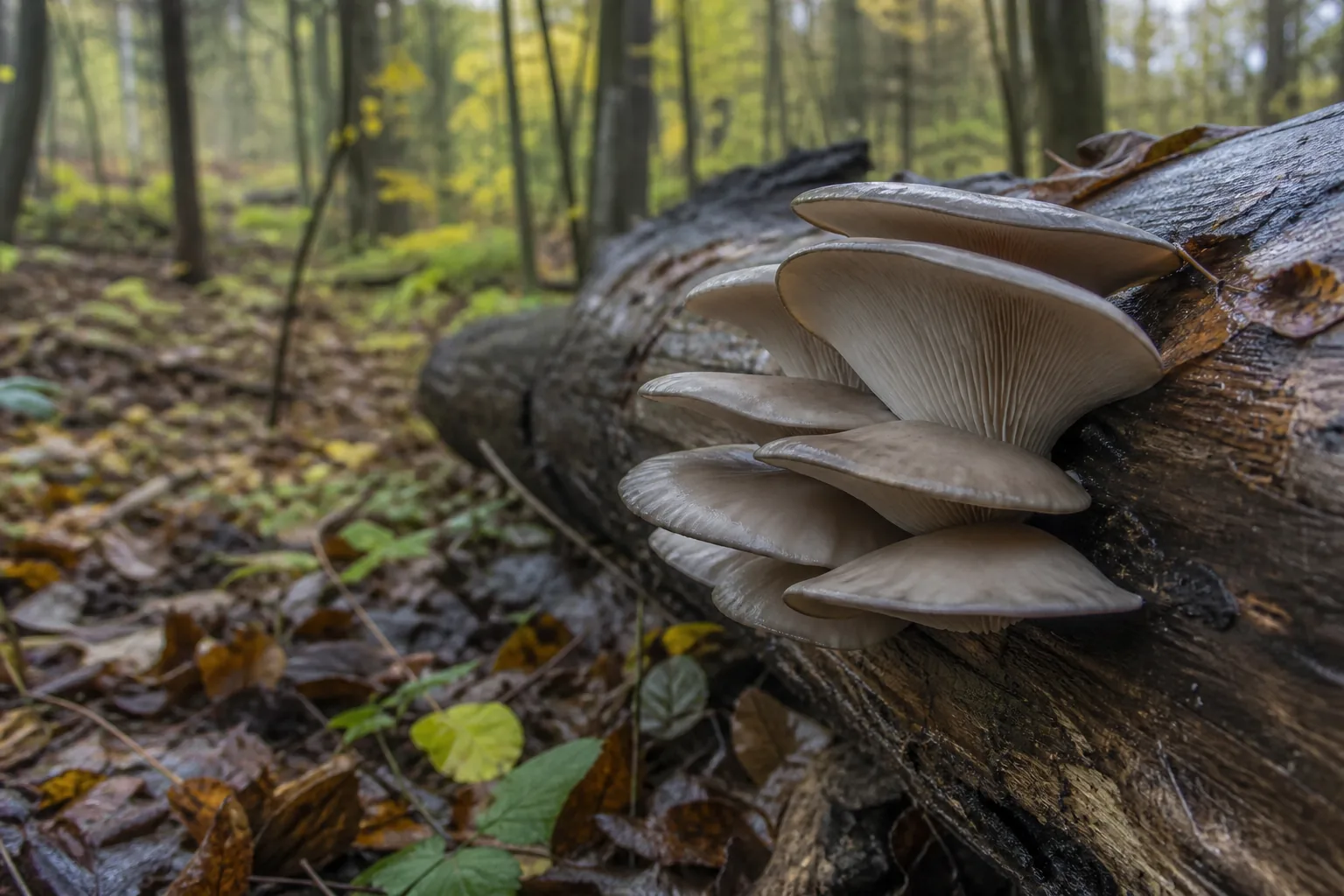
Oyster mushrooms usually grow as overlapping shelves from dead or dying hardwood, with a short, off-center, or nearly absent stem. Their gills run down toward the attachment, creating a coherent shelf shape rather than a cap balanced on a central stem.
Start with the substrate and trace whether the cluster attaches to a trunk, fallen log, or buried root because hidden wood can make a wood-growing species appear terrestrial.
The underside carries more weight than cap color because oyster caps range through white, gray, tan, and brown, while their crowded pale gills should continue down the short lateral stem. A specimen with pores, tooth-like spines, or widely spaced gills belongs elsewhere.
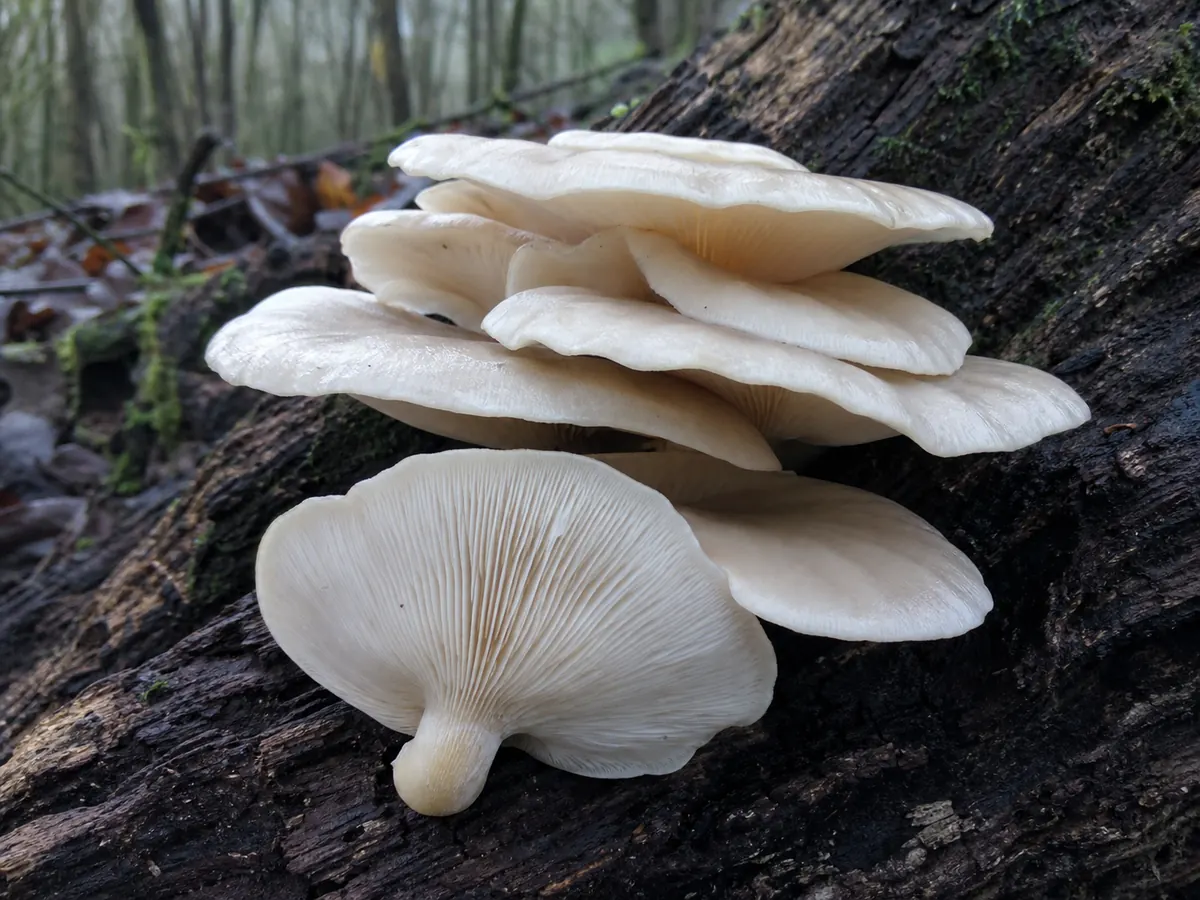
A spore print adds evidence when the specimen is mature enough to drop spores, and the white to pale lilac-gray result typical of Pleurotus supports the identification without repairing a conflict in habitat or structure.
Orange clustered mushrooms deserve particular caution because jack o'lantern mushrooms grow from wood or buried roots and have true gills, so the broad ideas of "clustered" and "wood-growing" do not separate them from oysters. Their orange color is obvious, but the safer habit is to compare color, gill form, stem position, flesh, and spore print together.
Cultivated oyster mushrooms offer a useful control specimen that you can study from the cap margin to the attachment point, print for spores, and watch as the gills change during expansion. That repeated reference makes later field observations more disciplined, but it never proves that an unknown wild cluster is edible.
Chanterelles come after you can read the underside
Chanterelles attract beginners with visible yellow or orange caps, but the decisive lesson is underneath where blunt ridges replace the thin independent gills that color can hide.
Run a fingertip lightly across the underside because chanterelle ridges feel like folds in the flesh, fork repeatedly, and often show small cross-veins between them. Sharp gills stand as separate blades and can usually be moved or broken individually.
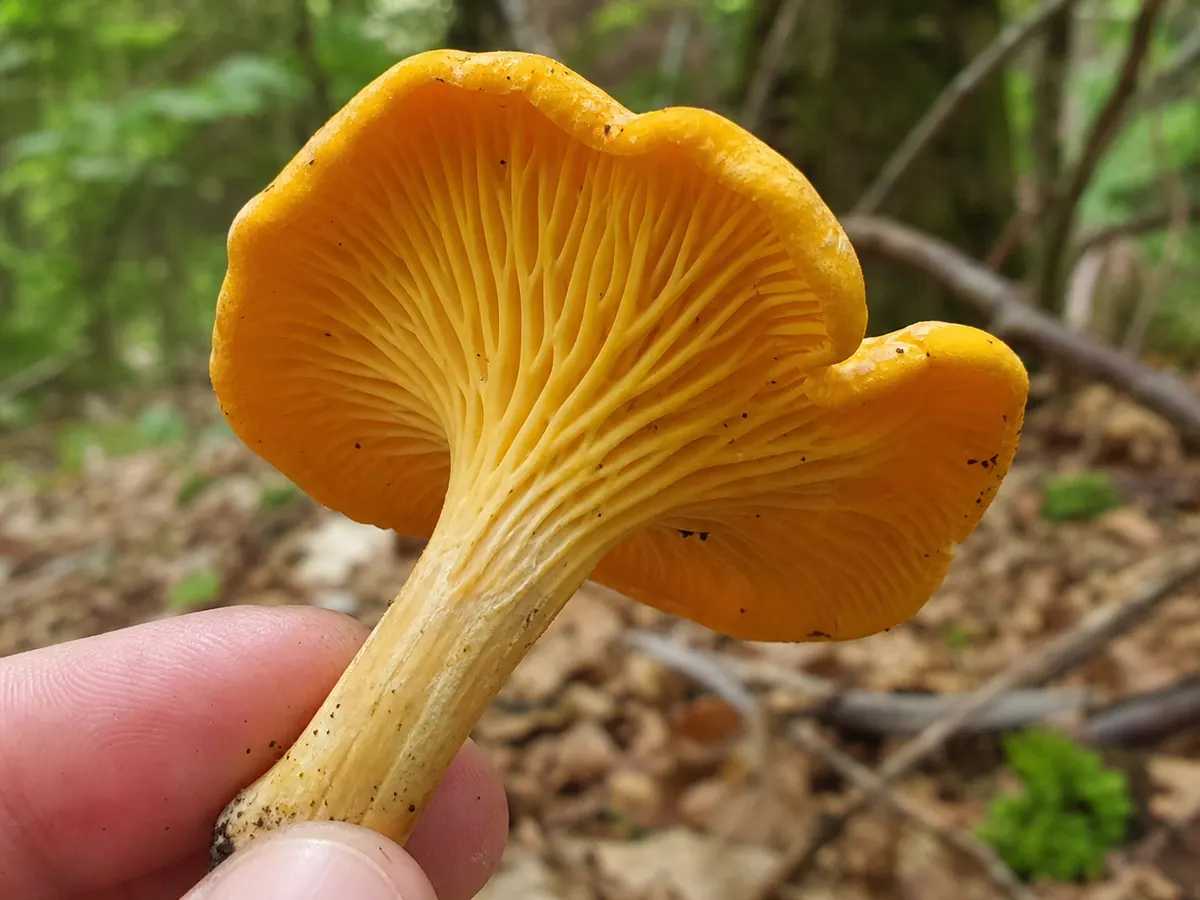
Habitat provides the second strong check because chanterelles grow from soil in partnership with living trees, often singly or in loose groups. Jack o'lantern mushrooms fruit in dense clusters from stumps, trunks, or buried roots, even when the wood is hidden below the soil surface.
In a mixed chanterelle patch, pale solid flesh and a mild apricot-like odor can support the identification, but variable smell must remain secondary to stable structural evidence.
Do not collect a mixed patch into one food basket because a bright orange toxic cluster and scattered chanterelles can fruit within the same woodland, while broken pieces become harder to reconstruct at home. Keep study specimens separated and labeled until every one has been checked.
ForagingWhere to Find Fall Mushrooms After the First Cool RainsMorels are a second-stage mushroom
Morels look memorable because their caps have honeycomb-like pits and ridges, but spring woods also produce false morels with folded or brain-like caps. A beginner who stops at "wrinkled spring mushroom" has not completed the identification.
Cut one specimen from cap tip through stem base to confirm the continuous hollow chamber and attached cap of a true morel, while rejecting chambers, cottony tissue, or disorderly folds associated with false morels.
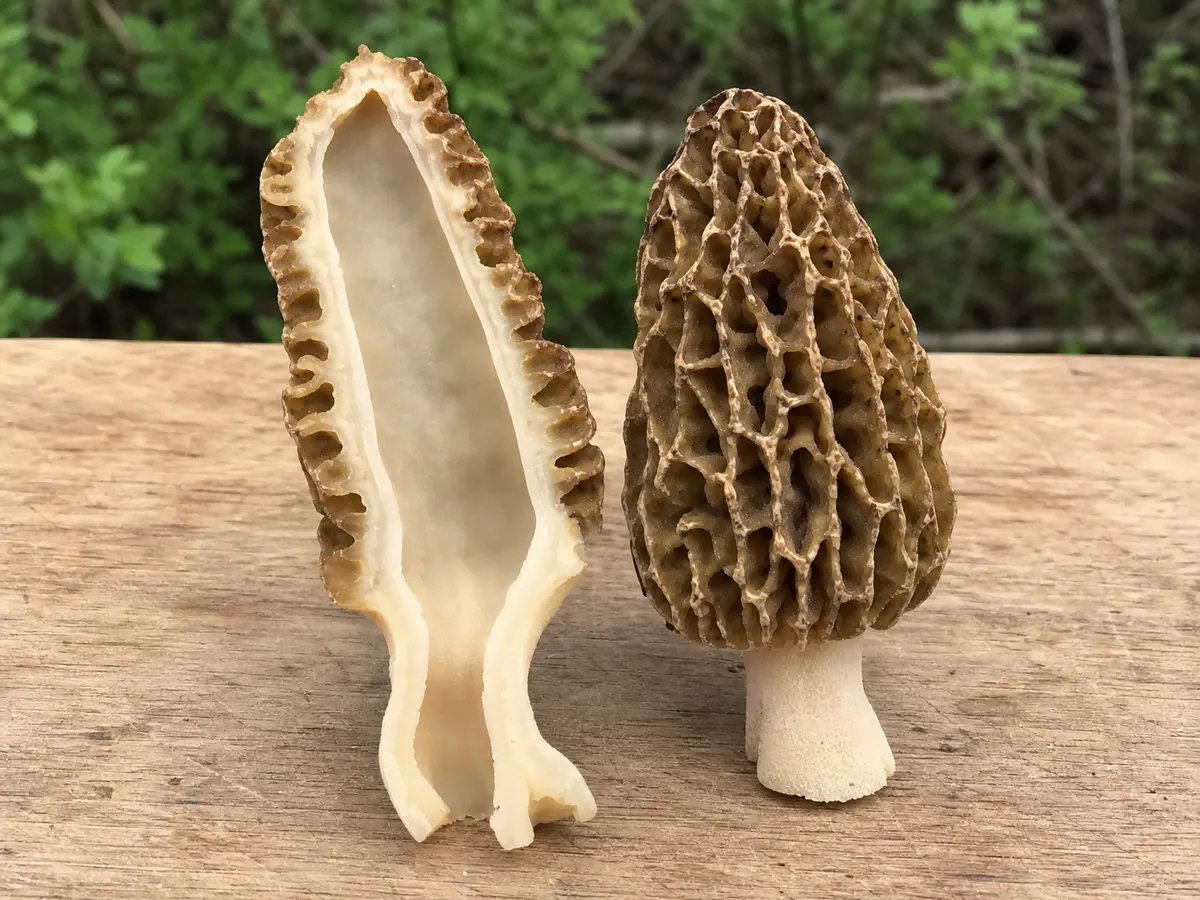
The comparison needs more than one binary test because half-free morels have a cap attached partway down the stem and several false morel species vary in shape. Learn the local spring species and compare cap attachment, internal structure, stem texture, habitat, and season together.
True morels also require thorough cooking because raw or undercooked morels can cause gastrointestinal and neurological illness, and alcohol has been associated with reactions in some meals. A correct name therefore does not finish the safety decision.
Because their culinary value encourages haste, morels belong after a learner has practiced retaining whole specimens, making decisive cuts, and comparing several traits without rushing.
Use one repeatable confirmation record
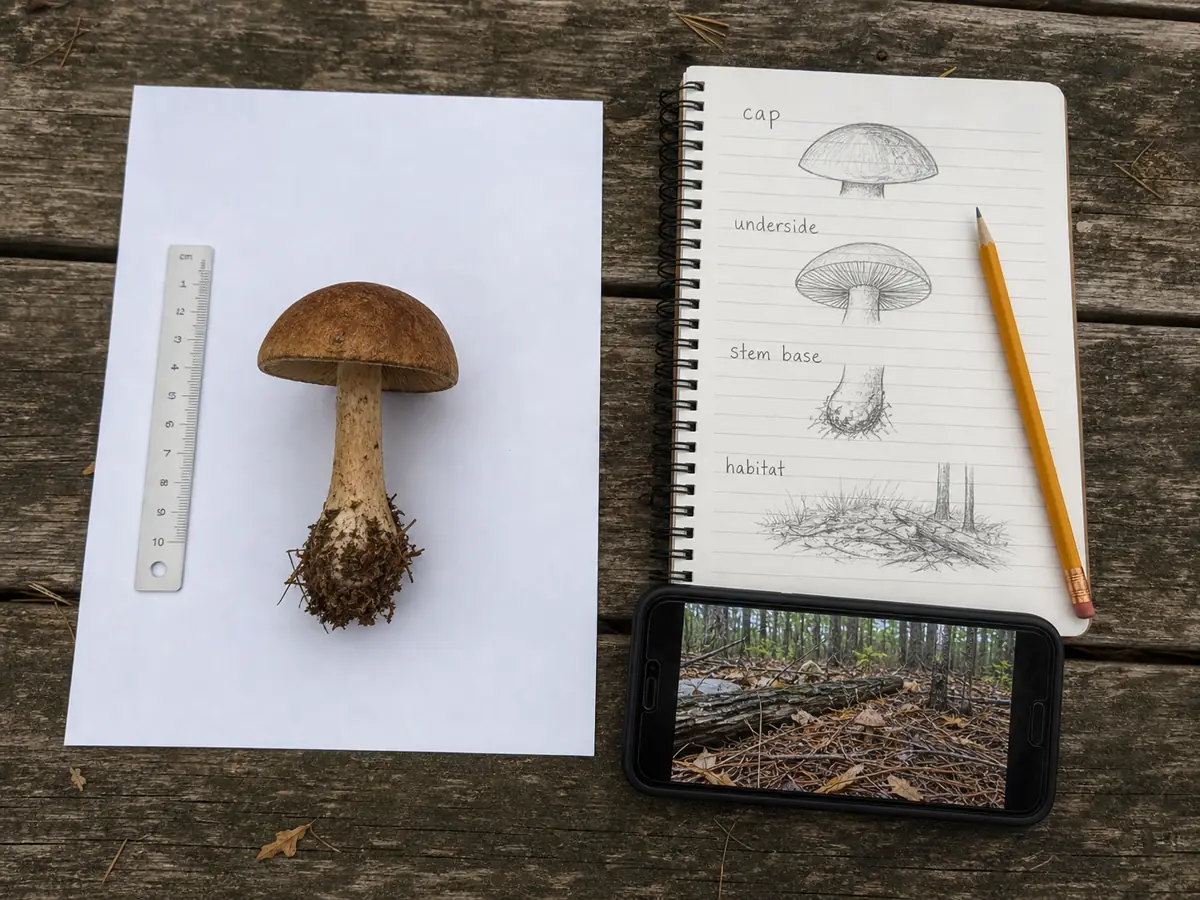
A good field record lets another person understand what you saw without handling the original habitat, so begin with photographs before picking. Capture the cap from above, the underside, the full stem and base, the attachment point, nearby trees, and a wider habitat view.
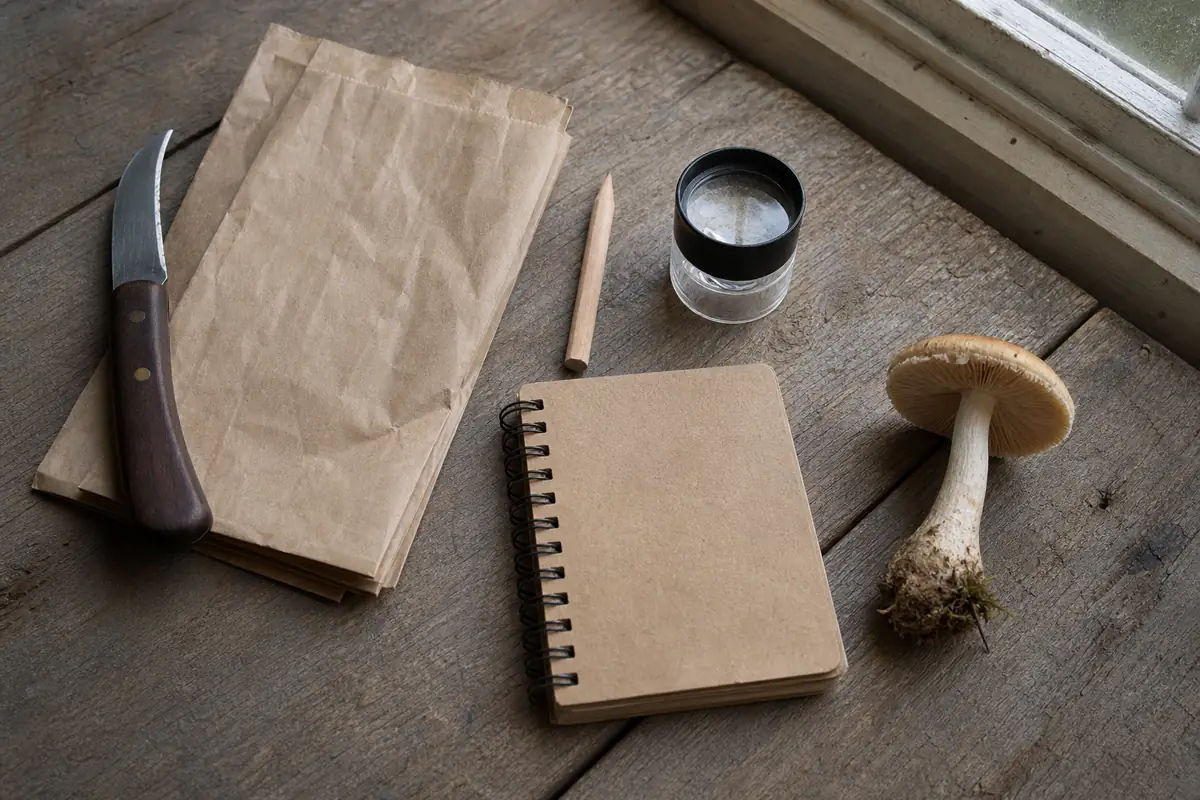
Keep the whole specimen when collection is legal because snapping a stem at ground level can remove a buried cup, swollen base, rooting structure, or wood attachment that changes the identification. Wrap each unknown separately in waxed paper or a small paper bag and write the location, date, and substrate on the package.
Use that specimen record with a regional guide to compare the full description and lookalike entries, giving one contradictory feature more weight than five broad similarities.
Bring the completed field record to a local mushroom club, extension educator, or experienced identifier because online photographs hide texture, true color, odor, and three-dimensional attachment.
Keep unknowns away from confirmed food, and do not let loose pieces, spores, or cooking prep erase which specimen came from which location. A clean separation rule protects the evidence as well as the meal.
Build experience without building a dinner basket
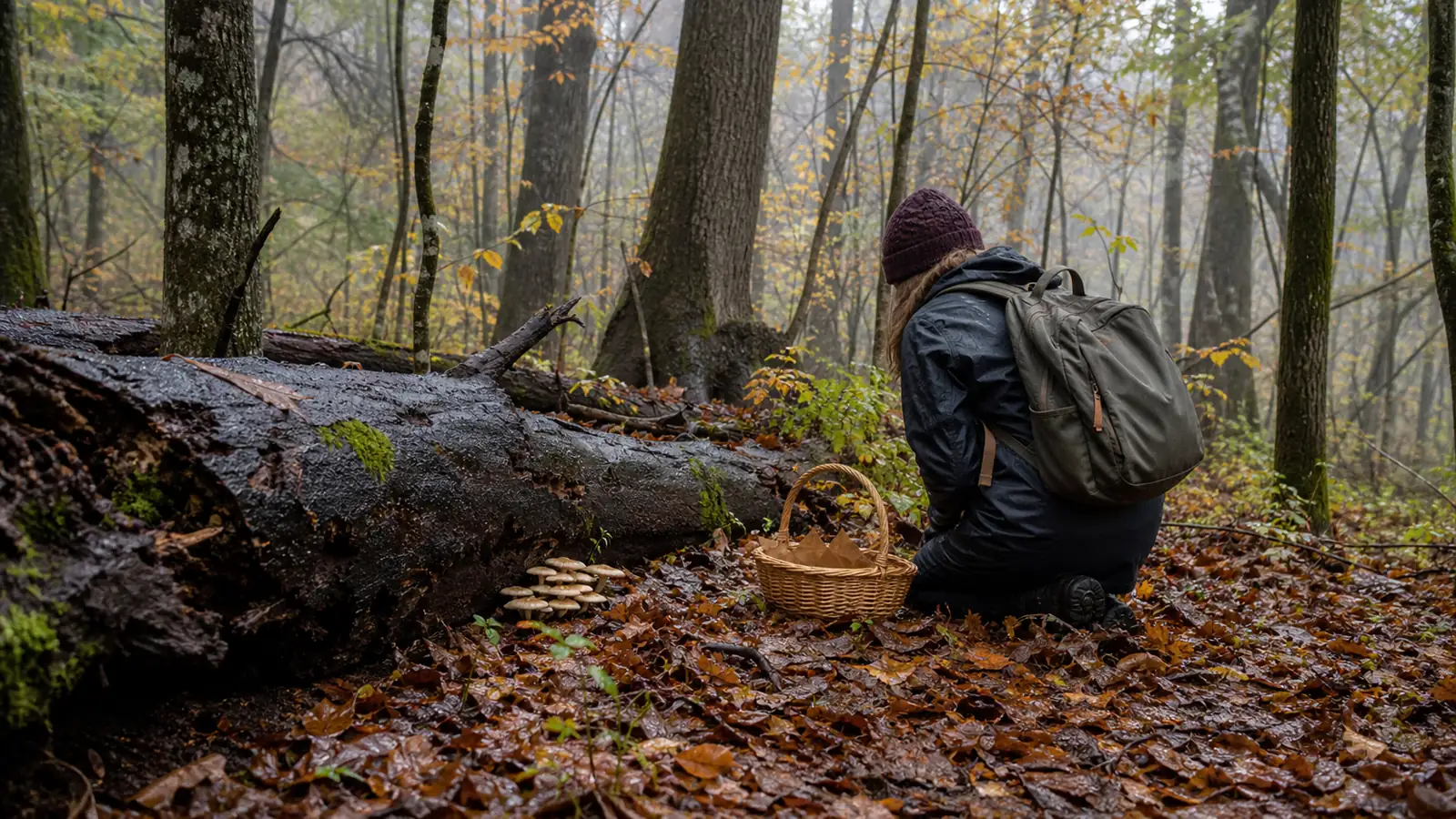
Make the first outing a photography study of one mushroom group across several ages, leaving specimens in place unless supervised collection has a defined purpose and keeping every find outside the food decision.
On the second outing, repeat the same group in another habitat and compare wet and dry caps, young and mature undersides, and different host trees. Repetition reveals which features remain stable and which ones change with weather.
Use the third stage for direct comparison with a knowledgeable local person, asking them to show the feature that rules out the dangerous alternative before you explain the identification back in your own words. If you cannot state the reject feature clearly, keep the mushroom in the study category.
Warning
No number of outings guarantees that a wild mushroom is safe. Eat a new species only after in-person confirmation, keep a complete uncooked specimen, cook it thoroughly, and try a small portion without mixing several new species in one meal.
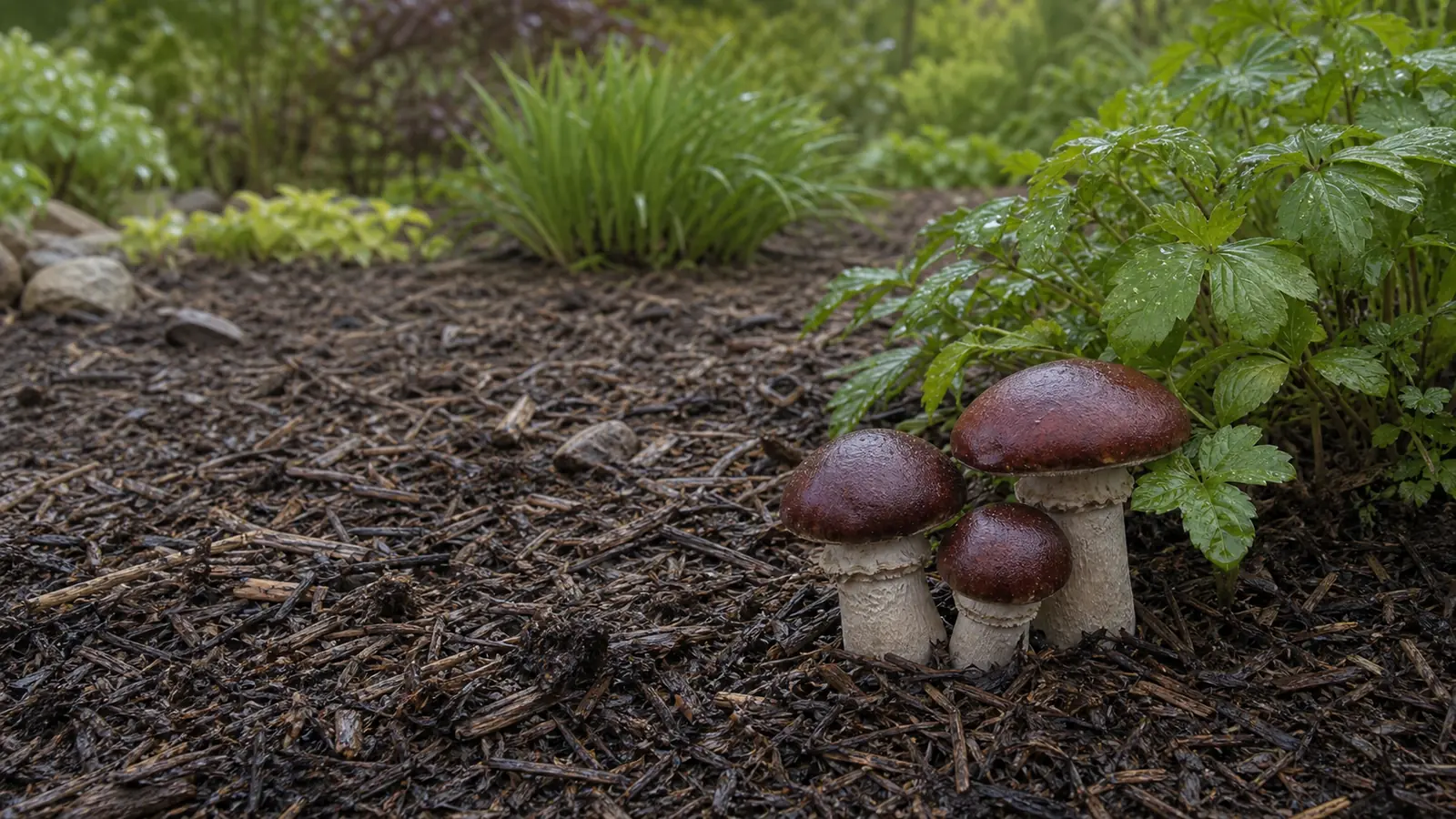
The images are shown as examples only and should not be used for identification.
North American Mycological Association
The best beginner mushroom is the one you can study repeatedly and verify locally, with lion's mane offering the cleanest structural lesson, oysters teaching attachment and gill direction, chanterelles training the eye to separate ridges from gills, and morels showing why an internal cut can matter more than a familiar outline.
Sources & References
- Poison Control, Wild Mushroom Warning Identification features, regional lookalike risk, delayed symptoms, and the need for expert confirmation.
- North American Mycological Association, Mushroom Poisoning Syndromes Toxic syndromes, false morel risk, cooking limitations, and emergency guidance.
- MushroomExpert.com Species descriptions and identification terminology for North American mushrooms.