What makes oyster mushrooms beginner-friendly?
Oyster mushroom questions usually split in two. Some people are checking a shelf mushroom on wood, while others want a beginner grow that fruits fast on simple substrates.
This profile is for the common oyster group around Pleurotus ostreatus. It does not make every pale shelf mushroom edible.
The safest path is boring in a good way. Confirm the wood, the gills, the flesh, and the smell before cooking or cloning a wild find.
Oysters reward a careful eye because their best traits and their safety checks are the same traits. The shelf shape, the white gills running down, and the wood all point one direction.
The payoff in the kitchen is a mild mushroom that soaks up sauce and browns into a chewy, savory bite.
Oysters are also the bridge between foraging and growing. The same traits that confirm a wild cluster, shelf growth, white decurrent gills, and wood attachment, also explain why the species fruits so well on straw, pellets, and hardwood blocks.
That does not mean every shelf is dinner. Treat the ID as a stack of checks, not one lucky match. If the wood, underside, flesh, and freshness do not agree, move the find into the dangerous lookalikes habit and leave it out.
How do you identify oyster mushrooms safely?
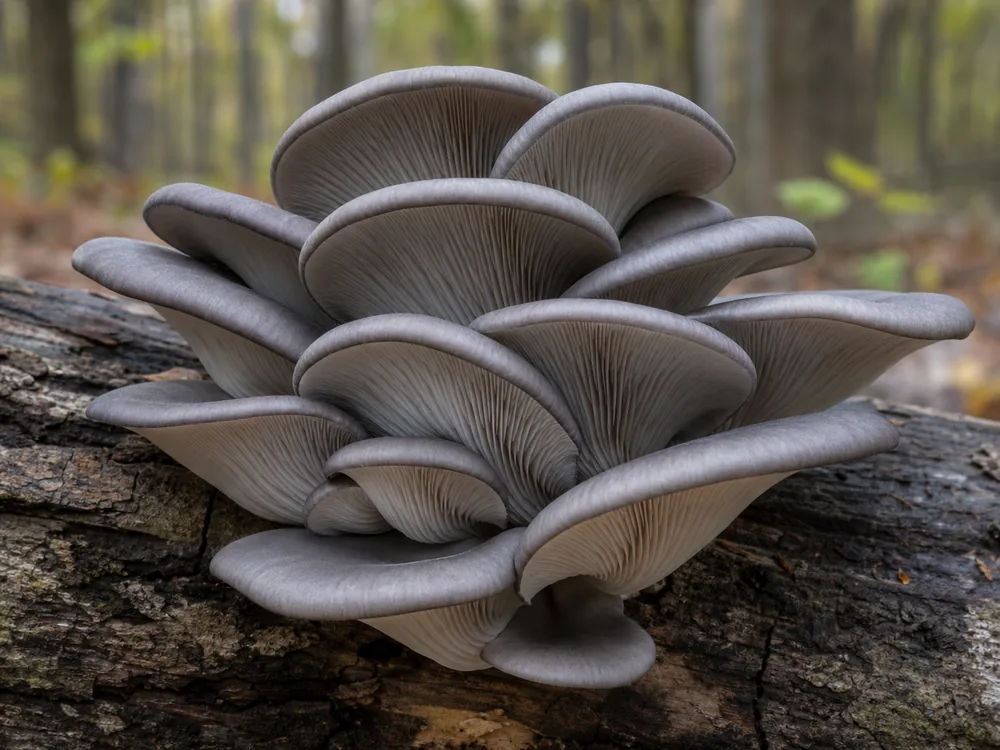
Oyster- or fan-shaped, 5 to 25 cm, gray to tan, growing in overlapping shelves.
White, decurrent gills running down onto a very short (or absent) stem.
Short, off-center, or absent. Caps grow shelf-like from wood.
Soft white flesh with a mild, faintly anise or seafood-like smell.
Start with the wood. True oysters usually form shelves on dead or dying hardwood, not as single mushrooms from soil.
The cap should be fan-shaped or shell-shaped, gray to tan, with white flesh. The gills run down toward a short off-center stem or a nearly stemless attachment.
Pause on thin pure-white shelves on conifer wood. That pattern can point to angel wing, which is not treated as a safe oyster mushroom here.
Take a spore print if you can. A true oyster drops a white to pale lilac-gray print, which helps separate it from other pale shelf fungi.
Snap a piece and smell it. A fresh oyster is soft and gives off a mild scent some people compare to anise or a faint seafood note, never sour or chemical.
A spore print is useful when the visible traits already point toward oyster but you still need one more support clue. It should be white to pale lilac-gray, not dark brown or rusty.
Do not use the print to rescue a bad habitat call. A thin white shelf on conifer wood is still a stop sign for beginners, even before the print is finished.
Thin pure-white shelves on conifer wood are not your oyster. Confirm hardwood and gills that run down the stem.
The hardwood and gill check
Oyster mushrooms have no deadly counterfeit across most of their range, which is part of why they are recommended to beginners. The cautions that matter are regional, and one of them is serious.
Angel wing, Pleurocybella porrigens, is the one to know.
It is pure white, thinner and more fragile than an oyster, and it grows on conifer wood rather than hardwood. It has been linked to fatal poisonings, mostly in people with existing kidney disease.
Substrate is therefore part of the identification rather than a side note. An oyster-shaped white mushroom on a pine or spruce log is not an oyster mushroom.
Several ordinary look-alikes are merely disappointing. Mock oyster is orange and fuzzy, and various small shelf fungi are too tough to be worth carrying home.
How do you cook oyster mushrooms well?
Cook oysters hot enough to drive off moisture and brown the edges. Tear large caps into strips so the thick base and thin edge cook at the same pace.
They are mild, so they work in stir-fries, soups, tacos, and risotto. When a recipe calls for shiitake but you want a softer texture, a shiitake substitute can be oyster mushroom instead.
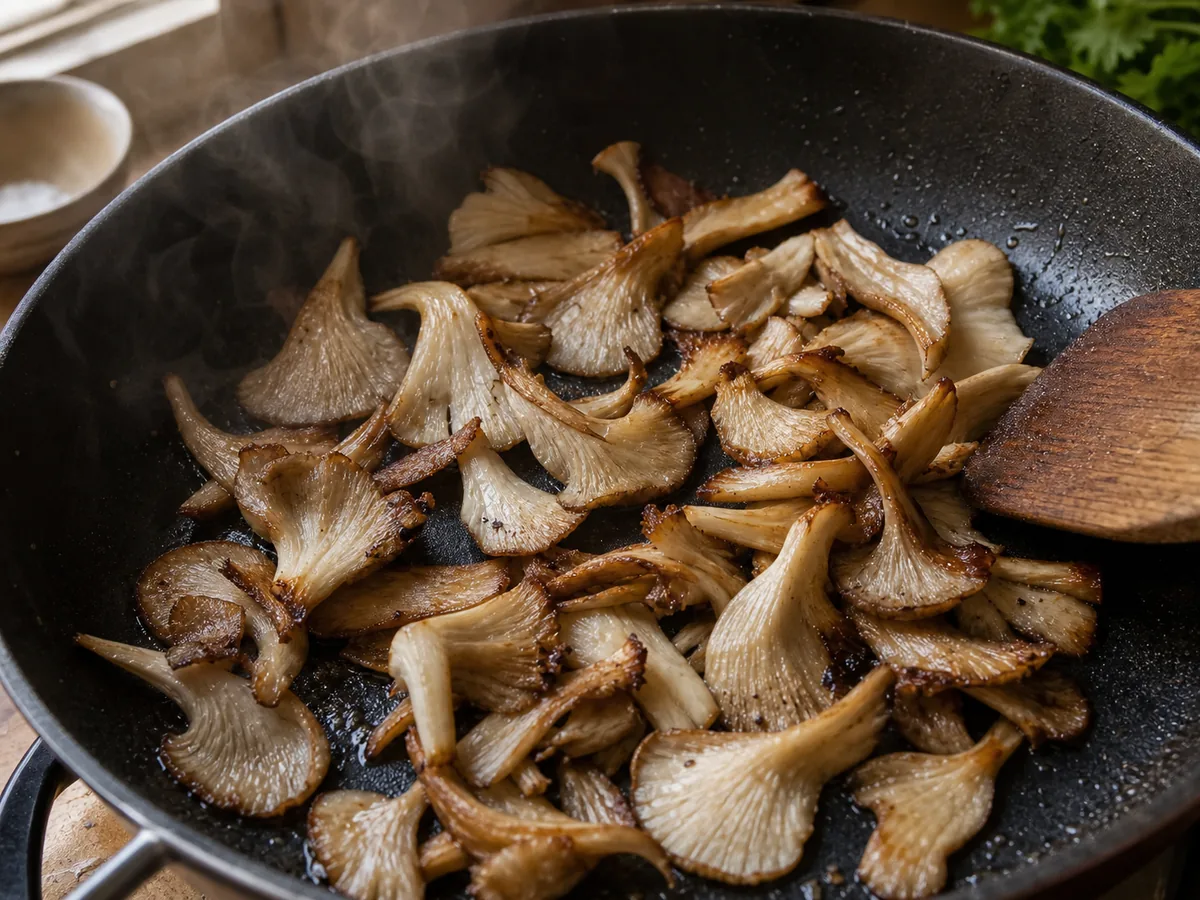
Avoid crowding the pan. Oysters hold water, so a packed pan steams them into a limp texture instead of browning them.
Young caps have the best texture. Older, tougher clusters still earn their keep in soups and stocks, where a long simmer softens them.
Tip
For crisp, lacy edges, spread torn oyster pieces on a tray and roast them in a hot oven until the thin margins turn golden.
Tear oyster mushrooms along the grain rather than slicing them across. The torn edges catch more heat and crisp, while a clean knife cut tends to go leathery.
They brown fast because they hold less water than most cultivated mushrooms.
Give them room in a hot pan and resist stirring for the first minute or two. Crowded oysters release liquid and stew, which is the difference between a crisp edge and a gray pile.
Why are oysters the first home-grow mushroom?
Oysters are the classic first grow because they colonize quickly and tolerate simple setups. Straw, pasteurized pellets, and ready-to-fruit blocks are more reliable than starting from a wild log.
The full process works best when oyster mushroom growing starts before buying spawn or building a fruiting chamber.
Contamination is the usual beginner setback. Clean hands, fresh substrate, and good airflow do more for success than any fancy gear.
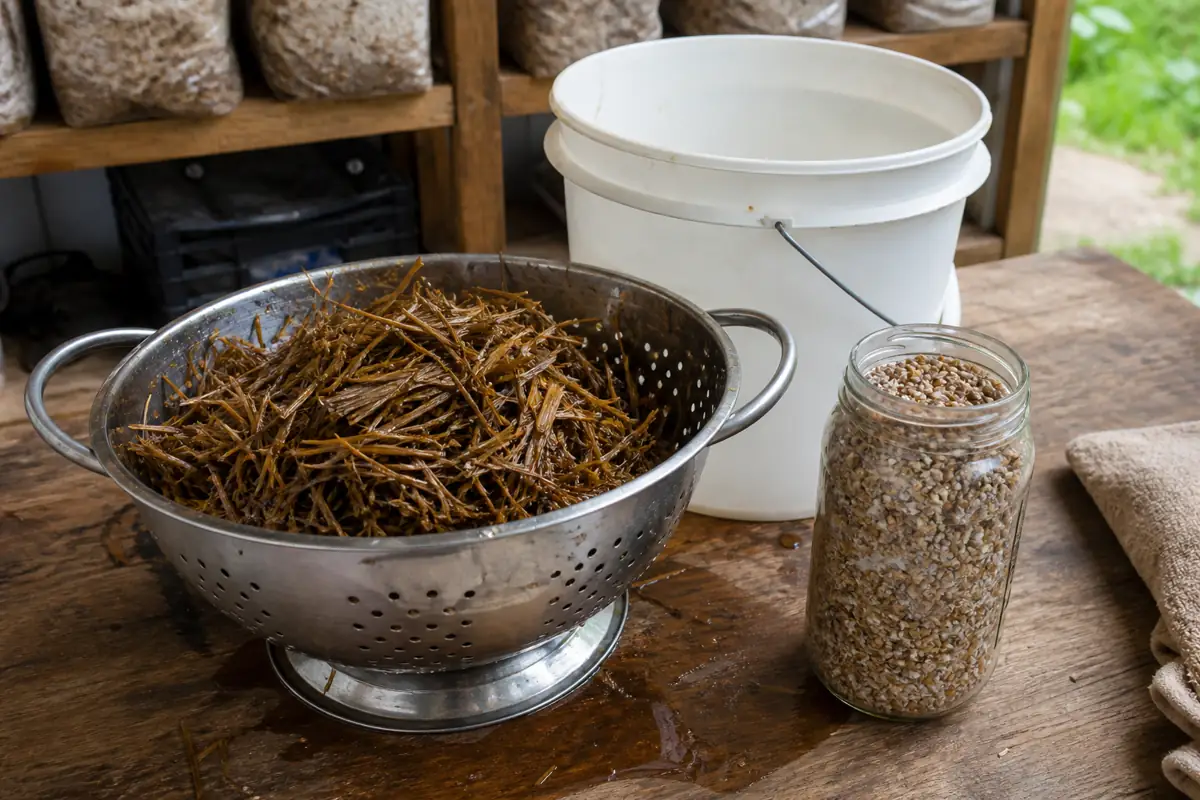
One caution for indoor growers. Fruiting oysters release clouds of spores, so people with asthma or spore allergies should vent the area well or grow outdoors.
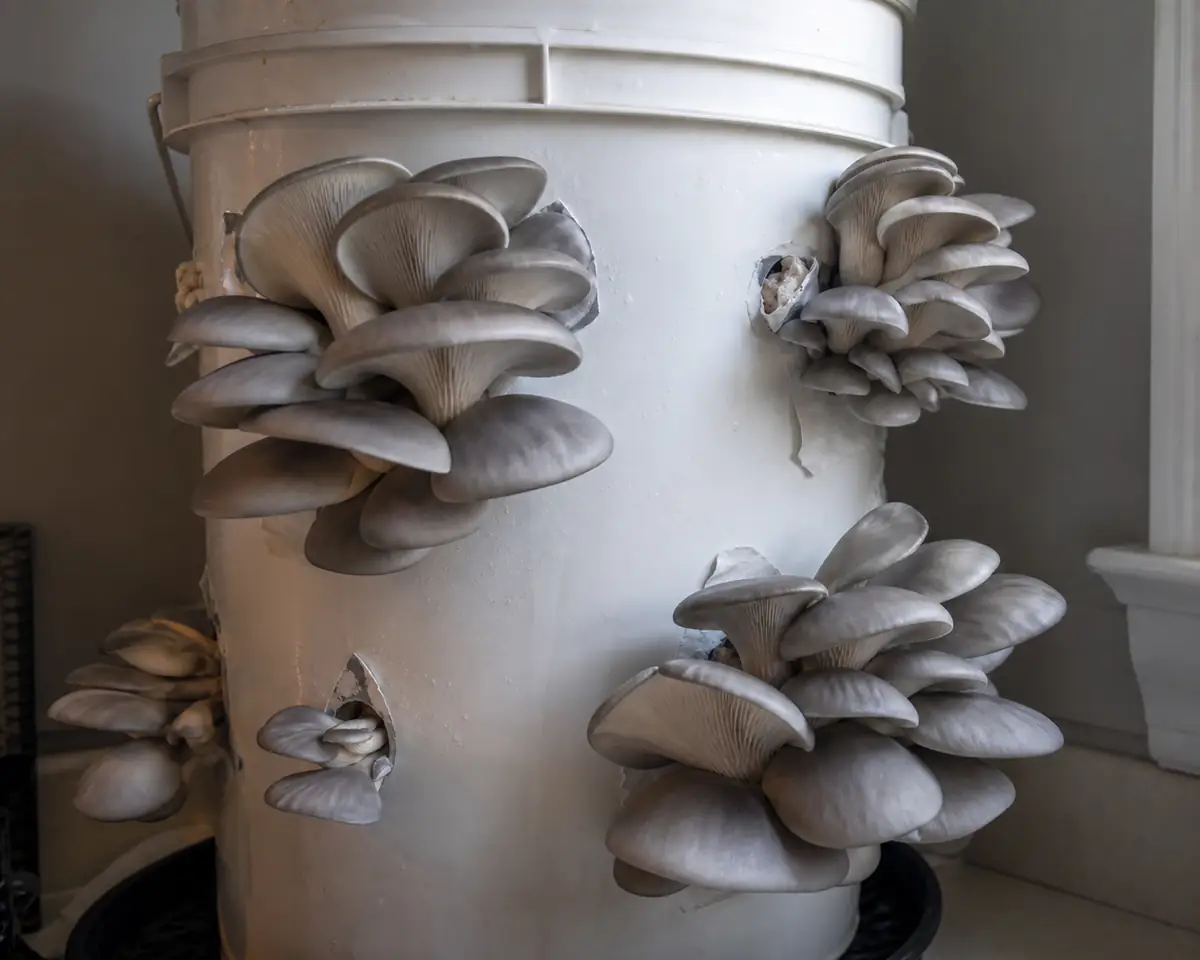
Watch cap shape as a feedback signal. Long stems and tiny caps usually mean the grow needs more fresh air. Dry cracked caps usually mean humidity is too low.
For a first grow, oysters are more forgiving than shiitake because they colonize fast and show problems quickly. Compare the tradeoff with oyster vs shiitake before choosing a kit.
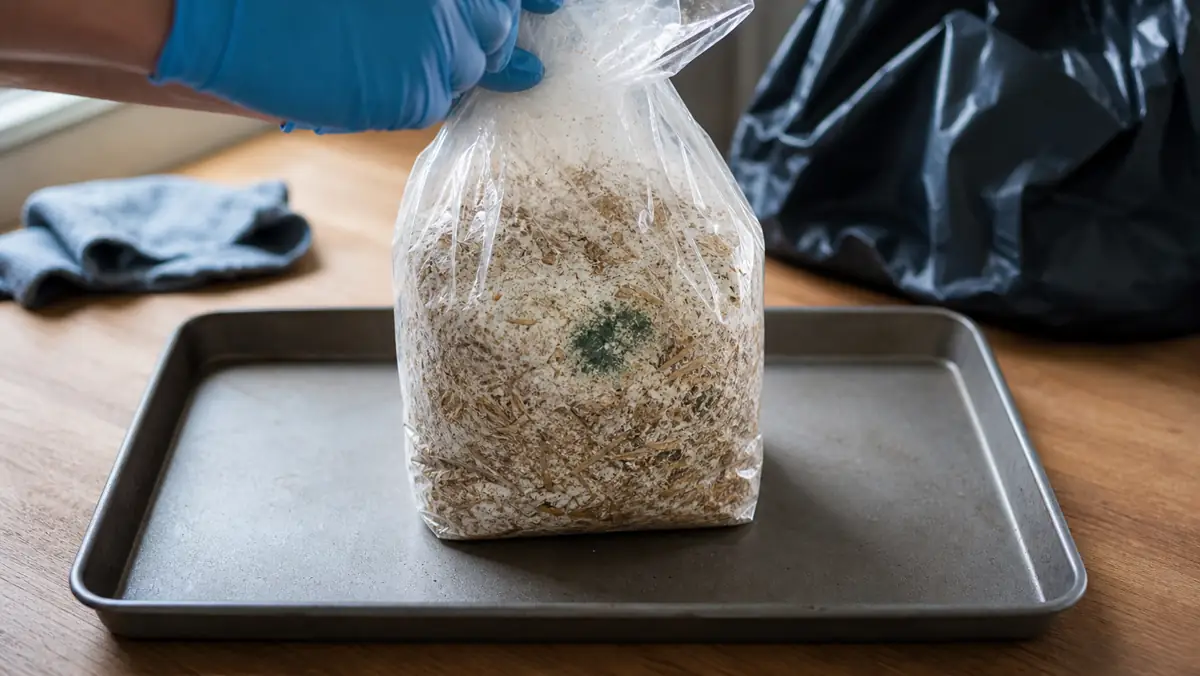
Indoor growers should plan for spores before the first flush. If you cannot vent the room or harvest before caps flatten, grow outside or choose a smaller fruiting block.
Start with a ready-to-fruit block if you want the least setup.
Give pins humidity and fresh air at the same time.
Seal oysters in a wet container with no air exchange.
Try to rescue a sour or green-molded bag indoors.
What nutrition do oyster mushrooms add?
Oyster mushrooms add fiber, B vitamins, iron, and more protein than many vegetables. Cook them before eating, especially if you are trying wild oysters for the first time.
Among common cultivated mushrooms, oysters are a decent source of plant-style protein and B vitamins. They stay low in calories and fat.
The protein is modest next to meat or beans, so treat oysters as a flavor and texture food that adds a little extra.
For meal planning, oyster mushrooms sit closer to a vegetable than a protein main. Pair them with beans, eggs, rice, tofu, or meat if the plate needs staying power.
The final field decision should sound plain. Keep the cluster only when the wood, gills, flesh, smell, and freshness all agree. If the mushroom is thin, pure white, growing on conifer wood, sour, slimy, or too old to cook well, leave it.
For store-bought oysters, the decision is easier. Cook them hot, give them room, and use them for texture rather than expecting a strong mushroom flavor.
For home-grown oysters, harvest before caps flatten and drop heavy spores. That keeps the texture better and makes the grow room easier to breathe in.
The last check is freshness. Oysters age quickly after harvest, especially in plastic. Store clean clusters in a paper bag, trim tough bases, and cook them within a few days.
If the edges are dry but the smell is still mild, soup or stock is a better use than a quick saute. If the smell is sour, throw the cluster away.
Do the same with home-grown clusters. A clean grow can still sit too long after harvest. Good oyster mushrooms should feel springy, not wet, collapsed, or sticky.
That last freshness check matters as much as the field marks once the cluster reaches the kitchen. A good ID can still become bad food if the harvest spoils.
Why does hardwood matter for oyster ID?
Oysters recycle dead hardwood. They break down logs, standing dead trees, and storm-felled branches, especially in cool wet weather.
They are also unusual hunters at the microscopic level. Oyster mycelium can trap and digest nematodes, which helps the fungus get nitrogen from wood that is otherwise poor in nutrients.
You will often find oysters after a cold snap, since many strains fruit in fall and winter when other mushrooms have stopped. Look on dead elm, beech, aspen, and poplar.
The same cluster can produce several flushes from one log as the wood slowly breaks down. A downed trunk can stay productive for a season or more.
The cool-season timing helps separate classic pearl oysters from some close relatives. Warmer weather can bring paler summer oysters, so use season as support, not proof.
| Field clue | What it changes |
|---|---|
| Hardwood log | Supports oyster ID and rules out the main angel-wing caution for beginners. |
| Decurrent gills | Shows the oyster-style underside rather than a bracket with pores. |
| Cool wet weather | Fits classic Pleurotus ostreatus, especially fall through early spring. |
| Sour smell or slime | Stops the harvest because freshness failed. |
Are oyster mushrooms medicinal?
Oysters contain beta-glucans and other compounds that make them a healthy food. Do not treat a dinner portion as medicine or use it to replace care.
Oysters naturally contain lovastatin, a compound related to a cholesterol drug, though the amount in a meal is small and hard to pin down. Eat them as food, not as a way to manage a health condition.
As with any mushroom, cook them first. Cooking improves both how they sit in the stomach and how they taste.
Be careful with big health claims. Oyster mushrooms are useful food, and their biology is interesting, but a skillet portion is not a cholesterol treatment, cancer treatment, or pollution cleanup plan.
Oyster mushrooms contain lovastatin naturally, the same compound developed into a cholesterol drug. The amount in a normal portion is far below a therapeutic dose, so this is a point of interest rather than a reason to eat them medicinally.
It is worth knowing if you already take a statin, because the food and the drug act on the same pathway. That is a conversation for a clinician rather than a reason to avoid the mushroom.
Taxonomy & Naming
Genus Pleurotus, several species (pearl, king, pink, golden) are sold as oyster mushrooms.
The name Pleurotus means 'side ear', a nod to the way the caps grow sideways off wood with an off-center stem. That growth habit is built into the biology.
King oysters, Pleurotus eryngii, look different from the classic shelf, with a thick white stem and a small cap. They are the same broad group and are prized for a meaty texture.
Oyster mushroom safety and growing questions
Are oyster mushrooms easy to grow?
What is the angel wing lookalike?
Can oyster mushrooms grow on conifers?
Do oyster mushrooms need long cooking?
Can you eat oyster mushrooms raw?
Why do my home-grown oysters smell strong?
Sources & References
- Farmscape Ecology Program Oyster mushroom habitat, decurrent gills, edible caution, and angel wing lookalike notes.