
Oyster Mushroom Substitute: What Works for Which Job
Oyster mushrooms are among the mildest cultivated species, so almost anything substitutes on flavor. What is hard to replace is the structure: a thin fan-shaped cap that tears along the grain into ragged strips and crisps at the edges. Maitake is the closest match because it comes apart the same way and browns harder, while king oyster shares the name and none of the structure. If all you have is button mushrooms, slice them thin and brown them hard.
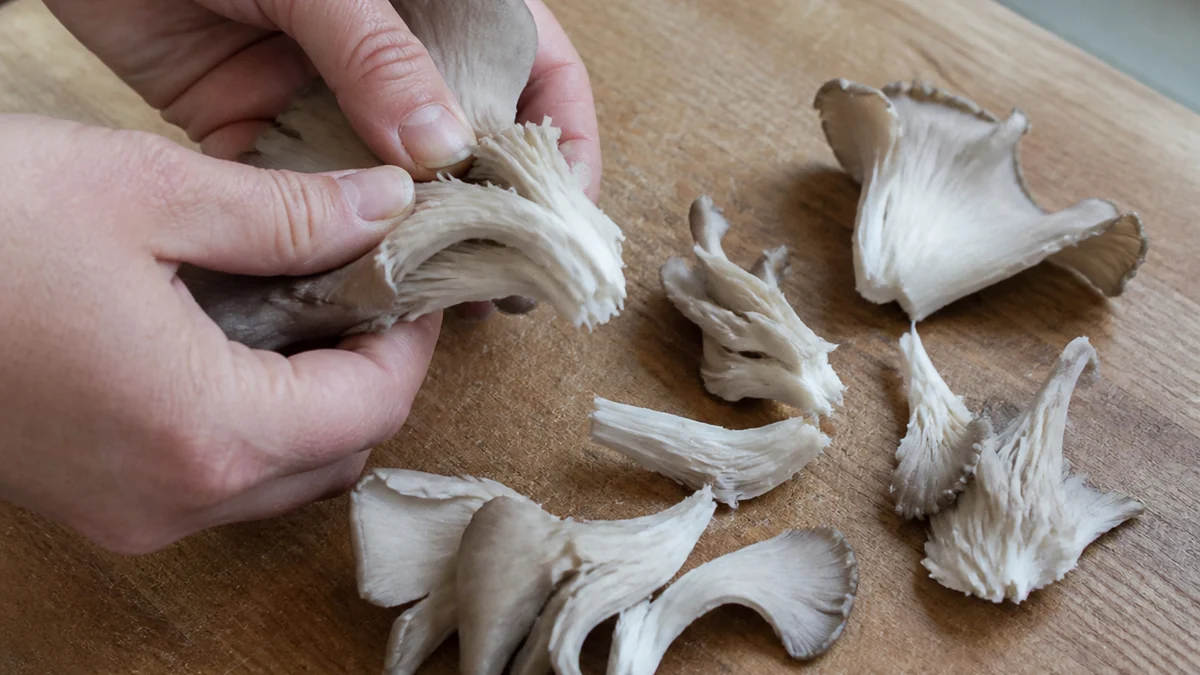
The closest match and not close. It comes apart into fronds the way an oyster tears into strips, and the ruffled surface browns harder than any oyster does.
The quiet second choice. They separate into small individual pieces rather than strips, which changes how the dish looks, and behave well in a hot pan once the raw bitterness cooks off.
Same genus, opposite structure. Almost all stem, so it slices into discs rather than tearing, which makes it excellent seared and poor as a like-for-like.
A flavor swap rather than a texture one. The best of the four in a broth and the worst in a dish where the crisp edge is the point.
Most substitute lists rank mushrooms by how much they taste like an oyster mushroom.
That is the easy half. Oyster mushrooms are among the mildest things in the shop, so almost anything passes on flavor and almost nothing passes on shape.
What actually makes an oyster mushroom distinctive?
The tear. Not the taste.
- Flavor
- Mild and faintly sweet, one of the least assertive cultivated species.
- Shape
- A fan-shaped cap growing in overlapping shelves off one base.
- Flesh
- Thin, which is why the edges crisp before the middle softens.
- The property people use
- Tearing along the grain into ragged strips.
- The hard property to replace
- All of the above except the flavor.
Only the first line on that list is easy to replace, which is the opposite of how these pages are usually written.
A cap that grows as a fan has its fibers running in one direction, so it comes apart in strips rather than crumbling. Those ragged edges are what catch the heat, which is why a torn oyster crisps and a sliced one browns.
Thin flesh does the rest. There is not enough depth for the middle to stay raw while the edge colors, so the whole piece arrives at the same time.
Put those together and the substitution problem inverts. Matching the mild flavor is trivial and matching the structure is the actual work.
Three things follow from that, and they set the shortlist:
- A candidate that tastes different is fine, because nobody is matching a strong flavor.
- A candidate that will not tear is a problem, because that is the property in use.
- A candidate with thick flesh is a bigger problem, because it cannot crisp at an edge it does not have.
Do oyster mushrooms taste like oysters?
No, and the name has sent a lot of people to the wrong shelf.
The name describes the cap. A pale fan growing in overlapping tiers off a tree looks like an oyster shell, and that is the entire connection.
Key takeaway
There is no brine, no shellfish note and nothing marine about them. Some people report a faint sweetness or a whisper of anise in certain species, and none of that is worth chasing in a substitute.
The practical consequence is a relief rather than a disappointment. You are not trying to replace a distinctive flavor, so the shortlist is decided on texture alone.
What replaces the shape?
Maitake, and it is not close.
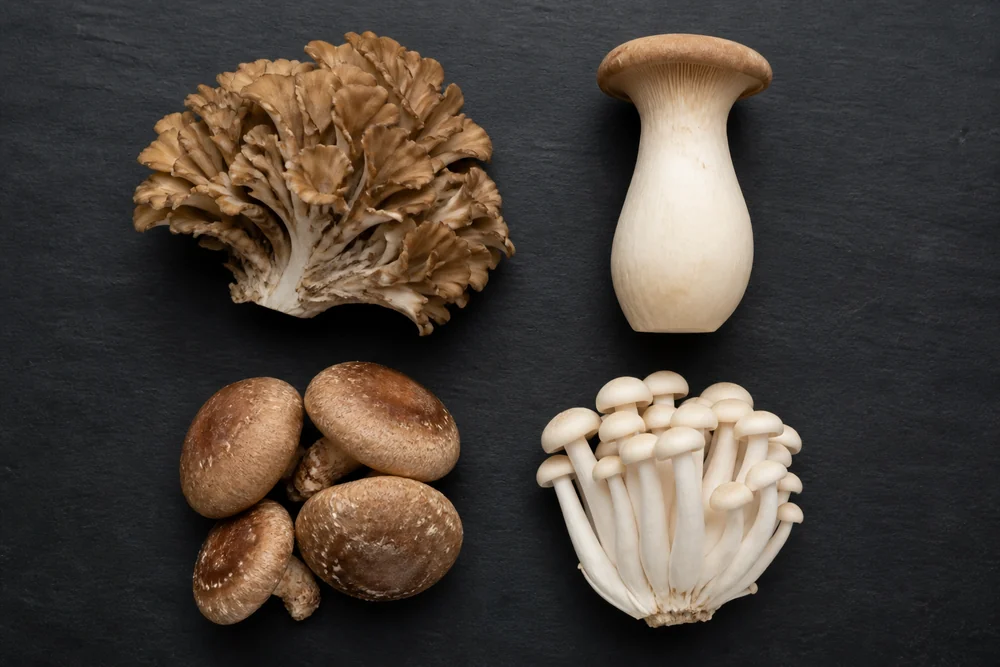
Four candidates, judged on what they do in your hands and in the pan.
| Option | Tears | Crisps | Flavor gap | Best for |
|---|---|---|---|---|
| Maitake fronds | Into fronds | Better than an oyster | Nuttier | Anything crisped |
| Beech mushrooms | Into small pieces | Moderately | Slightly bitter raw | Stir fries, soups |
| King oyster | No, slices | Browns rather than crisps | Milder | Sliced and seared |
| Dried shiitake | No | Chewy rather than crisp | Much deeper | Anything simmered |
Read the table by the first two columns, because that is where the difficulty lives:
- Tears and crisps: maitake, and nothing else on the list manages both.
- Crisps but does not tear: beech, in small pieces rather than strips.
- Neither: king oyster and shiitake, both excellent at other jobs.
Maitake comes apart in the hand exactly as an oyster does, into fronds rather than strips. It also browns harder than any oyster, because the ruffled surface gives the heat more to work with.
Beech mushrooms are the quiet second choice. They separate into small individual pieces rather than strips, which changes the look of the dish, and they behave well in a hot pan once the bitterness cooks off.
Shiitake sits at the other end. It is the best of the four in a broth and the worst in a dish where the texture is the point.
Is king oyster a good substitute?
Not for what you want it for, which surprises people because of the name.
King oyster is the same genus. Pleurotus eryngii is a genuine relative of the gray oyster, and the resemblance stops at the label.
The structural difference is the whole story. A gray oyster is mostly thin cap and a king oyster is mostly dense stem, so one tears and the other slices.
That makes it an excellent mushroom and a poor substitute. If your recipe says torn oyster mushrooms, reaching for king oyster gets you a different dish rather than the same dish.
What if you only have button mushrooms?
Then you can still cook the dish, and it will be a slightly different dish.
Button mushrooms match on mildness and on nothing else. Mild flavor is a match, but it does not reproduce the oyster mushroom's texture.
Slice them thin so more surface meets the pan
Brown them hard, in batches, until the edges darken
Accept a rounder, softer texture than the recipe assumed
Expect crisp ragged edges, which need thin fan-shaped flesh
Crowd the pan trying to cook the whole tray at once
Add liquid early, which stops any browning happening at all
Those six lines are most of the technique, and three habits close the rest of the gap:
- Slice at three or four millimetres rather than in thick wedges.
- Use a wider pan than the recipe implies, so nothing overlaps.
- Leave each batch undisturbed for two minutes before stirring.
Slicing thin and browning hard recovers a surprising amount. What it cannot produce is the crisp edge, because a button mushroom has no thin ragged margin to crisp.
For a soup, a sauce or anything simmered the swap is nearly invisible. For a dish built around crisped strips it is visible immediately.
Does the swap change the cooking time?
Yes, usually upward, and the direction is predictable.
Torn oyster pieces are thin and cook in three or four minutes over real heat. Anything denser needs longer, and a thick slice of king oyster needs a lower heat as well so the middle cooks before the outside burns.
Heat management is the other half of the timing question. A crowded pan steams mushrooms instead of browning them, whatever species you choose.
Work in batches and give each one room. It takes longer in wall-clock time and it is the difference between a swap that works and one that does not.
What should you use in a specific dish?
By dish, because the ranking moves with the method.
Crisped strips want maitake, without much competition. It reaches the texture faster than an oyster does and it holds the shape better once it gets there.
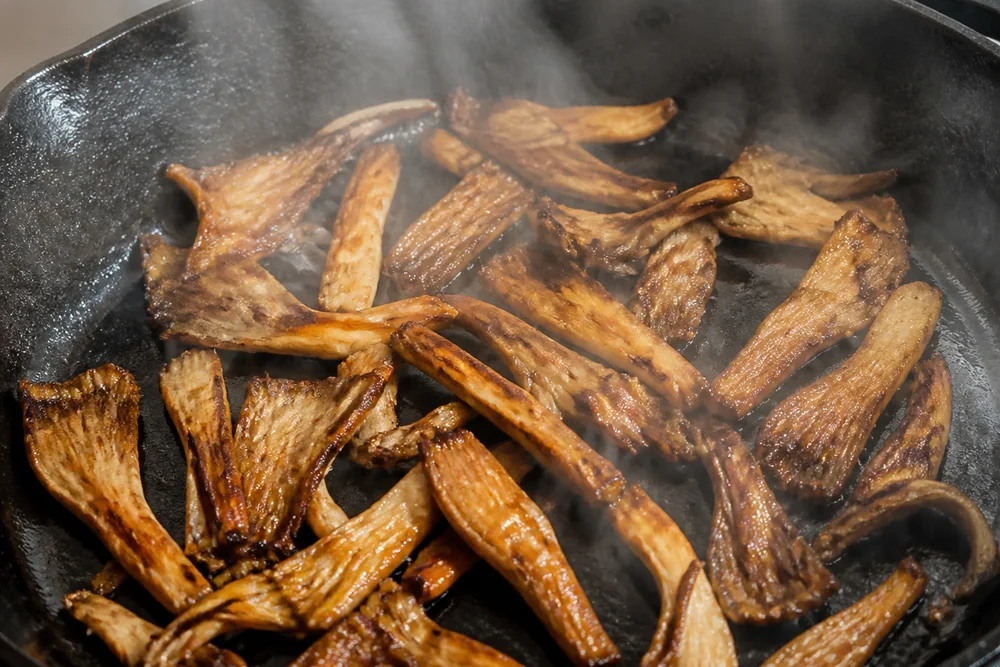
A stir fry tolerates almost anything sliced thin, which is why it is the most forgiving place to run out of oyster mushrooms. Button, beech and king oyster all work.
Soup and anything simmered want shiitake, since texture stops being the question once a mushroom has spent twenty minutes in liquid.
Anything battered or deep fried wants the thinnest flesh you can find, and the cooking method matters more there than the species does. If you can get oyster mushrooms at all, that is the one dish worth waiting for them.
Back to the Edible Oyster Mushroom profile