
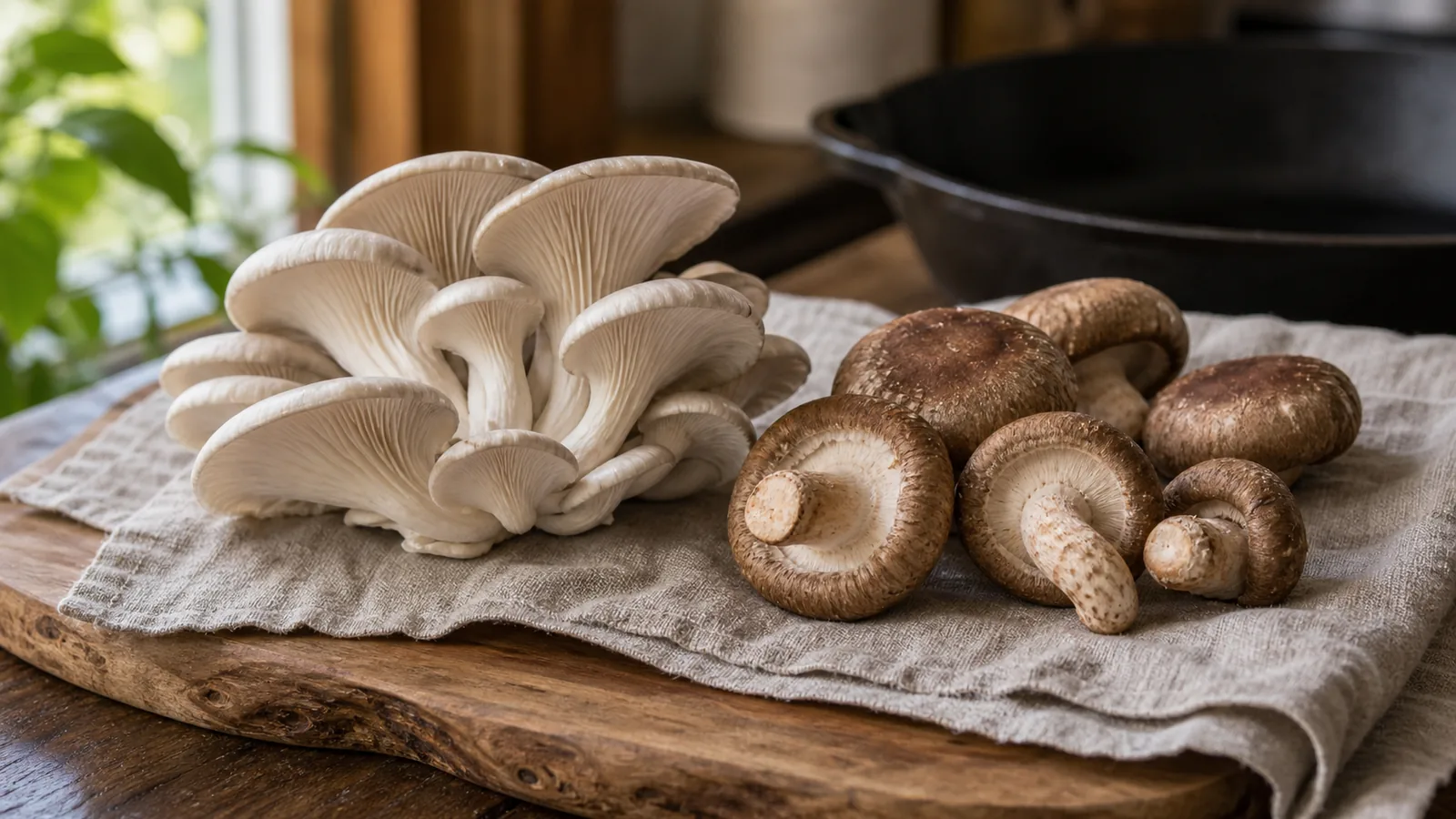
Oyster mushrooms are softer, faster-cooking, and easier to grow. Shiitake is firmer, deeper, and better when you want a meaty savory bite.
Which mushroom gives the texture your dish needs?
Choose oyster mushrooms when you want tender pieces that brown fast and take on sauce. Choose cultivated shiitake when you want deeper savory flavor and a firmer bite.
They overlap in stir-fries, noodles, risotto, and soups, but the pan separates them. Oyster mushrooms soften quickly, while shiitake caps remain firm longer.
| Job | Better pick | Why |
|---|---|---|
| Fast weeknight saute | Oyster mushroom | Thin caps cook quickly |
| Deep stock or broth | Shiitake | Dried shiitake adds strong umami |
| Crispy edges | Oyster mushroom | Torn pieces brown at the edges |
| Meaty bite | Shiitake | Caps stay firm after cooking |
| Beginner home grow | Oyster mushroom | Faster colonization and fruiting |
Flavor weight is different
Oyster mushrooms taste mild and slightly sweet, leaving the sauce, aromatics, or browned edges to carry the dish.
Shiitake tastes deeper and more savory, especially when dried. A small amount can change a broth, rice dish, or pan sauce.
That is why shiitake can dominate delicate recipes. Creamy mushroom risotto is easier with oyster mushrooms because they blend into a mixed mushroom base.
Think of oyster mushrooms as texture-first and shiitake as flavor-first. The distinction is practical rather than absolute because one disappears into sauce while the other keeps announcing itself.
The pan tells on them
Oyster mushrooms release moisture quickly and brown at the edges in a wide hot pan, but they collapse and steam when crowded.
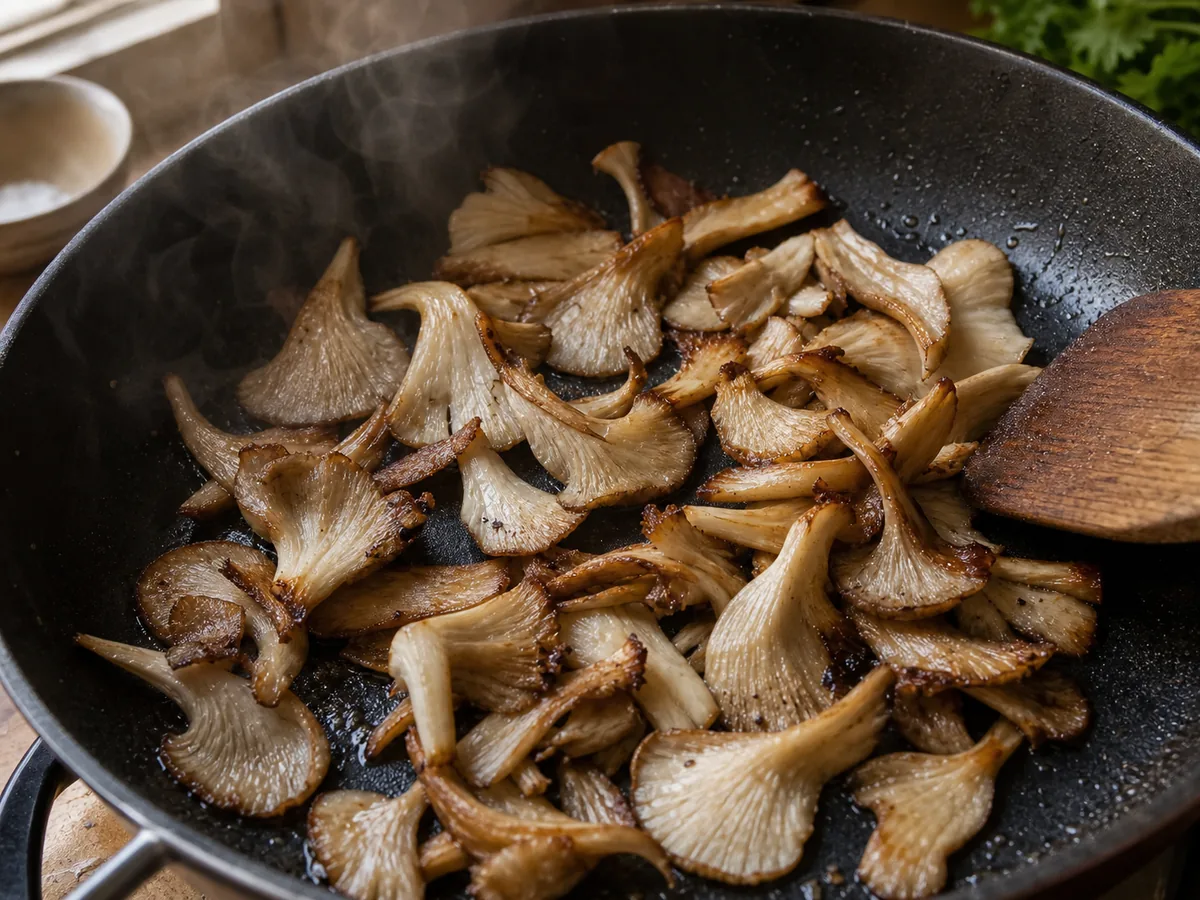
Shiitake caps need a little more time. They brown well, but the texture stays chewier and the stems can stay tough.
That timing difference changes prep. Start thick shiitake slices before delicate oyster pieces, or cook them in separate batches when the dish needs clean texture.
Stem rules are not equal
Oyster stems are usually edible when young and tender, though thick bases can be chewy. Cut off any dry cluster base before cooking.
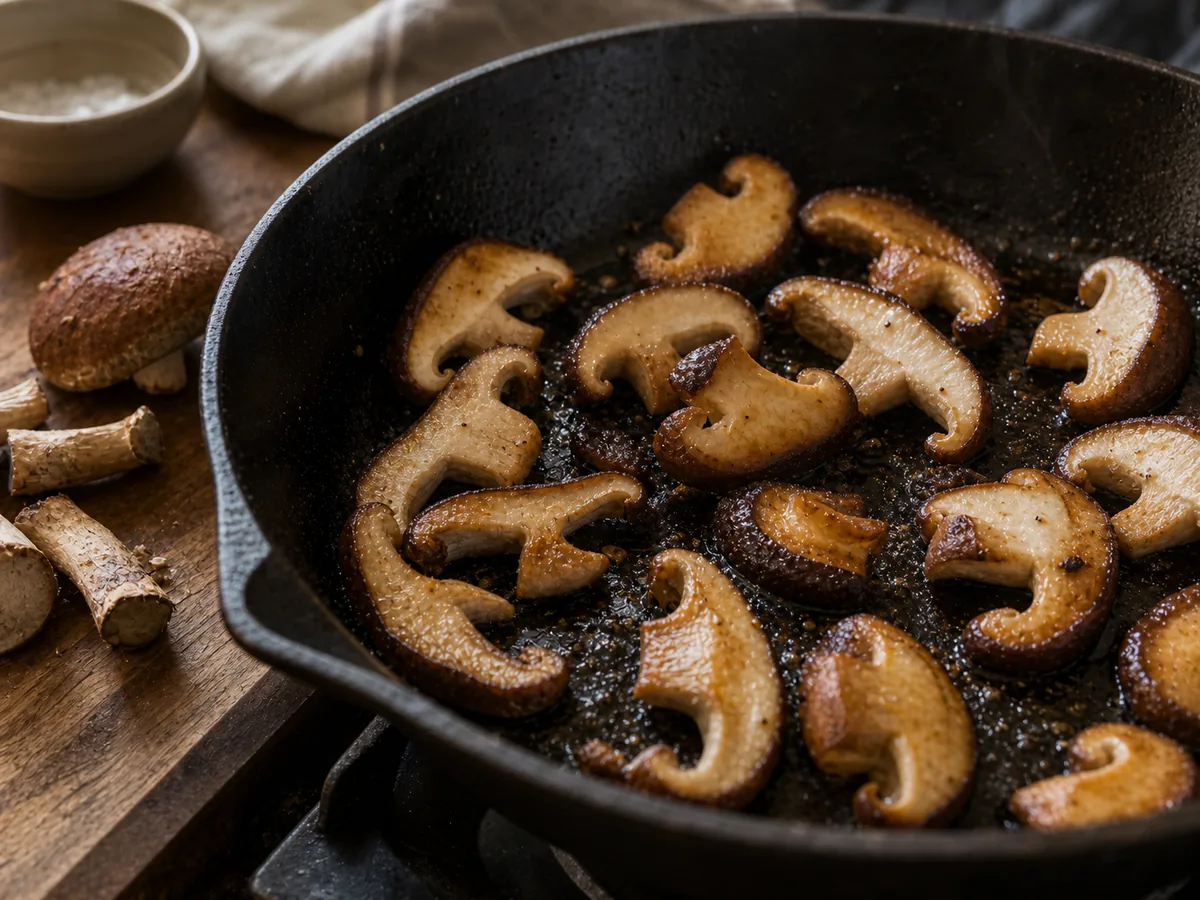
Tough shiitake stems belong in stock when clean, while the tender caps belong in the saute.
For oyster stems, the practical answer is simple. Young tender stems can go in the pan, while thick bases are better trimmed or saved for stock.
Tip
If a dish needs tender spoonfuls, trim shiitake stems hard. If it needs a quick saute, tear oyster clusters by hand so the edges brown unevenly.
Cut each mushroom for the cooking job
Tear an oyster mushroom cluster along its natural seams instead of pressing the whole fan flat under a knife. Broad pieces keep a tender center, while narrow strips expose more edge to the pan and become crisper.
Remove the dense cluster base before tearing because that shared knot can stay chewy after the caps are tender.
Slice shiitake caps across their width when you want even browning and a firm bite. Thin slices spread savory flavor through noodles or rice, while thicker slices remain distinct in a stir-fry or braise.
Piece size should match the cooking time. A thin oyster strip can finish before a thick shiitake slice releases its first moisture, so putting both in the pan together makes one mushroom wait for the other.
Dry surfaces before cooking either mushroom. Water trapped between oyster folds or inside shiitake gills lowers pan temperature and delays browning, even when the skillet felt hot before the mushrooms entered.
For one-pan dishes, brown thick shiitake slices first and add torn oyster pieces after the pan recovers its heat to preserve two textures without separate skillets.
The stem decision also affects the final cut. Tender oyster stems can remain attached to each torn piece, while firm shiitake stems should be removed before slicing the caps and saved separately for stock.
Fresh and dried forms
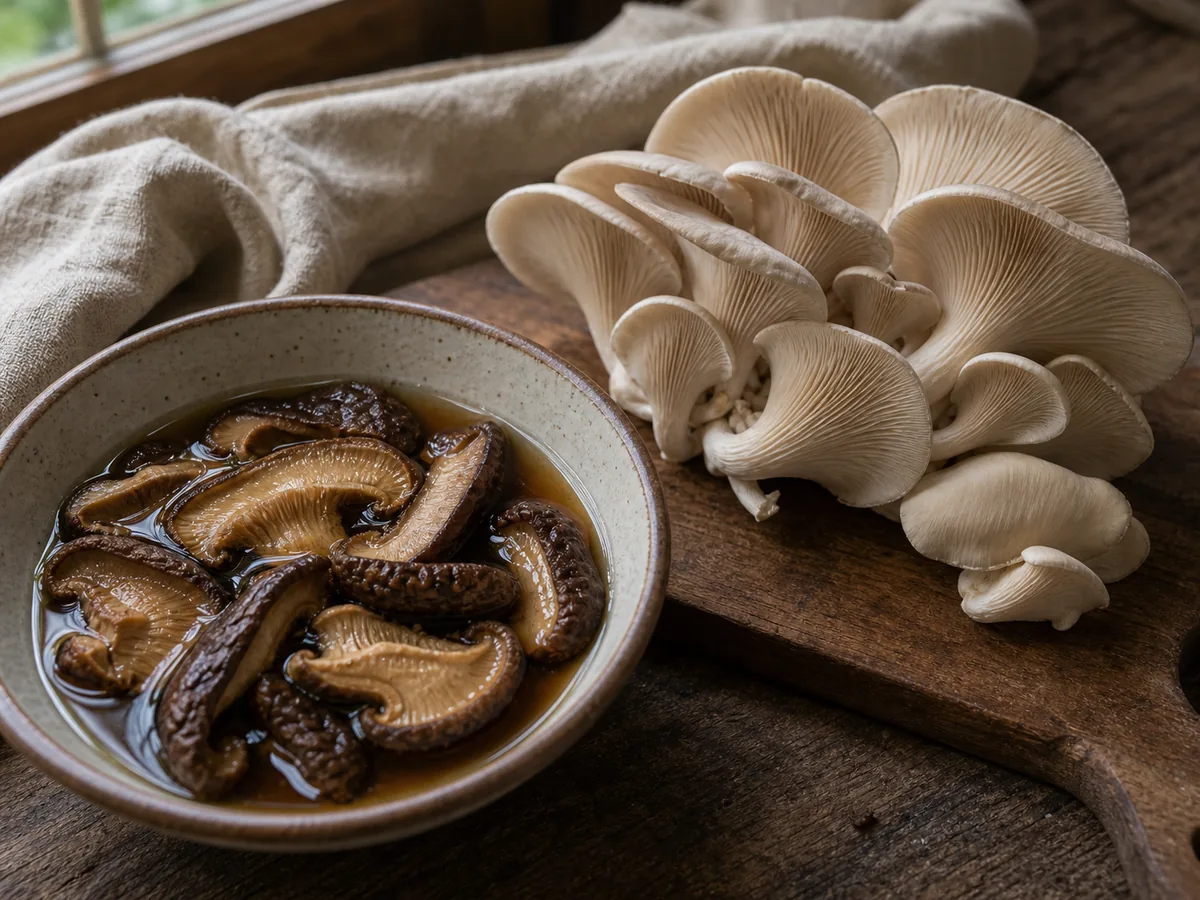
Fresh oyster mushrooms are usually the better fresh texture. Dried oyster mushrooms exist, but they do not carry the same punch as dried shiitake.
Dried shiitake is a pantry ingredient with a different job. Rehydrated caps bring depth, and the soaking liquid can enrich rice, soup, or sauce after filtering.
The first grow choice
Oyster mushrooms are the easier first grow because they fruit quickly on straw, buckets, bags, and ready-to-fruit blocks.
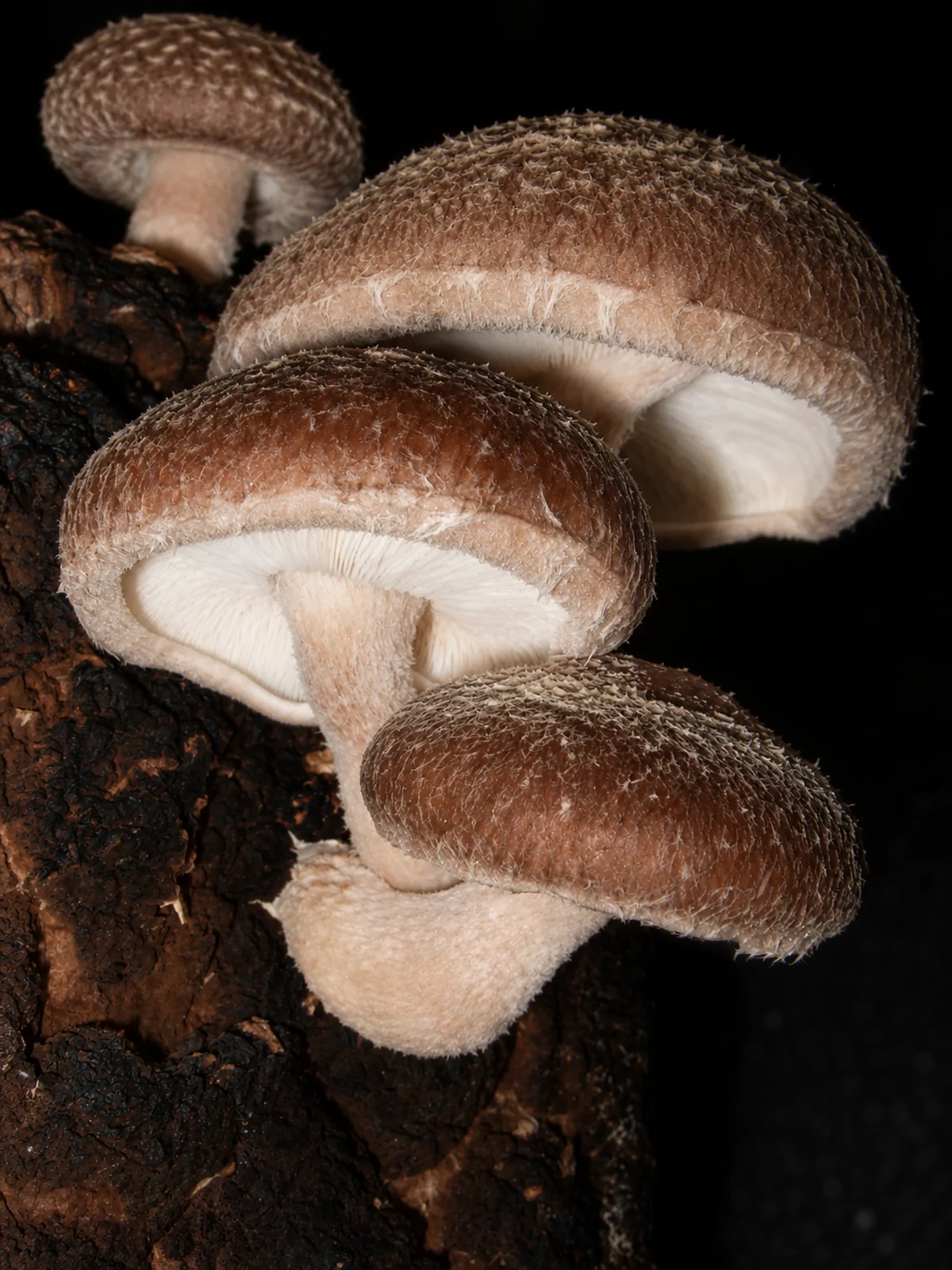
Shiitake grows best on hardwood logs or supplemented sawdust. It rewards patience, but the timeline is longer and the setup asks for more control.
A first harvest is easier when oyster mushroom growing starts with a clean, forgiving setup. Move to growing shiitake when you want a slower hardwood project.
Can oyster mushrooms replace shiitake in every dish?
They can substitute for each other when the recipe needs mushrooms more than one exact texture. Oyster mushrooms cook softer and faster, while shiitake stays firmer and tastes stronger.
Do not swap them blindly when texture defines the dish because oyster-only broth loses shiitake depth, while thick shiitake slices make an oyster-style taco or crisp saute too chewy.
For broader swaps, choose among shiitake substitutes according to how much savory flavor and firmness the dish needs.
Buying tells you the cooking window
Buy oyster mushrooms when they look dry, firm, and clean, with no sour smell or slimy patches. Avoid clusters with wet, dark edges.
Buy shiitake with springy caps and clean gills. Cracked caps can still be good, but slimy caps or sour odor mean the mushrooms are past their prime.
Store both in paper or a breathable container. Plastic traps moisture and shortens the window for a clean saute.
Price can decide the purchase because oyster clusters give generous fresh volume, while a small bag of dried shiitake supplies broth flavor across several meals.
That value changes after trimming. A box of shiitake may lose some weight to tough stems, while an oyster cluster may lose only the dense base.
If you are buying for one dinner, oyster mushrooms give more visible food on the plate. If you are stocking flavor for several soups, dried shiitake usually stretches farther.
Dishes that expose the difference
Use oyster mushrooms when tacos, toast, rice bowls, or quick noodles need torn pieces that soften inside and crisp at the edges.
Use shiitake when the broth or sauce needs depth. Dried shiitake can carry soup, gravy, and rice dishes in a way fresh oysters usually cannot.
Pair the mushrooms deliberately in mixed dishes. Oyster pieces add volume and tenderness, while shiitake provides the savory base that keeps creamy mushroom risotto from tasting flat.
CompareFalse Morel vs True Morel: Why the Hollow Test MattersStorage favors shiitake
Both mushrooms dislike trapped moisture. Keep them in paper or a breathable container, then cook them before the edges darken or turn slimy.
Use fragile oyster mushrooms sooner, while firm shiitake caps keep longer and dried shiitake waits in the pantry for a strong stock.
For a fast fresh-mushroom dinner, oyster mushrooms are the safer texture bet. For a planned weekend broth, dried shiitake earns its space.
Mixed packs need staging
Mixed mushroom packs are useful, but they blur cooking time. Pull thick shiitake pieces away from thin oyster pieces before they hit the pan.
Start shiitake first when the slices are thick. Add oyster mushrooms later so they brown without collapsing into the pan juices.
Treat an unfamiliar wild mushroom in a mixed pack as a safety question because a labeled cultivated blend is different from loose mushrooms with no species name.
For a mixed-pack saute, remove mushrooms as they finish instead of waiting for every piece to behave the same. Oyster pieces may be ready while shiitake still needs another minute.
That habit improves texture more than a complicated recipe does. The pan stops being one blended pile and becomes two mushrooms cooked to their own finish.
Soup belongs to shiitake
Shiitake is the better soup mushroom when the broth needs depth. Dried shiitake brings concentrated flavor, and fresh shiitake caps stay firm after simmering.
Add oyster mushrooms late to soup because long simmering softens their tender flesh until it feels limp.
For noodle soup, use shiitake for broth and oyster mushrooms for the last few minutes. That split keeps both mushrooms doing the job they are best at.
Main-bite dishes favor oysters
Oyster mushrooms can become the main bite when torn into large pieces and browned hard. They work well in tacos, toast, and rice bowls.
Shiitake works better as a savory accent unless the caps are large and sliced thick. It brings chew, but too much can make a dish feel heavy.
The better choice depends on the dish, not on which mushroom is more premium.
- Tear oyster mushrooms for crisp edges.
- Slice shiitake caps when you want even browning.
- Save clean shiitake stems for stock.
- Add oyster mushrooms late to soups.
- Use dried shiitake when the broth needs depth.
Which mushroom should a beginner buy first?
Oyster mushrooms expose pan mistakes quickly because crowded pieces steam instead of browning. A wide hot pan produces crisp edges and a tender center.
For flavor building, shiitake is easier because a small amount changes the dish. Even dried shiitake can carry a broth when fresh mushrooms are not available.
For growing, oyster mushrooms win clearly. They are faster, more forgiving, and easier to read during fruiting.
Shiitake is not difficult to cook, but it needs slower browning, stem trimming, and a dish that can use its stronger flavor.
Pick oyster or shiitake according to the cooking job instead of choosing the name that sounds fancier.
That choice makes the dish easier to control from the first minute onward.
Safety only changes the answer when mushrooms came from the woods, a yard, or a mixed unlabeled source. Cultivated oyster and shiitake sit on the low-risk side of mushroom edibility because the species and supply chain are known.
The same hot-pan logic shows up in sauteed chanterelles, but the ingredient job is different. Chanterelles bring a wild aroma, oysters bring quick browning, and shiitake brings a deeper base note.
For meal planning, choose oyster when dinner needs speed and volume, or shiitake when a smaller amount must carry the dish.
Sources behind the comparison
This comparison uses cooking behavior from practical mushroom cookery, cultivation timelines from Cornell Small Farms, and shiitake production guidance from Penn State Extension. Together, those sources support the texture, grow time, and safe handling claims for cultivated mushrooms.
Wild-harvest identity is a separate issue. If either mushroom came from the woods instead of a store or grow kit, apply foraging safety rules before any recipe decision.