
Creamy Mushroom Risotto With Deep Mushroom Flavor
A rich, savory risotto built on mixed cultivated mushrooms.
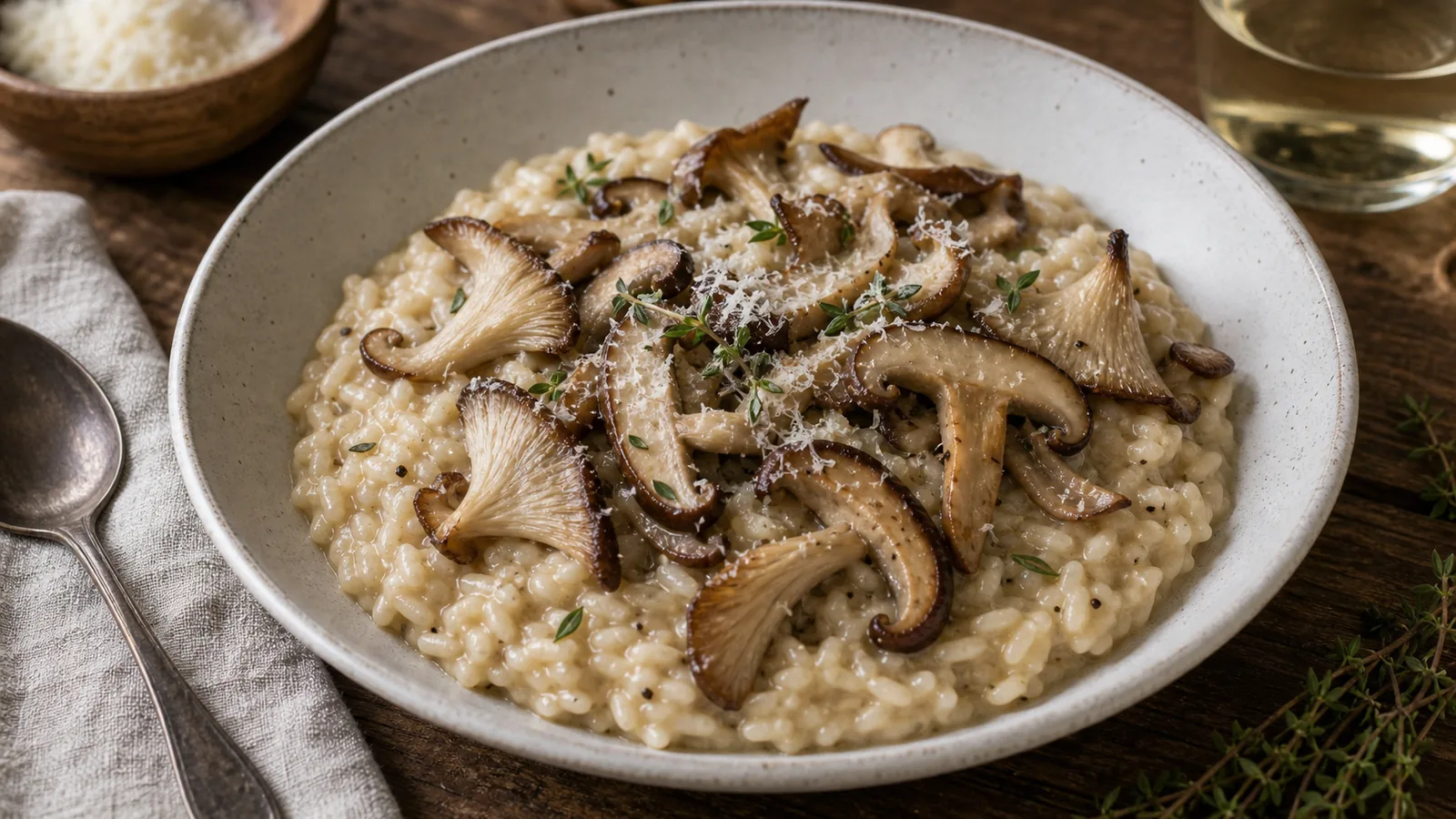
This creamy mushroom risotto uses cultivated mushrooms you can buy safely year-round. Shiitake brings savory depth, oyster mushrooms bring tender browned pieces, and warm stock gives the rice its creamy texture without needing heavy cream.
Ingredients
- 300g mixed mushrooms, such as shiitake and oyster, sliced or torn
- 1.5 cups arborio or carnaroli rice
- 1 small onion, finely diced
- 3 cloves garlic, minced
- 1 cup dry white wine, or extra warm stock
- 5 cups warm mushroom or vegetable stock
- 2 tbsp strained dried mushroom soaking liquid, optional
- 1/2 cup grated parmesan
- 3 tbsp butter, plus olive oil
- Fresh thyme, salt, black pepper, and a small squeeze of lemon if needed
Method
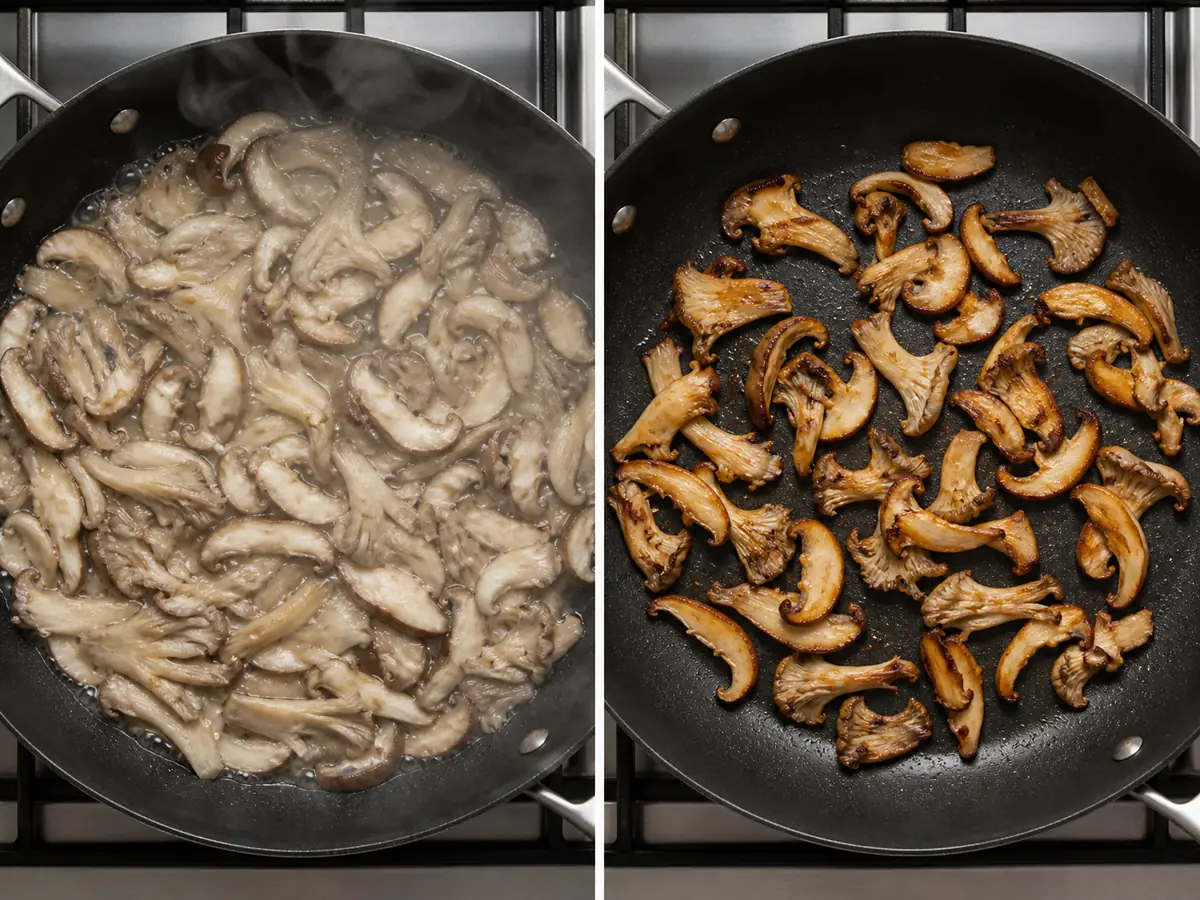
- Brown the sliced or torn mushrooms in butter and olive oil over medium-high heat until their water cooks off and the edges color, then set them aside.
- Soften the onion in olive oil, add garlic for the last minute, then stir in the rice until the edges look slightly translucent.
- Add wine, if using, and stir until the pan is nearly dry.
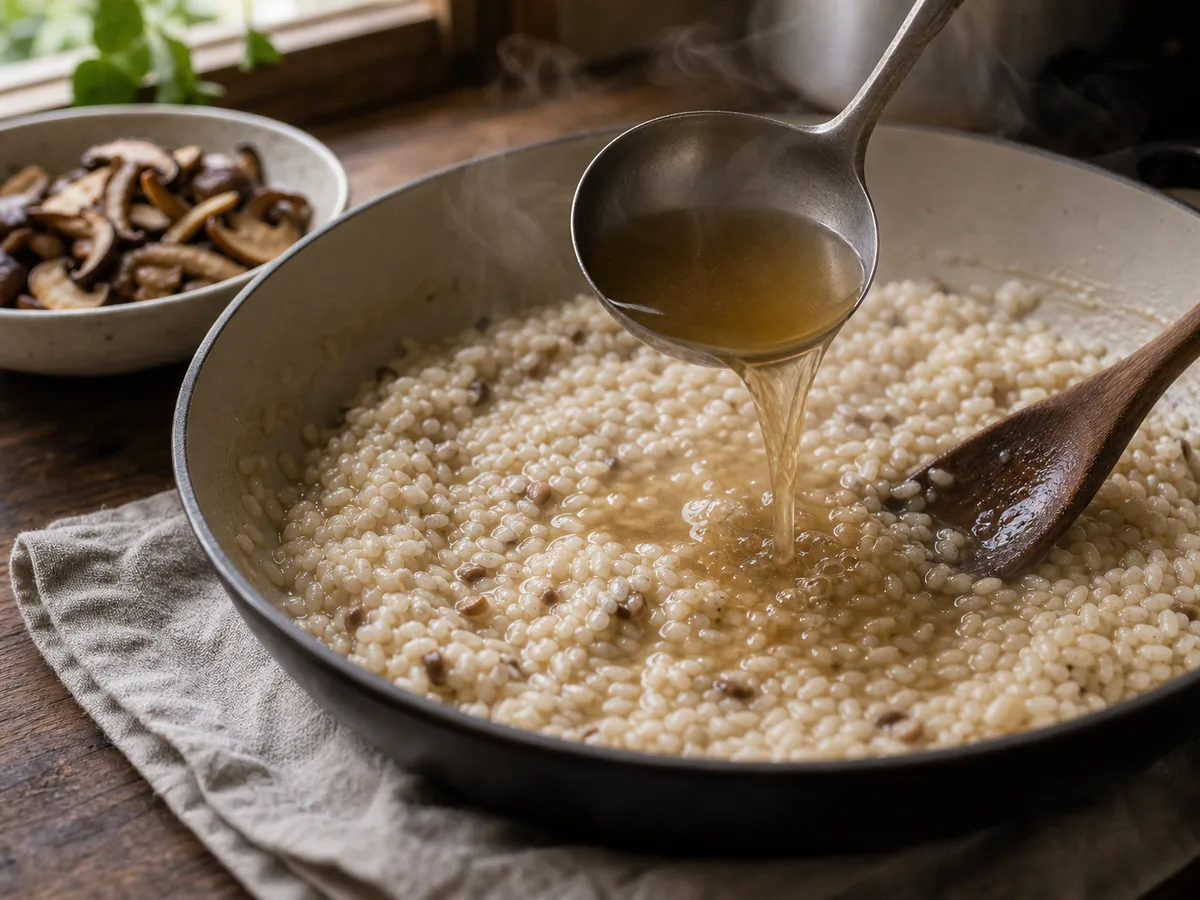
- Add warm stock one ladle at a time, stirring often and letting each addition absorb before adding the next.
- When the rice is just tender, fold the mushrooms back in and loosen with a final splash of warm stock if needed.
- Finish off the heat with parmesan, butter, thyme, black pepper, and salt. Add a small squeeze of lemon only if the risotto tastes flat.
- Main mushrooms
- Shiitake gives depth, oyster mushrooms give tender browned pieces.
- Rice
- Arborio or carnaroli releases starch as stock is added slowly.
- Pan rule
- Brown mushrooms first so the risotto tastes roasted, not watery.
- Stock rule
- Keep stock warm and add it in small ladles.
- Safety rule
- Use cultivated mushrooms unless a wild mushroom has been identified and cooked correctly.
Why this risotto works
This risotto gets its mushroom flavor from two places. Browned mushrooms give roasted edges, and warm mushroom stock carries flavor into the rice as it turns creamy.
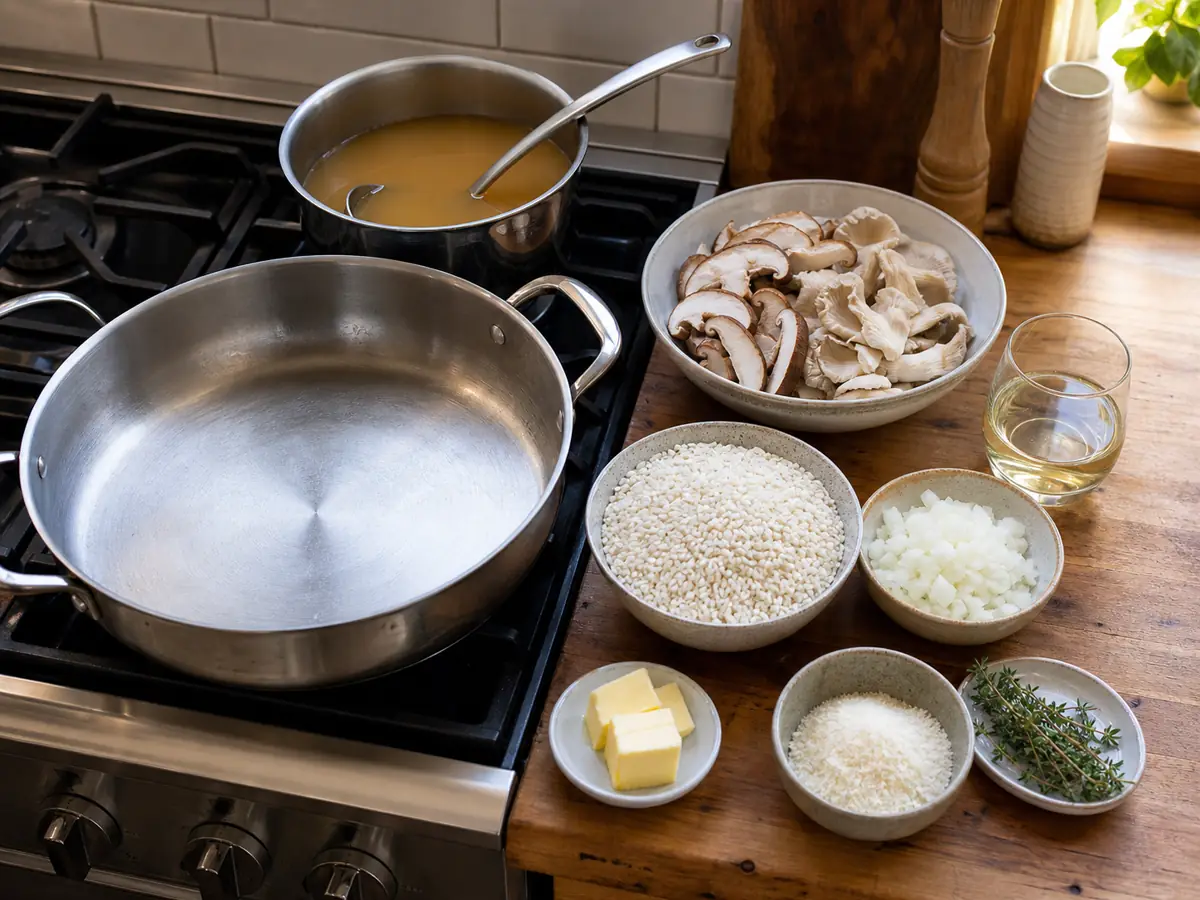
Shiitake gives the deeper savory note. Oyster mushrooms bring softer pieces that fold through the rice without making every bite chewy.
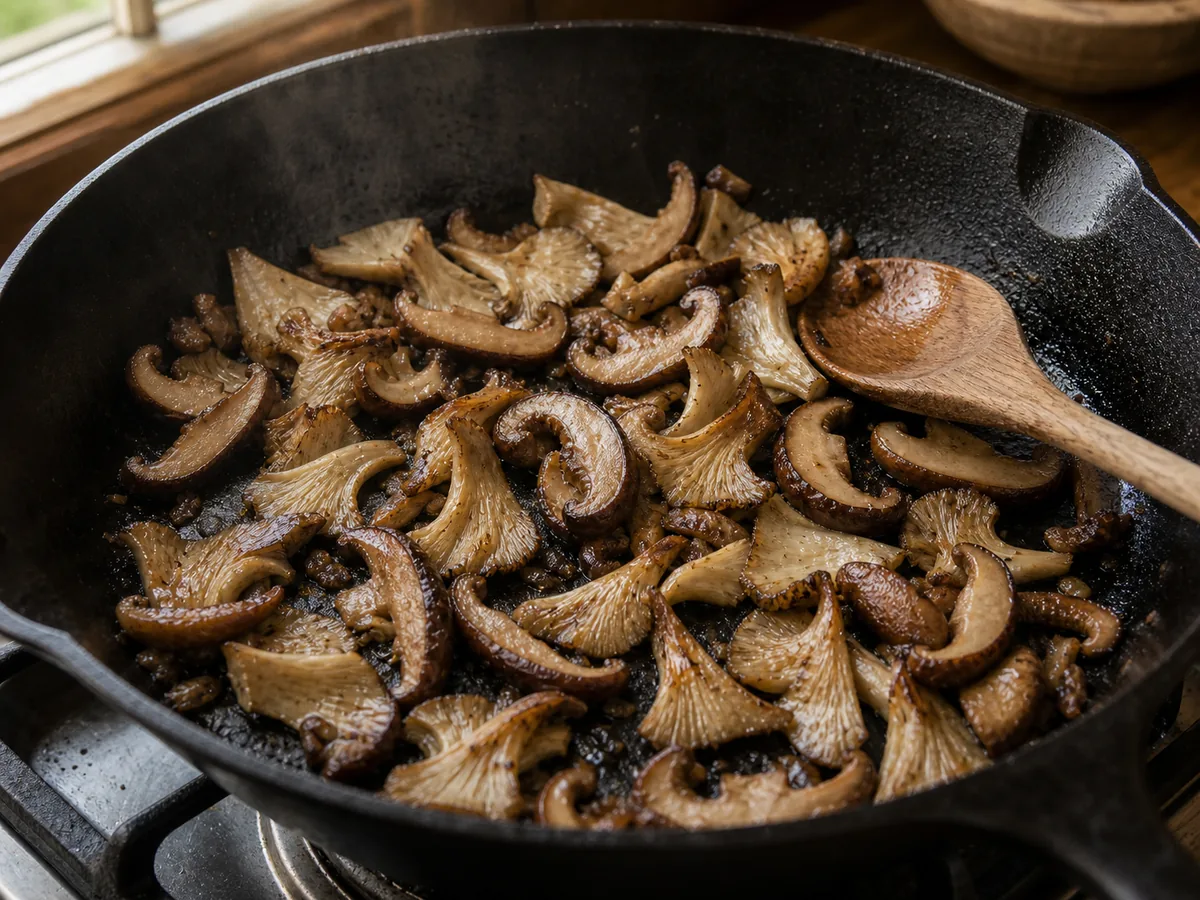
Arborio or carnaroli rice releases enough starch under steady stirring to make risotto creamy without actual cream.
Which mushrooms should you use?
Use cultivated mushrooms unless your wild mushrooms are fully identified and cooked safely. Store-bought shiitake and oyster mushrooms keep this recipe predictable, and both are easy to inspect before cooking.
Cremini can replace either mushroom when you need a grocery-store backup. It will taste earthier and less complex, but it browns well if the pan is not crowded.
| Mushroom | Job in risotto | How to cut it |
|---|---|---|
| Shiitake | Deep savory flavor | Remove tough stems and slice caps |
| Oyster | Tender pieces and browned edges | Tear into wide strips |
| Cremini | Easy backup mushroom | Slice thick so pieces do not disappear |
| Chanterelle | Wild aroma when safely identified | Tear or slice after cleaning |
| Morel | Spring depth after thorough cooking | Halve, clean, and cook fully |
Choose between shiitake and oyster by texture, using the oyster versus shiitake comparison to place tender wide pieces or firmer savory slices in the bowl.
Build a better mushroom stock
Warm stock keeps the rice cooking evenly. Cold stock shocks the pan, slows starch release, and makes the texture harder to control.
A small amount of dried mushroom liquid can deepen the pot. Rehydrate dried porcini or dried shiitake in warm water, strain the liquid through a coffee filter, then add a little to the stock.
Never pour gritty soaking liquid into risotto because sand from dried mushrooms can ruin the entire pan.
Cook the mushrooms before the rice
Start with a wide pan and medium-high heat. Add the sliced or torn mushrooms in a single layer, then leave them alone long enough to release water and brown.
Crowded mushrooms steam. If the pan fills with liquid, keep cooking until that liquid evaporates before adding butter, salt, wine, or rice.
Brown mushrooms before adding rice
Salt after the first water cooks off
Save shiitake stems for stock only if they are clean
Add wet mushrooms straight into creamy rice
Stir so hard that the grains break
Use unidentified wild mushrooms as a shortcut
Move browned mushrooms to a plate so they can return near the end with visible edges instead of turning the rice gray.
Use the browned pan before adding stock
After moving the browned mushrooms to a plate, inspect the pan for a dark golden film rather than black burned spots. That fond carries mushroom flavor into the rice when the onion or wine loosens it.
Lower the heat briefly if the pan looks close to burning before the onion enters.
Scrape the fond into the rice as the wine or first ladle of stock reaches the pan. Leaving it stuck to the skillet wastes flavor, while adding liquid to burned residue makes the whole pot bitter.
Stir the rice with a steady hand
Toast the rice with onion and garlic until the edges look a little translucent. Add wine if you are using it, then stir until the pan is almost dry.
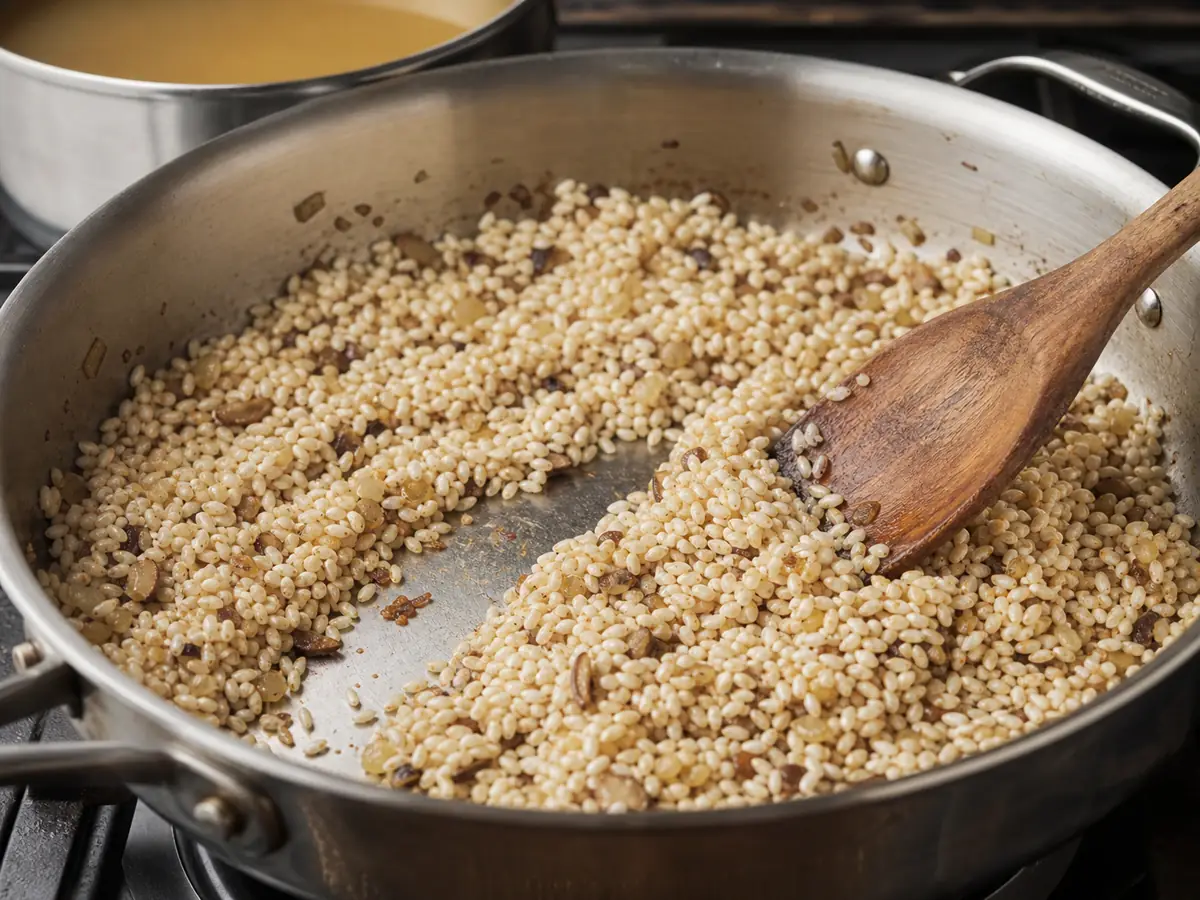
Add warm stock one ladle at a time and stir often without beating the rice. The target is creamy movement around intact grains.
When the rice is just tender, fold in mushrooms, butter, and Parmesan until the risotto spreads slowly on a plate rather than standing in a dry mound.
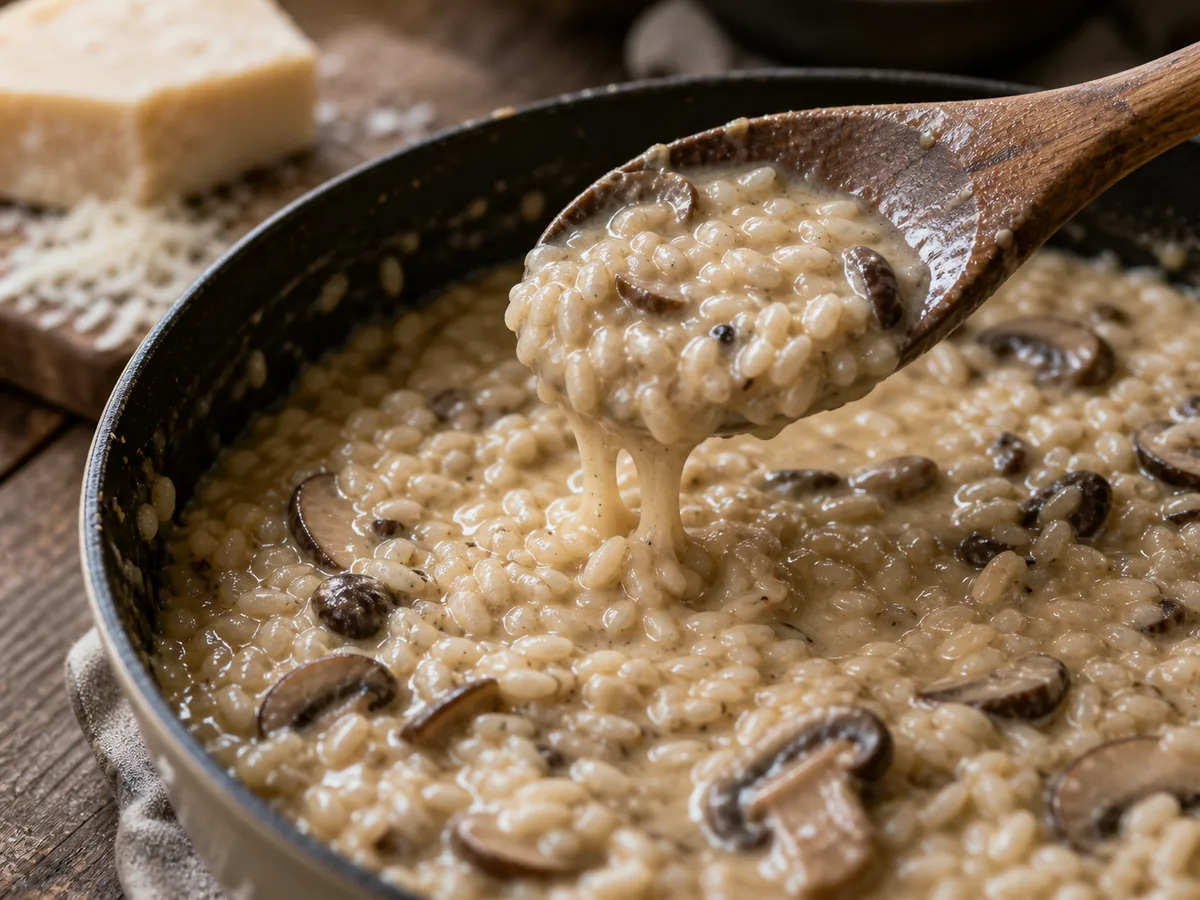
Fix common risotto problems
Watery risotto usually means the stock was added too fast or the mushrooms were not browned first. Keep simmering and stirring until the rice absorbs the extra liquid.
Gluey risotto usually means the heat was too high, the rice was over-stirred, or the pot sat too long after finishing. Loosen it with a splash of warm stock before serving.
Bland risotto needs a measured addition of salt, acid, or strained mushroom liquid rather than enough dark liquid to make the flavor muddy.
Serve it safely and well
Serve risotto as soon as it is creamy. It thickens as it sits, so hold back a little warm stock if dinner is delayed.
Wild mushrooms change the safety job. Chanterelles, morels, and other foraged mushrooms should already be identified, cleaned, and cooked according to their own rules before they join the rice.
Morels need a complete lengthwise cut and full heat, while chanterelles need confirmed false ridges and no Jack O'Lantern traits before either enters risotto.
Foraged mushrooms belong in the rice only after the specimen has passed your field check. Recipe timing cannot fix a weak identification.
Leftovers should be cooled quickly, refrigerated, and reheated until hot. Add a splash of stock or water while reheating because rice tightens in the fridge.
Why cultivated mushrooms are the default
Cultivated shiitake and oyster mushrooms keep the weeknight risotto repeatable with known handling, steady texture, and no wild identification problem.
Use wild mushrooms only when the identification work is already finished. The recipe starts after that decision, not before it.
Featured mushroom: Edible Shiitake