A method guide organized by maturity rather than by variety, covering why the three shelf names are one species, the measured compositional change that makes an older mushroom firmer, the single pan failure behind almost every complaint, the sequence that avoids it including when fat and salt go in, a measured comparison of four cooking methods, and what to do with the stems and the washing question.
Cremini, the white button and the portobello are the same mushroom at three ages, and the difference between them is most of what you need to know to cook one.
Once that lands, almost every question about this mushroom answers itself.
One species, three ages
The three names on the shelf describe maturity, not variety, and the research literature treats them as one and the same species.
Lined up together the relationship is obvious. On a shelf in three separate punnets it is not, which is why so few people know it.
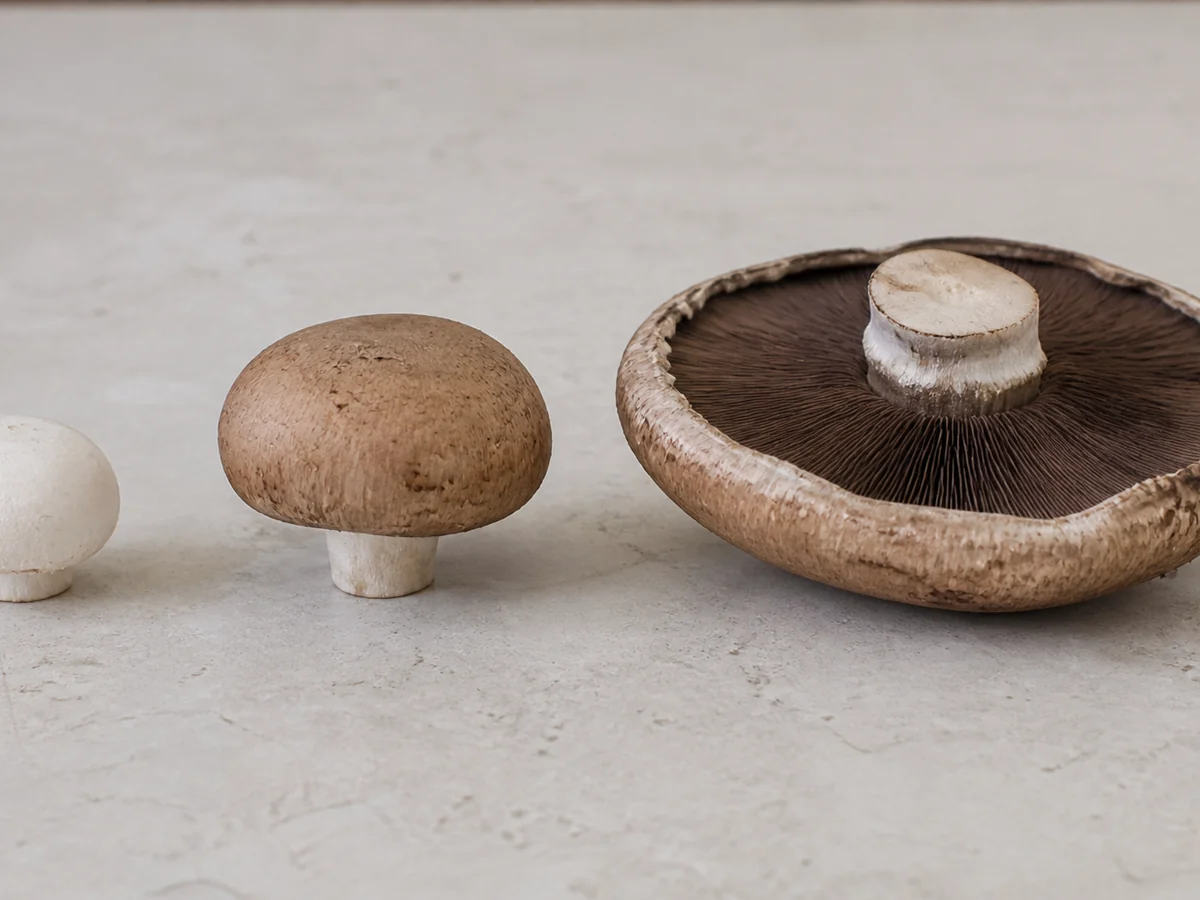
Brown strains and white strains exist within the species, and that is where the color difference comes from. Strain and age are two separate things that happen to arrive together on the shelf.
But the reason a cremini feels denser than a white button in your hand is age rather than strain, and that is the part that matters at the stove.
So when you choose between the three punnets you are choosing a maturity. It is closer to choosing between a green banana and a spotted one than to choosing between two vegetables.
Cooking MushroomsHow to Cook Cauliflower Mushroom Without Trapping GritWhat changes as it gets older
This is measurable rather than a matter of opinion, and one number does most of the explaining.
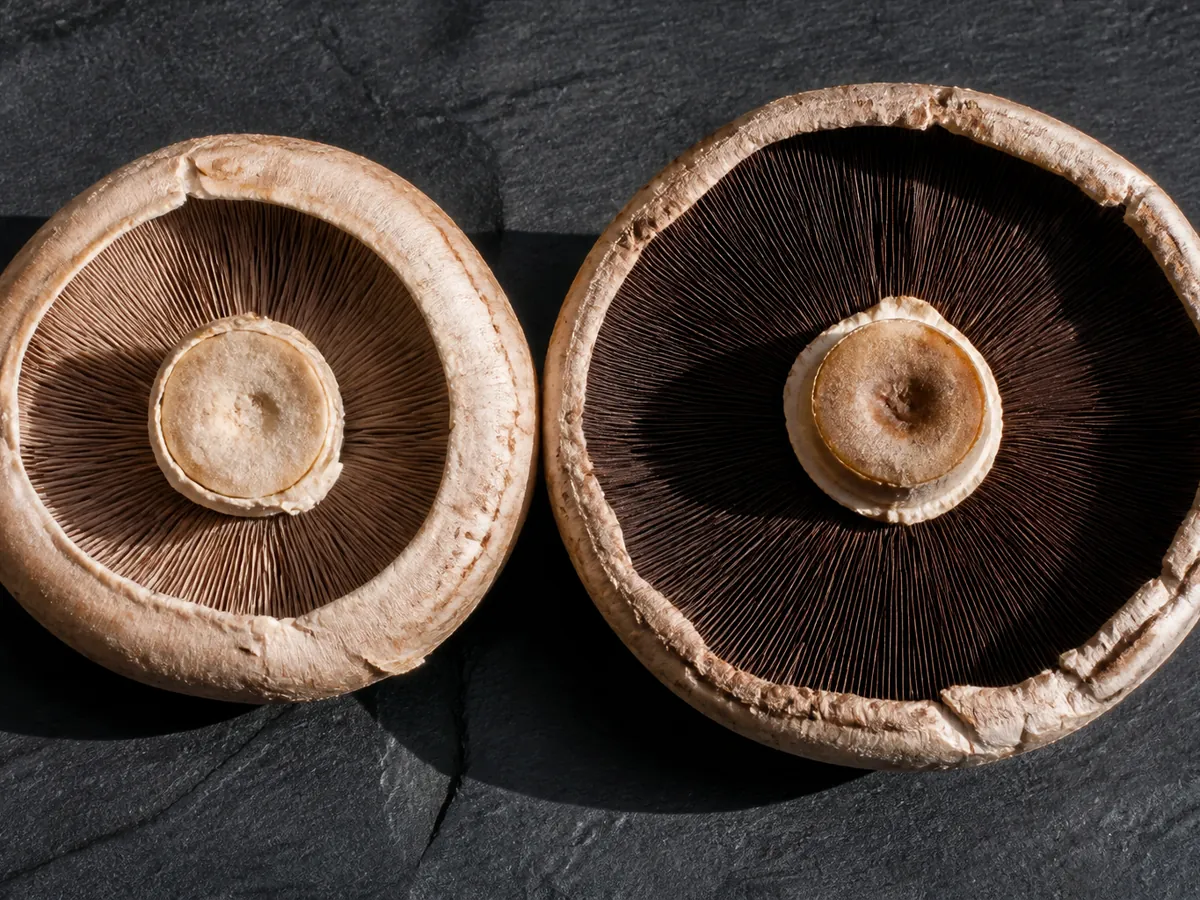
A study of mushroom composition at different stages of maturity found that chitin concentration increased as the mushroom matured, and that portabella carried the highest chitin of the varieties measured, at 8.0 percent.
Warning
Chitin is the structural polymer in a fungal cell wall. It is the fungal equivalent of the fiber that keeps a plant stem upright, and it is what makes an older mushroom hold its shape and chew more firmly than a young one. That is the physical difference between the three ages, and it is why a cremini behaves differently in a pan from a white button even though they are the same species.
The same study found something else worth knowing, which is that cooking changes the composition too.
Cooking decreased chitin and increased starch, total dietary fiber and fat. So the firmness you are managing at the stove is being softened by the cooking itself, which is why an overcooked mushroom slumps.
Crude protein, incidentally, came out highest in crimini among the varieties they measured. That is a small point and it is a genuine one in favor of the middle age.
The one failure everybody has
Almost every complaint about cooking mushrooms is the same complaint, and it has nothing to do with the mushrooms.
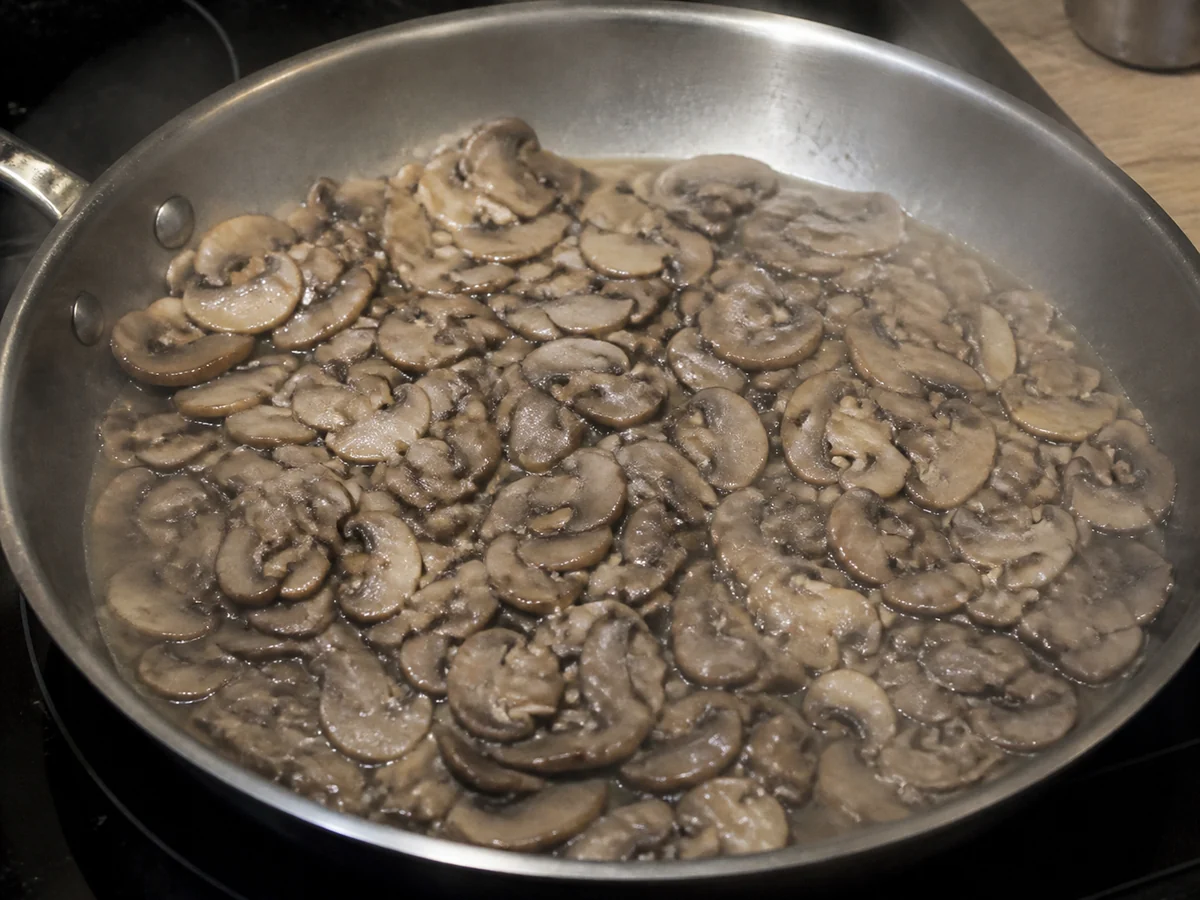
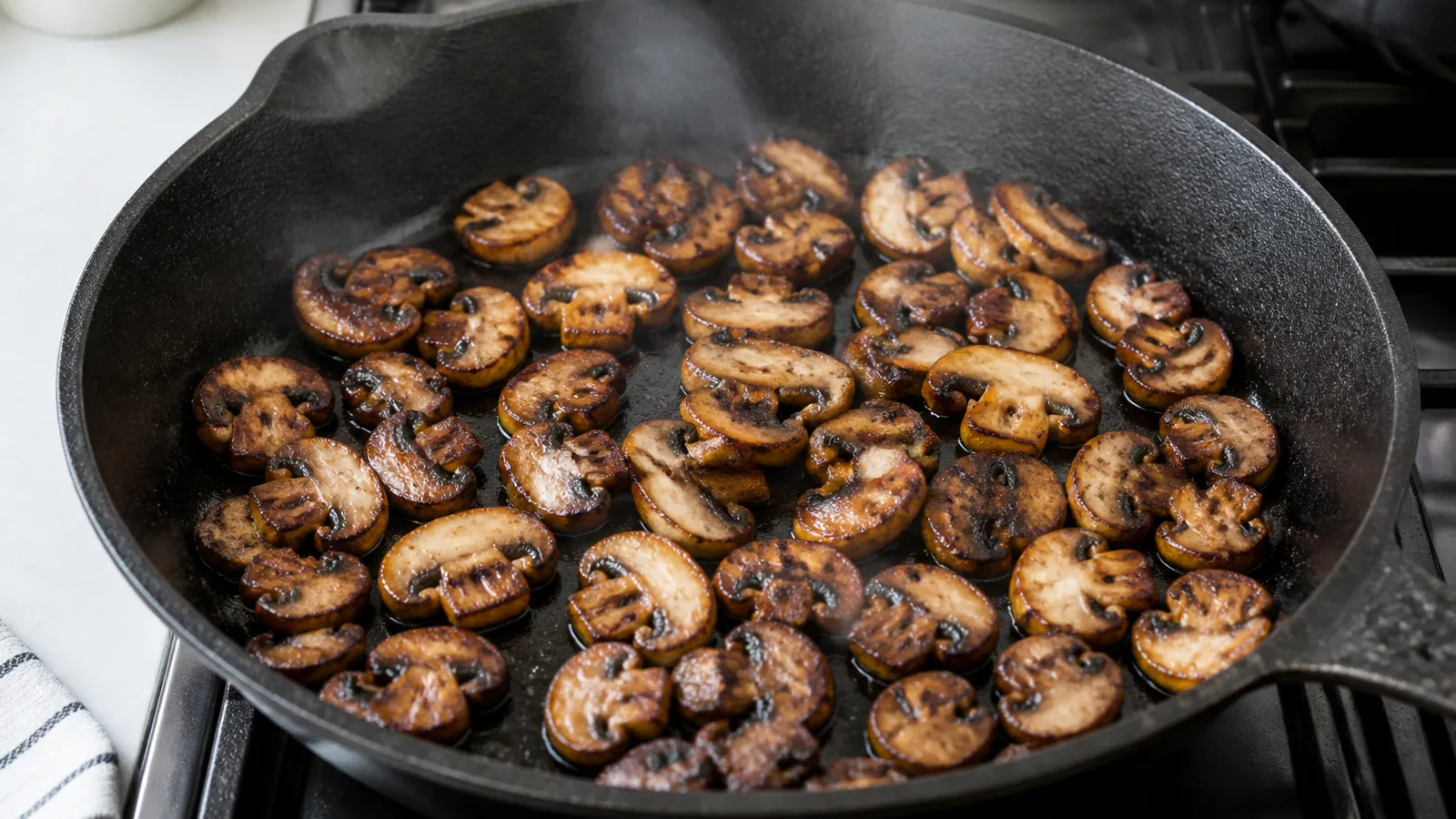
Mushrooms are mostly water. Heat them and that water leaves the cells, and where it goes next decides everything.
| If the water can evaporate | If it cannot | |
|---|---|---|
| What the pan does | Stays hot, surfaces dry, browning starts | Drops in temperature and fills with liquid |
| What you see | Edges going deep brown | Gray, pale, slippery pieces |
| What you taste | Concentrated and savory | Watery and slightly rubbery |
| What caused it | A hot pan with room in it | A crowded pan, a cool pan, or both |
Two variables produce that column on the right and they are the same two every time.
Too many mushrooms in the pan means the water released by the first ones is still there when the last ones start releasing theirs. A pan that was not hot enough to begin with never gets ahead of it at all.
Neither of those is a problem with the mushrooms, the brand, the season or the strain.
It is a heat-and-space problem, and everything that fixes it is on that list of two.
- A pan that was hot before anything went into it
- Fewer pieces in it than feels efficient
- No lid, because a lid keeps the water in the pan
- Patience for a second batch, which takes less time than rescuing a wet one
The method that fixes it
The sequence matters more than any single step, and one step in it is where most guides go quiet.
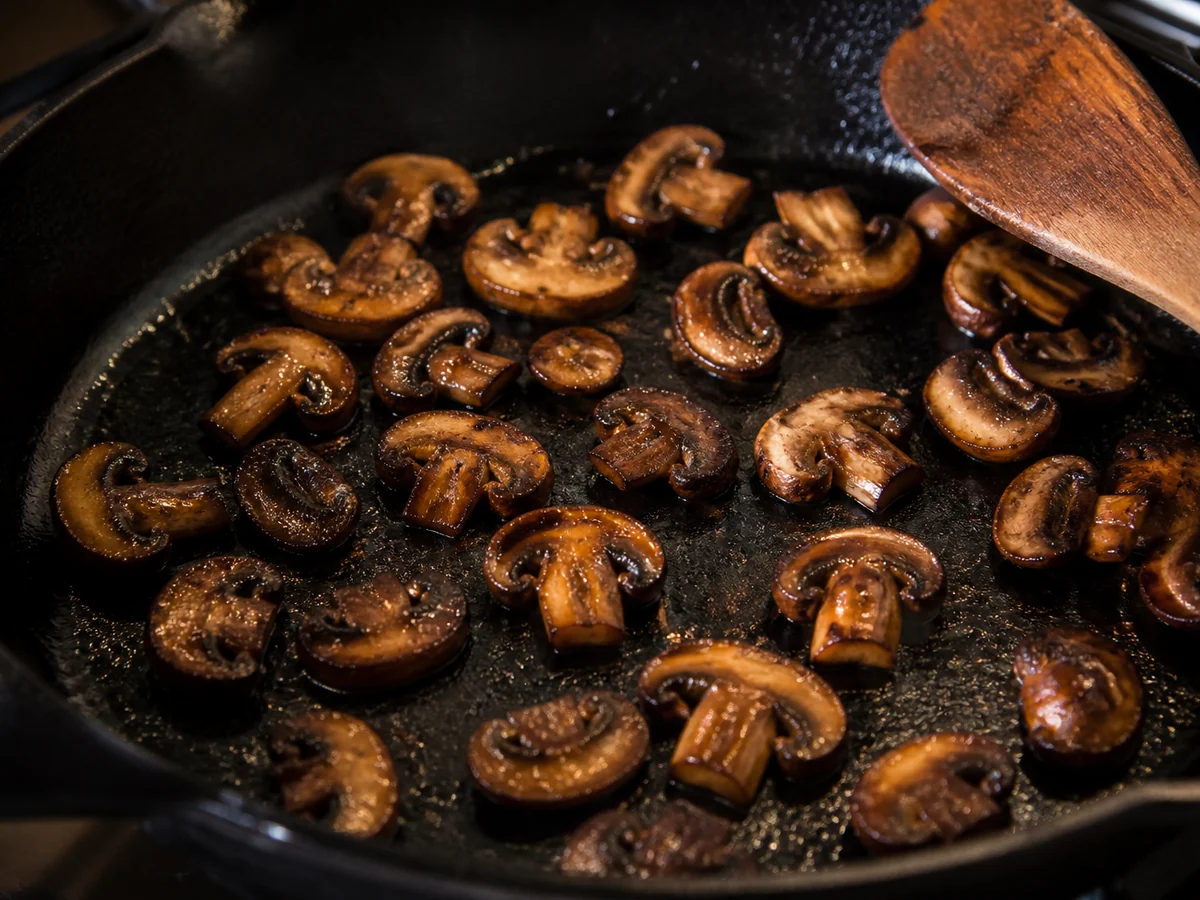
Here is the whole thing in order. Each line depends on the one above it.
That third line is the one worth arguing about. It contradicts the usual instruction to heat the oil before anything else goes in.
Fat added at the start sits in the pan while the mushrooms flood it with water, and what you get is oil suspended in mushroom liquid, which browns nothing and coats everything.
That suspended-oil problem disappears if you simply wait for the pan to go dry again. Once the pieces are starting to squeak and color, butter or oil meets hot dry surfaces and does what fat is supposed to do, and the same logic decides when salt goes in.
The salt point works the same way, because salt draws water out by osmosis and salting at the start actively works against the thing you are trying to achieve.
None of this needs a lid, and a lid would defeat the whole exercise by trapping the steam you are trying to lose.
Cooking MushroomsHow to Cook Black Truffle Without Losing Its AromaWhat the method comparison actually found
The pan is not the only option. Somebody has actually gone and measured the alternatives against each other.
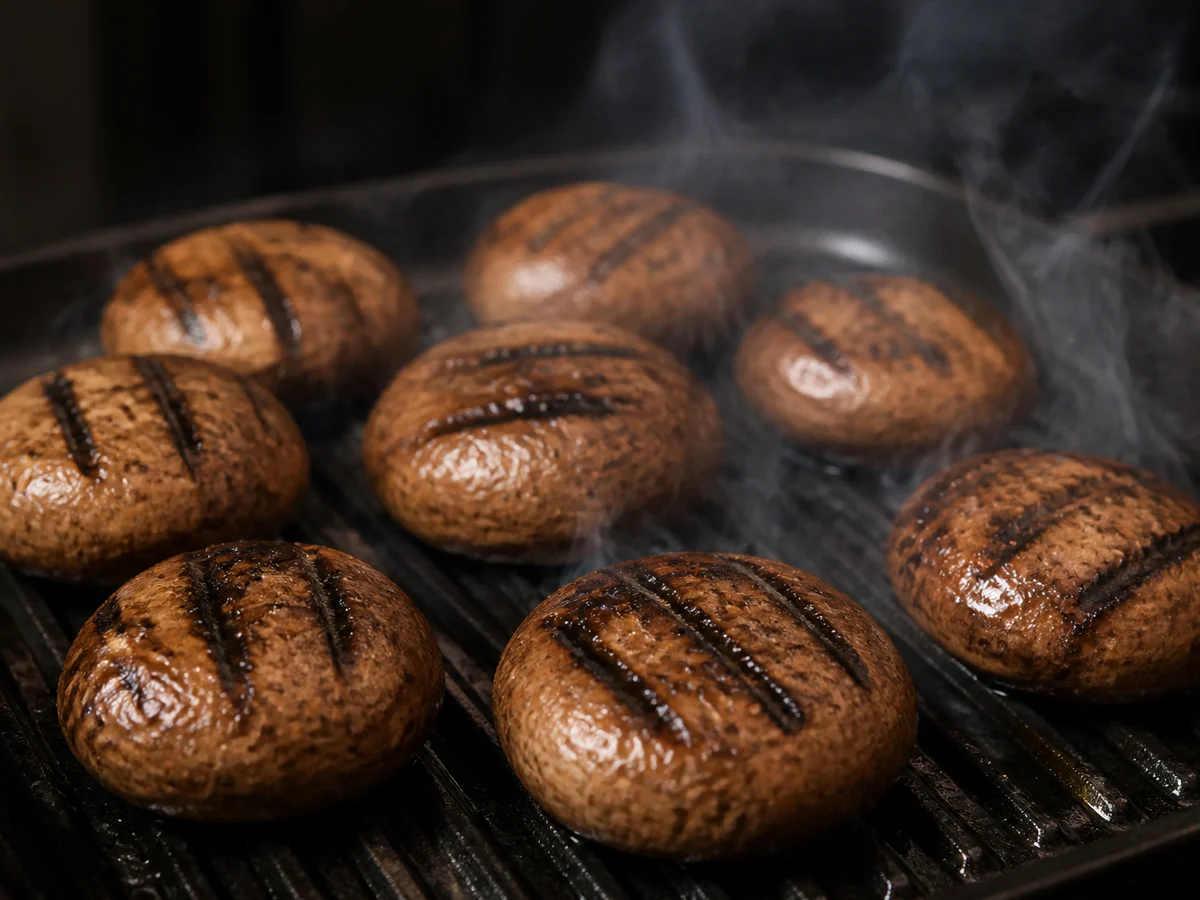
A study compared boiling, microwaving, grilling and deep frying across four cultivated species, this one among them.
- Deep frying
- The most severe losses in protein, ash and carbohydrate, plus added fat and energy
- Boiling
- Raised total glucans by enhancing the beta-glucan fraction, but cut antioxidant activity
- Grilling
- Kept antioxidant activity high
- Microwaving
- Also kept antioxidant activity high
- The authors' conclusion
- Microwaving and grilling were the best two for maintaining the nutritional profile
The microwave line surprises people. It is worth sitting with rather than dismissing, because the reasoning behind it is simple.
A microwave heats the water inside the mushroom directly and quickly, with no added fat and no long exposure. On the measure that study used, that turned out to be a good thing rather than a shameful one.
That does not make a microwaved mushroom taste like a seared one. Browning is a flavor process and a microwave does not do it, so this is a genuine trade rather than a free win.
Boiling comes with its own trade, and it is the most interesting of the four.
It raised the beta-glucan fraction while lowering antioxidant activity, so it is neither simply good nor simply bad, which is how most cooking decisions actually work.
Cleaning, stems and the parts people throw away
Two small questions come up every time, and both have short answers.
The question is always whether to wash cremini or wipe them, and the argument is mostly overblown. A brief rinse under a tap does not turn a mushroom into a sponge, because the exposure is a few seconds and the cap surface is not especially absorbent.
What water does do is sit on the surface, and surface water is exactly what you spend the first minutes in the pan driving off.
So wipe them if they look clean and wash them if they are gritty, then dry them properly on a cloth before they go anywhere near heat. The mistake is not washing, it is cooking them wet.
Cremini stems are firm, clean-tasting and completely edible. They are not the woody, inedible stems that some other species carry, and cutting them off is throwing away good food.
Trim the very base if it is dry or dirty, and slice the rest along with the cap.
- The stem is denser than the cap, so cut both to a similar thickness rather than discarding one
- A torn veil means an older mushroom, not a damaged one
- Gritty mushrooms are worth rinsing, and wet mushrooms are worth drying properly first
- Dark patches on the cap are age rather than spoilage, though slimy ones are past it
The veil is the last small thing.
If the membrane under the cap has started to tear and you can see the gills, the mushroom is simply a little older and closer to a portobello.
That is a maturity signal rather than a fault. It usually means darker color and stronger flavor once it hits the pan.
What cremini is actually good at
Choosing the middle age is a real choice with real consequences. It suits some jobs and actively works against others.
- Holds shape in liquid
- Better than the white button, which softens sooner
- Flavor
- Deeper than white button, milder than a fully open portobello
- In a braise or a sauce
- Slices stay intact where thinner species collapse
- Not the right pick for
- A dish where you want the mushroom to melt into the background
- A large surplus
- Better dried than left to open in the fridge
The braise point is the practical one. A white button in a long-cooked sauce tends to give up and go soft, and the extra structure in a cremini is what keeps a recognizable piece on the fork.
That same structure is a disadvantage if you want mushrooms to disappear into a duxelles or a soup base, where the youngest form is genuinely the better tool.
- Choose white button when you want the mushroom to melt into something
- Choose cremini when you want to still find it on the fork
- Choose portobello when the mushroom is the center of the plate
- All three take the same method, and only the timing shifts
If you have more than you can use in a few days, the answer is not to leave them and hope. They will keep maturing in the fridge, and drying them is a better use than watching them open.
Anything that then wants a specific dish rather than a technique belongs with the recipes for this species.
Sources & References
- Effects of stage of maturity and cooking on the chemical composition of select mushroom varieties, Journal of Agricultural and Food Chemistry 2005 That white button, crimini and portabella are treated as Agaricus bisporus, that chitin concentration increased with maturity and was highest in portabella at 8.0 percent, and that cooking decreased chitin and protein while increasing starch, fiber and fat.
- Effect of different cooking methods on nutritional value and antioxidant activity of cultivated mushrooms, International Journal of Food Science and Nutrition 2017 The four-method comparison across four cultivated species, the losses from frying, the glucan gain and antioxidant loss from boiling, and the conclusion that microwaving and grilling best maintained the profile.