
Mushroom soup: the browning step is the whole recipe
The browning step is the recipe
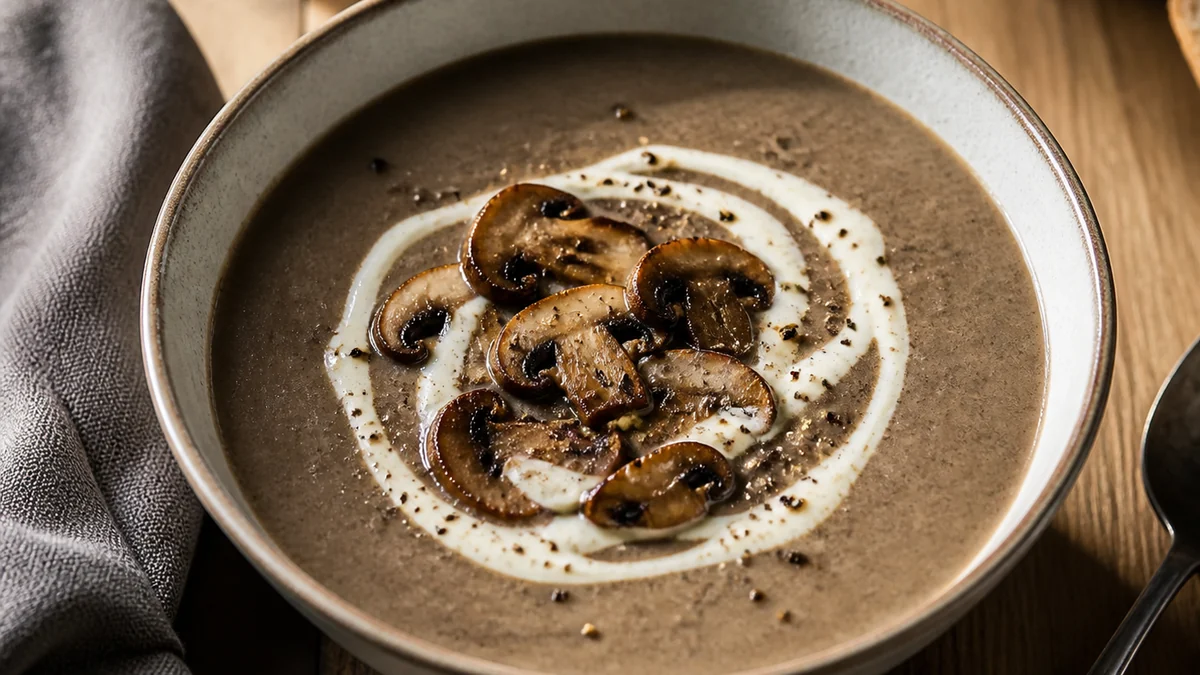
Bland mushroom soup is a browning failure rather than a cream shortage. Cook the mushrooms in batches so they brown instead of boiling, keep the water your dried mushrooms soaked in, and blend about half the pot.
Ingredients
- 500 g fresh mushrooms, mostly cremini or chestnut, sliced
- 15 g dried mushrooms, porcini for preference
- 1 medium onion, finely chopped
- 2 cloves garlic, sliced
- 40 g butter
- A few sprigs of thyme
- 800 ml stock or water
- Salt and black pepper
- Cream, a blended floury potato or soaked cashews, to finish (optional)
Method
- Cover the dried mushrooms with hot water and leave them for fifteen minutes.
- Heat a wide pan on high for a minute or two before anything goes in.
- Brown the fresh mushrooms in two or three batches, one layer deep, leaving each batch undisturbed for two minutes before stirring. Wait for the hissing to stop and the pan to darken. Salt only at the end of each batch, and set each one aside.
- Lower the heat, add the butter and the onion, and cook until soft. Add the garlic and thyme for the last minute.
- Return the mushrooms to the pan. Pour in the soaking liquid from the top of the bowl, leaving the grit behind, and scrape the base while it bubbles.
- Add the stock or water, bring to a simmer and cook for fifteen minutes.
- Blend about half the pot, keeping a spoonful of browned slices back for the top.
- Season, finish with cream or a blended potato if you want more body, and serve.
Gray, thin, and tasting mostly of cream. That is the mushroom soup most people make the first time.
The cream is not the problem. The failure happened about six minutes in, at the step described as cook until softened.
Why does mushroom soup come out bland?
Because the mushrooms were boiled rather than browned. Everything after that is compensation for a step that did not happen.
Those four lines are the whole diagnosis, and the fourth one is where most recipes leave the reader.
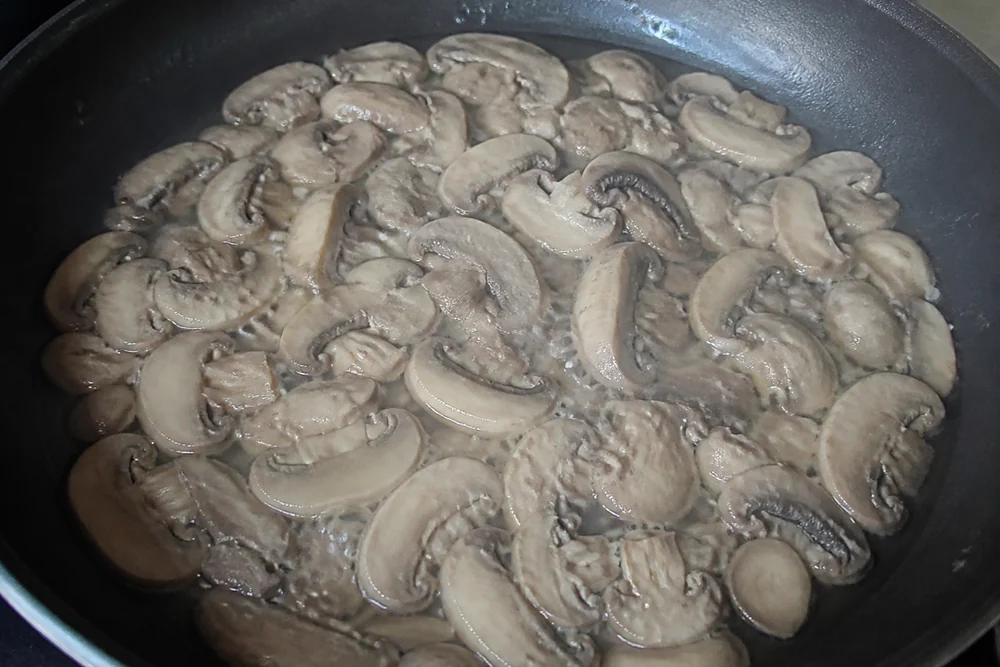
Pile mushrooms into a pan and they release water faster than the pan can drive it off. The temperature at the surface drops to boiling point and stays there, and nothing browns while there is standing liquid in the pan.
Tip
The pan tells you where you are without any timer. While it hisses and steams, water is still leaving; when it goes quiet and starts to smell nutty, browning has finally begun.
What do you need?
The ingredients are short, and one item on the list does more work than everything else combined.
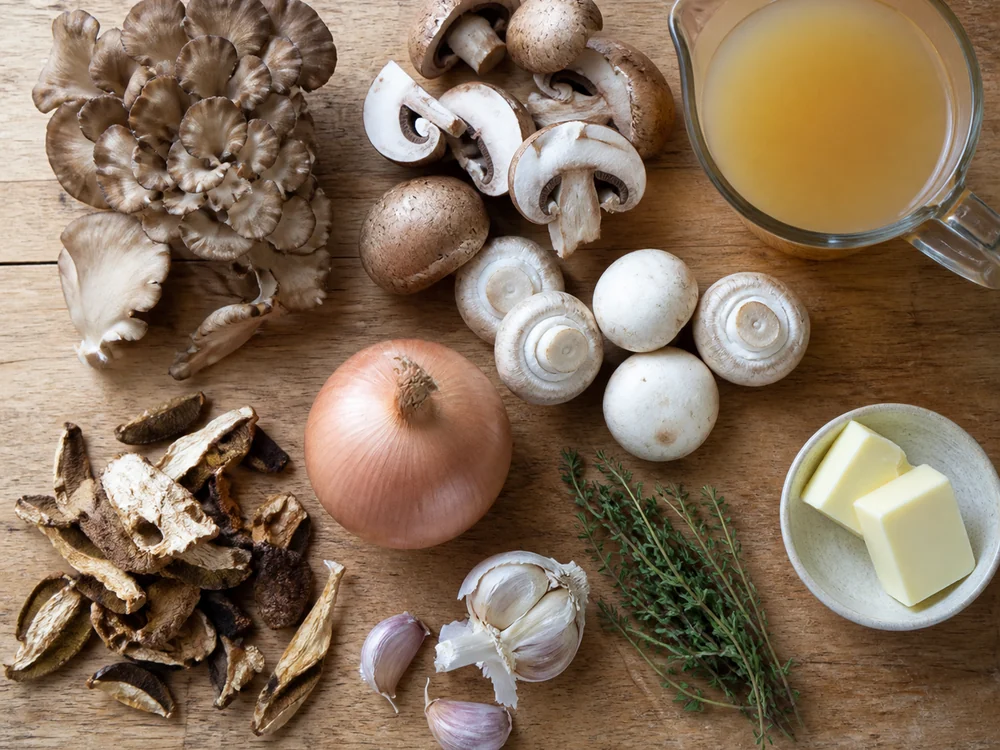
Seven things go in. The table says what each one is actually doing.
| Ingredient | Amount for four | What it is doing |
|---|---|---|
| Fresh mushrooms | 500 g | Body and bulk |
| Dried mushrooms | 15 g | Concentrated flavor and the soaking liquid |
| Onion | 1 medium | Sweetness and base |
| Garlic | 2 cloves | Depth, added late so it does not burn |
| Butter | 40 g | Browning medium and richness |
| Thyme | A few sprigs | The herb that survives the browning stage |
| Stock or water | 800 ml | Volume, and less important than it sounds |
Fifteen grams of dried mushrooms is a small handful carrying more flavor than the entire fresh weight above it, because drying them concentrates what fresh mushrooms hold in dilute form.
Everything on that table except two items is genuinely negotiable:
- The dried mushrooms are not, because nothing else on the list carries that concentration.
- The pan size is not, because it decides whether any browning happens at all.
- Everything else, including the stock, can be substituted or left out.
Butter rather than oil, because it browns sooner and tastes better.
Add the garlic near the end of the browning stage. It burns long before the mushrooms are done, and burnt garlic is the one flavor this soup cannot hide.
- Serves
- Four, as a starter or two as a main.
- Active time
- About forty minutes, most of it browning.
- The one non-negotiable
- Browning in batches rather than all at once.
- The ingredient that carries it
- 15 g of dried mushrooms and their soaking water.
- What cream is for
- Body and rounding acidity, not flavor.
Which mushrooms should you use?
A mix, and one of them has to be dried.
Water content is what separates those four, and white button holds the most of it.
A button soup is perfectly acceptable and noticeably paler, while cremini and chestnut brown faster and go further because there is less water to drive off.
Wild additions are worth it when you have them and never necessary, and a basket of fresh chanterelles is better fried than blended into anything. Anything you picked yourself belongs here on the same terms, and what a beginner should be picking is a separate question from what makes a good soup.
A handful of anything foraged changes the character of the pot, though the honest ranking is that fifteen grams of dried porcini does more than a punnet of anything fresh.
How do you brown them properly?
In batches, in a pan that is too hot. No salt until the end.
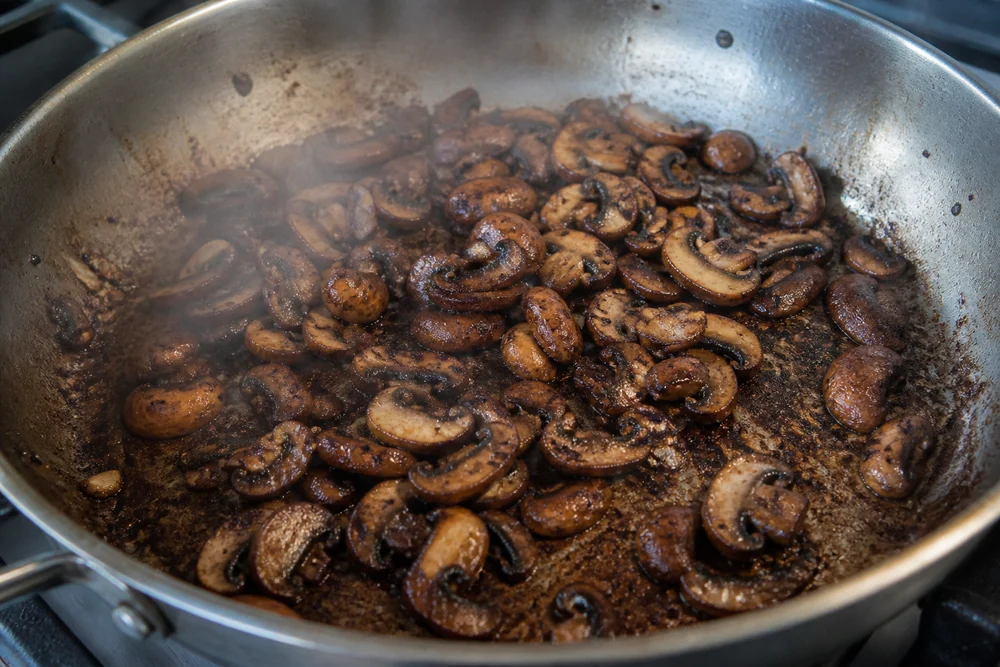
Five steps, and the third one is where most people interfere.
Those numbers are the whole reason the batches matter.
Each batch takes six to eight minutes and the last two of them do most of the work. Nothing much appears to be happening for the first five and then the color arrives quickly, which is the point at which people who have wandered off lose the pan.
Three signs tell you a batch is finished, and they arrive in this order:
- The hissing stops, which means the free water has gone.
- The smell turns nutty rather than damp.
- The pan base darkens, which is the fond you are collecting.
Warning
Do not tip the batches back together and keep cooking. Once they are browned, set them aside and start the next batch in the same pan, because the fond building on the base is being collected for later.
What liquid should you use?
The water your dried mushrooms soaked in, before any stock goes near the pan.
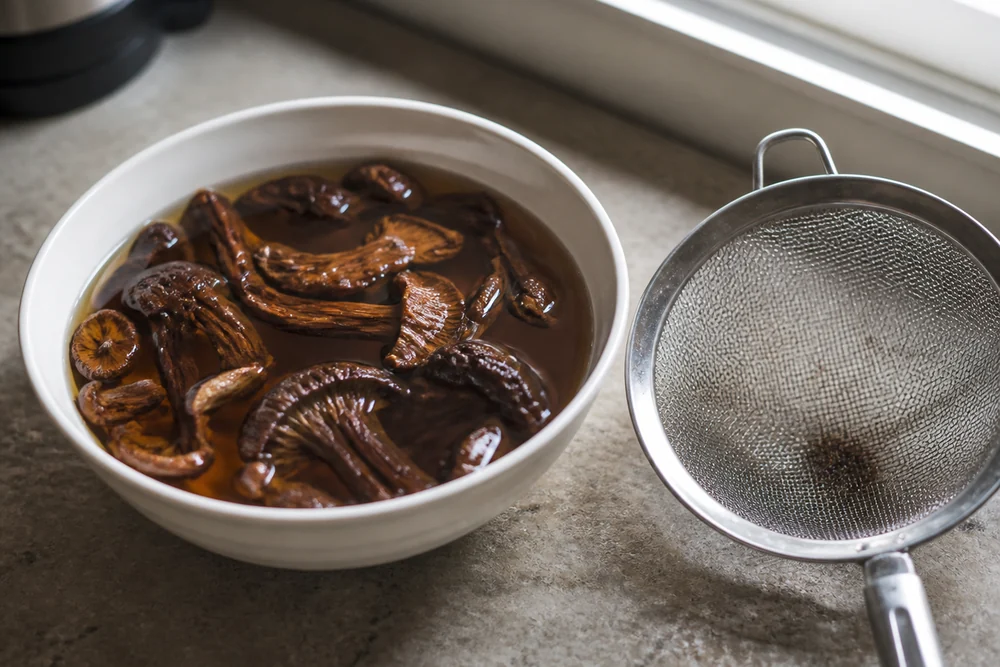
Fifteen minutes in water off the boil is enough for most dried mushrooms, and the liquid is worth more than they are.
Key takeaway
Pour the soaking liquid off the top rather than tipping the bowl out. Whatever grit came off the dried mushrooms is sitting in the last centimetre, and a fine sieve or a moment of patience keeps it out of the soup.
Deglaze with it, because the fond is the flavor you spent three batches building. Return the onions and browned mushrooms to the pan, pour the soaking liquid in, and scrape the base while it bubbles, which lifts the fond you spent three batches building.
Stock matters less than every recipe implies. A good chicken or vegetable stock rounds the result out, and plain water plus the soaking liquid still makes a better soup than stock plus under-browned mushrooms.
Should you blend it?
Half of it, which is the answer most people actually want.
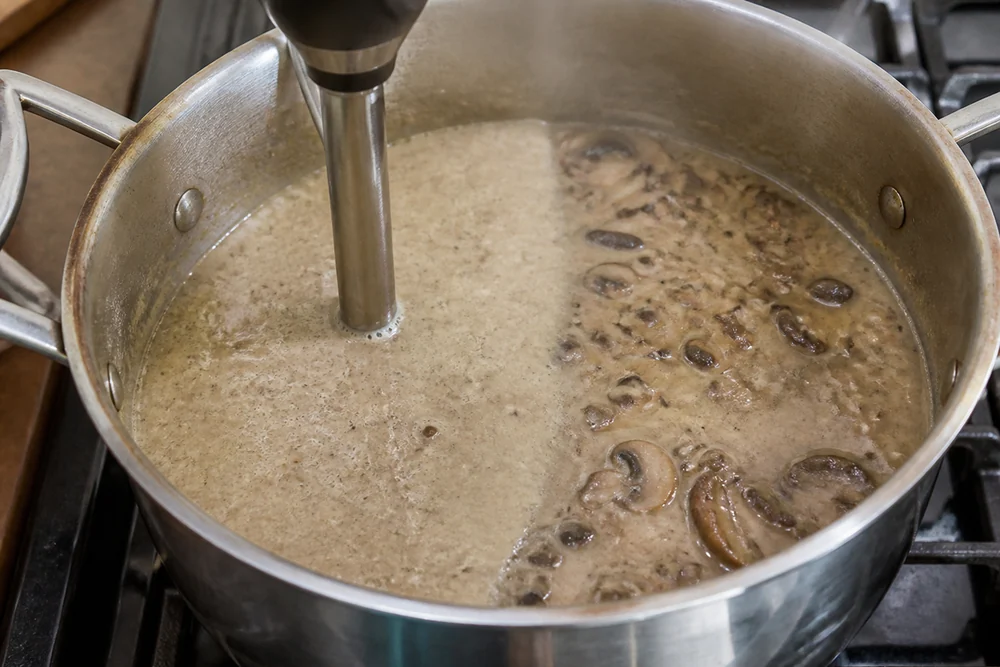
A full blend gives a smooth, restaurant-looking soup with a flatter mouthfeel. Every piece disappears, which is a real loss when you spent twenty minutes browning them.
Blending half the pot thickens the soup and keeps something to chew on. Reserve a spoonful of the best browned slices before any of it goes in the blender, and put them on top at the table.
Do you need cream?
No, and it is worth knowing what it is actually for.
Cream adds body and rounds off acidity. It contributes almost nothing in the way of mushroom flavor, which is why a soup that needs cream to taste of anything is telling you the browning stage went wrong.
Finish with a splash rather than a cupful
Use a blended potato or a handful of blended cashews for the same body
Taste before adding anything, because a well-browned soup often needs nothing
Add cream to fix blandness, which it cannot do
Boil the soup hard after the cream goes in
Assume the dairy-free version is a compromise
If you are leaving the dairy out, the options in order of how well they work:
- A floury potato, peeled and diced into the pot early, then blended with everything else.
- A small handful of cashews soaked for an hour and blended into the finished soup.
- Nothing at all, which is fine when the browning went well and the soup is already dark.
A blended floury potato does the textural job well, and so does a small handful of cashews soaked and blended into the pot. Both are thickeners rather than substitutes, which is the correct way to think about the cream they are replacing.
Season at the very end, taste, and stop. The mushrooms you started with did the work forty minutes ago, and this stage is only about salt, pepper and whether the texture is where you want it.