The name on a packet is not a field identification
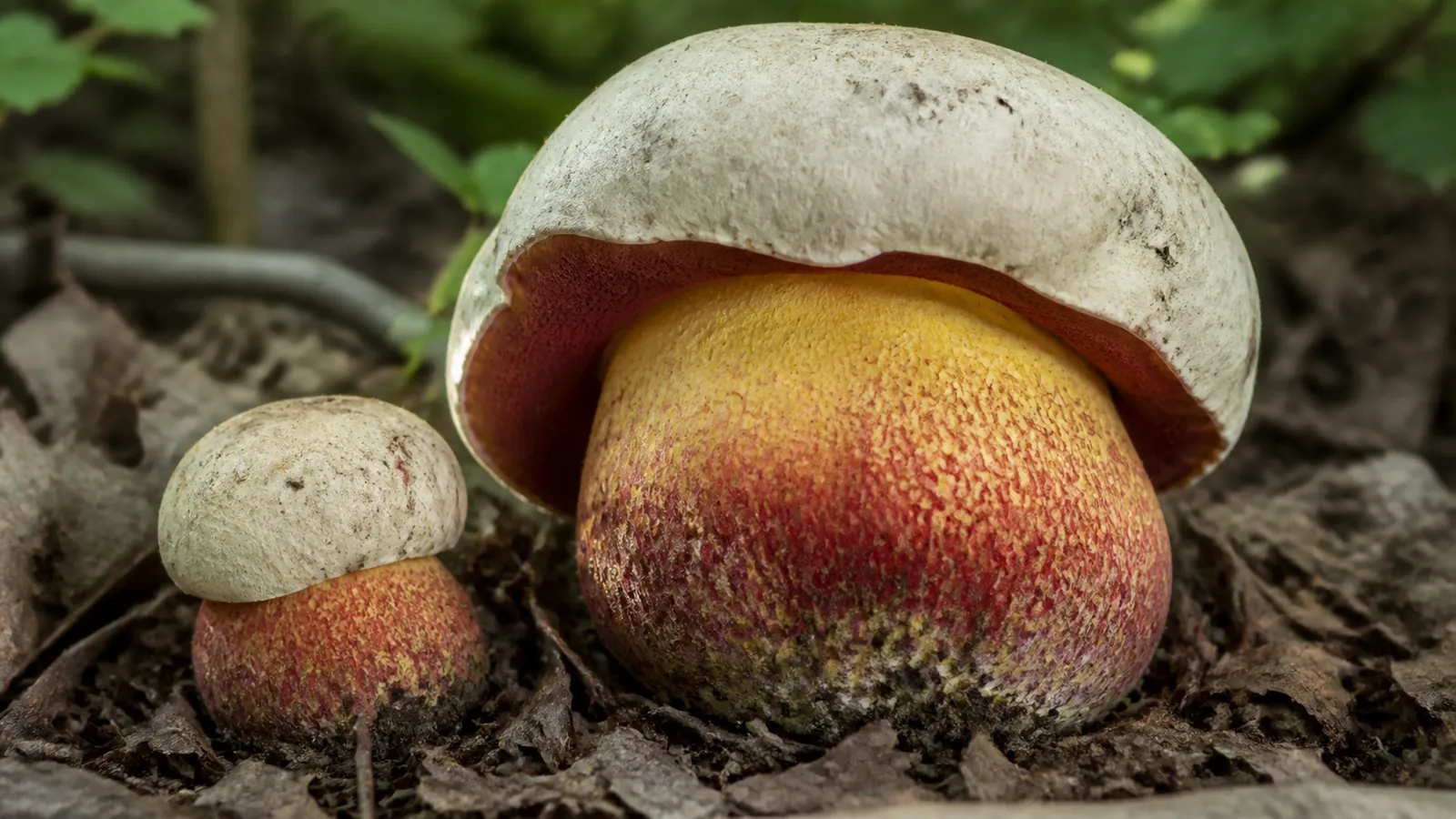
Porcini is a market category as well as a mushroom name. A dried packet or restaurant menu may group several allied boletes under that word, while this profile describes Boletus edulis.
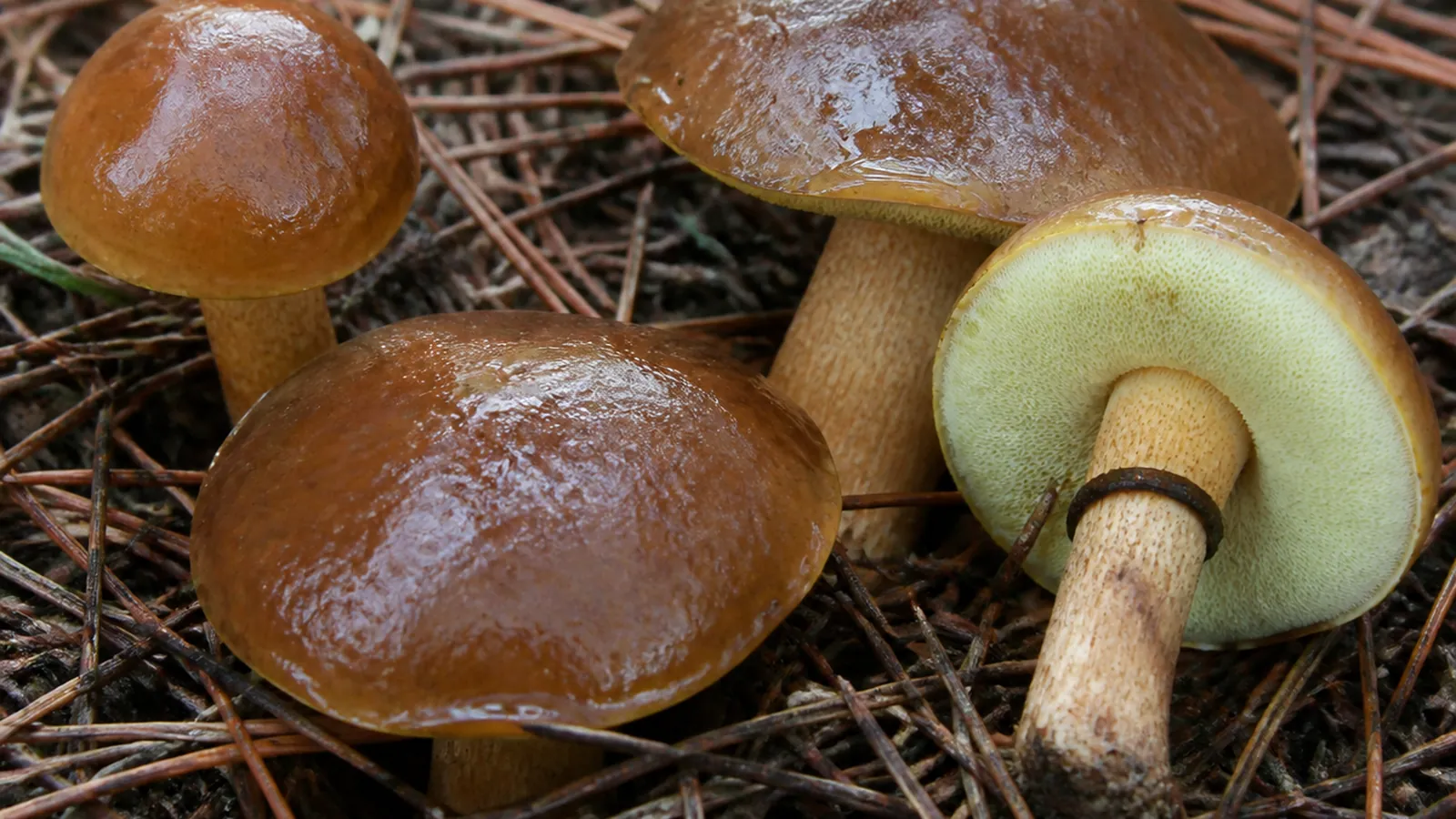
That distinction matters in the field because a commercial label cannot identify a fresh specimen. DNA studies have found multiple, sometimes unnamed species in material sold as porcini, and regional brown boletes can look close without being European B. edulis.
The useful starting point is the underside. B. edulis has pores rather than gills, but pores alone do not prove identity or edibility.
A sound identification combines the pore color, flesh reaction, stem reticulation, cap, host, and geography. If one part conflicts, keep that specimen out of food and resolve it with a regional key or qualified local identifier.
The same separation applies after collection. Keep each putative species apart, photograph the intact specimens, and do not let broken pieces from an uncertain bolete enter a verified batch.
Once identity is secure, condition becomes a separate decision. A correctly named mushroom can still be waterlogged, moldy, heavily tunneled, or too soft to use safely.
Porcini earns its culinary reputation through dense young flesh and aromatic compounds that respond strongly to drying. Drying changes the aroma rather than merely concentrating a fresh specimen, so fresh and dried porcini serve different jobs in a kitchen.
Build the identification from combined evidence
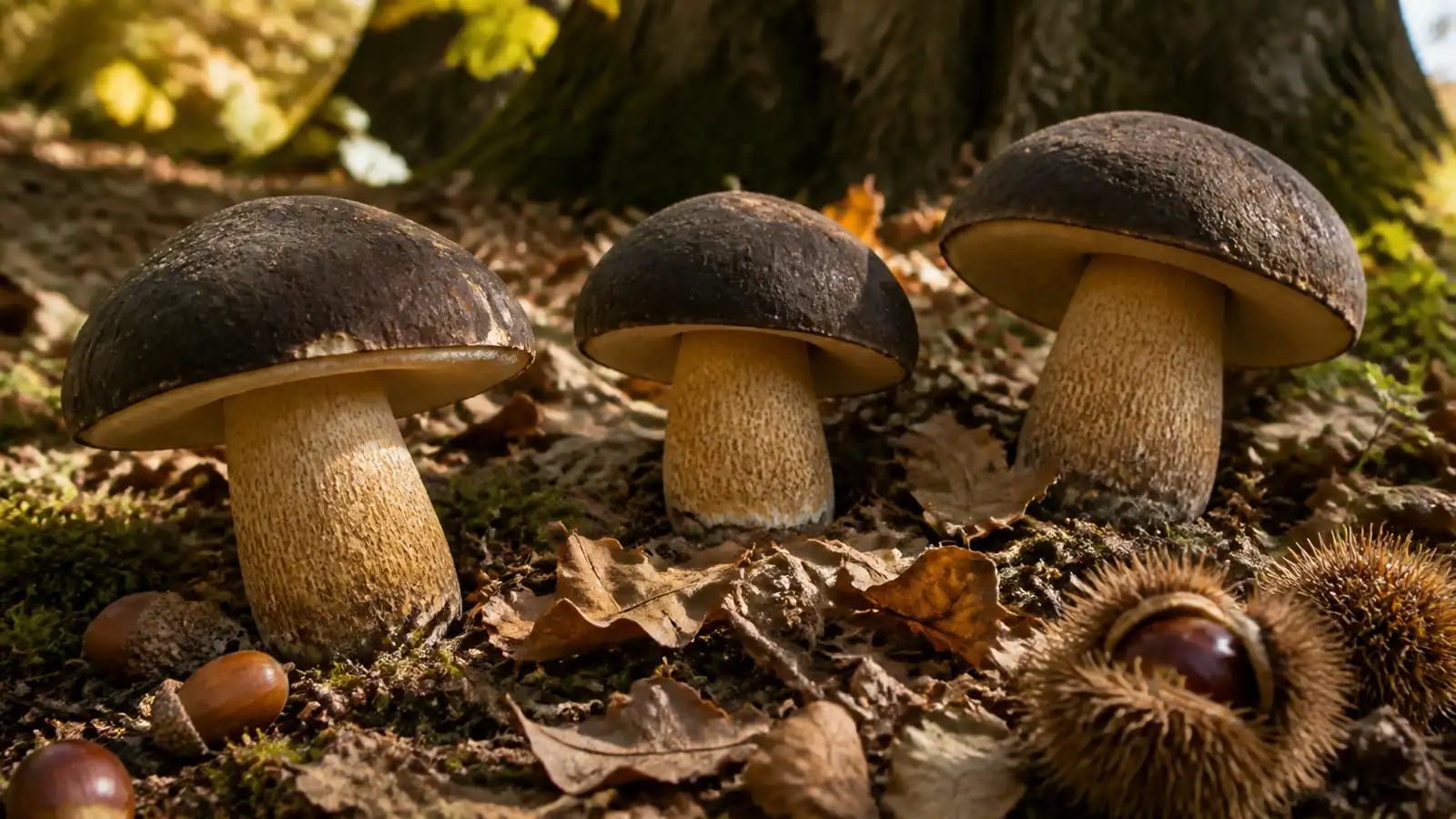
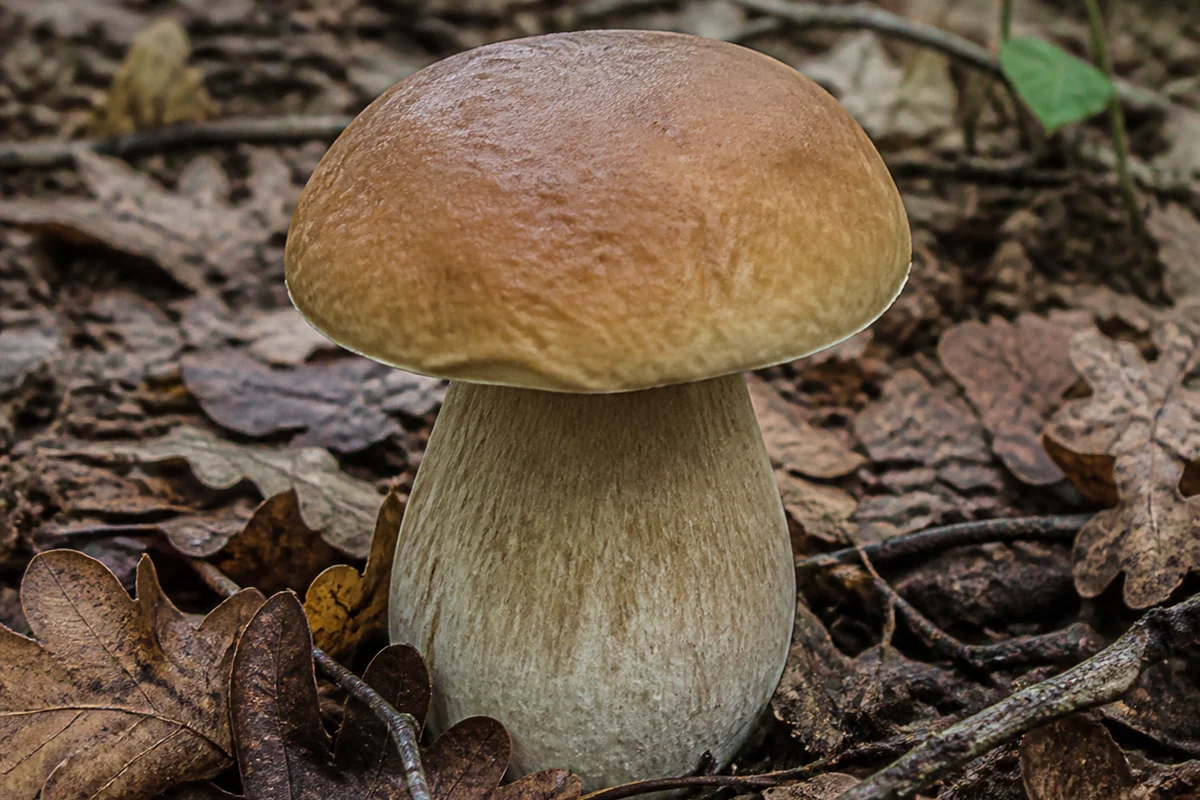
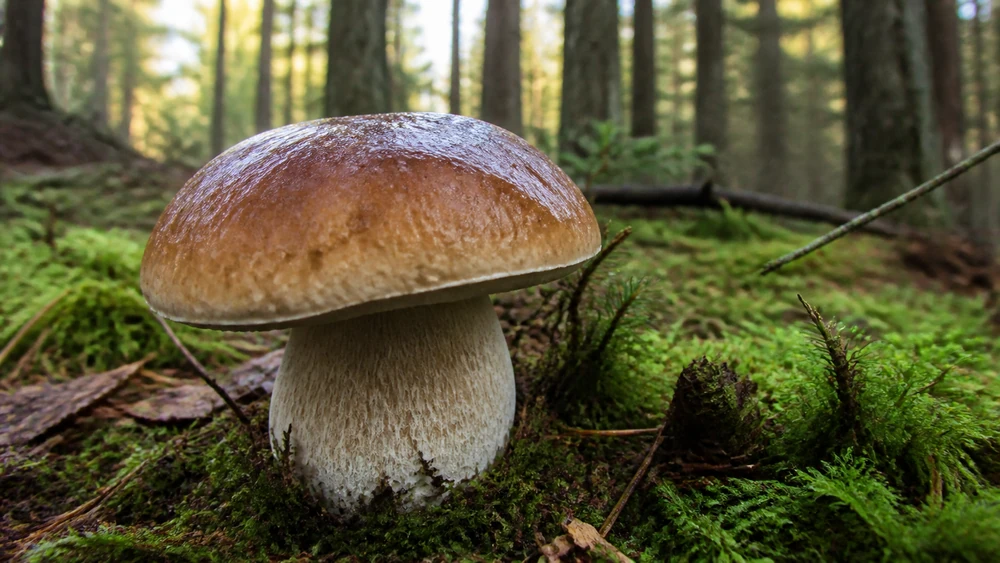
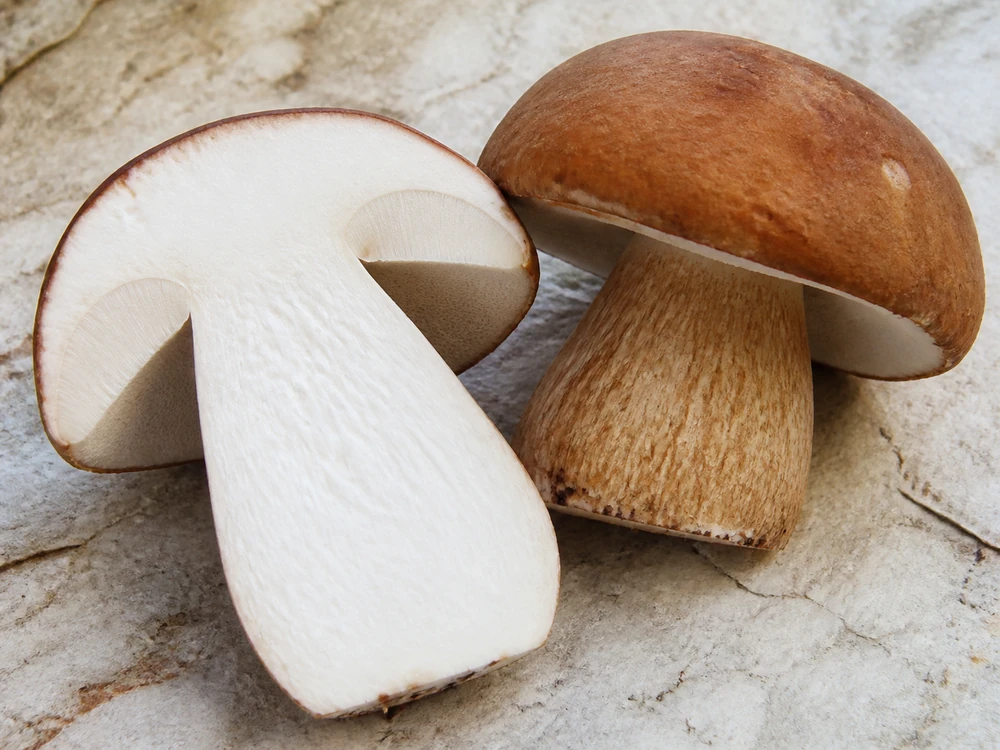
Brown to tan, commonly 7 to 25 cm across, convex then broader with age, and often slightly sticky when damp. A narrow pale margin may show on young European material.
None. The underside has fine pores that begin white, become yellow, then olive as the tubes mature.
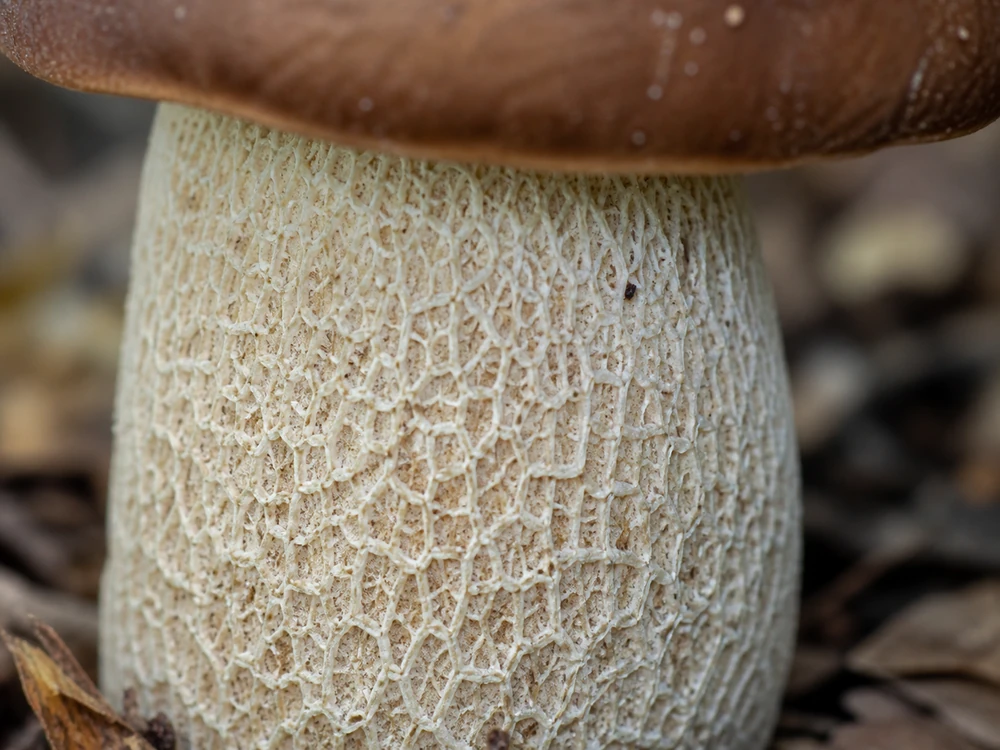
Stout to club-shaped, whitish or pale brown, with a fine raised pale network that is usually clearest near the top.
White flesh that normally remains white when cut, with a mild mushroom odor. Odor does not confirm the species.
Begin with a complete specimen and its setting. Photograph the cap, pore surface, full stem, fresh cut, and nearby trees before trimming away evidence.
These marks work as a set. A brown bun-shaped cap is common among boletes, and a white young pore surface can change as several different species mature.
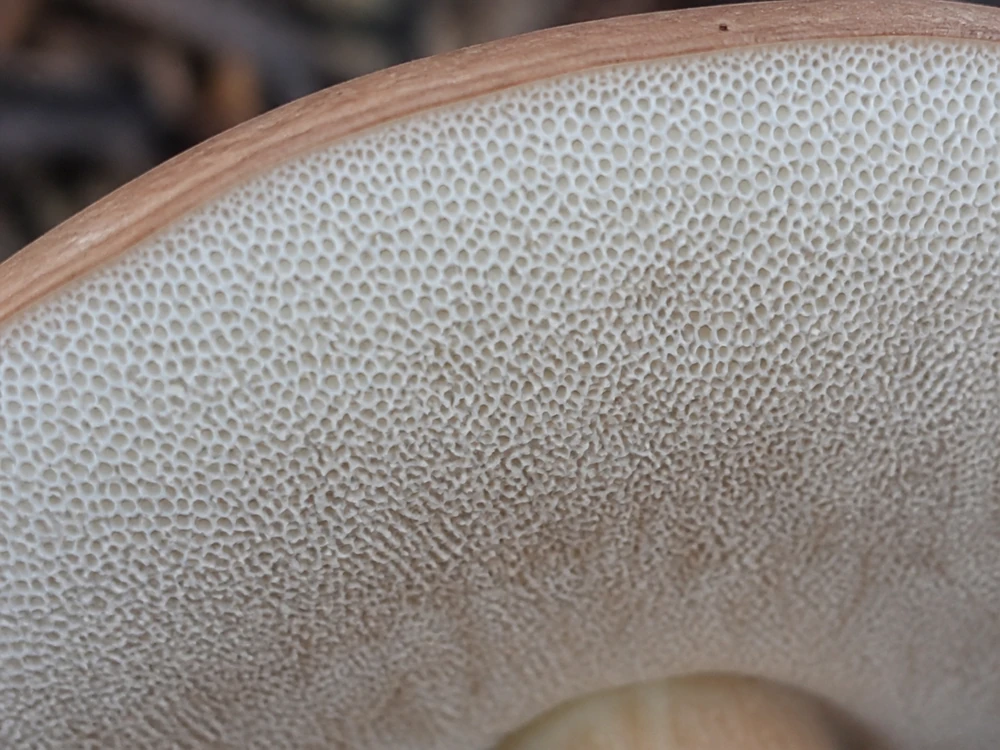
Turn the cap over in clean light and inspect the tubes before handling damages them. White pores that mature through yellow to olive support B. edulis, while pink, red, or orange redirects the identification.
Next, cut the fruit body lengthwise from cap through the stem base. Dense white flesh that remains white supports the identification, but rapid blue or other strong staining is a stop signal, not a universal verdict about toxicity.
A pale raised mesh should cross the upper stem as fine ridges. Side light helps separate real reticulation from longitudinal fibers, soil marks, or cracks.
| Observed conflict | What it means | Field decision |
|---|---|---|
| Pores mature pink and the stem has a coarse brown net | Fits the European bitter bolete pattern better than B. edulis | Separate it and resolve the species without tasting |
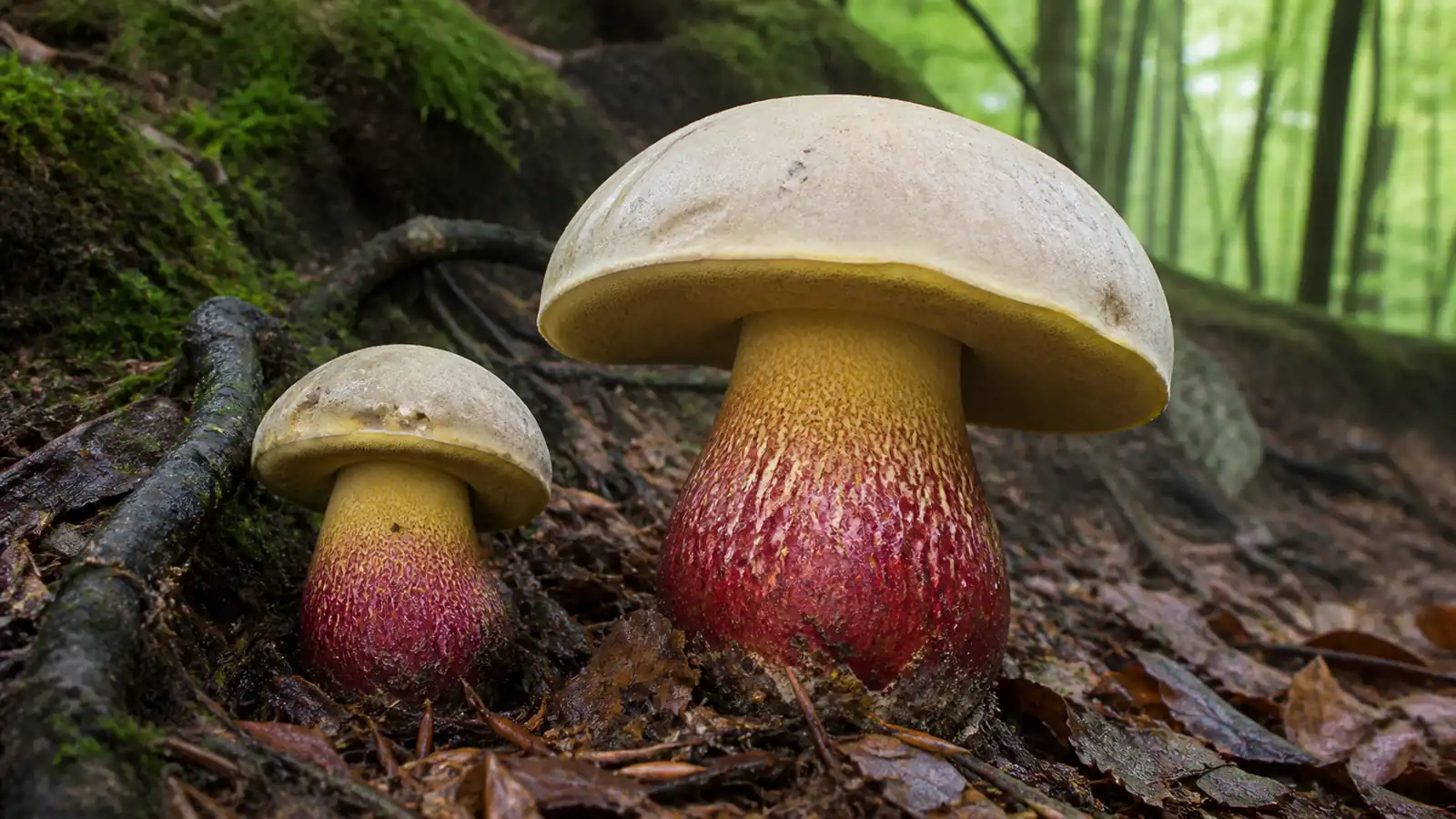
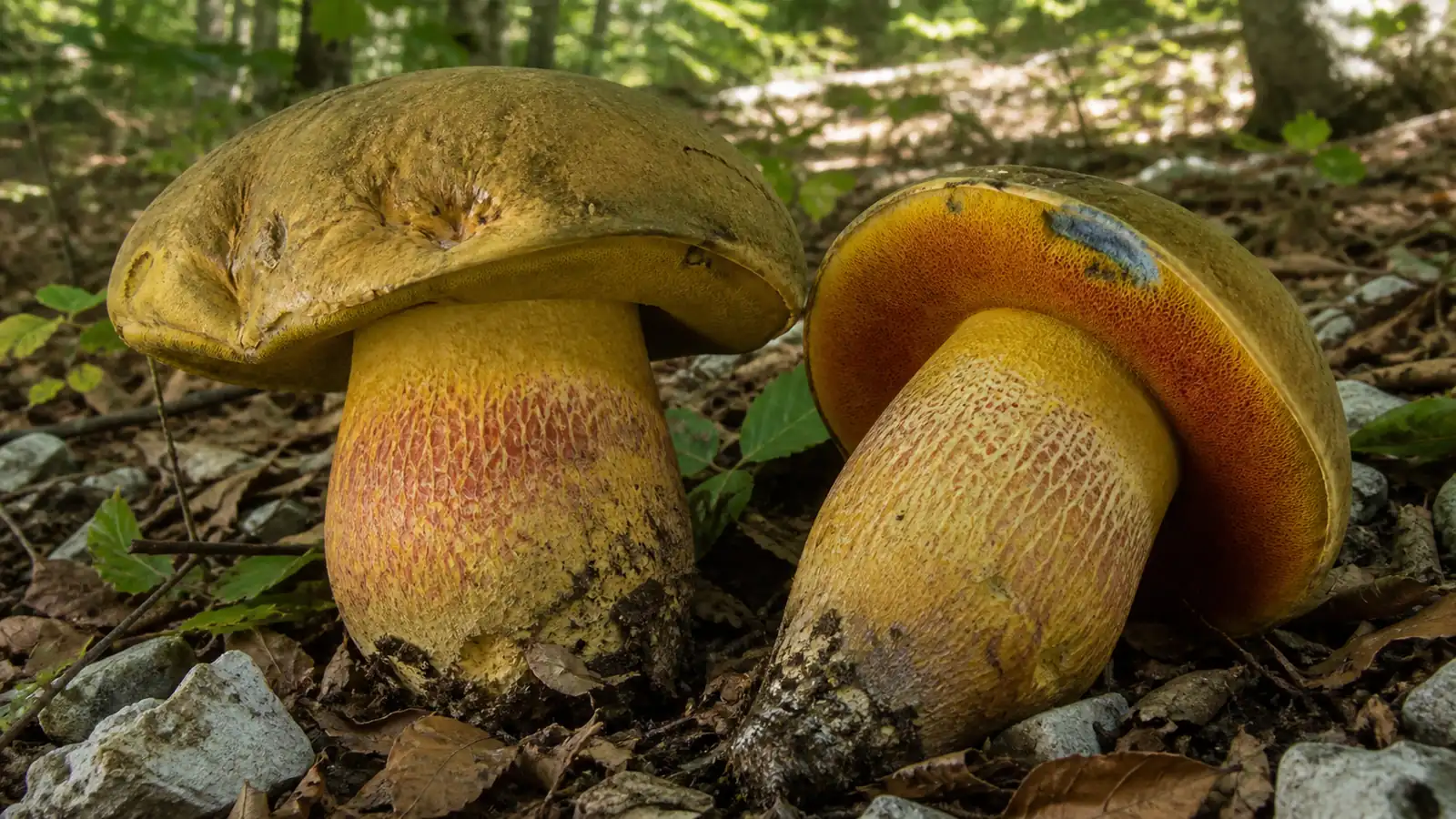
| Pores are red or orange | The specimen lies outside the porcini character set | Do not add it to food |
| Flesh stains rapidly blue or another strong color | A different bolete assessment is required | Keep it separate and use a regional key |
| Region, host, or several characters disagree | The name cannot be defended from appearance alone | Leave it unidentified or seek local confirmation |
The bitter bolete, Tylopilus felleus, illustrates why visible structure should settle the comparison. European descriptions emphasize pores that become pink and a broad dark-brown stem network, while North American lookalikes carrying that name may represent different regional taxa.
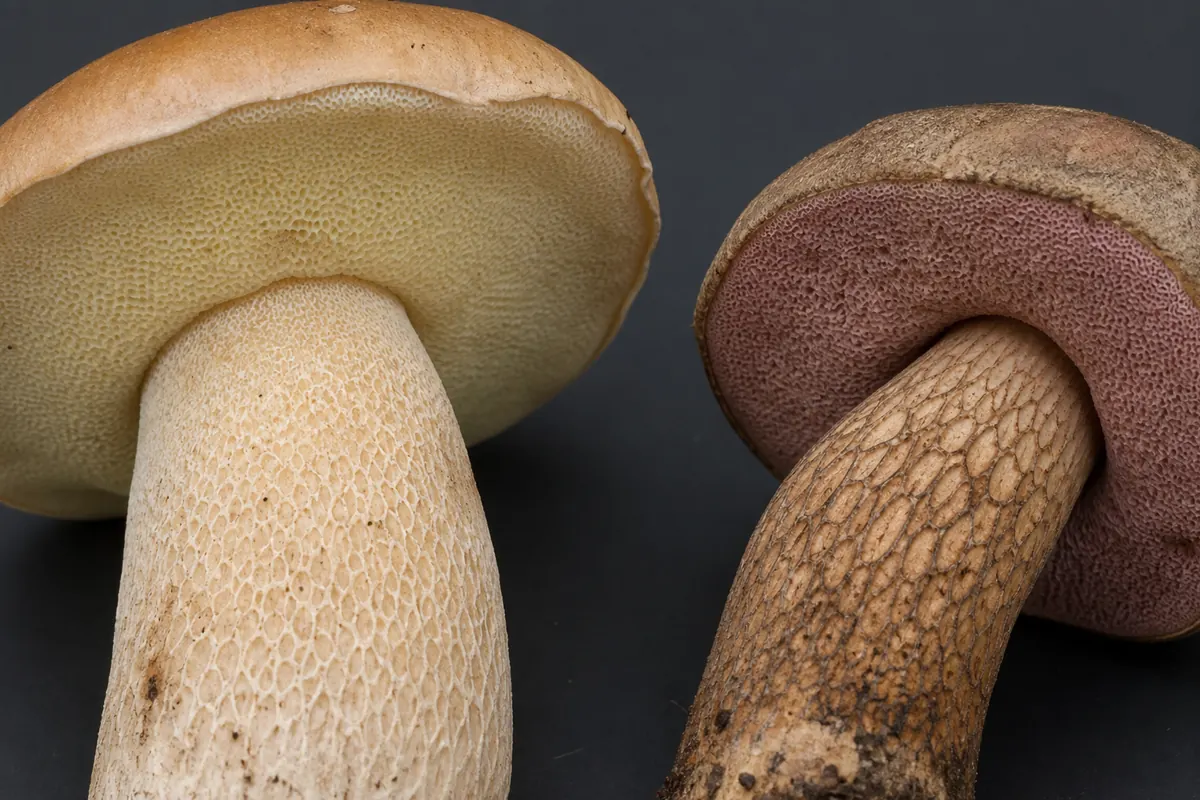
Do not use raw flavor as an identification shortcut. Official consumer guidance says never to eat wild mushrooms raw, and the visible comparison already supplies the needed rejection evidence.
Separate identity, condition, cooking, and storage
Kitchen work begins only after every specimen passes identification and condition review. Keep uncertain pieces out of the preparation area because a later decision cannot recover mixed fragments.
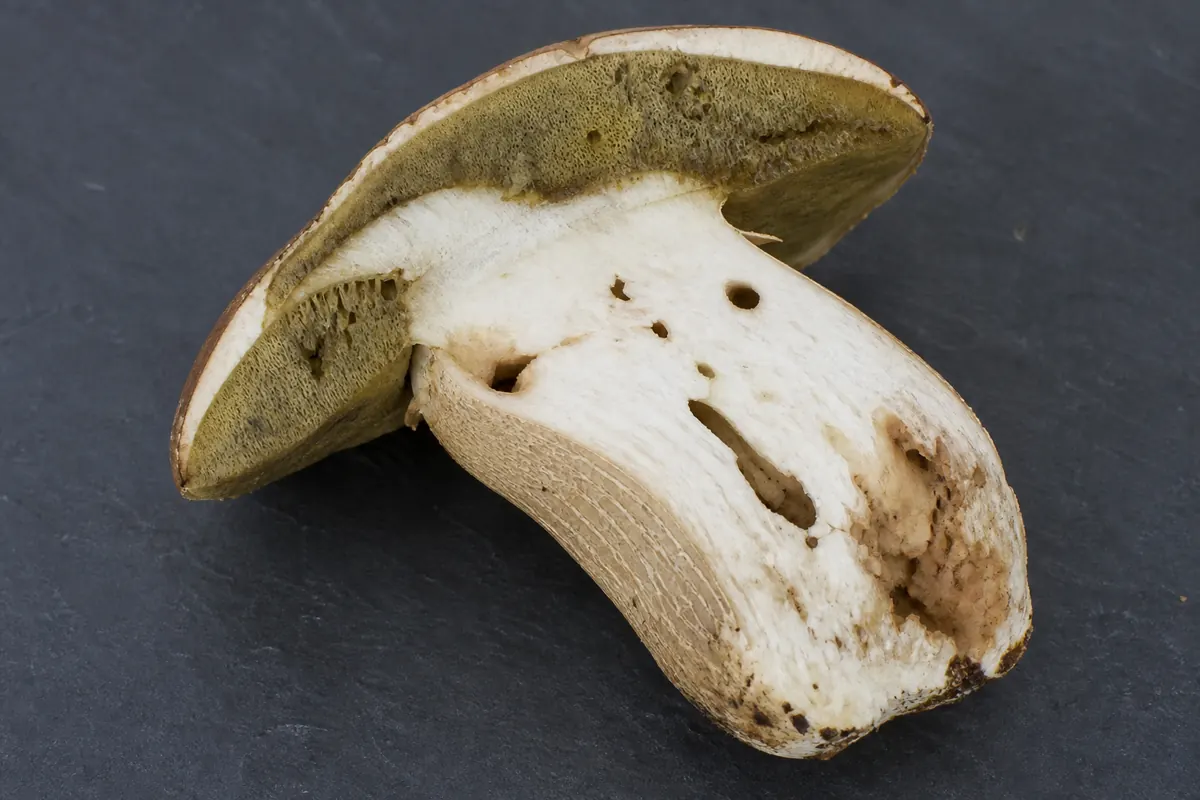
Cut each mushroom through the cap and stem. Firm white flesh with limited insect damage may be usable, while sour odor, slime, water-soaked tissue, internal mold, or extensive soft decay means discard.
Official consumer guidance says to cook wild mushrooms thoroughly and never eat them raw. Cooking is a food-safety step after identification, not a way to make an unknown bolete safe.
Inspect the cut
Keep firm, clean tissueReject sour odor, slime, water-soaked flesh, internal mold, and extensive soft decay
Chill separated specimens
Refrigerate at no more than 4°CKeep them away from other foods and use them within two days of collection
Preserve evidence
Keep photographs and collection notesClear records support an accurate exposure assessment if illness occurs
Fresh porcini can be brushed and trimmed, then cut into evenly sized pieces so the interior heats consistently. The exact pan method is a recipe choice, but complete cooking and a reasonable portion are safety decisions.
Drying gives a different aroma profile from fresh cooking. Controlled studies found that drying method changes volatile composition and sensory results, so a low, even process is preferable to an improvised claim that one temperature preserves everything.
Slice only clean, identified specimens evenly and dry them until the pieces are fully brittle rather than flexible. Cool them completely before packaging because warm dried food can create condensation inside a container.
Store the cooled pieces in clean, dry, moisture-proof containers in a cool, dark place. If moisture returns, redry promptly when there is no spoilage, but discard any moldy food rather than trimming it.
Rehydrated porcini and its soaking liquid should be treated as ingredients that still need cooking. Filter out grit, and do not use liquid from material that smelled spoiled or showed mold before soaking.
Match the tree partner, region, and season
Boletus edulis exchanges soil nutrients for carbohydrates at the roots of living trees. This mycorrhizal dependence explains why a fruit body rises from soil near a host and why a dead log is the wrong ecological clue.
Document every plausible tree rather than choosing the nearest trunk. Roots cross beneath mixed woodland, and European studies found host identity too variable to separate several forms once treated as distinct species.
The confirmed host range includes conifers and broadleaf trees. Spruce, pine, fir, oak, beech, and birch are useful candidates, but the relevant list changes with region.
Season is also regional. Summer through fall is a practical Northern Hemisphere frame, while rain, soil temperature, elevation, and local climate shift each flush.
A Southern Hemisphere find needs particular care with the name. Phylogenetic work supports human-assisted introductions of some porcini lineages with planted trees, but it also shows that similar commercial mushrooms can belong to other geographic lineages.
Where Boletus edulis ends and porcini begins
Boletus edulis is one species within the porcini lineage, not a scientific synonym for every mushroom sold as porcini. European phylogeny separates B. edulis, B. aereus, B. pinophilus, and B. reticulatus, while finding substantial variation within the European B. edulis clade.
Broader sampling uncovered many additional porcini lineages, with strong geographic structure and unresolved names. B. edulis itself has a wide Northern Hemisphere distribution, but similar Asian and American mushrooms cannot be renamed from a European photograph.
Commercial evidence makes the boundary concrete. A DNA survey of one dried packet sold as porcini recovered three unnamed species, showing that the trade label describes a product category, not verified species identity.
Cep and penny bun are common names associated with porcini, while king bolete is used broadly in North America. These names help interpret menus and labels but cannot replace a regional description, specimen record, or molecular evidence where species boundaries overlap.
The practical result is simple. Use B. edulis only when the specimen and geography support that species, and use porcini as a culinary group name when a seller has not provided defensible species-level identification.
Porcini questions people ask first
Does a porcini label mean Boletus edulis?
Which field marks should agree?
What should I do if a bolete has pink pores?
Does blue staining mean a bolete is poisonous?
Can cooking make an uncertain bolete safe?
How soon should fresh porcini be used?
Sources & References
- Beugelsdijk et al., Persoonia European Boletus section Boletus phylogeny and the combined morphology of white unchanging flesh, white-to-olive pores, and reticulate stems.
- Dentinger et al., Molecular Phylogenetics and Evolution Global porcini diversity, geographic lineages, and limits of applying European names to commercial or regional material.
- Dentinger and Suz, PeerJ DNA identification of three unnamed species in a commercial packet labeled porcini.
- MushroomExpert, Tylopilus felleus Regional description of pink-maturing pores, coarse brown reticulation, and the limits of the European name in North America.
- ANSES Official guidance to separate species, keep complete sound specimens, refrigerate at no more than 4°C, use within two days, cook thoroughly, and never eat wild mushrooms raw.
- Nöfer et al., Journal of Food Quality Controlled comparison showing that drying method changes Boletus edulis volatile composition and sensory profile.
- Jaworska et al., Drying Technology Effects of drying methods and storage on Boletus edulis water activity, rehydration, and measured antioxidants.
- National Center for Home Food Preservation Cooling, moisture-proof packaging, condensation response, cool dark storage, and mold-discard guidance for dried foods.