
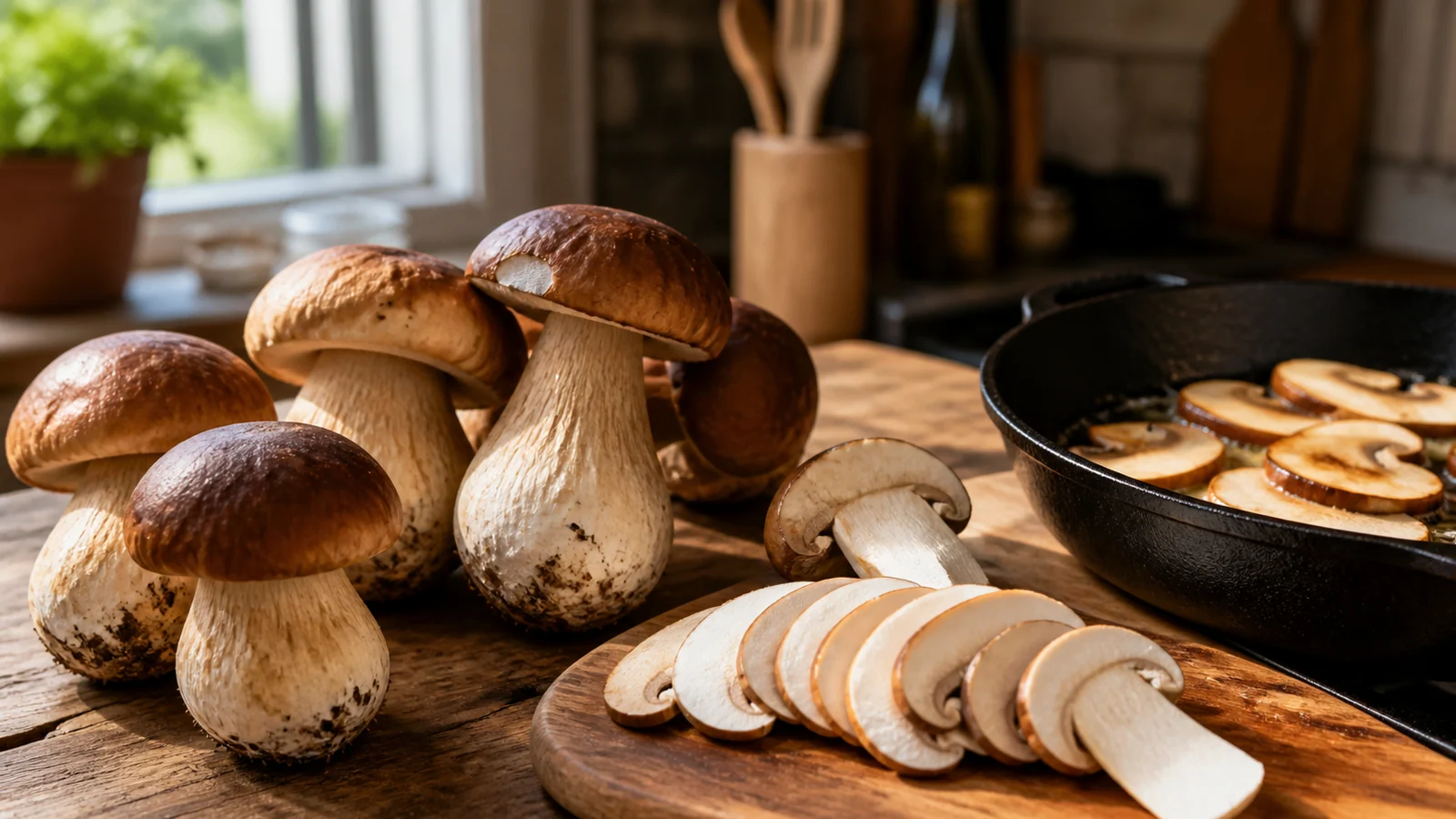
Almost every wild mushroom page answers this question the same way, and almost every one of them is talking about a mushroom nobody was planning to eat raw anyway.
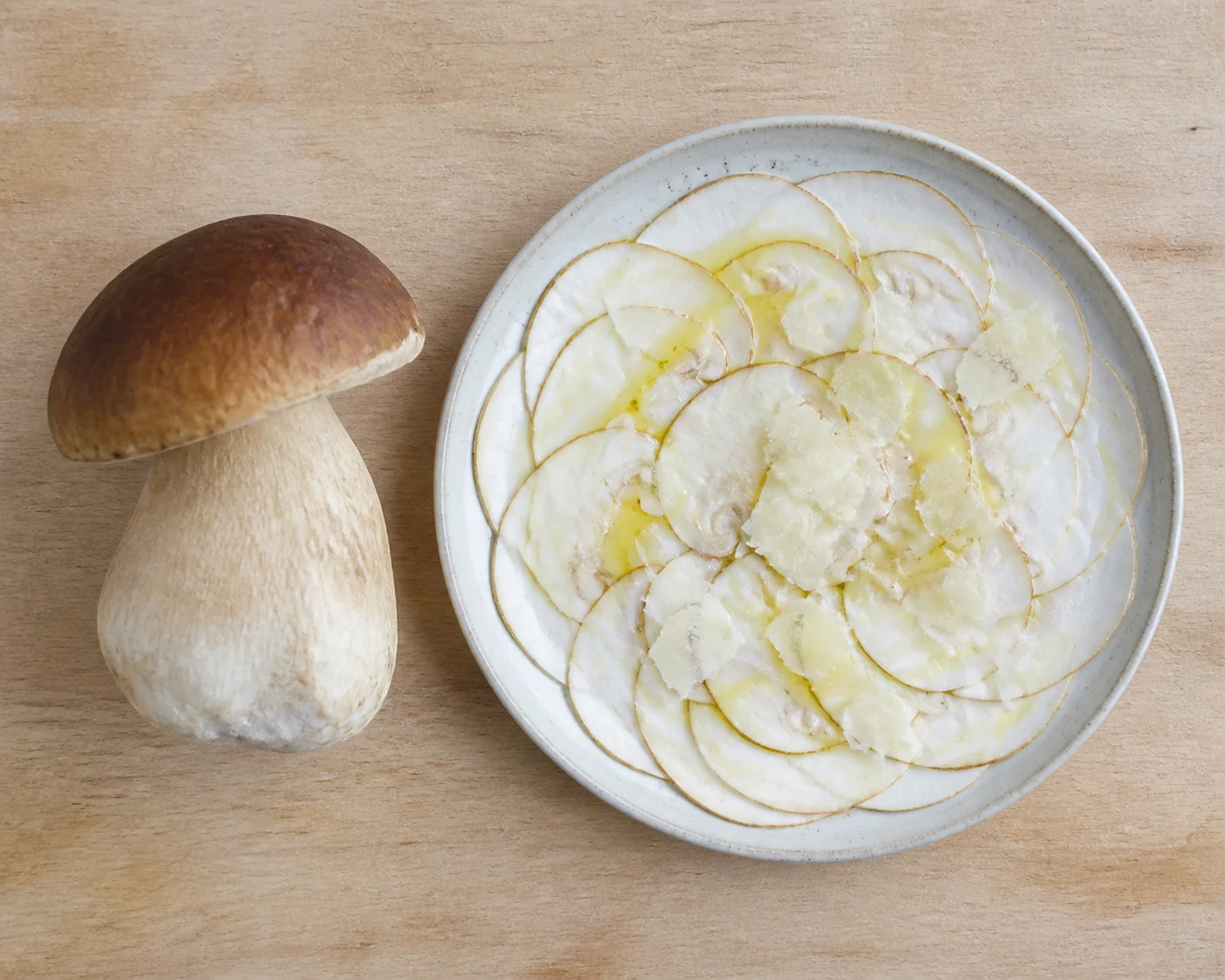
Porcini is the exception. Thin raw slices dressed with oil and lemon are a real dish, served in real restaurants, eaten by people who know exactly what they are doing.
So the warning has to be better than a reflex, and since 2021 it is.
Can you eat porcini raw?
Food safety guidance says no, and the reason stopped being vague four years ago.
Researchers publishing in Food Chemistry isolated two previously undescribed toxic proteins from Boletus edulis fruiting bodies. That moved raw porcini out of the category of things that are probably hard to digest and into the category of things with a named component and a measured response to heat.
- Verdict
- Cook it, and the reason is now specific rather than general
- What was found
- Two ribotoxin-like proteins, Edulitin 1 and Edulitin 2, in the fruiting body
- What removes them
- Heat, in a particular order relative to digestion
- What raw slicing does not change
- The proteins are in the tissue, not on the surface
- The honest caveat
- Cell culture toxicity is not the same as a documented human poisoning
None of that makes the raw porcini dish imaginary.
People have been shaving young porcini into salads for a long time, and most of them have been fine. Check what the cited evidence actually establishes before deciding how to prepare the mushroom.
The same answer covers the close relatives sold under the same name.
Pine bolete, Boletus pinophilus, differs from Boletus edulis in cap color and in its attachment to pine rather than in anything a cook or a stomach would notice. The protein work was done on Boletus edulis specifically, so that finding belongs to that species, and nothing about the group suggests a pine bolete is the safer raw option.
What is actually in a raw porcini
Three separate things, and only one of them is new.
| What is in there | What it does | What heat does to it |
|---|---|---|
| Edulitin 1, a 16 kDa protein | Dose and time dependent toxicity on human cells in culture | Denatured by heat |
| Edulitin 2, a 14 kDa protein | Same class of toxicity, and it resists being broken down | Needs heat before digestion can finish it |
| Trypsin inhibitors | Interfere with the body's own protein digestion | Deactivated by cooking |
| Ordinary raw fungal tissue | Chitin cell walls that human digestion handles poorly | Broken down by heat |
The bottom row is the one every wild mushroom shares, and it is the least interesting of the four rows.
It is why raw mushrooms of almost any species sit heavily, and on its own it would put porcini in the same mild category as a raw chanterelle. The top three rows are what make this species a different conversation.
The name of the class is worth unpacking, because it sounds worse than the situation.
Ribotoxins act on ribosomes, the machinery a cell uses to build proteins, and shutting that machinery down is what makes them toxic to a cell. That is a serious mechanism in a petri dish and a much more complicated one in a person, where the protein has to survive a stomach and cross a gut wall before it reaches any ribosome that matters.
Ribotoxin-like proteins are also not exotic in fungi.
Similar proteins have been described in other edible mushrooms, including the ordinary white button, where one was named Bisporitin. Their presence is not a scandal and it is not an argument against eating mushrooms, because the species carrying them are eaten cooked by hundreds of millions of people.
What matters for a cook is not that they exist but what it takes to deal with them, and that turns out to be the interesting part.
SafetyCan You Eat Beech Mushrooms Raw? Not Poisonous, Just BitterWhy your digestion does not solve it
The obvious objection is a good one. Your stomach breaks down proteins for a living, so why should a protein in a mushroom be any different?
For Edulitin 1, it more or less is not. For Edulitin 2, the study found something more awkward.
That is the whole argument in one line.
Toxicity was abolished only after heat treatment at 90 degrees Celsius followed by proteolysis.
The finding that decides the question
Digestion alone did not neutralize Edulitin 2 in the laboratory, and heat plus digestion did. Eating porcini raw asks your stomach to do a job the experiment suggests it cannot finish by itself.
The reason the heat has to come first comes down to shape.
A protein that stays tightly folded gives digestive enzymes very little to grip, which is what protease resistance means in practice. Heat unfolds it, and an unfolded protein is something a stomach can take apart.
The two treatments are not alternatives that each half-work. They are one step and then the next.
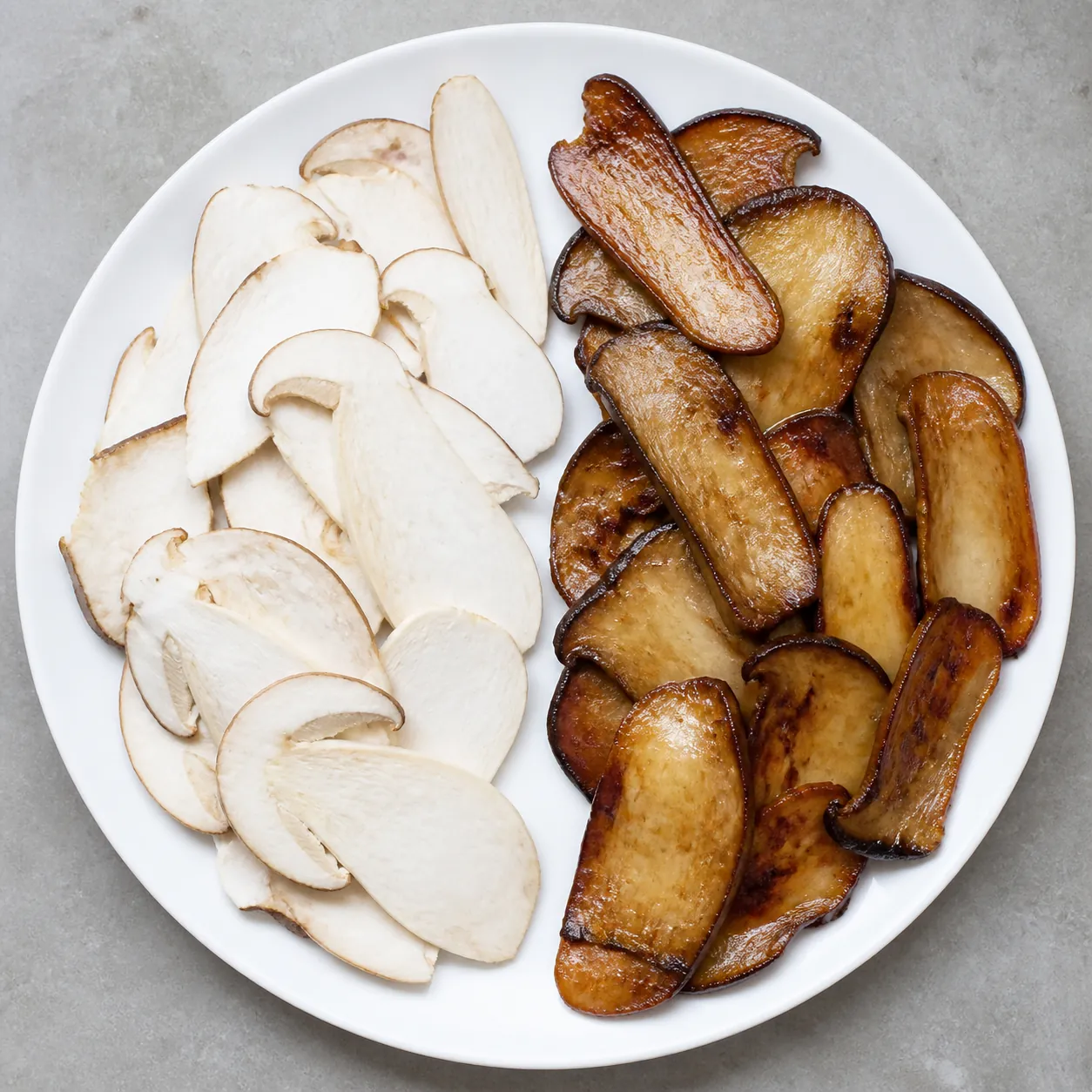
Ninety degrees is not a demanding target for a porcini pan.
Any real cooking method clears it comfortably, and porcini flesh is dense enough that it takes browning and roasting without collapsing. The step being asked for is ordinary.
The carpaccio question
If the proteins have always been there, and people have always eaten it raw, what actually changed in 2021?
The honest answer is that the explanation changed rather than the risk. Raw porcini has been linked to accidental food poisoning in the literature for longer than the proteins have had names, and the study gives a mechanism for something that was already being reported.
Absence of complaint is weaker evidence than it feels.
Mild digestive upset after a rich restaurant meal rarely gets attributed to one ingredient, and nobody files a report about feeling off the next morning. A tradition can persist comfortably on top of a low rate of mild reactions that nobody connects to the dish.
That cuts both ways, and it is worth saying so.
A low rate of mild reactions is also not a public health emergency, and treating raw porcini as though it belonged beside a genuinely toxic species would be its own kind of dishonesty.
Portion is the one variable actually under anyone's control here.
A restaurant plate of shavings is a small amount of mushroom by weight, far less than a cooked portion of the same species, and dose matters for a dose-dependent effect. That is a real mitigation rather than a rationalization, and it is also the reason a large bowl of raw porcini is a worse idea than a garnish.
SafetyCan You Eat Beefsteak Polypore Raw? Yes, If You Slice It ThinWhat raw does to the other risks
Cooking was quietly doing more than one job, and the protein finding tends to crowd out the rest. A plate of raw shavings assumes several things at once.
- That the specimen was young enough to have nothing breaking down inside it
- That nobody handled it between the forest floor and the board
- That the larvae check was done and done properly
- That whatever was on the surface is something you are willing to eat
Wild harvested mushrooms need inspecting for rot, insect infestation and mold before they go anywhere, and porcini are picked from leaf litter rather than from a tray. A raw preparation removes the step that would otherwise have dealt with whatever survived the inspection.
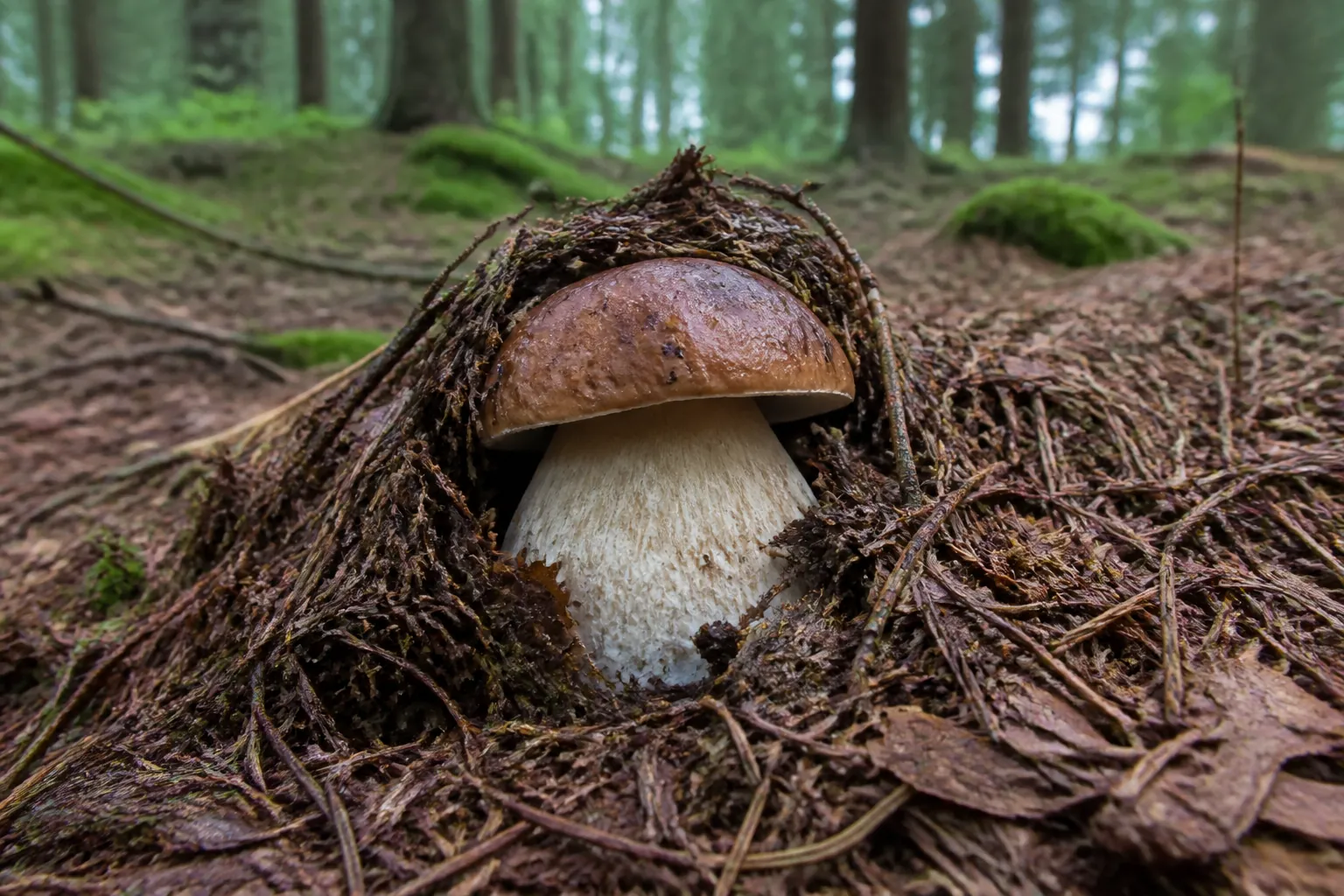
A raw plate also gives you no cover on infestation, and porcini attract more of it than most.
Larvae tunnel up through the stem before anything shows on the outside, so the check before a raw plate is a lengthwise cut through the base rather than a quick look at the cap.
Cooked, a lightly tunnelled specimen is a matter of trimming. Sliced thin onto a plate, that same tunnelling is what the person eating it is looking at.
Age matters more for a raw porcini dish than a cooked one.
A porcini that is slightly past its best will still make a good sauce, because heat and salt cover a multitude of small faults. The same specimen sliced raw onto a plate has nothing standing between it and the person eating it.
Dried porcini sit outside this raw question entirely.
They are rehydrated into cooked dishes, and the strained soaking liquid goes into something that gets heat as well. Nobody is making carpaccio out of rehydrated porcini.
If you serve it raw anyway
Some readers will have decided before they got here, and the useful thing is to be straight about what helps rather than to repeat the recommendation.
Choose the youngest firmest buttons in the basket
Cut the base lengthwise to check for tunnelling first
Keep the portion to a garnish rather than a plateful
Serve raw shavings to anyone pregnant or immunocompromised
Use a specimen that has been in the fridge for days
None of that makes raw porcini equivalent to cooked porcini, and pretending otherwise would be the wrong kind of help.
The cooked version is not a consolation prize either. Porcini browned properly in butter is the dish this species is famous for, and the heat that settles the protein question is the same heat that produces it.

The two routes are not competing for the same occasion anyway.
Raw shavings are a garnish and a texture, and a browned porcini is dinner, so a cook who wants both has no real conflict to resolve beyond deciding which one the mushroom in front of them deserves.
Note
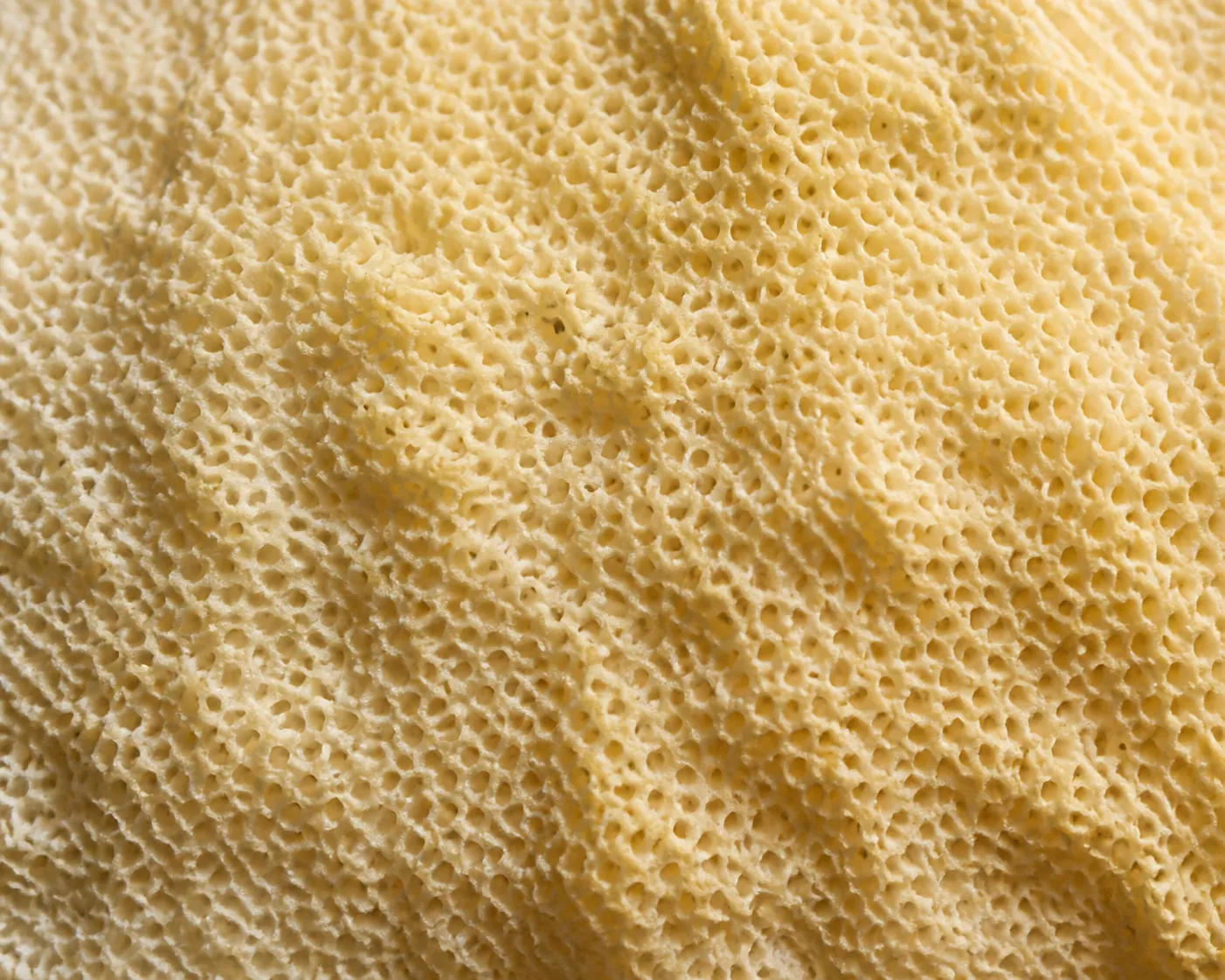
This page assumes the identification is settled. Boletus edulis has a pale sponge-like pore surface rather than gills, and several boletes are best left alone, including the bitter bolete that ruins a dish and the red-pored species that do rather more than that, so the name comes first and every question about raw or cooked comes after it.
Sources & References
- Ribotoxin-like proteins from Boletus edulis: structural properties, cytotoxicity and in vitro digestibility Isolates Edulitin 1 and Edulitin 2 from Boletus edulis fruiting bodies, reports dose and time dependent toxicity on human cells, and finds that Edulitin 2 resists proteolysis with toxicity abolished only after heat treatment at 90 degrees Celsius followed by proteolysis.
- Porcini Mushroom, Boletus edulis States that raw porcini may be difficult to digest and can contain trace thermolabile toxins that cooking neutralizes, that Boletus edulis should always be thoroughly cooked, and that wild harvested mushrooms need inspecting for rot, insect infestation and mold.