
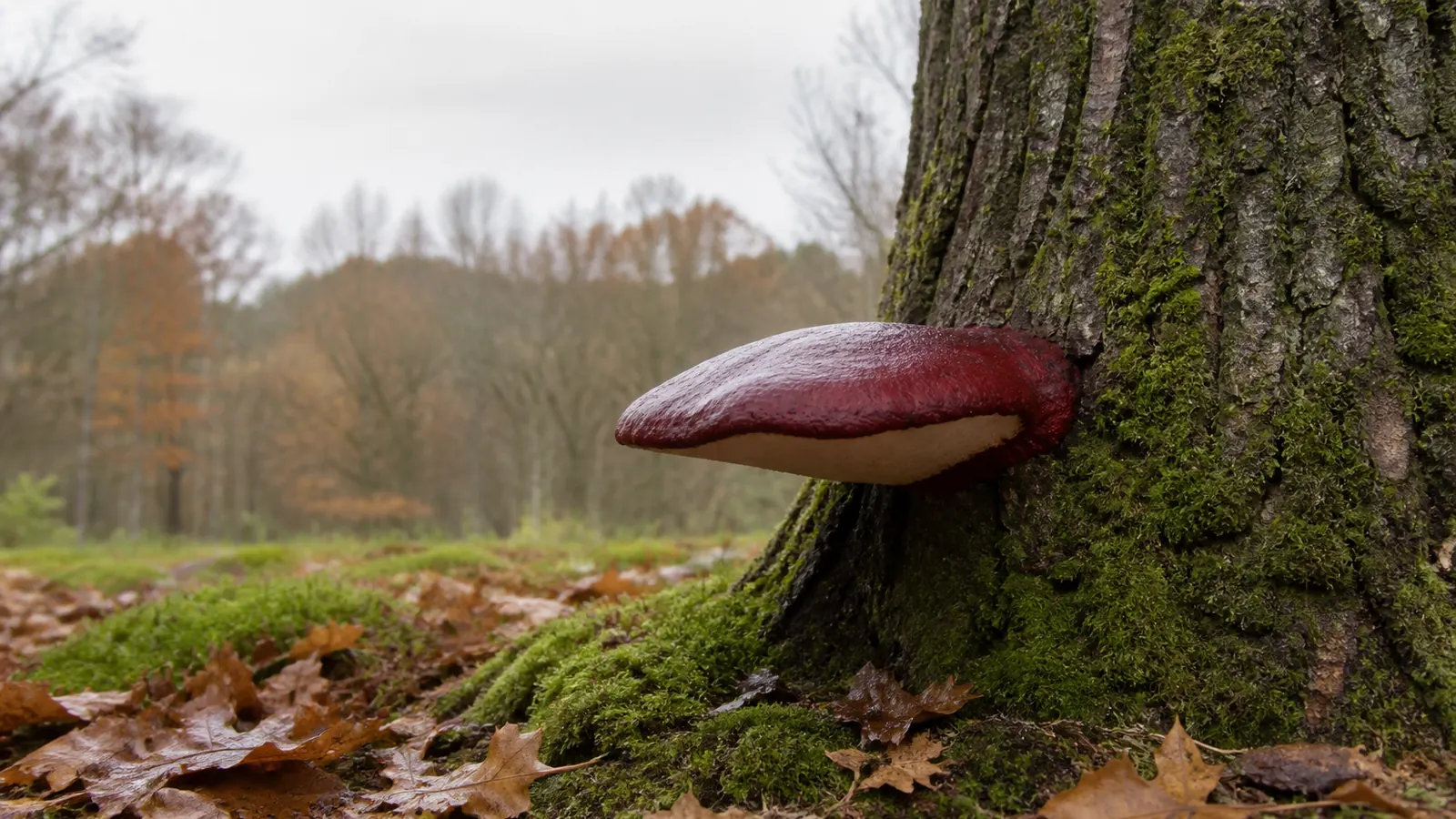
Every other answer in this series is no. This one is yes, and the reason is worth more than the answer.
Beefsteak is eaten raw on purpose, sliced thin into salads, by people who are not taking a risk when they do it.
Can you eat beefsteak polypore raw?
Yes, with two conditions that do all the work.
- The raw use
- Sliced thin into salads, where the fruity acidic taste suits the dish
- Condition one
- Young and fresh, which is the state every reference attaches to its answer
- Condition two
- Thin, because thickness is what makes it hard work rather than heat
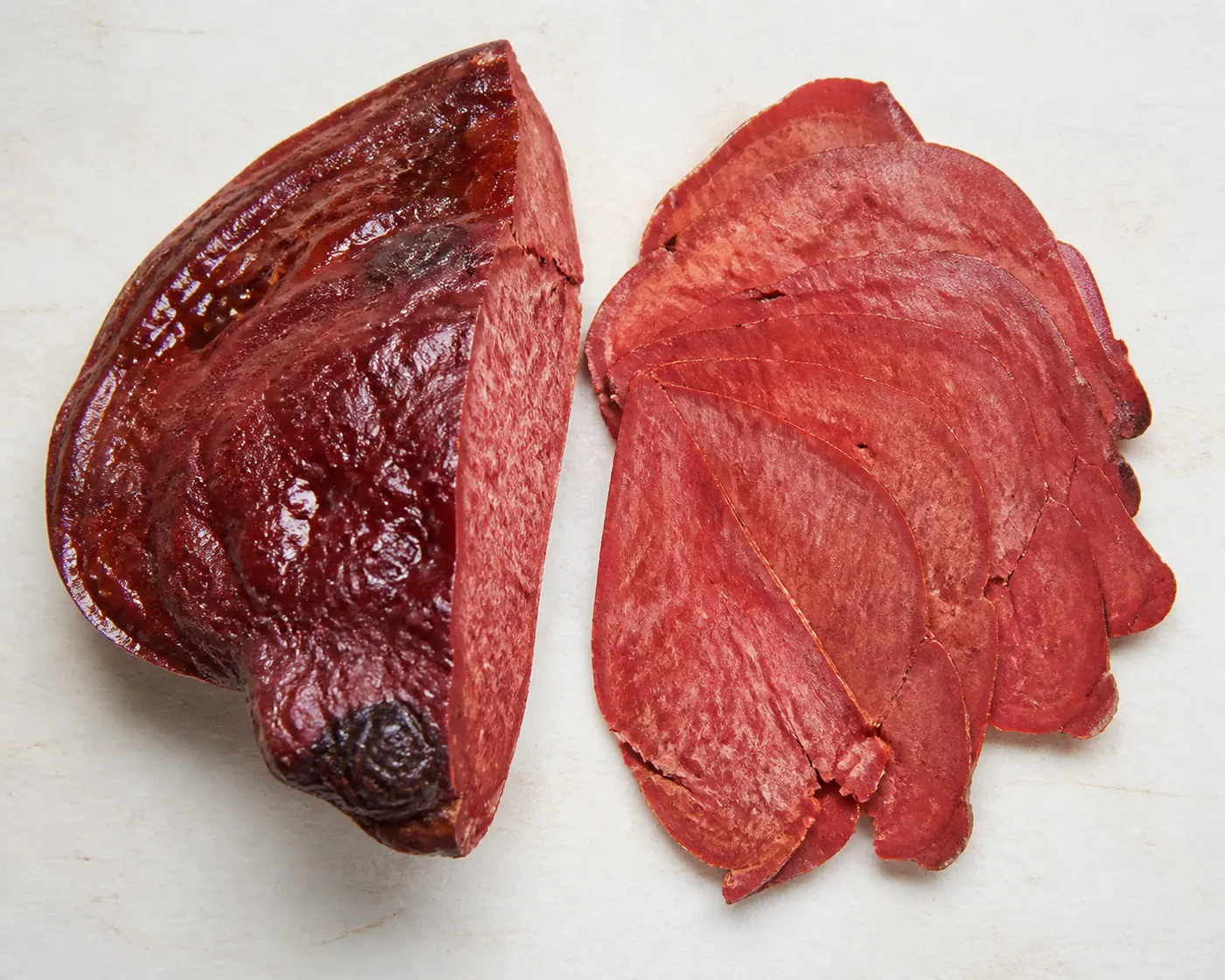
- What the flesh looks like
- Red and marbled with pale veins, bleeding a blood-like liquid in drops
- What it does not need
- Cooking to make it safe, which is the opposite of everything else here
The hesitation most people feel here is understandable and it points at the wrong thing. A mushroom that bleeds looks like it needs careful handling, and the real constraints are texture and sourness rather than anything that could hurt you.
Those drops are not blood and they are not a warning. The flesh holds a great deal of liquid and a cut surface lets it out, which is also why a slice of this feels wet in a way a slice of most brackets does not.

Where it sits against the other brackets
The oak this grew on is often holding two or three other species from this series at the same time.
| Species | Raw answer | Why |
|---|---|---|
| Beefsteak | Yes, sliced thin | No toxin, no irritant, and the taste works cold |
| Chicken of the woods | No | Never raw, and a share of people react even cooked |
| Maitake | No | Nothing dangerous, but raw delivers none of the point |
| Morel | No | Hydrazine compounds in the raw flesh |
One column there has a single yes in it, and that is unusual enough to be worth explaining rather than stating. The risks differ by species, so do not transfer raw-eating advice from one mushroom to another.
Beefsteak has none of those causes, so the question stops being about safety and starts being about whether you will enjoy it.
That is a real shift and it changes what to do with the answer. Nothing here calls for a small first portion or a wait, and the worst outcome of getting it wrong is that you leave most of the plate.
SafetyCan You Eat Beech Mushrooms Raw? Not Poisonous, Just BitterThe sourness is the whole flavor
This is the part that surprises people who came for a steak substitute.
Tip
Beefsteak is sour. The acidity comes from an unusually high level of ascorbic acid in the flesh rather than from anything going wrong, it gets stronger as the bracket ages, and raw is where it is most obvious. Some people reach for under-ripe citrus to describe it and some for lightly vinegared meat, and both land closer to the truth than beef.
Ascorbic acid is vitamin C, and beefsteak carries an unusual amount of it for a fungus. The sourness is not a fault and not a sign of age on its own, which is why the salad use is a real use rather than a way of covering something up.
That sourness is the reason the salad use works. A thin sour slice does roughly what a squeeze of lemon does, and the same slice next to a piece of roast meat tastes wrong for exactly the same reason.
There is a standard way to take the edge off it. Soaking the slices in milk for about thirty minutes reduces the acidity, and mixing beefsteak with other mushrooms rather than serving it alone does the same job by dilution.
Neither is necessary and both are worth knowing before you commit a whole bracket to one dish.
Age is the variable that decides how much of this you will need. A young bracket with an inflated edge is mild enough to eat as it comes, and one that has flattened and darkened will want the milk or the company of blander mushrooms.
Heat moves the sourness in the opposite direction from what people expect. Cooking mellows it rather than concentrating it, so the acidity that dominates a raw slice sits much further back in a stew.
How thin is thin enough
Here is the contradiction a reader meets within about two minutes of searching. Two well regarded references say opposite things about the same mushroom.
Nothing about a three centimeter wedge of the same bracket is pleasant raw.
It is dense, fibrous and acidic all at once, and chewing one is the kind of work that makes people decide the species is overrated. Cut the same bracket into slices you can almost see through and it turns into something else.
Slicing it is easier than it sounds, because the flesh is soft rather than woody. A sharp knife goes through a young bracket about as easily as through a firm tomato, and the thinner you commit at that moment the better the raw version turns out.
The rule is simpler than the disagreement makes it look. Thin and raw, or thick and simmered slowly, and the only real mistake is thick and raw.
A quick fry lands in the same place as thick and raw, because a few minutes of heat does nothing to fiber that needs an hour.
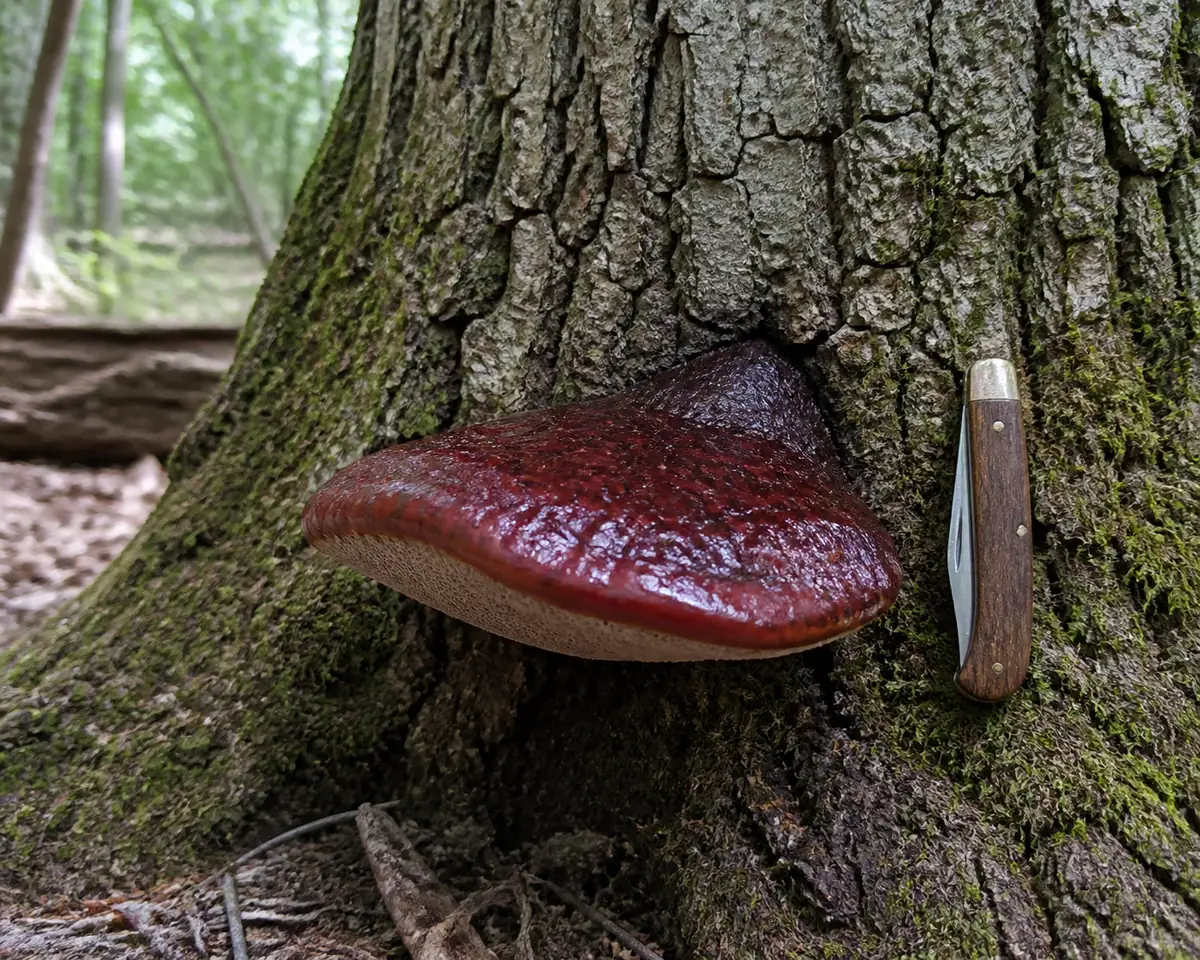
One bracket usually covers both approaches at once. A mature one runs six to twenty five centimeters across and three to six thick, so the thin outer part can go into a salad while the dense middle goes into a pot.
Which ones to take and where they grow
Beefsteak keeps to a short list of trees and a low position on them. That narrows a search far more than the calendar does.
That last line is the one to learn, because it is unusual. Most polypores carry tubes fused into a solid layer, and on beefsteak they come apart individually under a thumbnail.
Nothing else growing low on an oak does that, and it is the last check worth making before the knife comes out.
The season is short and the references do not quite agree on it. One gives July to October and another August to November, and both say the brackets do not last through the winter.
It fruits on living trees as well as dead ones, which is not true of most things worth eating. A standing oak in a park can carry one at knee height for weeks, and that is where a lot of people meet their first bracket.
The tree keeps a record of it long after the bracket has gone. Oak infected by this fungus turns deep brown through the heartwood, and cabinet makers pay extra for the timber under the name brown oak.
A trunk that produced one bracket is likely to produce another, so it is worth marking.
What people expect and what they get
The name sets an expectation the mushroom does not meet, and it is better to say so plainly. One reference does exactly that.
They are rather acidic and slightly bitter, and they do not taste at all like beef.
A field reference on what beefsteak fungus actually tastes like
That is worth reading twice if you carried a heavy bracket home expecting dinner. Its resemblance to beef does not extend to flavor, so choose a preparation that suits its sour taste.
None of that is a reason to walk past one. It is a reason to pick it for what it is, which is a sour red mushroom that works cold and in small quantities.
The vegetarian steak the name keeps promising is a different search, and it does not end here.
Sources & References
- Beefsteak Fungus, Fistulina hepatica, Wild Food UK Gives the raw salad use and the fruity acidic taste that suits it, records the red flesh with white veins and the blood-like liquid it exudes in drops, gives oak and sweet chestnut as hosts on living or dead trees, the August to November season, the inflated edge of young specimens flattening with age, the thirty minute milk soak to reduce acidity, and the advice to mix it with other mushrooms.
- Fistulina hepatica, Beefsteak Fungus, First Nature States that young fresh fruitbodies are edible while being rather acidic and slightly bitter and not tasting at all like beef, that even young specimens need a lot of cooking to become tender and are best simmered slowly, gives mature brackets at ten to twenty five centimeters across and three to six thick, gives the July to October season, and records that the tubes separate easily where those of other polypores are bonded together, plus the brown oak timber the fungus produces.
- Beefsteak Fungus, Fistulina hepatica, Zombie Myco Records it as safe for raw consumption in small amounts, attributes the sour taste to an unusually high ascorbic acid content, notes that the sourness intensifies in older specimens while young flesh stays soft and juicy, and gives the marinade approach for balancing the acidity.