
Mushroom poisoning is a race against time, and the most dangerous toxins hide for hours before they hurt you. If you or someone near you may have eaten a wild mushroom, act now and read on so you know each step before panic sets in.
Warning
Suspected ingestion requires immediate poison-center advice, even without symptoms.
What should you do first if you suspect mushroom poisoning?
In the United States, call Poison Control at 1-800-222-1222 as soon as a mushroom exposure is suspected. Certainty and symptoms are not required before making the call.
The most dangerous mushroom toxins can remain quiet for hours, which makes the early symptom-free period useful treatment time rather than a reason to wait.
You do not need to prove that the mushroom was poisonous or supply a species name before calling. An uncertain wild-mushroom ingestion is enough reason to ask the poison specialist for guidance.
The Poison Control line is free, private, and staffed every hour by trained specialists who explain what to watch for and what to do next. Give an honest account without fear of judgment because accurate facts help the specialist recognize a life-threatening case.
Call 911 first when the person cannot breathe, cannot be awakened, or is having a seizure, letting emergency crews manage the life threat while Poison Control addresses the mushroom exposure and using speakerphone when one helper needs both hands free.
Outside the United States, use the local poison center or emergency number and save that contact before a foraging trip. Searching for the right service during illness consumes time while the toxin may continue working.
Some poisoning symptoms begin within 30 minutes, while death-cap illness may wait six hours or longer after liver damage has started. Calm action during the early window gives specialists more options than panic after symptoms appear.
SafetyAte a Poisonous Mushroom? Do These Things NowThe step-by-step response
Work through the response in order with the phone close and stay beside the exposed person because the condition can change quickly.
Step 1: Call for help
Call Poison Control or 911 according to the person's condition and describe the exposure in plain language. Give the person's age, approximate weight, and meal time when known.
Mention a child first because the same amount can create a larger dose for a smaller body.
Step 2: Save the evidence
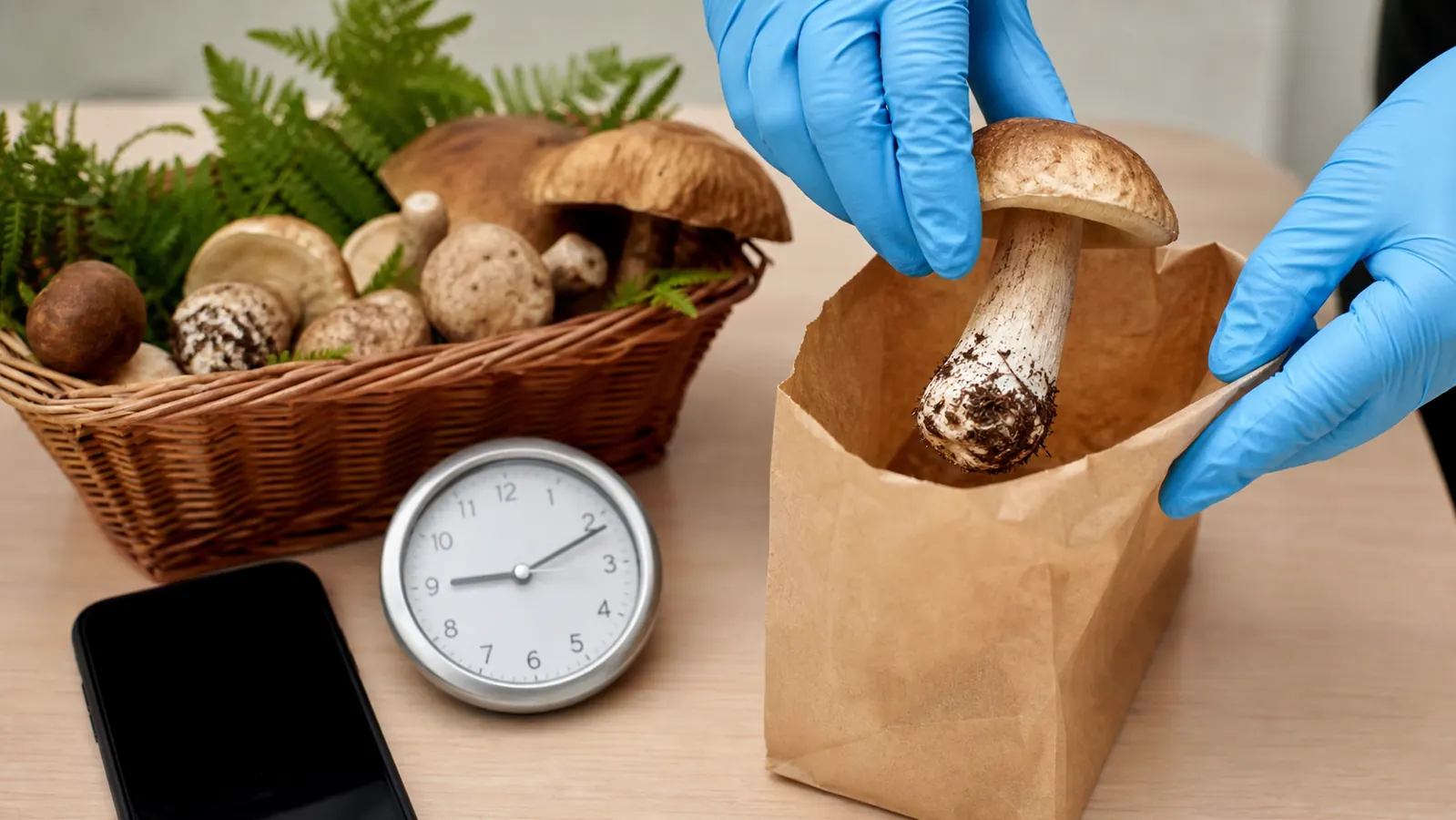
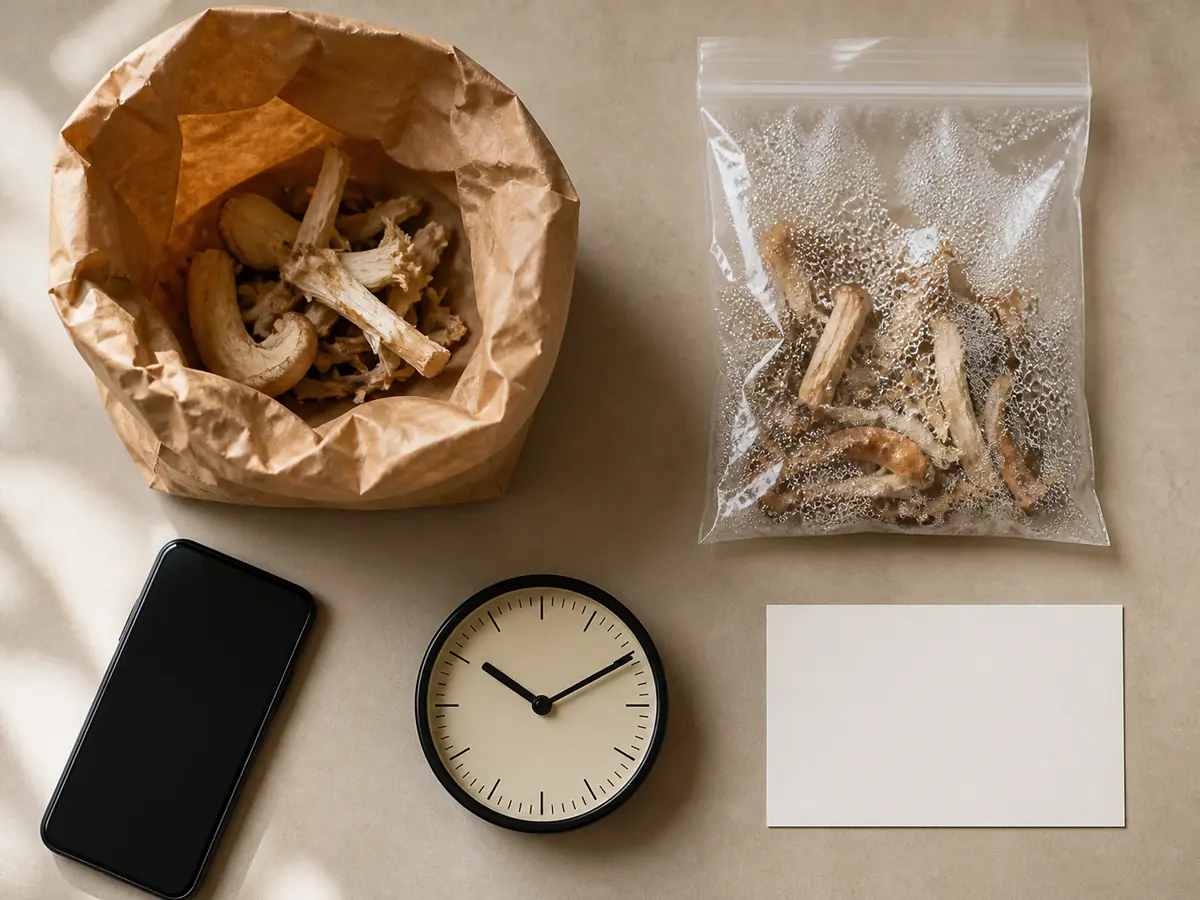
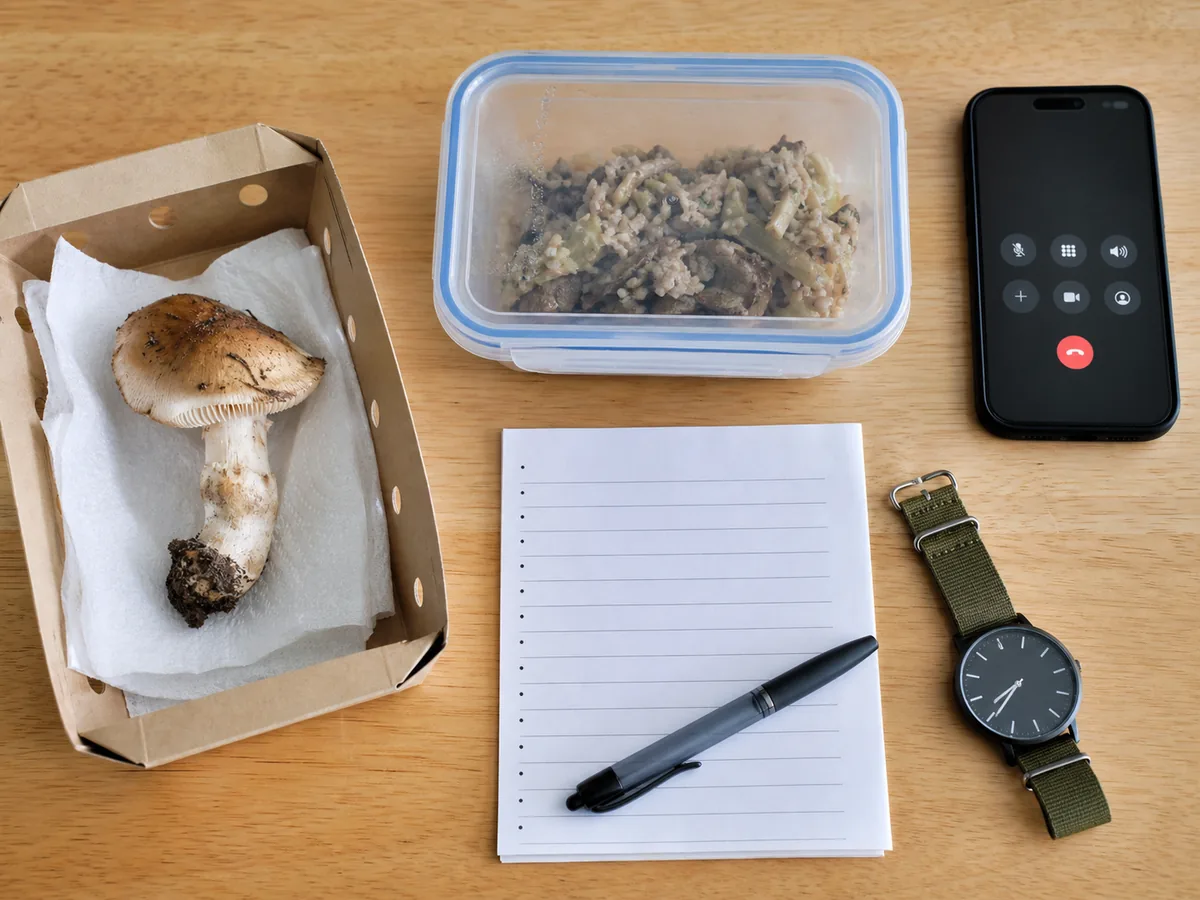
Place uneaten mushroom pieces in a paper bag in the refrigerator instead of discarding them or sealing them in moisture-trapping plastic. Photograph the growth site, including nearby soil, wood, leaves, and the intact stem base when available.
Save vomited material in a clean container because mushroom fragments may help an identifier narrow the species quickly. The unpleasant sample can preserve information that would otherwise disappear during cleanup.
Step 3: Note the timing
Record the meal time and the first symptom time with a clock or phone rather than estimating later. The gap gives clinicians useful toxin information.
A short delay often accompanies gastrointestinal irritants, while a long symptom-free interval can point toward species that damage organs.
Step 4: Wait with them and follow instructions
Follow only the actions directed by Poison Control or the treating clinician, and stay beside the person to report new pain, sweating, vomiting, weakness, or confusion. Bring saved specimens, photographs, and written times to the hospital.
SafetyDeadly Mushrooms: The Most Lethal SpeciesWhat makes a useful specimen record?
Make the emergency call before spending time on identification, then photograph the cap top, underside, complete stem, and base beside a familiar object for scale. Include the growth site and show whether the mushroom rose from soil, grass, mulch, or wood.
Keep several mushroom specimens when young and mature stages show different structures, store every unknown piece away from food, and wash hands after handling damaged material.
A plain-looking specimen can belong to the deadly mushroom groups, including the death cap, so a reassuring cap color cannot shorten the response. The broader poisonous mushroom reference can help organize later questions but must not delay professional advice.
For an animal exposure, follow the same evidence steps and the separate dog mushroom safety response.
What you must never do
Some old home remedies make things worse, and a few can be dangerous on their own. Here is the clear line between safe help and harm.
Call Poison Control the moment you suspect a bad mushroom.
Save uneaten pieces, a photo of the spot, and any vomit sample.
Write down the time of the meal and the first symptom.
Give small sips of water if the person is fully awake and asks.
Do not make the person throw up unless an expert tells you to.
Do not give salt water, milk, or any folk cure to force vomiting.
Do not give food, alcohol, or medicine on your own guess.
Do not wait for symptoms to get worse before you call.
Do not force vomiting because it can injure the throat, cause choking, or send stomach contents into the lungs without removing enough toxin to help. Let the poison specialist decide whether any stomach-emptying measure is appropriate.
Skip online antidotes, herbal teas, and unsupervised activated charcoal. Clinicians sometimes use charcoal in real treatment, but the timing and dose belong to the professional directing the case.
An unsuitable home treatment can mask symptoms or leave the person too impaired to describe a change clearly.
Warning
Never trust that someone is fine just because they feel okay an hour after eating, because the deadliest mushrooms cause a quiet gap with no symptoms and then strike the liver and kidneys. Call on suspicion, not on symptoms.
How to help the poison center help you
The expert on the phone can only work with what you tell them. A few clear facts speed everything up and point them at the right risk.
Have the exposure facts ready when you call the poison specialist.
- Who ate it, their age, and their rough weight.
- When they ate it and how much.
- What the mushroom looked like, plus your saved pieces and photos.
- Where it grew, such as on wood, in grass, or under a certain tree.
- Every symptom so far and the time each one started.
Tell the medical team who collected the mushroom, which reference was used, and how confident the identification seemed. Dangerous lookalikes fool careful foragers, so an honest account of uncertainty helps the team choose care without wasting time.
Risk falls before the meal when field habits keep uncertain mushrooms apart from food. Review foraging safety rules and the common poisonous groups before the next trip so important features are easier to photograph and describe.
What to do if your dog or cat is poisoned
Because a dog or cat may swallow a yard mushroom without leaving identifiable material, call a veterinarian or animal poison service immediately on suspicion instead of waiting for illness or morning.
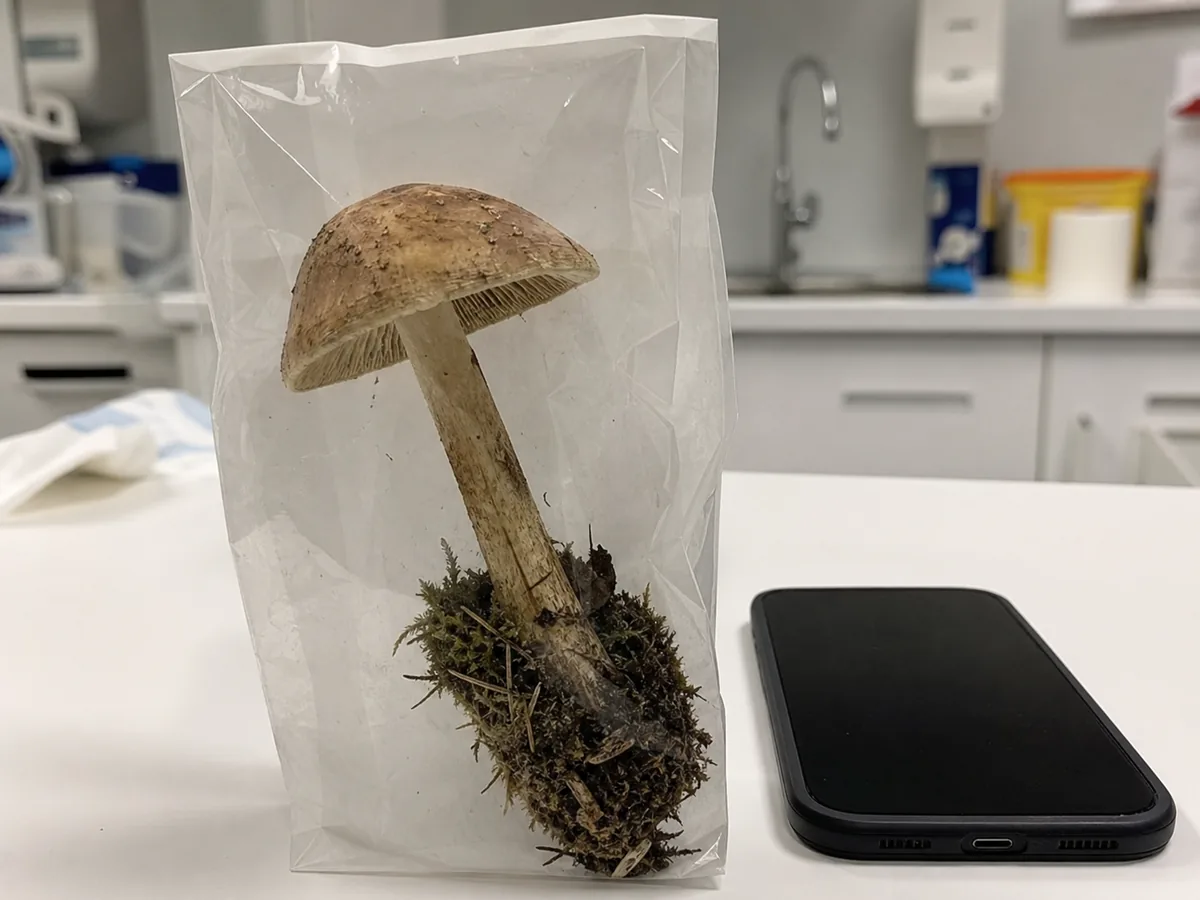
Preserve the same evidence for a pet by saving mushroom pieces, noting the time, and recording drooling, vomiting, wobbling, or yellow gums and eyes. Dogs can swallow a whole mushroom quickly, leaving little warning and no intact specimen.
Cats may nibble despite being selective eaters, and their small bodies can receive a meaningful dose from little material. Inspect a pet-accessible yard after rain and remove mushrooms before curiosity creates an animal-hospital emergency.
Do not treat a pet with human medicine or forced vomiting because dog mushroom poisoning risk requires veterinary direction after an unseen yard exposure.
Speed and an accurate exposure account help both people and pets. When doubt remains, make the call because poison specialists would rather assess a false alarm than receive the case after useful time has passed.
- First action
- Call on suspicion.
- Evidence
- Save the specimen and timeline.