
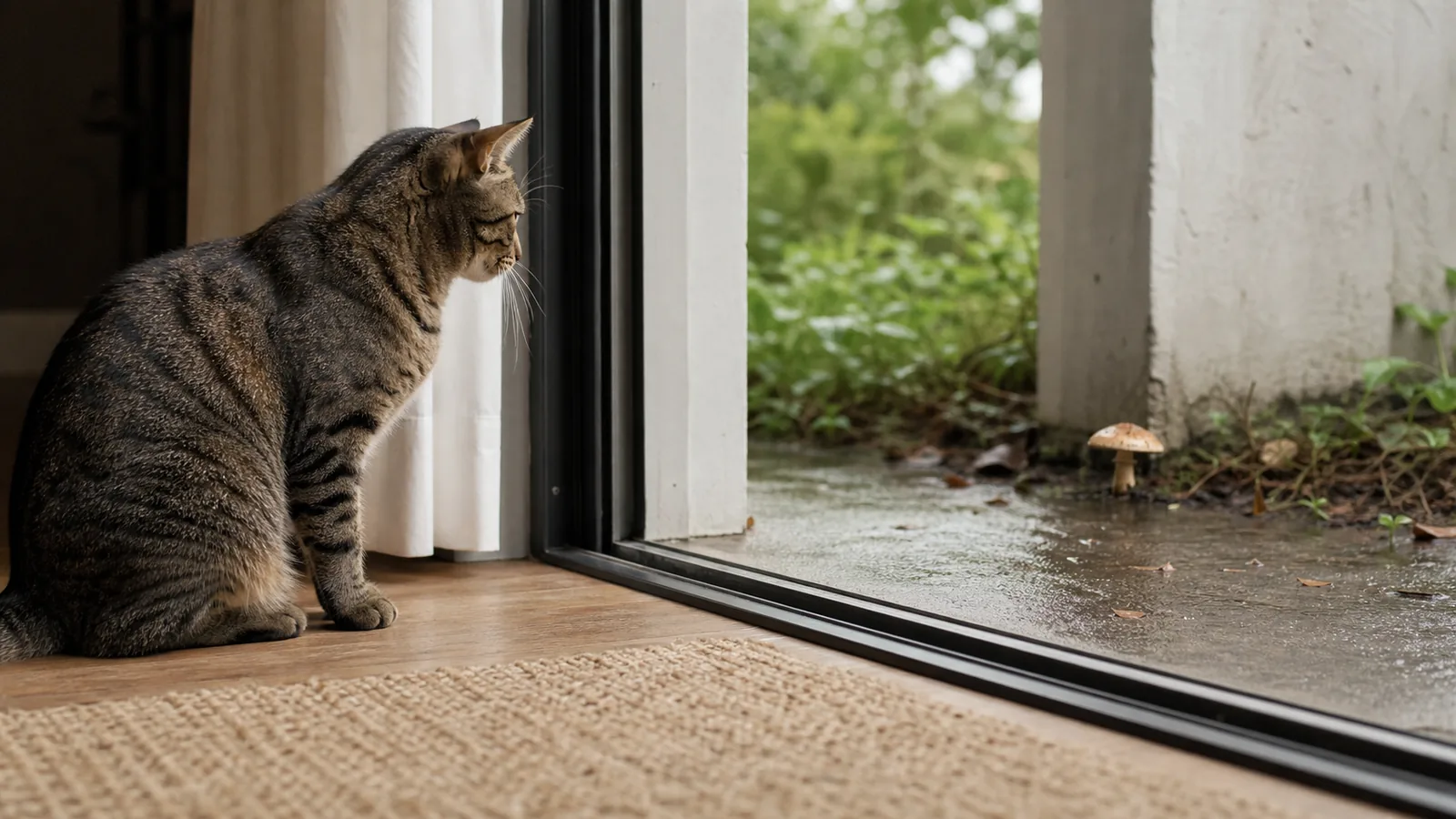
Call before symptoms appear
Treat any unidentified mushroom your cat may have swallowed as potentially toxic. Call your veterinarian, an emergency veterinary hospital, or an animal poison service immediately, even when your cat looks and acts normal.
Move the cat away from the mushroom and close off the area so no animal takes another bite. If your cat is having a seizure, struggling to breathe, collapsing, bleeding, or losing consciousness, leave for an emergency hospital while someone calls ahead.
Prepare for the veterinary call with your cat's age, weight, medical conditions, medications, the possible exposure window, the amount that may be missing, and any change in behavior.
Keeping the chewed pieces matters as much as the notes, because the veterinary call goes faster when the exposure can be shown.
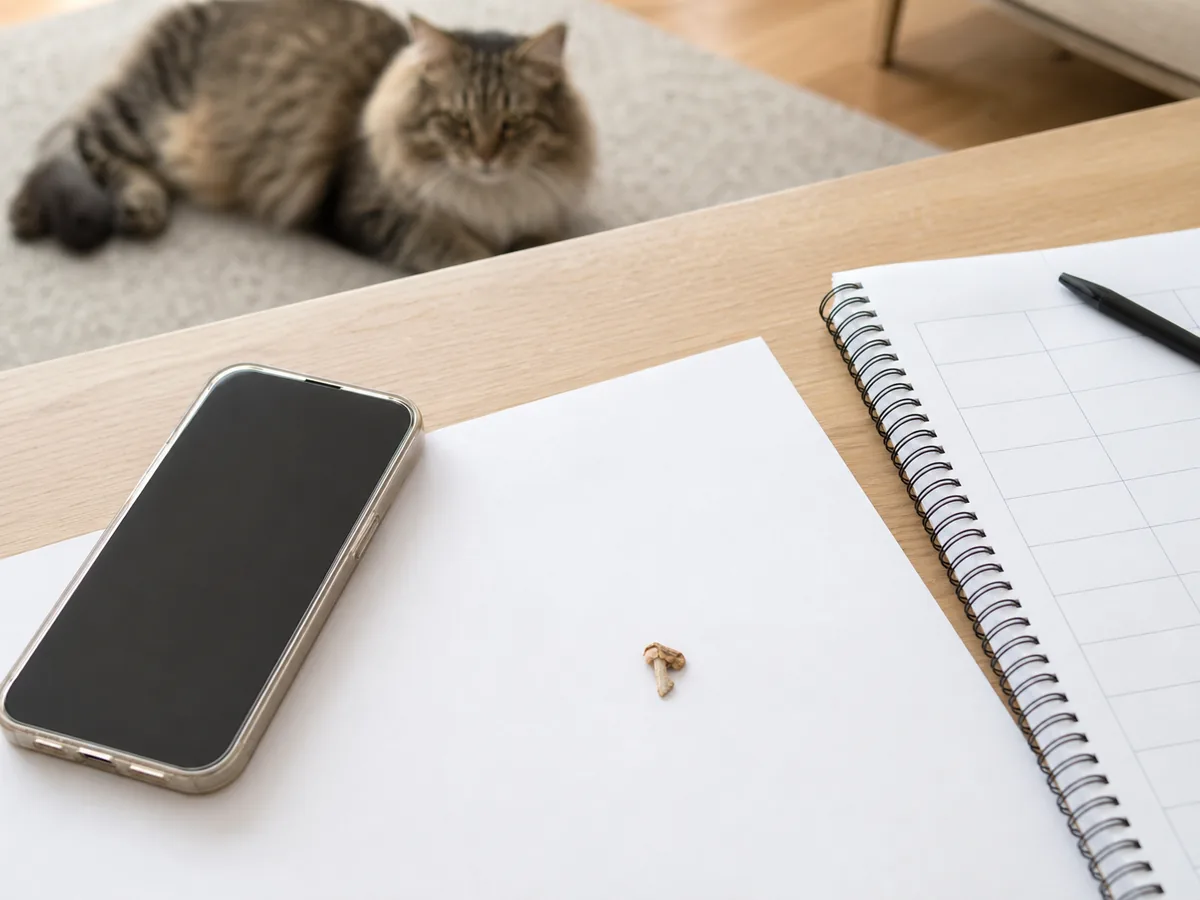
For this cat exposure, call the ASPCA Animal Poison Control Center at 888-426-4435 or Pet Poison Helpline at 855-764-7661 if your veterinarian directs you there or local care is not immediately available. Both services charge a consultation fee, and the case number can help the poison specialist coordinate with the treating clinic.
Keep a towel-lined carrier ready without delaying departure.
SafetyDeadly Mushrooms: The Most Lethal SpeciesA cat can look normal while the risk is changing
A symptom-free interval does not establish that the mushroom was safe. Different toxins produce different clocks, and some of the most dangerous exposures remain quiet while the toxin is being absorbed.
Muscarine can cause drooling, tearing, vomiting, diarrhea, small pupils, a slow heart rate, or breathing difficulty within minutes to a few hours. Mushrooms containing ibotenic acid or muscimol can produce disorientation, an unsteady gait, tremors, unusual agitation, marked sleepiness, or seizures on a similarly early schedule.
Amatoxins can remain quiet for 6 to 12 hours before vomiting, abdominal discomfort, diarrhea, and lethargy appear.
The cat may then appear to improve after the gastrointestinal phase. That improvement cannot rule out continuing liver injury, low blood sugar, clotting problems, encephalopathy, or kidney injury.
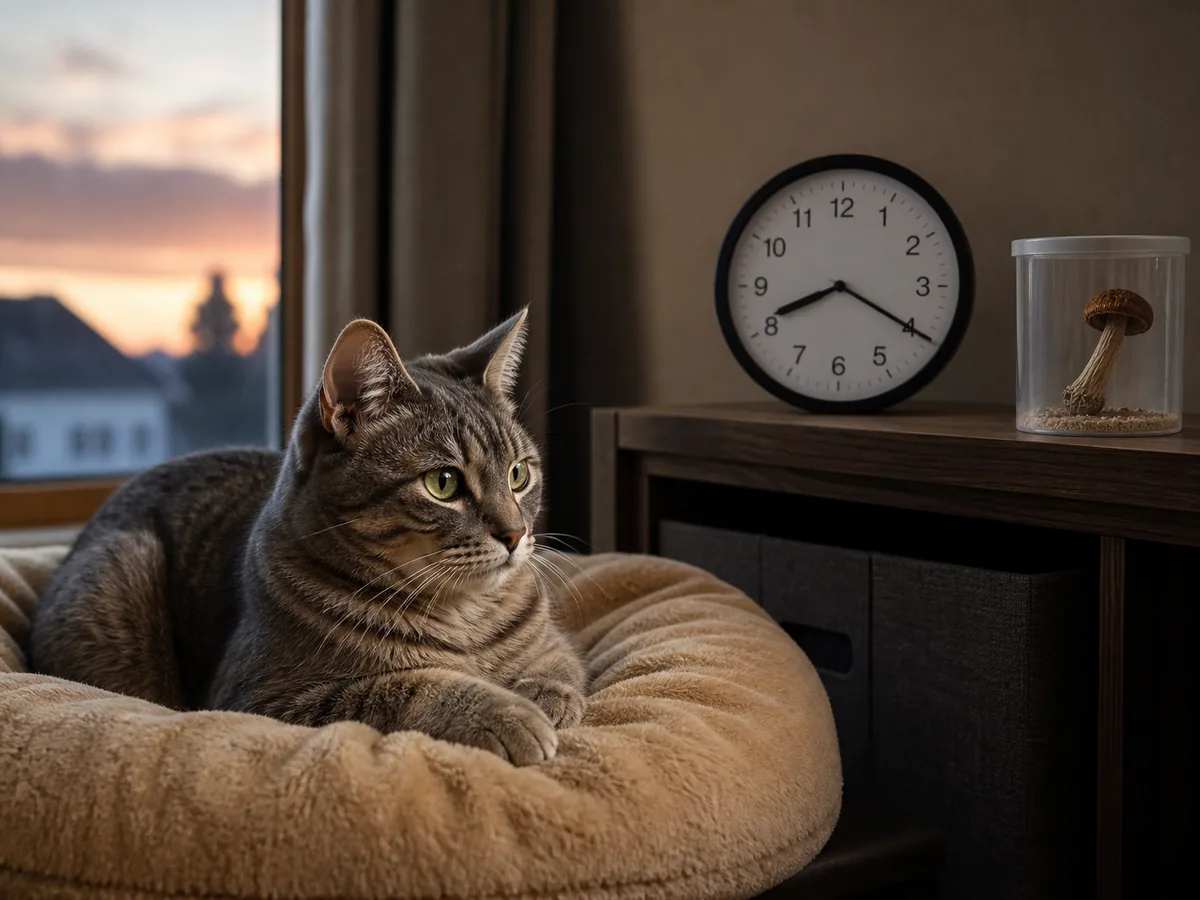
Timing narrows the veterinary possibilities, but the same sign can appear with several toxins and timing alone cannot identify the mushroom.
Record every new sign and its start time so the sequence remains clear during the call.
What symptoms can mushroom poisoning cause in cats?
Mushroom poisoning in cats can affect the stomach and intestines, nervous system, secretions and breathing, liver, kidneys, or several systems together. The useful observation is a concrete change from your cat's normal behavior, not a guess about the toxin.
Vomiting, diarrhea, abdominal discomfort, refusal of food, and lethargy may be the first visible changes because fluid loss can quickly add dehydration and electrolyte disturbance.
Neurologic changes include stumbling, falling, tremors, disorientation, unusual vocalizing, agitation, profound sleepiness, visual disturbance, or seizures. Film a brief episode only if doing so does not delay emergency transport or put you near a frightened cat's teeth and claws.
- Gut
- Vomiting, diarrhea, abdominal discomfort, appetite loss, dehydration, and electrolyte changes
- Brain
- Unsteady gait, tremor, disorientation, agitation, marked depression, sleepiness, or seizure
- Secretions and breathing
- Heavy drooling, tearing, small pupils, slow pulse, wheezing, or labored breathing
- Liver and kidneys
- Jaundice, weakness, bleeding, black stool, thirst or urine changes, and abnormal blood or urine tests
Heavy drooling together with tearing, diarrhea, small pupils, or breathing difficulty can fit excessive muscarinic stimulation. Respiratory effort, blue or pale gums, collapse, or a seizure requires immediate emergency care regardless of which toxin is suspected.
Liver and kidney signs can arrive later. Yellow gums or eyes, black stool, unusual bleeding, marked weakness, increased thirst, changed urination, or swelling should be reported at once, but waiting for those signs loses the early treatment window.
Warning
Do not use one normal behavior, one normal meal, or one quiet hour as proof that the exposure has passed. Delayed toxins can progress before an owner can see the organ injury.
The mushroom evidence matters as much as the first symptom
Keep a cat record for the clinical changes and a separate mushroom record for possible expert identification.
Write down the possible exposure window, amount missing, first sign, every later change, food and medications, and any illness that could affect treatment. Include whether another pet reached the same area and whether the mushroom came from soil, wood, mulch, a houseplant pot, compost, or prepared food.
Photograph the cap, underside, full stem, stem base, growth pattern, and surrounding substrate before moving the mushroom.
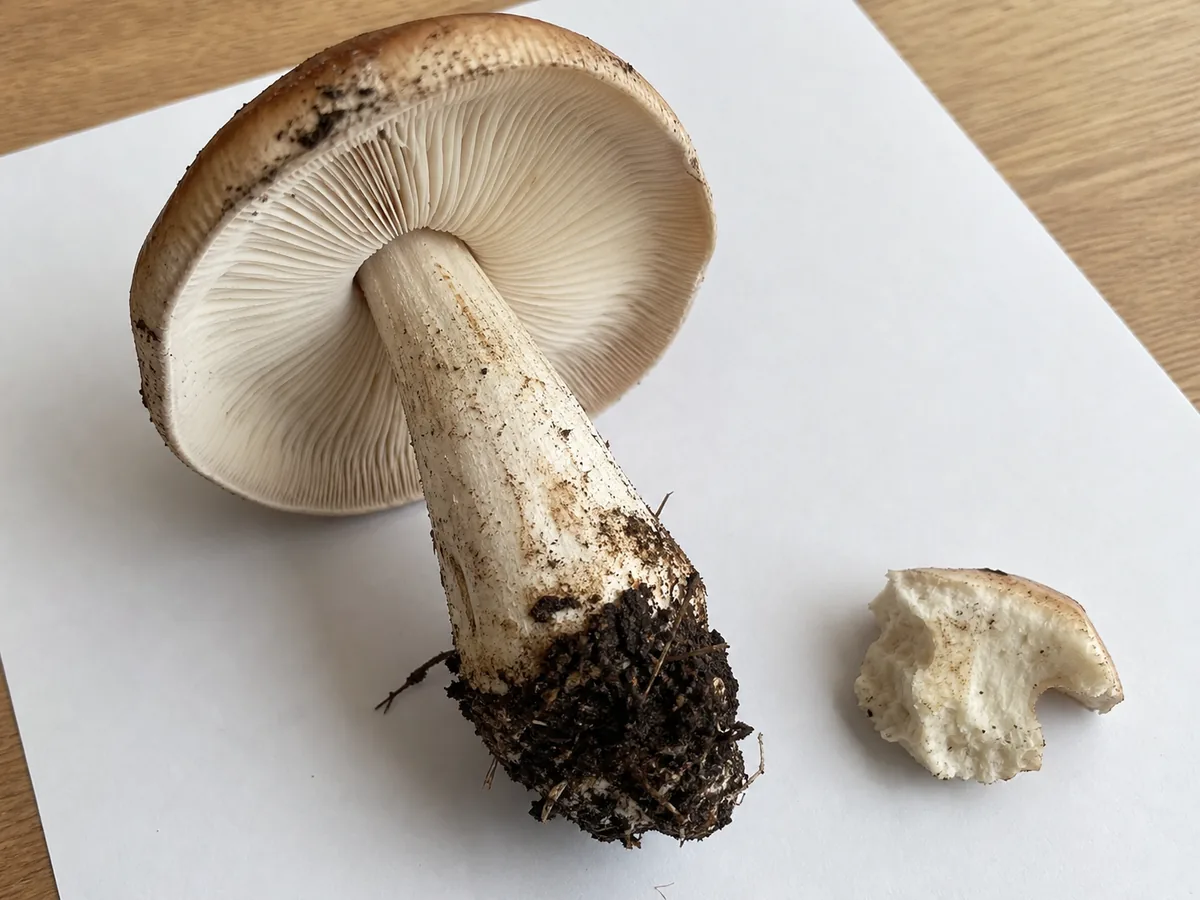
If it is safe to collect a matching specimen, lift one whole mushroom with the base intact and keep it apart from vomit or chewed fragments. North American Mycological Association guidance recommends paper or waxed paper rather than plastic, followed by refrigeration until examination.
- Keep the intact matching mushroom in its own paper container.
- Keep chewed pieces or vomited material separate if the clinic requests them.
- Label the location and collection time.
- Retain the original habitat photographs at full resolution.
- Send images only after veterinary contact is underway.
Do not let specimen work postpone the call, and do not ask a social-media group to decide whether your cat needs care. Veterinary toxicology directs the patient response, while expert mushroom identification can refine the suspected toxin.
Why hydrogen peroxide is especially unsafe for cats
Do not give hydrogen peroxide to a cat because it can injure the feline stomach and esophagus.
There is no safe at-home method for making a cat vomit.
Salt, mustard, milk, oil, food, and large amounts of water do not provide a safe substitute. Salt can cause a second poisoning, while forced liquids or food can be aspirated when a cat is weak, sedated, seizing, or unable to swallow normally.
Activated charcoal belongs to the veterinary decision because aspiration risk, dose, and repeat use depend on the toxin and patient status.
Warning
Give nothing by mouth unless a veterinarian or animal poison specialist tells you exactly what to give and confirms that it is safe for this cat at this point in the exposure.
Prevent another bite, prepare the carrier, gather the cat and mushroom records, and keep the veterinary line open.
SafetyPoisonous Mushrooms: The Toxic Species to KnowWhat the veterinary team needs to decide
The clinic begins with the exposure window, possible dose, current signs, physical examination, and any usable specimen identification. Those facts determine whether the cat needs immediate stabilization, selected decontamination, observation, repeated laboratory work, or intensive organ support.
No single blood test identifies every mushroom toxin, so glucose, electrolytes, organ values, coagulation, urine, heart rhythm, neurologic status, and breathing may be assessed in different combinations.
| Decision | Evidence the team may use | Why it can change |
|---|---|---|
| Stabilize now | Breathing, circulation, temperature, glucose, seizure activity, hydration | Unstable functions take priority over identification |
| Decontaminate | Elapsed time, symptoms, airway protection, suspected toxin | The useful window and aspiration risk differ by case |
| Monitor organs | Liver and kidney values, electrolytes, urine, coagulation, glucose | Delayed injury may not appear on the first measurement |
| Consult specialists | Specimen, photographs, syndrome, location, timing | Mycology can refine identity while toxicology guides the patient response |
The team reads those test results next to the exposure evidence you brought, because neither one names the syndrome alone.
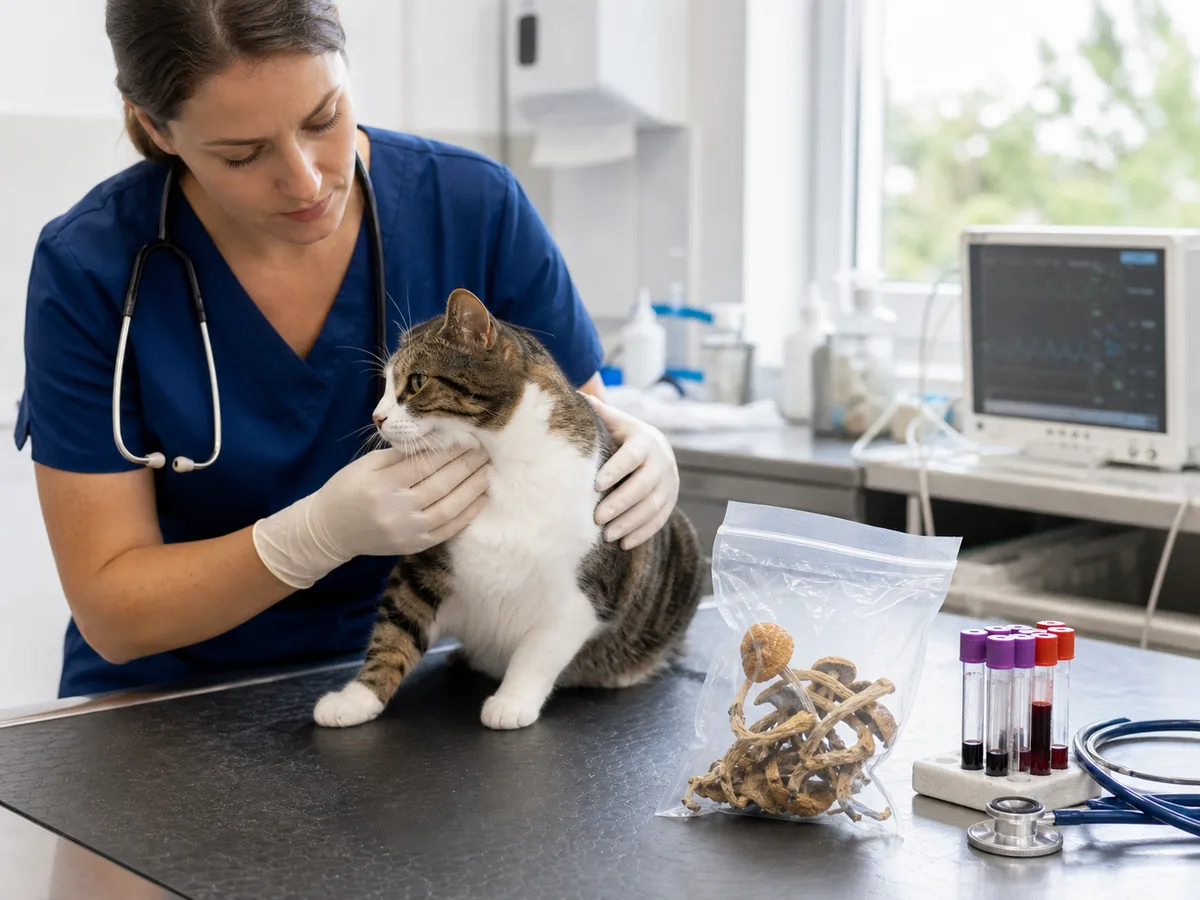
Treatment is matched to the suspected syndrome rather than chosen from one universal antidote. It may include airway and circulation support, intravenous fluids, control of vomiting or seizures, temperature management, glucose support, and care directed at liver, kidney, or clotting complications.
Repeat measurements may be needed when the first sample was taken before delayed organ injury became measurable.
Ask what changes require an immediate return, when the next examination or blood test is due, and whether the sample should go to an identifier. Keep the case number and clinic discharge instructions together so every caregiver follows the same plan.
Indoor cats can still reach mushrooms
An indoor cat can still reach mushrooms on a patio, screened porch, garage threshold, damp basement, or houseplant pot.
Fungi sometimes fruit from damp potting media or decaying wood mixed into soil. Remove the cat first, photograph the growth in place, and tell the veterinarian that the mushroom came from a pot because the substrate may help identification.
Check shoes, gardening tools, children's collections, and other pets that can carry mushroom fragments indoors.
- Inspect damp houseplant pots and seed-starting trays.
- Block access to compost, mulch bags, and firewood storage.
- Do not leave collected wild mushrooms on a counter or drying rack.
- Check patios and doorways after rain.
- Ask whether another household member discarded cooked or raw mushroom pieces.
A known grocery mushroom creates a different identification problem from an unknown wild specimen, but the rest of the dish still matters. Onion, garlic, alcohol, rich sauces, mold, spoiled food, or packaging can add risks that have nothing to do with the mushroom species.
Tell the veterinarian the complete ingredient list and whether the mushroom was raw, cooked, dried, powdered, or part of a supplement. A product label is more useful than the broad statement that the cat ate a mushroom dish.
Check every pet that could share the route because exposure and swallowed amount can differ between animals.
Clear the exposure site without losing evidence
Begin cleanup only after the veterinary call is underway and one useful matching specimen has been preserved. Keep the cat and other animals indoors or behind a closed barrier while you photograph and clear the area.
Wear gloves, lift visible fruiting bodies with the base when practical, and place mushrooms intended for disposal in a closed container outside animal access. Do not mix the retained specimen with the disposal batch.
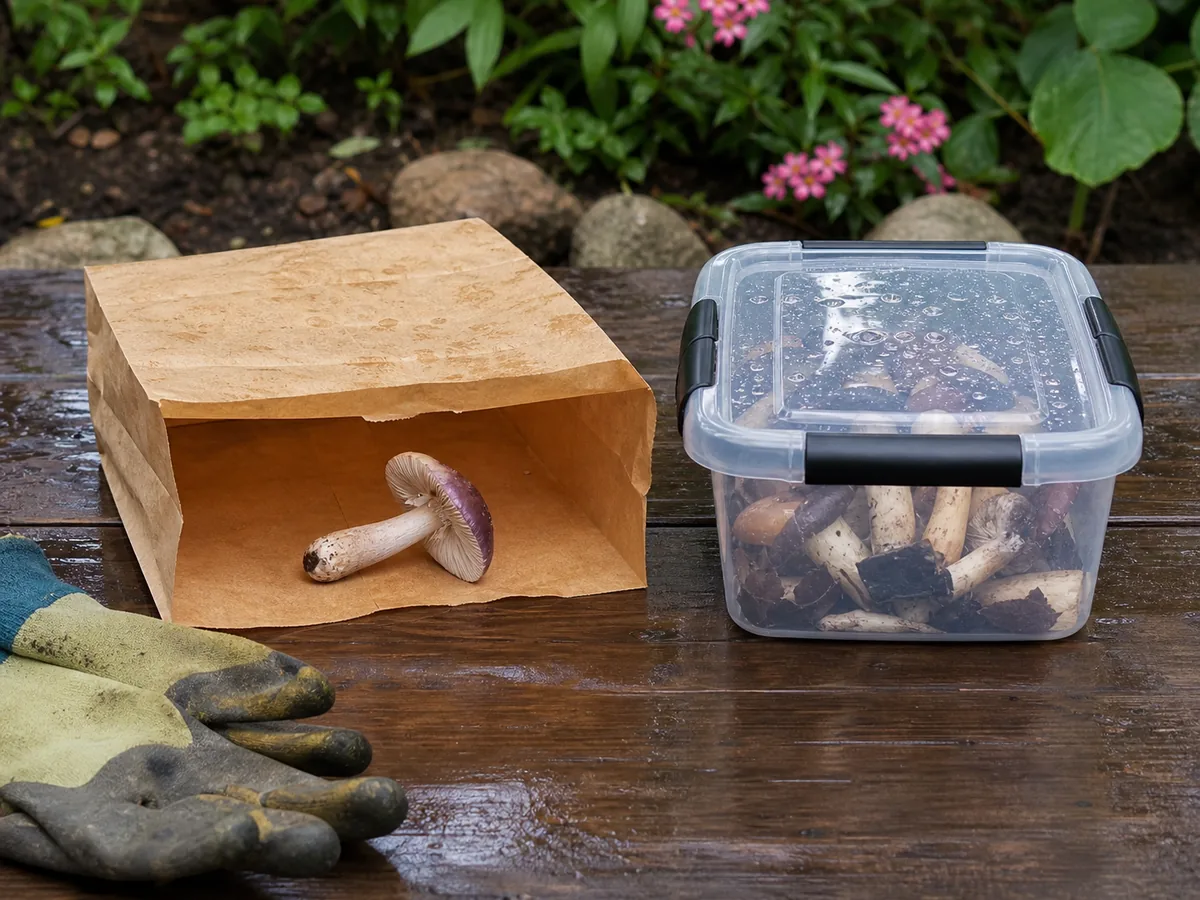
Removing visible caps does not remove the mycelium, so recheck the same pot, lawn edge, mulch bed, stump, or compost area after rain or watering.
Reduce persistent moisture and remove decaying material when that can be done without harming a tree or structure. Fungicide is not a substitute for access control, and one cleanup cannot guarantee that fruiting bodies will not return.
| Action | Current case | Future exposure |
|---|---|---|
| Preserve | Keep one intact matching specimen and the original photographs | Store only as long as the veterinarian or identifier requests |
| Remove | Clear accessible fruiting bodies after evidence is saved | Recheck the site after rain or watering |
| Restrict | Keep cats and other pets away during the event | Block damp pots, compost, mulch, and recurring patches |
| Reassess | Report every symptom or timeline change | Treat every new suspected ingestion as a new veterinary case |
Each returning fruiting body can be a different mushroom, so a previous harmless identification does not settle a new exposure for the cat.
The endpoint is a cat kept away from recurring fruiting bodies, a retained evidence trail, and a fresh veterinary call whenever another ingestion may have occurred.
Sources & References
- ASPCA: What to Do if Your Pet Is Poisoned
- ASPCA: Is It Ever Safe to Induce Vomiting?
- Merck Veterinary Manual: Overview of Mushrooms Toxic to Animals
- Merck Veterinary Manual: Mushroom Toxins With a Latent Period of 6 Hours or Longer
- North American Mycological Association: Mushroom Poisonings in Dogs and Cats
- Pet Poison Helpline: Are Mushrooms Bad for Cats?