
DEADLY POISONOUS
No one antidote treats all mushroom poisoning. Hospitals first keep breathing and blood flow steady. Then they treat the body system under threat. They use gut clearing only when the gain beats the airway risk. Poison-center advice and repeat tests guide the rest of care.
Mushroom Poisoning Treatment: What Hospitals Do Next
No single universal antidote exists for mushroom poisoning. The hospital team starts by protecting the airway, breathing, blood flow and brain. It also guards any organ the toxin puts at risk. Meanwhile, a poison specialist works with the team to pin down which syndrome fits.
In the United States, call Poison Control at 1-800-222-1222 if anyone may have eaten a poisonous wild mushroom. Call even before symptoms begin. Call emergency services for collapse, a seizure, breathing trouble, severe confusion, or someone you cannot wake. Shock or a fast decline also needs emergency services.
Can treatment start before anyone knows the species?
| Clinical question | What the team can act on now | Evidence that may refine the plan |
|---|---|---|
| Is the airway protected? | Positioning, oxygen, suction, ventilation support | Alertness, vomiting, secretions, breathing effort |
| Is circulation stable? | IV access, measured fluid and electrolyte support | Pulse, blood pressure, urine, ongoing losses, organ history |
| Which syndrome fits? | Monitoring and symptom-directed care | Onset time, symptom system, repeated meals, specimens |
| Is organ injury emerging? | Serial testing and specialist escalation | Liver, kidney, clotting, glucose, electrolyte, muscle trends |
Clinicians can treat a dangerous body problem before anyone names the mushroom. Someone who is seizing needs seizure control and a protected airway first. Someone who has lost a lot of fluid needs a check of blood flow and blood salts (electrolytes), whatever a photo later shows. The plan then changes as the story of the meal becomes clearer.
Nurses and doctors first ask when each mushroom meal took place. They ask how much each person ate, when symptoms began, how they changed, and how the cook prepared the mushrooms. Alcohol, medicines and existing illness can change the risk, so those questions come up too. In a mixed dish, each diner counts as a separate case, because pieces of each species and portion sizes spread unevenly through the food.
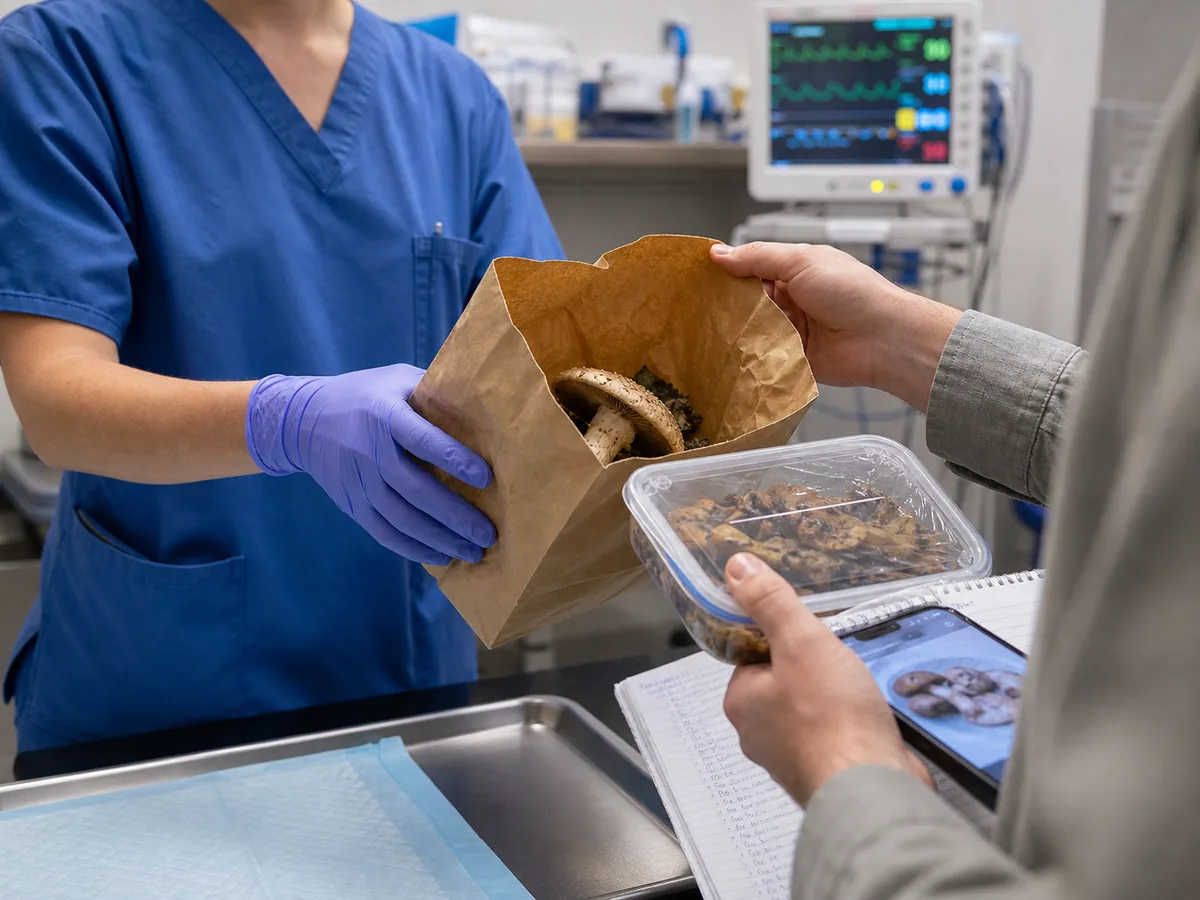
The call you make from home connects what clinicians see at the bedside to toxin patterns, local cases and treatment options. Medical toxicologists advise on watching the patient, clearing the gut and toxin-directed treatment. They also say when to escalate care. No image search can give that advice.
Naming the mushroom supports this work, but it does not run the first minutes. With a whole raw specimen, cooked leftovers, habitat photos, packaging and meal notes, an experienced identifier may narrow the species or group. Stabilizing the patient should not wait for any of that. Nobody needs to go back to the site, make a spore print, or force an answer from a broken cap first.
Hospital tests rarely give a quick toxin name either. Routine labs show how the body responds. They track blood sugar, blood salts, liver, kidney, clotting, blood, urine, acid-base, muscle and heart results. Special toxin tests may not be on hand or may depend on timing, and none covers every mushroom.
So treatment often moves ahead from the syndrome and organ trends while the ID stays provisional. The plan stays open to change, because new symptoms and new lab trends can shift the working syndrome. What seemed reasonable during a calm call with no symptoms may stop fitting later. Vomiting, confusion, jaundice, dark urine, weakness or less urine can each change it.
SafetyDeadly Mushrooms: Fatal Species and the Toxins Behind ThemStabilizing the body system under threat
Airway and breathing come first when someone cannot stay awake. The same goes for someone who cannot guard against vomit, has heavy secretions, or cannot keep oxygen levels up. As the patient needs, clinicians may use positioning, suction, extra oxygen, airway tools or a breathing machine.
Low alertness creates two risks at once. The toxin can slow breathing or coordination. The patient can also breathe vomit into the lungs. That same risk affects whether any treatment by mouth is safe.
Repeated vomiting and diarrhea can weaken circulation. Fluid losses lower blood pressure, cut blood flow to the kidneys, upset sodium and potassium, and worsen weakness or abnormal heart rhythms. Doctors match IV fluids and electrolytes to measured losses, urine output, heart and kidney function, the exam and repeat results. No fixed volume fits every patient.
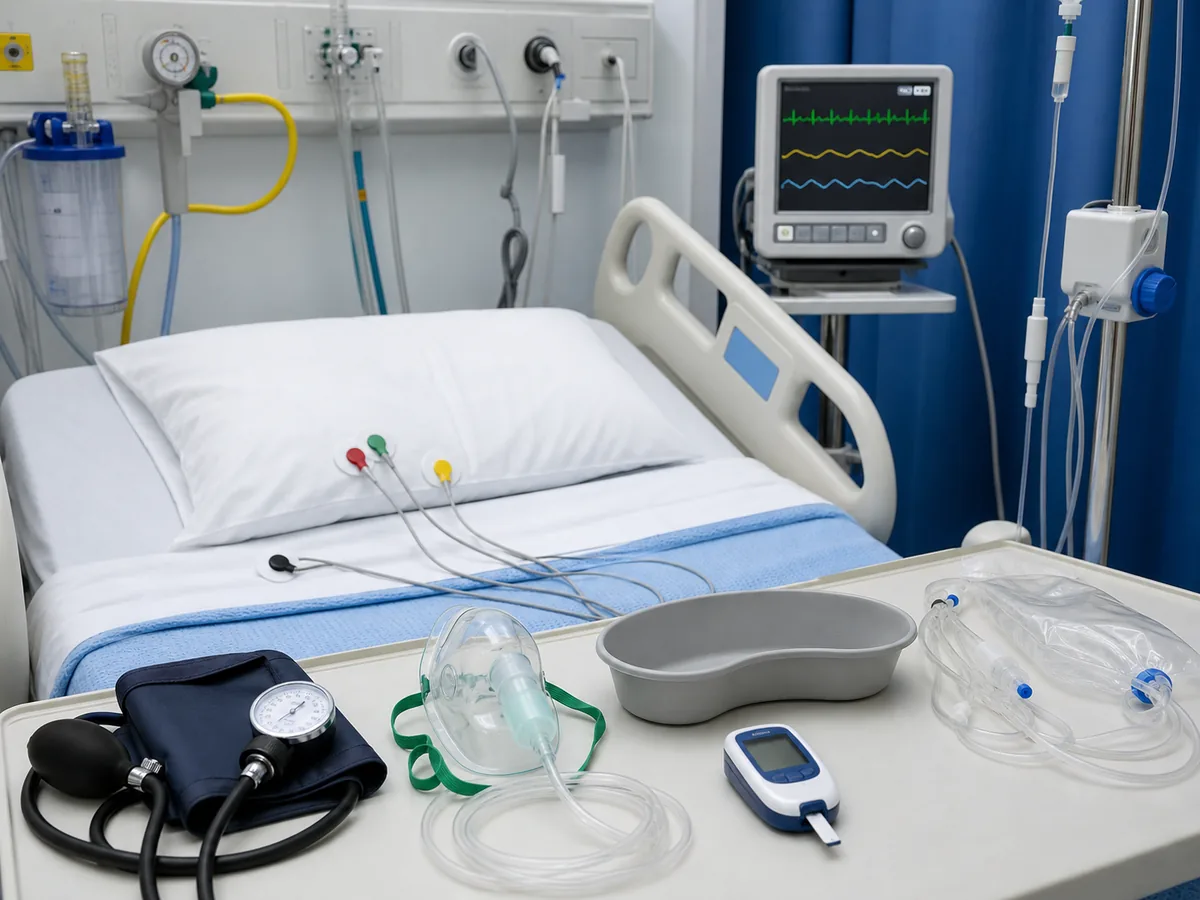
Brain symptoms mean guarding the patient from the toxin and from the room around them. Agitation, hallucinations, clumsiness, odd movements, deep drowsiness or seizures can all cause harm. They can lead to falls, overheating, aspiration and injury unless staff watch closely.
- Airway
- Alertness, swallowing, vomiting, secretions, breathing effort, and oxygenation
- Circulation
- Pulse, blood pressure, fluid losses, urine output, electrolytes, and organ reserve
- Brain
- Orientation, behavior, coordination, temperature, seizure activity, and response over time
- Metabolism
- Glucose, acid-base balance, kidney function, liver tests, and toxin-specific measurements
Blood sugar and body heat can turn into urgent problems too. Severe liver injury can upset blood sugar control. Agitation, seizures or muscle injury can raise body heat and the body's energy needs. Fixing those threats supports the patient, but it does not name or remove the toxin.
Each big change means a fresh look at the plan. Someone who talked normally on arrival may later need a different airway or monitoring plan. That happens when alertness, secretions, blood flow or breathing gets worse.
Activated charcoal and other decontamination
Activated charcoal can bind some toxins in the gut. Its benefit depends on the substance and the time since eating. Vomiting, bowel function and the patient's ability to protect the airway also count. Clinicians use it as one tool in some cases, and it is no universal mushroom antidote.
Airway risk can outweigh any theoretical toxin binding. If the patient is sleepy, confused, seizing or vomiting again and again, charcoal can get into the lungs. There it can cause serious injury. Then doctors may delay oral charcoal, protect the airway first, or skip it when the expected benefit is too small.
- Not appropriate at home
- Household charcoal products and improvised doses do not provide a safe treatment plan
- Requires clinical assessment
- Timing, toxin pattern, vomiting, bowel function, and airway protection decide suitability
- Specialist-directed use
- Repeated dosing has been considered in selected amatoxin cases to interrupt recirculation
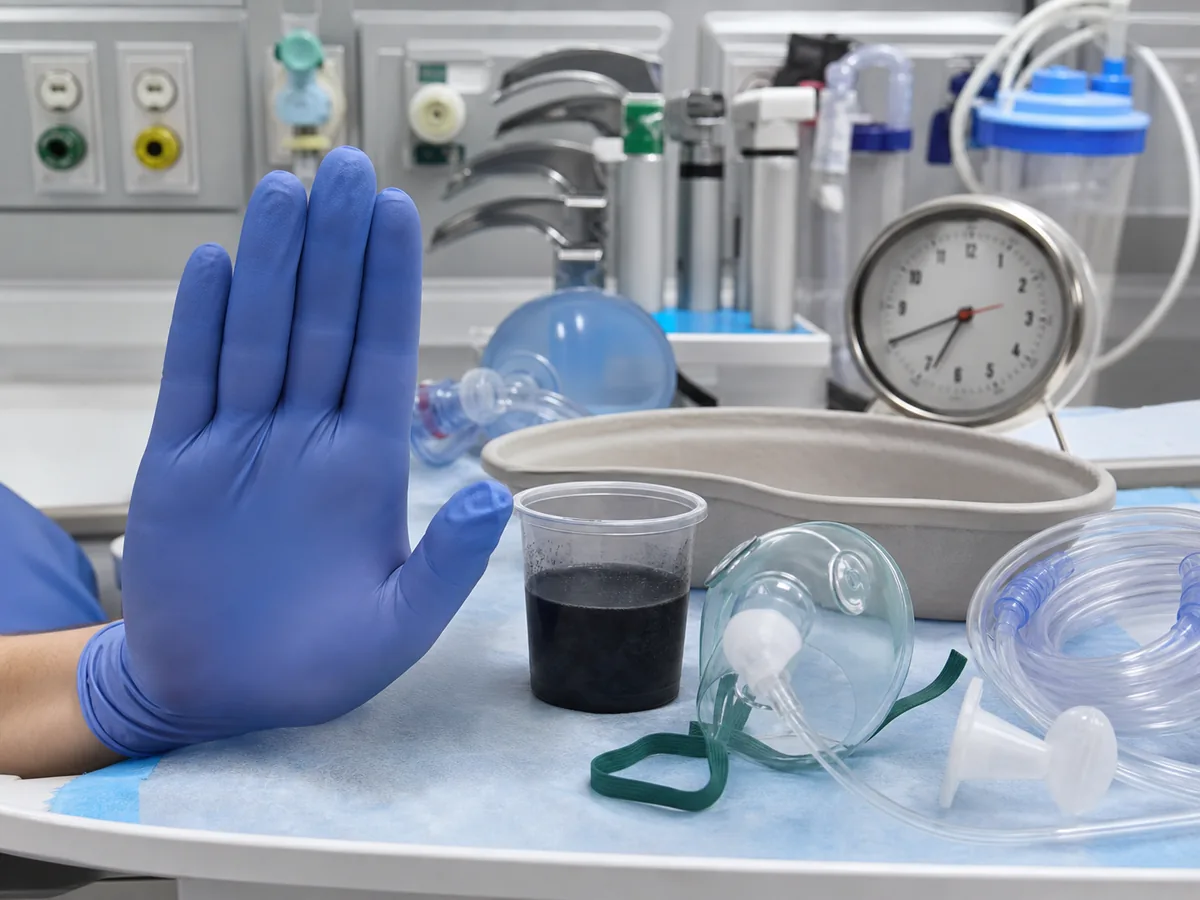
Repeated charcoal has a narrower purpose than one early dose. Amatoxins can cycle between the liver, bile and gut. So specialists may consider repeated doses to cut reabsorption in selected patients.
None of this turns charcoal into a home remedy. Charcoal is a timing decision made in a hospital. The patient may also need anti-nausea care, airway protection, bowel checks, fluids and a close watch, which no store bottle provides. Makers label charcoal supplements for a different purpose, so they cannot stand in for hospital treatment.
Making someone vomit is no safer than hospital charcoal. Home methods include salt water, syrup, fingers in the throat, mustard and peroxide. Each can cause aspiration, harm to blood salts, tissue damage and delays in care. Leave every choice about clearing the gut to a poison specialist or clinician.
SafetyMushroom Poisoning in Cats: Symptoms and First ActionsSupportive care for each syndrome
Most mushroom poisoning care is supportive, but that word covers different actions for each body system. It means backing up whatever the toxin or fluid loss threatens. Meanwhile, the body clears the exposure and the team watches for delayed injury.
For a gastrointestinal syndrome, care means more than counting bouts of vomiting. Staff check hydration, blood pressure, pulse and urine. It also checks electrolytes, kidney function, acid-base balance and whether the patient can keep fluids down. Nausea control and measured fluids can improve comfort and circulation while the team checks whether the onset timing points to a delayed organ toxin.
Cholinergic illness shifts attention to secretions, breathing and heart rate. Signs include heavy drooling, tears, sweating, wheezing, vomiting and diarrhea. Small pupils and a slow pulse can appear too. These signs can call for a close watch on breathing and blood flow, plus treatment for that syndrome that clinicians direct.
Nerve and brain syndromes can swing from agitation to sedation. Someone who is combative, hallucinating, clumsy or seizing needs protection from injury. That person also needs symptom control under close watch. Someone who turns deeply sleepy may need airway protection, even if they only seemed restless before.
- Gastrointestinal pattern requires fluid, electrolyte, kidney, and delayed-toxin assessment.
- Cholinergic pattern requires attention to secretions, breathing, pulse, and circulation.
- Excitatory neurologic pattern requires seizure, temperature, agitation, and injury control.
- Depressant neurologic pattern requires repeated alertness, airway, breathing, and aspiration assessment.
- Cardiovascular disturbance requires rhythm, blood pressure, electrolyte, and perfusion monitoring.
Gyromitrin poisoning can cause gut symptoms, seizures, upset body chemistry and liver injury in one illness. Even a sure false morel name or photo cannot guide treatment alone. Toxin levels vary, and other syndromes can look alike early on.
Alcohol-linked mushroom reactions depend on the history too. Some Coprinopsis exposures, with alcohol taken near the mushroom meal, can cause flushing, a pounding heartbeat, headache, nausea and low blood pressure. Doctors need the timing and amount of both, because the heart and blood pressure problem may be more serious than the stomach upset.
Food allergy and ordinary food poisoning stay on the list of possible causes. Hives, facial swelling, wheezing or fast breathing trouble can call for allergy care. Fever, or illness in people who ate other foods, may point somewhere else. Keeping those options open stops a mushroom story from hiding a second emergency or forcing every stomach symptom into one toxin group.
Gut and nerve syndromes can also change after the early phase. Vomiting may settle before liver tests worsen, and confusion may follow an earlier stomach phase. Kidney or muscle findings may show up after the first check. So supportive care means repeating the right checks, and nobody treats the label given on admission as final.
How do doctors protect the liver after amatoxin poisoning?
Amatoxins damage liver cells by disrupting protein synthesis. The first gut illness commonly follows a quiet spell. By the time vomiting and diarrhea start, the team must treat severe fluid loss. At the same time, it watches for a later rise in liver injury and poor clotting.
Death-cap poisoning has no single standard, FDA-approved antidote plan in the United States. Care rests on early expert advice and aggressive supportive care. Care then adds repeat liver and clotting tests, blood sugar checks, and kidney and blood salt support. It escalates care promptly when liver failure progresses.
- Established foundation
- Circulation support, electrolyte correction, glucose surveillance, serial organ tests, and toxicology consultation
- Off-label options
- N-acetylcysteine and high-dose penicillin G have been used, with uncertain efficacy for amatoxin poisoning
- Special access
- IV silibinin can require emergency investigational access and is not routinely stocked
- Definitive rescue
- Liver transplantation may be required when fulminant liver failure becomes irreversible
The evidence for death-cap treatments is still uncertain, even when names like N-acetylcysteine or silibinin sound settled. Doctors have used or proposed N-acetylcysteine, high-dose penicillin G and silibinin. Repeat charcoal, octreotide, cyclosporine, biliary drainage and other approaches are on the list too. Past cases and biology can support a specialist's choice to consider them. They do not prove one best order, and they do not give consumers a choice among remedies.
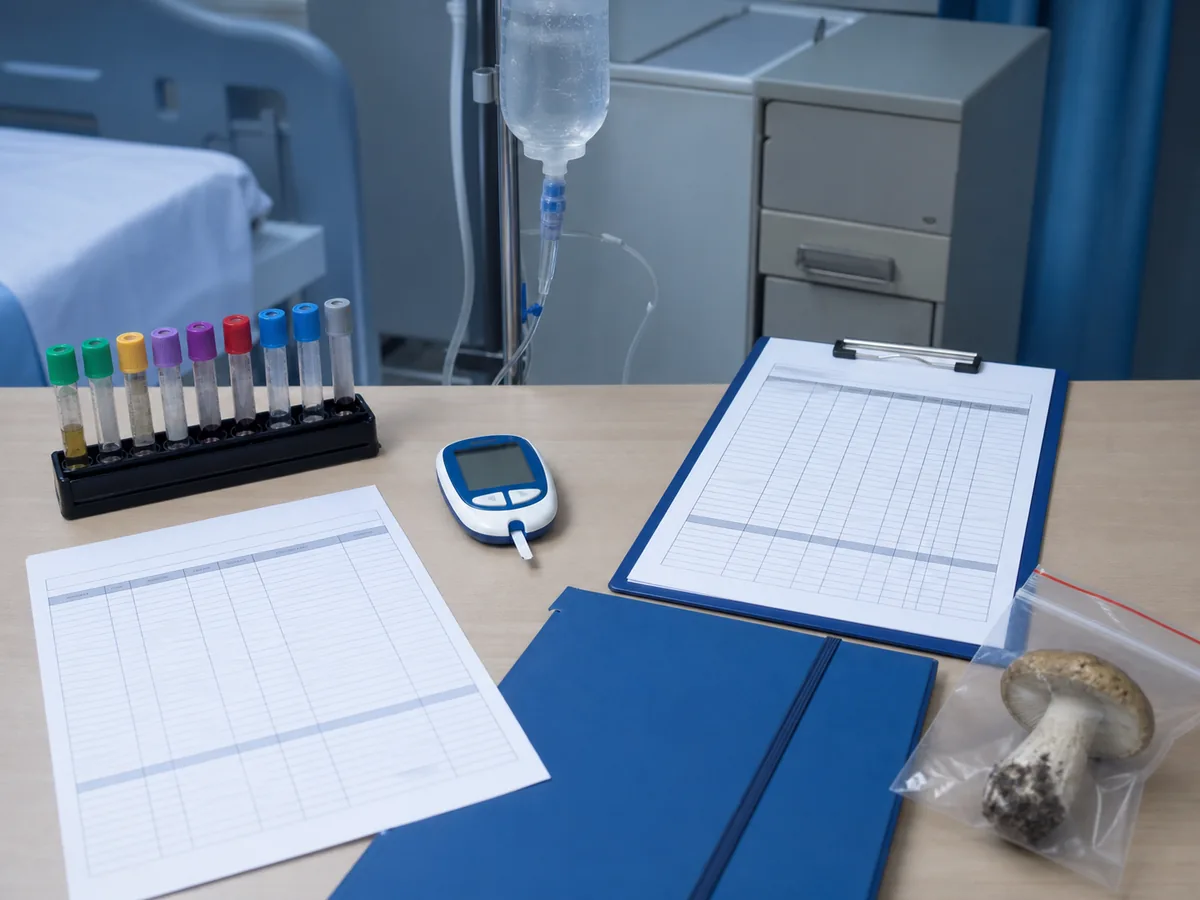
Silibinin shows the access problem. The IV form used for amatoxin poisoning is not the same as an over-the-counter milk thistle capsule. When CDC reported the 2016 California outbreak, intravenous silibinin was available in the United States only through an open clinical trial. If you are the patient or a companion, do not delay care to search for a supplement with a similar ingredient name.
Proof of the toxin can stay missing through all of this. CDC notes that only special labs offer urine amatoxin tests. CDC also notes that no FDA-approved clinical test confirms that someone ate amatoxin. So a matching delayed gut illness, liver injury, meal history and expert mushroom check can count for more right now than waiting for a final toxin result.
Repeat liver and clotting results guide how urgent things are while proof of the toxin is missing. Liver enzymes, bilirubin, blood sugar and clotting can change at different speeds. So can kidney function, acid-base status, mental state, urine output and blood flow. The patient may feel better after fluids while clotting or liver function slides toward failure.
When liver injury turns severe and keeps getting worse, the team calls a liver-transplant center early. The choice to transfer rests on the course of illness, the lab trend, mental state and failing organs. The skills on hand and set transplant criteria count too. No single enzyme number drives the choice.
The 2025 to 2026 outbreak in northern California shows the stakes. It does not prove any preferred drug combination. CDC reported 39 suspected amatoxin cases, including three liver transplants and four deaths. The same report states that no standardized regimen or FDA-approved therapy exists.
SafetyPoisonous Mushrooms: Species Risks and Identification LimitsTreating kidney and muscle injury
Kidney injury can follow dehydration, shock, direct toxin effects or muscle breakdown. Several of these can happen at once. Treatment starts by finding which process is active. The same fluid plan can benefit one patient and overload another whose kidneys or heart cannot cope.
Orellanine-related kidney failure can appear days after the mushroom meal. Thirst, headache, nausea, flank pain, less urine or rising kidney results may lead to fluid balance checks, electrolyte care and a medicine review. If the kidneys need support, a kidney specialist may join and dialysis can start.
Rhabdomyolysis, or severe muscle breakdown, takes a different route to kidney danger. Badly hurt skeletal muscle releases creatine kinase, myoglobin, potassium, phosphate and other cell contents. Nurses and doctors follow strength, pain, urine, blood salts and kidney function. It also tracks body heat, heart rhythm, blood flow and the trend in muscle markers.
In rhabdomyolysis, the team adjusts fluids to perfusion, urine output and electrolytes. Kidney function, heart function and breathing shape the plan too. No safe home volume formula exists. Aggressive fluid amounts can cause harm once kidney failure or fluid overload develops.
Blood salt problems may need urgent care before the kidney picture is clear. Potassium from hurt muscle can upset the heart rhythm. Calcium, phosphate, bicarbonate and kidney function can shift at the same time. Heart monitors and repeat blood tests let the team treat a dangerous imbalance, since no single urine color or creatine kinase number shows the whole picture.
Yellow knight case reports link repeated large meals with severe muscle breakdown. Even so, doctors still look into exercise, heat, infection, seizures, injury, medicines and metabolic causes. The mushroom history adds to the list of causes without ruling the others out.
Dialysis can support a patient whose kidneys cannot control fluid, blood salts, acid-base balance or waste. The need for it reflects how well the organs work and how sick the patient is. It does not mean a machine reliably removes every mushroom toxin.
Muscle and kidney plans meet in repeated blood chemistry. Urine output can fall and kidney injury can progress after the first result. Repeated tests show whether support is working or the team needs to escalate.
How long does hospital observation last?
How long the team watches depends on the suspected toxin, the time before symptoms began and the symptoms themselves. Specimen evidence, the exam and test trends count too. Someone with early symptoms that clear on their own does not need the same watch as someone with a possible amatoxin, orellanine or repeated-meal muscle exposure.
One normal test may only be a baseline. Delayed liver, kidney, clotting, electrolyte or muscle changes may not show on the first panel. Repeat timing comes from the working syndrome and the patient's course, so no single fixed schedule covers every test.
Normal-looking tests or easing symptoms can mislead the team. Vomiting may stop after fluids and nausea medicine while liver injury goes on, or agitation may settle before deep sleepiness sets in. So where each diner goes next depends on symptoms, function and the direction of lab results. Social support, travel distance and the ability to come back quickly count too.
- Clinical course
- Symptom onset, quiet intervals, progression, improvement, and recurrence
- Stability
- Airway, breathing, circulation, alertness, hydration, walking, and oral intake when appropriate
- Test direction
- Whether liver, kidney, clotting, glucose, electrolyte, or muscle results improve or worsen
- Follow-up
- Named return signs, monitoring duration, contact number, and destination for reassessment
Every diner gets their own decision. People at the same table can eat different species pieces and amounts, and their body size, health, medicines and symptom clocks differ. The sickest person's diagnosis does not clear the least ill diner, and neither do another person's normal results.
Each discharge plan needs instructions specific enough to act on. The patient and companion need to know which symptom calls for a phone call and which needs emergency services. They need to know how long observation lasts and where repeat testing happens. They also need the case number that ties follow-up to the first exposure.
What patients and companions can do safely
As a companion, you can improve care by bringing accurate facts with you. Bring the poison-center case number and the meal and symptom timeline. Bring a list of medicines, health conditions, and alcohol or other exposures. Bring photos, packaging and leftovers, plus a complete raw specimen when the clinical team asks for it.
Keep each diner's evidence separate in the record. For each person, list the portion, the first and last bite, the first symptom, later changes and care already given. Mark estimated times as estimates. False precision can steer the reading of the syndrome the wrong way.
- Tell staff about repeated mushroom meals in the preceding days.
- Report every medicine, supplement, alcohol exposure, and relevant medical condition.
- Preserve complete specimens without delaying transport or creating another exposure.
- Ask which results are being trended and which changes require another call.
- Keep discharge papers and the poison-center case number together.
Keep talking to the team after the first handoff. Report new vomiting, diarrhea, sweating, secretions, confusion or weakness as soon as it appears. Do the same for dark urine, less urine, jaundice, bleeding, chest symptoms or breathing changes, without waiting for the next scheduled check. Any new symptom can change the syndrome and the monitoring plan.
Do not give any home treatment while you contact the team.
Warning
Mushroom poisoning treatment belongs with poison specialists and clinicians
Do not make the person vomit, force fluids, give alcohol or give charcoal. Do not swap supplements for IV medicines, and do not use another person's prescription. Call Poison Control for advice on this case. Call emergency services for life-threatening changes.
Sources4
- Merck Manual Professional Edition, Mushroom Poisoning Most mushroom poisoning treatment is symptomatic and supportive; N-acetylcysteine, high-dose penicillin and silibinin unproved
- Amanita Species Mushroom Poisonings, Northern California, November 2025 to March 2026, CDC MMWR 2025-26 outbreak: 39 suspected cases, 3 transplants, 4 deaths; no standardized regimen or FDA-approved therapy; urine amatoxin testing only at specialized labs, no FDA-approved test
- Amanita phalloides Mushroom Poisonings, Northern California, December 2016, CDC MMWR 2017 2016 outbreak: IV silibinin available in the United States only through an open clinical trial
- Poison Control, Activated Charcoal Do not treat a poisoning with activated charcoal at home; charcoal cases are monitored in an ER
Frequently Asked Questions
Is there an antidote for mushroom poisoning?
No single antidote works for every mushroom toxin. Most care supports the body and fits the type of poisoning. Several drugs used for amatoxin poisoning have weak or unclear evidence.
Do hospitals use activated charcoal for mushroom poisoning?
Doctors may consider activated charcoal in selected cases. Timing, the toxin, vomiting, bowel function and airway safety decide whether it fits. Do not use it at home.
Can treatment start before the mushroom is identified?
Yes, treatment starts right away. Doctors treat the airway, breathing, blood flow, seizures, fluid loss and organ injury. Poison and mushroom experts study the meal history and specimens at the same time.
How is death-cap poisoning treated?
Doctors give intensive support and repeat the liver and clotting tests. Specialists may direct off-label or trial drugs. The team calls a transplant center early when severe liver failure sets in.
Why are blood tests repeated?
Some liver, kidney, blood salt and muscle injuries show up after an early test. The trend across repeat tests can reveal a decline that one baseline result misses.