
DEADLY POISONOUS
Coprine poisoning is an alcohol-triggered reaction tied mainly to the common inkcap. Symptoms can begin or come back after either exposure. So piece together both timelines, the mushroom meal and every drink of alcohol.
Coprine Mushroom Alcohol Reaction: Symptoms and When to Act
Coprine poisoning is an alcohol-triggered reaction tied most clearly to the common inkcap, Coprinopsis atramentaria. The mushroom meal itself may cause no problem at first. Then a drink can bring on flushing, a pounding headache, nausea, palpitations, weakness, or low blood pressure.
Warning
Stop all alcohol and call Poison Control at 1-800-222-1222 in the United States when this pattern follows an inkcap meal. Call 911 for chest pain, fainting, breathing trouble, severe weakness, confusion, seizure, or inability to wake the person.
What should you do during a reaction?
Take the drink away and make sure no more alcohol reaches the person. Dizziness and low blood pressure can make standing unsafe, so sit or lie the person down the way emergency dispatch tells you. Do not try home remedies such as making the person vomit, forcing fluids, or giving them another person's heart or blood-pressure medicine. The safe steps before hospital care start with a phone call.
While you wait, write down when the person ate the mushrooms, when they drank, the first symptom, a pulse reading, and whether they fainted or felt chest pressure. Name the actual drink and how much went down, because "there was alcohol" tells the poison center very little.
Fainting, bad shortness of breath, chest pain that won't ease, marked weakness, or an uneven heartbeat raise the stakes. They can point to a more serious problem with blood flow, or to a different illness. Flushing and warmth can look dramatic and still stay stable. Watch pulse readings can't stand in for a proper check of pulse, blood pressure, oxygen, and heart rhythm.
Keep someone with the person until help comes. Anyone who feels dizzy should not drive, shower alone, or walk around to see if the reaction has passed.
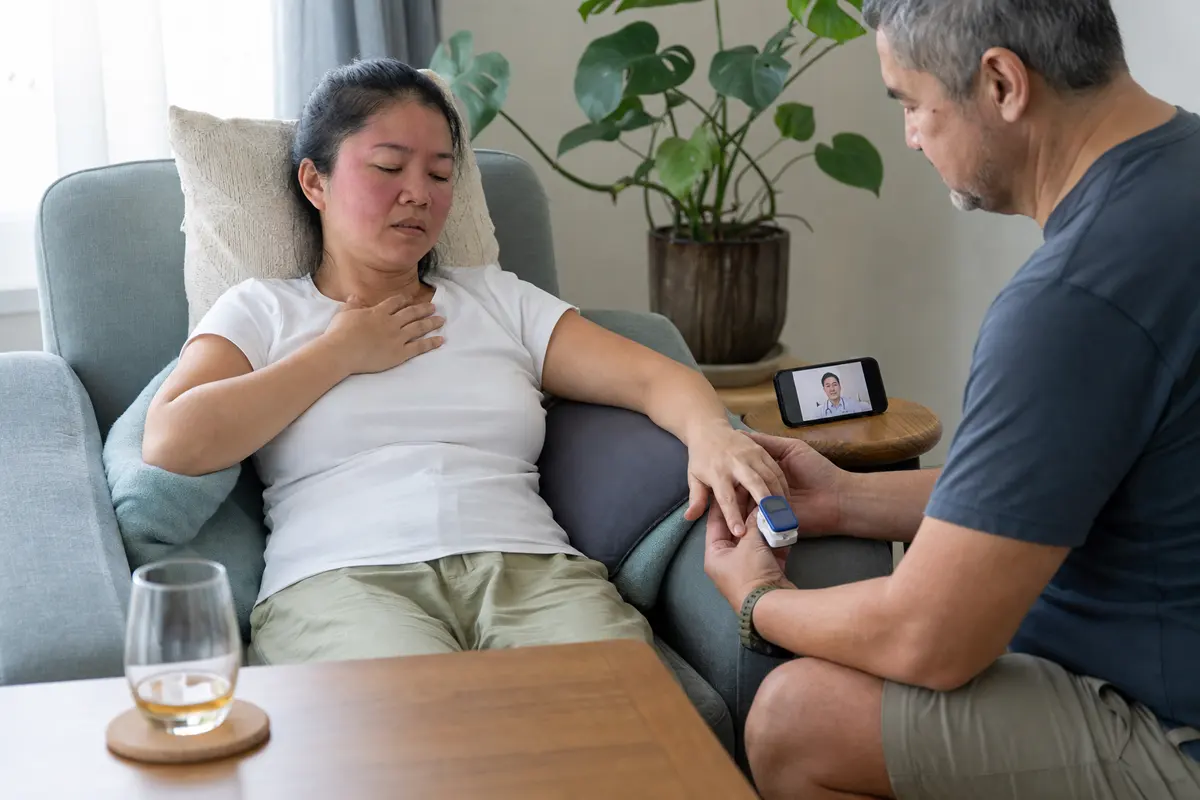
Two clocks: the mushroom meal and the drink
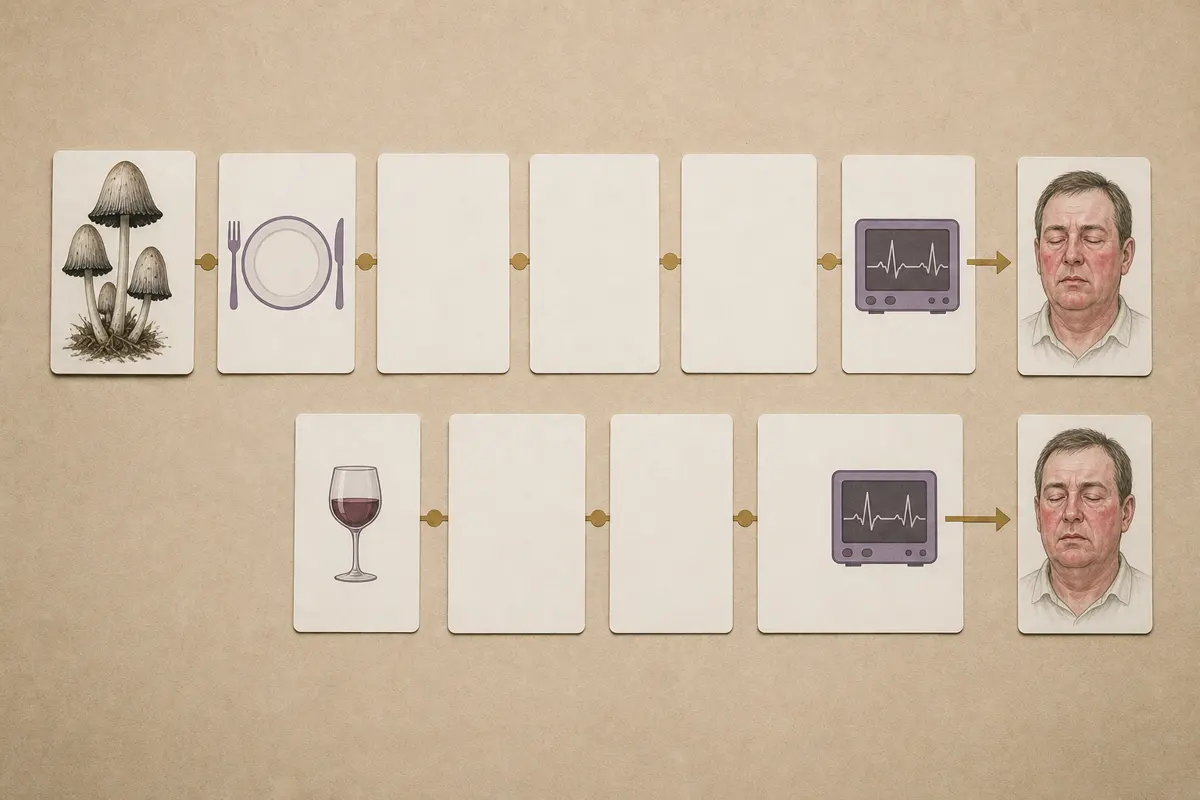
The case only makes sense when you lay the mushroom clock and the alcohol clock side by side.
| Clock | Detail to record | Why it changes the interpretation |
|---|---|---|
| Mushroom meal | Species, amount, preparation, date, and time | Establishes when coprine or its active metabolite could affect alcohol metabolism |
| Alcohol exposure | Beverage, food, medicine, amount, date, and time | Identifies the trigger that may cause acetaldehyde to accumulate |
| Symptom onset | First warmth, flush, headache, nausea, dizziness, or palpitations | Tests whether the sequence fits the interaction |
| Repeat exposure | Any alcohol after initial improvement | Explains a second episode without another mushroom meal |
The alcohol may come before, with, or after the mushroom. Published reports of coprine-type poisoning describe reactions when the two timelines overlap during a risky period. The exact window varies. So no single cutoff you remember can replace advice from the poison center about your own case.
Symptoms usually follow the drink, not the meal. So diners may blame a later drink, think the first meal was safe, or miss the link entirely. Someone can feel fine after eating, react at dinner the next day, get better, and then react again after another drink.
Each diner needs a separate record. One person may skip alcohol, another may drink a little, and a third may take a medicine that contains alcohol. Their different outcomes support the link to alcohol. Without the mushroom itself, though, they can't prove which species people ate.
Which mushrooms and which alcohol sources count?
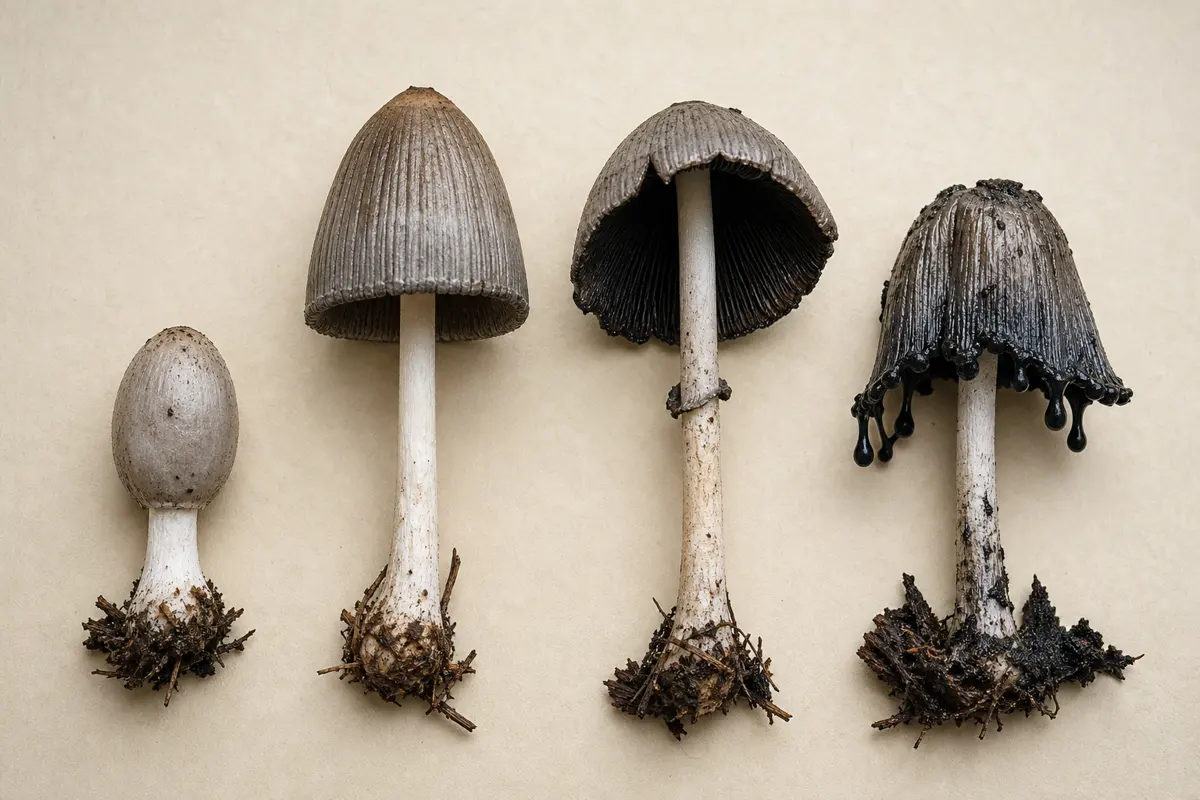
The common inkcap is the best-known source of coprine. It often grows in clusters as a wood-decomposer mushroom on buried roots, stumps, disturbed soil, lawns, and paths. Its gray-brown caps can turn grooved, and its gills darken toward black as it ages.
Don't assume every darkening inkcap holds the same amount of coprine. Several related kinds share thin caps, black spores, or gills that digest themselves, yet their chemistry varies. Save whole young and mature mushrooms, stem bases, photos of where they grew, and raw or cooked leftovers for an expert.
Your list of alcohol sources needs the same detail. Beer, wine, spirits, cocktails, cooking wine, desserts made with alcohol, tinctures, mouth products, and some liquid medicines can all count. Tell the poison center about every one. Don't test small amounts to see if symptoms come back.
The amount on a label may not match what someone took in. The way someone cooked a sauce changes how much alcohol stays in it. Mixed drinks may hold more than one measure, and people often forget a refill. The care team needs your best honest guess, and a falsely exact number is no use to them.
Alcohol in a product counts even when nobody calls it a drink. Liquid medicine, desserts, and sauces may hold only a little, but they still belong in the history. The person who reacted can't judge the risk by taste. Poison experts weigh that dose against the symptoms, and they don't treat every trace as equally dangerous.
What causes the coprine and alcohol reaction?
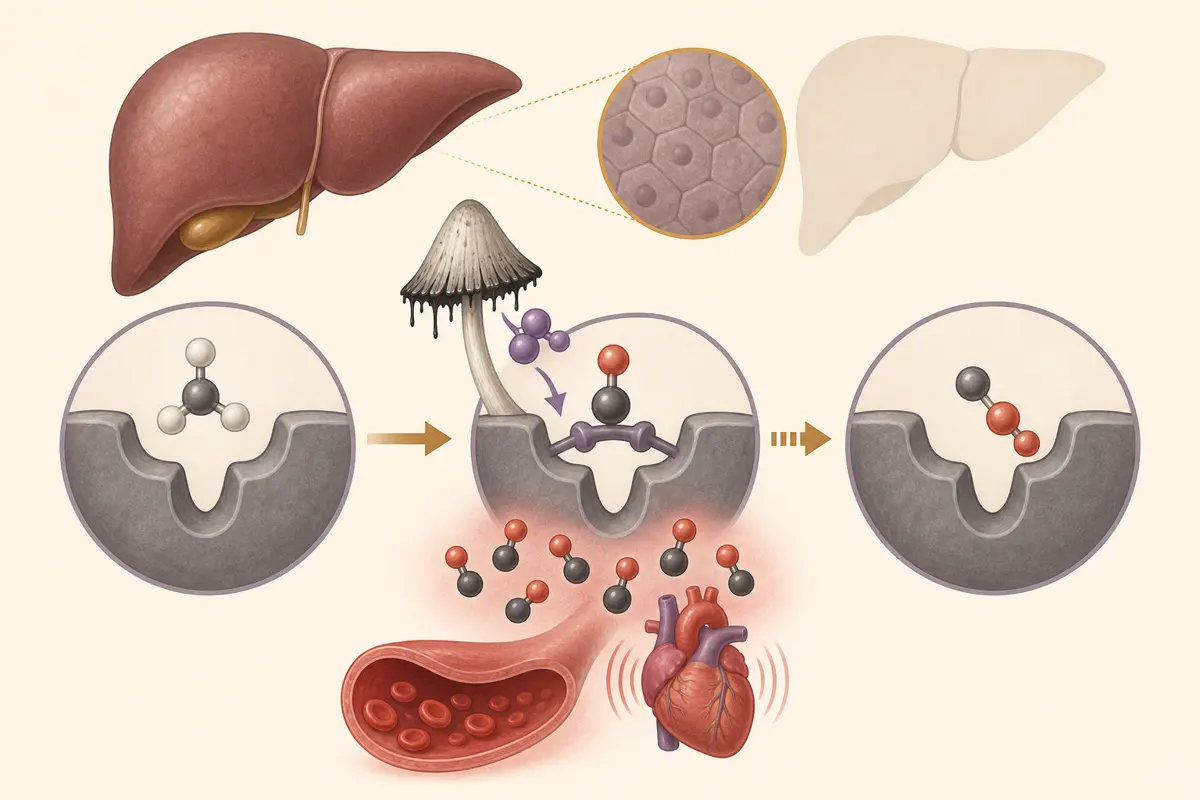
Your body breaks alcohol down in two steps. First it becomes acetaldehyde, and then it becomes acetate. The second step depends on an enzyme called aldehyde dehydrogenase, which keeps acetaldehyde from building up.
- Mushroom compound
- Coprine is converted to 1-aminocyclopropanol
- Enzyme target
- The metabolite inhibits aldehyde dehydrogenase
- Trigger
- Alcohol then produces acetaldehyde faster than the body can clear it normally
- Body response
- Blood vessels dilate and cardiovascular and gastrointestinal symptoms can appear
Coprine's breakdown product blocks that enzyme, and that's how coprine leaves people unable to handle alcohol. The trapped acetaldehyde brings the warmth, flushing, throbbing headache, nausea, and palpitations. Wider blood vessels can drop blood pressure, and the heart may speed up to make up for it.
The reaction looks like the one the drug disulfiram causes with alcohol. Still, the two aren't the same in dose, length, or severity. Doctors judge the patient in front of them and don't expect a neat textbook case.
The enzyme block can last longer than the flush you can see. Another drink may restart symptoms after the person seems well, so avoiding only the drink that started the first episode isn't enough. Some people may handle the mushroom on its own. But doubt about the species, personal health, hidden alcohol, and other compounds keep it from being a safe food for every diner.
Symptoms, and the conditions that look the same
The classic coprine pattern starts after alcohol with quick warmth and a flush over the face or upper body. Then a pulsing headache, nausea, palpitations, dizziness, weakness, sweating, or low blood pressure can join in. Some people also report tingling, chest discomfort, shortness of breath, or a feeling that something bad is about to happen.
- Pattern strength
- Inkcap history plus alcohol followed by flushing and cardiovascular symptoms
- Higher concern
- Fainting, chest pain, severe hypotension, irregular rhythm, confusion, or breathing difficulty
- Important limit
- Flushing alone cannot identify coprine or exclude another emergency
- Reassessment trigger
- Symptoms recur after another alcohol-containing product
Symptoms can start fairly soon after the alcohol. The timing still shifts with food, dose, the drink, the person's body, and how much of the enzyme block remains. Even when the reaction starts late, that never makes it safe to test it at home with another drink.
Other conditions can cause the same signs. Alcohol alone can bring flushing, nausea, dehydration, or a fast heartbeat. Allergy can add hives, swelling, wheezing, or throat symptoms. Panic, heart rhythm problems, heart disease, sepsis, drug mixes, and other mushroom toxins can all strain the heart too.
Allergy follows a different emergency pathway. Fast swelling of the lips or tongue, hives over much of the body, wheezing, a tight throat, or trouble breathing need emergency care, even when the flush began after alcohol. Don't let the inkcap story delay treatment for a possible severe allergic reaction (anaphylaxis).
Chest pain needs the same caution. Don't assume it's only acetaldehyde when the person has heart disease, an uneven pulse, fainting, shortness of breath, or pressure that won't go away. Emergency doctors can check heart rhythm, blood flow, oxygen, and other causes while they go over the poison history.
Missing one common sign doesn't clear the case either. Skin tone, poor light, and a short look can hide a flush. Blood pressure may also recover before anyone measures it. Witness accounts and time-stamped photos add to the exam, but they can't replace it.
How doctors watch the heart and blood pressure
Doctors start with airway, breathing, blood flow, alertness, temperature, oxygen, pulse, and blood pressure. With an electrocardiogram (ECG), they can spot rate or rhythm problems that a pounding feeling in the chest can't sort out. They may also check blood sugar, salts, kidney function, fluids, and other tests. That depends on vomiting, fainting, chest symptoms, health history, or doubt about the mushroom.
The trend tells doctors more than any single scary reading. Pulse and pressure can shift as the person lies down, gets fluids, calms down, or clears the acetaldehyde. Repeat readings next to the symptoms show whether the person is steadily getting better or has an unstable rhythm or a blood-flow problem that won't settle.
So supportive care forms the base of treatment. Positioning, watched fluids when they fit, nausea control, oxygen or breathing support, and treatment of a dangerous rhythm or blood-pressure problem all follow what the patient needs. No home antidote can safely take the place of this care.
Activated charcoal isn't an automatic step. Meal timing, vomiting, alertness, and the risk of breathing in stomach contents all shape the choice. So poison experts decide on any steps to clear the gut. Making someone vomit or giving charcoal at home can create a new danger to the airway.
Health history narrows the margin for error. Heart disease, blood-pressure drugs, dehydration, pregnancy, older age, and other alcohol or drug use can change both the risk and the treatment. Bring a list of medicines, and report any recreational drugs in full.
SafetyGyromitrin Poisoning: False Morel Risk and What to DoWhy symptoms can come back after recovery
The flush may fade before the enzyme has fully recovered. New alcohol can then build up acetaldehyde again without another mushroom meal. Treat the improvement as the start of a time to avoid alcohol. It is never a chance to test.
Avoid every product with alcohol in it for as long as the poison center or the treating doctor says. References often advise caution for several days. But timing and products differ from person to person, so the medical advice comes first.
Hidden sources are the common trap. Cooking wine, extracts, fermented drinks, tinctures, mouthwash that gets swallowed, and liquid remedies can all reach someone who is recovering. Read labels, and ask a pharmacist when a product's alcohol content or a safer option is unclear.
Look back at products already used as well as ones you plan to use. If a liquid medicine or dessert came before the first reaction, keep its container and report when the person had it. If no one has used it yet, set it aside until a pharmacist or doctor confirms the plan for avoiding alcohol.
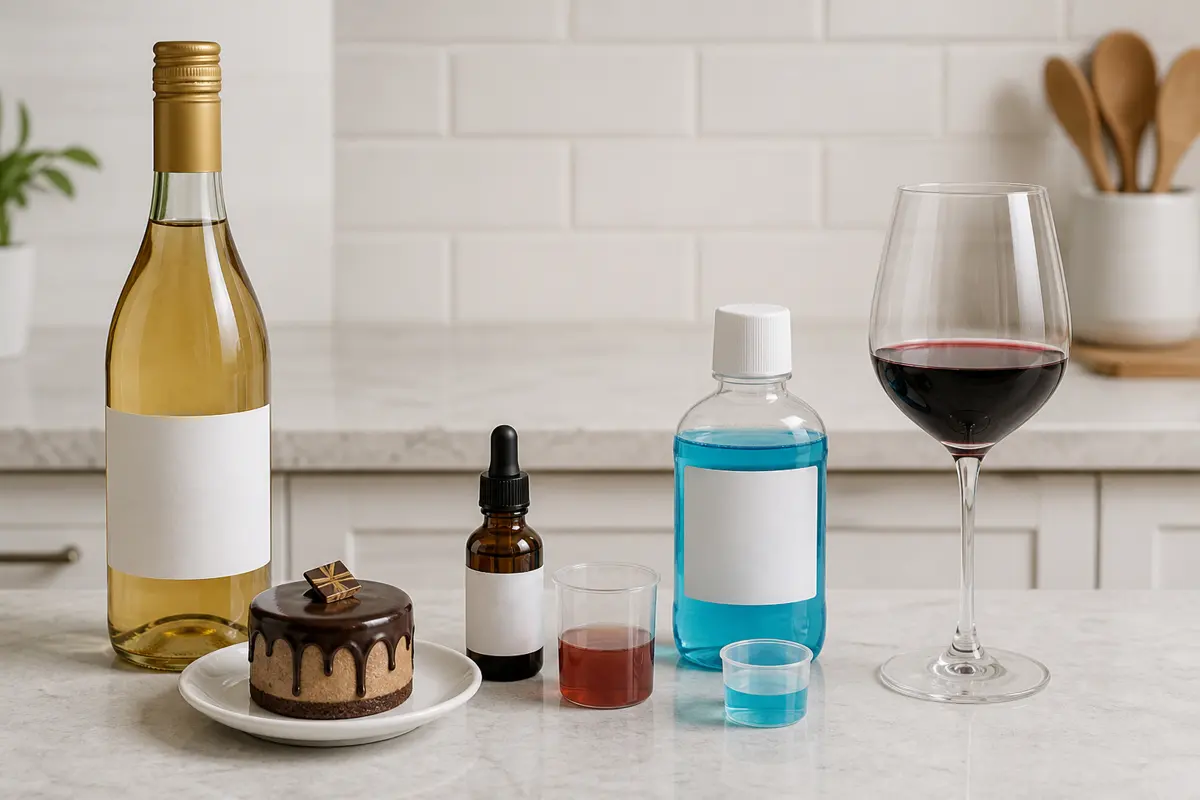
Never use a tiny drink as a test. Even if a small amount causes no symptoms, that can't prove the enzyme has recovered. Larger amounts can set off another heart and blood-pressure reaction. Waiting out the advised time is the safer path.
Symptoms that come back need a fresh check when they're severe, long-lasting, or different from the first time. Another dose of alcohol, dehydration, a heart problem, or a different toxin may now play a part.
Evidence, records and the recovery decision
Save whole mushrooms, raw scraps, cooked food, packaging, drink containers, and time-labeled photos. Don't taste anything, and don't let this delay care. Keep the sample apart from any food someone might eat. Put dry mushrooms in a paper bag or box when you can, chill cooked leftovers as poison experts direct, and keep photos at full size so the cap, gills, stem, base, and growing spot stay visible.
"Gray mushroom" tells an expert little once someone has cooked it. Notes on clustered growth, buried wood, blackening gills, a cap that breaks down, and the exact place it grew give a mycologist far more to work with than a common name.
Write one line for each person. Include how much mushroom they ate, every alcohol source and about how much, and the time between the two. Add any alcohol in food and whether symptoms began before or after alcohol. Then note pulse or blood-pressure readings, treatment, improvement, and any repeat reaction.
Someone who ate the mushrooms, drank no alcohol, and stayed well tells you something useful. Different portions and health histories still mean that person can't prove the mushrooms safe.
Recovery means more than skin color going back to normal. Doctors look for steady blood pressure and rhythm, clear alertness, controlled nausea, safe walking, good fluids, and no ongoing chest or breathing symptoms. How long they watch depends on how severe the case was, the health history, and how unsure the exposure is.
No routine blood test confirms coprine on its own. The diagnosis rests mainly on the mushroom evidence, the paired timing, the typical reaction, and ruling out illnesses that need different care. Blood tests and an ECG measure effects such as dehydration, salt imbalance, kidney strain, or an abnormal rhythm. They can't show which mushroom compound was present.
Put any normal reading taken after the flush has faded on the timeline. It shows recovery at that moment. It can't erase an earlier faint, a low blood-pressure reading, or an uneven pulse a witness reported. Photos, device records, dispatch notes, and treatment times let doctors rebuild changes they can no longer see.
The mushroom record has limits too. Photos may support an inkcap ID, yet cooking and self-digestion can destroy the gill and cap features an expert needs to be sure. With whole mushrooms, habitat, and growth stage, a trained identifier may narrow the species. Meanwhile the medical team keeps treating the reaction and doesn't wait for a perfect name.
Mixed meals add more doubt when the pan held more than one species and the mushroom record is incomplete. Early improvement from the alcohol reaction doesn't rule out a second toxin with a delayed liver or kidney phase. The care team may watch or test for longer when the basket history, symptom timing, or leftover mushrooms leave that open.
Children, older adults, pregnant patients, and people with heart disease or blood-pressure drugs need extra care in the assessment. Their symptoms don't prove a bigger mushroom dose. The same wider blood vessels, vomiting, or fast pulse simply leave their bodies less room to cope.
After discharge, follow the advice on alcohol and on when to come back exactly. Fainting, chest pressure, an uneven heartbeat, breathing trouble, confusion, vomiting that won't stop, or a stronger repeat reaction needs prompt care.
The medical record should name both the mushroom and the alcohol. That makes any later repeat reaction easier to read. It also gives every diner a clear warning about alcohol during the risky period.
When several people react, the poison center may ask for details for public-health follow-up. The place the mushrooms grew, the leftovers, the list of who ate, and what everyone drank can show whether the same mushroom-and-alcohol pairing explains the whole group. They can also show if another food hazard needs a closer look.
Note who ate mushrooms but drank no alcohol, who drank but ate no mushrooms, and who had both. These natural comparisons can strengthen or weaken the suspected link. Uneven portions and differences in health still keep them from proving the cause.
Safeguards for the next inkcap meal
Don't treat a common inkcap as an ordinary edible when guests may have had alcohol before arriving, take a medicine with alcohol in it, or have a health problem the picker doesn't know about. Keep doubtful inkcaps away from edible finds, and save whole young mushrooms before the gills dissolve. On its own, a black spore print or an inky cap can't settle the species or its chemistry.
Tell every diner the exact mushroom and its reaction with alcohol before you serve the food.
Cooking doesn't remove the need to manage the reaction with alcohol. Past meals without symptoms are no guarantee either. The safest choice is to leave the mushroom out whenever the ID or alcohol avoidance is in doubt.
Sources3
- Mushroom Poisoning Syndromes, North American Mycological Association Coprine pattern after alcohol: warmth, flushing, palpitations, headache; alcohol up to 5 days after inkcaps can still trigger it
- Haberl et al. 2011: coprine-like alcohol intolerance case series, PubMed abstract Coprine blocks ethanol breakdown at the acetaldehyde stage, causing alcohol intolerance
- Tugcan and Akpinar 2025: Mushroom poisoning, an updated review, PubMed Updated review: coprine reactions when alcohol and the mushroom overlap within about 3 days; supportive treatment
Frequently Asked Questions
How quickly does coprine poisoning begin?
Symptoms often start soon after someone drinks alcohol. Still, the history you give needs both the inkcap meal and every later alcohol exposure. No fixed time window is safe to rely on, so call Poison Control.
Can cooking make a common inkcap safe with alcohol?
Cooking doesn't remove the need to manage the reaction with alcohol. Doubt about the species and a dose that varies from meal to meal make it safer to avoid the mix. You can't predict how a cooked serving will act.
Can symptoms return after the flushing stops?
Yes. The symptoms you can see may fade before the body can fully handle alcohol again. Then another drink, food, or medicine with alcohol in it can set off a new episode.
When is an inkcap and alcohol reaction an emergency?
Call emergency services for fainting, chest pain, breathing trouble, severe weakness, confusion, seizure, an uneven heartbeat, or a person you can't wake.