
DEADLY POISONOUS
Amatoxin poisoning can start with six or more hours with no symptoms. Then come severe vomiting and diarrhea, a short spell of feeling better, and then liver failure. Anyone who could have eaten an amatoxin mushroom needs a poison center and an emergency check right away. Do not wait for someone to name the mushroom.
Amatoxin Poisoning: Organ Damage Timeline and Care
If someone may have eaten an amatoxin mushroom, treat it as an emergency even when the person feels well. In the United States, call Poison Control at 1-800-222-1222 and get an emergency evaluation after any plausible wild-mushroom meal. Waiting for symptoms can use up the hours when doctors have the most treatment options.
Call 911Collapse, seizure, severe confusion, breathing difficulty, or inability to wake the person
Call nowSomeone ate a wild mushroom and nobody can rule out death cap, destroying angel, Galerina, or a small Lepiota
High concernVomiting or watery diarrhea begins six or more hours after the meal
Continue careStomach symptoms improve but liver tests, clotting, glucose, or mental state change
Why you act before anyone feels sick
Amatoxin poisoning often gives no clue at the table. The mushroom may taste ordinary, several people may finish the meal, and everyone can feel fine through the first part of the night. So the history of the meal comes before the symptom list.
Tell the poison specialist or emergency team when everyone ate the mushrooms, who ate them, and how much each person ate. Also say whether several species shared the dish and where the mushrooms came from.
Delayed stomach illness after a wild-mushroom meal is a serious warning sign. CDC reports describe belly pain, nausea, vomiting and diarrhea that commonly start more than six hours after someone eats an amatoxin mushroom. Some patients show no lab sign of liver injury during those first stomach symptoms. So what looks like a simple stomach bug can still be the first phase of a deadly poisoning.
Onset before or after the six-hour mark can't prove or rule out amatoxin on its own. Meal size, how each body responds, mixed species and an unsure eating time can all blur the pattern. Earlier symptoms from a different mushroom in the same meal can blur it too.
Every diner's decision rests on a plausible exposure and how bad the outcome could be. Nobody needs a sure photo ID first. Keeping a whole specimen is useful later, yet no one should delay the call to search the woods, try an app, or wait for a name from social media.
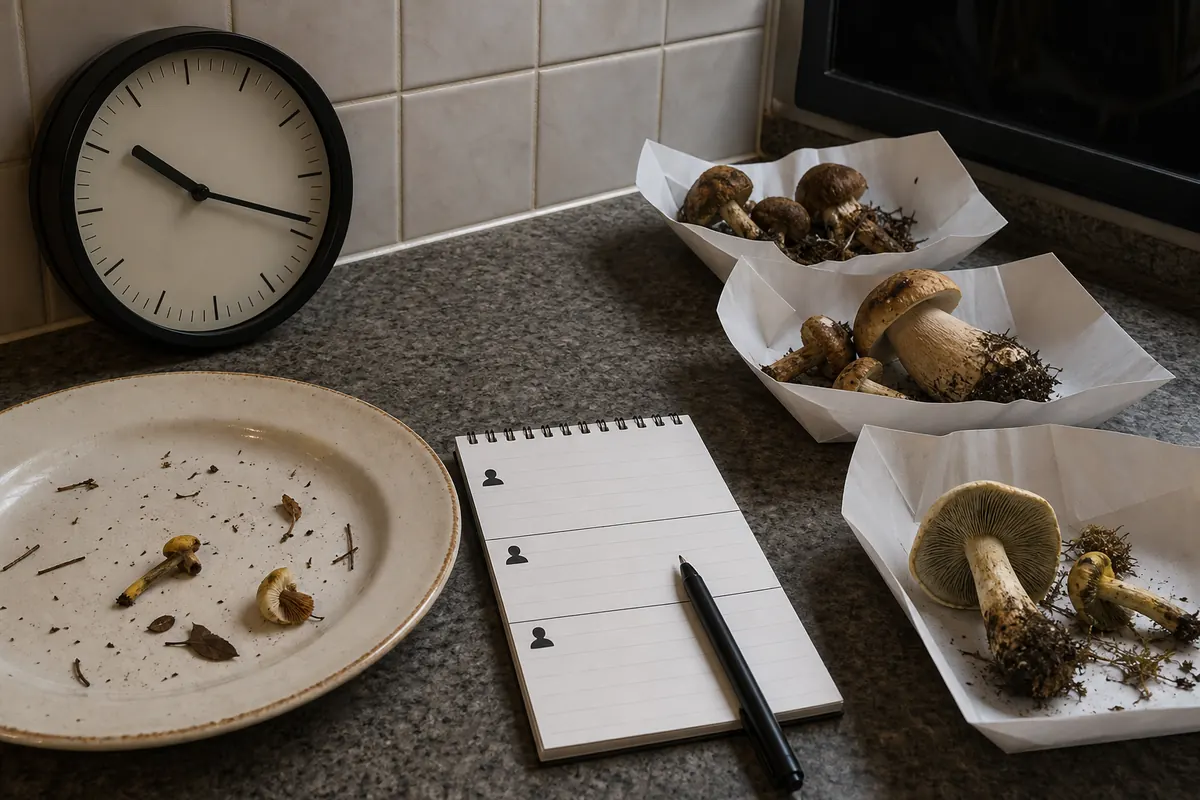
Give each diner a separate line in the record, because people who share a dish don't get the same dose. Someone who ate one cap may stay well while someone who ate several gets sick. One person without symptoms does not clear anyone else.
Report it right away if a diner is a child, an older adult, or pregnant, or has liver or kidney disease. Those facts don't identify the toxin. They can still change monitoring, fluid care, and how much room the patient has for complications.
SafetyCoprine Mushroom Alcohol Reaction: Symptoms and When to ActWhich mushrooms can contain amatoxins?
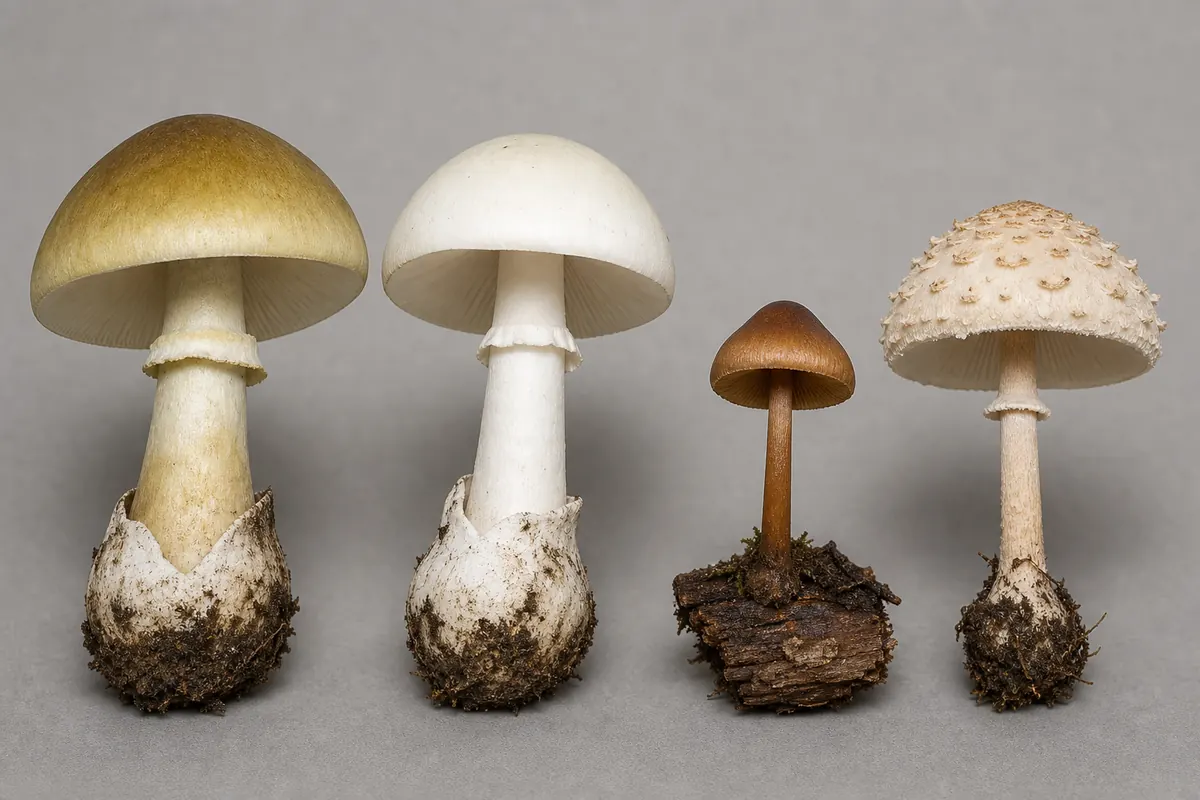
The death cap, Amanita phalloides, is the best-known amatoxin mushroom. Destroying angels are several white Amanita species. In North America, which destroying angel you meet varies by region. So a plain "white mushroom" label is not enough.
- Death caps
- Olive, yellow-green, or brownish caps can occur with white gills, a ring, and a saclike volva at the stem base
- Destroying angels
- Several mostly white Amanita species combine white gills with a ring and basal volva
- Galerina risk
- Galerina marginata and related small brown mushrooms can fruit on wood and contain amatoxins
- Lepiota risk
- Some small lepiotoid mushrooms also contain amatoxins despite looking unlike a death cap
Field mistakes often start at the stem base, when the whole base stays in the ground. The volva can tear away as you pick, hide in the soil, or get trimmed off for a clean basket before anyone takes a photo.
Small brown mushrooms trip people up in another way. The deadly Galerina, Galerina marginata, can grow on wood, even buried wood, so it can slip into a basket meant for edible mushrooms that grow on wood. Small toxic Lepiota can pass for parasol-like mushrooms. No one cap color or genus covers the whole threat.
To name an amatoxin mushroom, you need the whole thing. That means the cap, gills, ring when there is one, the full stem base, what it grew on and the habitat around it. Spore prints and a microscope may give a trained expert more clues. But neither the treatment nor the emergency call should wait for a final Latin name.
Cooking gives you no safety test. Fried, boiled, frozen, dried or preserved mushrooms can still carry amatoxin risk, and tasting a small bit is not a safe test dose. The meal may also hold scraps that no longer look like the mushroom you picked. Keep raw and cooked leftovers, cleaning scraps and clear photos apart and labeled, since each one may answer a different question about what the mushroom was.
How amatoxin damages the liver
Alpha-amanitin is the amatoxin most often discussed in severe human poisoning. Once the gut absorbs it, the toxin reaches the liver and blocks RNA polymerase II. Cells need this enzyme to make messenger RNA. Without it, they can't keep making proteins.
Liver cells (hepatocytes) take much of the harm. The liver receives what the gut absorbs, and it works hard to handle what flows in the blood. The cell injury starts well before jaundice or confusion makes liver failure visible.
- Exposure
- Amatoxin survives the meal and is absorbed from the digestive tract
- Target
- Alpha-amanitin inhibits RNA polymerase II inside vulnerable cells
- Consequence
- Protein production fails and liver cells die
- Extension
- Kidney injury may arise from toxicity, dehydration, shock, or multiorgan failure
Some toxin moves back and forth between the liver, bile, gut and blood. That loop explains why toxicologists may consider repeat gut decontamination in selected cases. The choice belongs in a hospital. Timing, bowel function, the patient's state and the risk of breathing in vomit (aspiration) all bear on it.
Stomach pain does not track liver damage in a simple way. Vomiting reflects the gut phase. Clotting problems, falling glucose, rising liver enzymes, acid-base changes, kidney injury and a changed mental state show harm the patient can't judge at home.
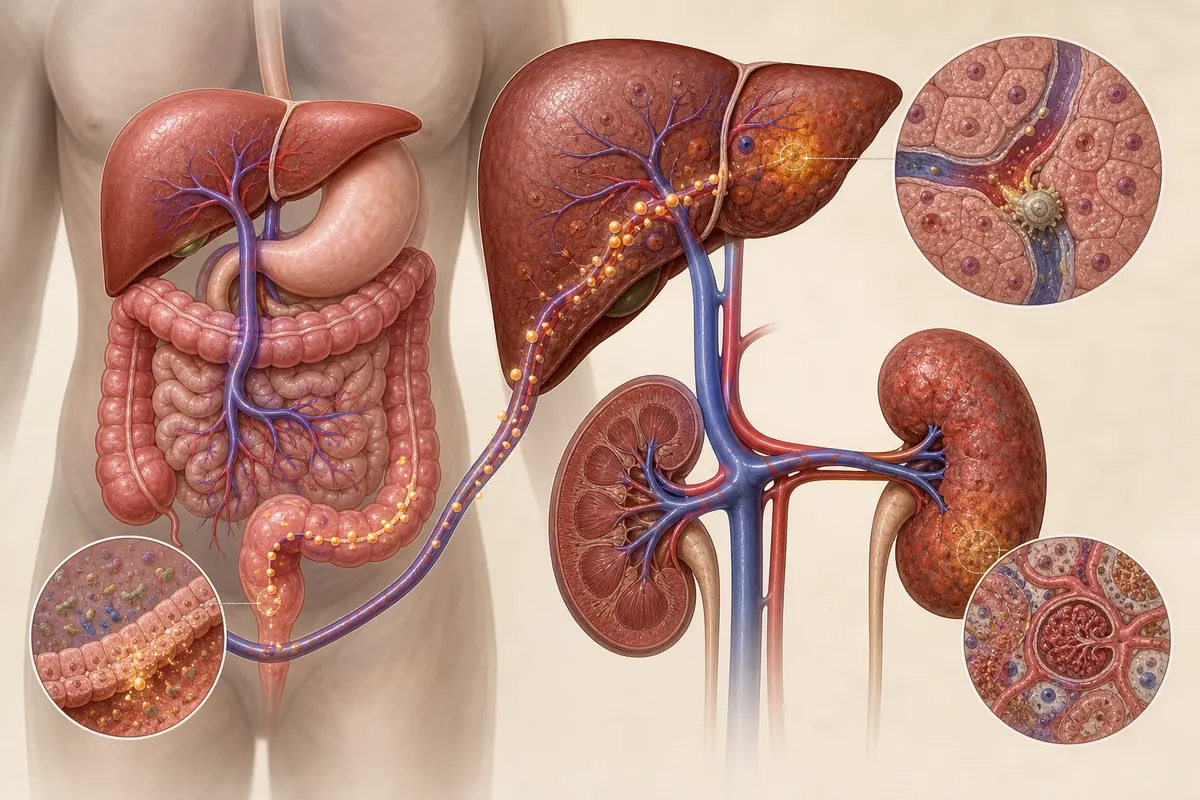
Fluid loss adds a second problem. Repeated vomiting and watery diarrhea can cut circulation, upset sodium and potassium, and strain the kidneys while the toxin keeps hurting the liver. The patient needs IV fluids, yet fluids alone are not enough. Someone can look less dry after fluids and still have worse liver injury once the stomach calms.
The four phases and the false recovery
Doctors describe the classic amatoxin course in phases, because how the patient feels and what the organs go through don't move together. Real cases vary. Still, the sequence shows why sending someone home just because symptoms eased can be dangerous.
The latent phase often lasts six to 24 hours after the meal. The person feels normal while the gut absorbs the toxin and cell injury begins. Then the gastrointestinal phase brings abdominal pain, nausea, repeated vomiting and heavy watery diarrhea. Severe fluid and salt losses can dominate at that point, even when the first liver tests are normal or only starting to change.
The apparent recovery phase can start as vomiting and diarrhea ease. Over roughly the next day, the patient may ask to go home. Meanwhile, liver enzymes called aminotransferases rise, and the liver makes fewer of the proteins that clot blood.
Warning
Feeling better after delayed vomiting and diarrhea does not show that amatoxin has cleared. Continue emergency observation and serial laboratory testing until the treating toxicology and liver teams decide the risk has resolved.
The organ-failure phase can develop over the next two to six days. Jaundice may get worse, blood may stop clotting normally, and blood sugar may drop. Acid can build up in the blood (acidosis), the kidneys can fail, and confusion, bleeding and unstable circulation can follow. Together these signs mark fulminant liver failure.
These windows overlap, so never use them as a home diagnosis chart. Doctors use them to sort risk along with the exposure, the exam, lab trends, mushroom evidence and the response to treatment. Mixed-mushroom meals can also cause early symptoms from an irritant before amatoxin's delayed phase. Report every species that might have gone into the pan, because the early illness does not cancel the later risk.
SafetyGastrointestinal Mushroom Poisoning: Timing and CareWhat doctors track in repeat tests
One normal result soon after the meal can't close an amatoxin case. The medical team sets a baseline and repeats liver enzyme and clotting tests on a schedule that toxicology guides, with kidney tests alongside them. Doctors watch the direction and speed of change, and no single number tells the story.
AST and ALT rise when the toxin injures liver cells. Their movement shows that the injury is progressing, yet the highest value alone can't show whether the liver still does its key work. Clotting tests, especially prothrombin time and INR, show how well the liver still makes proteins. When INR worsens, the liver may be failing to make clotting factors, and bleeding risk may rise as the illness goes on.
Blood sugar needs repeat checks, because severe liver failure can upset its control. Falling sugar can come with confusion or decline that needs care at once. Bilirubin adds to the picture once jaundice appears, while creatinine and urine output track the kidneys. Salts in the blood, blood gases, lactate, blood pressure and mental state show how the whole body is coping.
Across AST, INR, bilirubin and creatinine, the word to watch is trend. Picture a patient whose vomiting stops after IV fluids while AST, ALT and INR rise on the next two draws. The calmer stomach speaks for one organ system. The lab direction shows that liver injury is still moving forward.
Another patient may have severe diarrhea but stable liver tests through the whole watch period. The team then weighs serial results, timing, the mushroom ID and how the patient is doing before it ends amatoxin monitoring.
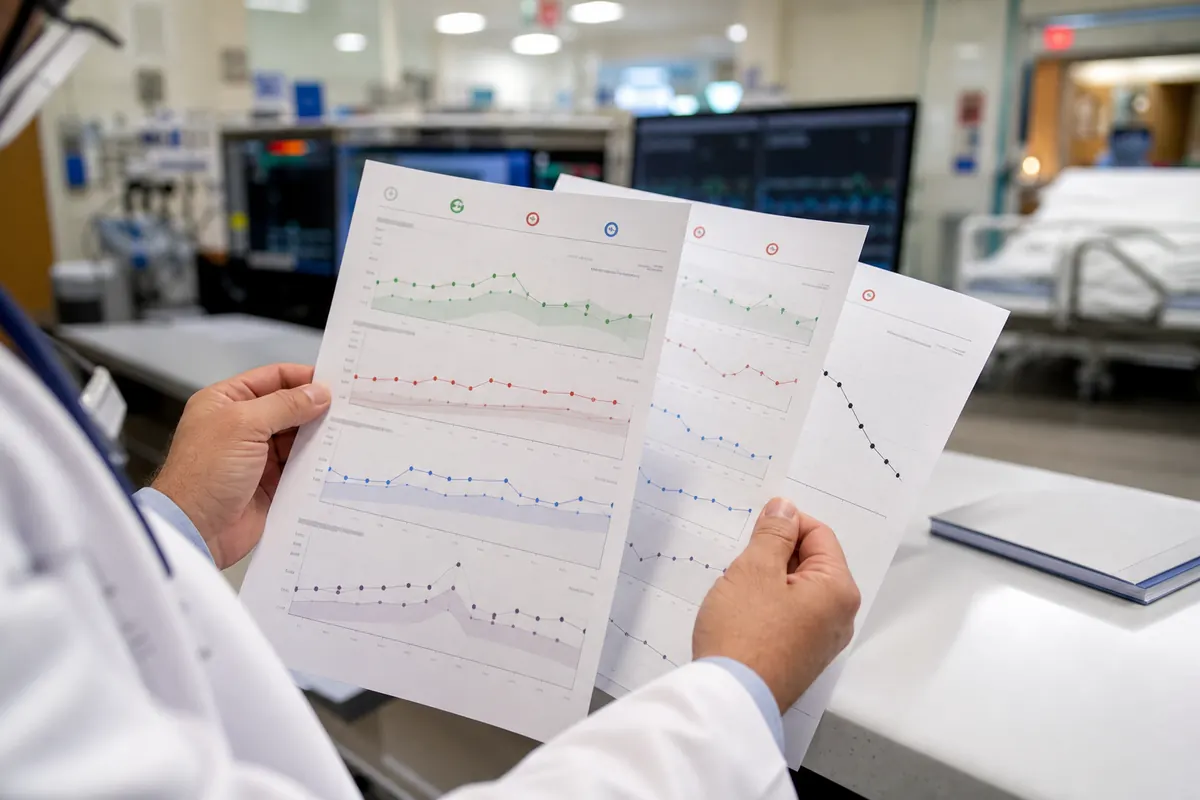
Changes in mental state count for more than another lab value. New confusion, odd sleepiness, agitation, trouble following instructions or being hard to rouse can mark hepatic encephalopathy or another critical problem that needs urgent escalation. Doctors also follow the blood's acid balance and circulation, because severe liver failure affects more than the liver. The whole course over time tells them more than a checklist done once.
How do hospitals treat amatoxin poisoning?
There is no single FDA-approved amatoxin antidote. No treatment plan is standard everywhere, either. CDC's current outbreak report stresses finding and treating cases early. It also says the evidence and access differ from one proposed therapy to the next.
Care starts with a call to the poison center or a medical toxicologist. Then come stabilizing the patient, replacing fluid and salts, and repeated checks. In critical illness, protecting the airway, supporting blood pressure, controlling glucose and treating problems come first.
Doctors may also consider gut decontamination when timing and the patient's condition allow. Activated charcoal is a medical treatment and no household remedy. Whether it is safe depends on the risk of breathing it in, repeated doses, bowel blockage and how alert the patient is.
Specialists may consider intravenous silibinin or N-acetylcysteine as part of a wider plan. The evidence does not make either one a sure antidote. The choice depends on supply, timing, how sick the patient is, reasons a drug may be unsafe for that person, and how the patient changes.
Penicillin has also appeared in past treatment regimens. Even so, no reader should try to pick or obtain a drug from an article. What you can do is get the patient fast to a hospital that can consult toxicology and liver specialists.
Supportive care is active treatment. It means replacing lost fluid, fixing glucose and salts, watching clotting and treating kidney problems. It also means keeping vomit out of the lungs and spotting early brain or circulation decline. That care can keep the patient going while the liver's course becomes clearer.
When lab and clinical signs point toward acute liver failure, the team should contact a transplant center early. Transfer and evaluation take time, so they should begin before every standard option has failed.
No home method can copy this monitoring. Making someone vomit, drinking alcohol, taking leftover medicine, using herbal products or trying an online detox can all delay care. They can also add liver stress, put vomit in the lungs, or cloud the picture for doctors.
Call 911 for collapse, seizure, severe confusion, breathing trouble or a patient you cannot wake. For other suspected exposures, Poison Control can coordinate the next steps right away.
SafetyGyromitrin Poisoning: False Morel Risk and What to DoHow mushroom evidence shapes the case
Treatment starts from clinical risk, and good mushroom evidence can sharpen that risk. Save the evidence without handling it more than you need to. Never send anyone back to the collection site before the patient reaches care.
Photograph an intact specimen from above, below and the side, with its complete stem base next to a scale object. Then note the substrate, nearby tree, growth pattern, and the place and time of collection. Wrap specimens in paper, and don't seal damp mushrooms in plastic. Label raw mushrooms, cooked leftovers, cleaning scraps and any material from vomit separately, keep them away from food preparation areas, and never mix fragments from different baskets.
Given a complete mushroom, a mycologist may be able to name it, while cooked pieces may show only suggestive features. On the other hand, one cooked fragment may prove that a suspect species went into the meal, even when the raw mushrooms left over came from a different collection.
The meal record should list every ingredient and cooking step. Then doctors can weigh the mushrooms against food poisoning, medicine, alcohol or another cause, without assuming one cause rules out the rest.
Tell them whether several people shared the dish and whether anyone ate a different portion. Someone who only tasted the sauce may have a different dose from someone who ate several caps. Also say whether a child or pet ate a raw specimen before cooking.
Expert ID supports care and never replaces it. No negative guess from a partial photo can cancel what delayed stomach illness and worsening liver tests mean.
Recovery and liver failure outcomes
Some people recover with monitoring and supportive care. Others reach fulminant liver failure, need a transplant, or die. No article can predict one person's outcome from the number of mushrooms eaten or the first lab results. CDC's northern California investigation found 39 amatoxin cases from November 2025 through March 2026. Thirty-two patients recovered, three got liver transplants, and four died.
Those figures show the full range within one outbreak, and they do not forecast any one person's course. Severity can reflect the species and amount of toxin, the portion eaten, the delay before care, fluid loss, age, existing illness, and how the liver and kidneys respond. Doubt about the identification also counts, because a guessed cap count may not match the toxin dose.
Some patients get stable after early treatment, while others get worse despite all-out care. So transplant teams judge by set clinical criteria and repeat test results. They don't wait for one dramatic moment.
Kidney injury can come with liver failure in several ways. Fluid loss, poor blood flow, direct harm from the toxin and multiorgan illness can all play a part. Dialysis can take over kidney work and manage problems. Even so, dialysis does not fix the liver problem.
Recovery also needs follow-up for liver and kidney tests, medicines, food, activity and mental health. That need grows when the poisoning was on purpose or came from a family meal with severe outcomes. Survivors and families may feel guilt, fear or grief, so the aftermath deserves direct care. The treating team can link them with support and keep the medical inquiry from turning into blame.
How can you prevent amatoxin poisoning?
Prevention starts before anything goes into a mixed basket. Keep each uncertain species apart, and keep whole specimens. Never let a big harvest or a familiar recipe stand in for naming the exact species. Do not serve a wild mushroom to other people until all the required field characters support the name, because guests can't truly consent when the collector is unsure or has thrown away the stem base.
Keep children and pets away from sorting surfaces, compost, yard mushrooms and field bags. One raw mushroom can cause an exposure, and once someone chews or scatters it, its identity gets harder to pin down.
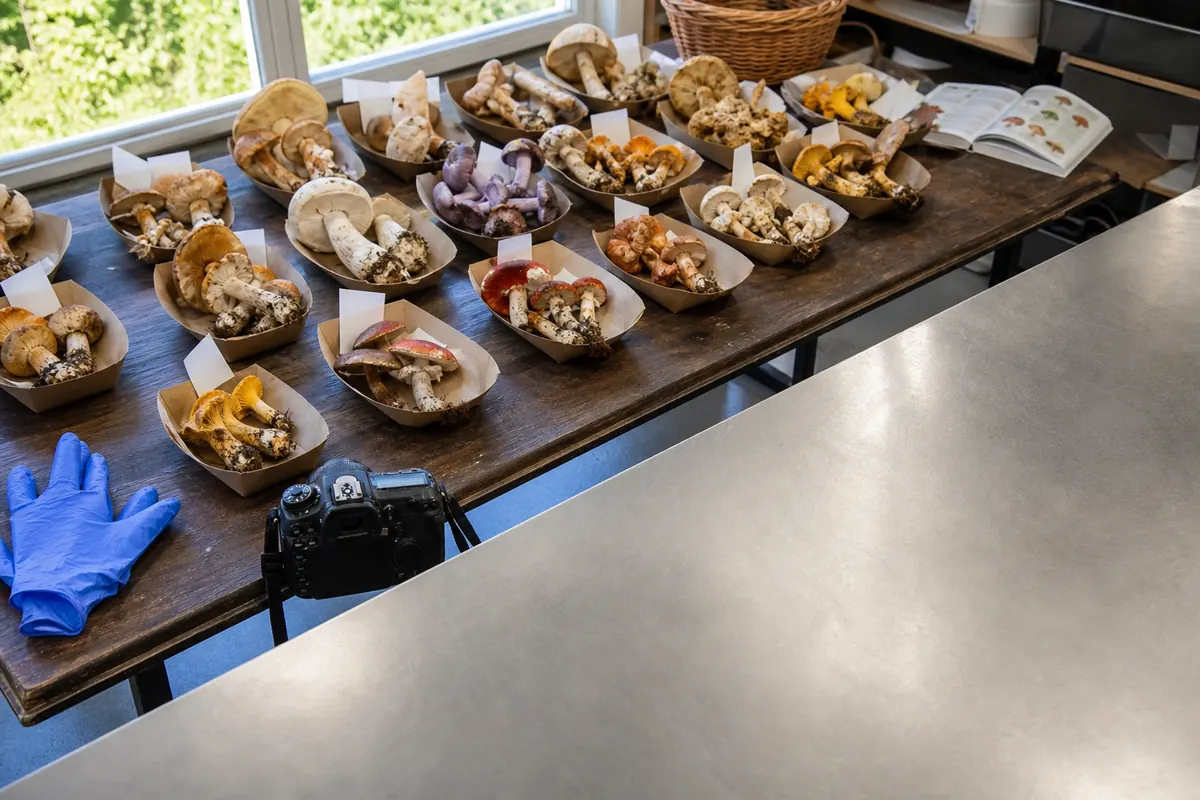
Cooking, soaking, drying, freezing, pickling and tasting do not make a mushroom safe. Only a correct ID, and keeping doubtful mushrooms out of food, controls the risk. After a wild-mushroom meal, keep one raw specimen of each species eaten in a labeled paper container in the fridge for a short time. That specimen is evidence for an emergency and gives no permission to eat a mushroom that is still uncertain.
| Failure point | Why it matters | Safer control |
|---|---|---|
| Stem base cut off in the field | A volva or basal structure can be lost | Collect one complete specimen for identification |
| Several species mixed in one basket | Fragments and spores become hard to assign | Separate each species in paper before transport |
| Confidence based on cap color | Death caps and destroying angels vary in appearance | Use the complete set of field characters and regional expertise |
| Delayed symptoms dismissed as food poisoning | The latent period is characteristic of serious risk | Report the wild-mushroom meal immediately |
| Improvement after diarrhea | Liver injury can worsen during apparent recovery | Continue observation and serial testing until medically cleared |
| Leftovers discarded | Toxicologists lose identification evidence | Preserve labeled raw and cooked material without delaying care |
Sources3
- Amanita Species Mushroom Poisonings, Northern California, November 2025 to March 2026, CDC MMWR 39 suspected cases Nov 18 2025 to Mar 17 2026: 32 recovered, 3 liver transplants, 4 died; silibinin and N-acetylcysteine among proposed therapies with no FDA-approved treatment; amatoxins not denatured by cooking or other food preparation
- Amanita phalloides Mushroom Poisonings, Northern California, December 2016, CDC MMWR 2017 Delayed gastroenteritis with abdominal pain, nausea, vomiting and diarrhea after a 6 to 24 hour latency
- Mushroom Poisoning Syndromes, North American Mycological Association Galerina marginata and several Lepiota species contain amatoxins; liver enzymes and clotting factors must be closely monitored
Frequently Asked Questions
How long does amatoxin poisoning take to start?
Stomach symptoms often start more than six hours after the meal, and they can hold off for up to 24 hours. That delay is a major warning sign, yet on its own it can't confirm amatoxin.
Can you feel better before amatoxin liver failure?
Yes. Vomiting and diarrhea may ease while liver tests and clotting function get worse. Feeling better is no reason to leave the care of the medical team.
Is there an antidote for amatoxin poisoning?
The US has no FDA-approved antidote for amatoxin, and no single drug plan is standard. Poison specialists may try several drugs. Meanwhile, they give intensive support and judge whether the patient needs a liver transplant.
Does cooking destroy amatoxins?
No. Cooking, drying, freezing or soaking won't reliably make a mushroom with amatoxin safe to eat.
Which mushrooms contain amatoxins?
Death caps and destroying angels are the best-known sources. Some Galerina and Lepiota species carry amatoxins too.