
DEADLY POISONOUS
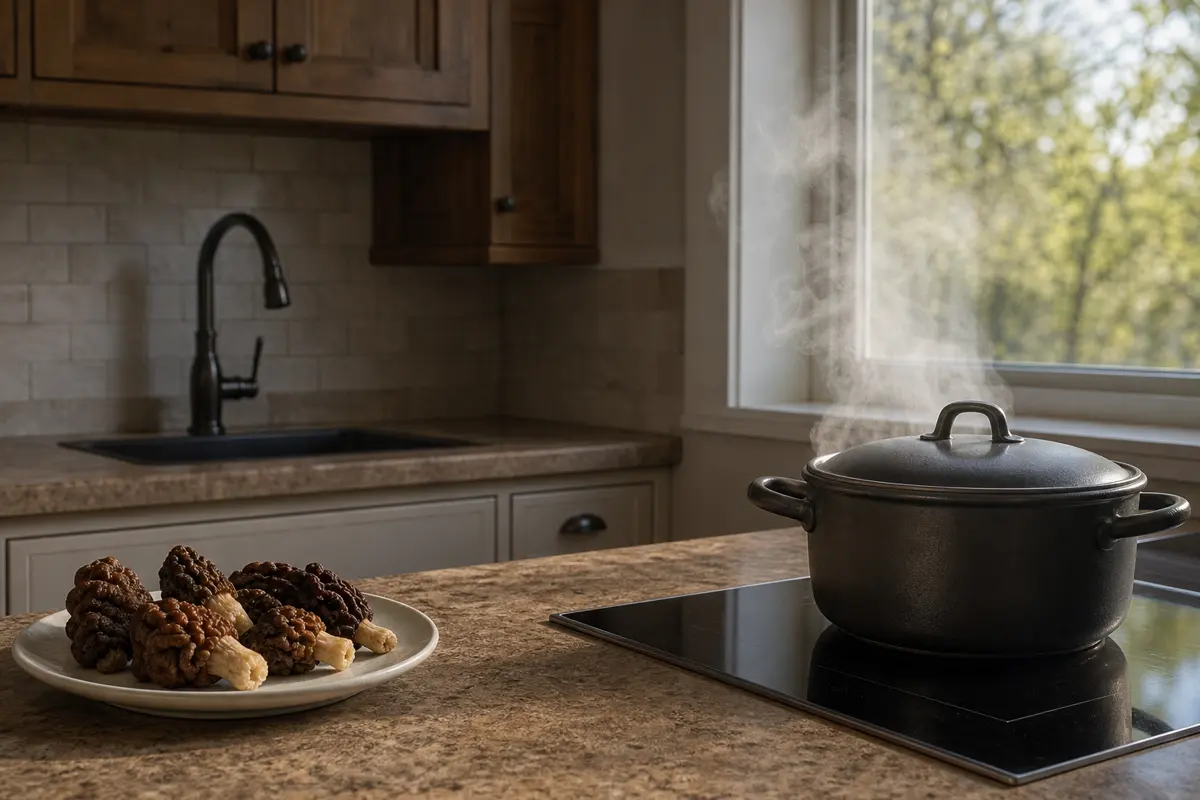
Gyromitrin poisoning comes from certain false morels. It can cause delayed vomiting, brain changes, seizures, and liver injury. Steam from the pot may also harm people nearby who never eat them.
Gyromitrin Poisoning: False Morel Risk and What to Do
Gyromitrin poisoning can begin with vomiting and progress to confusion, seizures, metabolic disturbance, or liver injury after exposure to certain false morels. The harm can come from eating the mushroom or from breathing its strong steam while it cooks. In the United States, call Poison Control at 1-800-222-1222 after a suspected meal or cooking-vapor exposure. Call 911 for a seizure, collapse, breathing trouble, severe confusion, or a person you cannot wake.
- Highest urgency
- Seizure, declining alertness, breathing difficulty, collapse, or repeated vomiting
- Exposure routes
- Eating the mushroom and breathing concentrated vapor during preparation
- Important uncertainty
- Toxin concentration varies among species, specimens, and batches
- Unsafe conclusion
- A previous uneventful meal does not prove the next collection is safe
Which exposures need emergency care?
Start with what happened, when, and to whom. Write down where you picked the mushrooms, when people ate them, and how you cooked them. Note when the first symptom began. Note too whether anyone stayed in a kitchen with poor airflow while the mushrooms boiled or dried.
Give each diner and each cook their own timeline, since the dose someone breathes in and the dose someone swallows can differ. Symptoms often wait several hours after the meal. So the meal can seem unrelated just as vomiting, headache, dizziness, weakness, or belly pain begins. Vomiting that keeps going needs care on its own, because losing fluid and salts can worsen problems with body chemistry and blood flow.
Any change in thinking or in how awake someone is raises the stakes at once. Confusion, unusual sleepiness, agitation, tremor, poor coordination, seizure, or passing out needs emergency care now.
Do not induce vomiting. Do not give food, alcohol, herbal products, or vitamin pills unless a poison specialist tells you to. Move away from active cooking steam, but do not walk into an unsafe space to do it. If the person is less alert than usual, follow the dispatcher's advice on how to position them.
Which false morels carry gyromitrin?
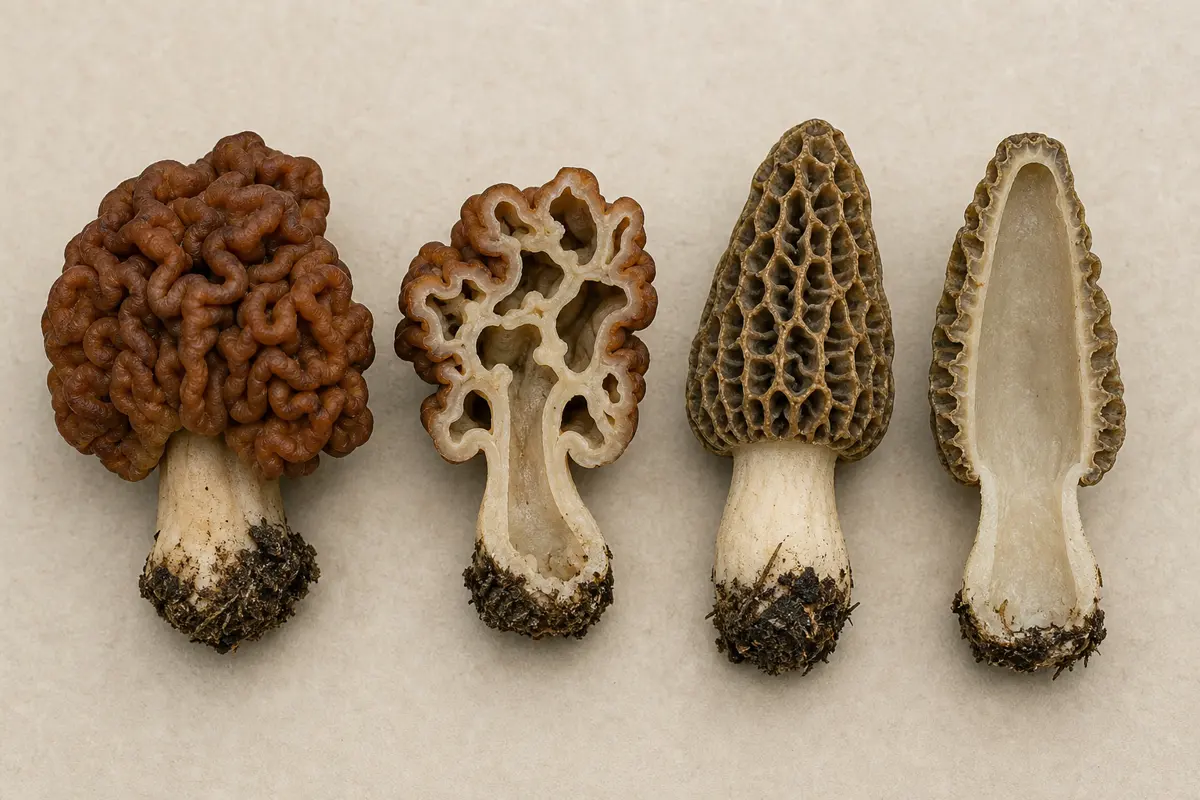
Gyromitra esculenta and some related false morels have the closest link to gyromitrin. Whether a mushroom holds the toxin, and how much, shifts with region, species, age, drying, storage, and the single mushroom. That uneven spread makes any one basket hard to judge.
- Cap
- Often wrinkled, folded, lobed, or brainlike rather than evenly pitted
- Interior
- Chambers or cottony tissue may occur, depending on species and maturity
- Attachment
- Cap-to-stem structure varies and must be examined through a full specimen
- Evidence
- Habitat, substrate, season, spore characters, and microscopy may be needed
The broad false morel group includes fungi that look alike at a glance. So a name taken from one cap photo is not a toxin test. Sorting them out still takes the whole mushroom and local expertise. True morels usually have a pitted, honeycomb-like cap and a typical cap attachment. Even so, the rule that hollow means safe can fail on a damaged, young, or misread mushroom.
Knowing what the inside of each cap looks like when you slice it is useful before a meal, but it gives no permission to taste an uncertain find. If you ate false morels before and stayed well, that proves only that no known poisoning followed that one meal. It cannot measure the toxin in a new batch. Nor can it account for a different portion, cooking method, diner, or amount of steam. With that much variation, family tradition and repeat experience cannot prove any reliable detox method.
What causes gyromitrin poisoning?
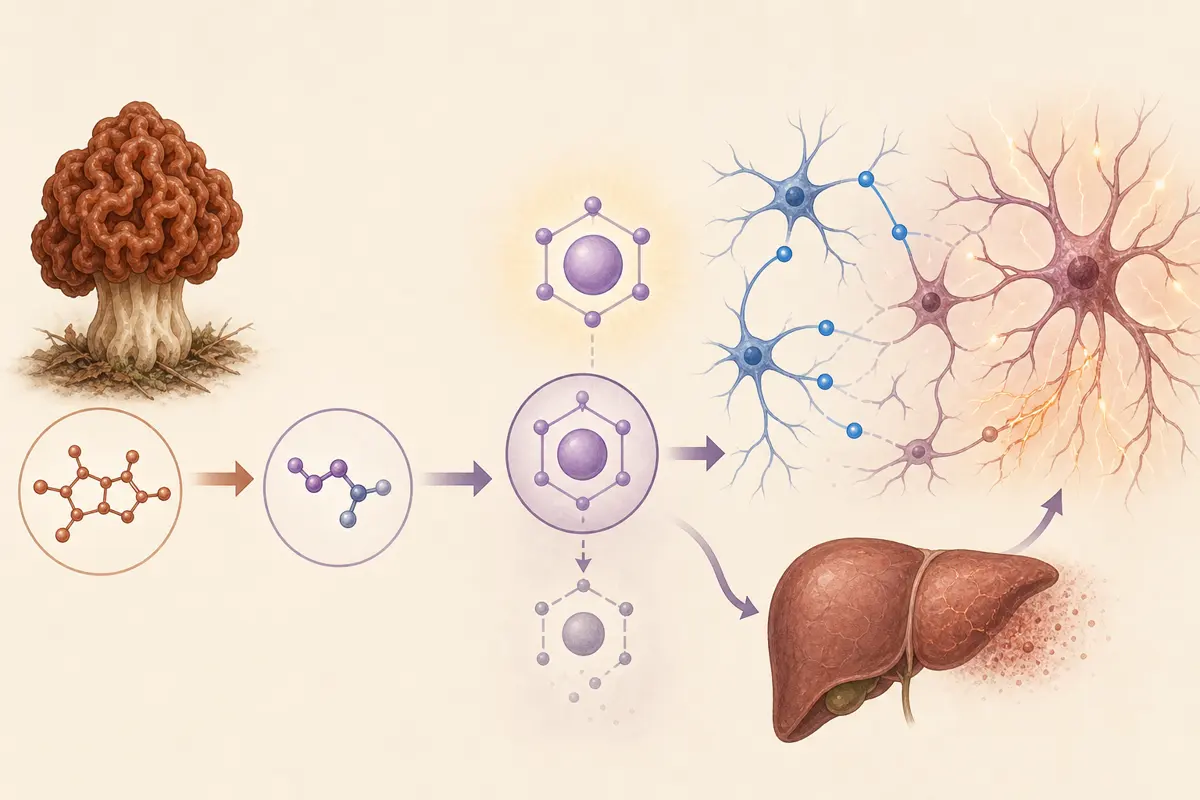
Gyromitrin can break down into monomethylhydrazine, or MMH. MMH is a volatile hydrazine compound, related to chemicals used in rocket propellants. That link describes the chemistry, not the dose or outcome of one meal.
The vitamin B6 pathway ties the chemistry to treatment. When calming GABA signals fall, the brain grows more prone to uncontrolled electrical activity. That does not mean you should swallow vitamin tablets from the cupboard. Hospital treatment relies on a clinical exam, the right form of the drug, dosing under watch, and seizure support.
The liver also processes the toxin and may suffer oxidative injury. So a person's brain symptoms can improve while liver tests still need watching. Someone else may have mainly stomach illness and no seizure at all. The mechanism lists possible harms, and no single patient goes through every one.
Severe cases can also bring low blood sugar and acid-base disturbance. Those changes can worsen weakness, confusion, and seizure risk. Doctors measure them directly, since the patient's looks cannot show them.
The symptom clock, phase by phase
Illness often starts hours after the exposure, but published cases do not follow one exact clock. Dose, route, food, cooking, and each person's metabolism can shift the order.
| Phase | Possible findings | What changes the response |
|---|---|---|
| Silent interval | No symptoms after the meal or kitchen exposure | Preserve the history rather than declaring the mushroom safe |
| Early illness | Nausea, vomiting, diarrhea, abdominal pain, headache, dizziness, weakness | Call the poison center and assess hydration and alertness |
| Neurological escalation | Confusion, agitation, tremor, poor coordination, seizure, coma | Emergency airway and seizure care |
| Organ and metabolic injury | Abnormal glucose, acid-base disturbance, rising liver tests, jaundice | Serial laboratory monitoring and critical care when severe |
Over many years, a Michigan case series recorded harm ranging from stomach illness to nerve effects and liver injury. Stomach symptoms can lead at first. Yet their severity does not reliably predict whether brain or liver problems will follow. The care team keeps watching the patient's course and the meal details. When vomiting eases, the quiet spell that follows is no proof the toxin has finished its work.
Very early symptoms, or a much longer delay, may point elsewhere. Food poisoning, a pesticide, a medicine, another mushroom toxin, or a mixed exposure can all fit. Amatoxin poisoning follows a different delayed liver-failure pattern, but an unknown mixed basket can blur the line. Food infection, gastroenteritis, carbon monoxide, and other mushroom syndromes can also overlap with part of the picture.
Doctors test these options with the cooking history, the shared exposure pattern, and a nerve exam. Lab trends and kept mushrooms add more. Cap shape alone is never enough.
Each sick person needs their own check. One cook may breathe steam, one diner may eat a portion with more toxin, and another may stay well. Group averages can hide the one person whose blood sugar, liver function, or level of alertness is getting worse.
Timing tells the most about people who did not eat. If someone who only stood near the boiling pot falls ill, that points to the steam as a route. It also changes who else needs a check. Still, it cannot measure the inhaled dose or prove that every diner's illness has the same cause.
SafetyCoprine Mushroom Alcohol Reaction: Symptoms and When to ActBoiling, drying and the vapor problem
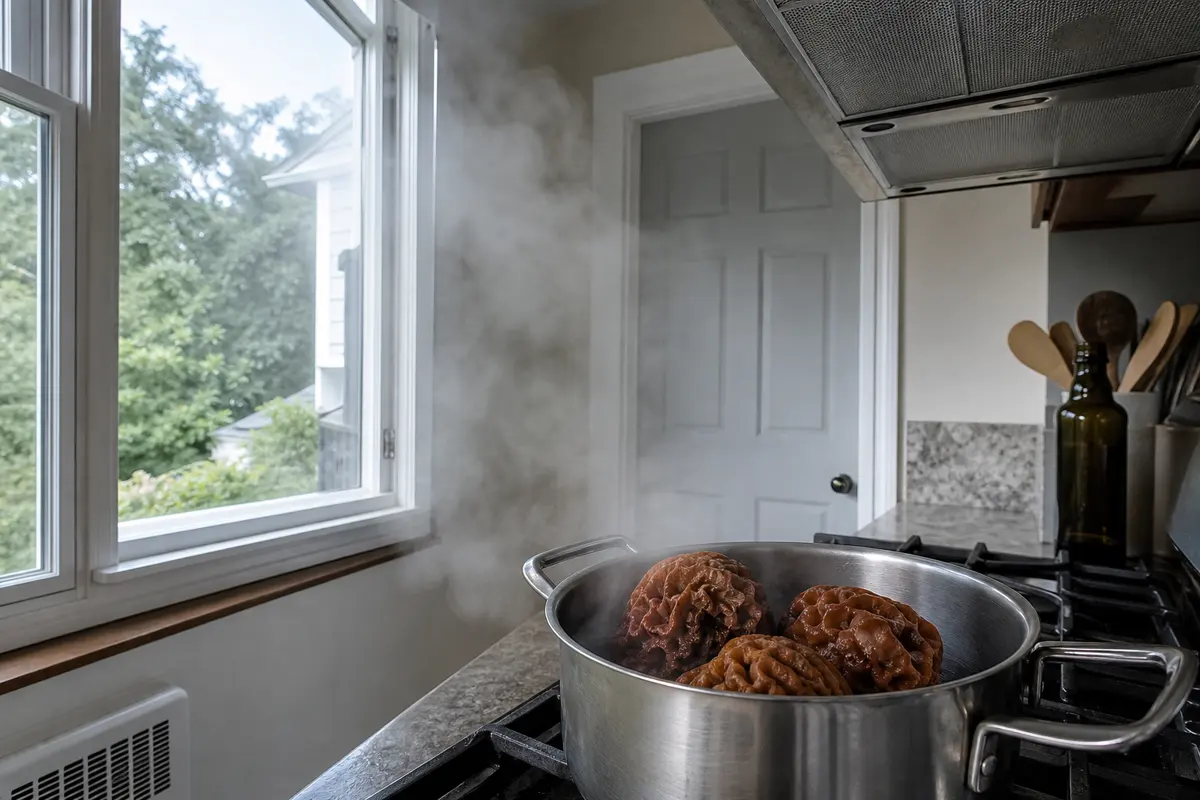
MMH is volatile, so heat can move some of it out of the mushroom into the air and the cooking water. People sometimes turn that fact into a promise that home cooking removes the toxin. The evidence cannot back that promise.
Warning
Do not boil, rinse, dry, or keep cooking an unidentified false morel as a safety test. The steam can expose people nearby. The poured-off water can create another hazard, and nobody measures the toxin left in the food.
Boiling shifts the exposure without making the food safe. Airflow, mushroom size, chopping, heat, time, water volume, repeat heating, storage, and starting toxin level all vary. Traditional methods may lower the toxin in some cases. Even then, they cannot make every species, batch, kitchen, or diner safe in a way anyone can predict.
Drying carries the same doubt. Some volatile material may leave, yet nobody at home can measure the toxin left behind or the risk from later handling. Soaking or cooking dried false morels can release steam all over again.
Smell and taste cannot reveal the dose that remains. If you suspect a toxic batch, stop cooking it and prevent further exposure. Save the evidence if you can do so safely, and call the poison center. Do not ask another person or a pet to test the batch.
What doctors test and monitor
Emergency checks begin with the airway, breathing, blood flow, and temperature. Staff also check oxygen, mental state, and blood sugar. Repeat nerve exams catch a patient sliding from weakness or dizziness toward agitation or seizure. Blood work may cover electrolytes, kidney function, glucose, acid-base status, blood count, and liver markers. Doctors may repeat aminotransferases, bilirubin, clotting tests, and glucose, because liver injury may develop after the first sample.
Normal results describe only the moment of the blood draw. If the lab drew them too early, or while symptoms were still changing, they do not cancel a real exposure. Trends show whether body-chemistry stress and liver injury are easing, holding steady, or getting worse.
Clotting tests add what liver enzymes alone cannot show. Rising enzymes mean liver cells have taken damage. Poor clotting, low glucose, jaundice, or a change in mental state can mean the liver is losing function. That difference tells doctors when routine watching must step up to intensive support or a specialist.
Doctors may add an electrocardiogram and constant monitoring. They do this when severe vomiting, salt shifts, low alertness, or treatment could affect heart rhythm. Urine output and fluid balance show whether dehydration or organ trouble is building. Every change in alertness or nerve signs gets a time beside it. The team can then compare speech, coordination, tremor, seizures, temperature, glucose, and treatment response on one timeline.
Low glucose can worsen confusion or seizure risk and may need fixing right away. One corrected reading still does not close the poison workup. Repeat results show whether the problem returns while vomiting, poor eating, or liver trouble goes on.
Acid-base results give another view of stress on the body. Acidosis that lasts after blood flow and seizures are under control can signal ongoing trouble. Improvement backs the plan of care. Doctors read that trend beside breathing, perfusion, salts, temperature, kidney function, and the exposure history.
The exposure history also sorts the people who shared the meal by portion and symptom clock. Someone well who ate less and a sick cook who only breathed steam answer different questions. Those separate records give the mushroom identifier and poison team a clearer picture of the batch. Neither person works as a simple control.
Identification supports stabilizing the patient but never delays it. Doctors may call a medical toxicologist, the poison center, and a mushroom identifier while they treat the illness in front of them. No routine rapid bedside test exists for gyromitrin or MMH. That leaves the history and the course of illness to carry much of the weight.
SafetyGastrointestinal Mushroom Poisoning: Timing and CareHospital treatment for seizures and liver risk
Supportive care for Gyromitra exposure first protects the airway, oxygen, blood flow, glucose, and temperature. The patient's exam and lab results then shape the rest. That can mean an IV line, fluids picked with care, salt correction, anti-nausea drugs, and breathing support.
Seizures need medical control right away. Doctors use standard seizure care and may give pyridoxine, because the toxin disrupts calming brain signals that depend on vitamin B6. The form, route, dose, repeat doses, and monitoring belong to emergency and toxicology staff, not to a home plan. Pyridoxine is a targeted step and does not replace the broader hospital care for mushroom poisoning.
After a long seizure, the patient may need airway protection, temperature control, repeat glucose and acid-base checks, and close monitoring. Repeated convulsions can create heat, acid, and muscle breakdown. Those add kidney and blood-flow stress beyond the toxin itself. Liver damage can call for more critical care and a specialist. Hospital monitoring separates these knock-on effects from the direct gyromitrin effects and treats both.
Activated charcoal or other decontamination is a poison specialist's call. It depends on timing, how awake the person is, vomiting, and the risk of aspiration. Nobody should improvise it after a seizure or in someone who cannot protect their airway.
Seizures that settle after one medicine still cannot identify the mushroom. Other poisonings can cause seizures too. Mixed baskets can also add delayed risks after the seizures stop. The team keeps working through the whole case even when the most visible symptom improves.

Kitchen evidence and the road to recovery
Bring raw mushrooms, cooked leftovers, dried pieces, packaging, photos, and the recipe or cooking steps. Say whether anyone tasted a raw piece, ate leftovers on another day, or handled dried mushrooms. Also report whether you used windows or exhaust fans, who came into the kitchen during heating, and how long each person stayed. Keep food and field finds in separate labeled containers.
Build a separate exposure line for each diner and each person who stayed near the stove. Record the portion, cooking method, meal time, and first symptom. Note whether the person ate the solids, drank cooking liquid, or only breathed steam from the pot. Even a cook who ate nothing may point to an inhaled route, while a diner who stayed well does not prove the batch was safe. Portions can hold different amounts of toxin, and people may have spent very different lengths of time in the kitchen.
Compare the timelines before you merge them into one household story. Similar illness after a shared dish points to a common meal. Earlier symptoms in the cook, or illness in someone who tasted only broth, can change which food and which cooking step deserve the closest look. The cooking details then show whether the shared exposure came from food, steam, or both.
Your cooking record should name each boil, water change, drying period, reheating step, and airflow condition. It should not treat any step as detox. Investigators need those details to rebuild the exposure, not to approve the recipe for later.
List medicines and alcohol beside the food record, too. Sedatives, stimulants, diabetes drugs, and other exposures can change mental state, glucose, or seizure risk. With that list, doctors can sort out competing causes while they keep repeating nerve and liver checks.
Leftovers can start a later exposure clock. Ask whether anyone fell ill after handling leftovers on another day. Eating leftovers later starts a second onset clock, so doctors should not force every symptom onto the first serving.
Photograph the cap surface, underside, full stem, a lengthwise cut, what it grew on, and nearby trees, without delaying care. The cut face can preserve details that collapse when a mushroom dries.
Recovery varies with dose and severity. Many reported cases clear up after stomach illness and supportive care. Severe cases can involve seizures, coma, liver failure, or death. Published case series cannot predict how any one patient will do.
How long vomiting lasts is not the only sign of recovery. Doctors also look for a patient who stays awake and clear, with no repeat seizure, glucose and acid-base balance back to normal, and enough fluids. They want a liver trend that no longer points to progression. That wider endpoint keeps a quieter problem from slipping past once nausea improves. Discharge depends on stable nerve status, hydration, lab results, and a suitable period of liver checks.
After someone leaves care, new confusion, repeat vomiting, seizure, jaundice, dark urine, unusual bleeding, or severe weakness needs a prompt recheck. Keep the meal history in the record even after symptoms improve. It lets later doctors read delayed liver tests. It also alerts public-health or poison specialists when several people shared the same batch.
Keeping false morels out of the kitchen
Do not serve a wrinkled spring mushroom until a qualified local process has identified every specimen from its whole anatomy. Sort the mushrooms one by one, and never call a whole basket safe from the best-looking cap. Keeping suspected Gyromitra out of the kitchen prevents both eating exposure and strong cooking steam. Children, guests, and pets should stay out of any kitchen where someone is preparing an uncertain mushroom.
Telling true and false morels apart takes several features together: cap texture, attachment, inner structure, stem, habitat, and season. Reject a mushroom when one important feature conflicts, even if the rest of the batch seems familiar. Compare whole mushrooms, not loose cap photos. Cutting one lengthwise shows the attachment and inner structure, while the uncut ones keep their features for an identifier. Never taste the cut one.
Keep one whole uncooked example of each wild species you serve, labeled with date and place. That small habit saves evidence without asking anyone to repeat the exposure.
Warning
No home boiling or drying routine can measure the toxin left in a false morel. The reliable safe choice is to keep any uncertain or gyromitrin-linked mushroom out of food preparation.
Sources3
- A 19-Year Assessment of Gyromitrin-Containing Mushroom Poisonings in Michigan Michigan poison center 2002-2020: 118 cases; GI symptoms most common, neurological and liver injury less often; supportive care; pyridoxine in seven
- The Most Dreadful Mushroom Toxins: A Review Gyromitrin converts to MFH and MMH; inhaling cooking vapor can poison; boiling or long drying only partly reduces toxicity; pyridoxine for severe CNS toxicity
- Gyromitra Mushroom Toxicity, StatPearls Supportive care for Gyromitra exposure (page behind reCAPTCHA this pass; not reopened)
Frequently Asked Questions
What mushrooms cause gyromitrin poisoning?
Gyromitra esculenta and some related false morels have the closest link to gyromitrin. How much toxin they hold varies by species and from mushroom to mushroom.
Can false-morel cooking vapor make someone sick?
Yes. Heat can release volatile monomethylhydrazine into kitchen air. Even a cook who never eats the mushrooms can take in the toxin by breathing that vapor.
What are the main gyromitrin symptoms?
Early signs include nausea, vomiting, belly pain, headache, and dizziness. Confusion, tremor, seizures, metabolic disturbance, and liver injury can follow.
Does boiling make false morels safe?
No home boiling or drying routine can tell you how much toxin stays in the food. Heat can also move the toxin into the steam and the cooking water.
How do hospitals treat gyromitrin poisoning?
Care supports breathing, blood flow, blood sugar, fluids, and the liver. Doctors may give pyridoxine for severe nerve and brain effects, but it is not a home treatment.