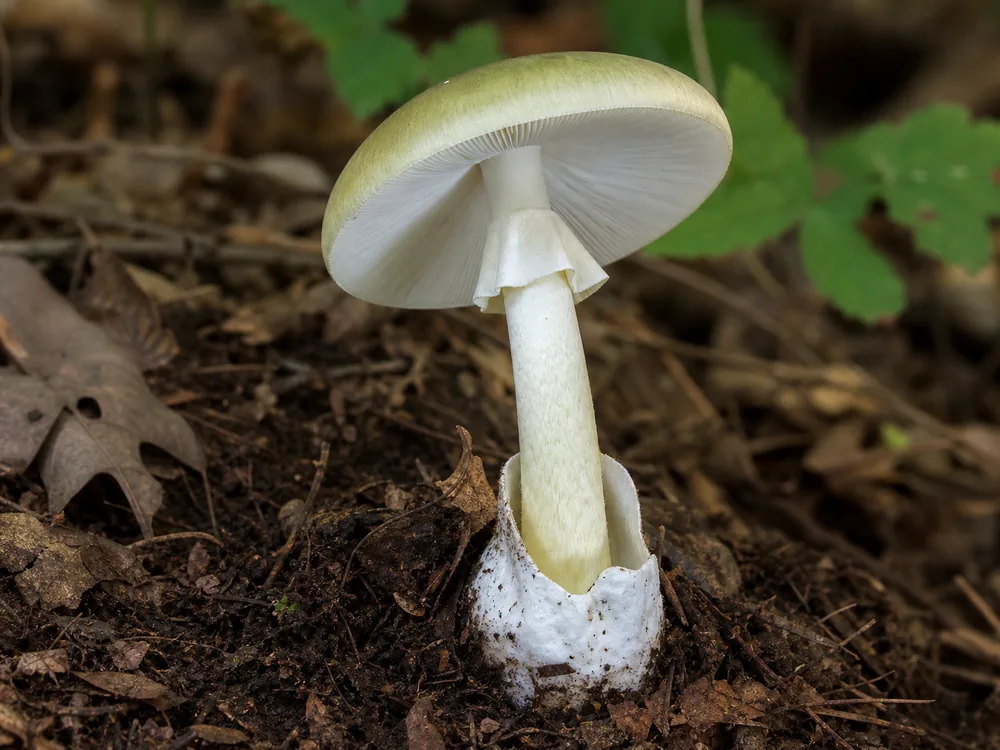
Lookalikes fool people because they share the feature beginners notice first. The safe split usually comes from the underside, base, habitat, or interior cut.
Why lookalikes fool people
Dangerous lookalikes copy the trait beginners notice first, including orange color, honeycomb texture, white gills, or a market-style silhouette.
The safer question is different. Ask which hidden feature would prove the ID wrong, then look for that feature before you think about cooking.
A good lookalike check uses a short list of stop features that you can see, cut, smell, or trace to habitat.
Which pairs deserve priority?
Learn the pairs that combine a popular edible with a mushroom that can make you seriously ill. These are the mistakes a beginner is most likely to rationalize.
| Pair | The tempting edible | The danger signal |
|---|---|---|
| Chanterelle vs Jack O'Lantern | Golden chanterelle | True gills and clustered wood growth point to Jack O'Lantern |
| False morel vs true morel | Spring morel | A chambered or cottony interior is not a true morel |
| Edible white mushrooms vs death cap | Grocery-style white mushrooms | White gills, ring, and cup-like base can mean death cap |
| Oyster lookalikes | Store-style oyster mushrooms | Tough texture, odd odor, or wrong habitat should stop the pick |
Field checks that catch mistakes
Use checks that force you to handle the whole mushroom.
A lookalike often survives a photo test but fails when you inspect the base, cut the stem, or ask what it was growing from.
- Turn the mushroom over before judging color.
- Trace the stem to the base.
- Cut morels lengthwise before cleaning.
- Check whether it grew from soil, wood, mulch, or a buried root.
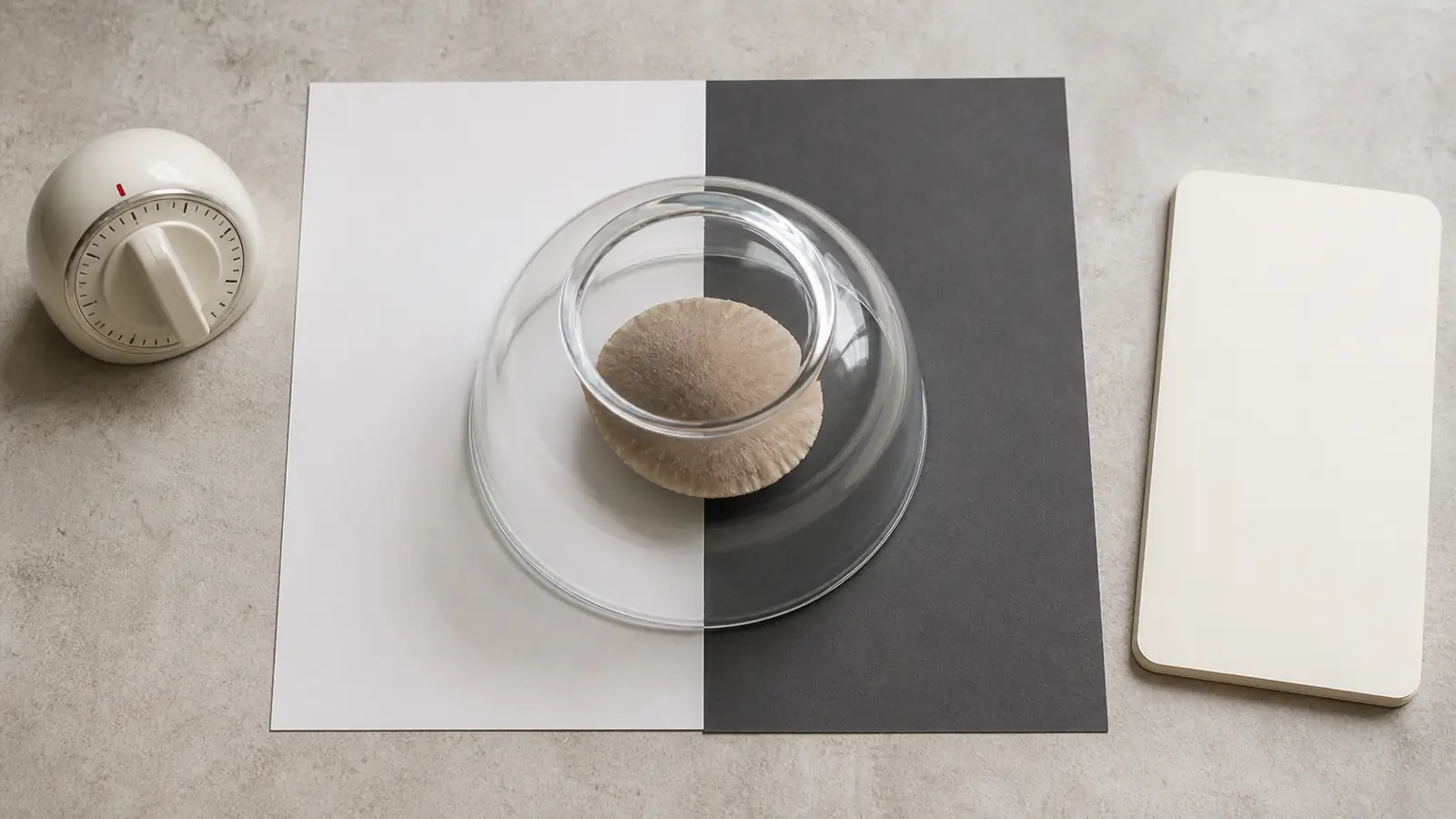
- Make a spore print when spore color changes the ID.
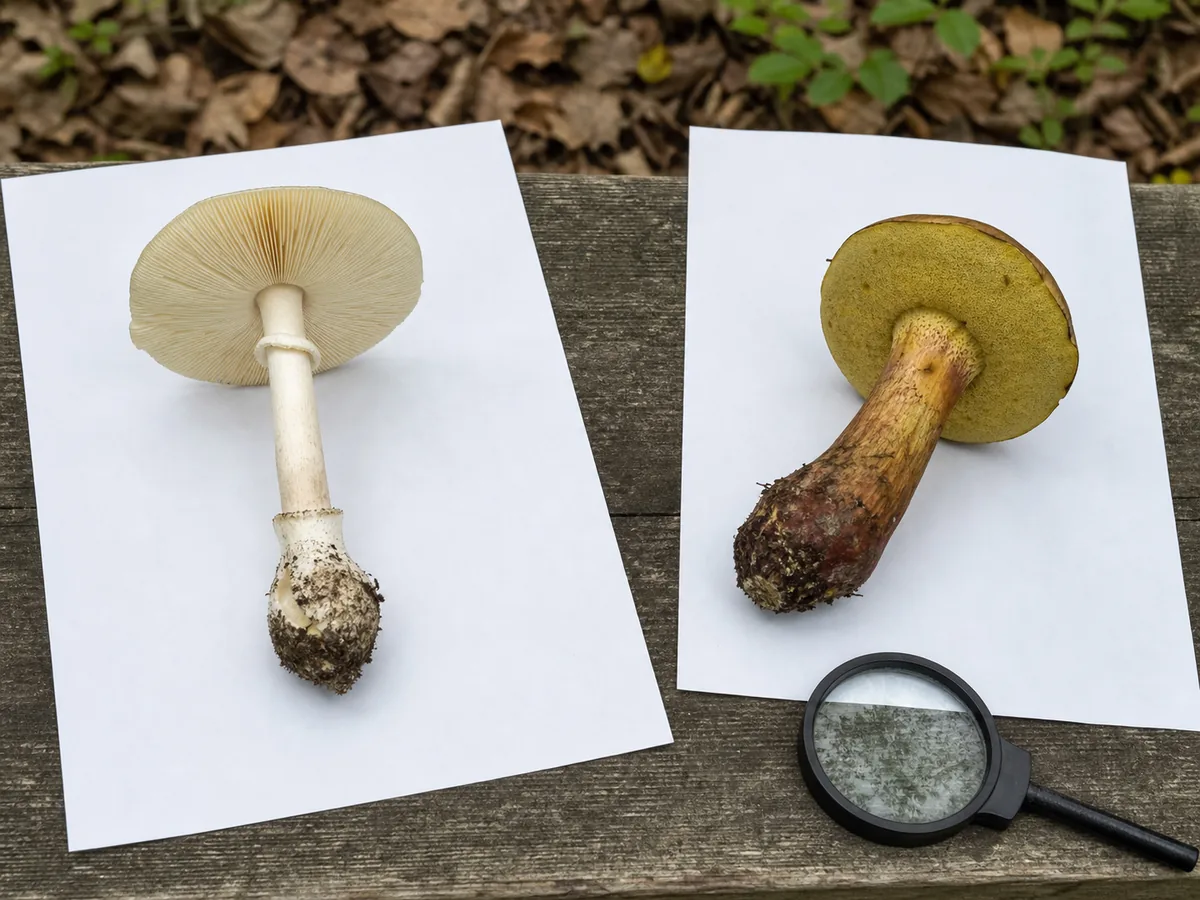
Familiarity is its own trap, because looking like a shop mushroom is not a test a wild specimen can pass.
Warning
Do not eat a wild mushroom because it resembles a grocery mushroom. Store mushrooms are controlled food crops and wild lookalikes are not.
What stop signs mean throw it out?
Stop when the evidence does not line up. A chanterelle that grows in a fused orange clump, a morel that is not hollow, or a white-gilled mushroom with a buried cup does not deserve another argument.
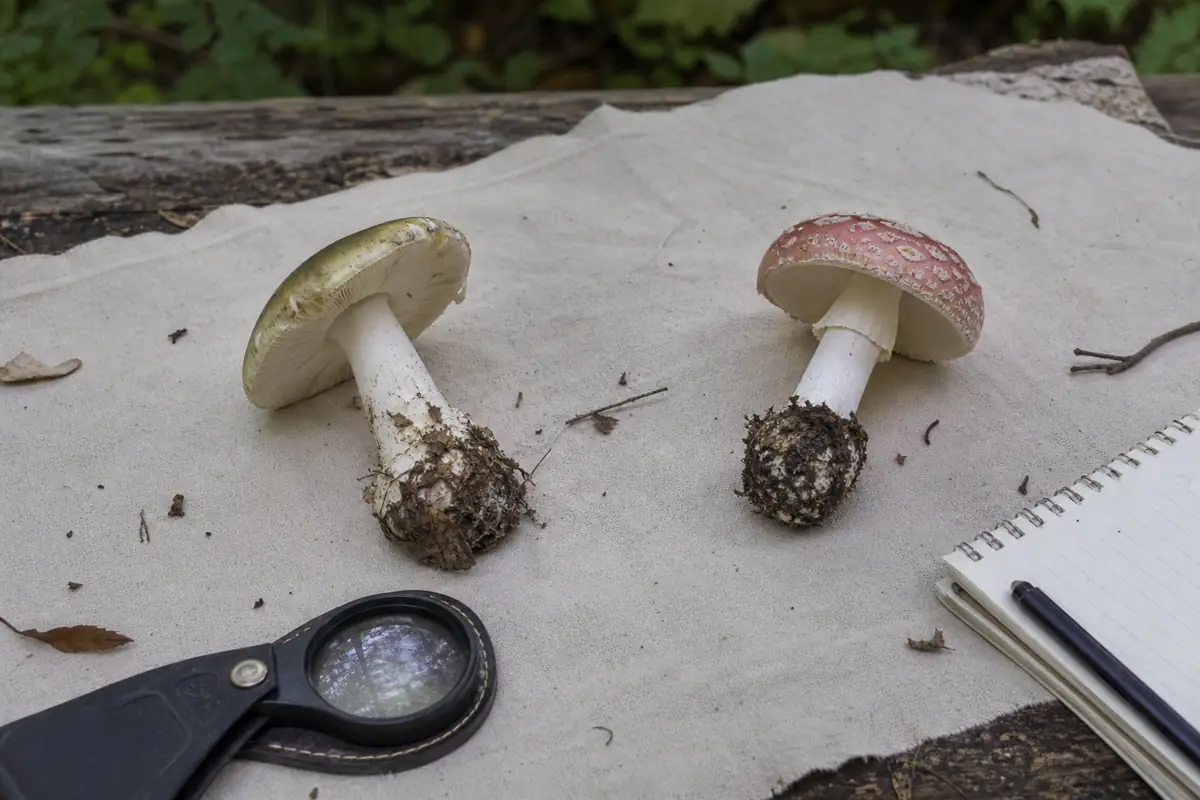
A missing base can stop an identification when the species group is defined by a buried cup, bulb, or rooting structure, especially after rain or handling leaves a detached volva behind in wet soil or leaf litter.
Safety guideForaging Safety Rules That Keep Wild Mushrooms Off Your PlateChanterelle or Jack O'Lantern?
Chanterelles have blunt, forked false gills that look more like ridges than blades. They usually grow from soil near trees, not in dense fused clusters from wood.
Jack O'Lanterns are orange, clustered, and wood-associated. Their true gills are sharper and more blade-like.
Color is the trap because underside structure and growth habit decide the chanterelle and Jack O'Lantern split.
True morel or false morel?
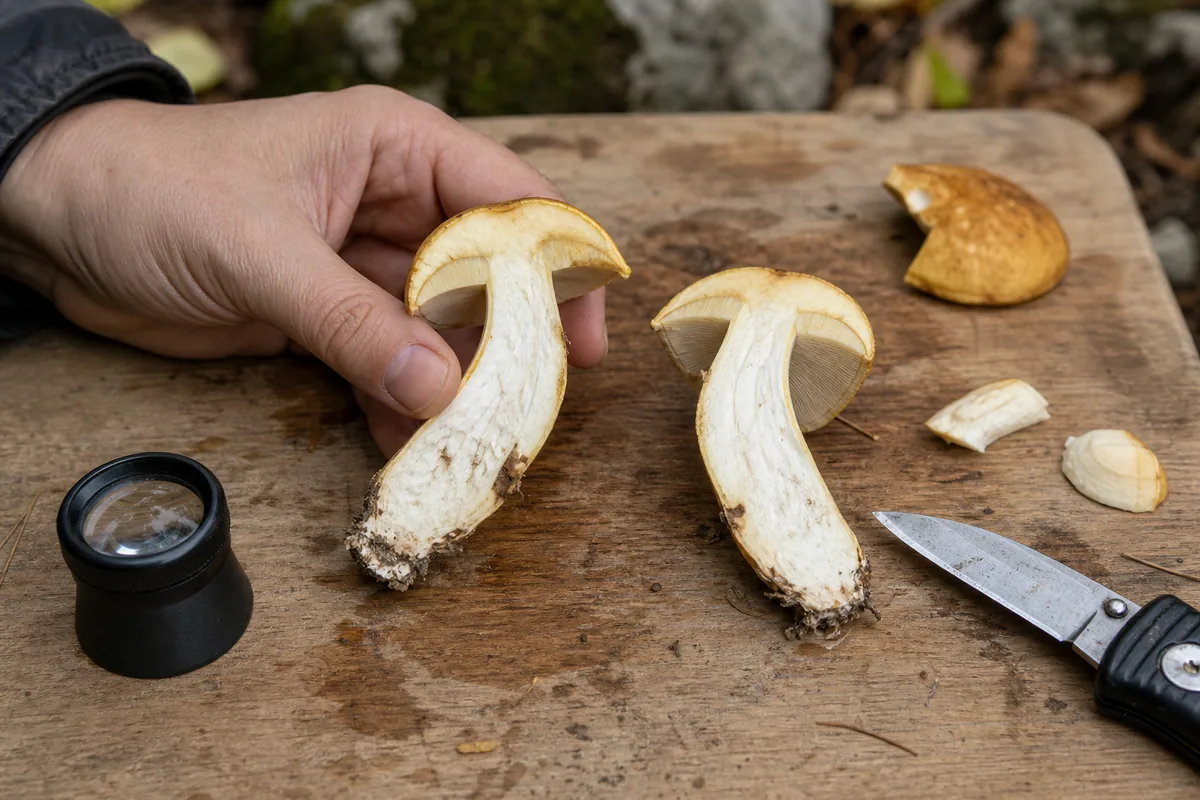
A true morel has one hollow chamber from cap to stem. The cap is attached to the stem, and the surface has pits and ridges rather than loose folds.
A false morel can look wrinkled and spring-like from above, but its cottony, chambered, folded, or irregular interior stops the meal. A true morel opens into one continuous hollow chamber from cap to stem.
White gills, ring, and cup
White-gilled mushrooms with a ring and cup-like base deserve extreme caution. That feature set belongs near deadly Amanitas in the decision tree.
Death cap risk is not solved by smell, taste, cooking, or a familiar cap shape, so study the poisonous mushrooms group before handling unknown white-gilled species.
The whole base matters because a mushroom cut at ground level can lose the feature that would have stopped the identification.
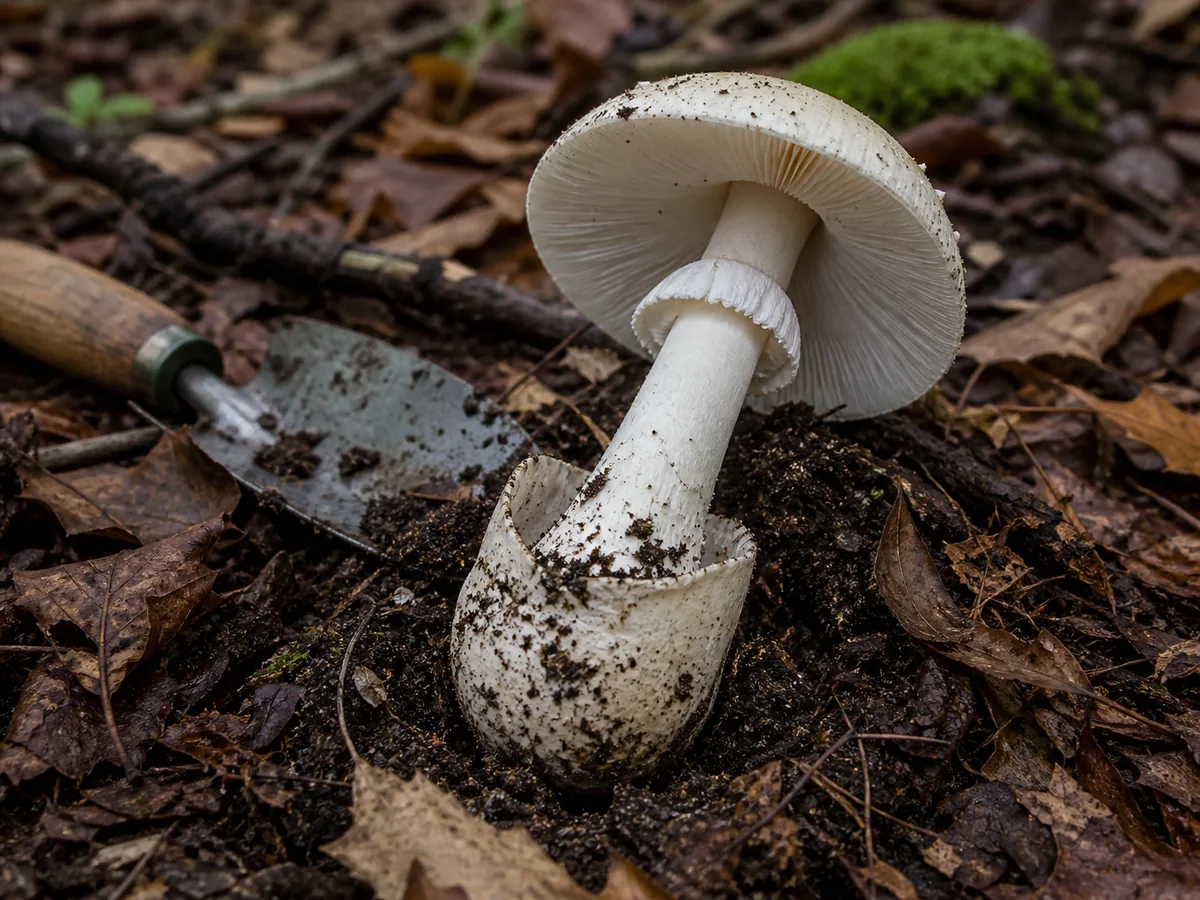
Why small brown wood mushrooms need a stricter check
Small brown mushrooms on a log can share cap color, size, rings, and clustered growth while belonging to species with very different risks. The edible-looking cluster is only a starting point because buried wood can make a mushroom appear to grow from soil.
Preserve the entire stem and photograph the attachment point before separating the cluster. Ring position, fibers below the ring, cap scales, odor, and the exact wood all become harder to recover after cleaning.
A deadly Galerina profile belongs in this comparison because Galerina marginata can fruit on decaying wood near edible honey mushrooms and other small brown species. Its rusty-brown spores and amatoxin risk make a casual cluster-level identification unsafe.
Take a spore print from each candidate when color can separate the groups because honey mushrooms generally print white and deadly Galerina prints rusty brown, although the stem, cap, habitat, and regional species list must still agree.
Do not treat one confirmed mushroom as permission for the whole cluster. Mixed fruitings happen on the same log, so every cap entering the basket must share the complete set of field marks.
Oyster-style lookalikes
Oyster mushrooms are usually shelf-like, tender, and wood-growing, with gills running down toward the base. They should smell mild and fresh.
Wrong habitat, tough flesh, odd odor, or unusual color should stop an oyster identification because a store-style silhouette does not make a wild mushroom safe.
Oyster mushroom field marks give the fuller edible pattern, but the field decision still depends on the exact specimen in hand.
IdentificationHow to Take a Spore Print You Can Actually ReadHow mistakes happen
Most mistakes do not feel reckless at the moment. They feel like a small exception.
The mushroom is a little darker, a little clustered, a little old, or a little broken, and the person wants the edible answer to be true. A written stop list helps because you decide danger signs before excitement takes over.
- Orange mushrooms with true gills and wood growth stop the chanterelle ID.
- Morels without one clean hollow chamber stop the morel ID.
- White-gilled mushrooms with a ring and buried cup stop the edible white mushroom ID.
- Any mushroom with a missing base stops IDs where the base matters.
- Any mushroom that needs a story to explain away a warning sign stays out of the pan.
Why local expertise matters
Mushroom risk is local because dangerous lookalikes vary by region, and imported trees can introduce unexpected species into parks, campuses, and yards.
A local mycological club can teach the exact trees, seasons, and lookalikes that matter near you. That context is hard to replace with a national article.
Online references can teach the questions, while local experts test the answers before a wild mushroom becomes food.
Use profiles as detail, not permission
Use this warning map as a set of stop features, not as the final ID. Each pair points toward the feature that usually breaks the confusion, then the species profile gives the fuller description.
Check the species description against all the features you recorded in the field. Chanterelles need false gills, true morels need one hollow interior, and death caps demand a complete stem base rather than a reassuring color or smell.
When a species profile and the mushroom in your hand disagree, the specimen stays out of food.
Study one pair at a time
Do not try to memorize every dangerous mushroom at once. Pick one pair, collect photos, compare specimens when legal, and write down the feature that stops the edible ID.
A good stop feature is visible and testable. True gills versus false gills, hollow versus chambered interior, wood versus soil, and cup-like base versus no cup are stronger than vague color words.
Season and region change the danger map, so beginner foraging mushrooms narrow the first study set while fall mushroom foraging shifts attention toward clustered and wood-growing species without replacing a specimen-level identification.
Cooking guideHow to Cook Morels Safely and Brown Them WellExplain risk out loud
Explain the identification in one clear sentence that names the edible features and the absent danger features. General resemblance is not enough.
That spoken check catches weak identifications because color, size, or general shape alone cannot support a wild mushroom meal.
If the person who picked the mushroom cannot explain the underside, base, habitat, and one dangerous alternative, the mushroom should not be served. Before the next trip, foraging safety rules require you to record the underside, base, habitat, and dangerous alternatives.
Which feature should you trust first?
Trust the feature that is hardest to imitate across the pair. Habitat, underside structure, stem base, and interior cut carry more weight than a shared cap color.
Lookalike work starts with one question, which is the feature that would make the edible identification impossible.
For chanterelles, true gills and wood growth carry more weight than orange color. For morels, the interior carries more weight than the wrinkled cap.
What changes by season?
Season changes the likely mistakes, with morels and false morels meeting in spring, chanterelles and orange lookalikes appearing in wet summer woods, and dense clusters or wood-chip species becoming prominent in fall. These patterns prioritize checks without proving a name.
Season only tells you which dangers deserve extra attention, and it never proves that a mushroom is safe.
Local trees matter too. A mushroom under oak, pine, lawn grass, mulch, or buried wood may belong to a different decision path even when the cap looks familiar.
How should groups study lookalikes?
Study pairs with a shared worksheet. Put the edible traits on one side, the stop traits on the other, then test each fresh specimen against both columns.
Group study helps because one person may notice the underside while another notices habitat. It also slows the social pressure to call a mushroom edible.
If one careful person cannot explain the identification, the group keeps that mushroom out of the pan.
What belongs in a lookalike photo set?
A useful photo set shows the mushroom where it grew, the underside, the stem, the base, and any cut surface. One glamour photo of the cap is weak evidence.
Include a ruler or familiar object in the photo, but do not treat size as an identification feature. Young deadly mushrooms can be small, and old edible mushrooms can be large.
A complete photo set should already show the base and habitat when an expert asks about them.
Which references back up the stop features?
The stop features here follow poisoning guidance from the North American Mycological Association and public safety advice from Poison Control. They both point readers away from taste, smell, and casual resemblance when a dangerous lookalike is possible.
Field guides and local experts still matter because regional species lists change, and the mushroom must fit the local evidence before any meal.