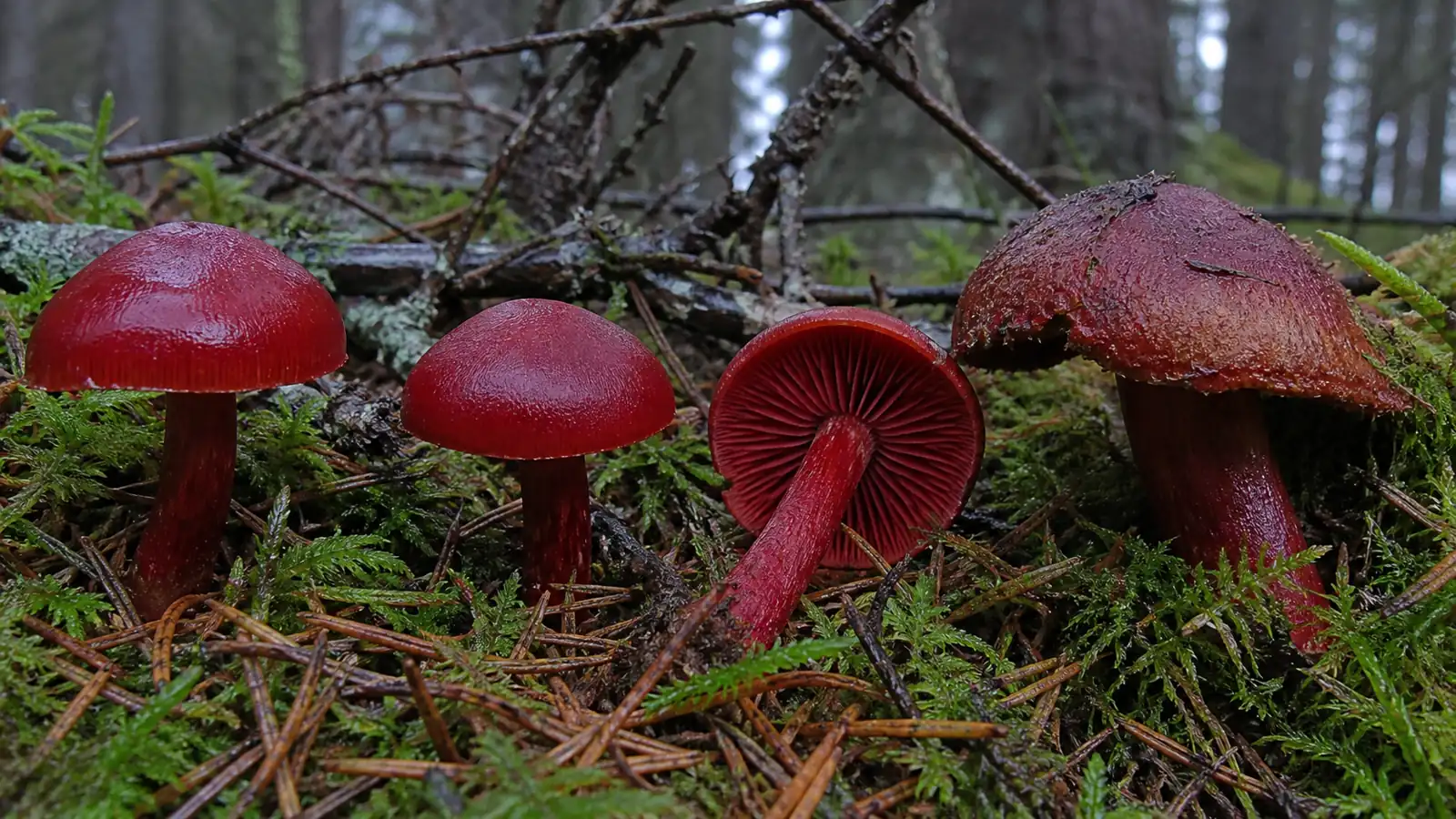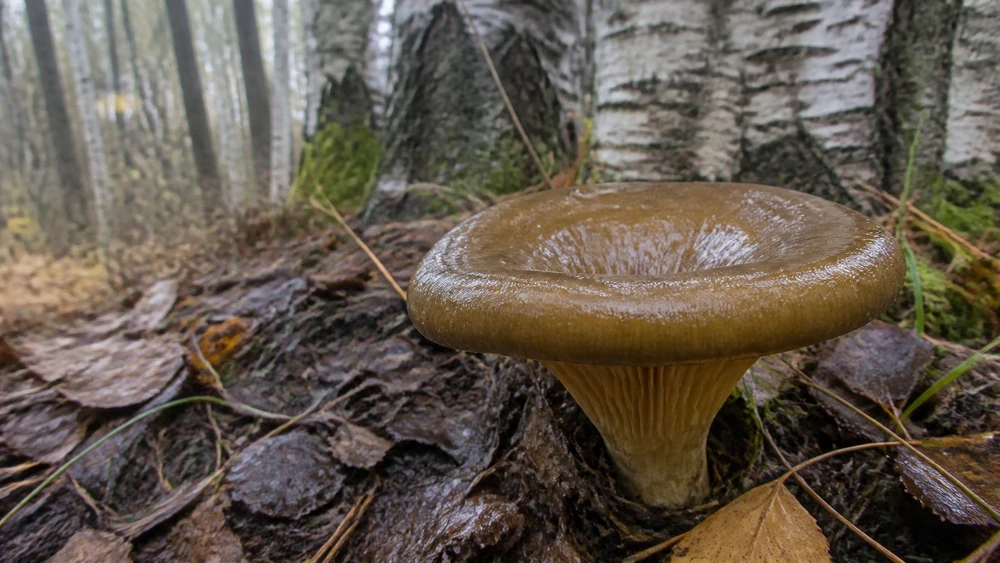
Why Jack O'Lanterns fool chanterelle hunters
A Jack O'Lantern is poisonous and should be treated as an orange-mushroom stop sign. The fast answer is simple. True blade gills plus clustered growth from wood means do not eat it.
The common mistake is not that Jack O'Lanterns perfectly match chanterelles. It is that a forager sees orange caps and starts hoping. A real true chanterelle has blunt ridges, pale flesh, and scattered soil growth near trees.
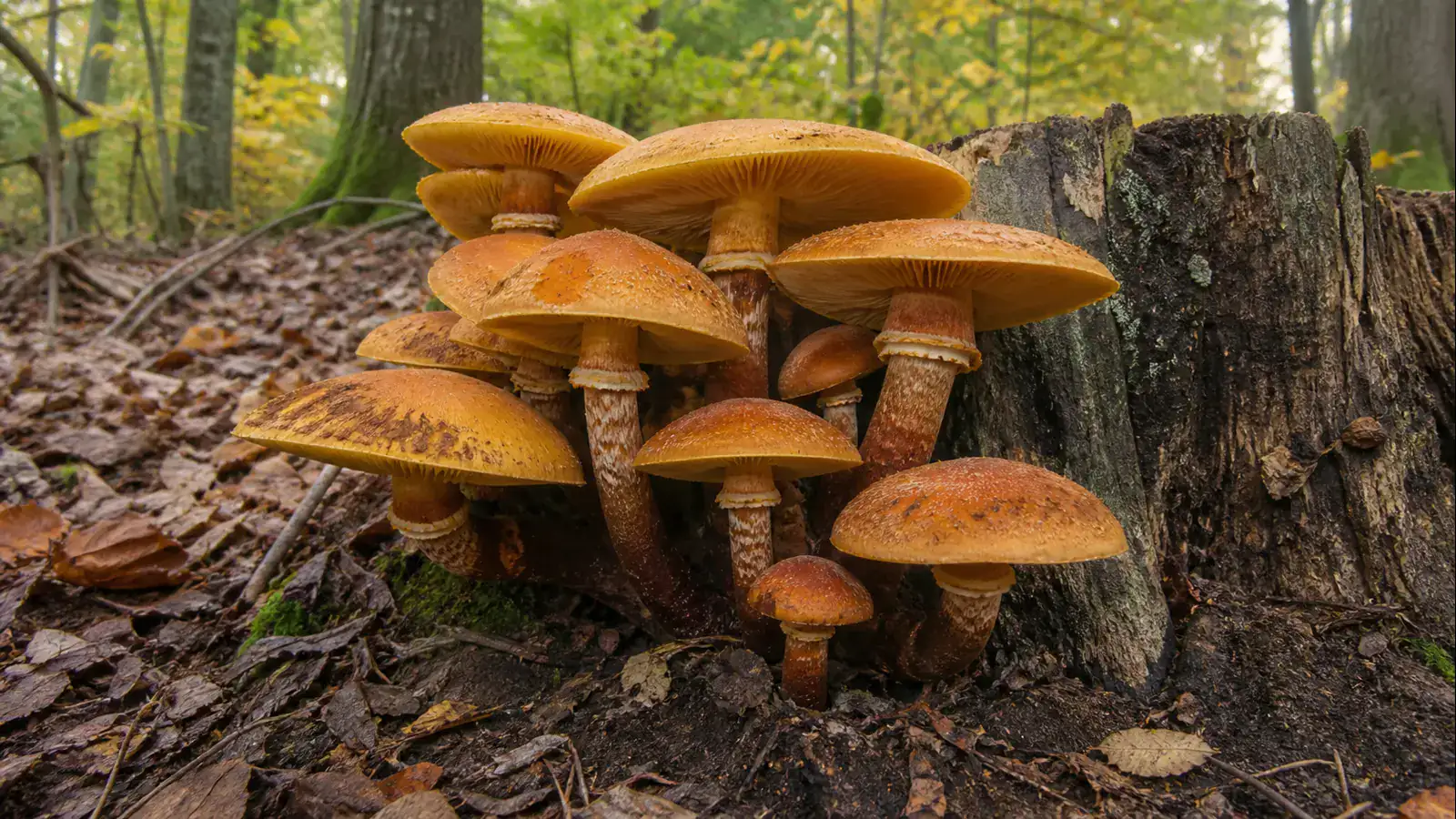
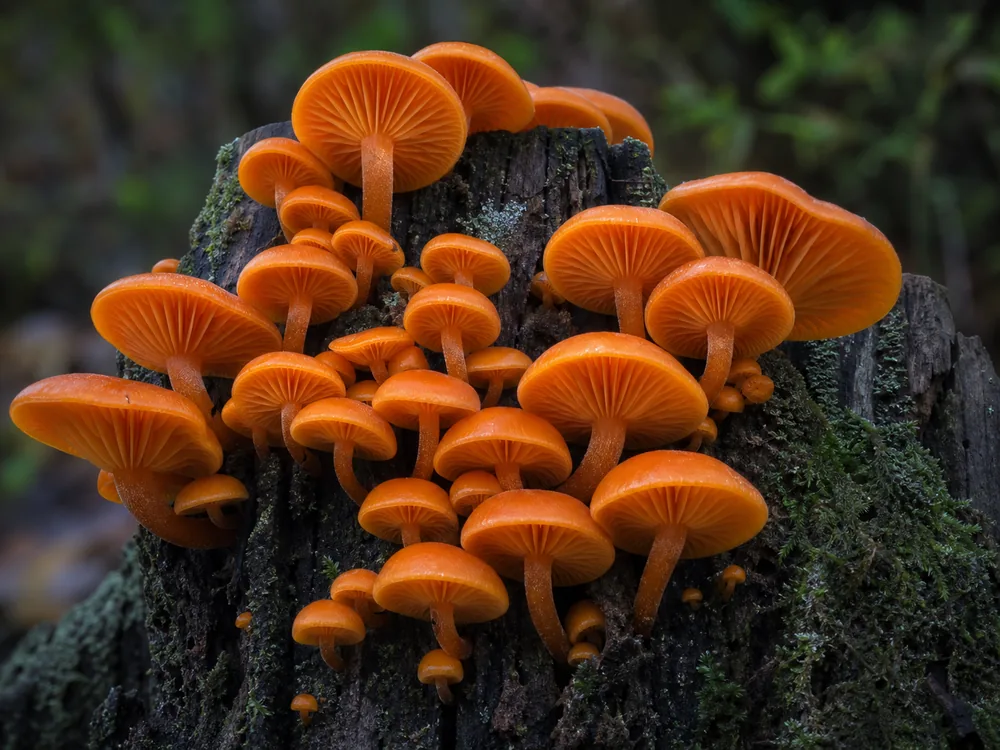
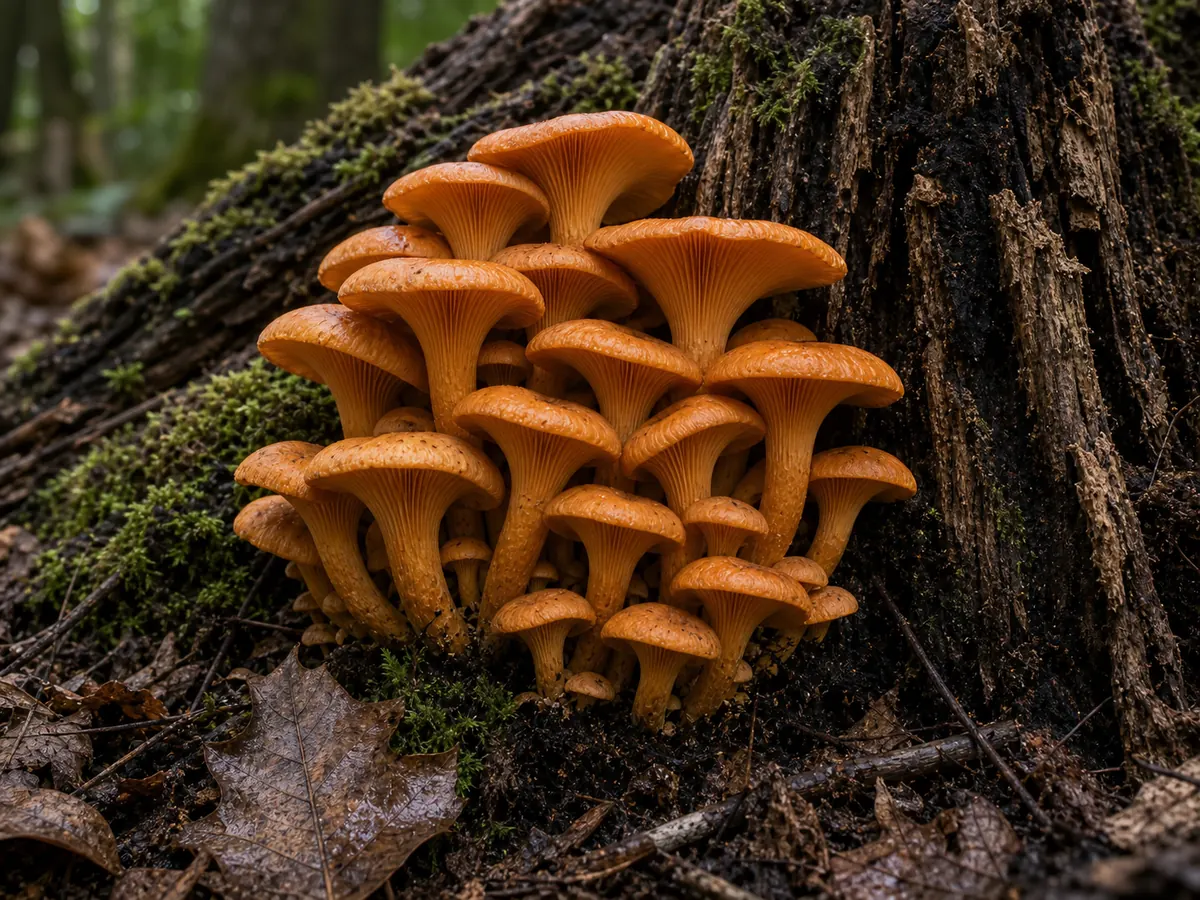
Jack O'Lanterns do the opposite. They grow in tight groups from stumps, dead roots, or buried hardwood, and the underside carries sharp, crowded gills that stay separate like thin blades.
The underside structure decides the meal before cap color does. If the underside or base already points to Jack O'Lantern, the food decision is over.
Poisoning usually means severe stomach illness rather than liver failure, but that does not make it casual. Vomiting, cramps, and diarrhea can start after a meal and can dehydrate a person fast.
If someone ate a suspect orange cluster, mushroom symptom timing matters before anyone searches for a species name. Poison-control first aid is the next step. Save any leftover mushrooms, photos, and meal timing for the poison specialist.
How do you identify a Jack O'Lantern?
Bright orange, 5 to 20 cm, smooth, often in overlapping clusters.
True gills that are thin, sharp, blade-like, and run down the stem. Fresh gills can glow faint green in complete darkness.
Tapering, often fused with neighbors at the base. Flesh is orange throughout.
Orange flesh, no pleasant fruity smell.
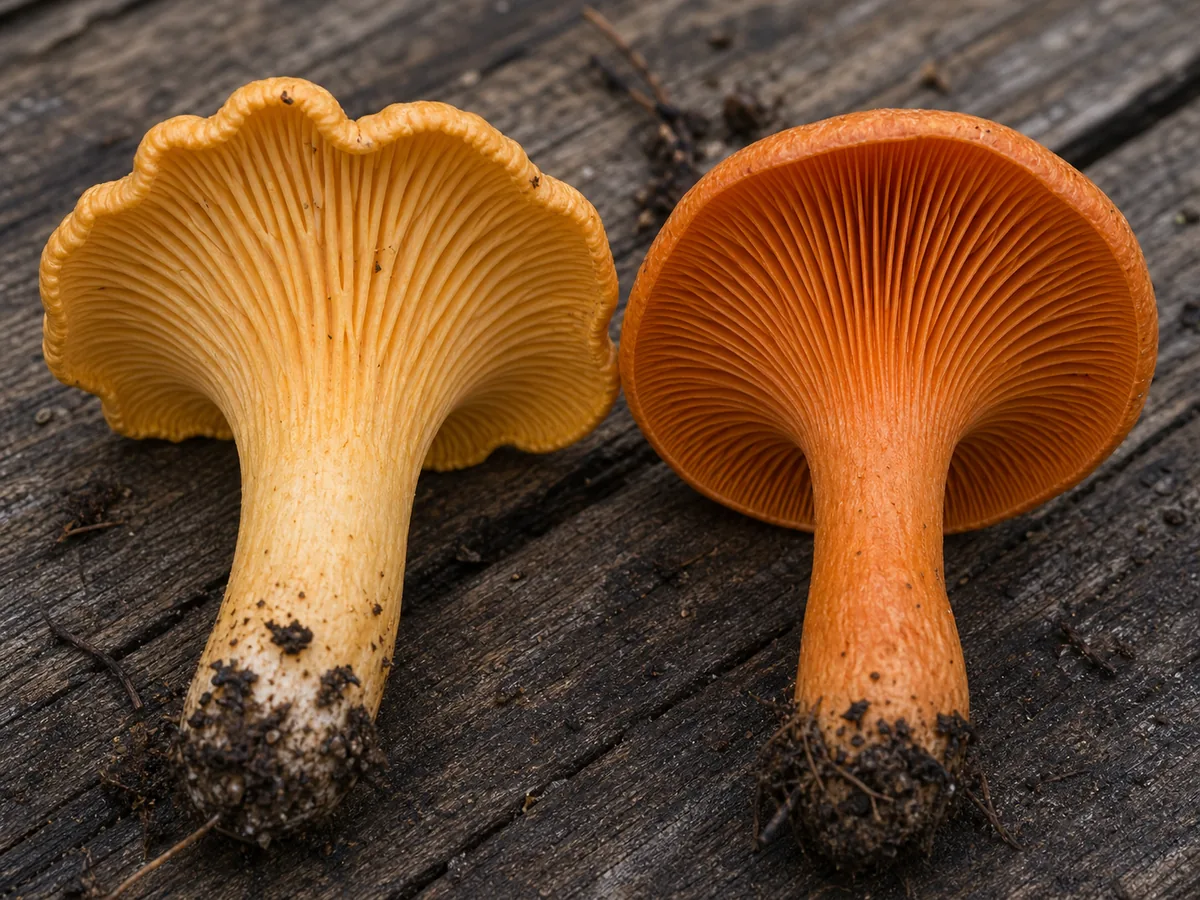
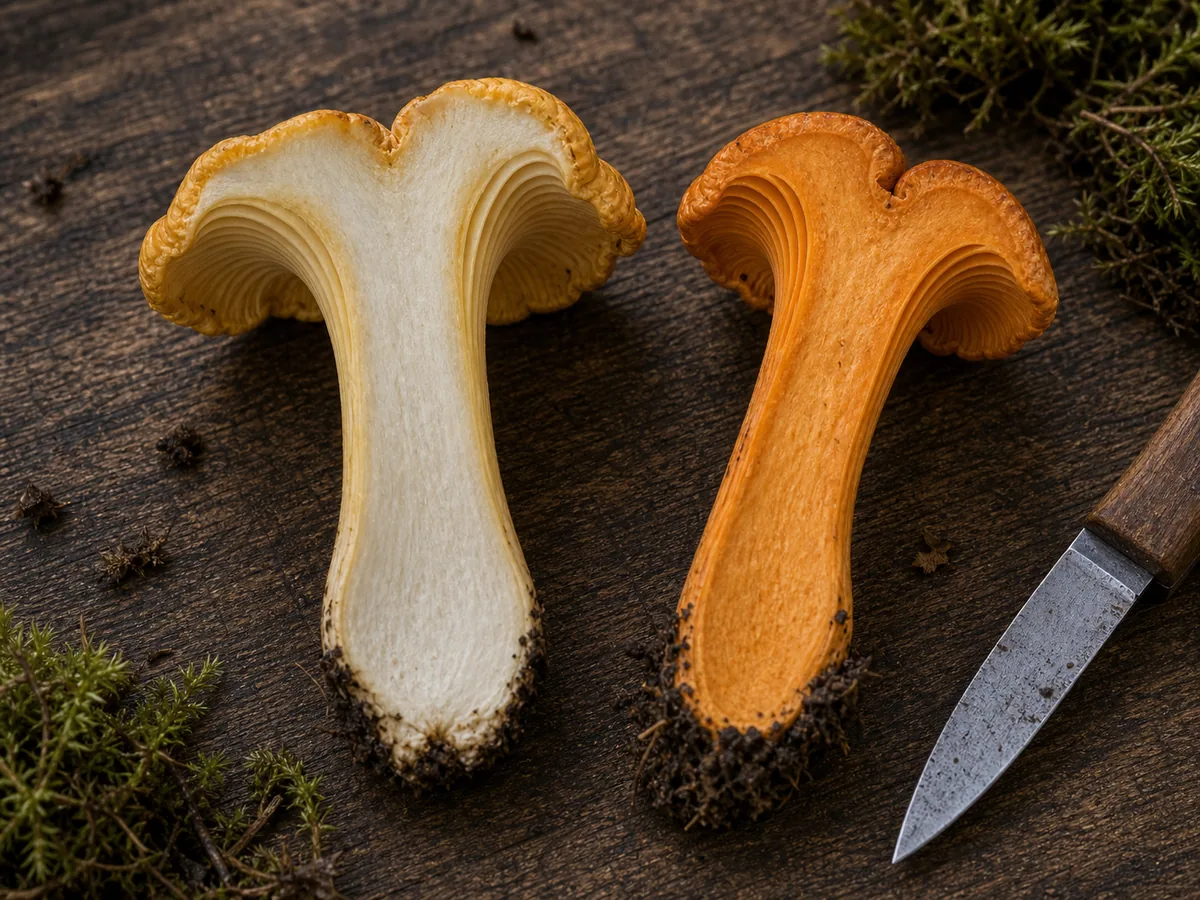
Flip the cap before you admire the color. Jack O'Lantern gills are real blades with clear edges and spaces between them. They often run down the stem, but they still look like separate pages rather than blunt folds in the flesh.
A chanterelle underside is built differently. The ridges look thick, low, and melted into the cap. The dangerous lookalike method starts with structure because orange caps can fool you from above.
Now inspect the base. Jack O'Lanterns often fuse together where they leave wood. A group may appear to grow from soil, but buried roots can be just under the leaf litter.
Cut one open if you are studying it for identification. The flesh is orange or orangish inside, not pale cream. That orange interior is one reason the mushroom looks convincing from above and fails when handled.
Size can support the call. A mature cluster can spread across a stump with overlapping caps, while chanterelles are usually single or scattered. Size alone never clears the mushroom, but a dinner-plate cluster should slow you down.
The faint green glow is real in fresh gills, but it is a poor field test. You need full darkness, fresh tissue, and patience. Use gills, wood, and orange flesh instead.
Use a spore print only after the structural checks. A pale print can support an Omphalotus ID, but it cannot turn true gills into safe food.
| Feature | Jack O'Lantern | Chanterelle |
|---|---|---|
| Underside | Thin, sharp true gills that separate like blades | Blunt, forked ridges that remain part of the cap flesh |
| Growth | Dense fused clusters from wood or buried roots | Single mushrooms or loose groups from soil near living trees |
| Cut flesh | Orange through the cap and stem | Pale cream inside |
| Food decision | Poisonous, keep it out of food | Edible only after every field mark and local lookalike check agrees |
True blade gills, orange flesh all the way through, and a base fused on wood mean leave it where it grows.
The reject pattern
If someone may have eaten this mushroom, act now. Call Poison Control at 1-800-222-1222 (US) or emergency services before symptoms appear, and save a piece of the mushroom for identification.
Which edible mushroom is it confused with?
Jack O'Lantern is the reason beginners are told to check the underside of every orange mushroom before they get excited.
It is a chanterelle counterfeit in color only. Every structural feature separates the two once you look.
True gills are the giveaway. Jack O'Lantern has thin, sharp, blade-like gills that lift away from the cap flesh, while a chanterelle has blunt ridges that run down into the stem and cannot be peeled off.
It also grows in tight clusters from wood, often from a stump or from roots buried under soil, so a clump of orange mushrooms fused at the base is a warning on its own.
The glow is real but unreliable. Fresh gills can show a faint green luminescence in full darkness, which is a curiosity rather than a field test.
Where does Jack O'Lantern grow?
Jack O'Lantern is a hardwood decomposer. It feeds on dead stumps, buried roots, and fallen wood, then fruits when late-summer or fall moisture arrives.
The hidden-root setting is the trap. A cluster at the base of an oak can look terrestrial until you clear leaf litter and find buried wood. That is why foraging safety rules tell you to keep the whole base and habitat notes.
You can meet Omphalotus illudens across much of eastern North America and Mexico. Western North America and Europe have related Omphalotus species that teach the same foraging lesson, even when the exact Latin name changes.
Leave the cluster in place unless a child or pet may eat it. The fungus is doing useful cleanup work on wood, but it does not belong in a mixed harvest.
Note
Because it feeds on buried roots, a Jack O'Lantern cluster can rise from open ground near an old oak and still count as wood growth. Dig at the base to find the hidden wood before you trust the spot.
It fruits from wood that is often invisible. A clump erupting from apparently open lawn is usually feeding on a buried stump or a dead root left behind after a tree came out, which is why it surprises people in tidy gardens.
The bioluminescence sits in the gills and needs full darkness plus fresh specimens to see at all.
Give your eyes several minutes to adjust and expect a faint green shimmer rather than a visible glow. It is a real phenomenon and a poor identification tool.
Why cooking does not make Jack O'Lantern safe
Do not cook Jack O'Lantern mushrooms. Boiling, frying, drying, or mixing them with edible mushrooms does not make them food.
This matters because the mistake usually happens near a good edible. A chanterelle recipe is safe only after the mushroom has passed the chanterelle ID checks. Chanterelle cooking steps only matter after this pre-cooking safety stop.
A mixed basket is the real kitchen risk. If one orange true-gilled cluster went into the bag, separate and review the entire collection before anything is chopped, and keep one whole specimen aside in case somebody needs it identified.
What if Jack O'Lantern grows in your yard?
Do not try to cultivate Jack O'Lanterns as a home project. They are poisonous, and the risk is highest when children, pets, or guests can reach the fruiting cluster.
If they appear in a yard, the underground wood or buried root is the real food source. Picking the mushrooms removes the visible fruiting bodies, but it does not remove the fungus from the wood below.
For a child or pet area, remove the cluster with gloves, bag it, and wash your hands. For a low-traffic woodland edge, leaving it to decay is usually fine.
Does Jack O'Lantern have any safe use?
The green glow is not a medicinal sign. It is a light reaction in fresh gill tissue, not evidence that the mushroom has a safe use.
Do not dry Jack O'Lanterns for tea, tinctures, powders, pet supplements, or novelty foods. A poisonous food mushroom stays poisonous when it is moved into another format.
The useful value of this species is educational. It teaches the difference between true gills and false gills, and it gives chanterelle hunters a clear reason to slow down.
The toxin itself has had a research career. Illudin S, one of the compounds that makes this mushroom sickening, was investigated as a starting point for anticancer chemistry and led to a synthetic derivative tested in trials.
None of that makes the mushroom useful to you. A compound worth studying in a laboratory is not a compound worth swallowing on a plate.
What is the final field decision?
Before cooking any orange mushroom, make the underside and base answer first. Cap color does not get a vote until the structural checks have passed.
Reject the find if the gills are thin blades, if several stems fuse from one woody base, or if the cut flesh stays orange through the stem. Those three facts point away from chanterelle and toward Jack O'Lantern.
If the mushroom passed those checks but you still feel unsure, do not move to the pan. Keep the specimen whole because chanterelle underside checks need more than loose orange caps.
A good final question is practical. What would change your mind? If one true-gill photo, one buried root, or one orange cut surface would change the answer, the ID is not strong enough for food.
Treat apparent soil growth as unresolved until the base is checked. Jack O'Lantern can fruit from buried hardwood, which means a cluster near a tree can look terrestrial from above and still be a wood decomposer.
Do not let the glow distract you. Some Jack O'Lantern gills glow faintly in total darkness, but many fresh collections will not show it under normal field conditions. A mushroom is poisonous whether you see the glow or not.
When several orange mushrooms are fused together, handle the group as one specimen. Separating caps too early can remove the growth pattern that proved they came from the same woody base.
The clean field answer is not almost chanterelle. It is either a fully confirmed chanterelle or a reject. Jack O'Lantern exists to make that boundary easy to respect.
When teaching someone else, show them one rejected cluster before showing a skillet. The habit of rejection is what keeps the edible hunt honest. A good chanterelle day can wait. A bad orange-mushroom mistake follows the whole meal.
Write the stop signs on the bag if you collect a specimen for study: true gills, orange flesh, fused base, wood. Those notes keep the lesson attached to the mushroom after the first excitement of the find has passed.
If the note cannot be written clearly, the ID is not clear either.
At home, keep study specimens out of the refrigerator drawer where edible mushrooms sit. Label them, photograph them, and discard them after the lesson is done.
Taxonomy & Naming
Genus Omphalotus. The North American Jack O'Lantern is usually treated as Omphalotus illudens, while Omphalotus olearius is the classic European name and Omphalotus olivascens is used for a western North American relative.
Those names matter for records, but the safety pattern is shared. An orange Omphalotus cluster on wood with true gills is poisonous and should be left alone.
The glow comes from fresh gill tissue. It is real but faint, and it does not prove anything about edibility.
Jack O'Lantern poisoning questions
Is the Jack O'Lantern deadly?
Do Jack O'Lantern mushrooms really glow?
How is it different from a chanterelle?
Can I use a Jack O'Lantern for cooking after boiling it?
How soon do Jack O'Lantern symptoms start?
Will the poisoning pass on its own?
Sources & References
- MushroomExpert Omphalotus illudens identification, clustered wood growth, orange flesh, pale spore print, and chanterelle confusion.
- Poison Control Emergency poison triage route and U.S. poison help access.