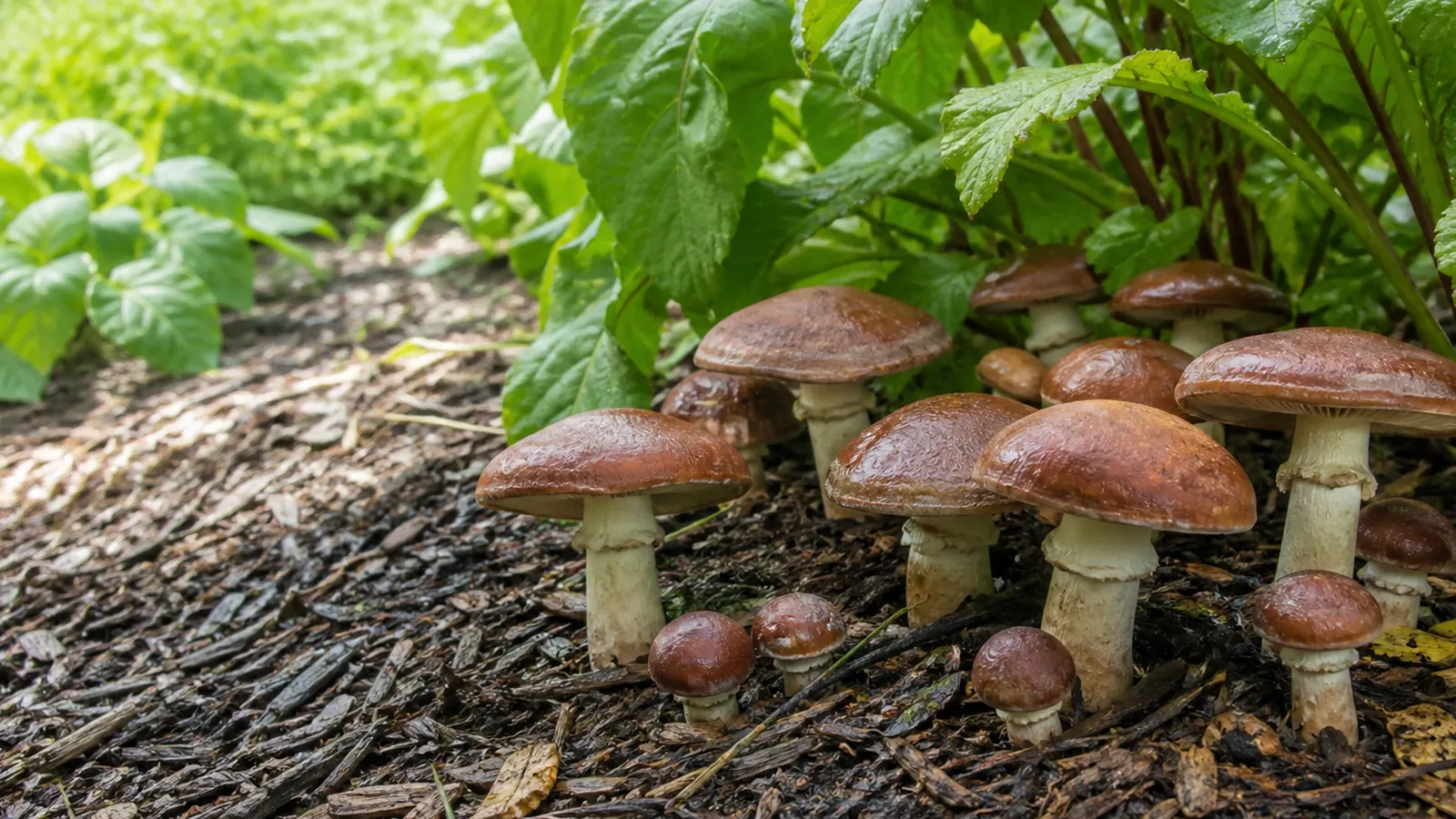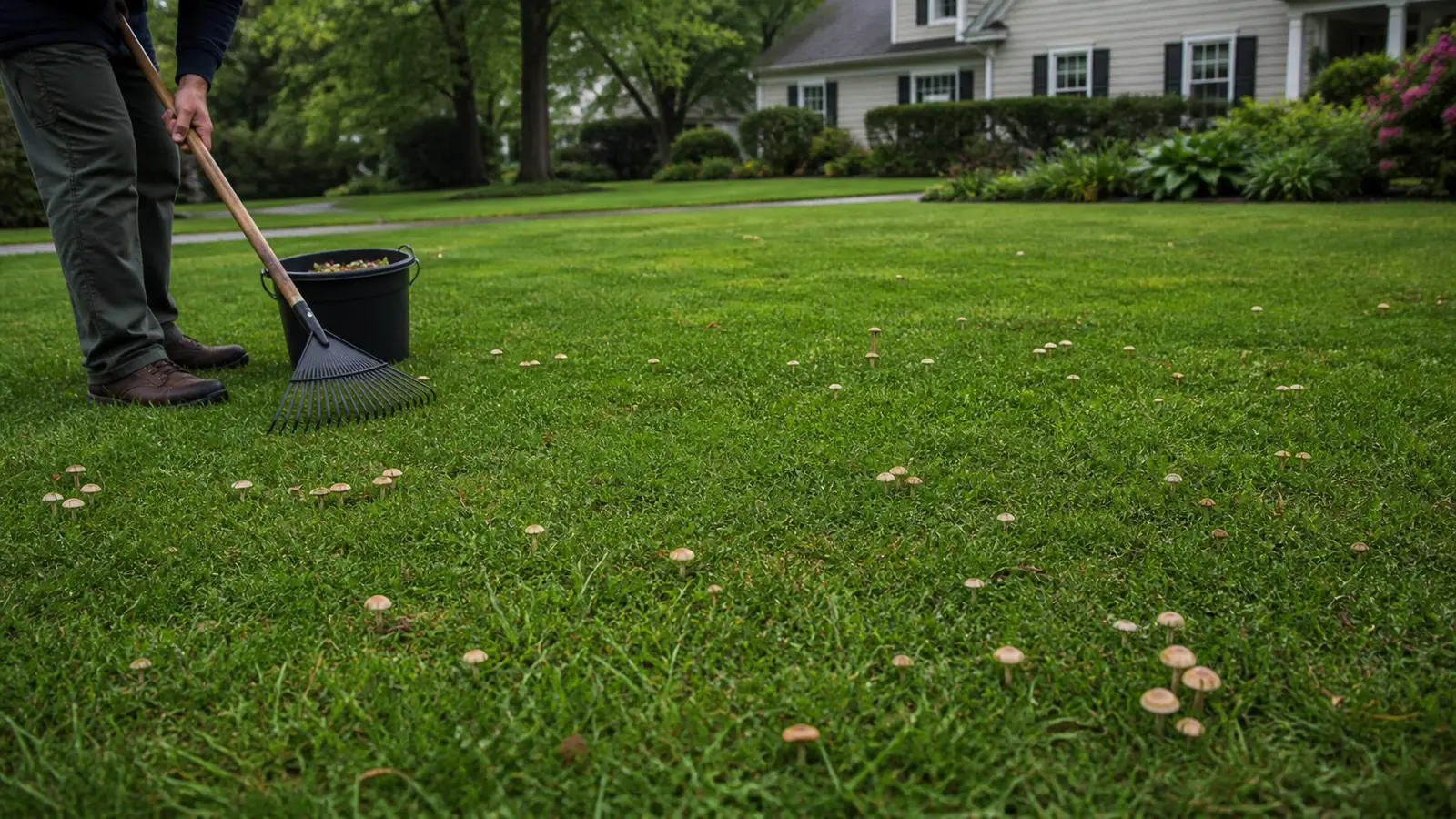
Pull, rake, or mow visible lawn mushrooms for immediate removal, especially around children and pets. Lasting reduction comes from correcting a diagnosed moisture or organic source because surface treatments do not remove buried mycelium.
Pull, rake, or mow visible lawn mushrooms when you need the grass clear today.
Lasting reduction requires a different job because the caps are short-lived fruiting bodies, while the feeding fungus remains in soil, thatch, or buried wood.
Most scattered lawn mushrooms do not injure turf. Remove them promptly where children or pets may eat them, then diagnose the recurring pattern before changing irrigation, digging soil, or applying a product.
What Gets Rid of Lawn Mushrooms Right Now?
Physical removal gives the fastest reliable cosmetic result. A gloved hand, rake, or mower can remove the visible structures, but none of those tools reaches the full mycelial network below the grass.
Choose immediate removal when caps interfere with use, appearance, mowing, or safe access.
Leaving an ordinary flush alone is also reasonable because many caps collapse when the lawn dries.
Do not interpret a cap-free week as eradication. Another rain can trigger fresh fruiting from the same network if temperature, moisture, and food still align.
The grass around a scattered cluster often remains healthy because the fungus is decomposing dead material. A complete ring, a dead arc, or fruiting directly from a living tree requires a different assessment later in this article.
Growing MushroomsWhat Does a Mushroom Farm Actually Cost to Start?Should You Pull, Rake, or Mow Lawn Mushrooms?
Pulling is best for a few large intact mushrooms, while raking suits numerous small dry caps.
Mowing is efficient for a broad cosmetic cleanup but scatters fragments, so collect first when a child or pet uses the area.
Do not kick or crush unknown mushrooms across a play lawn. Fragmentation does not create a new underground colony instantly, but it makes complete pickup harder and leaves material where a curious child can find it.

Check the same patch after later rain. Repeated intact collection is a prevention routine for access, not a claim that pulling the stem kills the fungus.
Why Do Lawn Mushrooms Keep Coming Back?
The mushroom is the reproductive structure of a larger organism.
Fine hyphae form mycelium through soil and organic material, then produce caps when moisture and temperature favor fruiting.
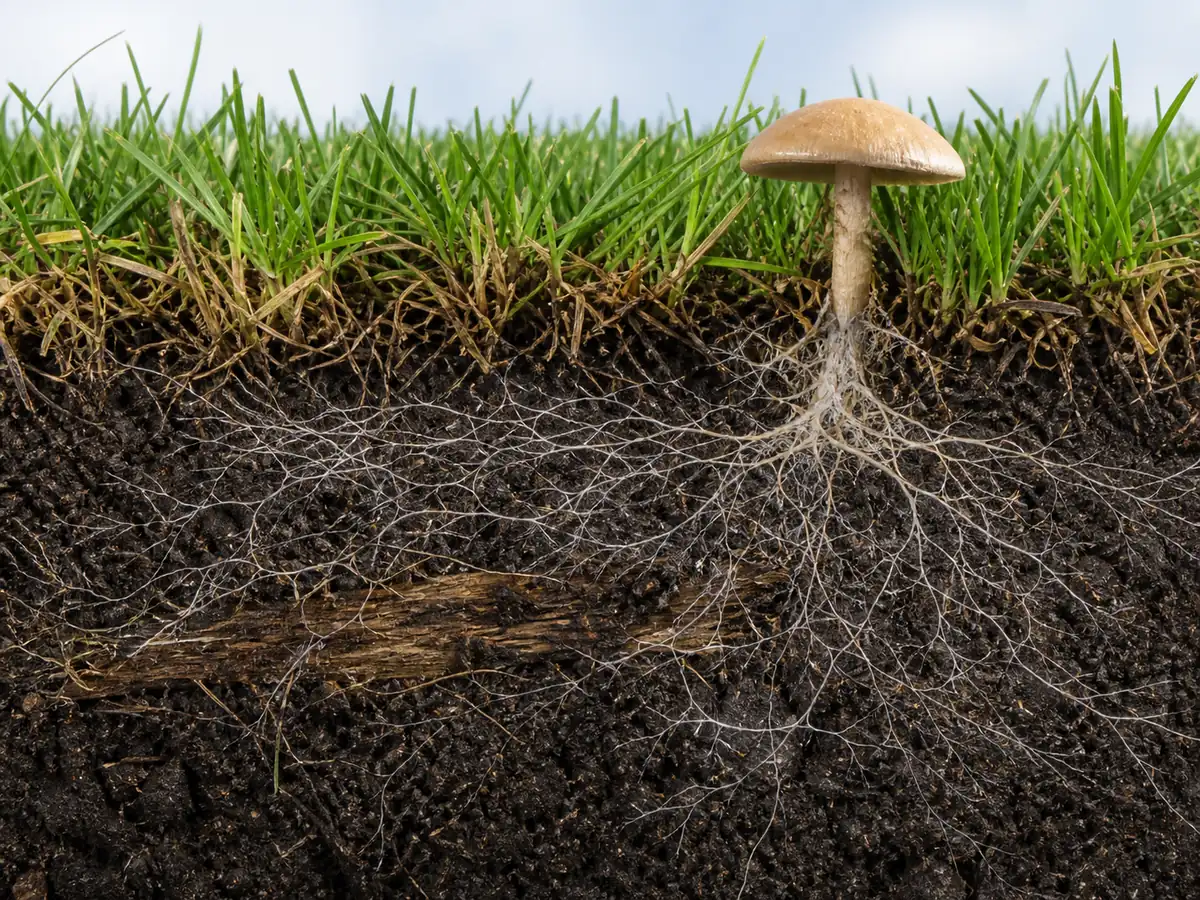
Rain reveals an established fungus rather than creating it overnight. Fruiting can begin after a wet period because the mycelium has enough water to build and expand mushrooms above the grass.
Buried roots, stumps, lumber, and thick thatch can support the network for years.
The mushrooms stop permanently only when the usable food is exhausted, removed, or conditions no longer support fruiting.
That slow timeline changes how progress should be judged. Fewer flushes, a shorter wet period, and a shrinking localized patch are more meaningful than one immediate cleanup.
Spores are already common outdoors, so trying to prevent every spore from reaching the lawn is not practical. Site conditions determine whether an established fungus has enough moisture and organic material to fruit conspicuously.
Growing MushroomsHow Do Mushroom Sawdust Blocks Work from Mix to Fruit?What Is Feeding the Fungus Under Your Grass?
Start with the shape of recurrence.
A patch that repeats in exactly one place carries more diagnostic value than mushrooms scattered across the entire lawn after regional rainfall.
Map the patch before working.
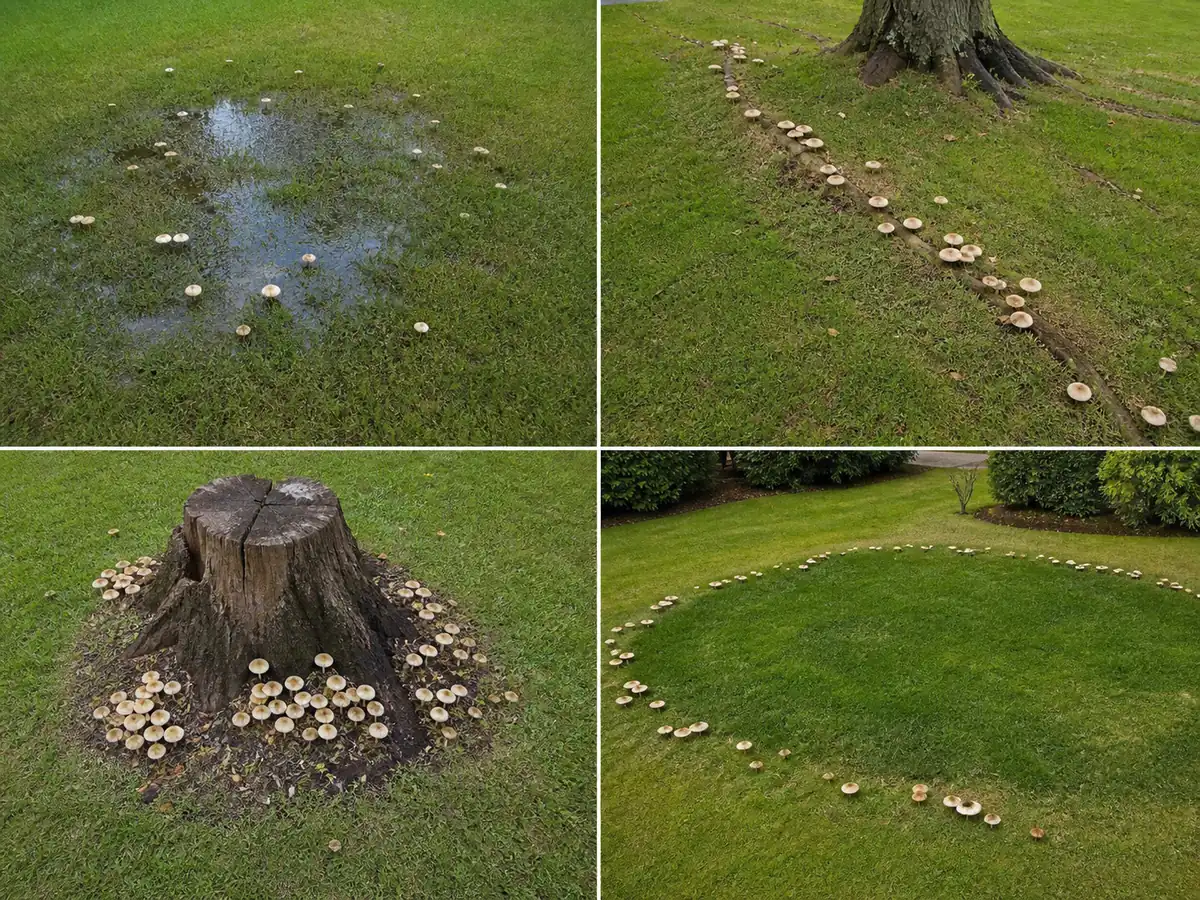
- Mark the outer edge after the next flush and compare it with the prior location.
- Probe thatch depth in affected and unaffected grass.
- Watch where water stands or runs thirty minutes after irrigation.
- Check irrigation overlap and whether watering continues into evening.
- Ask where trees, shrubs, fences, or construction lumber were removed.
- Note whether mushrooms follow a root line, complete circle, or random scatter.
One mushroom does not justify excavation. Digging without a localized source can destroy turf structure, mix soil layers, and leave the same moisture problem in place.
When a reachable piece of buried wood is clearly feeding one small patch, targeted removal can shorten recurrence.
Large old root systems are often better left to decompose while surface conditions are managed.
Growing MushroomsHow Do You Build an Outdoor Mushroom Bed That Lasts?Does Fungicide Kill Lawn Mushrooms?
Fungicide sprayed onto a cap does not remove the mycelium around buried organic matter. Many extension services therefore do not recommend routine fungicide for ordinary decomposer mushrooms in home lawns.
The target mismatch also explains why a successful-looking spray can mislead. Caps were already short-lived, so their collapse after treatment does not prove the underground source changed.
Warning
Skip bleach, salt, vinegar, and detergent mixtures | These home treatments can burn grass, alter soil conditions, injure nearby plants, or expose children and pets. They do not provide reliable control of a deep decomposer network.
Fungicide has a separate role in some diagnosed turf diseases, including professionally managed fairy-ring cases.
Product choice, timing, label, soil penetration, and irrigation requirements matter, so that exception is not a reason to spray scattered mushrooms.
Use the lawn pattern and turf symptoms to decide whether disease diagnosis is needed. Healthy grass around random post-rain caps rarely supports an aggressive chemical response.
When Do Mushrooms Point to Buried Wood or a Tree Problem?
Mushrooms that trace an old tree footprint usually indicate decomposition of remaining roots. This is a source clue, but it does not mean the current lawn grass is infected.
Fruiting directly from the trunk, root flare, or exposed roots of a living tree carries a different consequence.
Some wood-decay fungi affect structural tissue, and tree stability cannot be judged from cap removal.
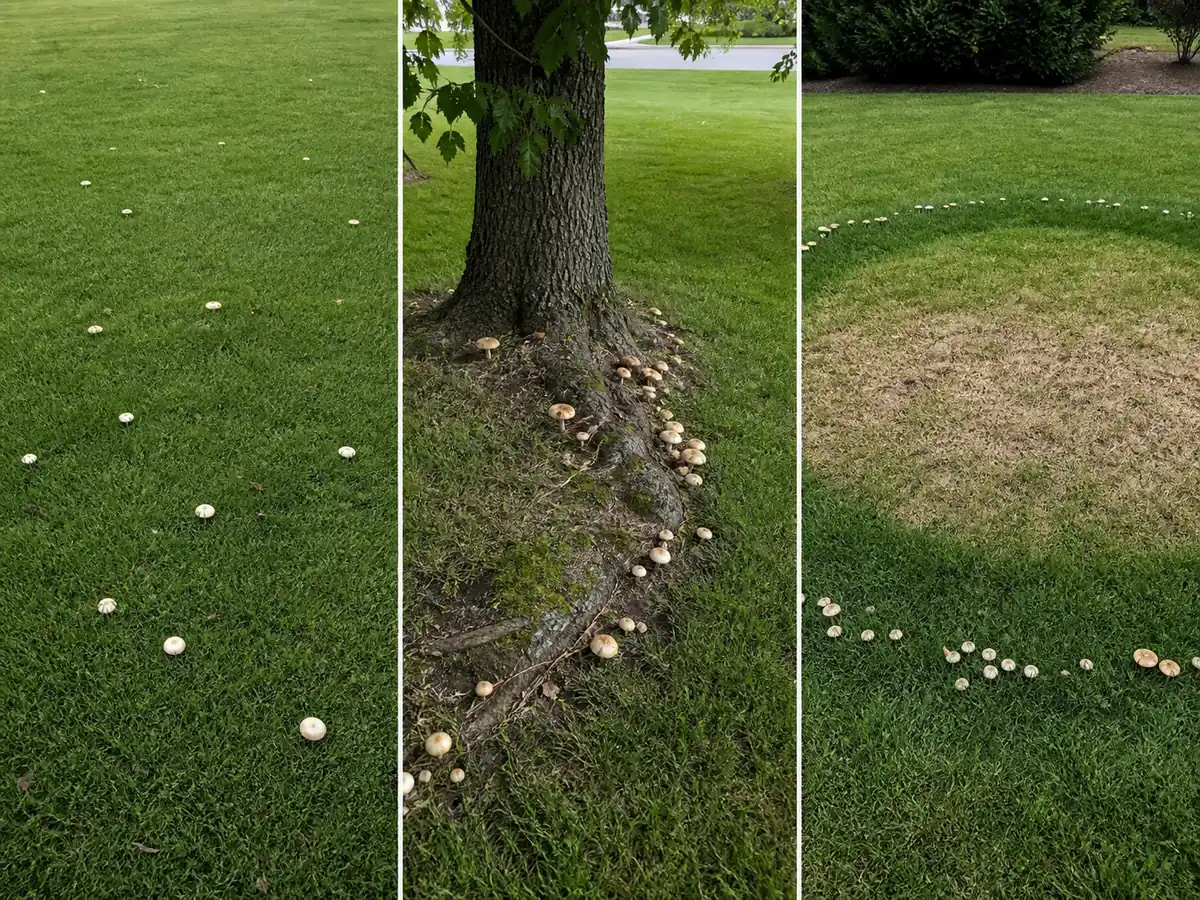
Document the full tree, the attachment point, the underside, the base, and any crown thinning, cracks, cavities, or recent root disturbance. A qualified arborist can combine those observations with tree species, decay location, and load conditions.
A complete or expanding circle belongs to the fairy-ring decision path. Dark green turf can reflect nutrient release, while a brown arc can indicate soil that repels water and leaves roots dry.
Pattern alone is still not a species identification.
Preserve habitat and full-structure photographs before mowing when an exposure, tree question, or unusual turf injury makes identification consequential.
How Can You Make the Lawn Less Favorable Without Damaging It?
Choose the smallest correction that changes the diagnosed condition. Performing every lawn practice at once makes it difficult to know what helped and can stress healthy turf.
Soil stays wet after irrigation
Water early, correct overspray, and divert concentrated runoffA longer dry interval reduces fruiting conditions without withholding needed root-zone water.
Compacted soil limits infiltration
Core-aerate at the appropriate season for the turfReal soil channels help only when compaction is present, not as a universal mushroom cure.
Thatch is measurably excessive
Dethatch at a turf-appropriate time and remove the excessTargeted work reduces a wet organic layer while avoiding unnecessary crown damage.
One localized patch follows accessible buried wood
Remove that source if turf and soil disruption are proportionateExcavation makes sense only when the food source is known and limited.
Morning irrigation is useful because the surface can dry during the day.
Reduce unnecessary frequency before reducing the total water required by the grass, since shallow drought-stressed roots create a different lawn problem.
Core aeration improves infiltration where compaction exists. It will not eliminate mushrooms that are feeding on a large buried stump in otherwise well-drained soil.
Dethatching also needs evidence. A thin normal thatch layer protects the soil surface, while aggressive removal from a lawn without excess thatch adds injury and does not address buried wood.
Accepting occasional caps can be the least damaging outcome when the grass is healthy and exposure is controlled.
A living soil with decomposers cannot be made sterile without harming the lawn system the treatment was meant to improve.
Sources & References
- University of Maryland Extension Lawn fungi, plant impact, removal, fungicide limits, and safety.
- Iowa State University Extension Buried wood, physical removal, and recurrence.
- UC Statewide IPM Moisture management, fairy-ring exceptions, and child or pet precautions.