Fairy-ring treatment depends on turf symptoms. Type I needs water-infiltration work, Type II often needs cosmetic nutrient balancing, and Type III mushrooms can usually be left or removed for access safety.
A fairy ring needs treatment only after you know which turf response it is producing. A dark green circle, a dead water-repellent arc, and a ring of mushrooms on otherwise healthy grass represent different management decisions.
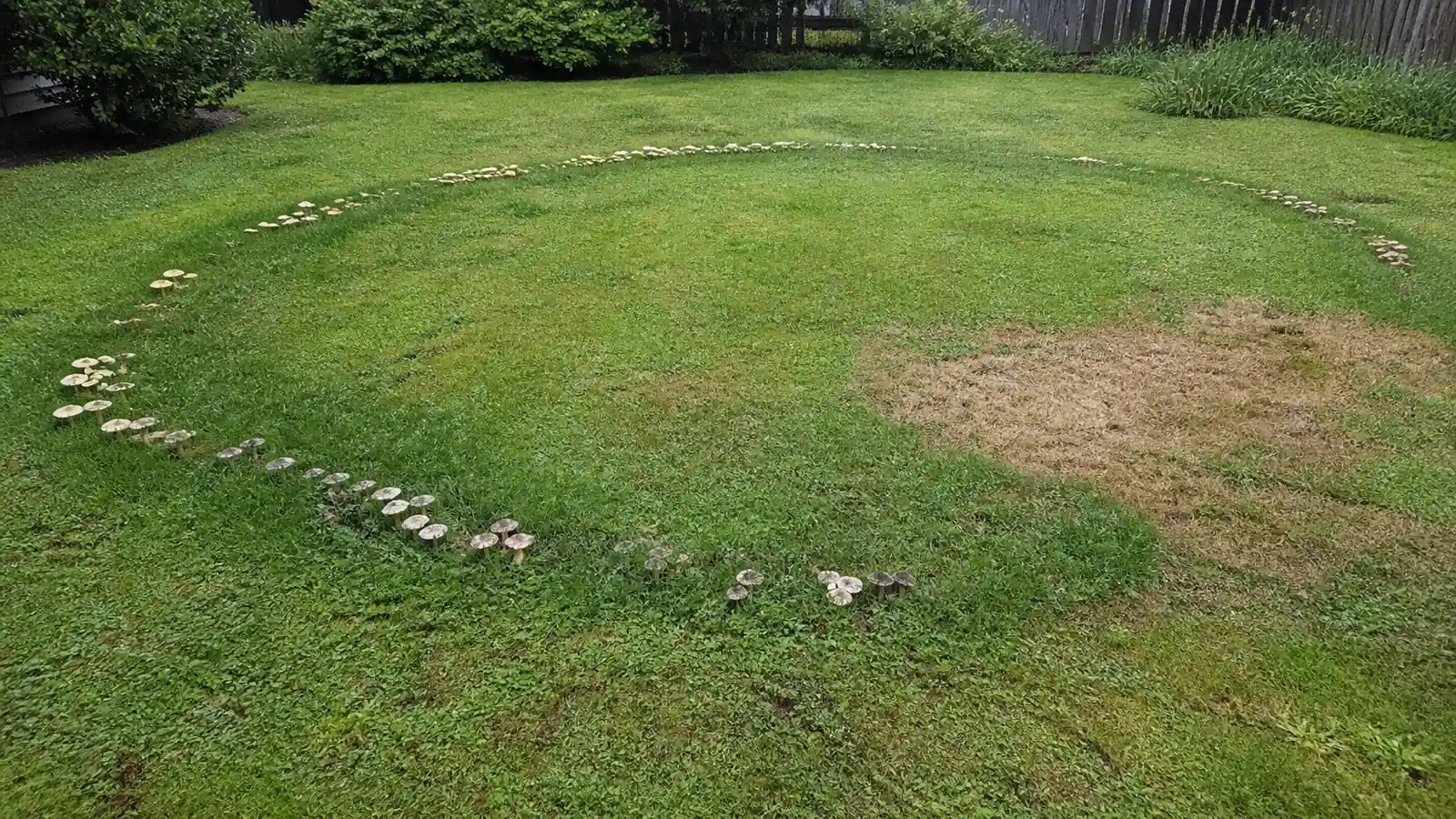
Type I can injure or kill turf, Type II stimulates green growth, and Type III produces mushrooms with little direct turf damage.
The mushrooms are therefore not a severity meter.
What Causes a Fairy Ring in Grass?
Fairy rings form when soil fungi grow outward from an established point through thatch or buried organic material. The active colony front can trace a circle or arc as it reaches fresh substrate.
As fungal hyphae decompose organic matter, they release nutrients that can darken and accelerate grass growth. Under other conditions, dense growth and water-repellent compounds reduce infiltration and leave a dry injured band.
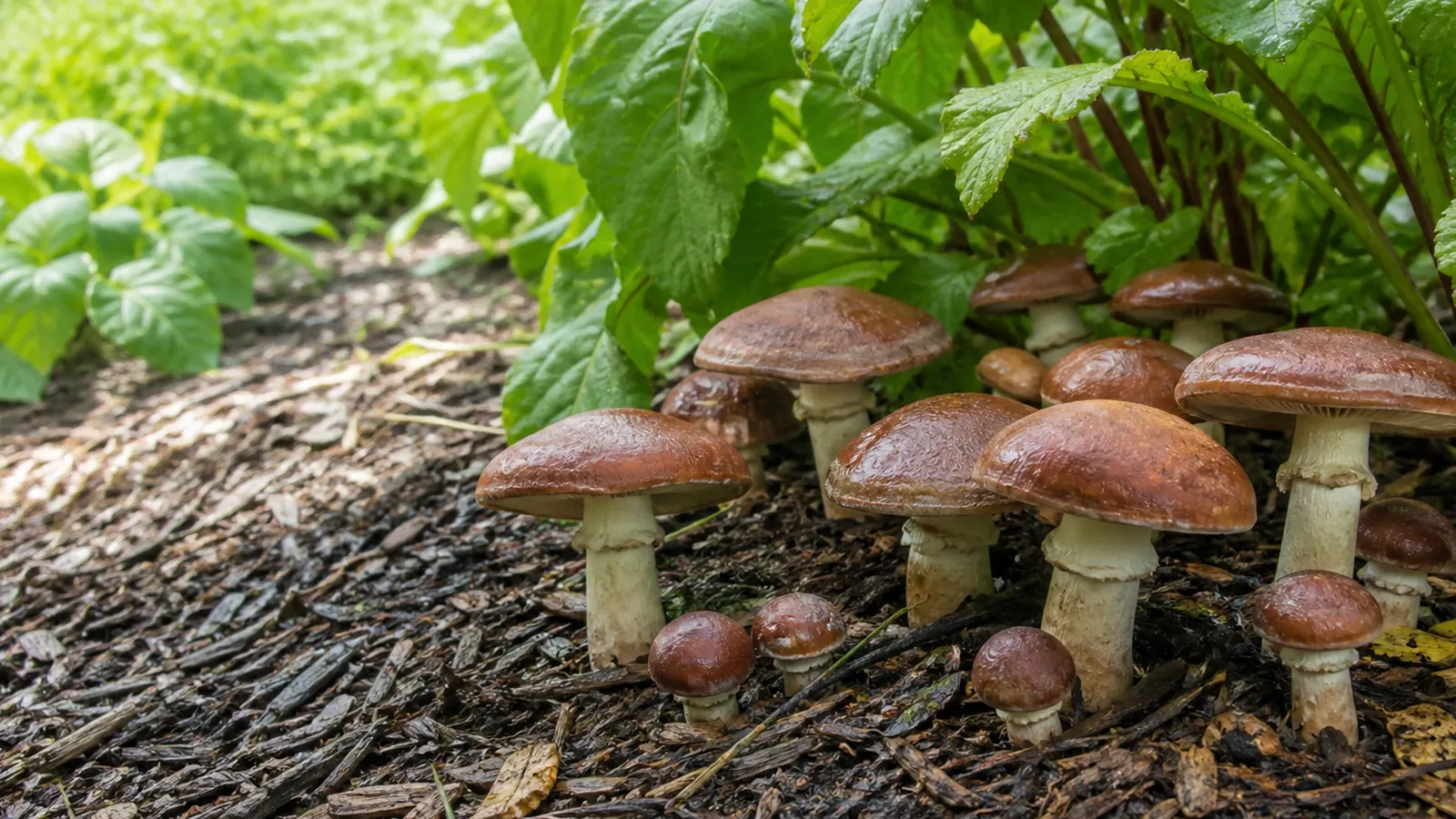
Mushrooms appear when the ring-forming fungus has enough moisture and suitable temperature to fruit.
A ring can remain visible through turf color long after the caps collapse, and it can exist without producing mushrooms during a particular season.
The diameter often expands over time because growth continues at the outer front. Old central turf may return to a more ordinary color while the active edge moves into new soil.
Not every circle is a fairy ring.
Irrigation patterns, fertilizer spills, buried edging, pet activity, grubs, and other turf diseases can create curves or patches, so the grass response and soil behavior must support the diagnosis.
Growing MushroomsWhat Does a Mushroom Farm Actually Cost to Start?Which Fairy-Ring Type Is in Your Lawn?
Classify the visible outcome before choosing a treatment. The traditional three types describe turf symptoms, not three fixed mushroom species.
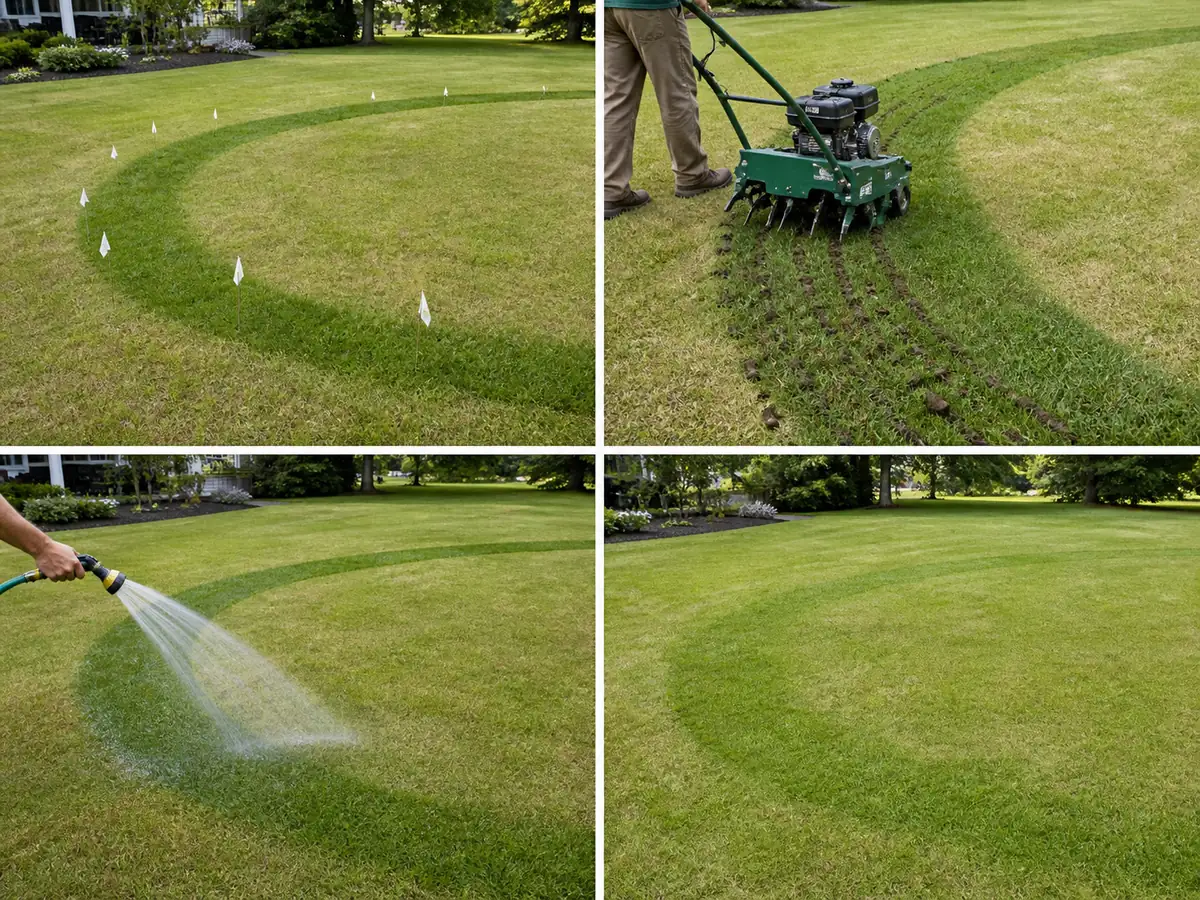
To classify the ring, walk the full perimeter and record what changes across it.

- Photograph the entire arc or circle from an elevated position.
- Compare grass color, density, and growth rate inside, on, and outside the ring.
- Note dead areas, wilt, hard soil, or water beading along the active edge.
- Record mushrooms before mowing and include the base, underside, and nearby trees.
- Mark the outer edge so later expansion can be measured.
- Check whether irrigation coverage or a past tree location explains the shape better.
Types can overlap.
A ring can show dark green growth during mild weather, mushrooms after rain, and dry injury during heat, so base treatment on the most consequential current symptom.
A dark green ring alone is largely cosmetic. A dead arc with poor infiltration deserves faster attention because adding water above a repellent layer may not reach the roots.
Growing MushroomsHow Do Mushroom Sawdust Blocks Work from Mix to Fruit?How Can You Test Whether the Ring Repels Water?
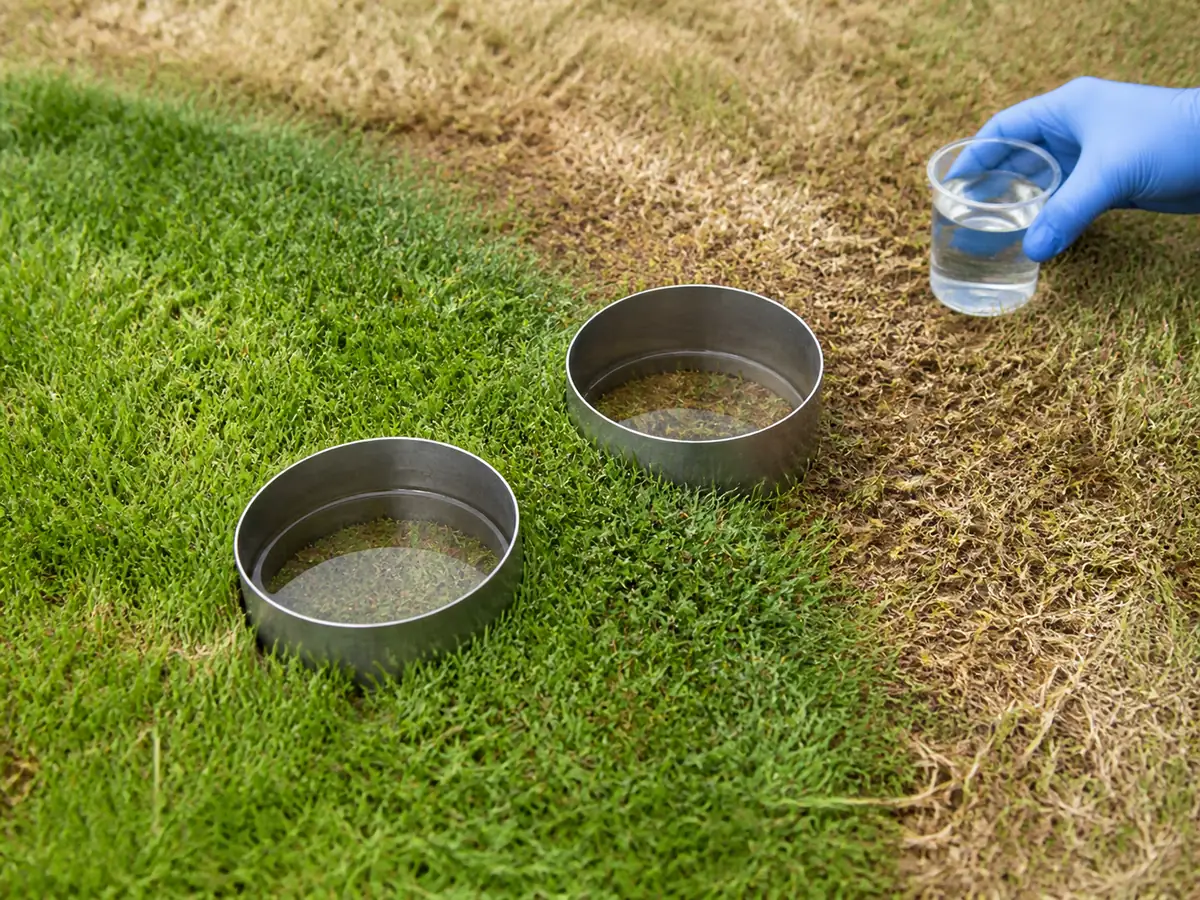
Test affected and unaffected turf side by side on a day when neither spot is already saturated.
Use equal small amounts of water so the comparison reflects infiltration rather than different application.
Open the grass canopy enough to see the soil surface without tearing roots. Apply water to the active ring and to normal soil a few feet away, then watch for beading, runoff, pooling, and absorption.
Water absorbs at a similar rate in both spots
Do not assume hydrophobic Type I soilCompare fertility, irrigation pattern, disease symptoms, and other causes of the ring.
Water beads on dense surface thatch only
Open or manage the thatch before diagnosing deeper repellencySurface interception can mimic a soil problem and needs a different correction.
Water runs from the ring but enters nearby soil
Treat the active zone as water repellentCore the band, use a suitable wetting approach, and verify penetration during slow irrigation.
Push a soil probe into both areas after the test. A wet surface above dry soil in the ring is stronger evidence than color alone that root-zone water is not arriving.
Recent heavy irrigation can hide the contrast, while severely dry surrounding soil can make both spots repel water.
Repeat under comparable conditions if the first result does not match the turf symptoms.
Why Can Type I Fairy Ring Kill Grass?
Type I injury often comes from a dry root zone rather than direct invasion of grass roots. Fungal growth and decomposition products can make organic soil particles resist water along the active front.

Water then beads, pools, or moves around the affected band. The sprinkler can run for its normal time while roots beneath the arc remain dry.
Heat amplifies the damage because the grass loses water faster and cannot replace it from the repellent zone.
Turf may wilt, thin, and die along the outer front while adjacent grass remains green.
Nutrient release can complicate the picture. A Type I ring may have dark green growth beside a brown dry band, which is why color alone cannot choose between fertilizer and water work.
Recovery also lags behind restored infiltration. Dead crowns must be reseeded or resodded after the soil accepts water, while stressed living turf needs time to rebuild roots.
Pouring more water quickly can increase runoff without solving the dry band. The treatment must create pathways and keep the wetting solution in contact with the affected soil long enough to enter.
Growing MushroomsHow Do You Build an Outdoor Mushroom Bed That Lasts?How Do You Treat a Fairy Ring Without Making Turf Worse?
Match the treatment to the type. Type I needs careful water-entry work, Type II often needs cosmetic balancing, and Type III usually needs only optional mushroom removal.
For Type II, a soil test and balanced lawn nutrition can reduce the contrast by improving surrounding turf.
Heavy nitrogen added blindly can burn grass, increase mowing, or create new nutrient imbalance.
For Type III, removing mushrooms is mainly an appearance or ingestion-prevention decision. Collect intact fruiting bodies before mowing when children or pets use the lawn, but do not expect cap removal to stop the underground ring.
Maintain appropriate irrigation, mowing height, and thatch management across the lawn. Those practices support turf resilience, yet they should not be presented as a guaranteed eradication program for an established colony.
Judge treatment by root-zone moisture, turf survival, and ring contrast over later stress periods.
The absence of mushrooms during dry weather does not prove the ring is gone.
Should You Use Fungicide or Dig Out a Fairy Ring?
Fungicides labeled for fairy ring are more complex than a surface spray. Their performance depends on timing, active ingredient, local label, delivery into the soil zone, irrigation, turf species, and the fungi present.
Some products are restricted to professional or commercial turf use.
A homeowner should not transfer a golf-course schedule to a residential lawn without confirming the current label and local rules.
Warning
Escalate only after the type and water problem are confirmed | Incorrect pesticide use can harm people, turf, and the environment. Partial excavation can miss the active front, spread affected soil, and create a larger repair without producing a lasting cure.
Professional treatment is more reasonable when Type I damage continues despite verified infiltration work and the turf loss justifies the cost. Ask how the product will reach the active soil, how effectiveness will be checked, and what restrictions apply after application.
Excavation is physically demanding because the active band can extend on both sides of the visible edge and to substantial depth. Removing only the mushrooms or a shallow strip of sod leaves much of the colony behind.
Removed soil also needs controlled handling, and replacement soil must be integrated without creating drainage or grade problems. Even drastic renovation can be followed by reestablishment over time.
For a green Type II ring or a Type III mushroom circle with healthy turf, tolerance and cosmetic management usually preserve more lawn than excavation. The goal is a usable healthy surface, not a sterile soil profile.
Sources & References
- Illinois Extension Three symptom types and type-specific management.
- NC State Extension Classification, prevention, fungicide limits, and recurrence.
- Oregon State University Extension Hydrophobic soil, wetting agents, and irrigation.
- University of Maryland Extension Ring recognition, watering, nutrition, and mushroom removal.