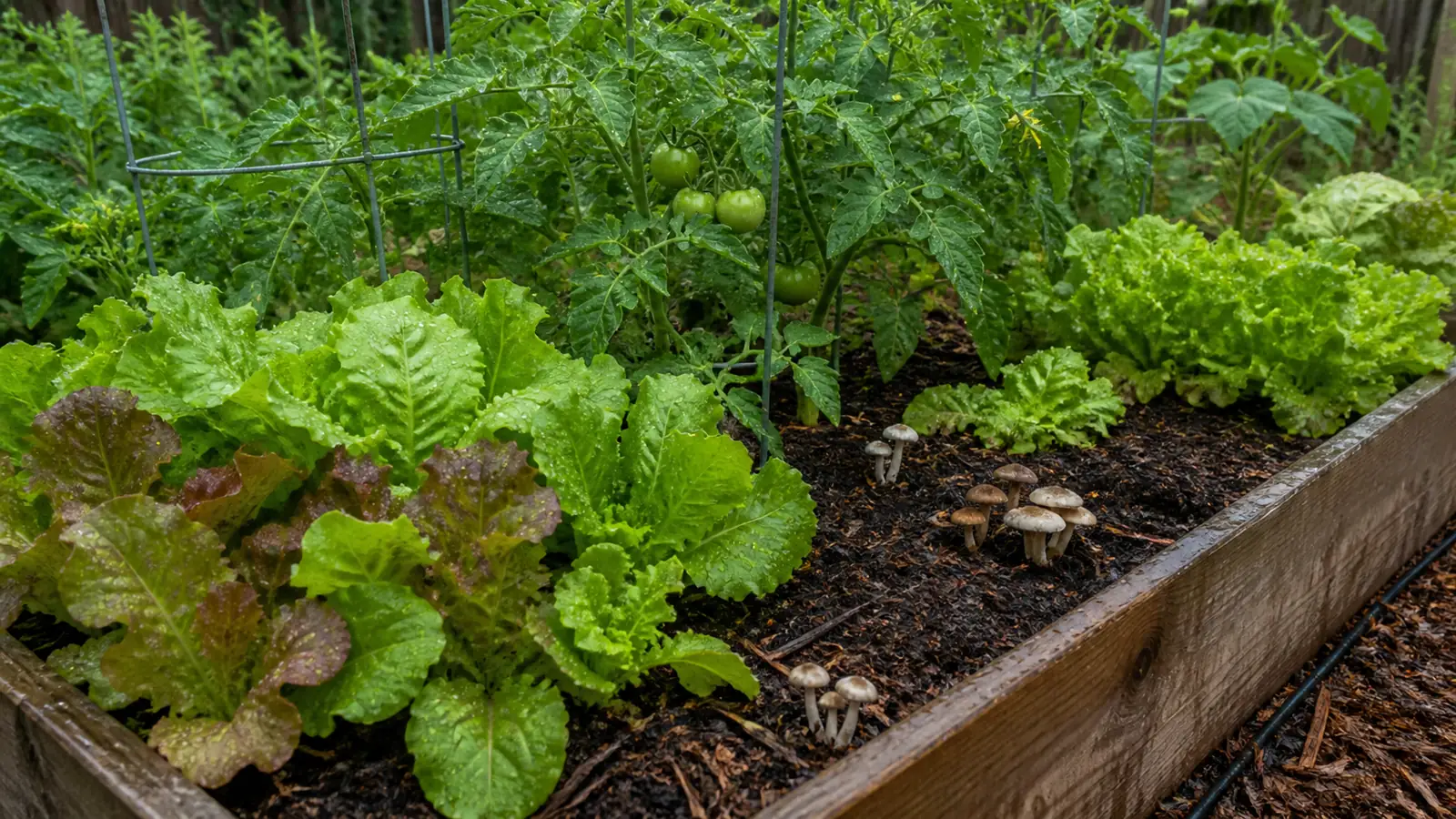
Mushrooms growing beside vegetables do not by themselves make the harvest unsafe. Keep unknown mushrooms out of the kitchen and wash sound produce under running water.
Leave a brief post-rain flush when crops look healthy. Remove mushrooms that children or pets can reach, and inspect irrigation or drainage when the bed stays wet and plants show stress.
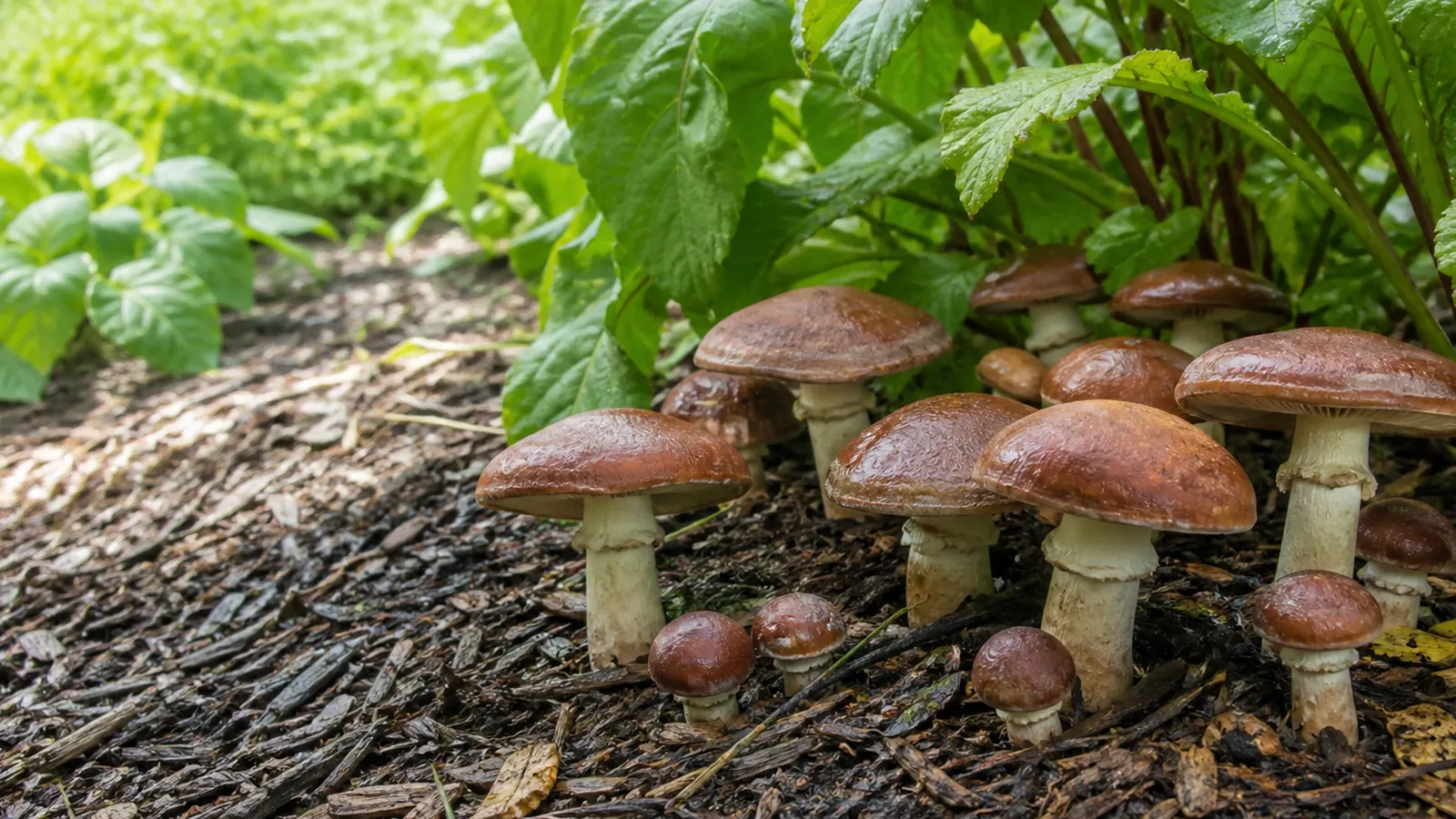
Mushrooms beside lettuce, tomatoes, or carrots can make an entire harvest look suspect. Sound vegetables remain usable, while every unidentified mushroom stays out of the harvest basket and away from anyone who might eat it.
The practical decision starts with the crop, then the substrate, moisture, and access risk.
A cap in the soil provides one observation. It does not identify the fungus, prove the bed is healthy, or diagnose overwatering by itself.
Are Vegetables Safe to Eat When Mushrooms Grow Beside Them?
Yes. Oregon State Extension describes toxin transfer from a mushroom or its underground mycelium into an adjacent crop as very unusual.
A decomposer fruiting from mulch or buried wood therefore does not make a firm tomato, intact bean, or healthy head of lettuce poisonous.
Shared soil does not turn the vegetable into the mushroom. The unknown fruiting body remains an ingestion hazard, so keep it separate from produce and do not use washing as a reason to taste it.
- Sound vegetables
- Harvest them when they are firm, healthy, and free of decay.
- Unknown mushrooms
- Keep every fruiting body and loose fragment out of food containers.
- Direct contact
- Remove mushroom pieces and discard produce that is rotten, slimy, or too damaged to clean.
- Before eating
- Rinse the harvested crop thoroughly under running water.
A lettuce leaf touching an intact cap is a surface-contact problem. Remove the cap, inspect the leaf, and rinse the sound leaf under running water.
Discard a leaf coated with collapsing mushroom tissue when cleaning would leave damaged or slimy plant material.
Root crops need the same ordinary soil-removal work they needed before the mushrooms appeared. Brush off loose soil, rinse under running water, and scrub firm produce with a clean produce brush when appropriate.
The FDA advises against soap, detergent, and commercial produce wash because produce can absorb residues. Wash your hands before and after handling the harvest, and clean knives, baskets, and cutting surfaces that contacted garden soil or mushroom debris.
There is an important boundary. A mushroom fruiting nearby is different from a fungus or bacterium directly infecting edible plant tissue.
Soft rot, mold growing on the crop, spreading lesions, or decay inside an ear, pod, fruit, or root requires crop-specific disease and food-safety guidance.
Growing MushroomsWhat Does a Mushroom Farm Actually Cost to Start?Where Is the Fungus Feeding in the Bed?
The visible mushroom is a short-lived reproductive structure. Most of the organism remains hidden as hyphae forming a mycelial network through its food source.
That food source is often dead material that arrived with the bed or accumulated during use. Raised-bed mix may contain bark fines, composted wood, or unfinished fragments.
Mulch, buried sticks, old roots, untreated boards, and woody bed fill can support the same decomposer after the cap disappears.
To find that food source, check the attachment point before disturbing the bed.
Picking the cap does not remove that underground network. New caps may appear when the same food source receives enough moisture and the temperature favors fruiting.

The location also limits the useful correction. Loose mulch can be thinned or moved without entering the root zone.
Digging after every buried strand can sever crop roots while leaving fragments of the same food source elsewhere.
White threads beneath mulch can be mycelium, but appearance alone does not identify a species. Photograph the threads and substrate before breaking them apart if plant damage, structural decay, or a possible ingestion makes identification important.
Growing MushroomsHow Do Mushroom Sawdust Blocks Work from Mix to Fruit?Does the Bed Stay Too Wet for Vegetables?
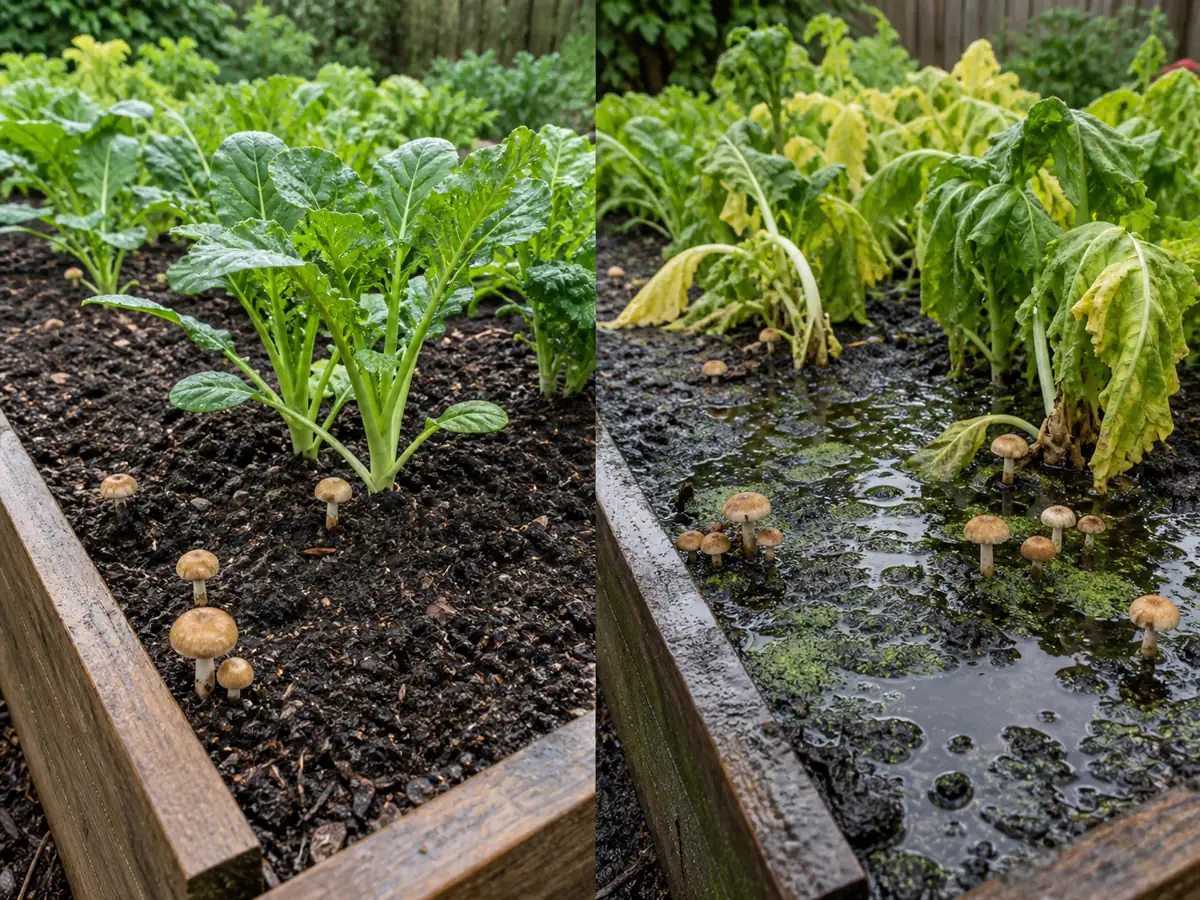
Rain can trigger mushrooms in a bed that drains well and grows healthy crops. Crop and soil condition carry more weight than the number of caps.
A brief flush after wet weather may dry and collapse while leaves stay green and firm.
Persistent saturation presents a larger pattern. Water remains at the surface or deep in the root zone, the soil loses its earthy smell, and the vegetables begin showing stress.
| What you observe | What it supports | What to check next |
|---|---|---|
| Mushrooms after rain, firm green leaves, and no standing water | A temporary fruiting response | Let the bed drain and watch the next irrigation cycle |
| A dry crust above cool wet soil | Moisture remains below the visible surface | Inspect soil near the crop rooting depth before watering |
| Pooling water, algae, sour odor, or mulch that never dries | Persistent wet conditions | Check blocked drainage, irrigation duration, and water entering from nearby areas |
| Yellow leaves, slow growth, or wilting while soil is wet | Root stress needs attention | Examine roots and request a crop diagnosis if symptoms continue |
Test below the surface without cutting through the main root mass. Open a narrow inspection point with a trowel near the plant, feel whether the soil is crumbly or slick, and observe whether water occupies the opening.
One inspection cannot set a permanent schedule because crop size, weather, soil mix, bed depth, and drainage change water demand. Use the same location over several irrigation cycles to learn whether the root zone drains before the next application.
When the bed remains wet, correct the water source before attacking the mushrooms. Shorten unnecessary irrigation, repair a leaking emitter, clear an obstructed outlet, and pull dense wet mulch back from plant crowns while preserving enough moisture for the crop.
Overhead watering can keep the surface and foliage wet even when the crop needs water mainly at its roots. Directing water to the soil and allowing foliage to dry also removes one condition that supports several unrelated plant diseases.
Is the Fungus Feeding on Dead Material or a Living Plant?
Most mushroom-forming fungi encountered in garden mulch are decomposers, but the word fungus does not describe one plant-health outcome. The substrate and the condition of the crop decide which explanation fits.
Caps emerging through loose bark with healthy vegetables nearby point toward dead-material decomposition. That activity recycles organic matter, yet the caps alone cannot measure fertility, drainage, microbial diversity, or overall soil health.
Fresh wood mixed through the root zone adds a separate nutrient issue. Microbes decomposing carbon-rich wood can use available nitrogen, so pale or slow crops justify a soil test and a review of how the bed was filled.
The mushrooms are a clue to the woody material, not proof that they stole fertilizer directly from the vegetables.
Herbaceous vegetable diseases often appear as spots, blights, wilts, molds, cankers, or rots rather than a familiar cap standing beside the plant. Do not use that general pattern to clear a sick crop.
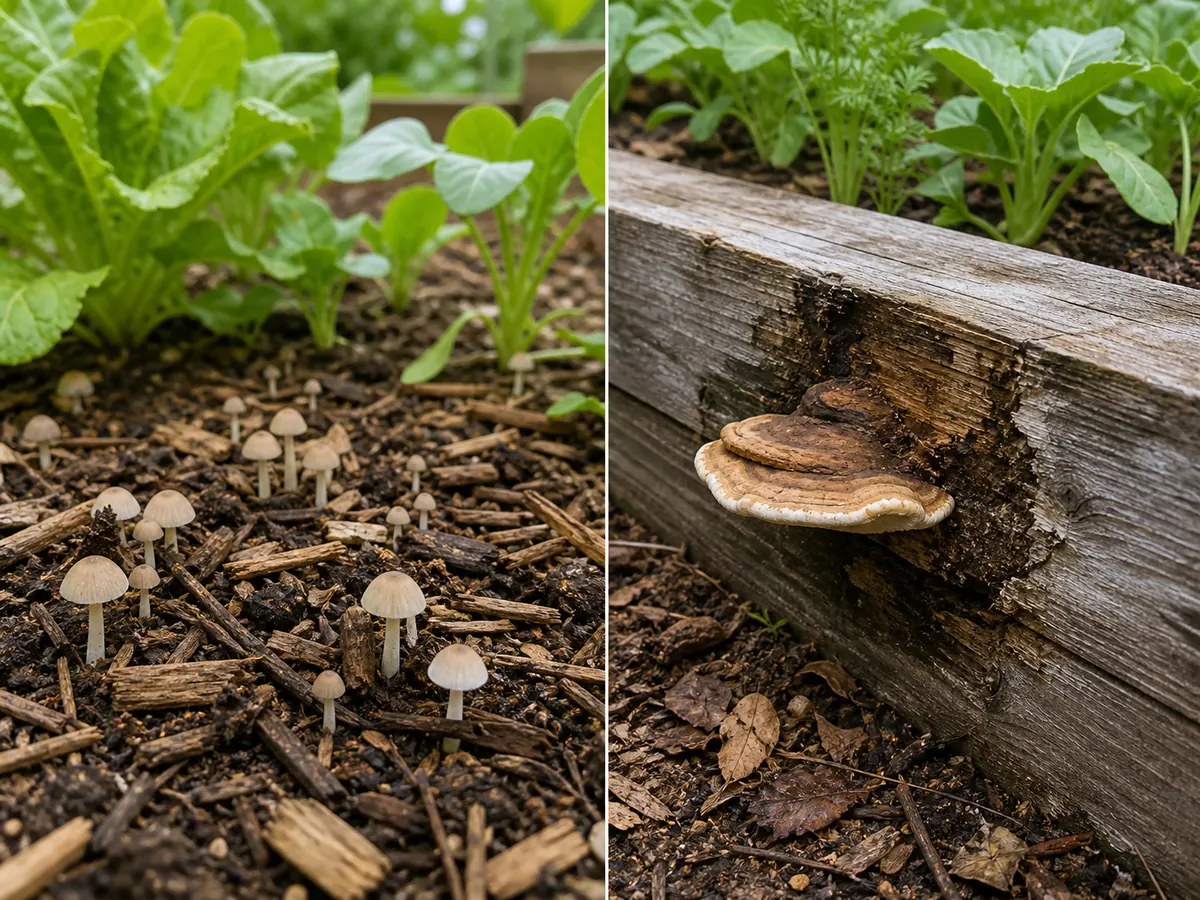
Photograph the symptoms and consult a local Extension plant clinic when damage spreads or the edible tissue is affected.
Woody plants and structural bed materials need their own boundary. A bracket or mushroom attached to a living trunk, woody crown, buried stump, or load-bearing board can indicate decay in that material.
Check stability and plant health instead of applying the loose-mulch rule.
This distinction prevents two opposite mistakes. You avoid tearing apart a productive bed because harmless decomposers appeared, and you avoid dismissing visible crop or wood decay as a universal sign of healthy soil.
Growing MushroomsHow Do You Build an Outdoor Mushroom Bed That Lasts?Should You Leave the Mushrooms, Remove Them, or Change the Bed?
Choose the response after checking the crop, substrate, moisture, and access risk. Use the smallest action that addresses the evidence.
Healthy crops and a brief rain flush
Leave the bed aloneThe fruiting bodies can dry without a soil treatment or harvest loss.
Children, pets, or vulnerable adults can reach the caps
Remove and contain themPhysical removal reduces the immediate chance of an unknown mushroom being swallowed.
Wet soil and crop stress persist
Correct water and drainageThe combined symptoms show that bed conditions matter beyond the mushrooms.
Fruiting attaches to living wood or crop tissue is diseased
Seek a plant or structural diagnosisThe ordinary dead-mulch explanation no longer owns the problem.
Accessible fruiting bodies can be removed without excavating the bed.
Composting is reasonable when the pile is secured and nobody can retrieve the mushrooms. A closed trash container is the safer disposal route when children, pets, chickens, or livestock can enter the compost area.
Removal may reduce local spore release, but it does not eliminate established mycelium. Recurrence after rain therefore does not prove that the first removal failed.
Routine fungicide is a poor fit for ordinary decomposer mushrooms. University of New Hampshire Extension notes that fungicides are generally ineffective for this problem, while Iowa State Extension explains that fruiting can continue until conditions change or the decomposed material is exhausted.
Full soil replacement can damage roots, discard usable soil, and still miss colonized wood below the bed. Reserve that scale of work for a specific diagnosis such as excessive mycelial growth that prevents water entry, contaminated fill, failed drainage construction, or another problem confirmed by an appropriate local authority.
What Should You Save After a Possible Ingestion?
Warning
Possible unknown mushroom ingestion | In the United States, call Poison Control at 1-800-222-1222 immediately after a person may have swallowed an unknown garden mushroom. Do not wait for symptoms. For a pet, contact a veterinarian or animal poison service promptly and follow their instructions.
Make the call before spending time on an identification attempt. Evidence supports the specialist, while a phone app, cap color, or resemblance to a grocery mushroom cannot establish safety.
If the responding professional asks for a specimen, keep the mushroom intact when doing so does not delay care. Follow their handling instructions, keep it away from food, and prevent anyone else from touching or eating it.
Follow the responding professional's first-aid instructions instead of trying a home remedy. Mushroom toxins produce different syndromes, so the appropriate response depends on the exposure and the service handling it.
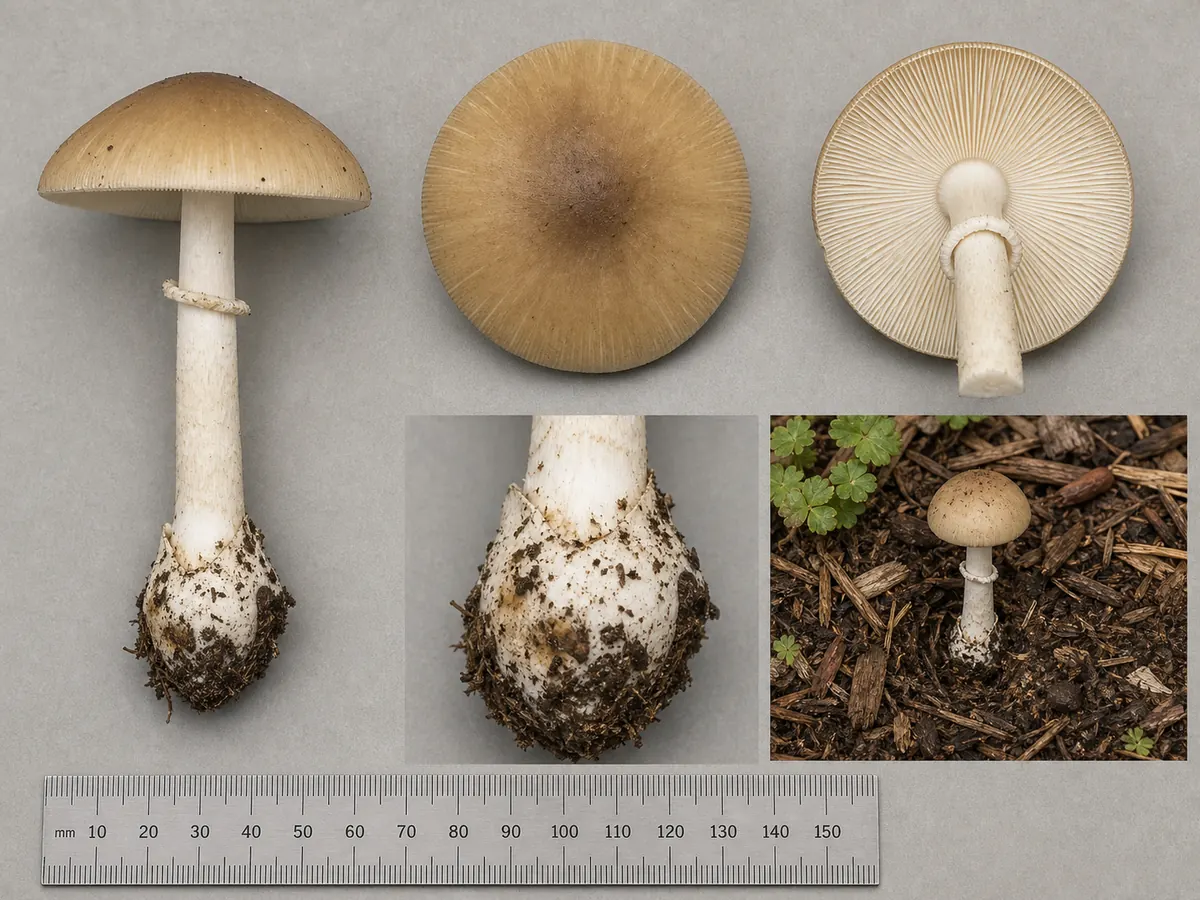
Clear photographs may help a mycologist narrow the possibilities, but they do not convert the remaining mushrooms into food.
Keep the garden rule unchanged after the emergency passes. Unknown fruiting bodies stay out of the kitchen unless a qualified local identifier examines adequate material and confirms the species.
Sources & References
- Oregon State University Ask Extension Raised-bed decomposer fungi, vegetable impact, woody material, moisture, and drainage.
- University of Maryland Extension Fruiting bodies, mycelium, wet-weather emergence, physical removal, and child or pet precautions.
- U.S. Food and Drug Administration Washing and preparing homegrown produce safely.
- University of Florida IFAS Extension Mushroom-forming fungi, moisture conditions, plant effects, handling, and ingestion precautions.
- Poison Control Unknown mushroom ingestion, delayed symptoms, expert identification, and immediate response.