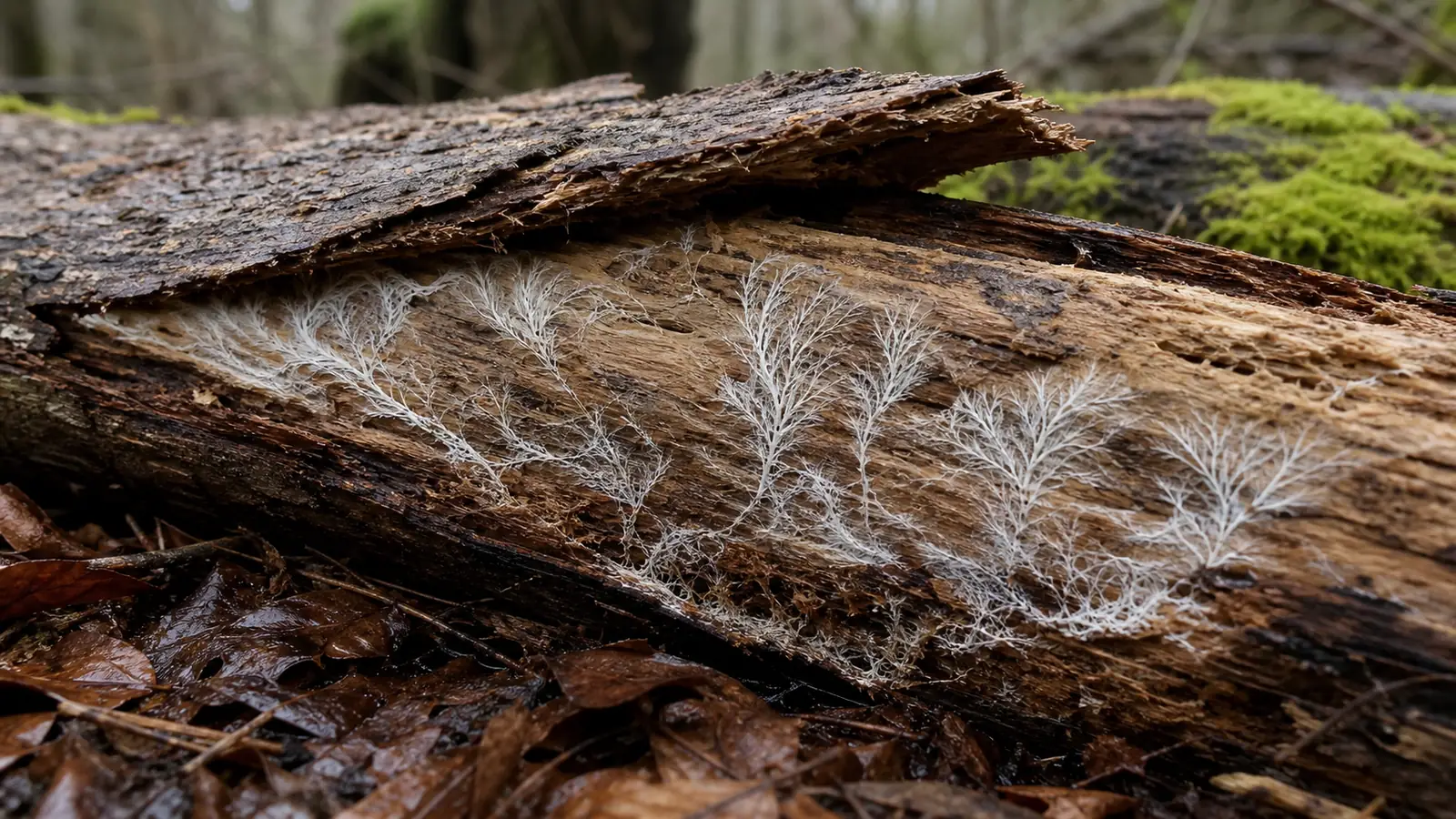
A mushroom's life cycle runs spore, mycelium, mushroom, spore. The visible mushroom exists only to release the next generation of spores.
Every mushroom you have ever seen is one frame in a loop that runs spore, thread, mushroom, spore. Understanding that loop tells you why fungi appear when they do, and why the same patch can vanish for a year and then flood a forest floor overnight.
Key takeaway
The visible mushroom is temporary. The feeding mycelium usually lasts much longer, then fruits when moisture, food, temperature, and species timing line up.
How does a mushroom reproduce?
A mushroom reproduces by spores, not seeds. Where a plant packs an embryo and a food supply into a seed, a fungus scatters millions of near microscopic spores, each one a single cell hoping to land somewhere it can grow.
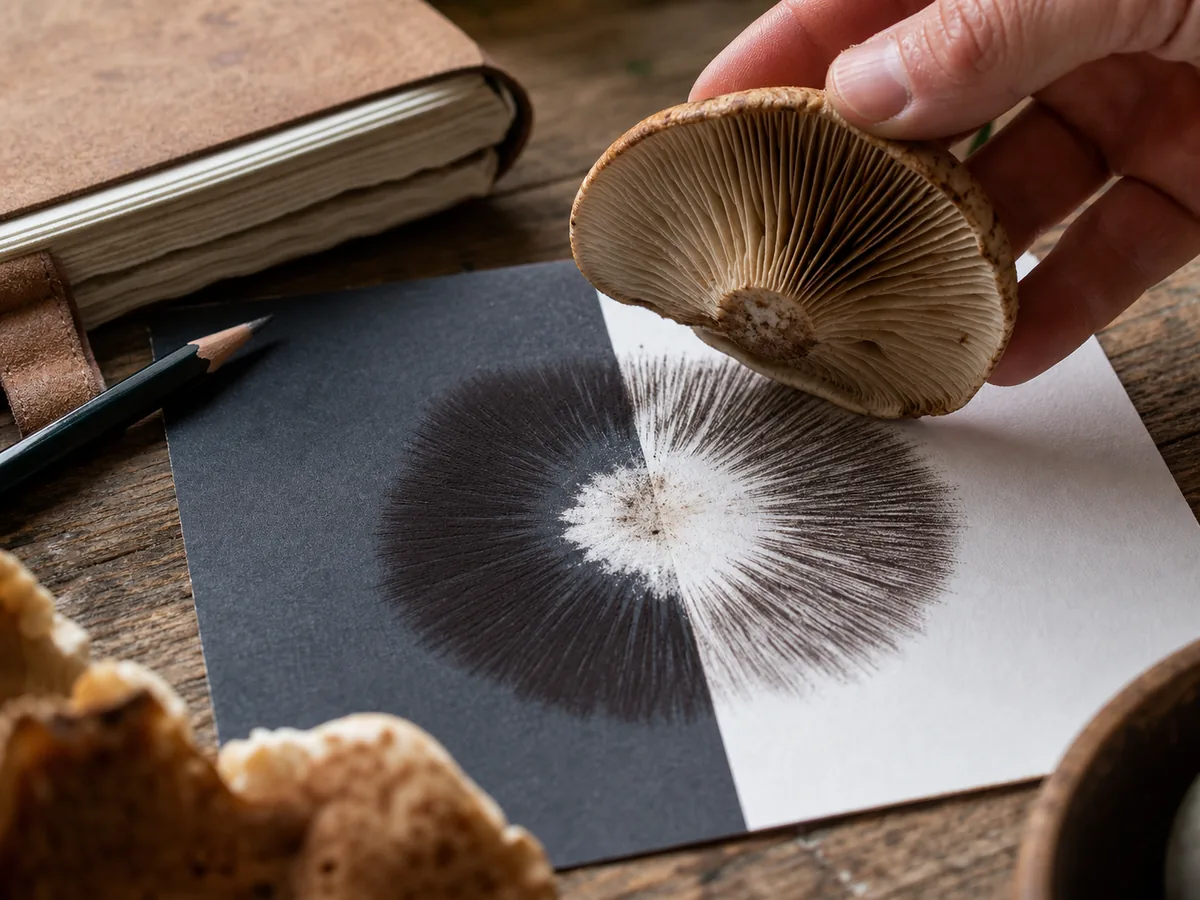
The numbers are staggering. A single large mushroom can release billions of spores over a few days, dusting the air and ground around it in a fine, often invisible rain.
Because most spores land without suitable food or moisture, fungi release vast numbers so a few can establish colonies.
The reproductive strategy uses enormous numbers of inexpensive spores to spread widely and let rare survivors rebuild the network. Mushroom mycelium occupies most of the cycle, while the mushroom is its brief reproductive structure.
Most spores fall from gills into moving air, while others travel on insects, animal fur, or through an animal gut. Some species use microscopic launch mechanisms to propel spores away from the fruiting body.
Gills, pores, teeth, and folds create a large spore-bearing surface beneath a protected cap. Their position lets falling spores enter moving air, so mushroom form directly supports dispersal.
MycologyMycelium Explained Through the Work It Does UndergroundThe four stages of the mushroom life cycle
Spores, germination, established mycelium, and fruiting follow a fixed order even though food, temperature, and moisture make the timing variable.
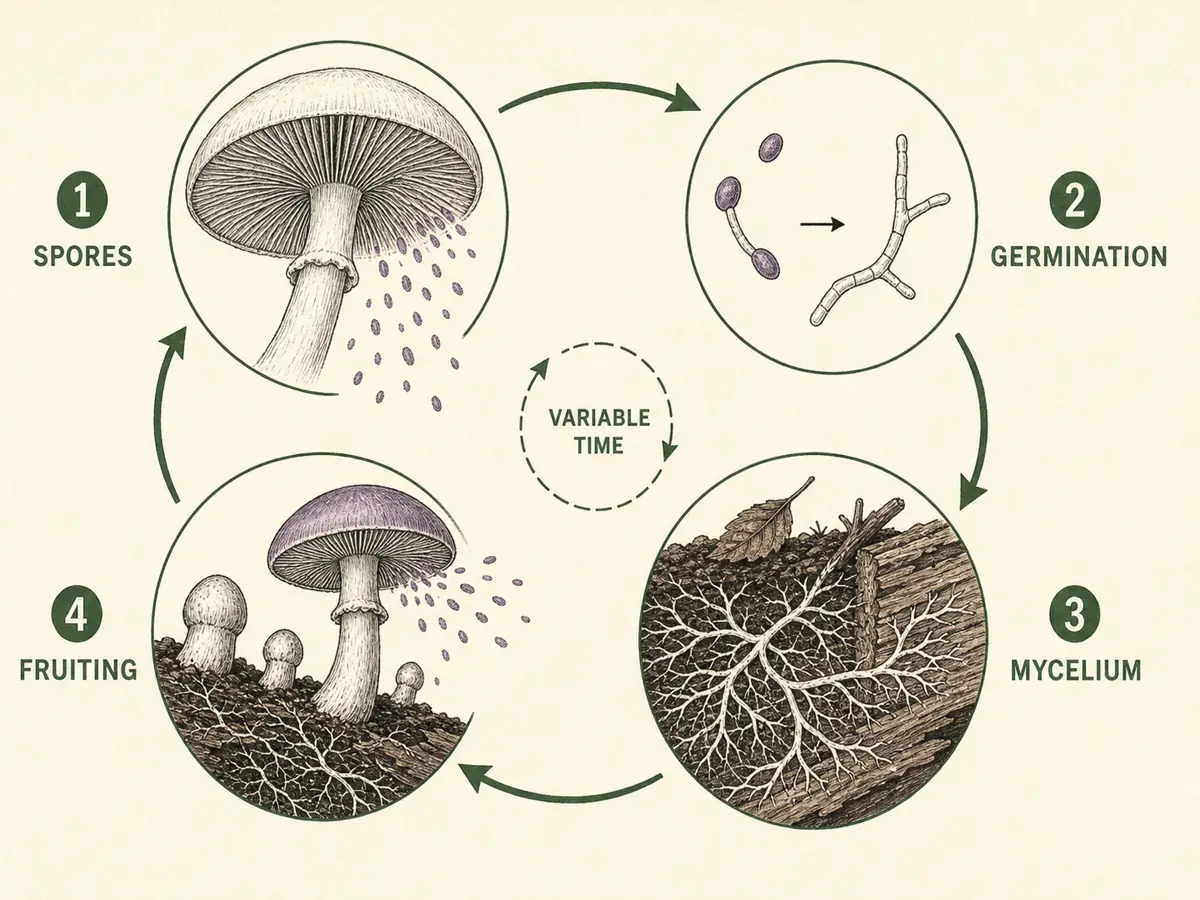
Each stage faces a different failure because spores dry out, young mycelium loses ground to microbes, and pins rot or shrivel when moisture is wrong. The tidy loop therefore represents a sequence of narrow biological handoffs.
That fragility is why the whole cycle is tuned toward numbers and timing. The fungus overproduces at the start and waits for the safest possible moment to fruit, so that the handful of spores and pins that do survive are the ones with the best shot.
There is one wrinkle worth knowing. A spore usually grows into mycelium that cannot fruit on its own, and only when it meets and fuses with a second compatible network does the combined body gain the ability to make mushrooms.
The fungal mating step explains why one germinated spore can remain a quiet thread until a compatible partner arrives.
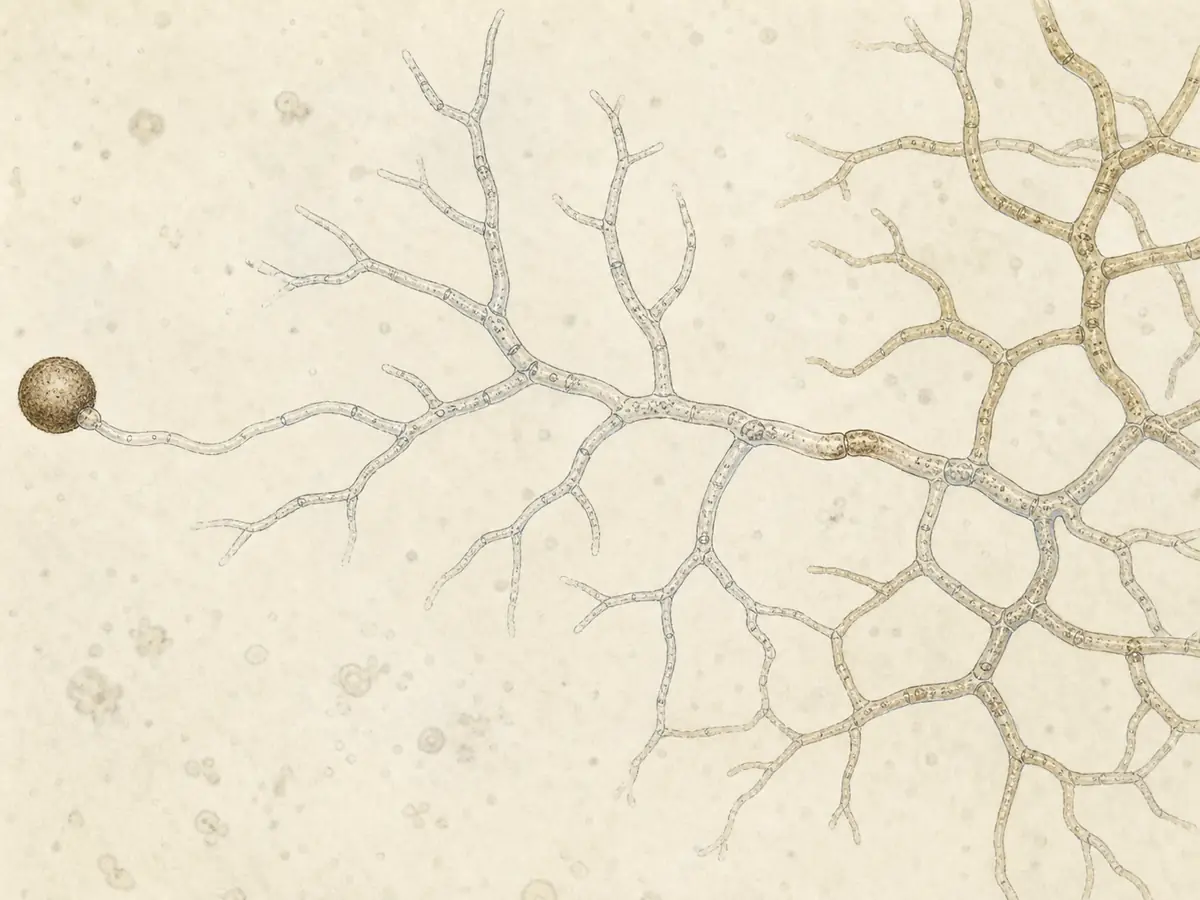
Some fungi have thousands of compatible mating types rather than two sexes, increasing the chance that unrelated hyphae from wind-scattered spores can pair. The exact system varies by group, but compatibility determines whether many mushroom-forming fungi can complete the next stage.
It also explains a detail every grower learns fast. A single spore print holds a mix of types, so a culture started from many spores at once will usually contain compatible partners already, ready to fuse and fruit, while a culture cloned from one strand may need help along the way.
Note
The mushroom is only stage three of four. Most of a fungus's life is spent as mycelium in stage two, which is why a patch can look empty for months and then fruit almost overnight when the weather finally turns.
How long does the mushroom life cycle take?
It depends entirely on the species and the weather, and the honest answer ranges from days to decades. There is no single clock.
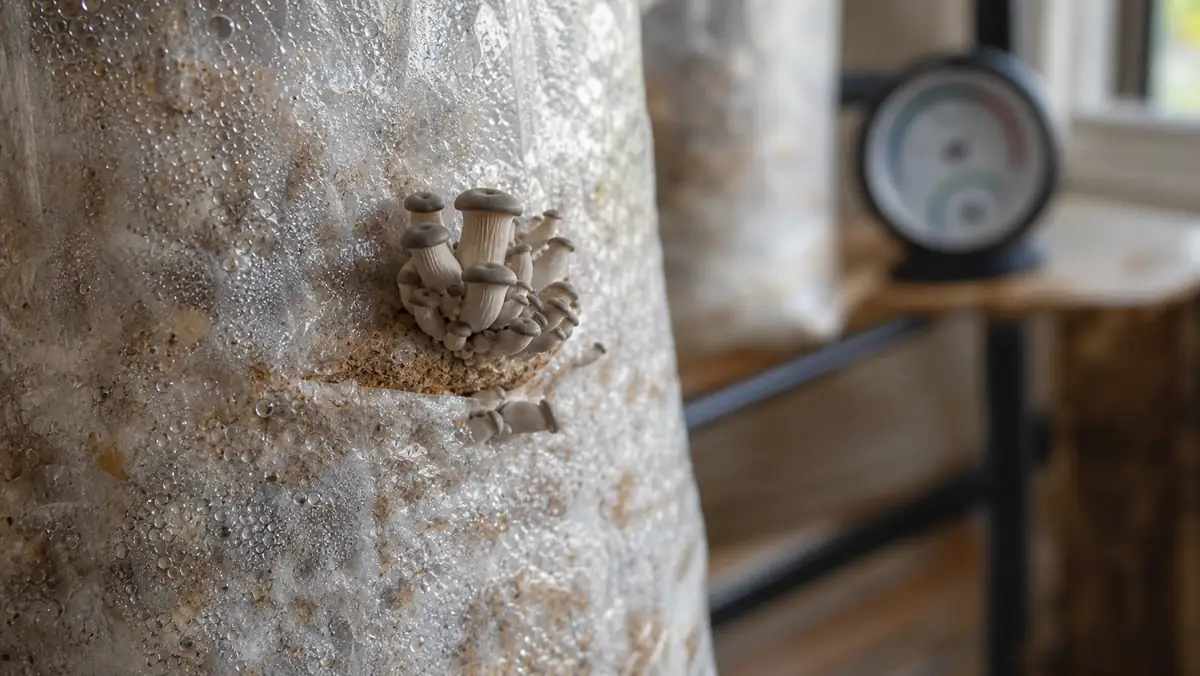
Controlled warmth and humidity can move oyster substrate from colonization to harvest in weeks, making its responsive cycle suitable for beginners.
The fruiting itself is faster still. Once a patch decides to fruit, pins can swell into full mushrooms in a day or two, which is why a lawn can look bare at breakfast and be studded with caps by evening.
A mycelial network may feed for years before fruiting, and woodland fungi associated with tree roots can persist between productive seasons for decades. A dry year can suppress mushrooms without killing the fungus because fruiting would waste energy when spores cannot disperse successfully.
The life cycle runs on a visible clock of days from pin to spore release and a hidden clock of months or years spent feeding as mycelium. Mushrooms seem sudden because people notice the fast reproductive phase and miss the long preparation underground.
Home growers wait longest for quiet colonization, so patience with the invisible stage prevents premature handling better than chasing fast fruiting.
Weather is the trigger that syncs it all. A soaking autumn rain after warm ground is the classic cue that pushes many fall mushroom flushes to appear at once.
Species respond to different seasonal cues, with some fruiting after autumn cooling, others in spring, and a few during winter. Experienced foragers match each target to the weather window when its cycle is most likely to reach fruiting.
One fungal patch can produce repeated flushes as mycelium rebuilds reserves between waves, spreading several harvests across weeks.
A quiet patch can remain inside the cycle
The absence of mushrooms marks a missing reproductive event rather than proof that the fungus disappeared. Mycelium may keep feeding through dry weather, hold resources until temperature and moisture improve, or lose part of its territory while surviving elsewhere in the same substrate.
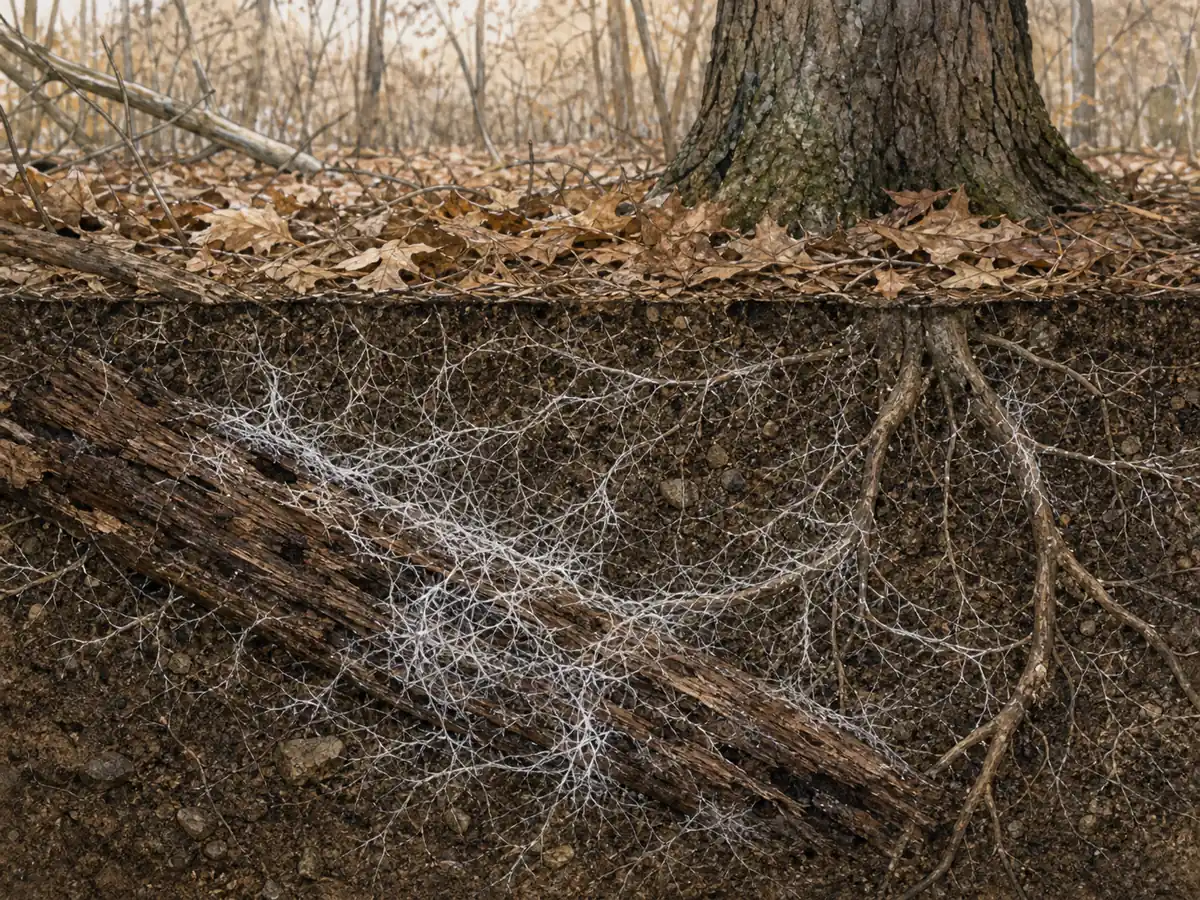
A returning fruiting does not mean a new fungus arrived either. Repeated mushrooms near the same tree or log may come from an established network, although genetics would be needed to prove that separated fruiting bodies belong to one individual.
Spore release also depends on a mature fruiting body and suitable air movement, so a young closed cap or waterlogged mushroom may contribute little even when the mycelium below is healthy.
After release, distance does not guarantee establishment because a spore must reach compatible food, moisture, temperature, and sometimes a mating partner. The cycle therefore filters enormous spore numbers into relatively few successful colonies.
In many mushroom-forming fungi, germinated hyphae must meet compatible partners before the network can produce the fertile tissue needed for mushrooms. Without compatible partners, suitable food and moisture may support growth while fertile tissue never forms.
The network must then accumulate enough resources to build mushrooms, which are expensive structures compared with microscopic hyphae. Poor food, drought, heat, or competition can keep the fungus in a feeding phase even after compatibility is established.
A mature cap may release spores for hours or days as humidity and air movement change, so dispersal is a period rather than one instant at full expansion.
Why the life cycle matters for foragers and growers
Reading the four life-cycle stages turns biological timing into practical evidence for both wild study and cultivation.
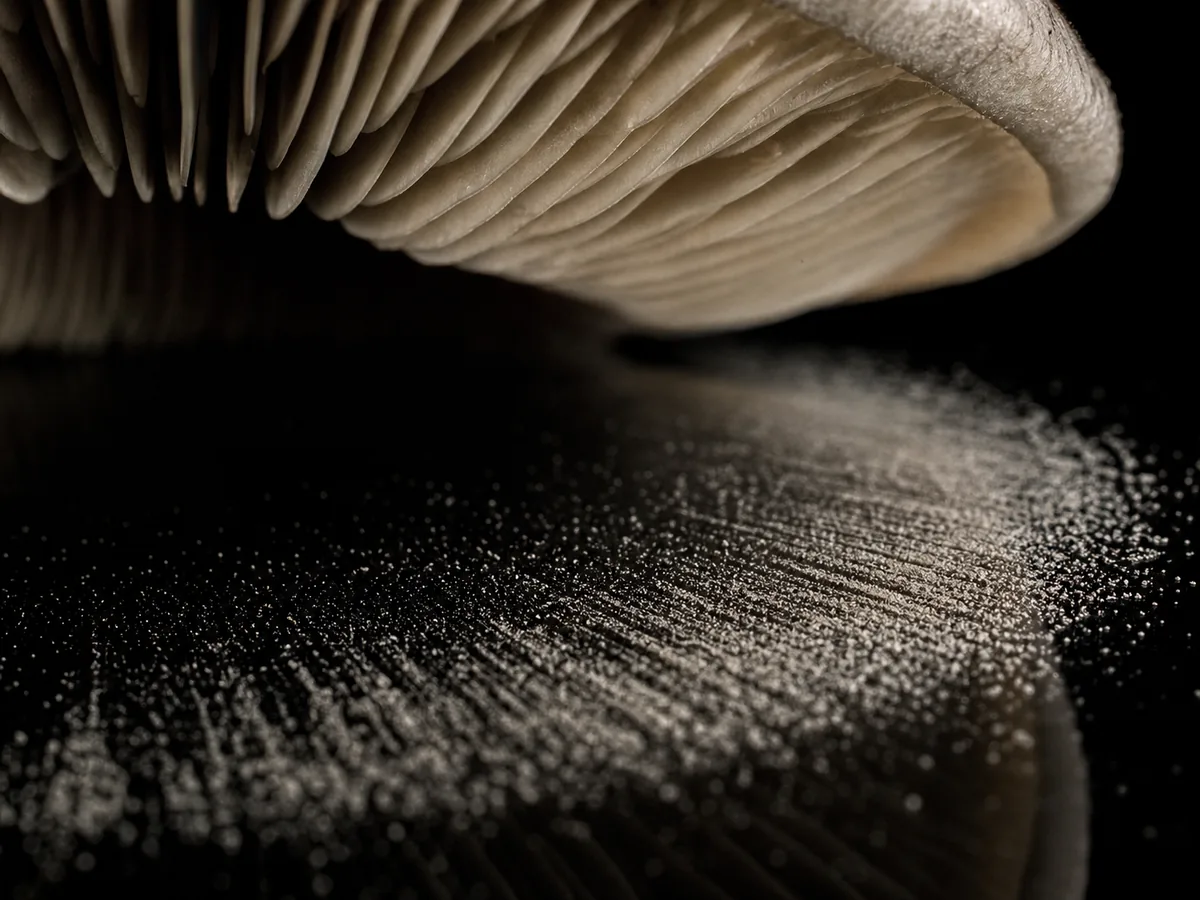
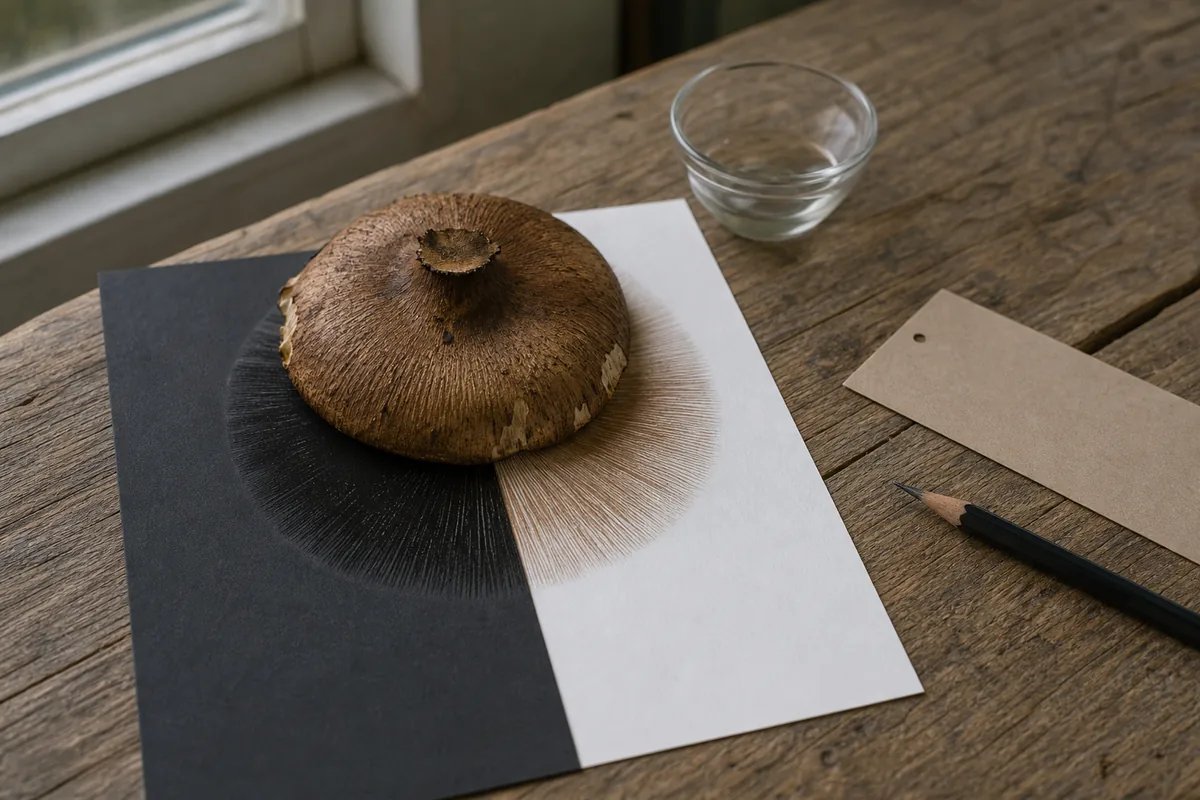
Spore color gives foragers one repeatable identification character, and a spore print can collect it overnight from a mature cap. The result narrows candidates but must agree with anatomy, habitat, and the complete specimen.
Fruiting follows a well-fed mycelium and suitable weather, which helps explain why a species can return to the same place in similar conditions. Beginner fieldwork combines season, habitat, growth stage, and spore evidence before any food decision.
Warning
A spore print narrows the field, but it never confirms a mushroom is safe to eat on its own. Some deadly species share a spore colour with good edibles, so a print is one clue among many, never a green light.
Cultivation concentrates effort on clean, complete colonization before changes in temperature, humidity, and airflow trigger fruiting. Oyster mushroom growing manages the same four stages deliberately rather than changing their order.
Shiitake may colonize a log for months while oyster strains move faster, changing the clock without changing the sequence.
A cold shock, soak, or increase in fresh air can trigger a colonized block because each action imitates a natural cue. The grower works with signals the fungus already recognizes rather than inventing a new stage.
The edible fruiting body belongs to a larger hidden organism, so one friendly-looking cap cannot establish identity or safety. Reading the full life cycle reinforces the need for multiple anatomical and ecological clues.
Once you see the loop, the whole fungal year clicks into place. The empty forest floor, the sudden overnight flush, the print on your paper, and the colonised jar on your shelf are all the same cycle caught at different moments, spore becoming thread becoming mushroom becoming spore again.
For field use, beginner foraging habits turn the cycle into safer timing, specimen handling, and spore-print decisions.
Sources & References
- Moore, D. et al. (2011). 21st Century Guidebook to Fungi Spore germination, mating types, and basidiocarp development.
- British Mycological Society Fungal reproduction and spore dispersal mechanisms.
- Money, N.P. (2016). Fungi: A Very Short Introduction Accessible overview of fungal development and life stages.