
Mycology
The science of fungi, explained plainly: what mycelium is, how mushrooms reproduce, and why fungi matter to food, medicine, and ecosystems.
Fundamentals
Core concepts for the curious.
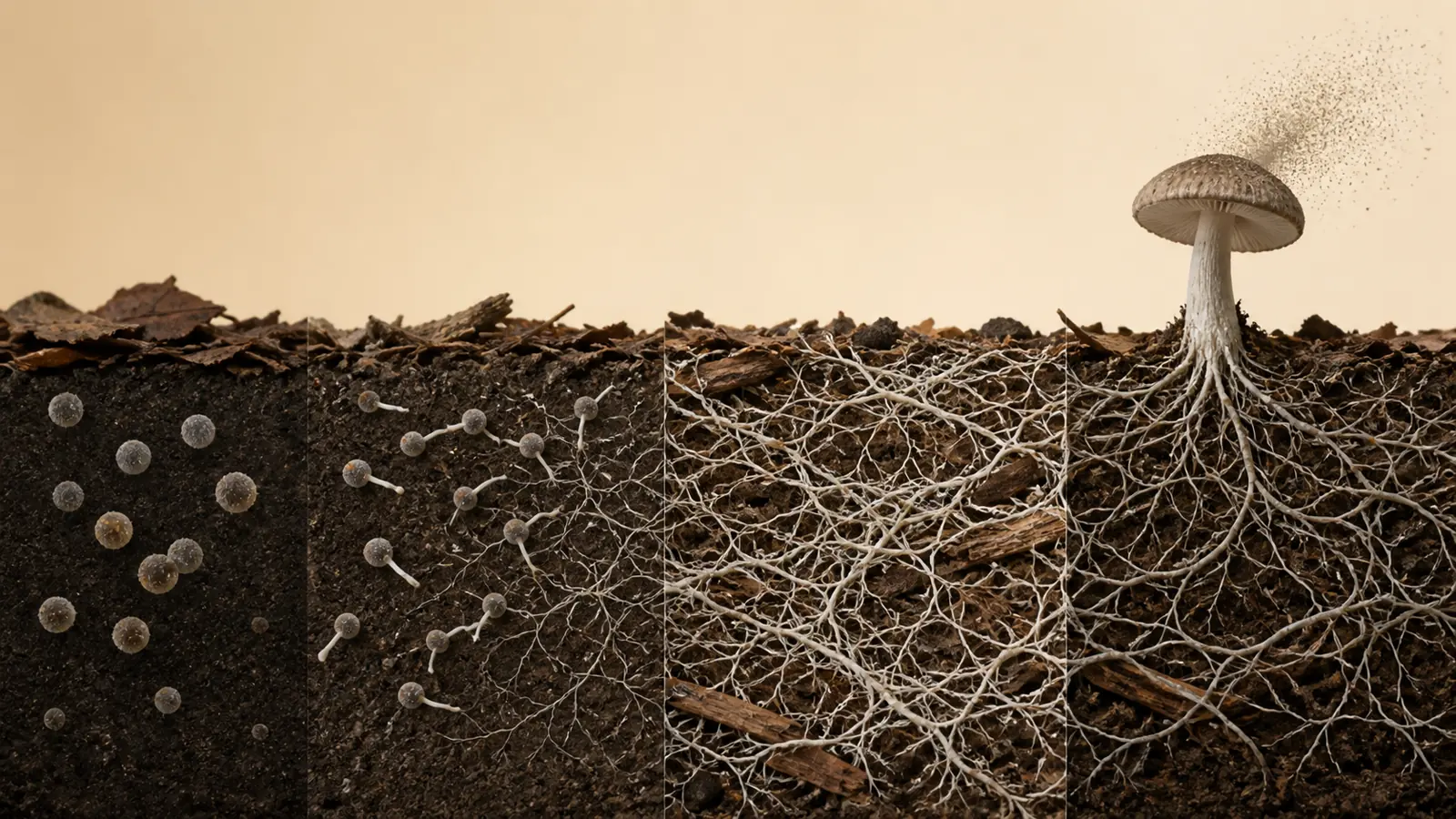
How the Mushroom Life Cycle Moves From Spore to Spore
From spore to mycelium to mushroom, and back to spore.
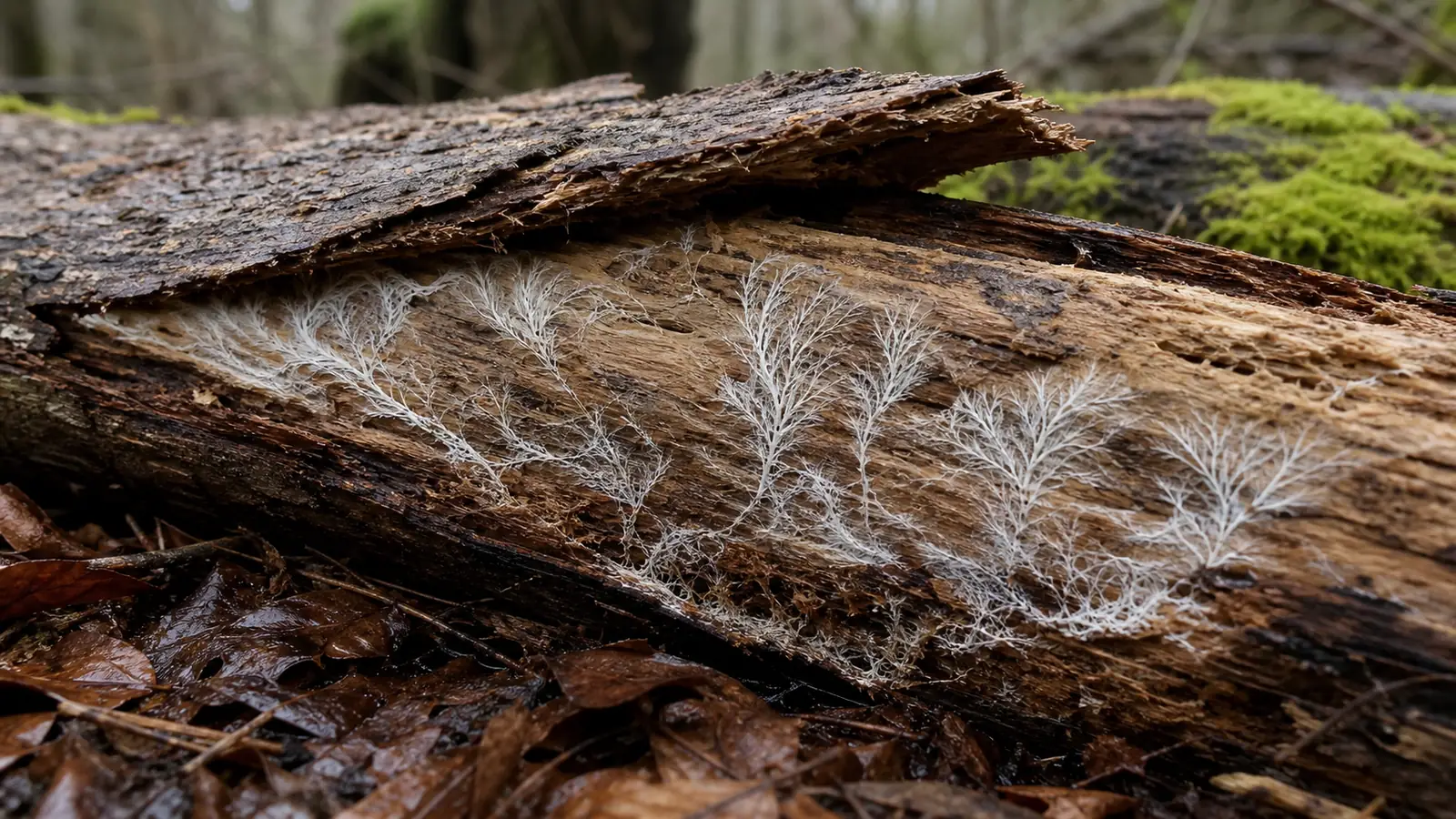
Mycelium Explained Through the Work It Does Underground
The hidden network that is the real body of a fungus.
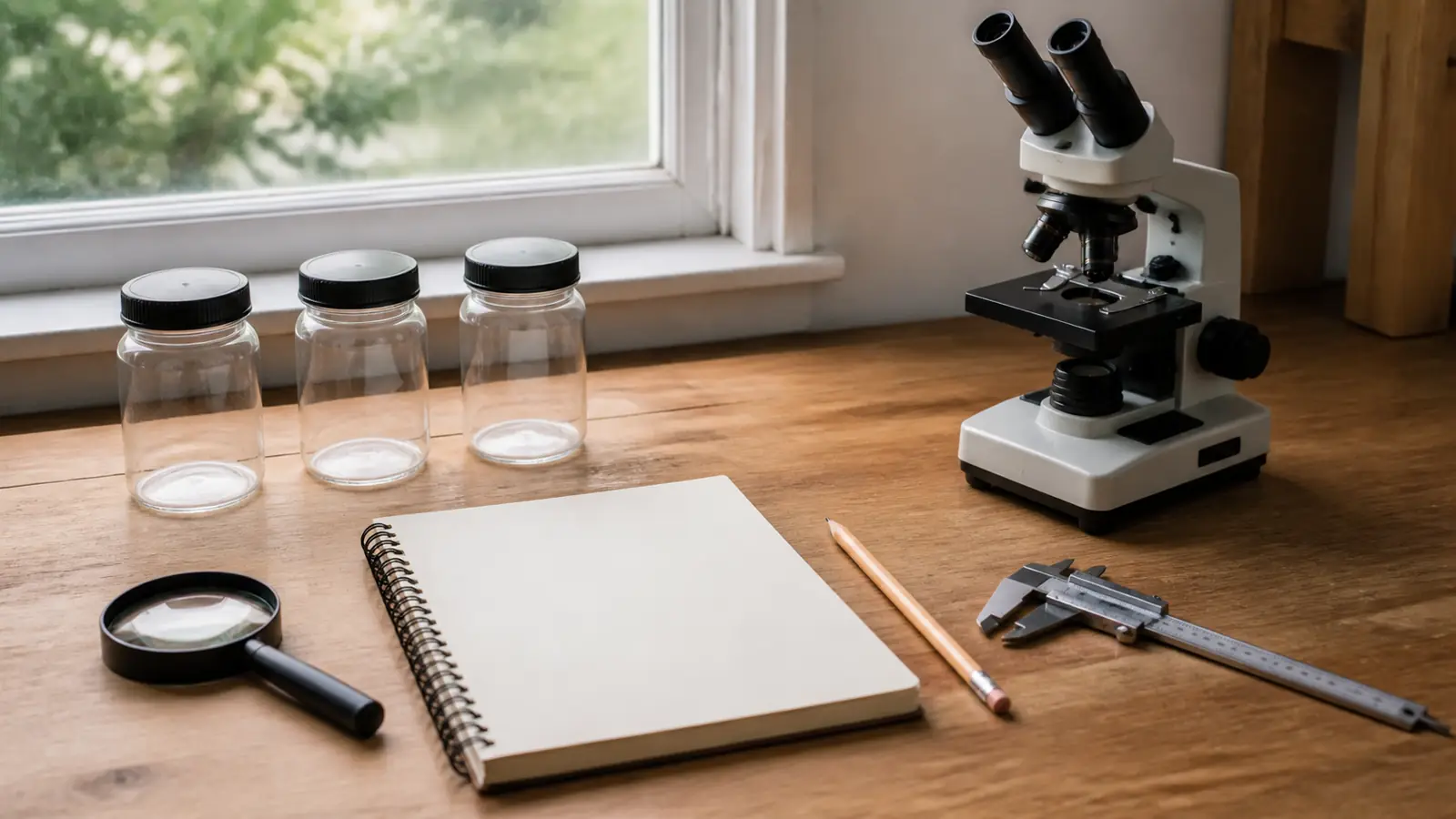
What Is Mycology, and What Do Mycologists Actually Study?
The study of fungi, and why it touches medicine, food, and ecology.
The science of fungi
Mycology is the study of fungi, a kingdom of life entirely separate from plants and animals. A mushroom is only the fruit. The real organism is a hidden web of threads called mycelium.
Why fungi matter
Fungi recycle dead wood, feed forests through their roots, and hold ecosystems together underground. Some are among the largest living things on earth.
For the curious
These articles explain how mushrooms reproduce, how mycelium spreads, and the partnerships between fungi and trees. No foraging required, just curiosity about a strange and vital kingdom.
Frequently Asked Questions
What is mycology?
Is a mushroom the whole fungus?
Are fungi plants?
Mycology starts with the right mushroom
Get to know the species, check its safety advice, and find practical help for your next step.
Browse the encyclopedia