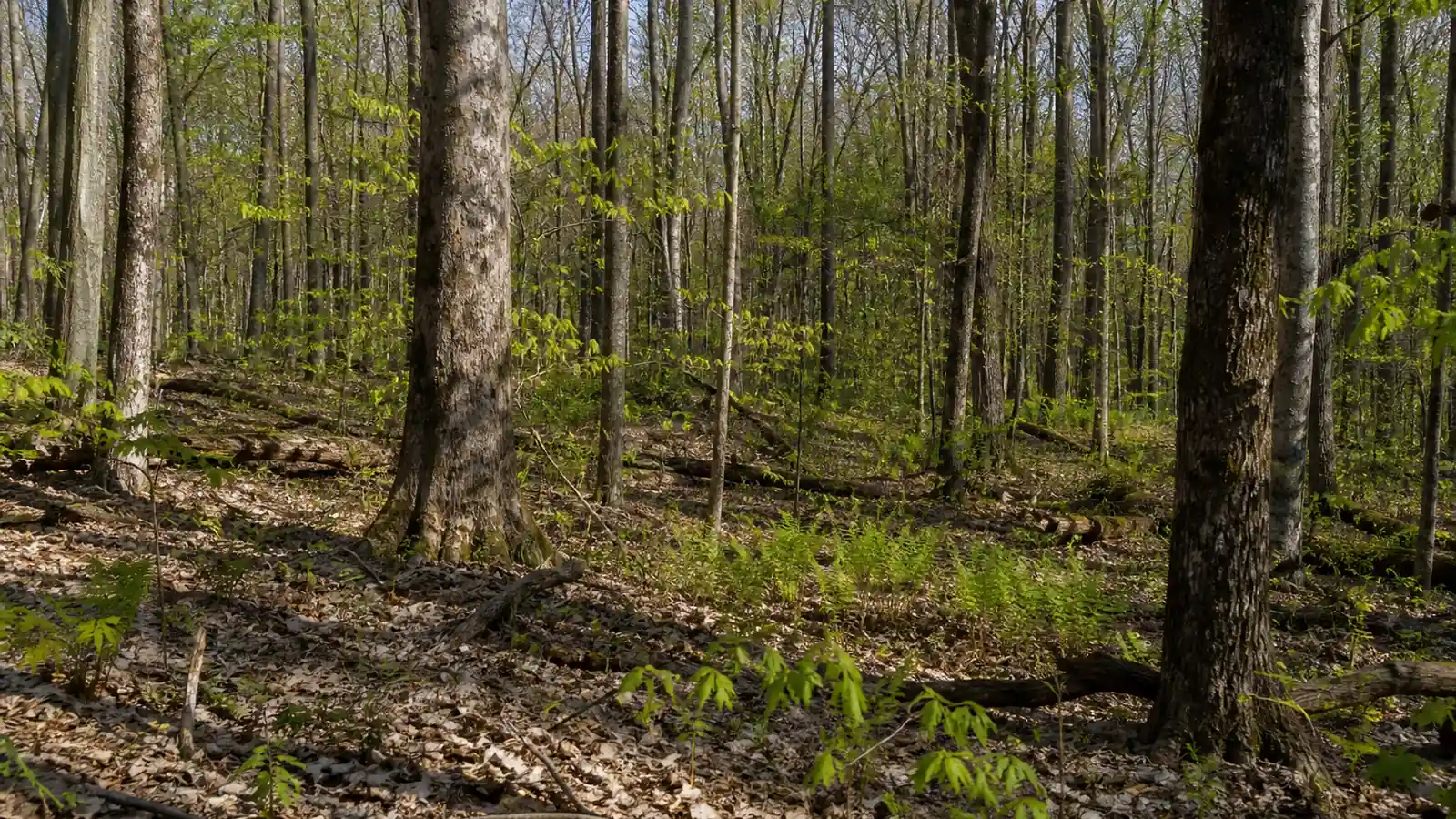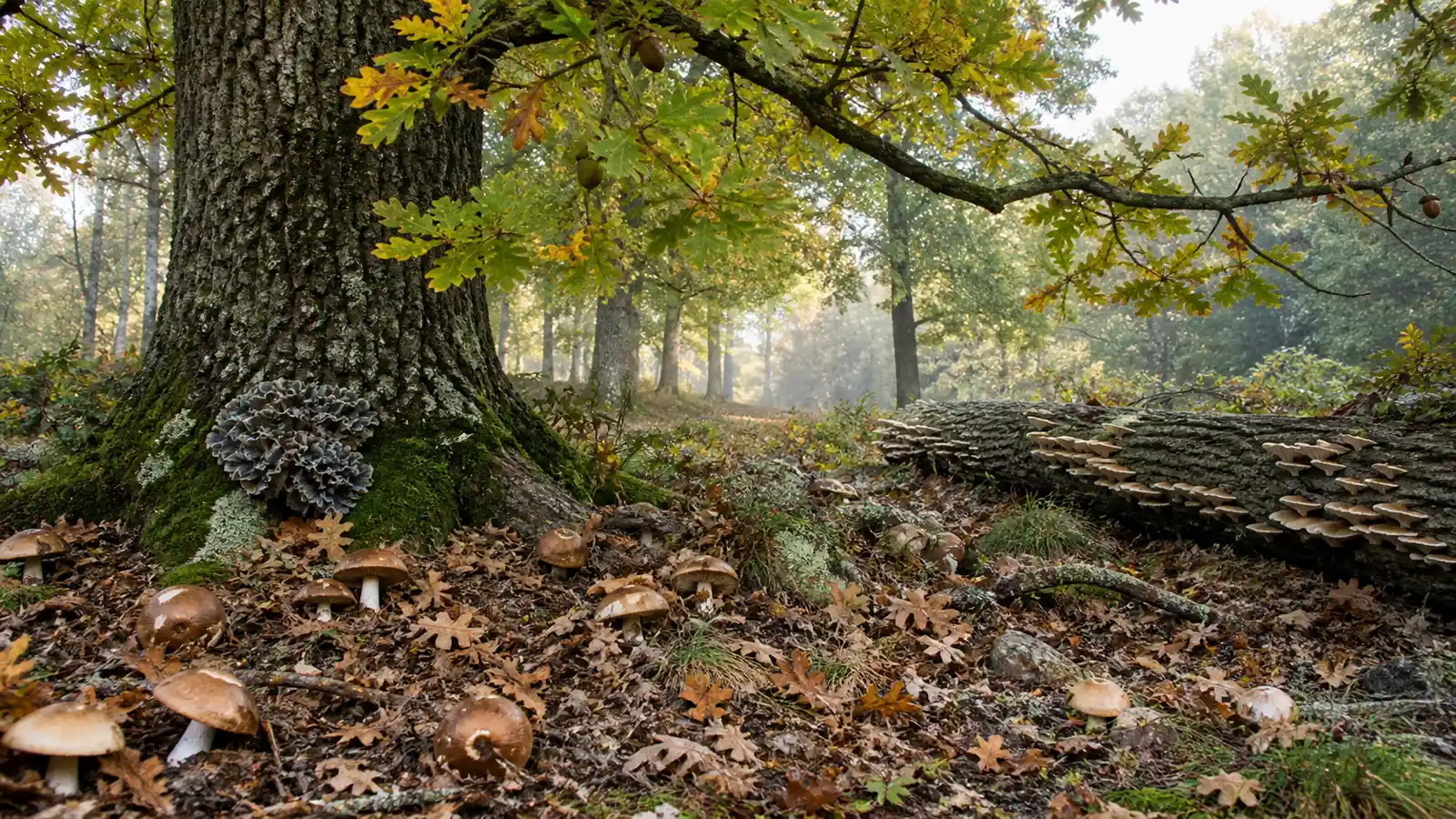
Oak supports both root partners in soil and wood-decay fungi on trunks, roots, stumps, and logs. Start by proving the attachment point, then record growth form, underside, complete stem base, season, region, and every nearby tree.
Oak habitat never proves edibility. Death caps associate with tree roots, while large basal brackets can raise a separate tree-safety concern.
Oak trees support mushrooms in two fundamentally different places. Mushrooms attached to oak wood are using the tree or its dead remains, while mushrooms rising from soil beneath the canopy may be connected to living roots.
Record the exact point of growth before using the oak as an identification clue.
Host is supporting evidence, never an edibility test. Oaks associate with edible, inedible, and deadly fungi, including death caps in parts of North America.
Map the Oak From Root Tips to Deadwood
Follow each stem or bracket to its exact point of growth without cutting it. A cap can appear to grow from soil while actually emerging from a buried root, and a cluster at the base may connect to wood below grade.
Use a narrow twig to move loose leaves, then stop at firm soil or bark. Deep excavation destroys the stem base and can injure the oak roots whose relationship you are trying to understand.
Distance from the trunk is not decisive because mature oak roots spread well beyond the drip line. Nearby pines, birches, beeches, and planted ornamentals may also send roots through the same patch.
| Where it fruits | Likely ecological role | Evidence to collect |
|---|---|---|
| Soil and leaf litter under the crown | Often ectomycorrhizal with oak roots | Distance from trunk, nearby tree species, complete stem base, underside |
| Root flare or trunk base | Root or butt decay, or a fungus using buried wood | Exact attachment, condition of bark, crown health, repeated fruiting |
| Standing trunk or branch wound | Wood decay in living or dead tissue | Height, wound, underside, branch condition |
| Stump, log, or fallen limb | Decomposition of dead oak | Wood hardness, bark, cut surface, cluster arrangement |
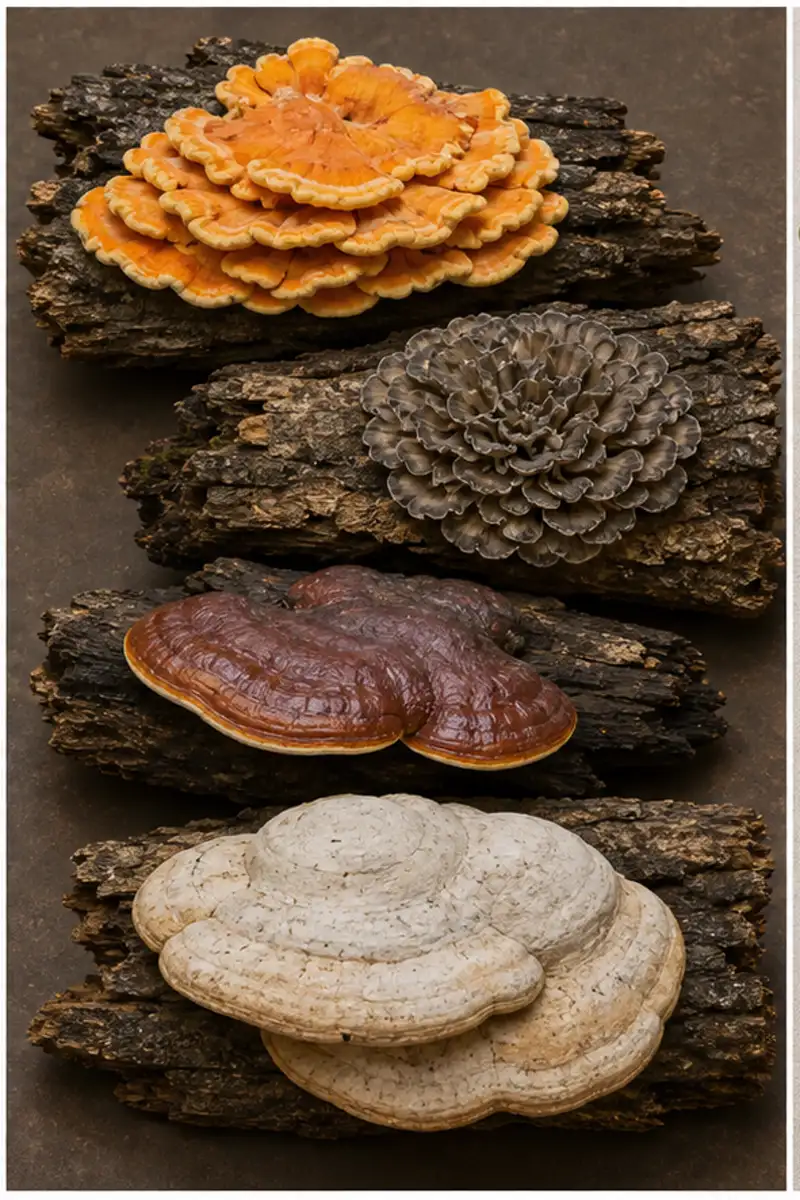
The four-zone plate below keeps those ecological roles in their physical positions.

The oak itself also needs confirmation. Acorns, lobed or bristle-tipped leaves, buds, bark, and local range provide stronger evidence than one fallen leaf blown under another tree.
White-oak-group leaves usually have rounded lobes, while red-oak-group leaves commonly carry bristle tips. That distinction can matter to a regional fungal record even when it does not identify the mushroom.
Photograph the trunk and canopy in the same direction as the specimen. A field reviewer can then judge whether the proposed host is close enough and whether another tree was omitted.
The Root Partners Beneath an Oak
Oaks form ectomycorrhizas, close root-fungus partnerships that exchange tree sugars for water and mineral access. USDA research on Oregon white oak documented more than 40 fungal associates at one study site, evidence that an oak grove cannot be reduced to one signature mushroom.
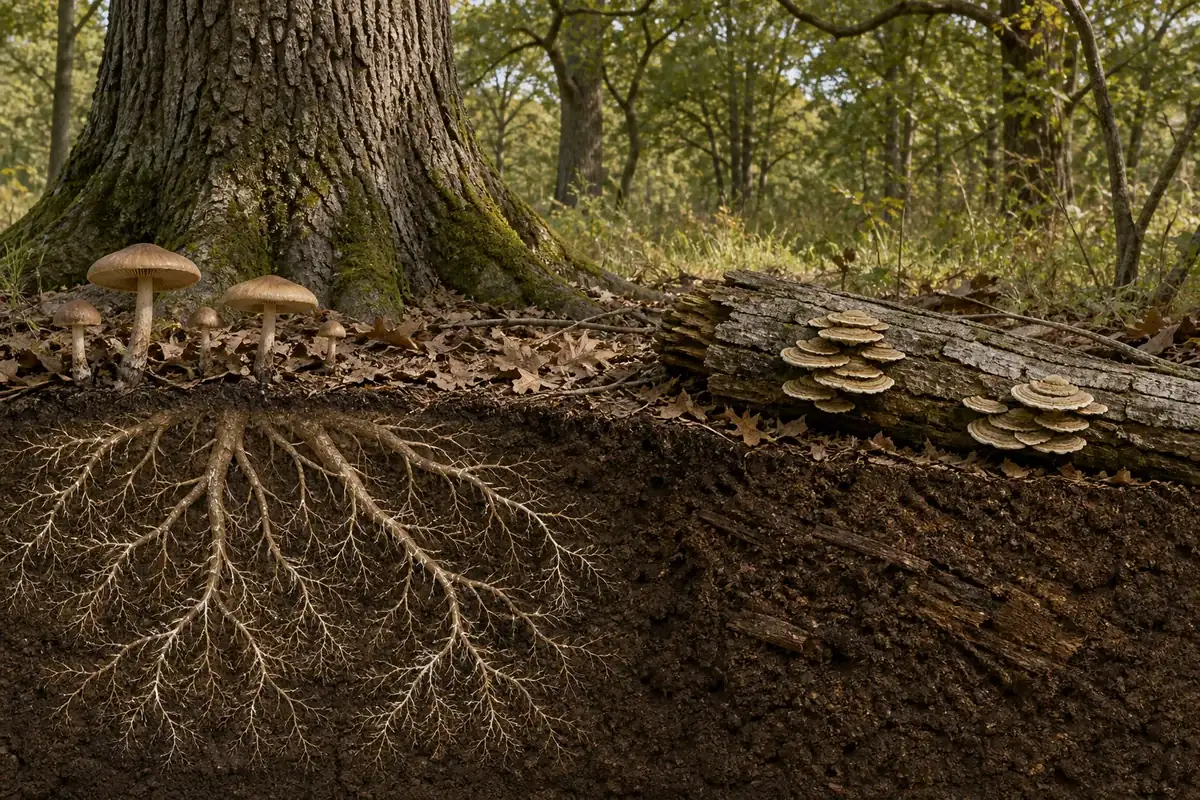
The visible cap is a temporary reproductive event above a much larger root-associated network. Rain and temperature can trigger several partners at once, so a mixed flush is normal rather than evidence that one species changed form.
Chanterelles form blunt folds that run down the stem, while many lookalikes carry thin blade-like gills. Even that distinction remains incomplete without solid flesh, growth pattern, color changes, odor, and a regional key.
Boletes replace gills with a pore surface, but the group includes edible, bitter, staining, and toxic species. Note pore color, pore bruising, stem network or dots, base color, and flesh change after cutting only when collection is lawful.
These groups are starting points rather than promises. Several oak partners change by continent, soil, and oak species, and two mushrooms beside the same trunk may belong to unrelated fungi.
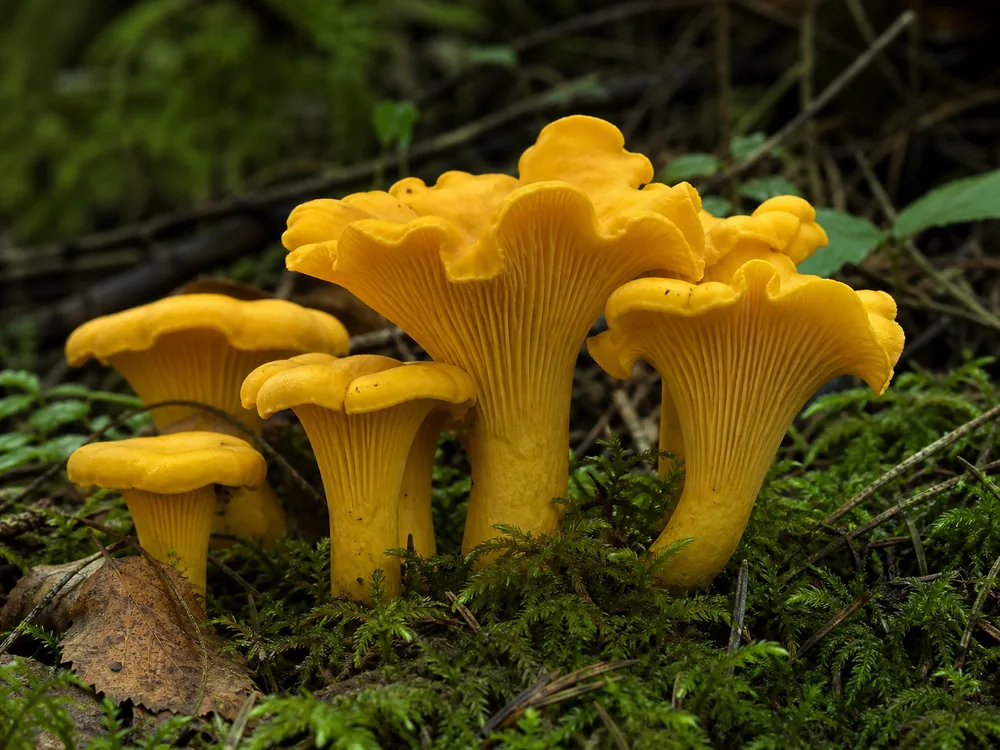 Soil beneath living oakChanterelleBlunt folds and solid flesh still need a regional identification
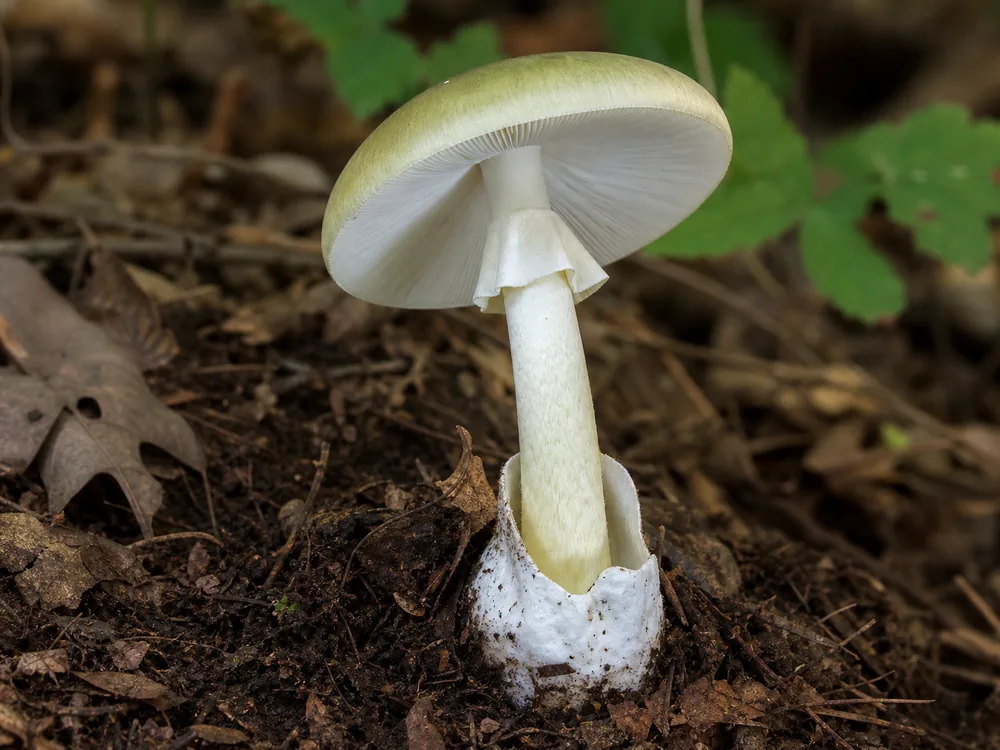 Soil in an oak root zoneDeath CapPreserve the complete stem base because this lethal Amanita can associate with oak
Milk caps can exude white, colored, or changing latex from damaged gills. Brittlegills break with a chalk-like snap, yet both groups contain many close species that require more than host and one texture test.
Amanitas demand the whole buried base because a cup-like volva can remain below the soil. Slice through leaf litter around the specimen rather than pulling until the bulb breaks away.
Warning
Oak habitat does not make a mushroom edible | The death cap grows with tree roots and has caused fatal poisonings. Never eat an oak-associated mushroom from host, cap color, or an app match alone.
What Ancient and Damaged Oak Wood Supports
A bracket fixed to oak wood starts a different investigation. Some fruit from dead logs, while others colonize wounds, heartwood, or roots before the tree dies.
Chicken of the woods can emerge from a trunk, stump, or buried root, which makes apparently terrestrial clusters possible. Young shelf color, pore surface, flesh texture, host, and regional species all need agreement.
Hen of the woods commonly returns around the same oak base in autumn. Its many gray-brown spoon-shaped fronds arise from a branching core, a structure unlike one solid shelf attached higher on the trunk.
Beefsteak fungus is a stronger European oak clue than a universal North American expectation. A red wet surface and marbled cut flesh help, but distribution must agree before the name enters a field record.
A fruiting body on living oak can lose color as it ages, but its attachment still reveals whether it emerges from trunk, root, or deadwood. That attachment also determines when the whole tree needs assessment.
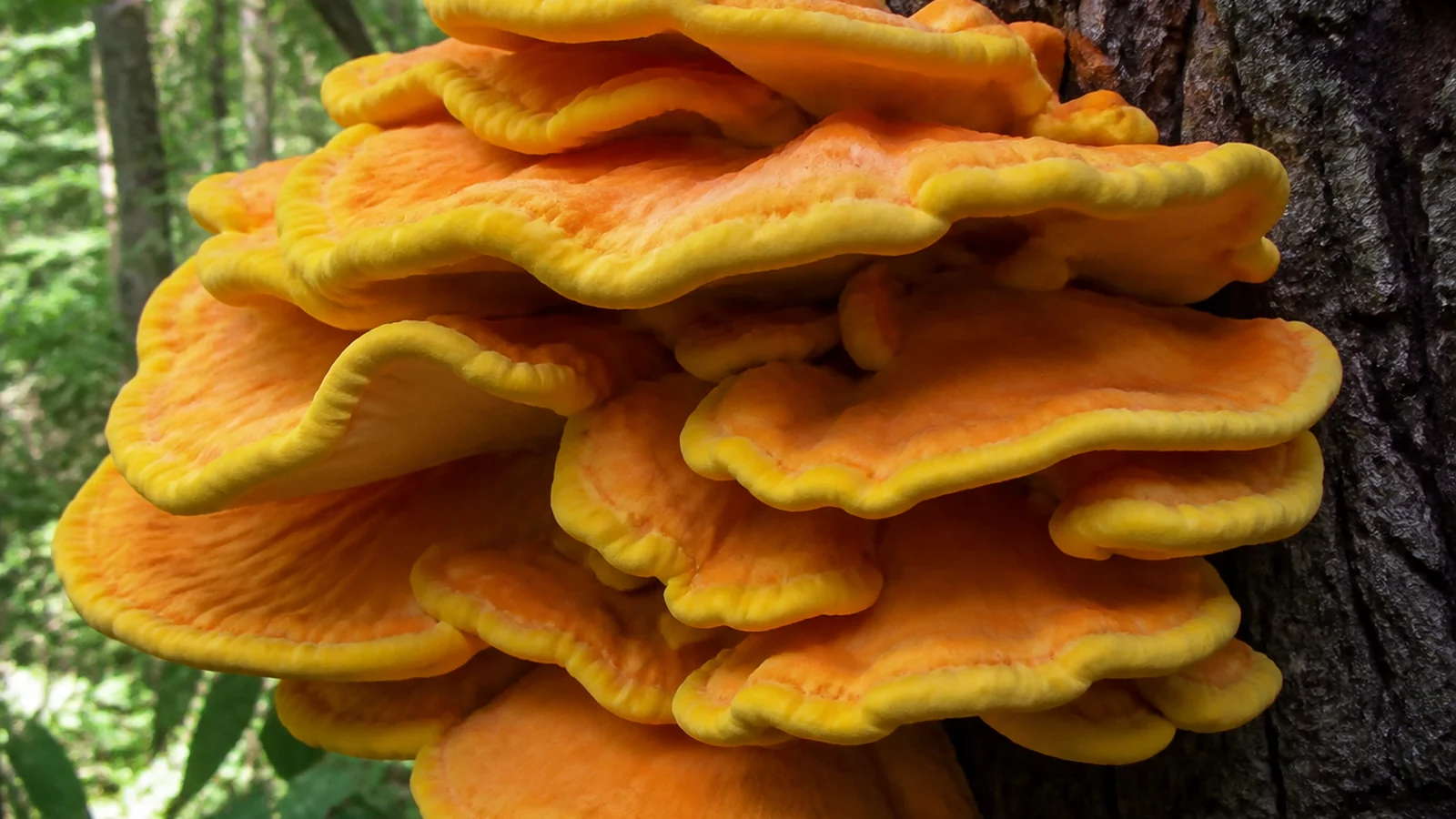 Shelves on oak wood or buried rootsChicken of the WoodsConfirm species, freshness, host, and underside before considering food
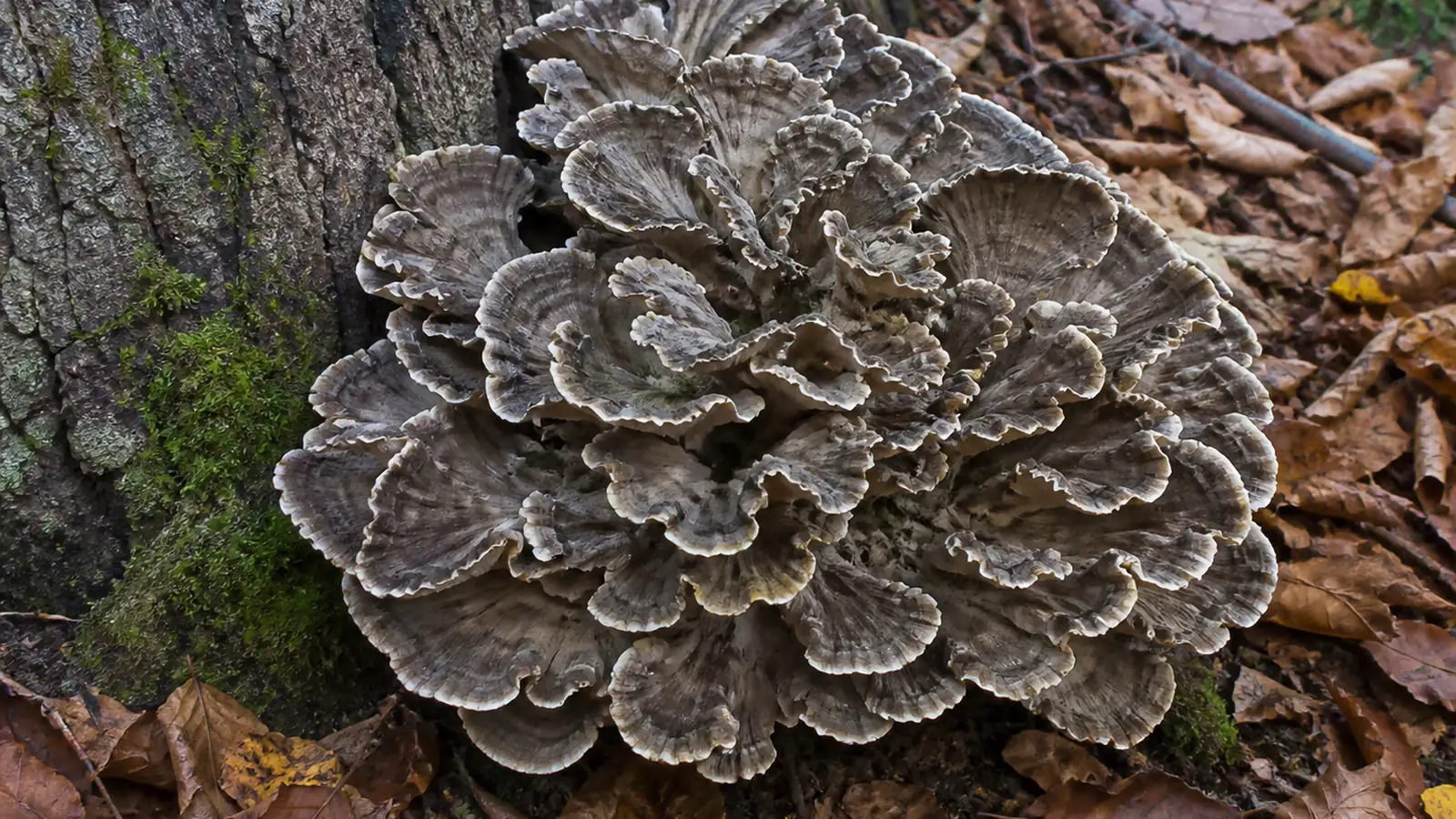 Rosette at an oak baseHen of the Woods (Maitake)Trace the branching core to buried roots and compare a complete specimen
Massive basal polypores may extend from roots that are hidden under soil. Photograph the whole base and crown before collecting a piece, because a detached bracket cannot preserve the structural context.
A fruiting body on living oak deserves a tree-health look as well as a mushroom record. Repeated basal brackets, cavities, dead leaders, root damage, or a target within falling distance make structural assessment more important than a species name.
Do not remove a bracket as treatment. The fungus remains in colonized wood, and the missing fruiting body can make a later site inspection less informative.
ForagingMushroom foraging laws in the UK: what is actually legalTurn the Find Into Identifying Evidence
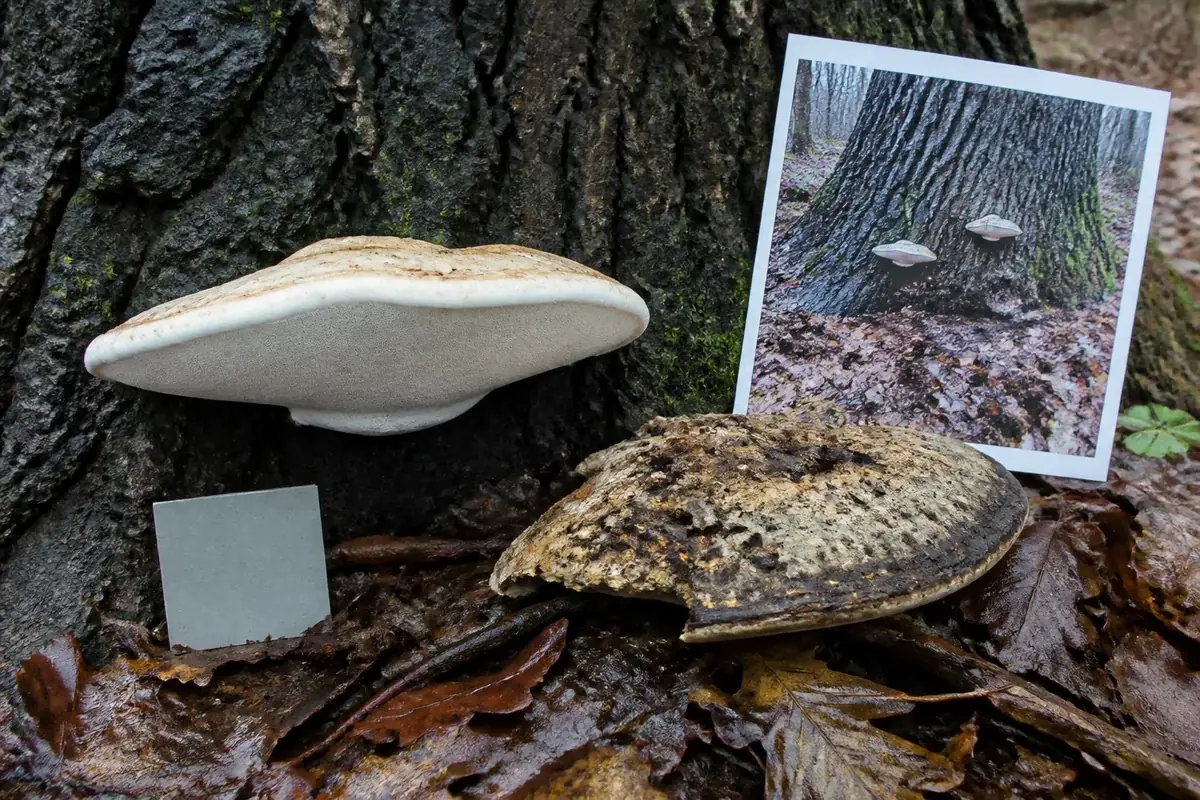
Begin with a complete specimen and the site. Photograph the cap, underside, full stem or attachment, surrounding oak, and growth pattern before handling it further.
Include young and mature examples when they occur naturally in the same patch. Veils, color, pore shape, cracking, and bruising can change so much with age that one old specimen creates a false candidate list.
Record soil type, slope, drainage, recent rain, and whether fruiting occurs singly, in arcs, or in dense clusters. These facts help test ecology without pretending that any one pattern proves identity.
The field-record image shows how the host proof and complete specimen remain connected.
Spore color can help after these observations, but it rarely identifies an oak mushroom by itself. Use a spore print color guide as one character in a complete description.
Keep each collection in a separate paper packet with its own notes. Mixing two brown-capped oak associates can make a correct print or stem base impossible to assign later.
Where Oak Evidence Stops
Oak can sharply improve a hypothesis when the fungus has a strong host association. It cannot resolve species complexes, geographic lookalikes, age-related color change, or a second tree whose roots cross the same patch.
Host confidence is strongest when fruiting attaches directly to confirmed oak wood. It is weaker in soil as distance, root overlap, and mixed woodland increase.
Some field-guide names now cover several genetically distinct species. Use the current regional name when it is supported, and record a broader group name when the available characters cannot justify more precision.
Young fruiting bodies may hide the underside, old brackets may lose color, and rain can wash away scales or latex. Return visits often reveal more than aggressive cutting because mature shape, fresh bruising, and repeated location add independent evidence.
Freezing, drought, and insect damage also distort texture. A specimen that has collapsed or become waterlogged is useful for location records but may be unsuitable for an eating decision.
For eating decisions, require a regional description, complete specimen, all diagnostic characters, and confirmation from a qualified local identifier. Leave rare, damaged, solitary, or uncertain specimens in place.
Safety, Tree Condition, and Habitat Limits
Warning
Keep identification and tree safety separate | Do not eat an oak-associated mushroom until every field character agrees, and arrange a tree assessment when basal fruiting appears with root movement, crown decline, or an occupied target.
One oak can support partners below ground, decomposers in fallen limbs, and decay fungi in old wounds at the same time. That layered community is the reason a host-based list helps observation but cannot replace identification.
Retained dead limbs and fallen logs often hold more visible decomposers than a manicured yard. That difference reflects available substrate, not a simple healthy-versus-unhealthy verdict for the oak.
Fruiting records become more valuable across years. Note whether the same species returns at one root, whether a wound expands, and whether crown condition changes after storms or construction.
Record tree condition along with mushrooms. Storm damage, pruning wounds, compacted roots, deadwood retention, rainfall, soil drainage, and canopy gaps explain why fruiting appears in one place and not another.
First decide whether the fungus is under the oak, at its base, or attached to its wood. Form, underside, stem base, season, and region can then test the species hypothesis without turning the host into a shortcut.
Sources & References
- USDA Forest Service Diversity of ectomycorrhizal fungi associated with Oregon white oak.
- University of Florida IFAS Extension Ectomycorrhizal mushrooms beneath oak and their relationship to the tree.
- UC Agriculture and Natural Resources Death cap identification, oak association, and poisoning risk.
- University of California Integrated Pest Management Wood-decay fruiting bodies and tree-health implications.