Summer belongs to chanterelles and boletes wherever humidity holds. It is also the season when the deadly Amanitas are most active in warm regions, which changes what a beginner should be checking.
Summer foraging depends on humidity far more than on rainfall totals.
A warm wet summer produces heavily and a warm dry one produces almost nothing, and the difference is whether the ground holds moisture between rains. Shade and leaf litter do most of that work.
The season is longer than spring and less concentrated than autumn.
What mushrooms actually grow in summer?
Chanterelles are the summer mushroom in most of eastern North America, and they fruit over weeks rather than days.
| Species | Where | Note |
|---|---|---|
| Chanterelle | Mossy hardwood ground, often with oak | Fruits over weeks, returns to the same ground |
| Boletes | Mixed woodland, mycorrhizal with many trees | Insect damage is heavy in warm weather |
| Chicken of the woods | Wounds on living and dead hardwood | Bright and easy to spot from a distance |
| Amanita species | Soil under oaks and conifers | Includes the deadliest species, most active in warm regions |
Boletes fruit well in summer and suffer for it, because insects work fast in heat.
A bolete that would be perfect in October is often riddled by the time it is found in July. Cutting the stem before putting it in the basket saves carrying home a mushroom that is already lost.

Why does summer heat change what is safe to carry?
A summer basket spoils in hours rather than days, and that is a safety issue as much as a culinary one.
Mushrooms left in a warm car break down quickly, and bacterial growth on a decomposing mushroom causes illness that has nothing to do with the species. Several reported poisonings involve edible species handled badly.
Those habits cost nothing in October and decide the outcome in July.
Warning
An edible species can still make you ill if it was carried warm and cooked late. Summer collecting needs a shorter interval between finding and cooking than autumn does.
Why are Amanitas a bigger problem in summer?
In warm regions, the deadliest species are most active in exactly this season.
Death caps and destroying angels fruit through summer and into autumn in much of North America, and they fruit in the same oak woodland that produces chanterelles. That overlap is the reason a summer forager needs the Amanita checks even when hunting something else.
The base is where those checks live.
Those features are worked through under destroying angel and death cap.

What is the green-spored parasol doing on lawns?
Summer is also when the most reported poisoning in North America happens, and it happens on mown grass.
Green-spored parasol fruits in lawns and parks after summer rain, often in large rings, and it looks like the parasols people read about. It is covered under green-spored parasol.
Note
A large white scaly mushroom in a lawn in summer needs a spore print before anything else. Green settles it, and gill color on a young cap does not.
When in summer should you go out?
The lag after summer rain is usually short, because warmth speeds everything up.
Two to four days is common for the fast species, and chanterelles often appear within a week of a good soaking. The mechanism sits under mushrooms after rain.
Very high temperatures stop fruiting rather than accelerating it.
Most species have an upper limit, and a heat wave shuts down a flush that rain would otherwise have produced. Shaded north-facing ground keeps producing when open ground has stopped.
Where do you look during a dry spell?
A dry summer does not stop production everywhere, and knowing where it holds is worth more than any rainfall figure.
North-facing slopes, stream drainages, and deep leaf litter under closed canopy all keep moisture when open ground has lost it. Those places produce through a dry fortnight that shuts down everywhere else.
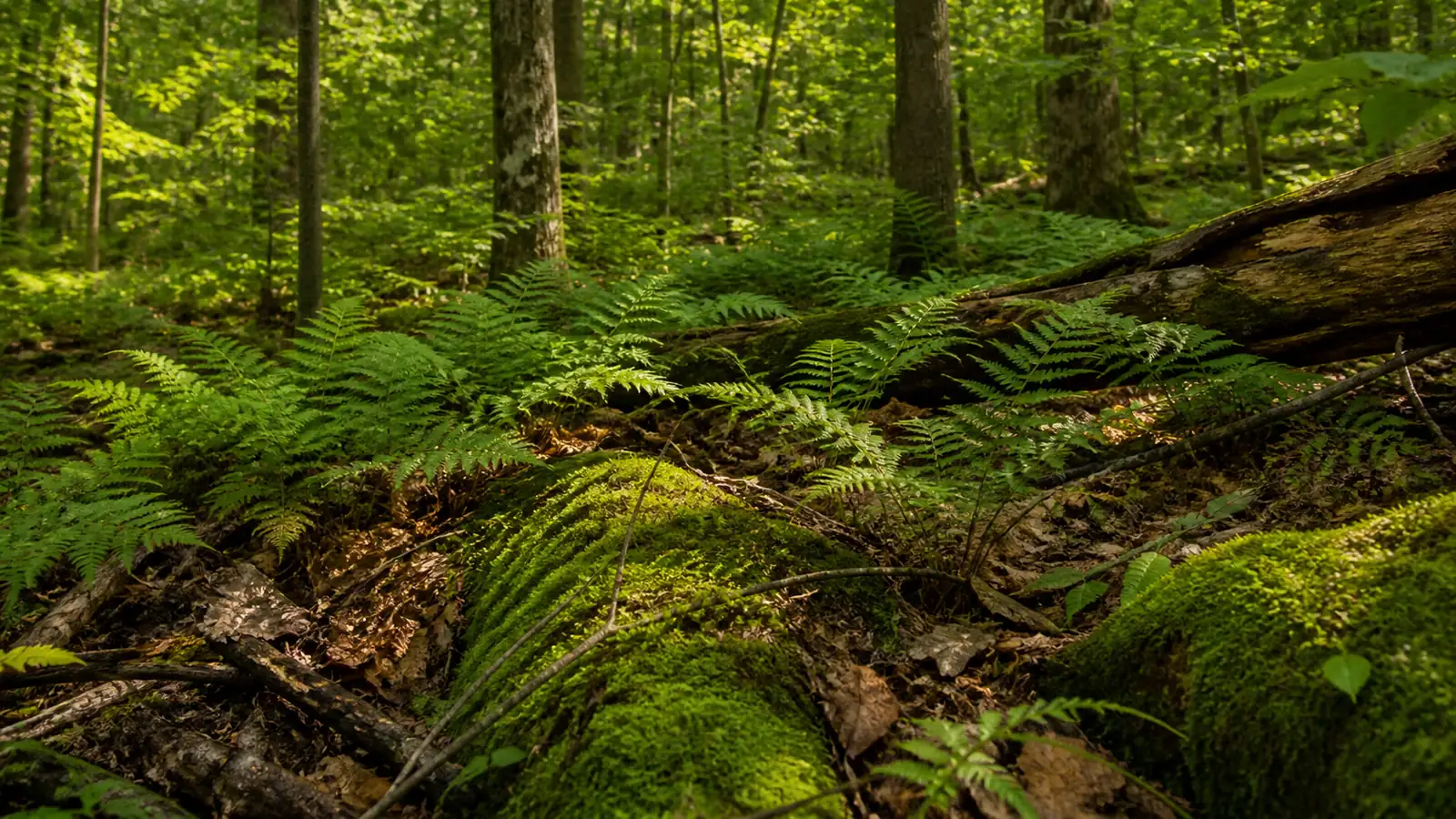
Moss is the readable signal on the ground itself.
Moss that is still soft and green is sitting on ground that has held moisture, while crisp brown moss means the ground below has dried. That reading takes a second and saves an hour of walking the wrong hillside.

How do you handle a basket in the heat?
Summer foraging has practical hazards that have nothing to do with mushrooms.
Ticks are active in exactly the habitat and season that produce chanterelles, and the ground cover that holds humidity is also what holds them. Long trousers, a check afterward, and a known route matter more in July than in October.
| Hazard | Practical response |
|---|---|
| Ticks | Long trousers, tucked socks, a full check the same evening |
| Heat and dehydration | More water than a cool-weather walk needs |
| Biting insects in drainages | The wettest productive ground is also the worst for them |
| Storms | Summer weather turns fast, and woodland is a poor place for it |
The tick problem is the one that follows you home, and it is worth a routine rather than a resolution.
Note
None of this is mushroom advice, and all of it is why summer trips end early. A shorter walk with a basket sorted the same evening beats a long one that spoils in a warm car.
Do chanterelle patches come back each year?
The most useful summer habit is remembering where you found things, because chanterelle patches return.
The fungus lives with tree roots and fruits from the same ground for many years, so a patch found this July is worth revisiting next July. That is not true of every species and it is reliably true of this one.
Returning through the season matters as much as returning next year.
A patch that produces a handful in early July often produces repeatedly into August, and a single visit misses most of what it will make. Weekly checks through a wet spell are how a good patch pays.
The cooking side of a good haul sits under how to cook chanterelles.
How do you store a summer haul?
Summer finds keep badly, and the handling between the woods and the kitchen decides most of the outcome.
Cool them quickly, keep them dry, and sort them the same day. A basket left in a warm kitchen overnight loses more than one left in a fridge for three days.
Chanterelles in particular do not wait.
They arrive damp from summer ground, and a sealed container turns a firm basket into a soft one overnight. Searing them dry and freezing the same evening is the practical answer to a large find.
Humidity in a fridge matters as much as temperature.
A paper bag inside the drawer keeps the caps from drying out while still letting them breathe, which is the balance a sealed box cannot strike. Wild mushrooms handled that way hold condition noticeably longer than ones left loose on a shelf.
Summer heat also shortens the window for identification.
A specimen kept for a poison center or a local expert should go into the fridge immediately, because a mushroom that has broken down in a warm bag is far harder to work from than a fresh one.
Sources & References
- North American Mycological Association Poisoning syndromes reference, including the species most reported in warm months.
- MushroomExpert Genus reference for the chanterelles and their season.