What exactly is chicken of the woods?
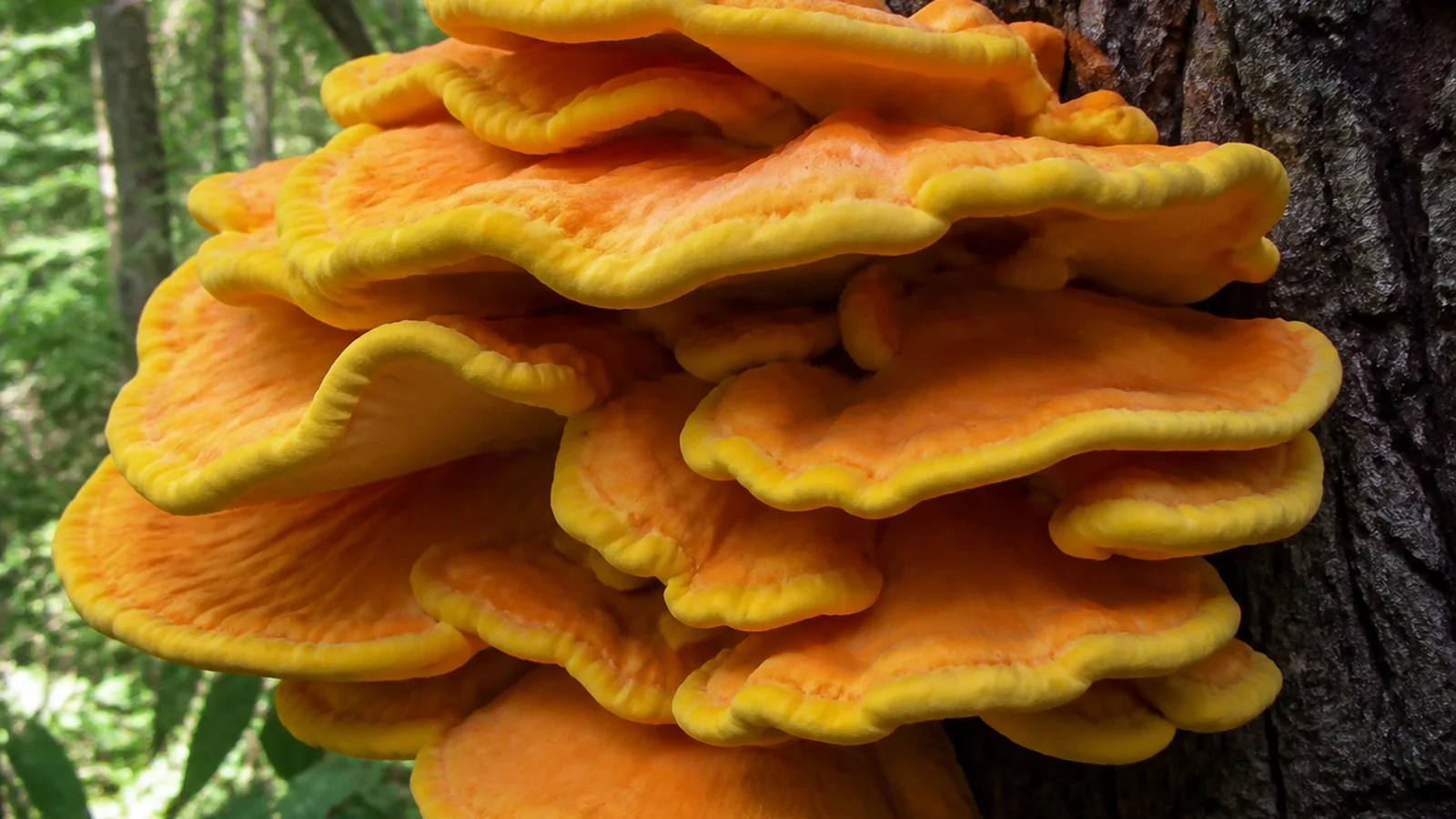
Chicken of the woods grows as overlapping shelves of thick soft flesh, bright sulphur yellow along the growing margin and orange across the rest of the surface. A single tree can carry a mass the size of a car tire.
It is usually spotted from a distance, which is unusual and is most of why beginners are drawn to it.
That distance changes how you walk a wood. Most foraging is close work, scanning the ground within a few metres of your boots, while this one is found by looking up and out along trunks.
Individual brackets run about 5 to 30 centimetres across, and they come in tiers rather than singly. The surface is suede to slightly wrinkled, and the sulphur yellow sits at the growing margin with orange behind it.
The texture is what earns the name. Young flesh is moist and layered and pulls apart in strands, which is closer to poultry than to anything else in a wood.
Age changes it more than any other feature. A specimen that was worth taking last week can be dry and brittle by the time you return, and old material is where a large share of reported stomach upsets come from.
The change is visible before it is obvious. The bright margin dulls first, then the whole surface goes chalky and the flesh loses its moisture from the outside inward.
So the practical rule is to take a bracket when you find it rather than planning to come back for it. Unlike most wild edibles, waiting a week here does not give you a bigger mushroom, it gives you a worse one.
How do you know you have found it?
Thick fleshy brackets 5 to 30 cm across, growing in overlapping shelves, suede-textured above, bright sulphur yellow at the margin grading to orange across the surface, fading to chalky pale buff with age.
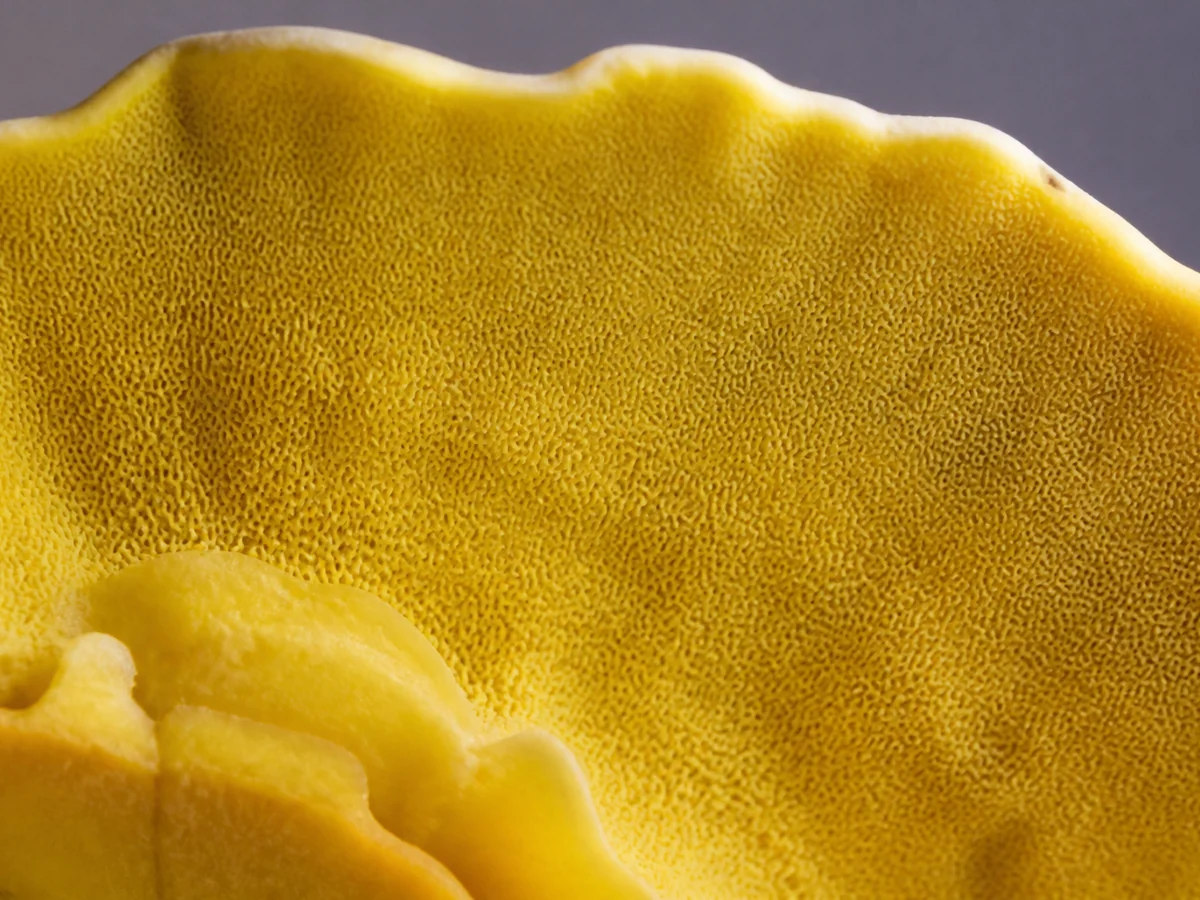
No gills. The underside is a pore surface, sulphur yellow in Laetiporus sulphureus and white in Laetiporus cincinnatus, with fine round pores.
No stem. Brackets attach broadly to trunk or branch, or in one species emerge as a ground-level rosette from buried roots.
Thick, moist and soft when young, becoming dry, crumbly and chalky with age, with a faint fungal smell and no distinctive taste raw.
The genus is easy. There is very little in a temperate wood that presents a bright orange shelf with a yellow margin and no gills.
The species is the hard part, and it is answered by the tree rather than by the mushroom.
That is the reverse of most identification work on this site, where the mushroom carries the evidence and the habitat only narrows it. Here the host is the primary character.
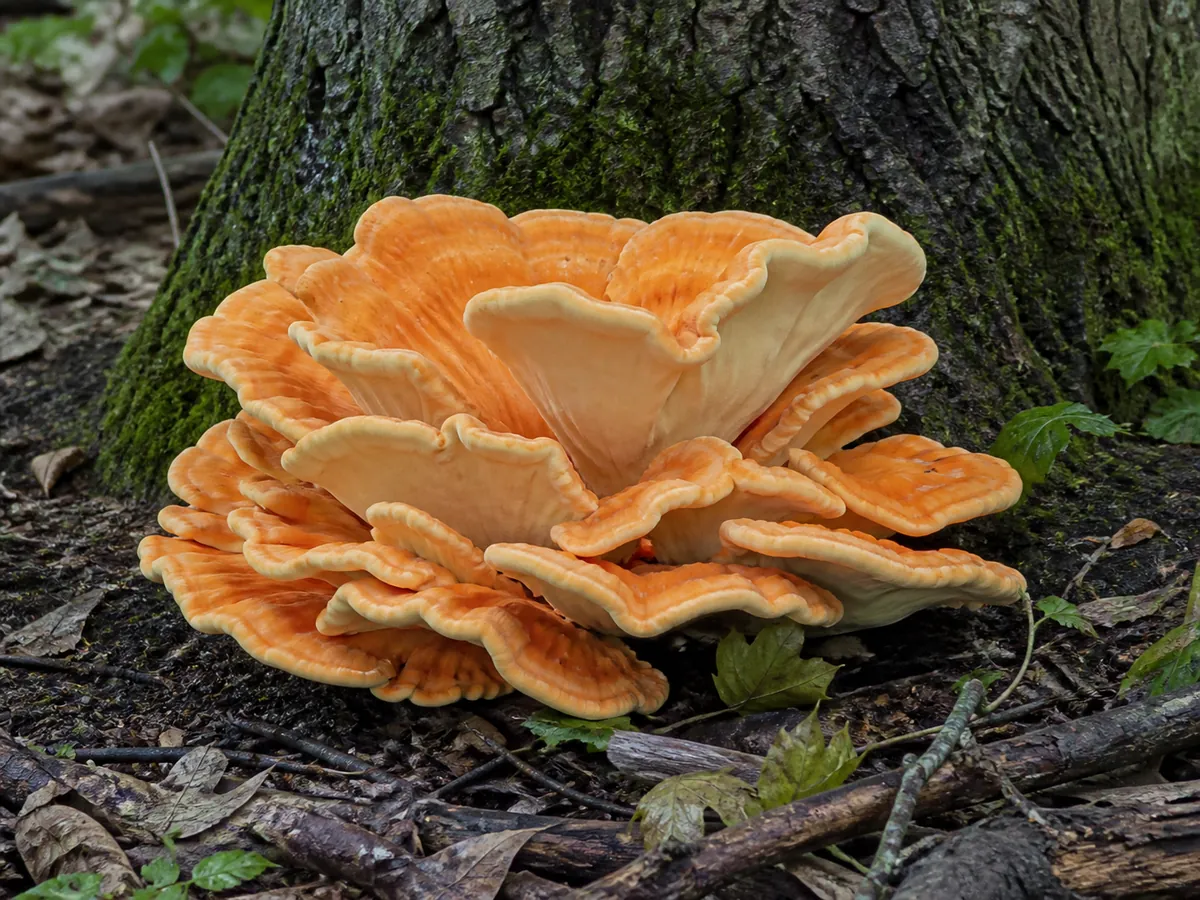
So record two things before anything else. Note what the underside looks like, and note precisely what kind of tree it is growing on, including whether it is emerging from the ground rather than from the trunk.
That second one defeats a lot of people, because naming trees is a separate skill from naming mushrooms and most foragers learn them in the wrong order here.
You do not need to identify the species of tree to use this page. You need to answer one question: is this a conifer or not?
Conifers carry needles or small scale-like leaves, they usually hold them through winter, and their bark is often resinous. Everything else in a temperate wood is a broadleaf, and that is the whole distinction this mushroom asks you to make.
If the tree is dead and bare, look at the ground beneath it and at the wood itself. Fallen needles persist for years, and conifer wood splits in straight grain with a resin smell that broadleaf wood does not have.
When the host genuinely cannot be established, that is an answer rather than a gap.
An orange shelf on an unidentifiable stump is a photograph, not a meal.
What safety details matter for Chicken of the Woods?
Four rules cover almost every reported problem. Avoid conifer and eucalyptus hosts, avoid old chalky specimens, cook it thoroughly, and start with a small portion.
Anyone with a history of reacting to wild mushrooms should skip this one rather than test it. Reactions here appear to be individual as well as species-linked.
If symptoms follow a meal, they typically begin within the hour. Persistent vomiting, or any symptom that starts many hours later rather than quickly, is a reason to seek medical advice, because delayed onset points away from this mushroom and toward something more serious.
Which chicken of the woods do you actually have?
Nothing dangerous closely resembles a bright orange bracket with a yellow pore surface, which is why this mushroom appears on beginner lists.
The confusions that matter are within the group rather than outside it.
In eastern and central North America two species divide the ground between them, and they are separated by one look and one position.
Laetiporus sulphureusSulphur yellow pore surface, shelving on trunks and logs of hardwood
Not the same speciesLaetiporus cincinnatus, white pore surface, growing as a rosette from the ground over oak roots
Both of those have the better tolerance record. The west is a different situation.
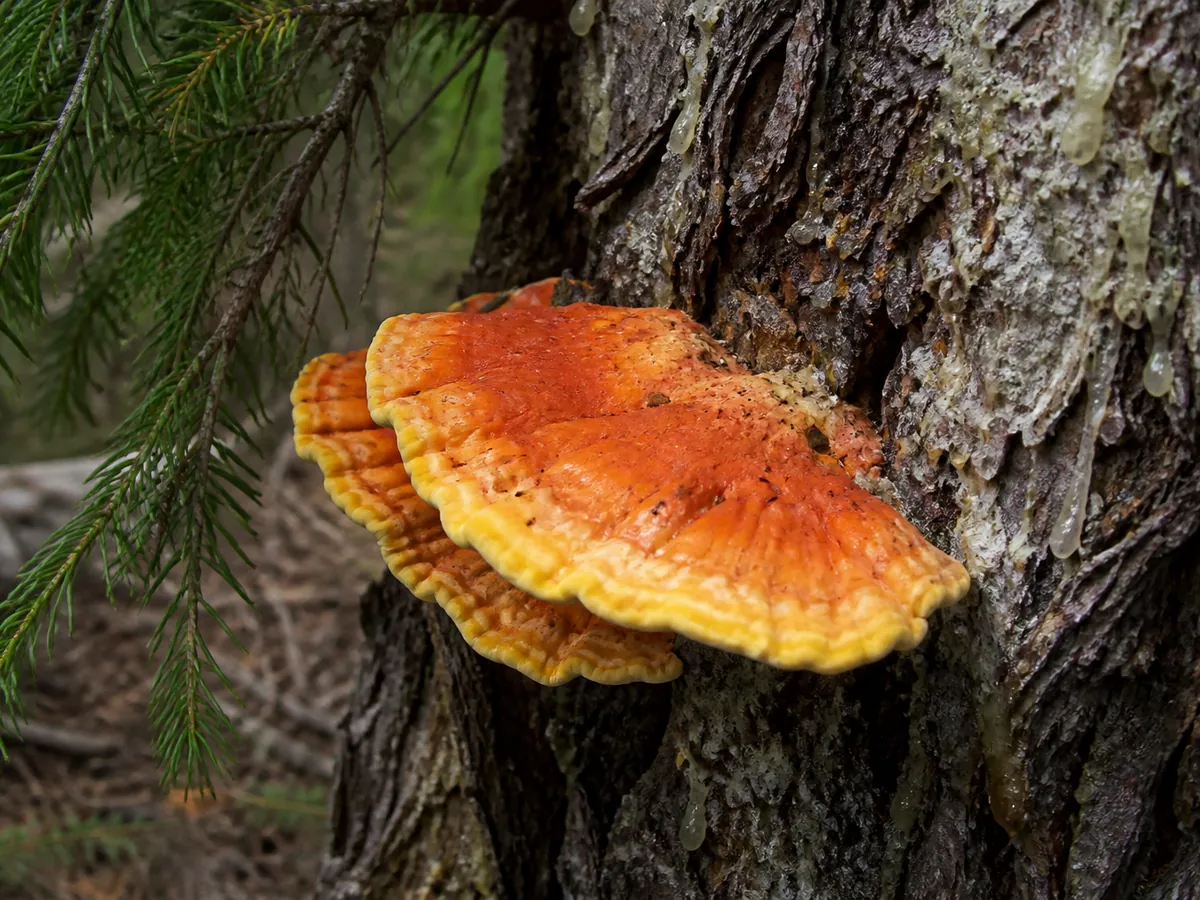
True Laetiporus sulphureus does not occur along the Pacific Coast. What grows there on oak and eucalyptus is Laetiporus gilbertsonii, and what grows on conifers is Laetiporus conifericola.
Both of those western species have adverse reactions reported against them, which is the single most useful thing to know before eating an orange shelf west of the Great Plains.
That leaves a western reader with a genuinely different page from an eastern one. The mushroom looks the same, the identification is just as easy, and the conclusion at the end of it is not.
The practical position on the Pacific Coast is that this is a species to photograph and learn rather than to collect, unless you have a local mycological society view on the particular host you are looking at.
Australia and New Zealand sit outside all of this again, with their own Laetiporus species and their own reports, so an eastern North American tolerance record says nothing useful there either.
This is a mushroom where correct identification does not finish the safety question. The reactions on record are unpleasant rather than dangerous, and they are fast.
Warning
Do not eat chicken of the woods from a conifer or from eucalyptus. Those hosts carry the species with the reported reactions, and no amount of cooking is known to make that reliable. The same caution applies to old, dry or chalky specimens from any host, and to yew, which is a conifer and toxic in its own right.
Individual tolerance also varies with no way to predict it. The standard advice for a first meal is a small portion, thoroughly cooked, with nothing else new on the plate, and a gap of a day before eating more.
What is it doing to the tree?
Chicken of the woods is a brown rot fungus, and that is a more aggressive job description than it sounds. Brown rot digests the cellulose in wood and leaves the lignin behind, which is why rotted wood ends up brown, dry and crumbling into cubes rather than pale and stringy.
It works on living trees as well as dead ones. The fungus enters through a wound and consumes heartwood while the tree is still standing and leafing out normally.
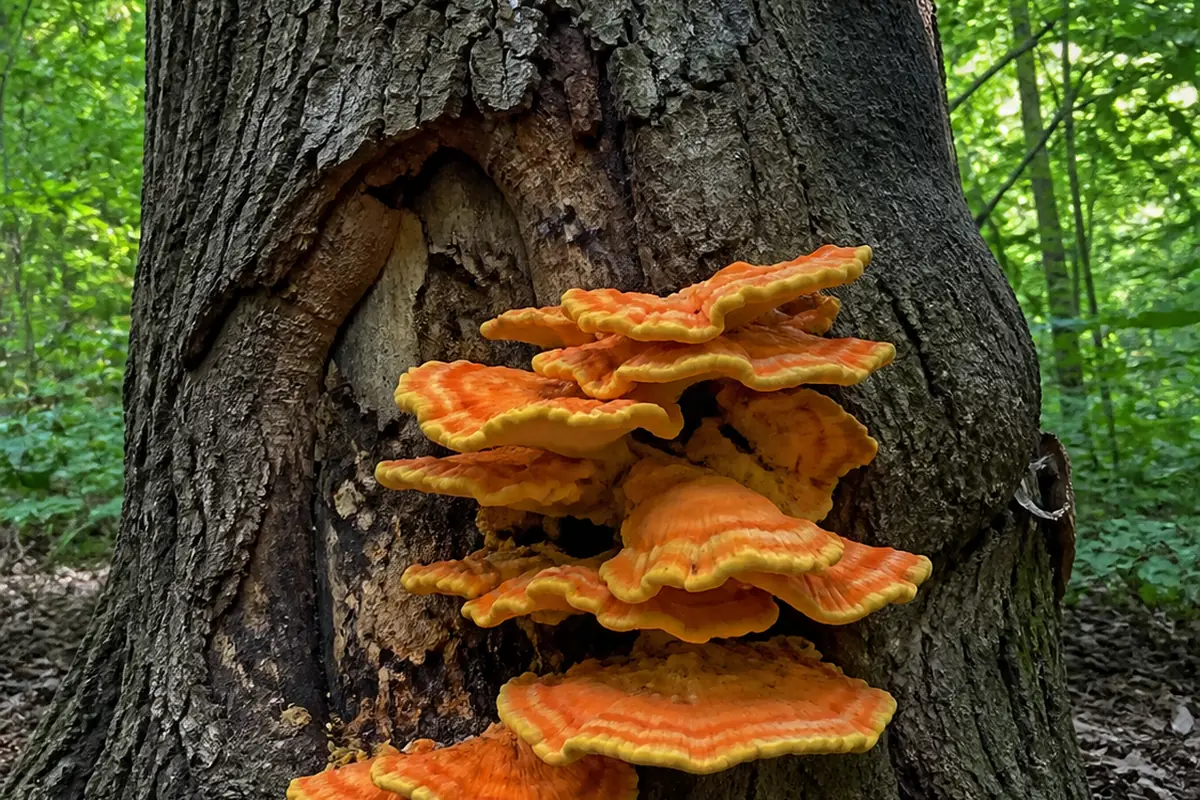
Seeing it attached to the trunk lets you establish the host rather than guessing from nearby trees.
That last point is why foragers keep a list of trees rather than a list of woods. A producing oak is worth revisiting for years.
It also means the mushroom is a symptom.
A large bracket low on a trunk indicates heart rot inside a tree that may be structurally compromised, which matters if the tree stands over anything.
The fungus gets in through damage rather than through healthy bark. A pruning cut, a lightning scar, a mower wound at the base, or a broken limb all open the heartwood it needs.
From there the decline is slow and mostly invisible. A tree can carry brown rot in its trunk for years while putting out a normal canopy every spring, which is why the first bracket often surprises the owner.
That gives a forager something to offer in exchange for access. Telling a landowner what a large bracket at the base of their oak means is worth more to them than the mushroom is to you, and it is usually how permission gets renewed.
How do you cook it without regretting it?
The texture is the whole appeal, and it depends almost entirely on picking young material.
Take the outer few centimeters, where the flesh is soft and moist and the margin is still bright. The inner part nearer the trunk is tougher, drier and more likely to be woody.
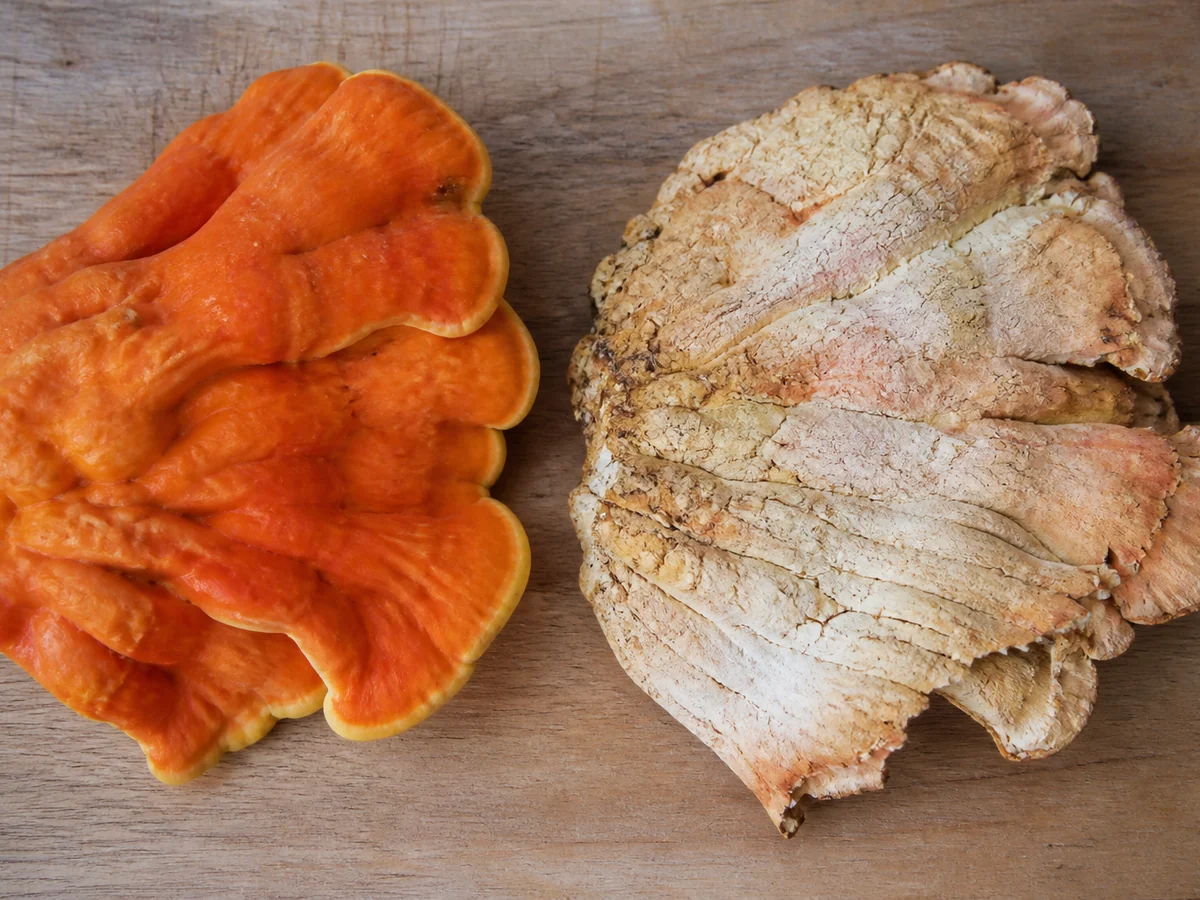
It must be cooked thoroughly, and thoroughly here means longer than instinct suggests.
The reason is the flesh itself. It is thick and dense rather than thin and open, so heat reaches the middle of a piece far more slowly than it does with a gilled mushroom, and a strip that is browned outside can still be barely warm at the center.
Raw or barely warmed material accounts for a noticeable share of the reactions on record, which is why the thickness of the cut matters as much as the time in the pan.
1
Cut away anything dry, chalky, insect-damaged or pale, keeping only the soft outer flesh
2
Slice across the grain into strips no thicker than a finger
3
Cook through in fat over moderate heat for at least ten to fifteen minutes, until firm and golden
4
On a first meal, eat a small portion and wait a day before eating more
Properly done, the strips firm up and take color rather than collapsing.
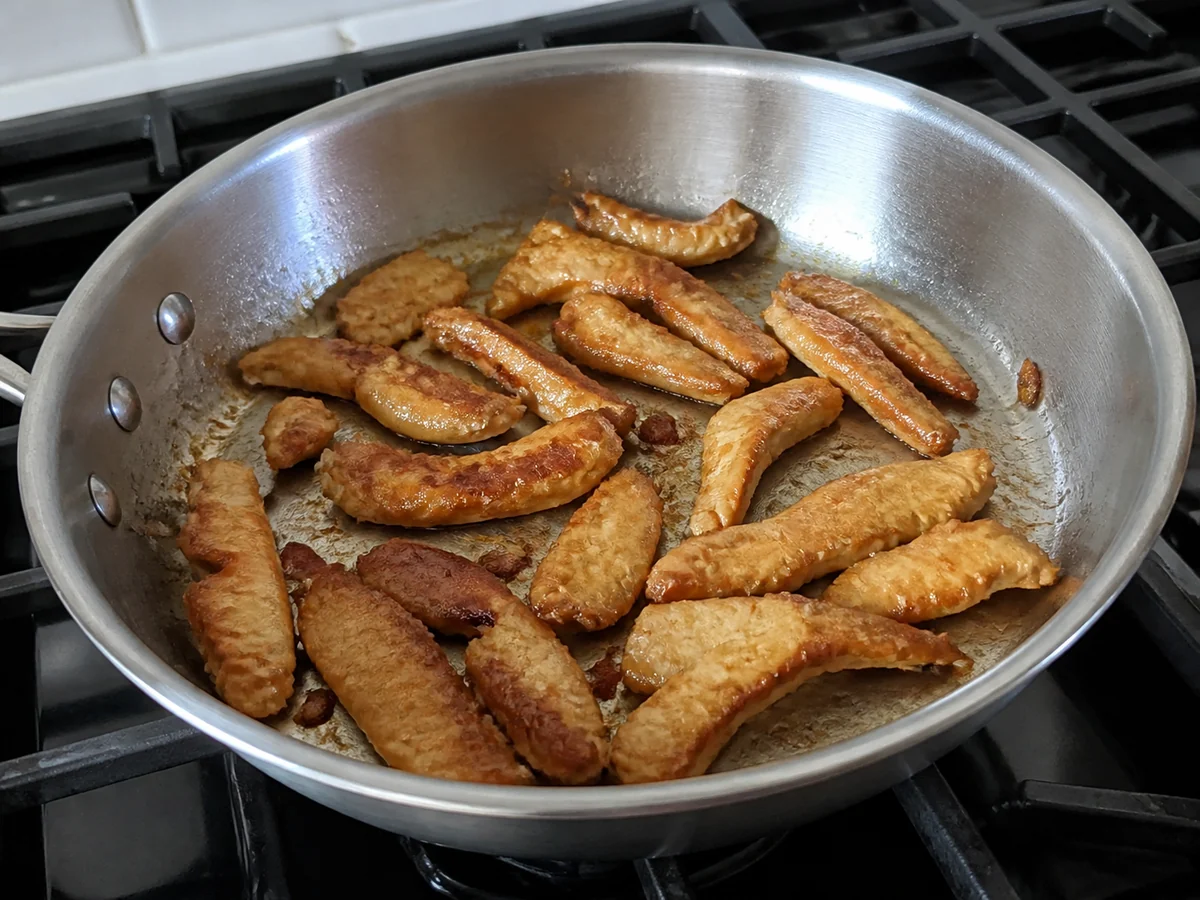
A large find creates the problem nobody warns you about, which is what to do with several kilograms at once.
Cooked pieces freeze well and hold their texture, which is the simplest answer. Raw material does not, because the water in that thick flesh tears the structure apart as it freezes.
Drying works less well here than with most species. The dense flesh dries slowly and rehydrates into something closer to cardboard than to the original, so a dehydrator is the wrong tool for this one.
The realistic plan is to cook the whole find within a day or two and freeze what the household cannot eat. That also removes the temptation to keep raw material in a fridge until it is past use.
The flavor is mild and faintly lemony rather than strongly mushroomy.
It carries sauces and coatings well, which is why it turns up in recipes written for chicken.
Is there a medicinal claim worth anything here?
There is laboratory work on compounds from Laetiporus, and there is no clinical case for eating it as medicine.
Note
A recurring problem in that literature is worth knowing. Papers reporting effects of Laetiporus sulphureus often do not say which member of the species complex was actually studied, so results cannot reliably be attached to the mushroom in front of you.
Treat this as a food with a caution attached rather than as a supplement subject. Nothing here supports taking it for a health outcome.
Can you grow it yourself?
Chicken of the woods can be cultivated and is rarely worth it.
It grows on hardwood logs and takes far longer to establish than the species people normally grow, and colonized logs often fail to fruit for years even when the mycelium is healthy.
The commercial supply that exists is mostly wild collected for the same reason. If you want a reliable indoor crop, this is not the species to start with.
Is it really a protein source?
The protein claim attached to this mushroom is repeated far more confidently than the numbers support.
It is a mushroom, which means it is mostly water, and the protein figures quoted online are usually dried weight values presented without saying so. Fresh weight tells a much plainer story.
Eat it because the texture is unusual and pleasant. Do not eat it as a meat substitute in any nutritional sense, and do not eat a large quantity on a first meal for exactly the reasons above.
Why do the names keep changing?
Chicken of the woods used to be one species and is now several, which is why older books and newer ones disagree.
Laetiporus sulphureus was long applied across the northern hemisphere. DNA work split that broad concept into regional species, and the split follows host trees closely enough to be useful in the field.
In eastern and central North America the yellow-pored shelf on hardwood is Laetiporus sulphureus, and the white-pored ground rosette over oak roots is Laetiporus cincinnatus.
On the Pacific Coast neither of those is what you have. The oak and eucalyptus species there is Laetiporus gilbertsonii and the conifer species is Laetiporus conifericola.
The genus now sits in its own family, Laetiporaceae, rather than with the other brown-rot brackets it was formerly grouped among.
Chicken of the woods safety and identification questions
Is chicken of the woods safe to eat?
How do you identify chicken of the woods?
Why does the tree it grows on matter?
What is the white-pored chicken of the woods?
What do reactions to chicken of the woods look like?
Which part should you pick?
Sources & References
- Toxic Fungi of Western North America, MykoWeb That true Laetiporus sulphureus does not occur along the Pacific Coast, that the eucalyptus and oak species there is Laetiporus gilbertsonii and the conifer species is Laetiporus conifericola, and the San Francisco toxicology survey finding seven near-identical reactions among 158 fungal poisoning reports with onset at 5 to 45 minutes
- Laetiporus cincinnatus, MushroomExpert.Com The white pore surface, the ground-level rosette habit rather than shelving on trunks, the parasitic and saprobic relationship with living and dead oaks causing a brown rot of butt and roots, the range from the Great Plains eastward, and the placement of the genus in Laetiporaceae