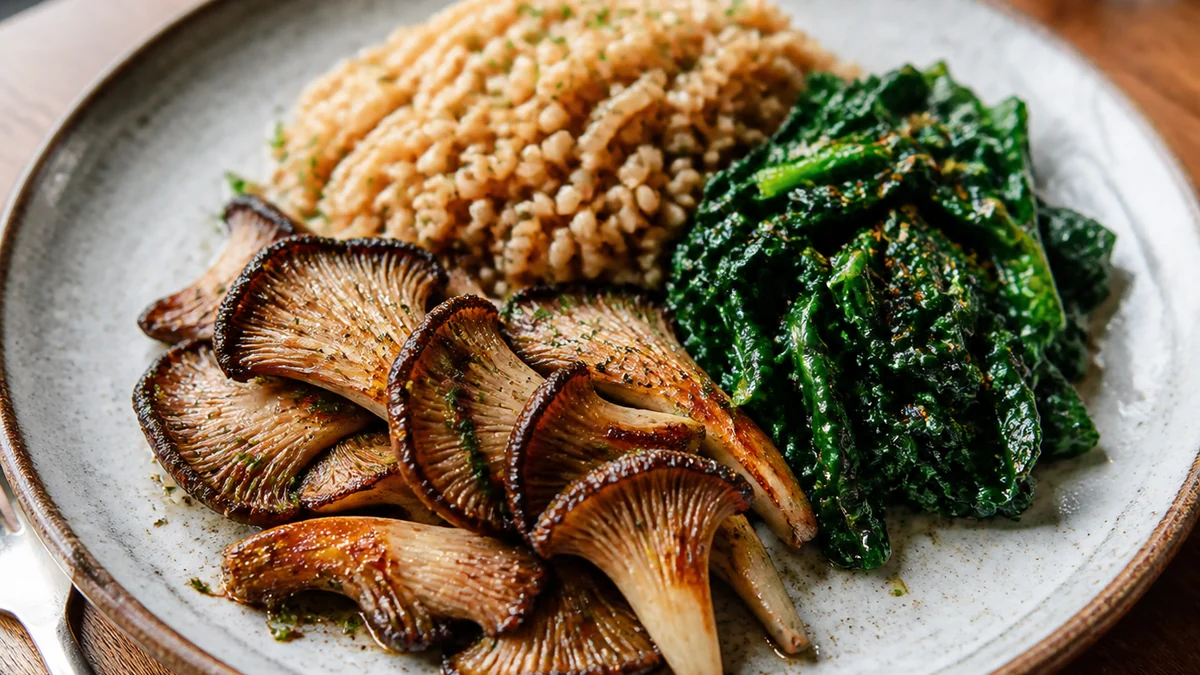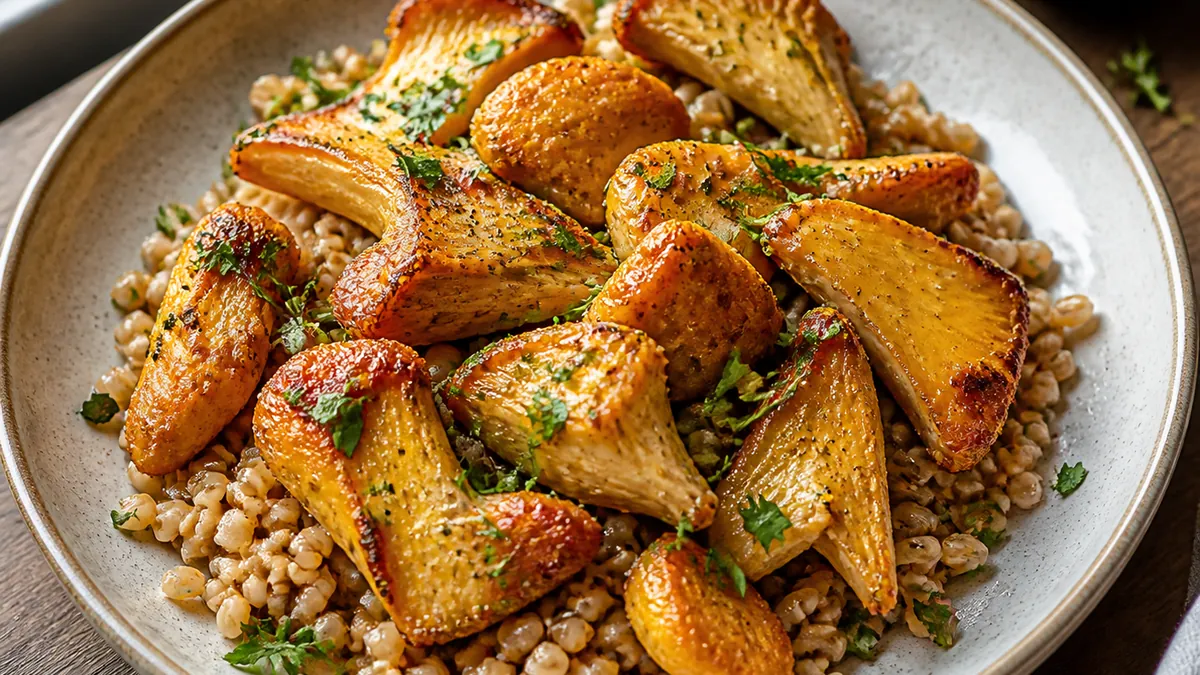
Chicken of the woods has no dangerous lookalikes, but a minority of people get gastric upset from correctly identified, thoroughly cooked brackets. Take only the soft outer margin, prefer oak-grown material, cook it covered then browned for fifteen to twenty minutes until fully opaque, and eat a small portion the first time.
Somebody told you chicken of the woods has no dangerous lookalikes and is a perfect mushroom for a beginner, and that part is broadly true.
What they left out is that a real minority of people get an upset stomach from it anyway, from a bracket that was correctly identified and thoroughly cooked.
It is not the foolproof mushroom you were told about
The lookalike claim and the safety claim are two different claims, and only the first one holds up cleanly.
Warning
Eat a small portion the first time you try it, and wait a day before eating more. This is the standing advice from foraging groups, and it exists because individual reactions to this species are common enough to plan around.
Nothing else on this page matters as much as that instruction. Everything below reduces the odds a little, and the small first portion is the part that protects you when the odds go against you anyway.
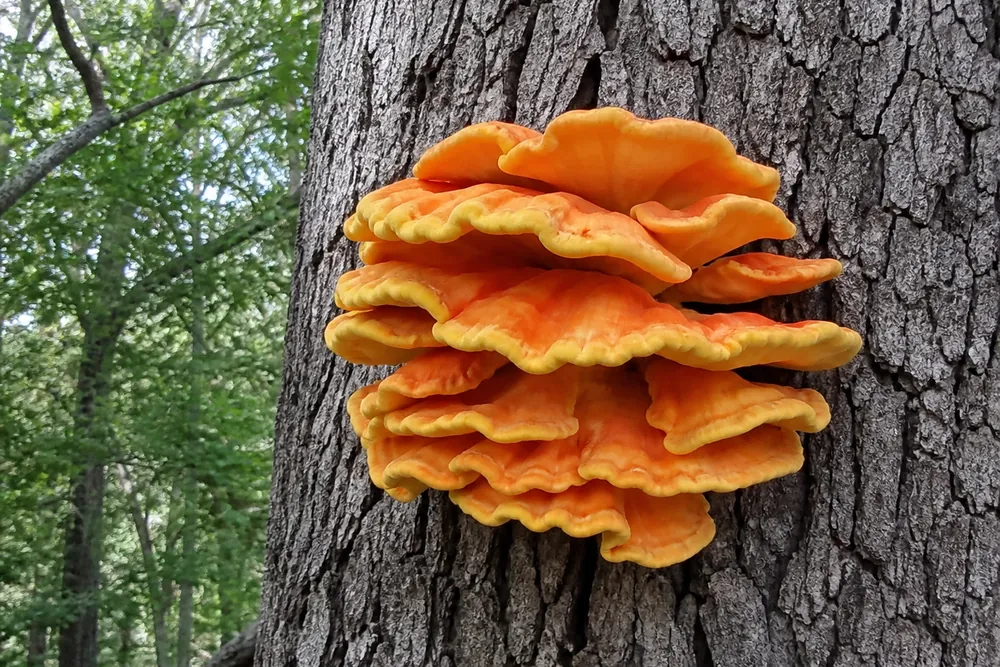
Nothing in its range looks enough like a bright orange shelf fungus to be confused with something dangerous, so the identification side is genuinely easy and our chicken of the woods profile sets out the details.
The eating side is less tidy, since gastric upset gets reported often enough by people who did everything right that the risk here is individual rather than a matter of mistakes.
That is unusual in a family of problems where the trouble almost always comes from misidentification, undercooking or a bad specimen, none of which need apply here.
There is a second reason the beginner framing sticks around. The mushroom is easy to find, impossible to miss and enormous when it fruits, so it gets written about by people who had a good experience and never heard from the people who did not.
None of it makes the mushroom a bad idea, and it sits on our roundup of the best mushrooms for beginners for good reasons, with the small-first-portion rule a modest price for a mushroom that grows in ten-pound flushes.
Cooking MushroomsHow to Cook Cauliflower Mushroom Without Trapping GritWhy some people react to it
The honest answer is that nobody knows. There is no identified compound and no test to run.
Only the last line changes what you should do. The first three are unpleasant and self-limiting, and the fourth is the one that means this was something other than an ordinary reaction.
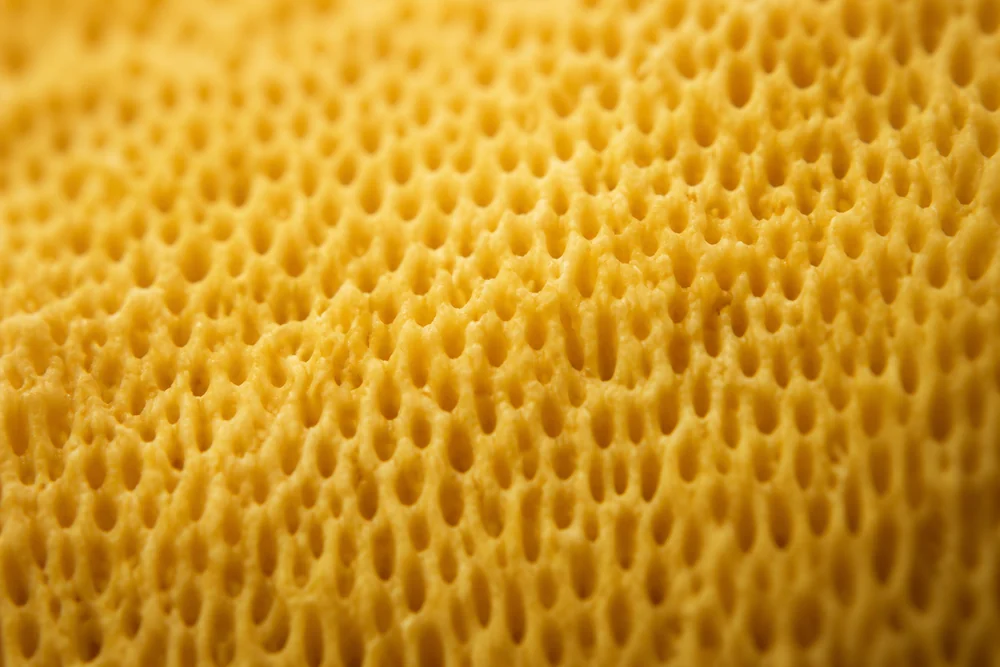
Reports describe symptoms starting within a few hours and clearing up on their own. It behaves like an individual sensitivity rather than a poisoning, and our page on mushroom poisoning symptoms covers where the line sits between the two.
That distinction is worth spelling out, because the two words get used interchangeably and they should not be.
A sensitivity is not a poisoning, the symptoms are unpleasant rather than dangerous, and there is no antidote to look for because there is nothing identified to treat. Rest and fluids are the whole of it.
Two patterns do show up in the reports: older brackets appear more often than young ones, and certain host trees appear more often than oak.
That is the practical value of the whole question. You cannot control your own sensitivity, but you can control the age and the host, and both of those get their own section below.
Only the young growth is food
Take the soft outer margin and leave the rest, a single rule that improves the eating and cuts the odds of a bad evening.
The last line is the one that surprises people. A bracket the size of a dinner plate can yield a single meal once the tough part is off it.
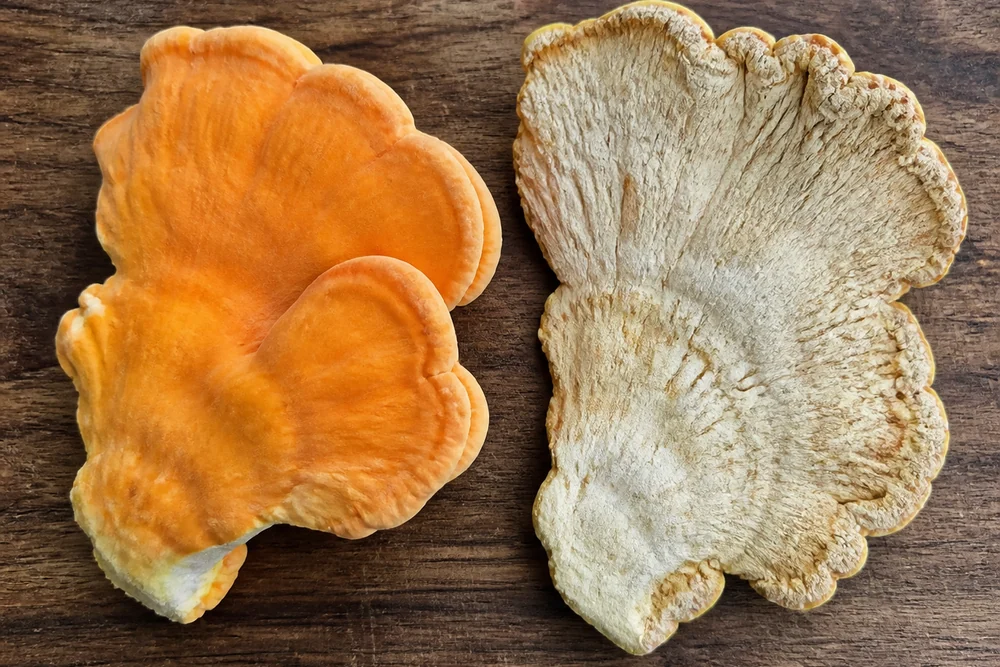
A young bracket is soft, damp, deep orange and gives under a fingernail. An old one is pale, dry, chalky and squeaks slightly when you cut it.
Age is not a subtle difference once you have handled both. The color fades from the edge inward, and the flesh goes from something you could tear to something you could snap.
Three checks settle it at the tree, before you have carried anything home:
- Press the margin with a thumbnail, which should sink in without resistance.
- Look at the color gradient, because fading from the edge inward means age.
- Cut one piece and listen, since old flesh squeaks against a blade.
Any one of the three failing is enough to leave the bracket where it is. There will be another one.
Note
Leaving the tough inner part attached to the tree is not waste. The fungus keeps fruiting from the same trunk for years, and cutting only the margin means the bracket often puts out fresh growth in the same season.
Old flesh also tastes sour rather than mild, and that sourness is a warning as much as it is a flavor, so if a cooked piece tastes distinctly sour then stop eating it.
Cooking MushroomsHow to Cook Black Morels: Halve Them, Never Slice ThemThe tree it grew on
Oak is the host with the best record, and it is also the commonest one. Most of what people bring home is oak-grown and most of what people eat without incident is oak-grown.
The conifer case is the clearest of the four, since what grows on conifers in western North America is a separate species rather than the same mushroom in a different place, and foragers there treat it with more caution.
Nobody has run the study that would settle any of this, which is worth stating plainly rather than papering over. What exists is a pile of individual reports collected by mycological societies, and a pattern in a pile of reports is a reason for caution rather than a finding.
Eucalyptus and locust are weaker signals but consistent ones. Neither is a rule so much as a reason to be conservative with a first portion from an unfamiliar host.
The yew warning deserves a flat answer, because it is repeated on almost every page about this mushroom on the theory that the fungus takes up the tree's toxins, and there is very little evidence that this actually happens.
Foragers avoid yew-grown brackets anyway, and that is a reasonable thing to do with a question nobody has settled. Avoiding an unknown is not the same as accepting a claim, and the distinction is worth keeping.
Trimming a bracket
Work inward from the outer edge with a knife and stop when the blade starts to resist, because everything past that point is fiber.
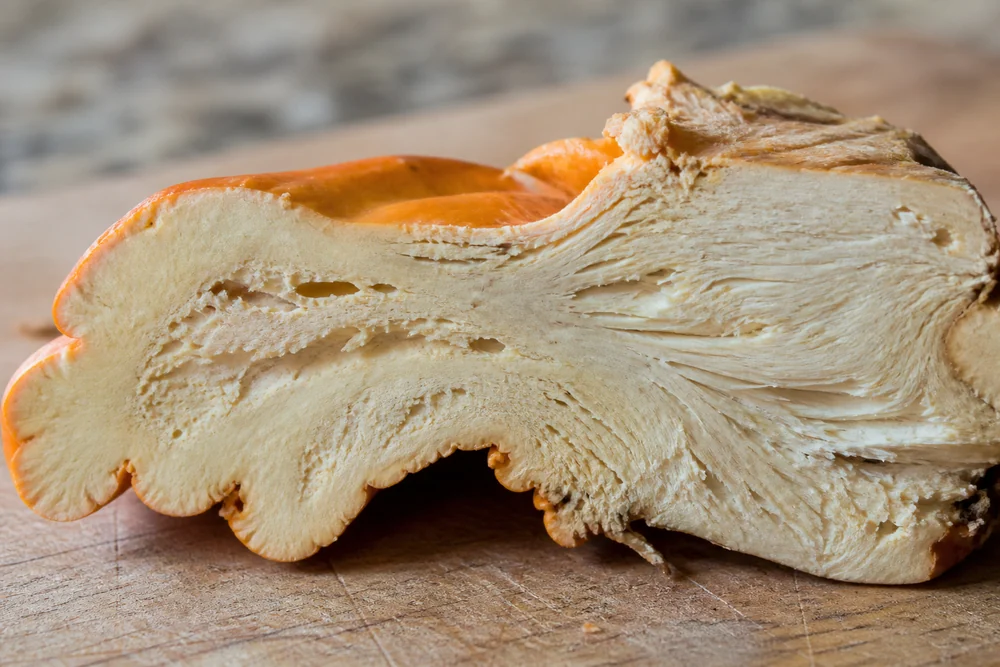
Four steps get a bracket from the woods to the pan, and only the second one is optional.
There is a good reason not to skip the second one anyway.
The saltwater soak is the one step people skip and regret. Older brackets in particular can be full of small insects that nothing else will shift.
If you soak, dry the pieces properly afterwards on a towel, since our guide to cleaning mushrooms makes the general case against washing and this species absorbs more than most.
There is a reason to be generous with the trim rather than economical. A stringy piece ruins the dish more thoroughly than a small yield disappoints you, and the tough part is not improved by anything you do to it later.
Cutting across the grain matters more here than with any cultivated mushroom, because the fibers run the length of the shelf and a piece cut along them is stringy in a way no amount of cooking fixes.
Cooking MushroomsHow to Cook Black Truffle Without Losing Its AromaCooking it all the way through
Fifteen to twenty minutes, and longer for thick pieces. This is not a mushroom you flash in a pan.
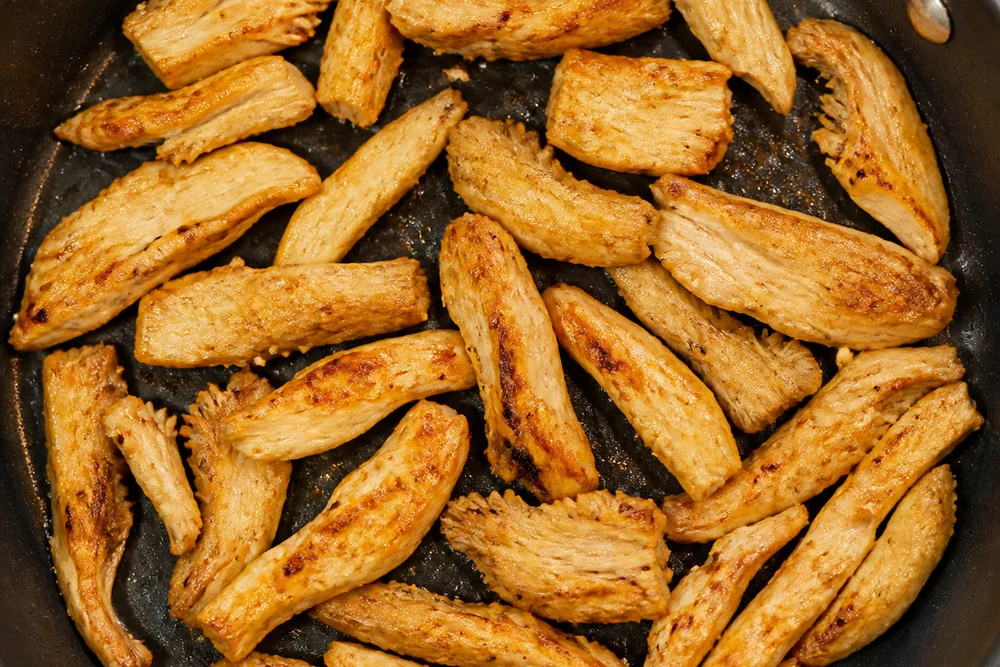
The flesh is dense and holds a lot of water, so a covered start does the work that dry heat cannot: strips into a pan with a splash of water or stock, lid on, ten minutes before you think about browning.
Tip
Done means fully opaque with no translucent center. Undercooking is the one avoidable cause of an upset stomach from this species, and it is the reason a thick piece needs longer than the recipe says.
Then take the lid off, let the liquid go, add fat and brown the outside for another five to ten minutes. The two-stage method is what separates tender from rubbery on a mushroom this dense.
Since the whole method rests on cooking it properly, the obvious question is whether any of it can be eaten raw, and our page on eating chicken of the woods raw answers that at length with a flat no.
Judging thickness by eye is where most people go wrong at the end.
Thick pieces are the usual failure. A two-centimetre slab can look done on the outside while the middle is still translucent, and cutting into the thickest piece is a quicker check than guessing.
What it tastes like
The texture earns the name. It genuinely resembles chicken breast, in a way that no other common mushroom really manages.
That texture also survives treatments that destroy other mushrooms, holding together through a long braise, through deep frying, and through being shredded with two forks, none of which an oyster mushroom would tolerate.
The flavor is mild, faintly savory and sometimes a little lemony. It is not a strong mushroom, which is exactly why it works in dishes where a stronger one would compete.
That combination suits it to a specific set of treatments:
- Battered or breadcrumbed and fried, which is where the texture does the most work.
- In curries and stews, where it holds its shape for a long time.
- Shredded into tacos, sandwiches and pies as a chicken replacement.
- Grilled in thick pieces, after the covered stage rather than instead of it.
- Simmered into a soup, where the fibers soften without anyone minding.
Frying is the treatment that made its reputation.
A battered strip of chicken of the woods is close enough to a piece of fried chicken that people who dislike mushrooms will eat it, which is not something you can say about a portobello.
What it does not suit is anything delicate. A cream sauce or a light broth leaves you with a chunk of texture and very little flavor, and there are better mushrooms for both.
Portion size is worth deciding before you cook rather than at the table. A small first portion means a few pieces rather than a plateful, and the point is to learn how you react while the consequence of being unlucky is small.
Anyone eating it regularly will find the figures on our chicken of the woods nutrition record, and anyone who has discovered they are one of the people who react to it can use our page on chicken of the woods substitutes to find a similar texture elsewhere.
Handling a big find
One bracket can be several kilos of usable flesh, which is a nice problem and still a problem. It also declines faster than most foraged mushrooms.
| Method | How it goes | Worth doing |
|---|---|---|
| Fresh in the fridge | Three or four days, then sour | Yes, for what you will eat soon |
| Frozen raw | Texture collapses on thawing | No |
| Cooked then frozen | Holds up well for months | Yes, the best option |
| Dried | Never fully rehydrates | No |
| Confit in oil or fat | Keeps a week or two, excellent texture | Yes, if you have the fat |
The middle two rows are the ones people get wrong most often, usually by treating it like a porcini.
There is a practical reason the order matters. Freezing raw flesh bursts the cells that hold the texture together, and it is exactly that texture you carried the bracket home for.
Cutting only the margin has a second advantage beyond politeness to the tree. The fungus is already inside that trunk and will fruit from the same spot for years, so a bracket trimmed rather than removed often puts out fresh growth in the same season.
Cook first, freeze second. That order is the whole answer to a large find, and it is the opposite of what people do with most mushrooms.
Three practical notes on the confit, which is the option most people have not tried:
- Cook the strips through first, exactly as above, before the fat goes anywhere near them.
- Cover them completely in oil or duck fat and keep the jar cold.
- Use the flavored fat afterwards, because it is the better half of the deal.
It goes sour rather than slimy as it ages, which is a useful signal because you can smell it before you can see it. A bracket that smells sharp on day four is telling you something honest.
Four things decide whether a find is worth carrying home:
- Age, which the thumbnail settles in a second.
- Host tree, which decides how conservative to be with a first portion.
- Weight, since a big bracket is heavier than it looks and mostly trim.
- Distance, because a warm rucksack for two hours does it no good at all.
The last of those catches people out more than the others. A bracket cut in the morning and carried in a closed bag until evening arrives sour, and that has nothing to do with the mushroom.
Taking too much is the beginner error nobody warns about. A whole bracket looks like a windfall so all of it comes home, and most of what came home is tough inner flesh that was never going to earn its place in a pan.
Our page on storing chicken of the woods covers the timings and the confit method in more detail. The short version is that the fridge is a holding pen and the freezer only works after the pan.
Sources & References
- Laetiporus sulphureus, chicken of the woods (Fungi Atlas) Species reference used for the bracket structure, the pore surface, the oak host preference and the separation of the conifer-growing Laetiporus from the oak-growing species.
- Chicken of the Woods (Forager Chef) Cook and forager reference used for the young-margin rule, the saltwater soak for insects, the across-the-grain cut and the reported sourness of older flesh.
- Mushroom Poisoning Case Registry (North American Mycological Association) Case reference used for the pattern of gastric upset, swollen lips and dizziness reported after eating correctly identified, cooked chicken of the woods, and for the absence of an identified compound.