Fresh black truffle rewards low heat and late addition. This guide separates whole Tuber melanosporum from oils and preserved products, then controls cleaning, slice size, carrier temperature, and final seasoning.
Fresh black truffle is most expressive when the finished food warms it gently.
Prolonged frying sends the aroma into the air before the plate reaches the table.
Confirm that the ingredient is fresh Tuber melanosporum, clean it shortly before use, and divide it between a warm carrier and a final raw shaving. The dish supplies heat, moisture, and fat while the truffle supplies aroma.
Which black truffle are you cooking?
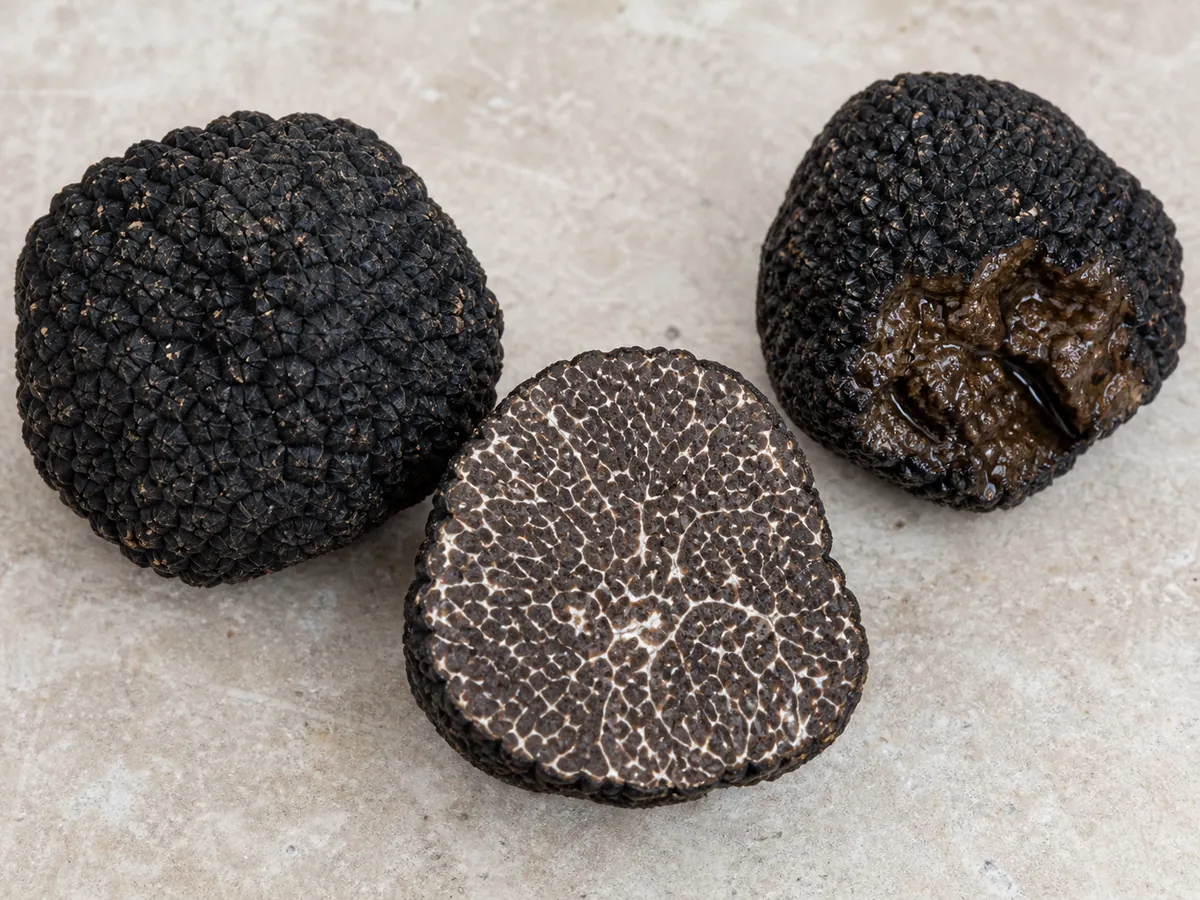
The method on this page is for a fresh whole black Périgord truffle labeled Tuber melanosporum. A black exterior alone is insufficient because several truffle species and many flavored products are sold under broad black truffle language.
Read the species name and product form before opening a pan. Preserved peelings, jarred slices, paste, oil, salt, and frozen pieces have already been processed, so their labels should control how they enter a dish.
Ask the seller when the truffle was harvested and how it was held in transit because the date explains more than an ornate box when aroma is already weak.
A fresh truffle should smell distinct before heat touches it. A ripe specimen feels firm, has a dry intact surface, and releases a complex earthy aroma when held near the nose.
A weak but sound truffle may be immature, old, or simply less aromatic, and extra cooking usually removes more of the volatile compounds that heat cannot manufacture.
Weight also changes as a truffle loses moisture, so an old specimen can feel unusually light for its size. Compare several pieces from the same batch when possible rather than turning one physical cue into a verdict.
Reject a specimen with wet slime, spreading softness, fermentation odor, or extensive internal discoloration. Trim a small localized blemish only when the surrounding flesh is firm and smells clean.
| Product in hand | What the kitchen can control | Suitable approach |
|---|---|---|
| Fresh whole T. melanosporum | Cleaning, cut, temperature, timing | Use this low-heat method |
| Preserved slices or peelings | Draining and final placement | Follow the pack and add late |
| Truffle paste | Dilution and seasoning | Stir into a warm carrier |
| Truffle oil or salt | Final intensity | Treat as seasoning, not fresh truffle |
This product split prevents a preserved flavoring from inheriting a method written for a fresh whole truffle.
Clean it at the last responsible moment
Soil lodged between the pyramidal surface warts needs removal, but washing too early leaves moisture in the crevices during storage.
Clean only the amount that will be used immediately.
Run a thin stream of cool water over the truffle while working gently with a clean soft brush. Turn it under good light so every groove is visible rather than scrubbing one side until the rind is damaged.
Pat the surface dry at once, then let it stand on a clean towel until no beads remain because water carried onto the slicer dilutes surface aroma and makes thin shavings cling together.
Inspect the towel after drying. Persistent grit means the brush missed a groove, while dark smears from soft tissue call for another condition check before slicing.
Do not soak the truffle in a bowl. Soil may loosen, but the extended wet contact gives no advantage over focused brushing and makes inspection less precise.
The textured rind is edible and aromatic, so routine peeling wastes part of an expensive ingredient. Use a knife only for embedded grit that brushing cannot reach or for a genuinely damaged spot.
Prepare a small clean zone before washing:
- A soft brush used only for food
- A dry absorbent towel
- A stable truffle shaver with its guard
- A plate for the cleaned whole truffle
Slice for distribution, not spectacle
Cut size decides whether one diner gets a thick aromatic piece while the rest of the plate receives almost nothing.
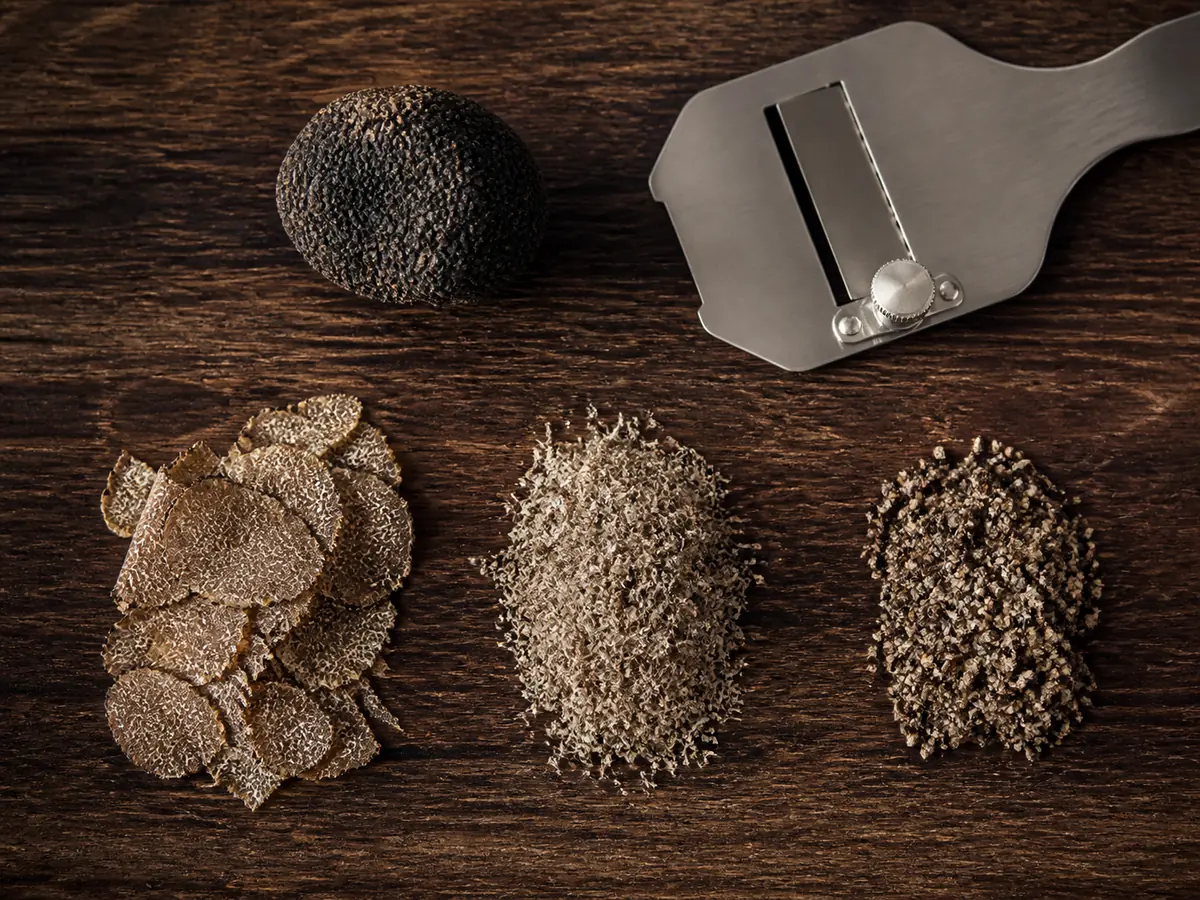
Thin slices expose a broad surface and make a small truffle easier to distribute.
Use a truffle shaver or a stable mandoline set to a thin, even cut, with a guard protecting your fingers. A very sharp knife works for deliberate slices, although it produces less consistent thickness.
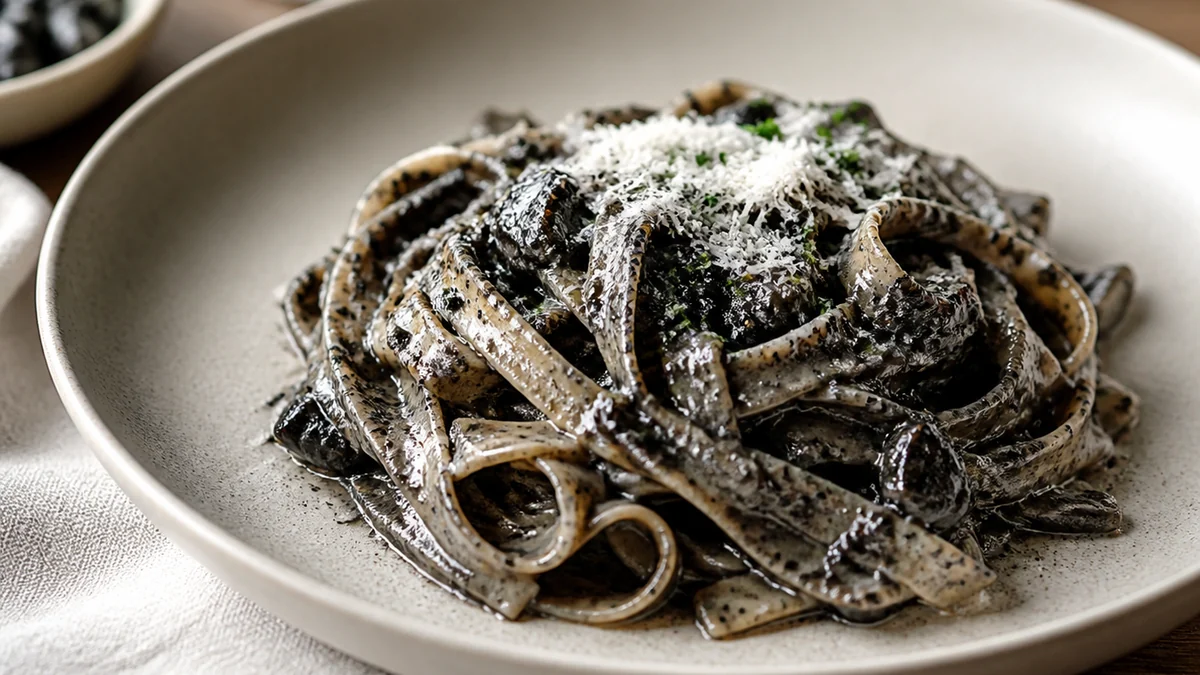
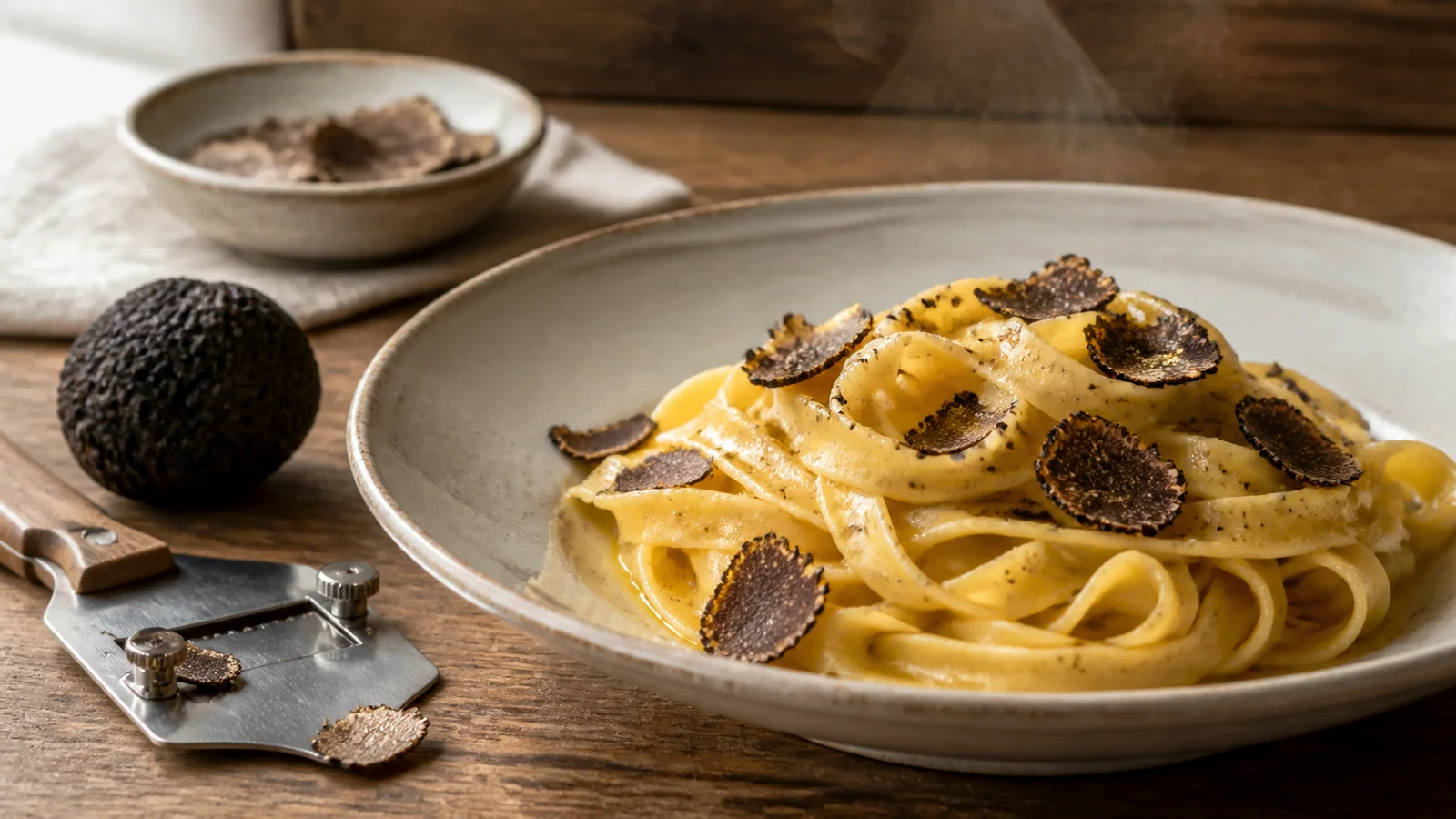
Fine grating suits eggs, mashed potato, butter, and sauces because the particles spread through a moist carrier. Shavings suit pasta, risotto, and finished plates where aroma and texture should arrive in distinct bites.
A mince sits between those options. It works in softened butter or a filled pasta where loose shavings would escape, although the knife should cut cleanly rather than mash wet pieces into the board.
Choose the cut from the food's surface area because a broad bowl of pasta needs wider distribution than a single toast or a small omelet.
Cut only after the carrier is nearly ready. A pile of exposed shavings loses aroma while it waits, especially beside a hot stove or under strong kitchen ventilation.
Count portions before making the first pass with the shaver. Reserving an equal visible finish for each plate is easier when the whole truffle is divided mentally before thin slices begin to accumulate.
Heat the carrier, not the truffle
Black truffle aroma comes from a mixture of volatile compounds, and controlled studies find that processing and heat change that mixture.
The practical response is to finish the food first and let its retained warmth release aroma at the table, because the foods that carry aroma best combine moisture, fat, and gentle heat.
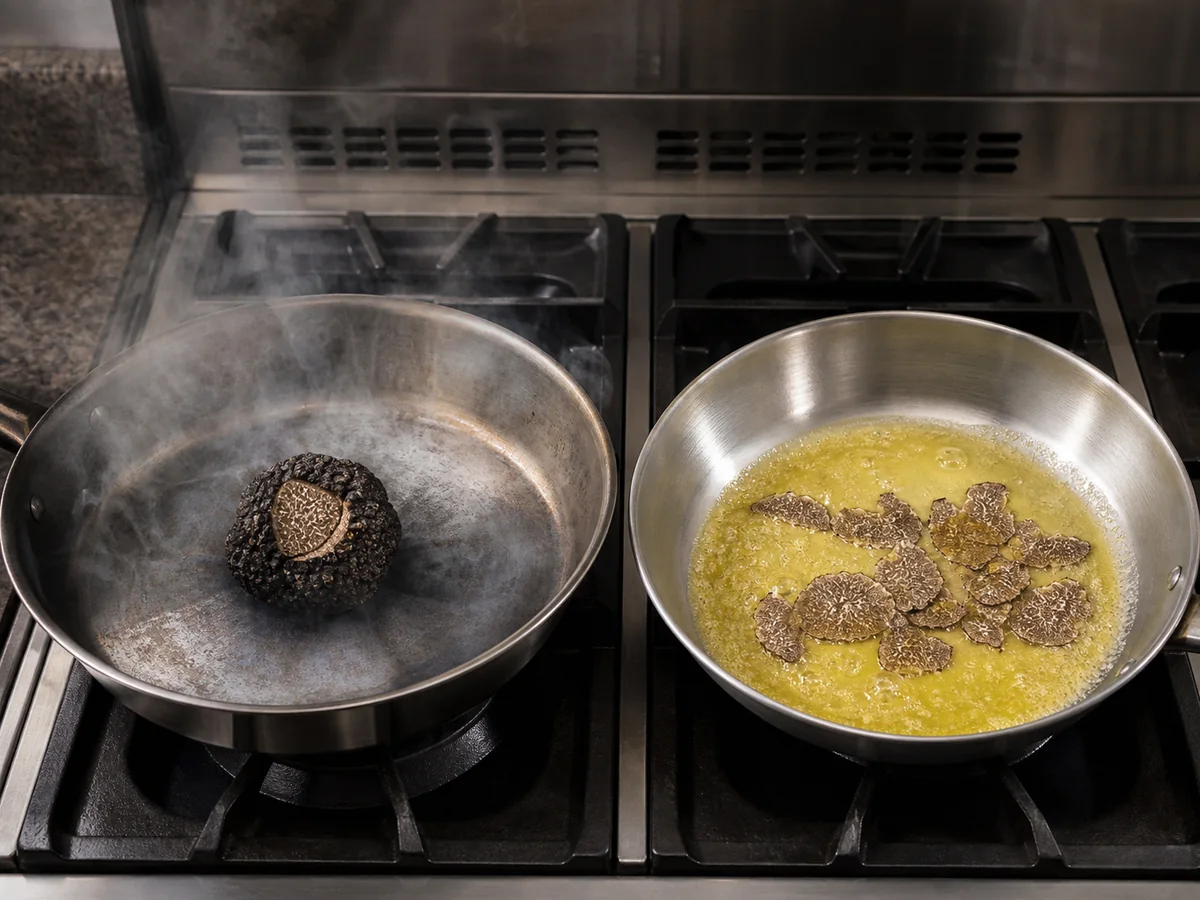
Cook eggs until softly set, finish the risotto, drain pasta, or mash the potatoes before the main truffle addition. Turn off aggressive heat, wait for violent bubbling to subside, then fold in grated truffle or arrange shavings over the moist surface.
For a warm emulsion, melt butter gently without browning it, remove the pan from heat, and stir in a small amount of truffle while the butter feels warm and fluid rather than hot enough to spit or smoke.
Boiling cream or stock needs a short pause for the same reason. Stirring truffle into a violently bubbling reduction exposes the small particles to direct steam loss at the moment their surface area is greatest.
High heat is useful for browning ordinary mushrooms because it creates roasted flavors and drives off water. Fresh truffle has a different job, so a searing pan trades its defining aroma for an effect the carrier can supply more cheaply.
Tip
If the truffle aroma is stronger above the range hood than above the plate, the ingredient met too much heat too early.
Use browned butter, toasted breadcrumbs, or sautéed cultivated mushrooms when the dish needs roasted depth. Add the fresh truffle only after those hotter flavor-building steps are complete.
Choose the carrier before the truffle
Fat helps distribute aroma, while moisture and gentle warmth move it toward the nose.
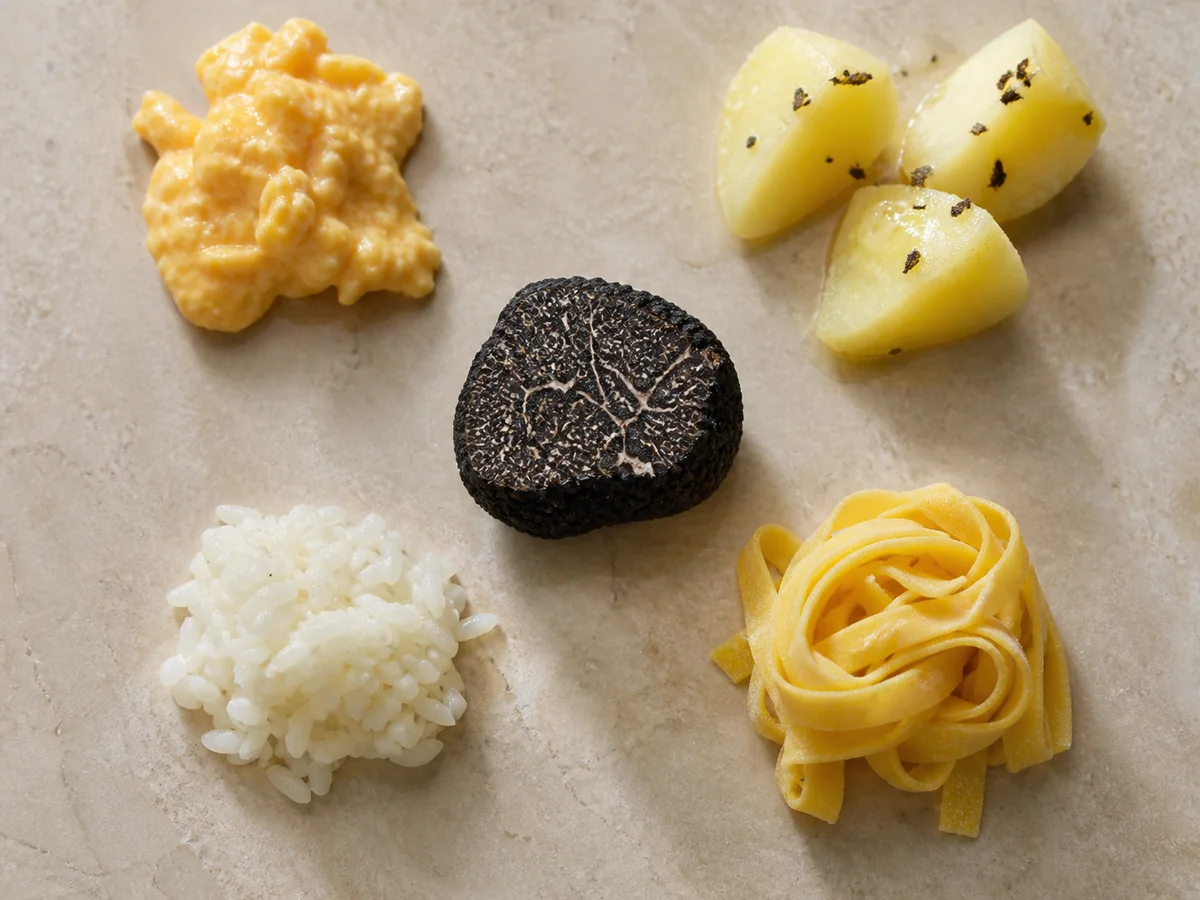
Eggs, dairy, potato, pasta, and rice combine those conditions without competing with heavy smoke, sugar, or sharp acid.
Butter and cream give grated truffle many contact points, but richness can mute detail when used heavily. Start with a restrained amount of fat, taste, then add more only when the food needs texture rather than louder truffle flavor.
Eggs provide warmth and sulfur notes that naturally meet the truffle's savory aroma. Keep them soft enough to accept grated pieces instead of drying them in the pan while waiting for a crust.
Potato, rice, and fresh pasta act as quiet starches. Season them before the final truffle addition so salt can dissolve in the food without forcing prolonged mixing after the shavings arrive.
Note
Match the carrier to service speed so the truffle does not wait beside the stove.
- Soft scrambled eggs reach the plate quickly and accept fine grating.
- Mashed potato holds warmth and distributes a truffled butter evenly.
- Risotto supports both an integrated portion and final shavings.
- Pasta needs enough sauce to keep shavings in contact with warm moisture.
Strong garlic, smoked meat, chile, and heavily toasted spices can dominate a modest specimen, so use them only when seasoning rather than truffle is meant to lead.
Give the truffle a warm, quiet surface so the expensive ingredient changes the whole dish instead of competing for attention in one overloaded bite.
Build aroma in two stages
One addition can perfume the carrier, while a second delivers the freshest aroma directly at service. Dividing the truffle makes those jobs explicit.
Grate roughly one third into warm butter, soft egg, sauce, or rice after the hottest cooking has ended. Cover briefly only when the food will be served within minutes, since a long covered hold continues to expose the truffle to heat.
Shave the remaining truffle onto each plate immediately before it leaves the kitchen to supply visible pieces and aroma that has not spent time circulating through steam.
The split is a method, not a fixed ratio. A very aromatic ripe truffle may need less integrated material, while a large platter may need finer grating to reach every serving.
- Stage one
- Fine particles distributed through a warm moist carrier
- Stage two
- Fresh shavings placed on each serving at the last moment
- Service rule
- Plates ready, diners seated, ventilation reduced if practical
Covering warm food for a few minutes can hold aroma close to the carrier, but condensation also softens garnishes and cools the plate. Use that brief hold only for a dish designed to be covered, then uncover immediately before the final shavings.
When weak aroma is a product problem
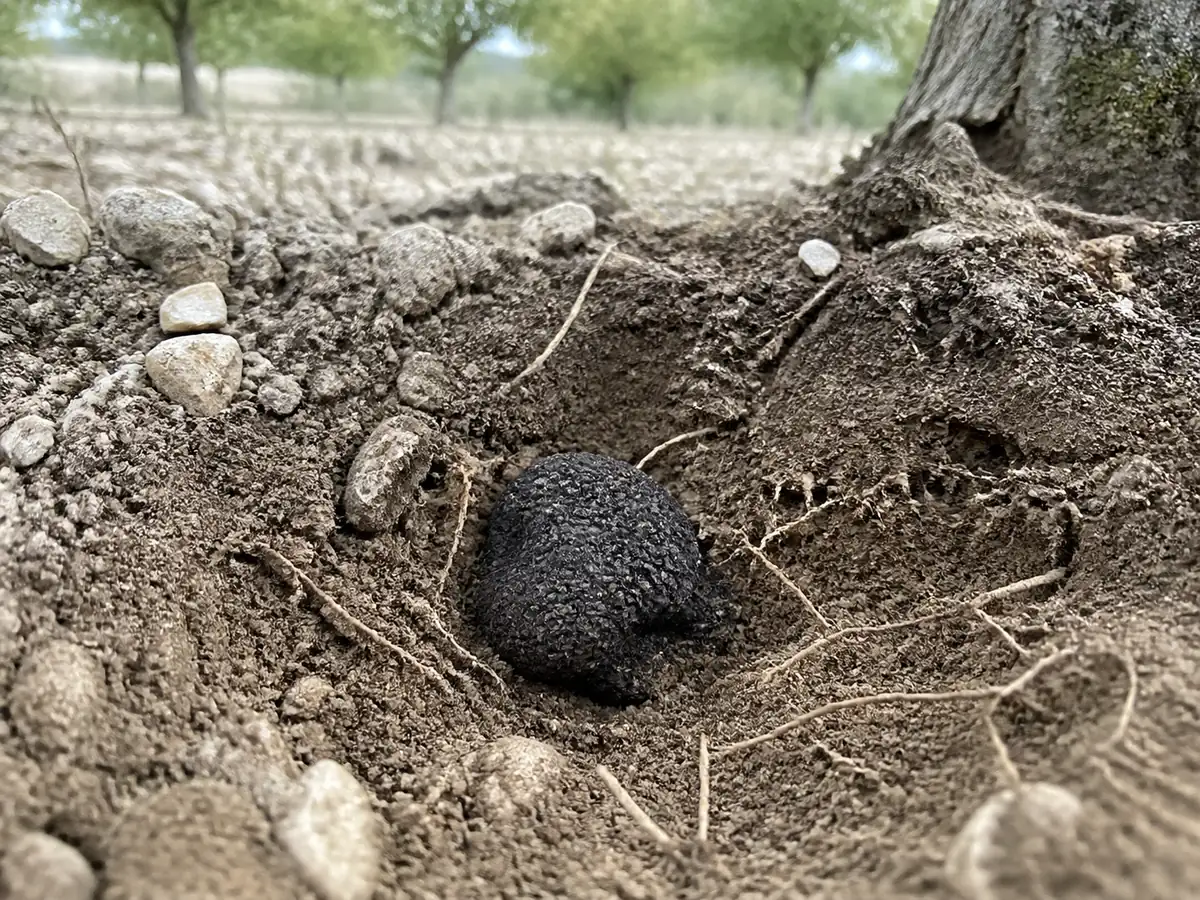
Maturity, harvest timing, storage, freezing, and processing all influence the volatile profile measured in black truffle, and a careful pan cannot reverse an unripe harvest or restore compounds already lost during long storage.
Cut a small section and smell the fresh interior. Sound flesh with little aroma points toward product condition, while a strong raw aroma that disappears during cooking points toward excessive heat, early cutting, or a long hot hold.
Salt contact can also change stored truffle aroma, so avoid burying a fresh specimen in salt as an improvised preservation step. Season the carrier, then use truffle promptly according to its storage guidance.
Do not compensate for weak aroma by scorching thicker pieces. That spends more ingredient and introduces cooked or bitter notes without solving maturity.
Compare three moments when diagnosing a disappointing dish:
- The intact truffle before washing
- The cut interior immediately after slicing
- The finished food after it leaves active heat
Strong aroma in the first two moments but not the third points toward process loss. Weak aroma throughout points toward the product or its maturity.
Diagnose before adding more because product weakness calls for a seller conversation or a different batch, while process loss calls for lower heat and later placement next time.
Finish before the aroma becomes background
Have the plates, slicer, towel, and carrier ready before cutting the truffle.
A coordinated finish protects more aroma than any elaborate last-minute technique.
- Best heat
- Residual heat from freshly cooked food
- Best cut
- Thin shavings for distinct bites, fine grating for broad distribution
- Best carrier
- Warm eggs, butter, cream, potato, pasta, or rice
- Main mistake
- Treating truffle as a mushroom that needs hard browning
Taste the carrier for salt first, turn off the heat, add the integrated portion, and plate immediately. Shave the reserved portion over each serving where diners can smell it before stirring.
Serve the dish hot enough to release aroma but not boiling hard. If it must wait, hold the untruffled carrier and complete both additions only when service resumes.
Note
Fresh black truffle does not need a long recipe to justify its price. It needs verified identity, sound condition, a compatible carrier, restrained heat, and a short path from shaver to table.
Sources & References
- Processing techniques and black truffle aroma Effects of processing on volatiles and sensory acceptance.
- Changes in black truffle aroma during storage Effects of age, heat, salt, freezing, and handling.
- Aromatic profile of Tuber melanosporum Maturity and quality-category aroma differences.
- Black truffle volatilome during development Maturity-linked volatile composition.
- Principal constituents of black truffle aroma Complex volatile basis of aroma.