
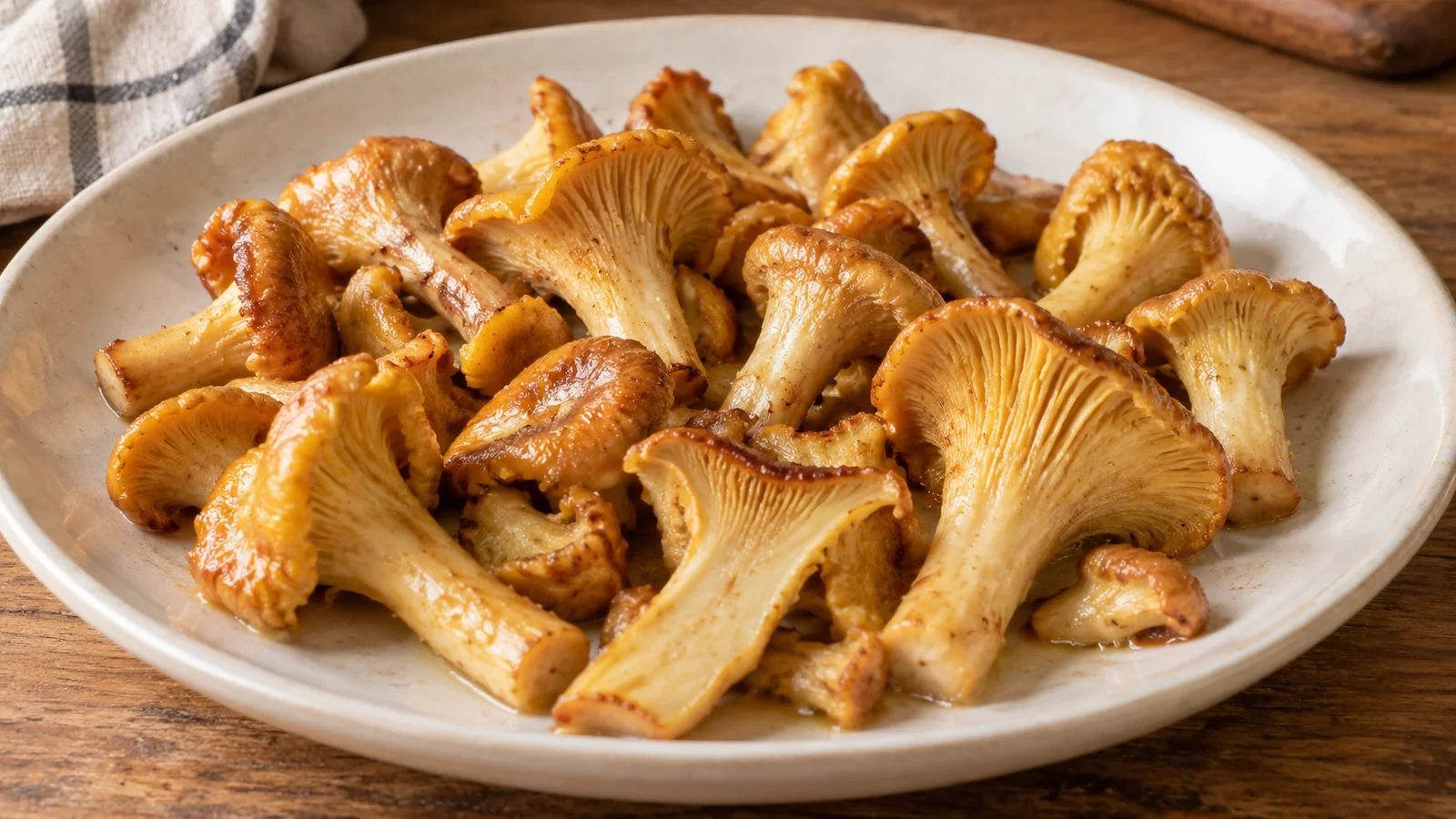
Cook cleaned chanterelles until tender, then give them a little color without drying them out. Start wet mushrooms in their own moisture, and give a drier batch a light coating of fat.
Chanterelles can be tender and lightly browned without turning crisp all over. Cooking the thick flesh and coloring its surface are two separate jobs, and the inside can be ready before every edge turns golden. Wet chanterelles do best when they release their liquid before the fat goes in, while a drier batch can start in butter or oil. Neither approach has to turn them into dry chips.
Cleaning the folds and cutting for an even bite
Warning
Identification comes before cooking
Use commercially supplied chanterelles or wild specimens identified by a qualified local expert. Cooking does not make a poisonous lookalike safe; orange color alone cannot distinguish chanterelles from jack-o-lantern mushrooms, and a finished dish cannot confirm identity.
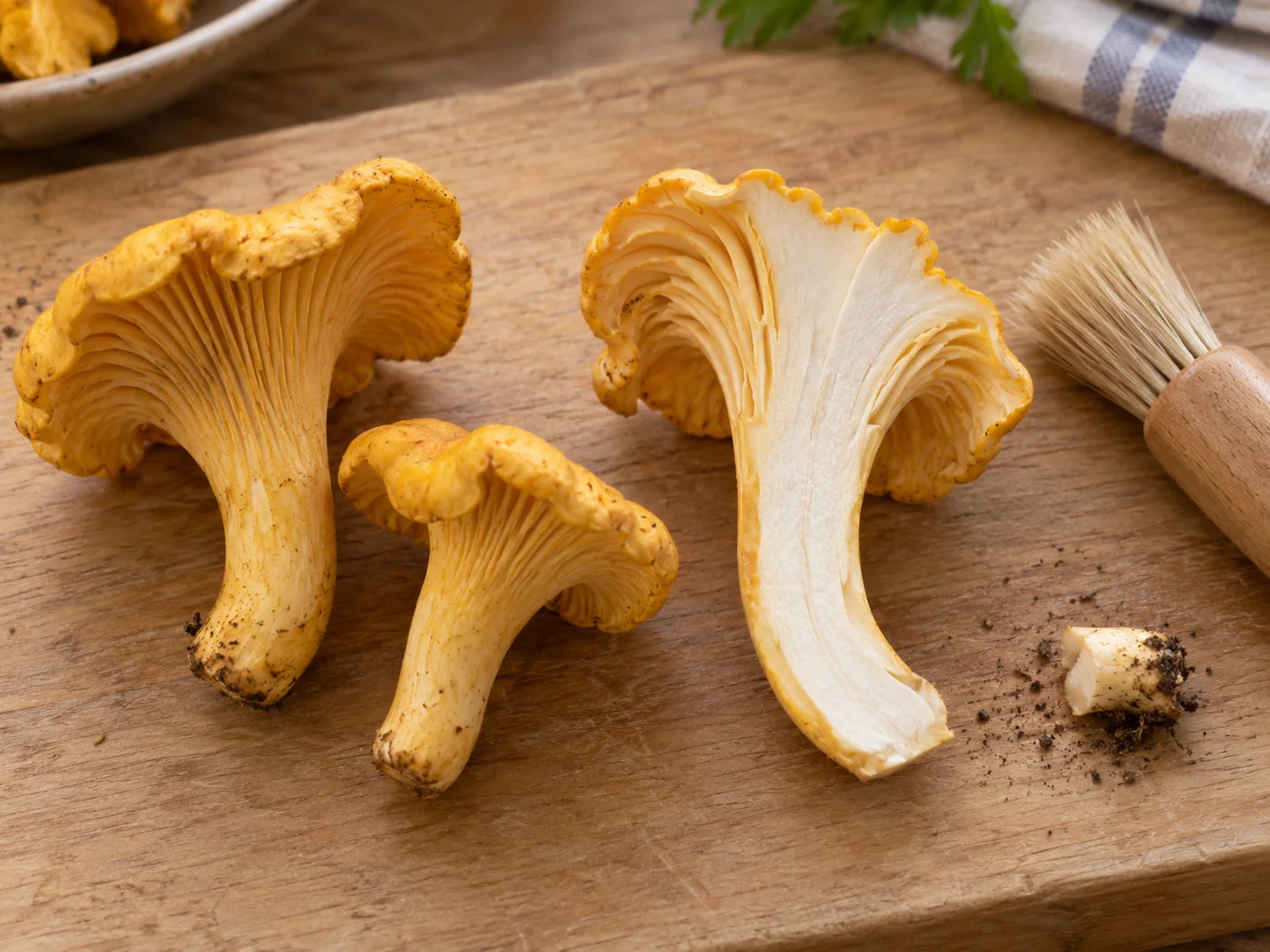
Give the underside as much attention as the cap. Debris lodges between the folds and around the stem base, then turns up in a mouthful even when the top looked clean. On a fairly clean specimen, a soft brush or a damp cloth lifts the loose litter. When fine grit stays in the folds, a brief rinse under cool running water does more good than more brushing of the cap.
Water is a normal part of cleaning mushrooms, and it beats serving them gritty. What counts afterwards is draining them and patting them dry before they cook. Visible droplets add to the liquid the pan has to deal with, but a rinse does not force you to give up on the mushrooms or hide them in soup.
Health Canada's general mushroom guidance favors washing just before use for quality. So a bought batch waiting for tomorrow's dinner stays in the refrigerator, and the thorough cleaning waits until close to cooking. Keep loose fresh mushrooms in a paper bag in the refrigerator, or leave them in suitable vented original packaging.
If you have wild chanterelles of unknown age, their purchase date cannot give you a reliable fresh-storage window. Spoiled mushrooms go in the bin, and cooking them longer or turning them into stock does not save them. Cleaning removes debris, but it cannot restore failing flesh or undo poor storage.
Small chanterelles often work well whole, as Alan Bergo's chanterelle guide notes, with cap and stem together in one solid bite. Larger ones need cuts that suit their thickness and the dish, which rarely means chopping them into tiny fragments. Cutting a thick stem lengthwise gives two easier pieces and keeps the cap-to-stem shape. For pasta, you may need to cut a broad cap into extra bite-size pieces so each forkful holds mushroom and pasta together.
Mixing big whole stems with tiny pieces makes an even finish harder. The thin pieces may already be tender while the thick ones still need cooking, so similar thickness counts for more than matching cap sizes.
Should you dry sauté chanterelles?
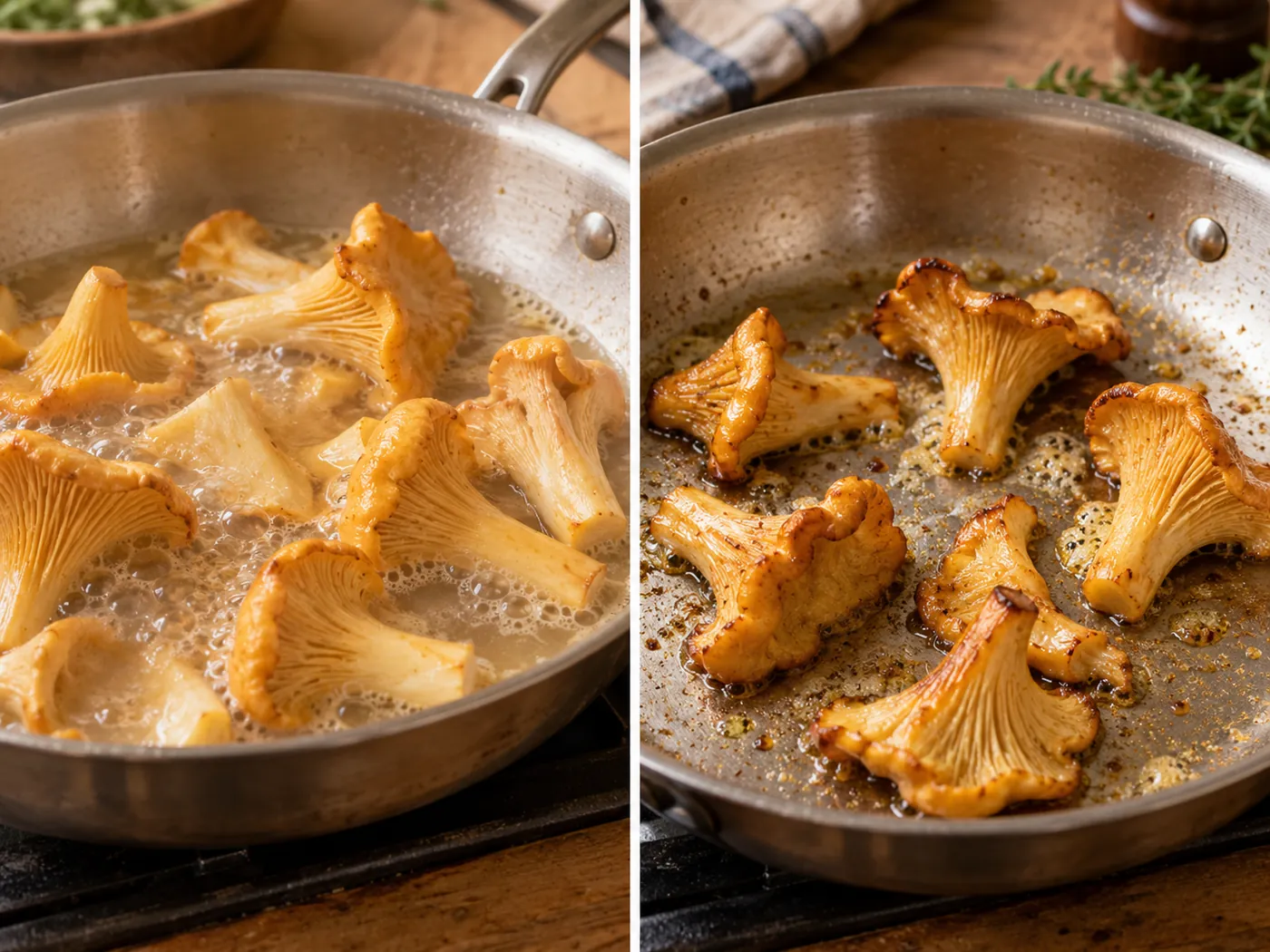
Dry sautéing is one option, and you do not have to start with it. Maryland DNR's chanterelle recipe begins with butter or oil, while chef Alan Bergo also describes a shallow-water start followed by fat once the pan is nearly dry. The two methods suit different starting points. Freshly rinsed or naturally wet batches already bring liquid to the pan, while fairly dry, thick mushrooms may need a little moisture before their surface starts to catch.
For a wet batch, starting with moisture makes the liquid stage easy to see. The mushrooms cook as their own liquid simmers, and the fat finish is easier to control once the visible pool has mostly gone. Even a dry pan never means an empty skillet left over fierce heat for as long as it takes.
If the mushrooms release little liquid and start to stick before they cook through, a small splash of water gives them a moist start. Thick pieces gain the most from it, and you do not need to boil every batch in a large pot. Drier mushrooms can start in a lightly greased pan instead. Fat carries the sauté finish, but adding it early does not seal water inside the mushroom or stop it from evaporating.
| Starting condition | Useful approach | What changes the next step |
|---|---|---|
| Wet mushrooms with visible droplets or released liquid | Begin with the moisture already present | Let the pool reduce before expecting browned surfaces |
| Thick, relatively dry mushrooms that catch on the pan | Add a little water for a moist initial cook | Add the finishing fat as the pan approaches dry |
| Drier prepared mushrooms with manageable thickness | Start with a light coating of butter or oil | Keep them moving as needed and avoid scorching the fat |
Pan width counts, because a pile of mushrooms cannot all touch the hot surface. When pieces stack up and a pool of liquid stays, the bottom layer and the top layer cook under different conditions. Using a wider skillet or smaller batches evens that out. Fill a narrow pan and keep turning up the heat, and you can scorch the exposed pieces while the pile keeps releasing liquid.
The pan liquid also carries mushroom flavor. Reducing a modest amount keeps that flavor with the food, and if an unusually wet batch makes a large pool, you can set some aside for a sauce without taking it as a sign of failure. Watch the concentrated residue as the pan nears dry, because it can darken and burn. Brown mushroom juices can go into the final sauce, while black scorched residue cannot.
How do you know chanterelles are done?
For plain sautéed chanterelles, aim for tender flesh with a little surface color. Their natural firmness can stay part of the appeal, and a cooked chanterelle does not have to collapse or lose its cap shape. Exposed edges may brown while a thick stem still needs cooking. The reverse happens too, when the inside has cooked through but lasting pan liquid holds back surface color.
Cut a thick piece open to check its center, since the cap color will not tell you. If the center has not heated through, it needs more cooking, and darkening the outside harder does nothing for it.
No timer can answer every doneness question for the same reason. Thickness, how wet the batch was, how much is in the pan and the strength of the burner all change the sequence. Maryland DNR's half-pound preparation describes an initial two-to-three-minute sauté before further cooking and finishing. That first interval is one stage of one recipe, and it is neither a universal total cooking time nor a safety guarantee for every chanterelle.
Garlic and shallot are smaller than the mushrooms and have a different job. Put finely chopped garlic in alongside a wet batch and it can cook through the whole evaporation stage, even though its pieces need far less time. Adding aromatics later lets you judge them on their own and keeps a bitter, scorched note out of the mushroom finish.
Salt does not have to wait until the very end. Bergo's wet-sauté method puts a little salt in the starting water, and you still adjust at the end, because the reduced liquid tastes different from the early pool. Unsalted butter makes that last adjustment simpler, especially when broth, cheese or another seasoned ingredient will join the mushrooms.
Light browning is a finish, and it does not remove any toxin. Serve chanterelles cooked, never as a raw garnish. Expert identification and individual tolerance are separate questions from whether the surface browned nicely.
If concerning symptoms follow a wild-mushroom meal, get poison-center advice, and do not assume the pan just needed another minute. In the United States, Poison Control is available at 1-800-222-1222.
TechniquesHow to Cook Black Morel Mushrooms: Halving and CleaningTiming chanterelles within a meal
Plan when the chanterelles join a dish with several stages. Left in the pan while the rice, a sauce and the garnish come together, they get far more cooking than they need. Cooked pieces can wait briefly in a separate dish while the next part of the meal finishes, then go back in near serving. That is a cooking-order choice within one meal, and it gives no permission to leave leftovers out of the fridge for hours.
With several skillet batches, take the first finished batch out while the next cooks. Finishing them together briefly at the end keeps the earliest mushrooms from sitting over heat through the whole series. Two batches of wet chanterelles for toast, for example, do not need to share one crowded skillet. Each reaches its own finish, and the bread and herbs can be ready before you bring the mushrooms together for serving.
Toast needs mushrooms without a big pool of free liquid, or the bread soaks it up before it reaches the table and turns soft. Egg dishes have a different timing problem. Cook the chanterelles before they meet the eggs, so the eggs do not sit over heat while thick mushroom pieces catch up.
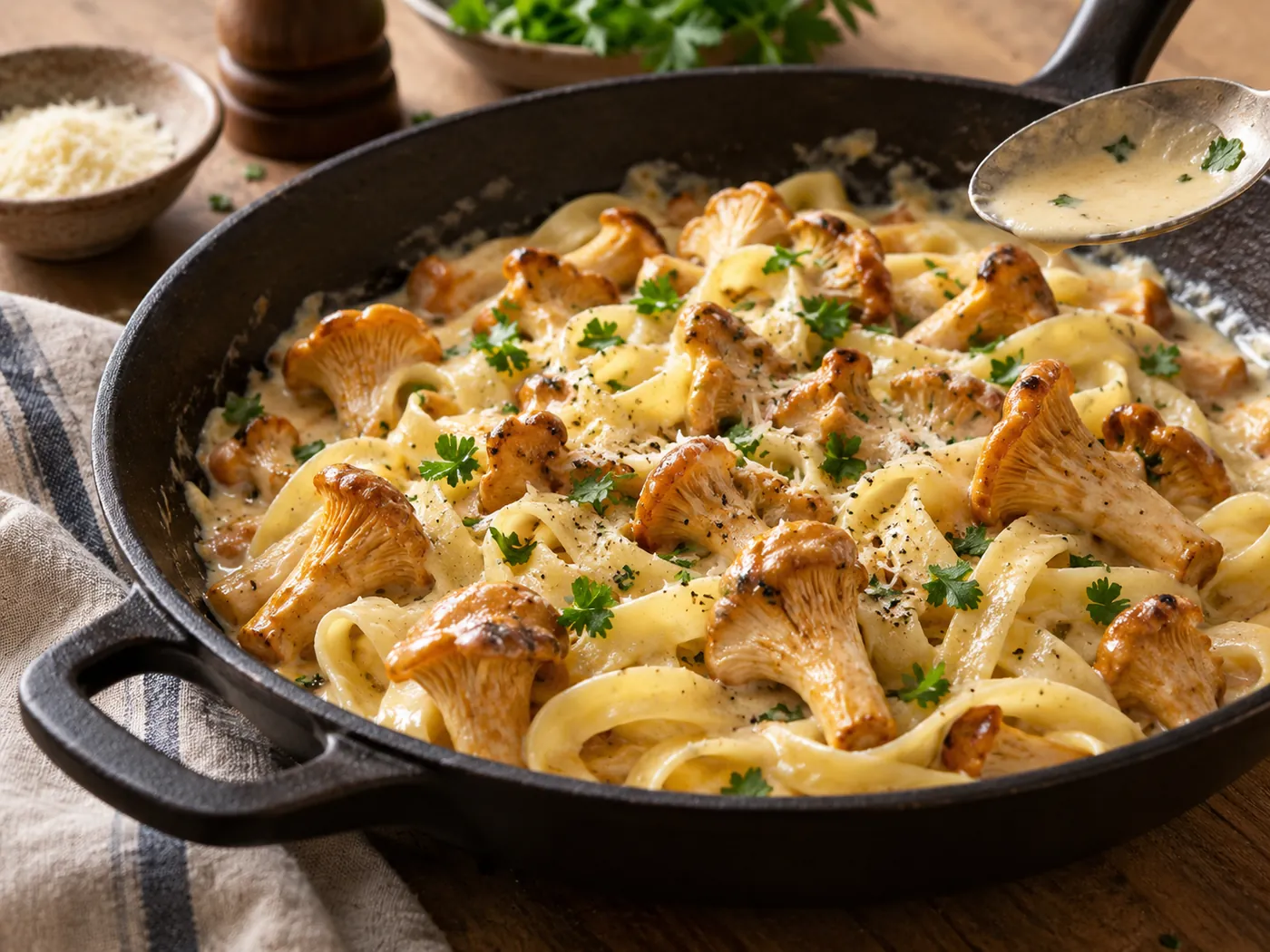
Pasta can carry some moisture, because a sauce is meant to coat the noodles. The test is whether the finished sauce clings to the pasta or leaves a watery pool underneath. For a cream sauce, handle the mushrooms and the sauce reduction separately. Return the tender chanterelles once the sauce is close to the consistency you want, so they do not simmer through the whole reduction.
Risotto takes longer than a mushroom pan finish, because the rice has its own cooking sequence. Adding a share of separately sautéed chanterelles near the end keeps a more distinct bite. Some risotto recipes cook the mushrooms with the rice on purpose, to spread their flavor through the dish. The choice depends on whether you want spread flavor, distinct pieces or both.
Herbs, cream, butter and a little garlic all suit chanterelles, but you can leave any of them out. Keeping your first preparation simple lets you judge their own texture before you change several strong seasonings at once. Oil and a little suitable stock give a dairy-free finish, a different style of sauce. Adjust that extra liquid for the dish's consistency, and do not pour it in to fix every disappointing texture.
Why are my chanterelles watery, greasy or tough?
Each of those problems has its own cause. Visible water, excess oil, a tough bite and burned aromatics are different signs, so a single order to cook harder cannot fix them all.
Watery mushrooms may simply be in the liquid stage, especially after rinsing. If they are tender but the topping needs to be drier, manage the liquid and the pan space, since the mushrooms themselves may have finished cooking already. Move some pieces from a crowded skillet into another batch. With the cooked mushrooms out of the way, you can deal with the remaining liquid without forcing every piece through another long cook.
Greasy pieces have a different problem, which is more fat than the dish needs. More butter for flavor will not undo that excess, even when the pan holds no visible water. Chanterelles also keep some natural chew, especially small whole ones. Thick stems that still need cooking and mushrooms dried out by long frying may both resist your teeth, but they call for opposite responses.
A visible liquid pool
Give the liquid room to reduce, or handle part of it separately for the dishTender mushrooms need not stay over heat for the entire reduction.
Uneven cooking in a crowded pan
Separate the pile into manageable batchesWith more open pan around the pieces, each batch cooks and finishes more evenly.
Oily mushrooms
Drain unwanted excess fat and stop adding moreDraining puts less oil on the plate, but longer frying alone will not make the original amount of oil useful.
Tough or dry pieces
Judge thickness and cooking history before adding heatThick undercooked pieces need more cooking, while overcooked dry pieces will not regain their original fresh texture.
If garlic or pan residue has blackened, move the sound food to a clean pan for a better finish, and leave the burned material out of the sauce. Some browned residue can add flavor, but an acrid scorched layer is a different thing. Chopping an overcooked batch into a sauce may change how its texture comes across, yet it does not reverse the overcooking. That option applies only to sound, properly handled food, never to mushrooms with spoilage or an uncertain identity.
Storing leftovers and freezing a surplus
Fresh storage and cooked leftovers need different handling. Raw chanterelles waiting in the refrigerator pose a different storage job from a buttered panful you have already served.
Cook a surplus before freezing it, which is where Health Canada's general mushroom advice starts. Steaming or sautéing first gives you a cooked portion to store, but it does not promise that thawed chanterelles will match their fresh texture. Meal-size portions make later use easier. One large frozen block tempts you to thaw more than the next dish needs, while small separate portions let you use one serving and leave the rest alone.
These steps follow University of Illinois Extension guidance on leftovers. The shallow-container rule is about food depth, and the look of the lid or bag has nothing to do with it. Deep piles stay warm in the center longer than small portions spread through a shallow container. Cooling also does not require a tray of cooked mushrooms to sit on the counter until completely cold.
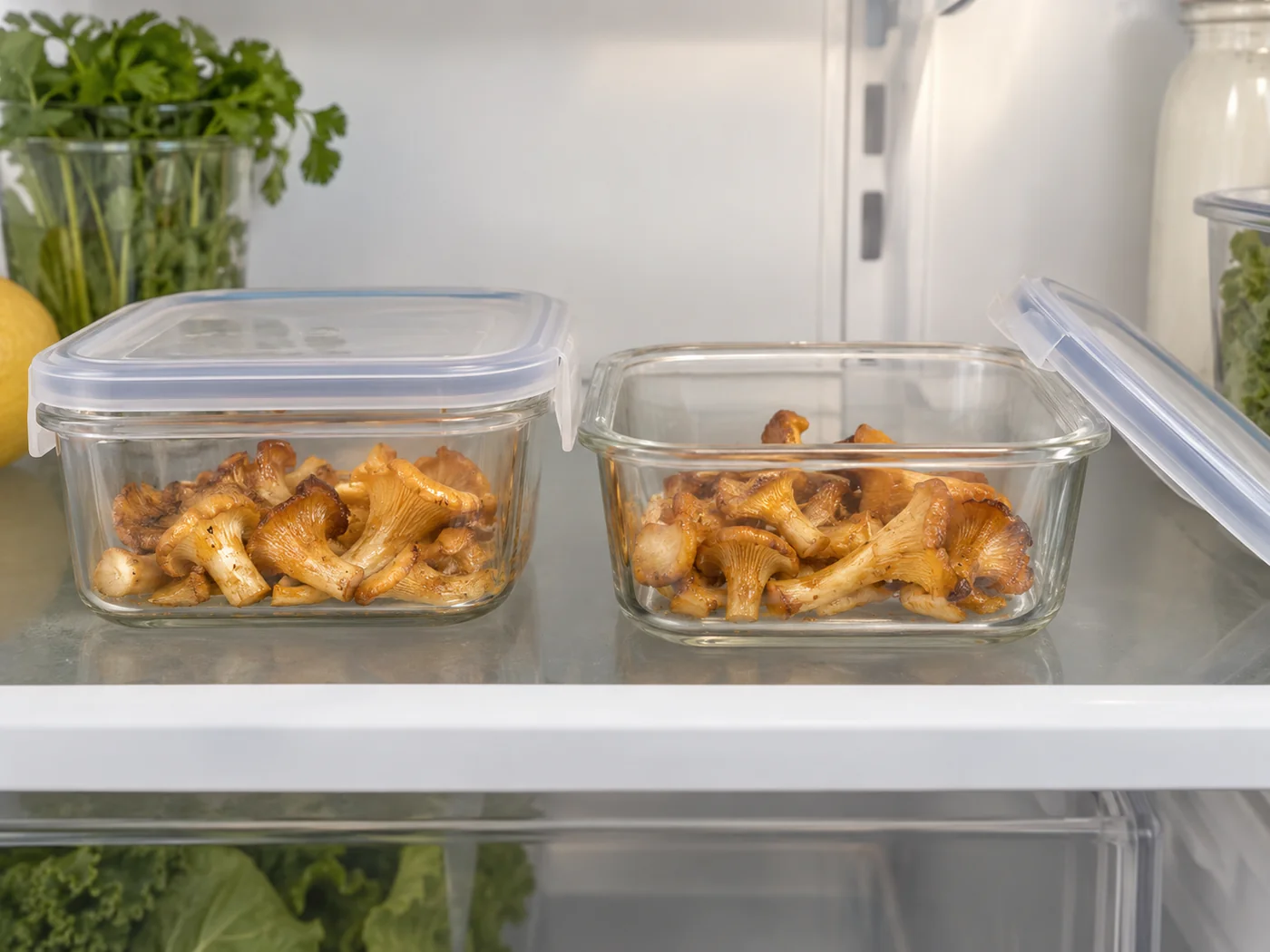
Label and date each cooked portion, so today's meal stays separate from an older container that looks the same. The refrigerated window for leftovers runs from cooking and storage, and the date you picked a wild batch plays no part in it. Freezing cannot rescue spoiled mushrooms, and it cannot rescue cooked food that someone has already mishandled.
For reheating, a moist sauce and a plain sautéed portion can need different handling. The sauce spreads heat around the pieces more easily, while a plain panful needs turning and attention to its thickest parts. Neither a steaming surface nor a browned edge replaces the thermometer for the leftover reheating target. Keeping the portion small makes that target easier to reach without holding the surrounding mushrooms over heat for no reason.


