
The underside decides first
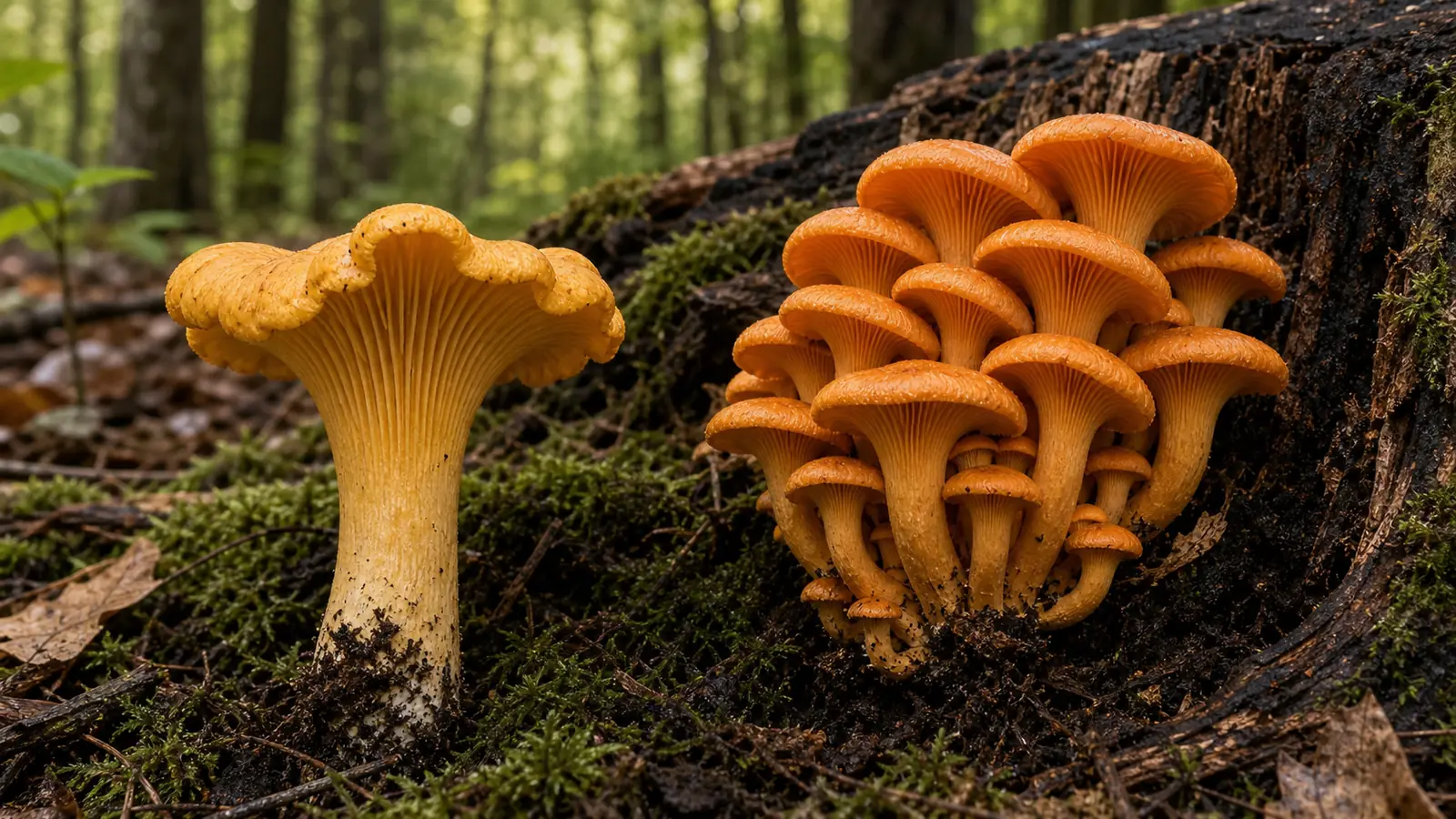
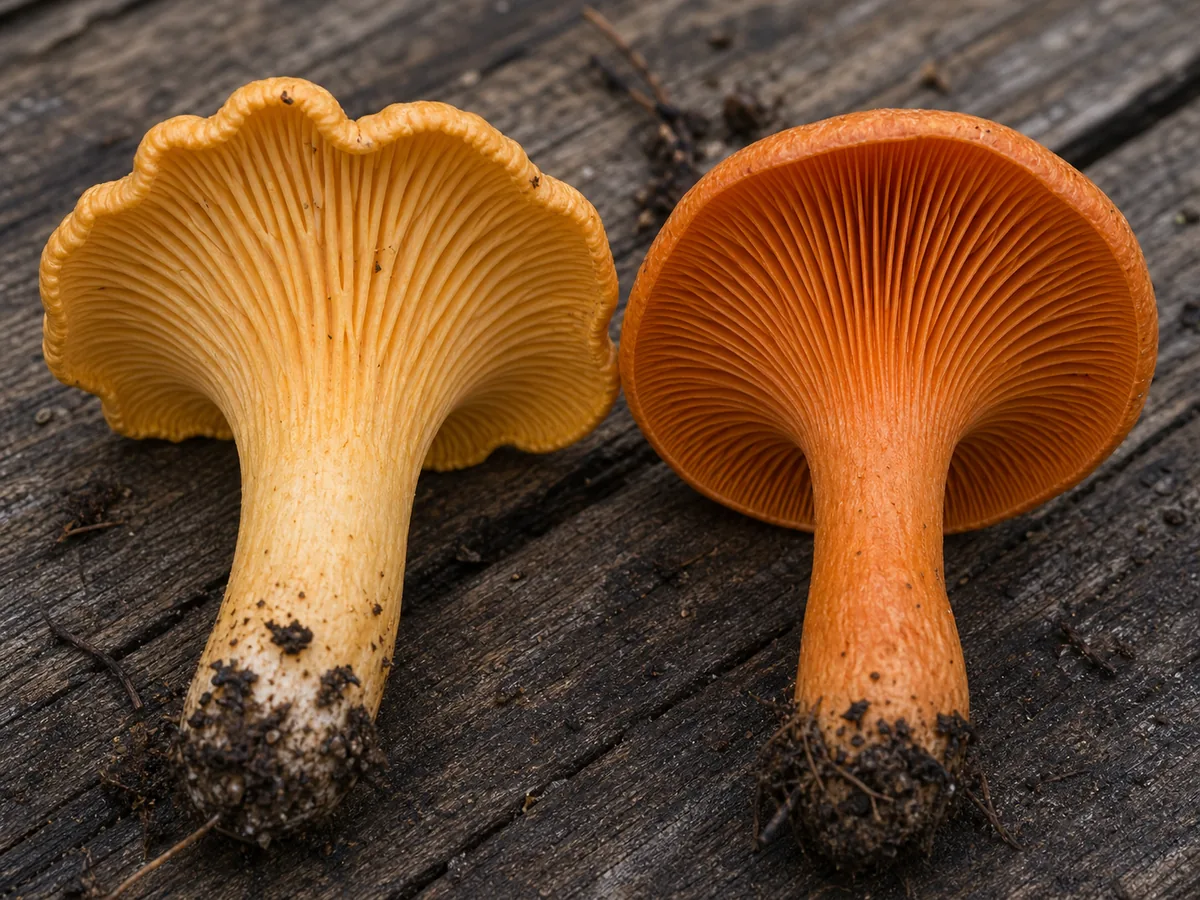
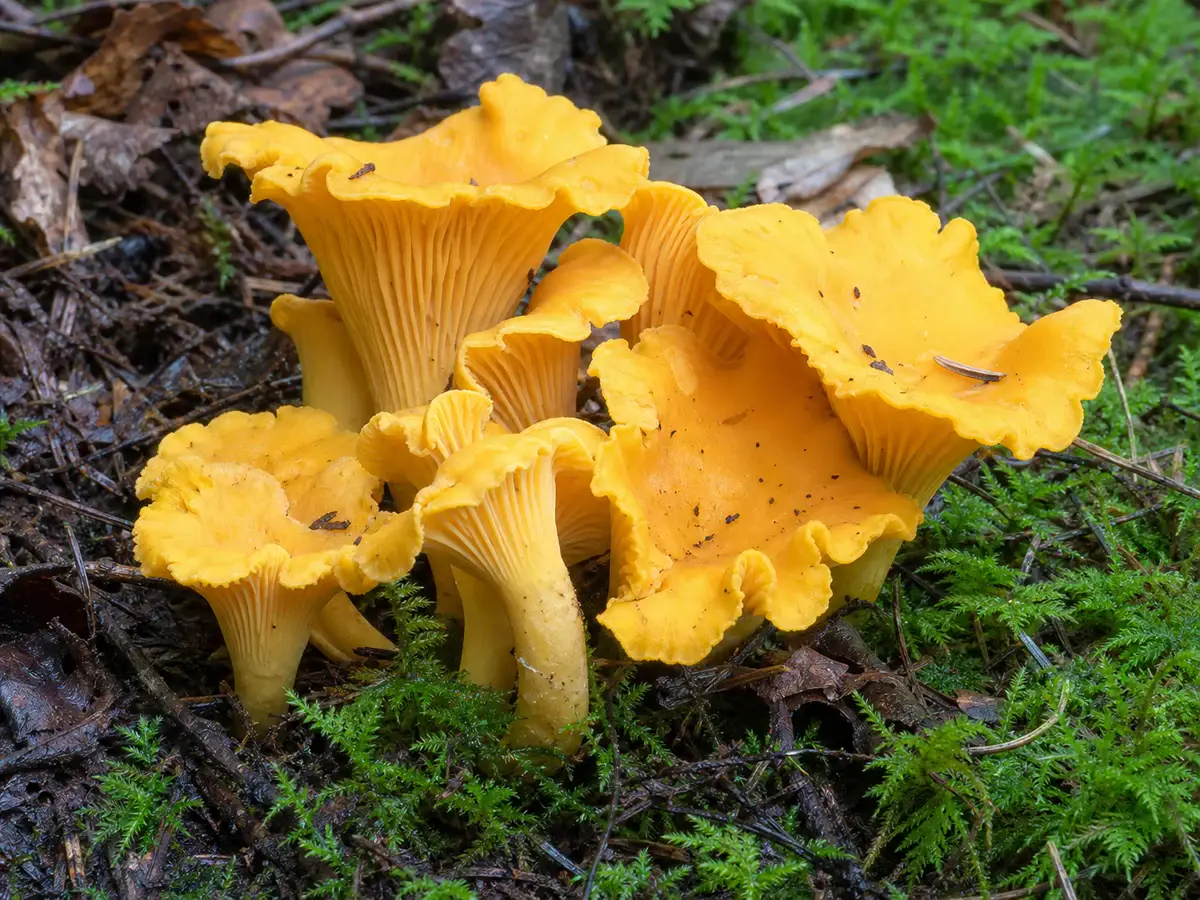
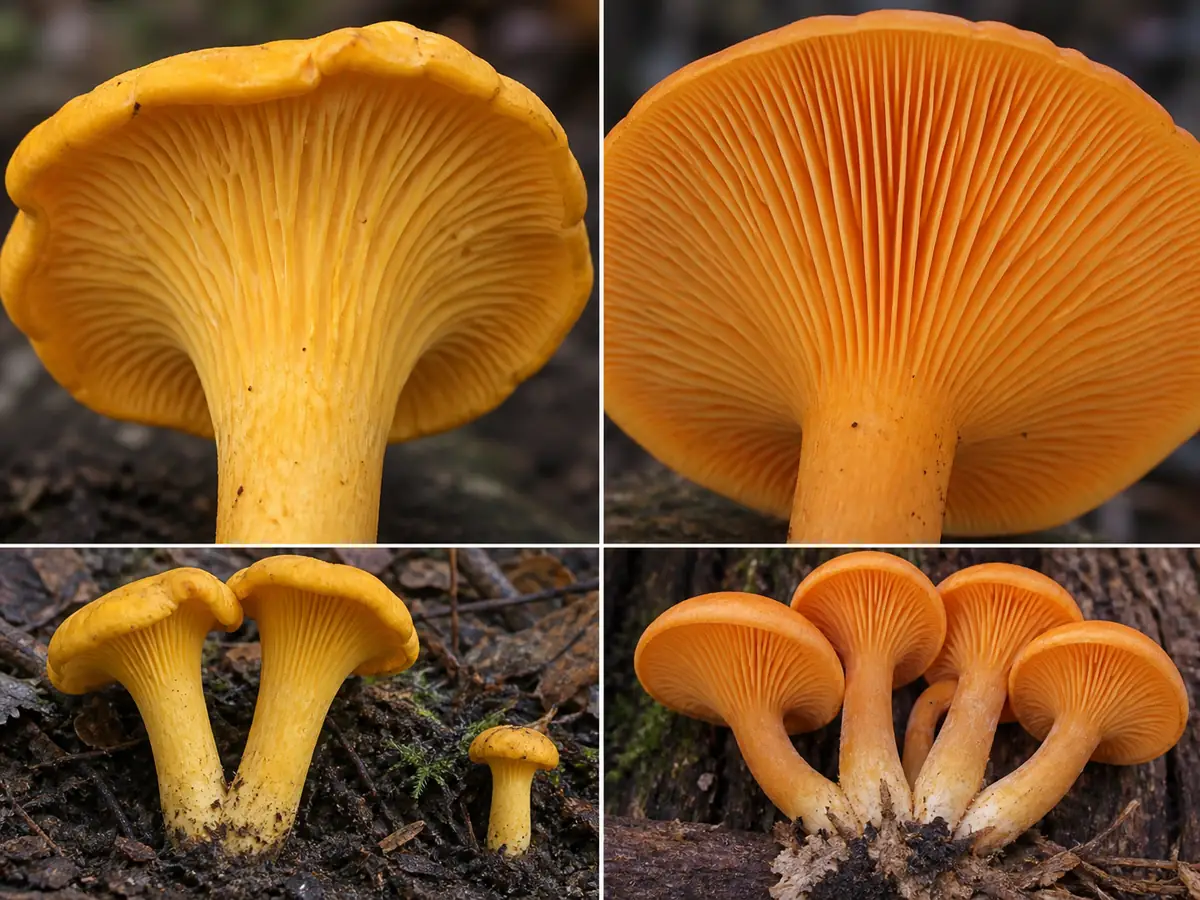
Start with the underside because a true chanterelle has blunt, forked ridges that run down the stem and feel continuous with the cap. A Jack O'Lantern has thin, sharp, crowded gills that stand apart like blades.
If the mushroom has true gills, do not keep arguing for chanterelle. That one feature changes the decision from dinner to discard.
| Check | Chanterelle | Jack O'Lantern |
|---|---|---|
| Underside | Blunt false gills, forked ridges | Sharp true gills, crowded blades |
| Growth | Usually single or scattered from soil | Dense clusters on wood or buried roots |
| Flesh | Pale inside, solid stem | Orange inside, often softer |
| Smell | Mild fruity or apricot-like | Often weak, musty, or not helpful |
| Safety call | Edible when fully identified and cooked | Poisonous, not for food |
The check order
Use a fixed order of underside, growth habit, cut flesh, and condition so orange color cannot rush the decision.
This order matters because each later check is easier to bend when you already want the mushroom to be edible. A written stop rule keeps the basket honest.
Gills that stop the ID
False gills are ridges. They look folded into the mushroom instead of pasted on, and they usually fork or cross near the stem.
True gills have clean edges, tight spacing, and visible depth between the blades. On a fresh Jack O'Lantern, they can run down the stem and still remain distinctly blade-like.
On a sturdy fresh specimen, lightly trace one ridge with a fingertip to judge whether it is a shallow fold or a separate blade.
Do not scrape the underside apart to make it fit the answer you want. If the structure needs that much persuasion, the food decision is already too weak.
Wood clusters change the call
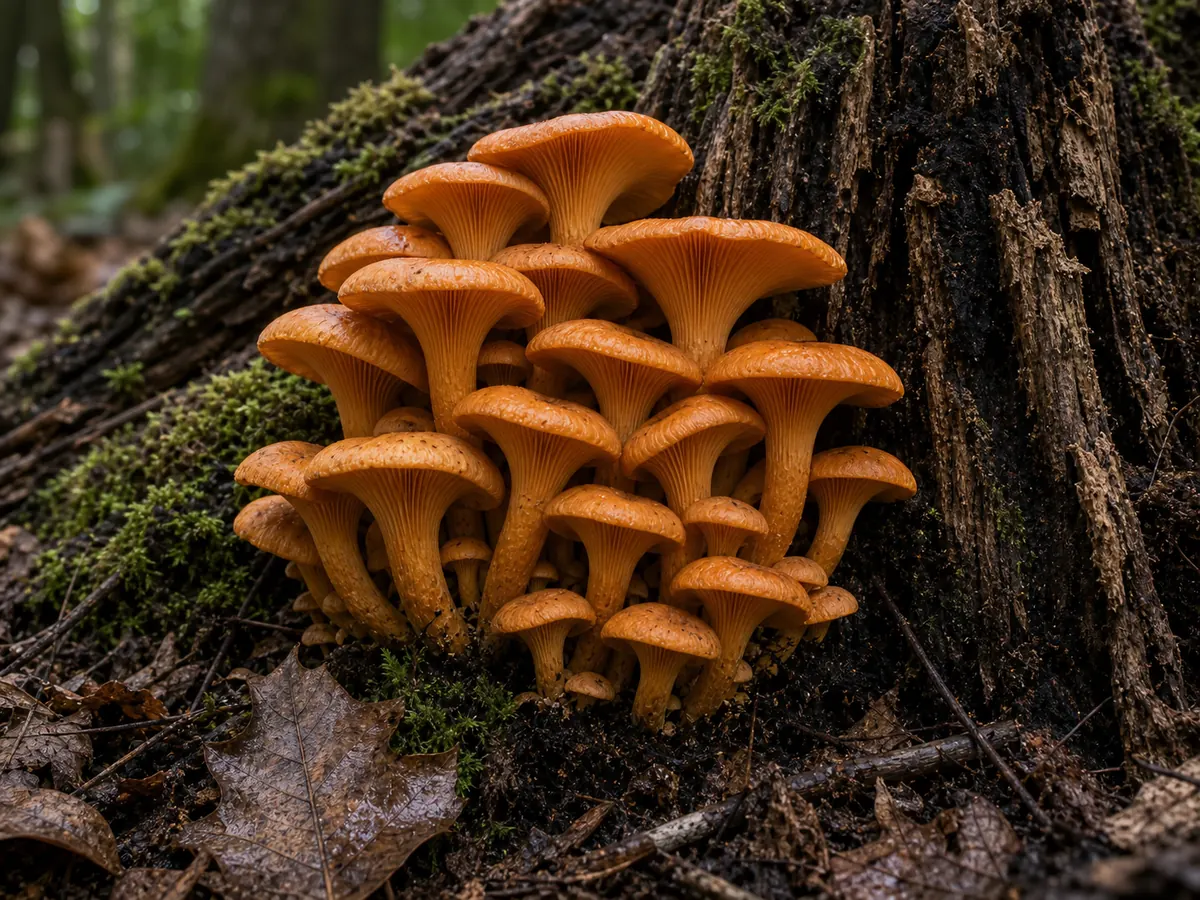
Growth habit is the second safety check because chanterelles grow from soil with tree roots. Jack O'Lanterns grow from stumps, roots, or buried hardwood that leaf litter can hide.
Hidden wood makes a fused orange cluster at a tree base a stop sign even when no stump is visible.
Buried roots are the trap. A Jack O'Lantern cluster can look like it is coming from soil when the wood is just below the leaves, so brush around the base before calling it a ground-growing mushroom.
Trace each stem to its attachment point before separating the mushrooms because Jack O'Lantern stems often converge into one dense base. Chanterelles can grow near one another, but each fruit usually keeps its own base in the soil.
Lift leaf litter around one edge without tearing up the entire patch, then photograph any stump, root, or buried wood beside the fused base. The Jack O'Lantern profile gives that wood attachment more weight than cap color because it identifies how the fungus is feeding.
A mixed patch can contain more than one orange species, so one convincing chanterelle never clears every neighboring cap.
Separate fruiting bodies do not prove a chanterelle identification because soil growth only removes one warning and never grants permission to eat.
Cut flesh as a backstop
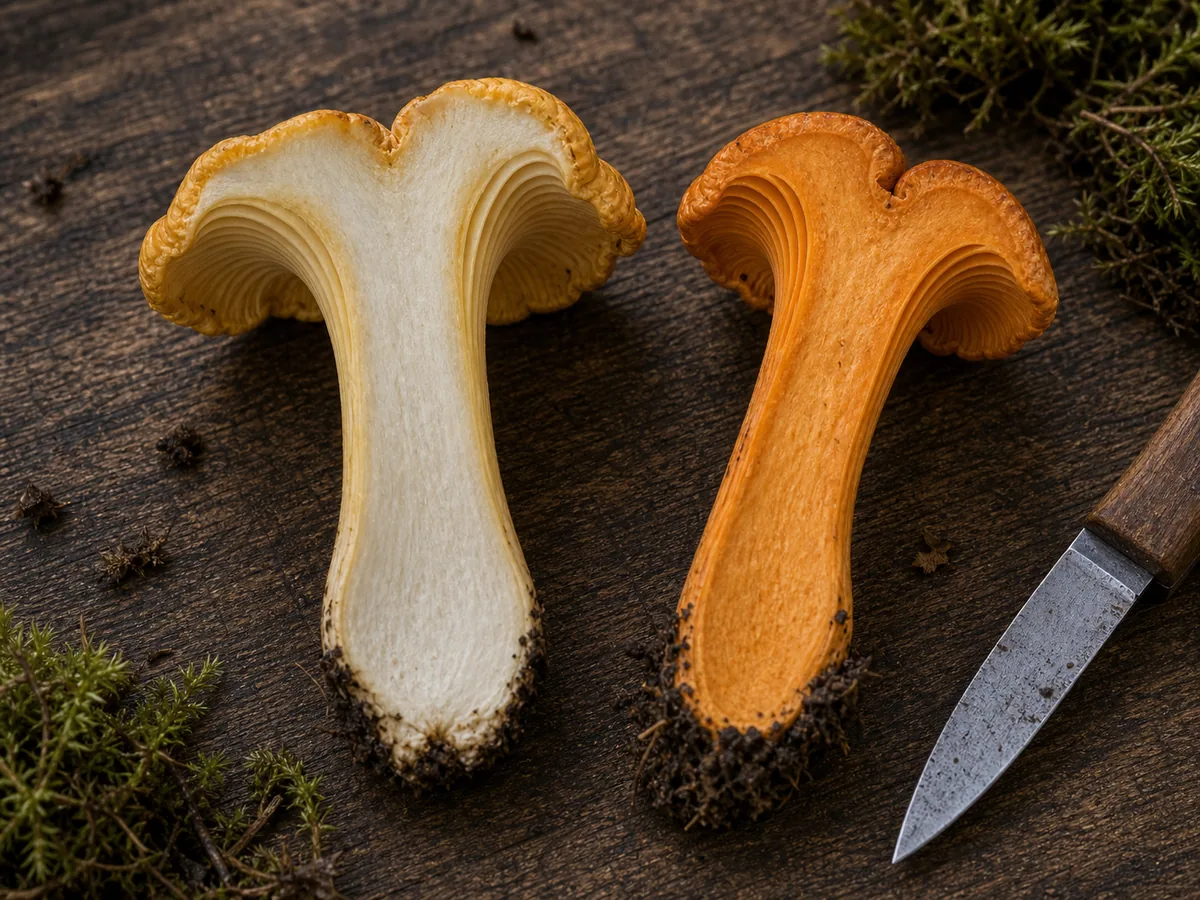
Cut one suspect mushroom lengthwise. Chanterelle flesh is pale and the stem is solid, while Jack O'Lantern flesh tends to stay orange through the cap and stem.
The cut is not the first check, but it catches weak IDs that survived a quick cap photo. It also makes old, bug-damaged, or waterlogged specimens easier to reject.
Color and smell are weak evidence
Orange color is the trap because pale and deep orange chanterelles overlap with Jack O'Lanterns. Use color only after the underside and growth habit agree.
Smell helps only after structure agrees because a fruity odor cannot overrule sharp gills or clustered wood growth.
Note
Do not taste a raw wild mushroom to settle this comparison. Taste is not needed here, and it does not make a poisonous mushroom safer.
Smell also fades in age and cold weather. A weak smell does not make Jack O'Lantern less likely, and a fruity smell does not make true gills disappear.
Glow is only a bonus warning
Fresh Jack O'Lantern gills can glow faintly in the dark, but glow is a poor field test. Many specimens do not glow strongly, and the test depends on freshness and darkness.
Use glow as a bonus warning rather than required proof because a non-glowing orange cluster can still be a Jack O'Lantern.
Photos that let experts help
Photograph the mushroom before picking, then photograph the underside, side view, base, and cut flesh. Include the stump, soil, or tree base in the first photo because habitat can disappear after cleaning.
A basket photo is almost useless for this pair. The expert needs the exact traits that separate false gills from true gills and soil growth from wood growth.
- Cap from above.
- Underside close enough to see ridges or blades.
- Whole stem and base.
- Growth point, including soil or wood.
- Cut flesh if the ID is still being checked.
Spore color has a narrow role
Spore color can support the identification without carrying it because multiple orange mushrooms share pale or cream deposits.
Use a spore print when you are sorting a wider orange-mushroom problem, not when true gills and wood growth already point to Jack O'Lantern. The print answers a narrower question after the visible structure has already been checked.
What changes with young mushrooms?
Young specimens make the underside harder to read because chanterelle ridges may be shallow and Jack O'Lantern gills may not have stretched into obvious blades. A small orange cap therefore needs the same complete check as a mature one.
Keep the stem base attached and record whether the young mushroom stood alone in soil or joined a wood cluster because the chanterelle profile cannot restore an attachment point lost during picking.
Wait for a mature specimen from the same patch when the underside remains smooth or compressed. Do not cut, taste, or cook an immature mushroom to force a decision that its field marks cannot yet support.
CompareOyster Mushroom vs Shiitake: Which One Fits the Dish?Rain makes shortcuts worse
Wet mushrooms make this pair harder because chanterelle ridges look smoother, Jack O'Lantern caps fade, and old specimens lose the clean texture shown in field guides.
After heavy rain, lean harder on structure. Turn the mushroom over, trace the stem, check the growth point, and cut one specimen if it remains a candidate.
Skip the meal when condition hides the underside, stem attachment, or growth point because an old edible mushroom is still a poor identification specimen.
Rain also changes confidence in photos. A wet orange cap can look brighter or flatter than it did in the woods, and a phone flash can hide the underside texture.
That is why the photo set should include a shaded underside shot and a base shot in natural light. The photo is evidence, not a trophy picture.
The expert question
Most expert follow-up questions are practical. They ask for the underside, the growth point, and whether the mushrooms were separate or fused.
A cap-only photo lets the mistake survive, while a complete photo set makes the wrong answer harder to defend.
For this pair, a good photo set should answer the best expert question. Did the mushroom grow singly from soil, or as a cluster from visible or buried wood?
If the answer is uncertain, keep the specimen out of food and keep studying. A chanterelle ID should feel boring by the time you cook it because every high-risk feature has already been checked.
When the habitat answer remains uncertain, a good expert asks what you ruled out. Saying "it smelled fruity" is weaker than saying "it had blunt forked ridges, pale flesh, no fused cluster, and no wood at the base."
That answer gives an expert a decision path to test instead of a conclusion to accept.
Practice without eating
Practice without eating first. Put suspected chanterelles and orange lookalikes into separate bags, photograph them, and write down which feature would stop the edible ID.
Compare the note with a chanterelle's blunt underside folds and a Jack O'Lantern's sharp orange gills. The broader food decision still depends on learning exactly which field mark ends the identification.
Keep the practice batch out of the kitchen until the underside, base, habitat, and growth habit all tell the same story.
When the basket answer is no
Throw it out when any major feature points to Jack O'Lantern. True gills, clustered wood growth, orange interior flesh, or a missing base should end the food decision.
A written stop rule protects the decision from wishful thinking when the desire to find chanterelles is strongest.
Warning
Jack O'Lantern is poisonous. Cooking, drying, or mixing it with other mushrooms does not turn it into food.
If someone has already eaten a suspected Jack O'Lantern, treat it as a mushroom poisoning symptoms question and contact Poison Control or local emergency care. Do not wait for glow, spore prints, or online opinions after exposure.
The wider lookalike method
Dangerous mushroom lookalikes often turn on one visible feature that should stop the meal. The first visible trait often starts the mistake, while the hidden feature ends it.
Use the same method on other orange mushrooms by naming the feature that would make the edible identification impossible before flavor, recipe, or basket weight matters.
Meal planning starts with foraging safety rules because the skillet waits until the identification is settled. A spore print can support the record without replacing the underside and habitat checks.
Which sources support this split?
The structural split here follows the field characters used by MushroomExpert.com and public poisoning guidance from Poison Control. Both point away from casual resemblance and toward visible identification characters.
Local expertise remains necessary because orange species vary by region, so use this comparison to stop a risky identification and a local club or expert to confirm a wild chanterelle before eating.
When in doubt, throw it out. Never consume a wild mushroom unless you are 100% certain of its identity. Foraging safety rules keep the full specimen, habitat, and dangerous alternatives in the decision before any wild mushroom becomes food.