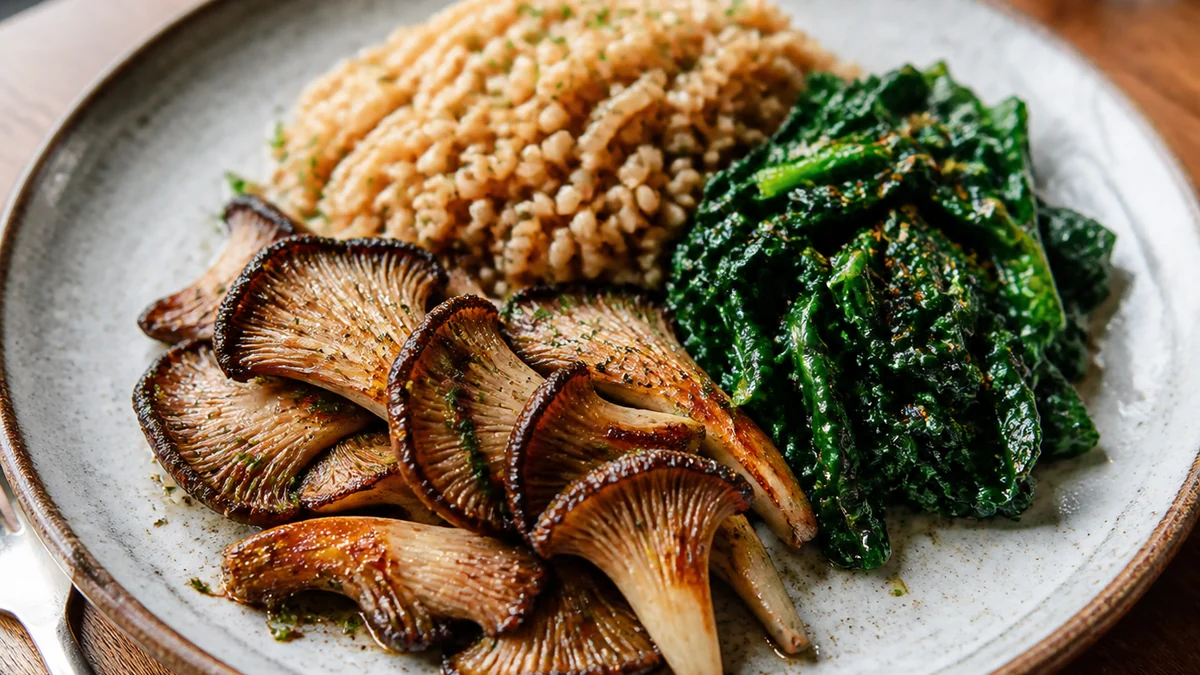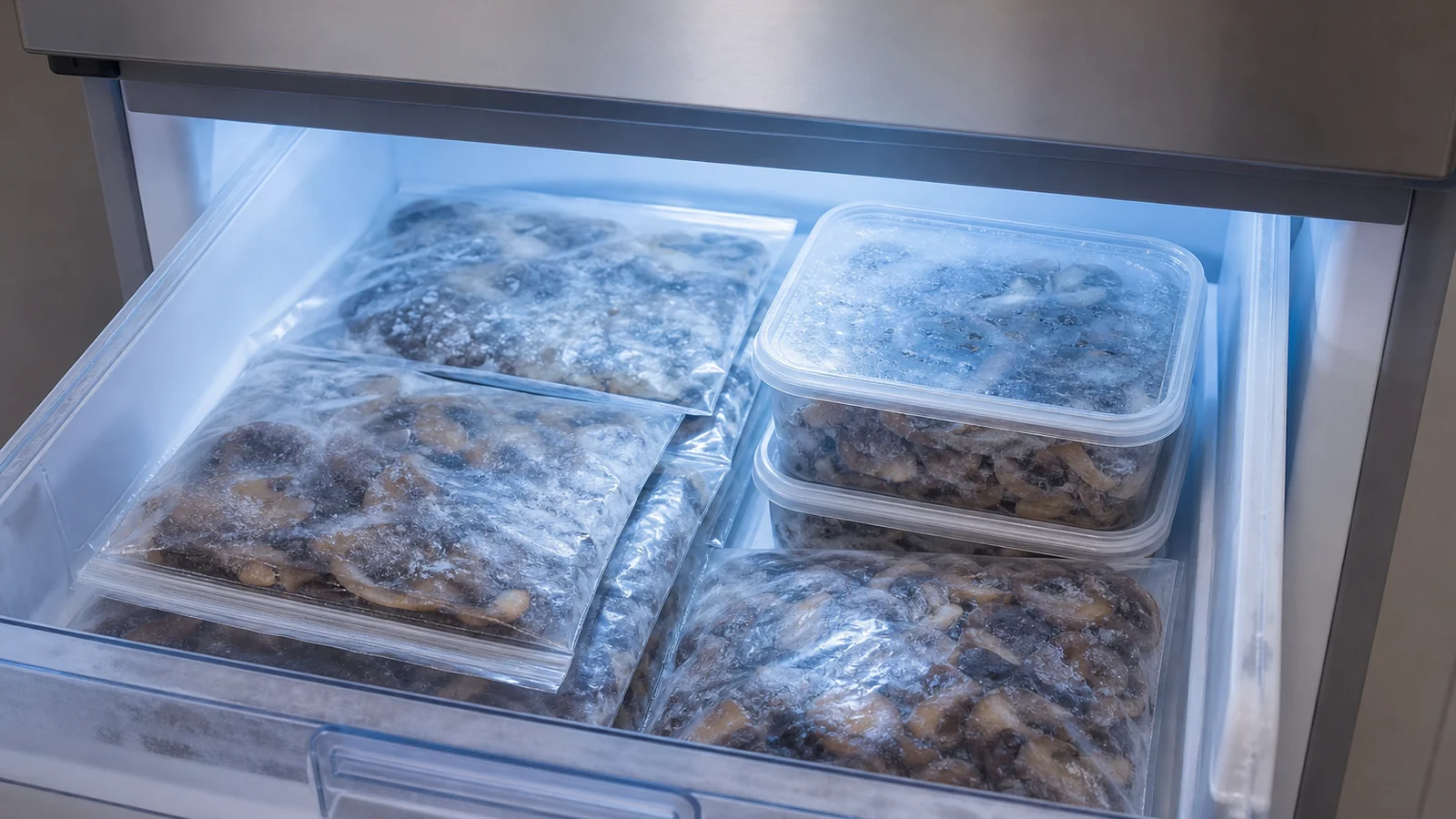
A preservation method for freezing mushrooms, comparing four routes into the freezer by what each returns on thawing, explaining the ice crystal damage that makes raw freezing fail, giving the tested acid dip and steaming times by cut, covering the pan-fried alternative and why published guidance ranks it second for keeping, and setting out packing, headspace and how to use the result without thawing it.
Freezing mushrooms raw is the fastest way to do it and the reliable way to produce something you will not want to eat.
The fix takes about fifteen minutes. It is not optional in the way most kitchen advice is optional.
How should you freeze mushrooms?
There are four ways to do it, and they differ in what you get back rather than in what they cost you now.
| Method | What it takes | What thaws out |
|---|---|---|
| Straight in, raw | Two minutes | Slack watery pieces sitting in gray liquid |
| Acid dip then steam | Fifteen minutes | Firm intact pieces, and the longest freezer life |
| Cooked in a pan first | Fifteen minutes | The best flavor, and a shorter freezer life |
| Reduced to a paste first | Forty minutes | No texture at all, which for some dishes is the point |
Only the middle two are tested methods with published parameters behind them, and the difference between them is real rather than a matter of taste.
The fourth one deserves a sentence, because it is the one people have never heard of and the one that solves the texture problem outright.
Cooking mushrooms down with a little onion until almost all the moisture has gone gives a dense savory paste that freezes perfectly, because there is barely any water left in it to form crystals. It takes longer and it commits you to using it as a paste, which for pies, sauces and fillings is no loss at all.

Before committing to any of them, it is worth asking whether the freezer is the right destination at all. For some material it is not.
Firm dry material in good condition dries well, and drying mushrooms gives a more concentrated result than freezing ever will. Small firm caps that would suffer either way are better handled by pickling mushrooms, which keeps their bite.
And if the punnet is still in decent condition and you simply have not got to it yet, how you store fresh mushrooms for another few days may be the whole answer.
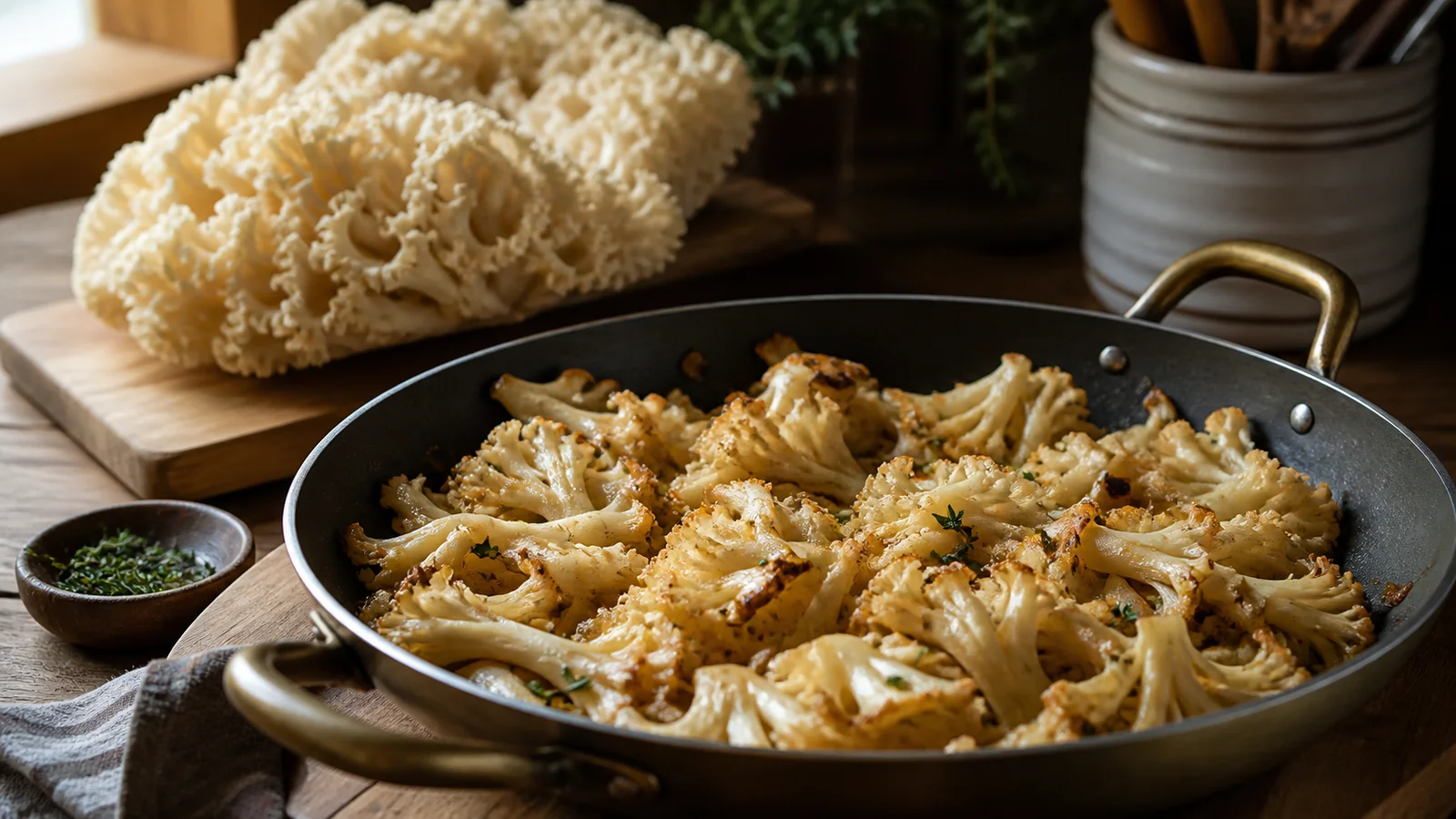
Cooking MushroomsHow to Cook Cauliflower Mushroom Without Trapping GritWhy can you not freeze mushrooms raw?
Most vegetables freeze reasonably well raw. Mushrooms do not, and the reason is a number.
A fresh mushroom is roughly ninety percent water by weight. That is high even among vegetables, and it means almost everything in the bag is about to change state.
Warning
Water expands as it freezes, and the crystals it forms grow larger the more slowly it freezes. A domestic freezer is slow, so the crystals are large, and they form inside the cells rather than only between them. Their edges rupture the cell walls from the inside, which is damage that has already happened by the time you open the bag.
The crystals themselves are visible on the surface, and the ones that matter are not.
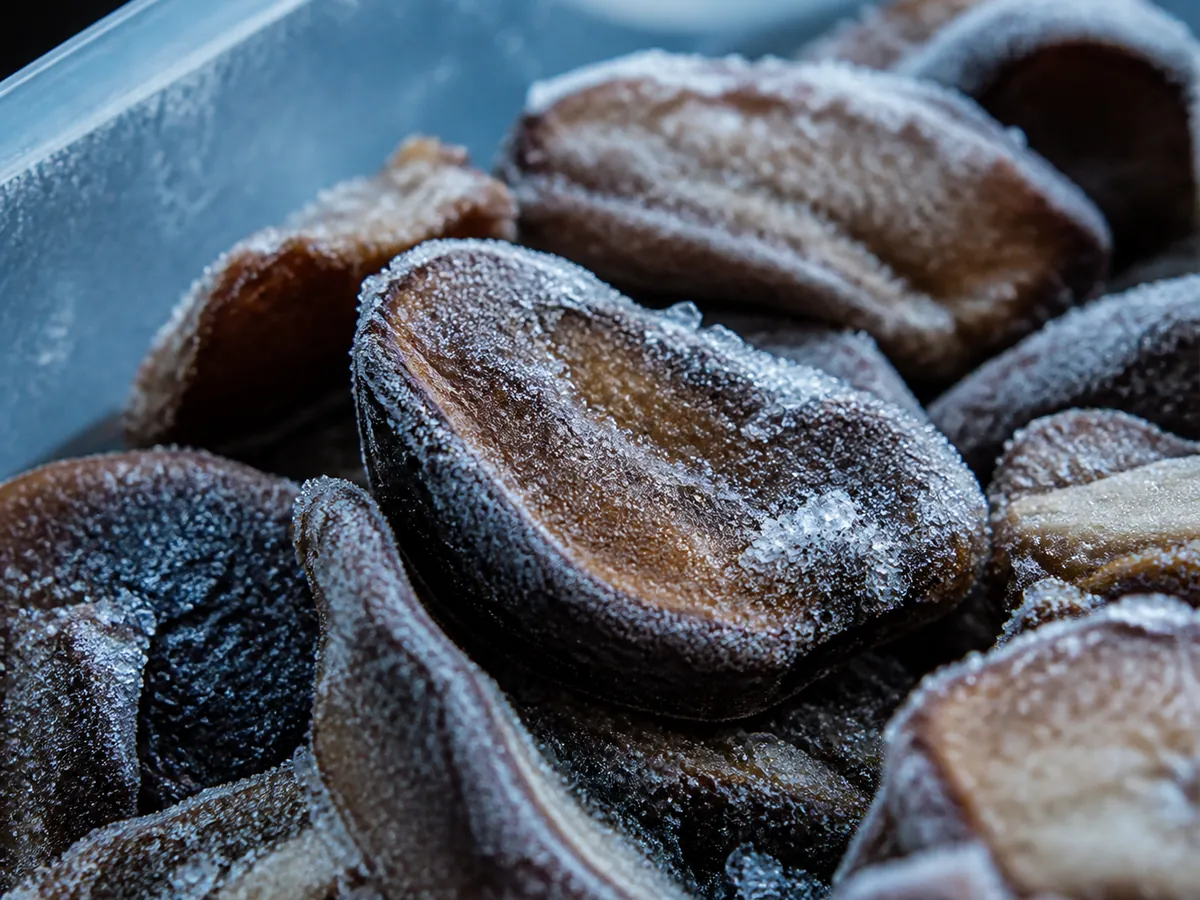
That is the entire explanation for the gray puddle. The sliminess is structural rather than microbial, and no amount of careful thawing recovers a cell wall that has already been cut open from within.
Thin-fleshed species show it worst, and oyster mushrooms are the common example, since there is very little structure there to begin with.
It is worth knowing why shop-bought frozen vegetables behave better than yours. Commercial freezing is fast enough that the crystals stay small, and small crystals do proportionally less damage than the large ones a domestic freezer produces over several hours.
You cannot match that at home, but you can reduce what the crystals have to work with.
- Get the material as cold as possible before it goes in, since a warm bag freezes slowly all the way through
- Freeze in shallow layers rather than deep ones, because the middle of a thick block is the last part to freeze
- Use the coldest part of the freezer for the first few hours, then move the bag once it is solid
- Avoid opening the drawer repeatedly while a fresh batch is still freezing
Heat treatment works because it collapses the cells on your terms. A mushroom that has already given up its water in a pan or a steamer has far less water left to freeze, and its structure has already set into the shape it is going to keep.
That is the whole logic. You are choosing between controlled collapse now and uncontrolled rupture later.
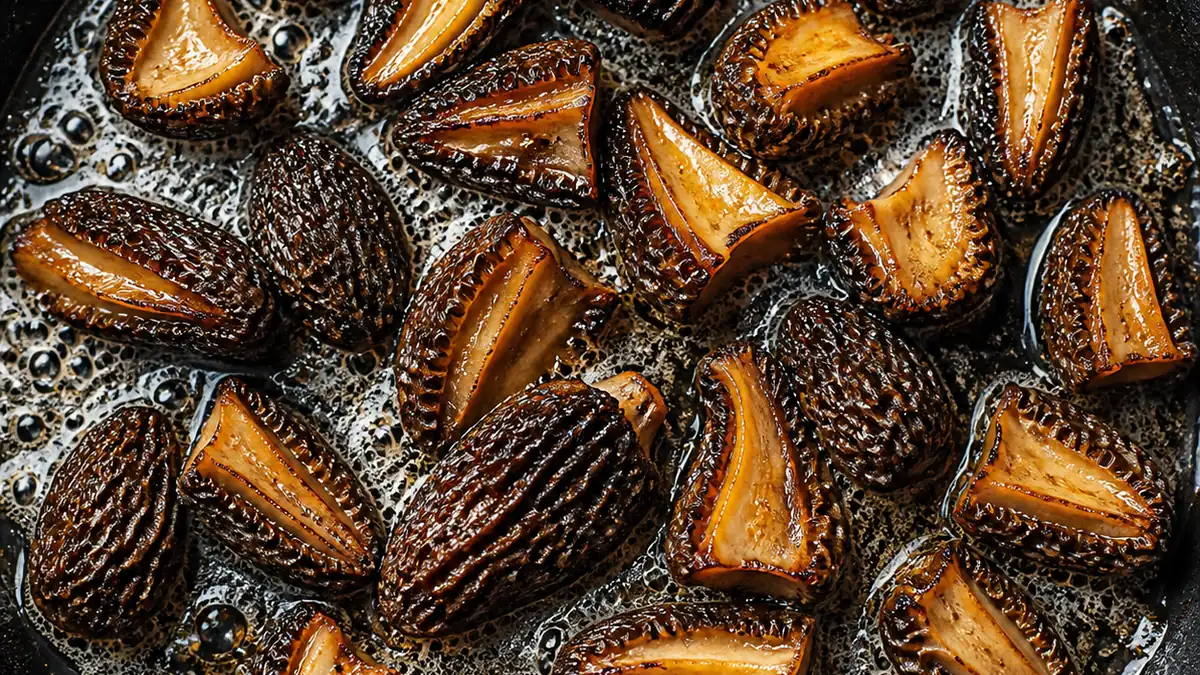
Cooking MushroomsHow to Cook Black Morels: Halve Them, Never Slice ThemHow long should you steam them first?
This is the method with published parameters behind it, and those parameters are specific enough to be worth following exactly.
Start with selection, because freezing preserves condition rather than improving it. Choose mushrooms free from spots and decay, sort them by size so a batch cooks evenly, wash them in cold water and trim the stem ends.
Anything larger than about an inch across gets sliced or quartered before treatment.
- The acid dip
- Five minutes in one teaspoon of lemon juice or one and a half teaspoons of citric acid per pint of water
- Why it is there
- It prevents the darkening that otherwise happens during and after the heat step
- Whole mushrooms
- Steam for five minutes
- Buttons or quarters
- Steam for three and a half minutes
- Slices
- Steam for three minutes
So yes, you do need to stop them going brown, and the acid dip is how the tested method does it. Cut mushroom flesh darkens through an enzymatic reaction with oxygen, and the acid slows that reaction down.
The dip is the step almost every home guide leaves out, and it costs five minutes of standing still.
It is worth understanding that those three steaming times are not rounded guesses. They are different because a slice reaches temperature far faster than a whole cap does, and overshooting turns the material to mush before it ever reaches the freezer.
If you do not own a steamer basket, a metal colander over a pan of boiling water with a lid on top does the same job, and so does a heatproof plate resting on a couple of ramekins.
What matters is that the material sits above the water rather than in it, because boiling leaches out flavor the steaming step is trying to keep.
Cool the batch promptly once the steaming is done. Material left warm on the counter carries on cooking in its own heat and arrives in the freezer already past the point the timing was designed to reach.
Dense-fleshed species tolerate the upper end of these times better than delicate ones, and shiitake caps are the obvious example of material that can take five minutes without complaint.
Can you saute them before freezing instead?
The pan method is the other tested one. It is also the one most cooks will actually use.
Heat small quantities in butter or margarine in an open pan until almost done, then cool them in air or by standing the pan in cold water.
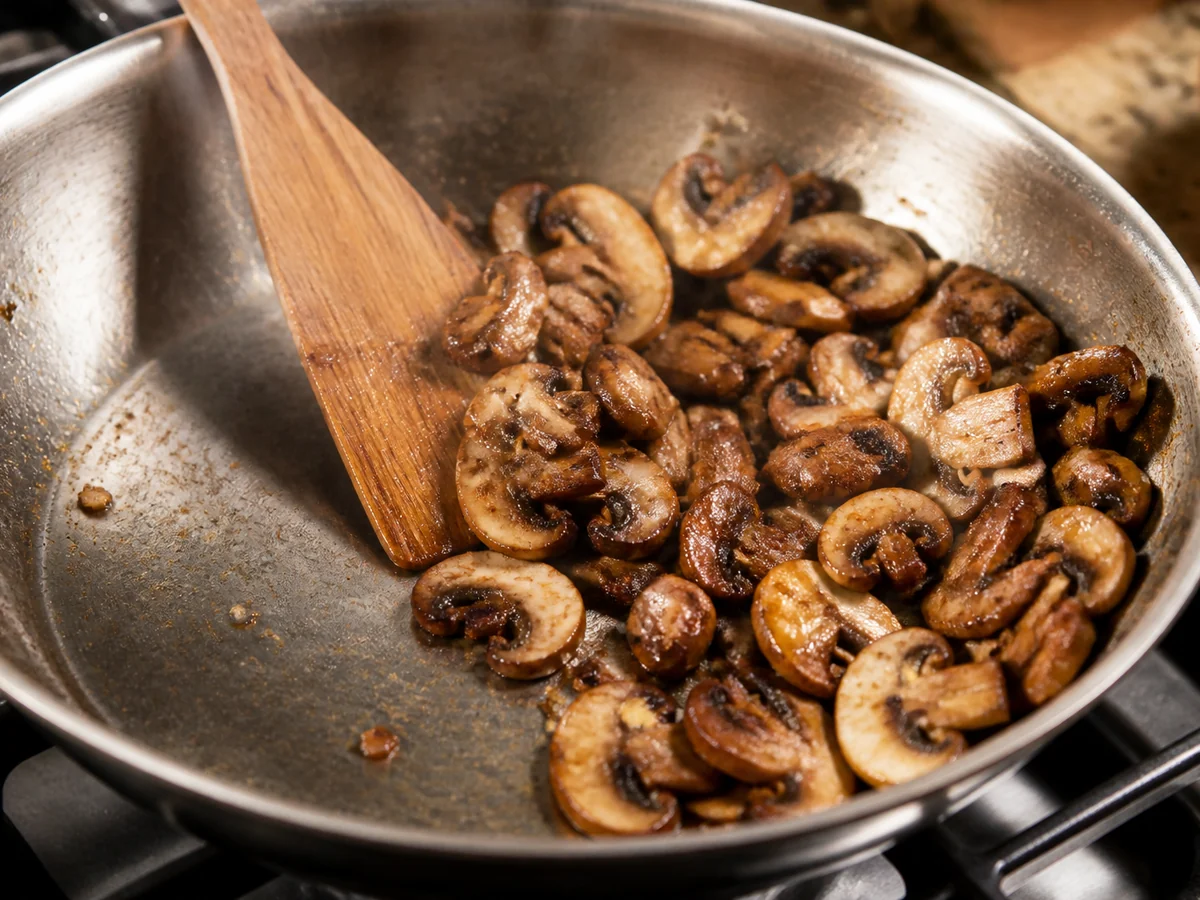
Two words in that instruction carry most of the weight, and both of them are easy to skim past.
Small quantities matters because a crowded pan steams instead of browning, and material that steamed in its own liquid is going into the freezer still full of water. Almost done matters because the batch will be cooked again later, and a fully cooked mushroom frozen and reheated is a tired one.
That ranking is not folklore.
That makes the choice between them a genuine trade rather than a preference.
The fat you choose has a say in that as well.
- Butter tastes best and goes rancid soonest, which shortens the useful freezer life the most
- A neutral oil keeps longer and contributes almost nothing to the flavor
- Olive oil sits between the two and firms up oddly when frozen, which is cosmetic rather than a problem
- Whichever you use, drain the excess rather than freezing the mushrooms sitting in it
So the sensible pattern for anybody with a glut is to do both. Steam the bulk of it, saute a couple of portions for the dishes where flavor matters most, and label them differently.
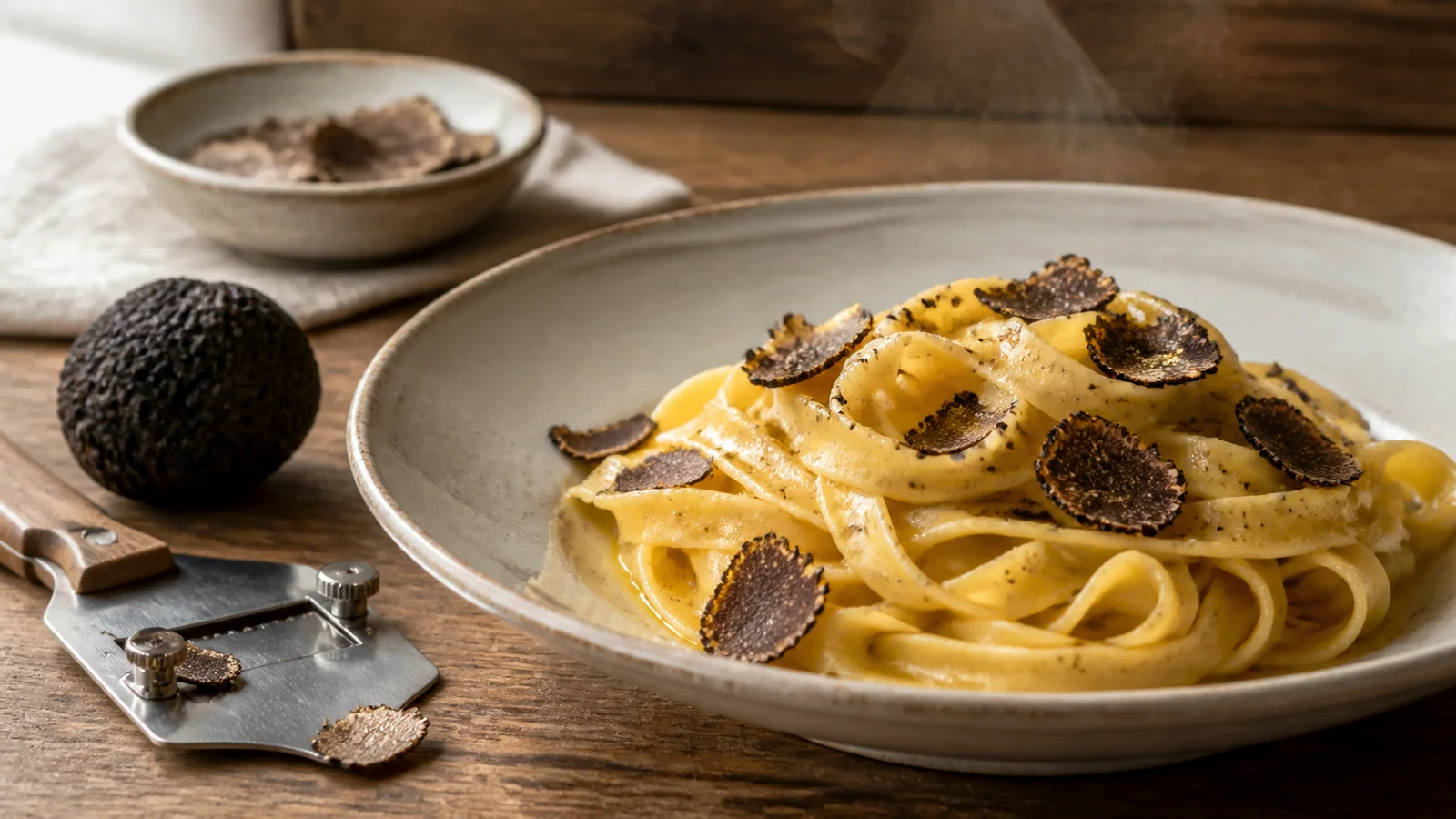
Cooking MushroomsHow to Cook Black Truffle Without Losing Its AromaHow do you pack them so they keep?
Drain before packing. Water clinging to the outside is water that will freeze into a solid block and take the pieces with it.
The headspace figure is there because the contents are mostly water, and water expands until something gives.
Flat freezing is the change that makes the biggest practical difference. A bag frozen flat and stood on edge takes roughly a quarter of the space of one frozen in a lump, and it thaws in a fraction of the time when you do want it thawed.
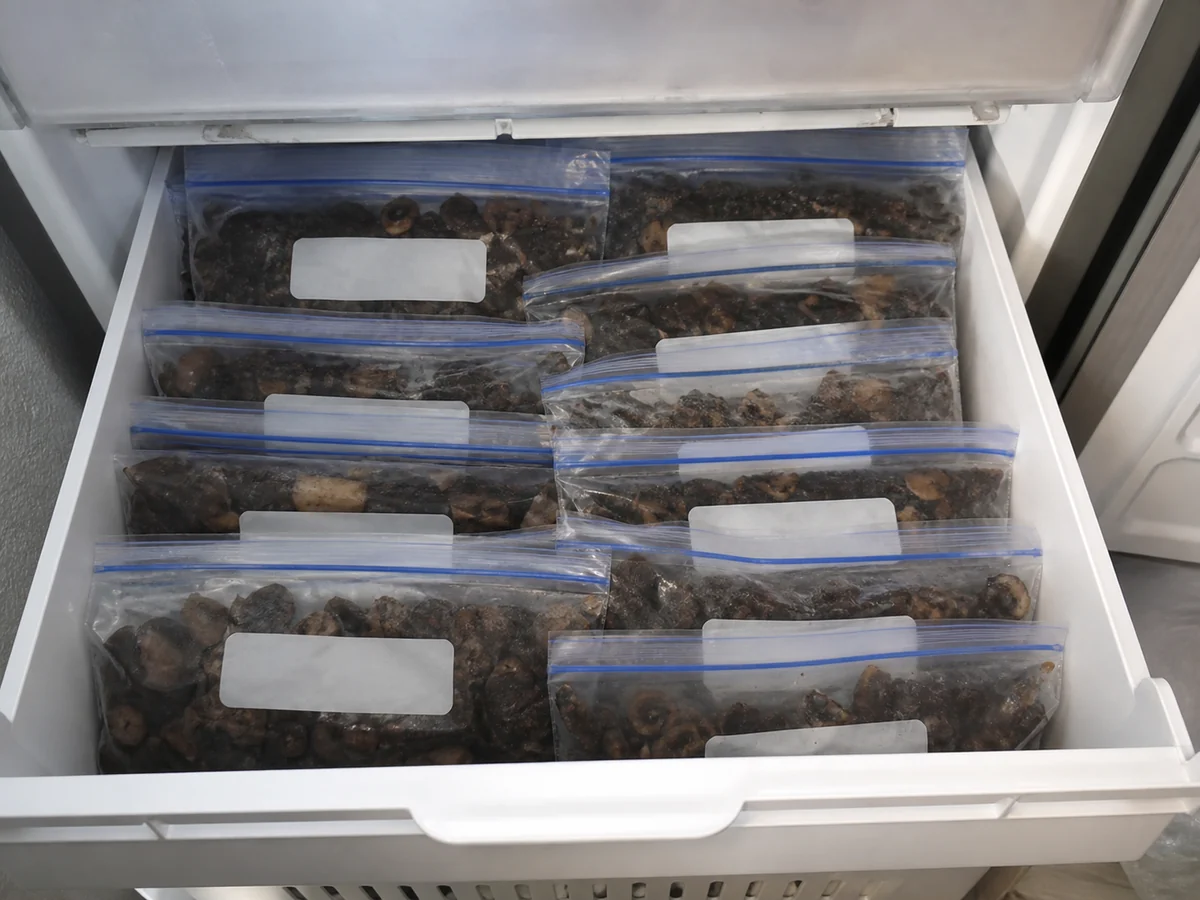
Portioning is the step people skip and regret. A single large bag means chiseling at a frozen block with a knife every time you want a handful, which is both annoying and a good way to cut yourself.
Write the treatment on the label as well as the date. Steamed and sauteed material behaves differently in a pan and keeps for different lengths of time, and in six months you will not remember which bag is which.
Air in the bag is the remaining enemy, and it shows up as freezer burn.
Freezer burn is water subliming out of the food and refreezing on the surface, which leaves dry pale patches. Pressing the air out by hand before sealing prevents most of it, and a vacuum sealer prevents nearly all of it if you own one.
Do you thaw frozen mushrooms before cooking?
Add frozen mushrooms directly to the cooking pan rather than thawing them first.
Frozen cooked mushrooms go into a hot pan or a simmering pot directly from the freezer.
Thawing on the counter gives the released water time to pool and the already-damaged structure time to slacken further, which turns a usable ingredient into a gray heap.
That last distinction matters more than it sounds. A bag at eleven months is not dangerous, it is just dull, and the reason to use the freezer within a season is quality rather than safety.
Judging an old bag is mostly about the surface. Dry pale patches mean freezer burn, which is safe to eat and tastes of cardboard, and heavy ice inside the bag means it thawed and refroze at some point, which is a reason to be more careful.
Three dishes cover almost everything a bag of these is good for.
- A mushroom soup or anything else simmered, where they release their water into a liquid that was going to be there anyway
- Anything baked under a lid or a crust, where the moisture has nowhere to go and helps rather than hinders
- Anything blended or chopped small, where the softened texture stops being visible at all
Set expectations honestly and the material earns its space. Frozen mushrooms are not fresh mushrooms in suspension, they are a prepared ingredient with a softer texture and a concentrated flavor, and they are excellent in exactly the dishes where nobody was looking at them.
If it is flavor rather than substance you were trying to keep, the other option is grinding dried material into powder, which produces a seasoning rather than a vegetable.
Sources & References
- National Center for Home Food Preservation, Freezing Mushrooms The selection and preparation steps, the acid dip, the steaming times by cut, the pan-fried alternative, the statement that steamed mushrooms keep longer than those heated in fat, and the half inch of headspace.
- National Center for Home Food Preservation, Mushrooms Whole or Sliced That plain mushrooms are a low-acid food requiring a pressure canner, and that wild mushrooms should not be canned.
- Changes in Physicochemical Characteristics and Antioxidant Activities of Dried Shiitake Mushroom, Foods Compositional context for the water content of fresh mushroom material.