What is an enoki mushroom?
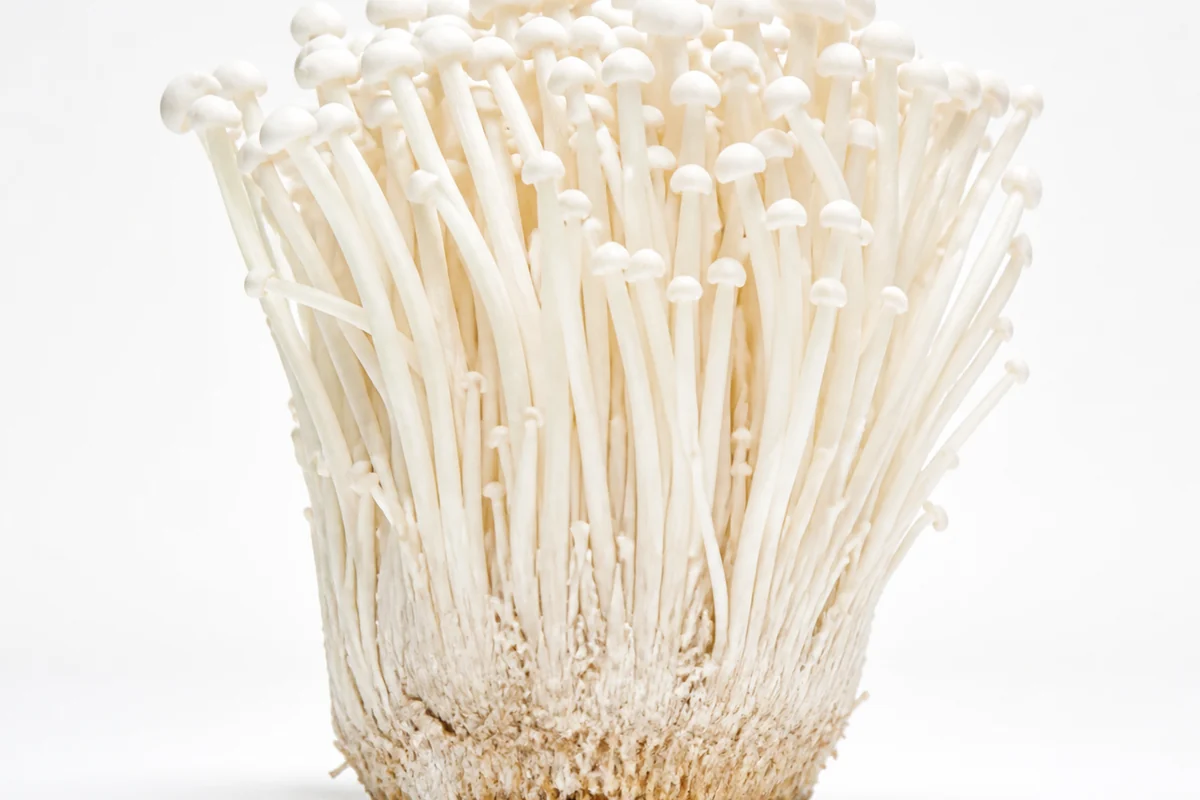
An enoki cluster is a dense bundle of very long thin white stems, each topped with a cap barely bigger than a match head, all fused into a solid pale mass at the bottom.
It is a gilled mushroom and it does not look like one, because the cap never opens far enough for the gills to become a feature.
The proportions are what make it useful in a kitchen. Almost all of the edible material is stem, and the stem is crisp rather than soft, which is unusual among cultivated mushrooms.
The names describe the wild mushroom rather than the crop. Enokitake means hackberry mushroom in Japanese and golden needle points at a color the cultivated form does not have.
That mismatch between name and product runs through the whole subject. Almost every familiar phrase about enoki was coined for a brown winter mushroom on a dead tree.
What should you look for when buying enoki?
Tiny, white and rounded, rarely more than 10 mm across in cultivated material, staying almost closed over the stem.
Narrow, crowded and white, barely visible under the small closed cap.
Very long, thin and pure white, commonly 10 to 15 cm and sometimes more, growing in dense bundles that fuse into a solid pale mass at the base.
Thin, white and crisp, with almost no smell and a mild slightly fruity taste.
There is no identification problem with a packet of enoki, and there is a condition problem worth knowing.
What a buyer is actually judging is freshness, because enoki goes over quickly and the early signs are easy to read.
| What to check | Good | Going over |
|---|---|---|
| Base | Firm, pale, dry | Dark, soft, wet |
| Stems | Even white, springy | Brown or translucent patches |
| Bundle | Separate strands | Matted and slimy |
| Smell | Almost none | Sour or fermented |
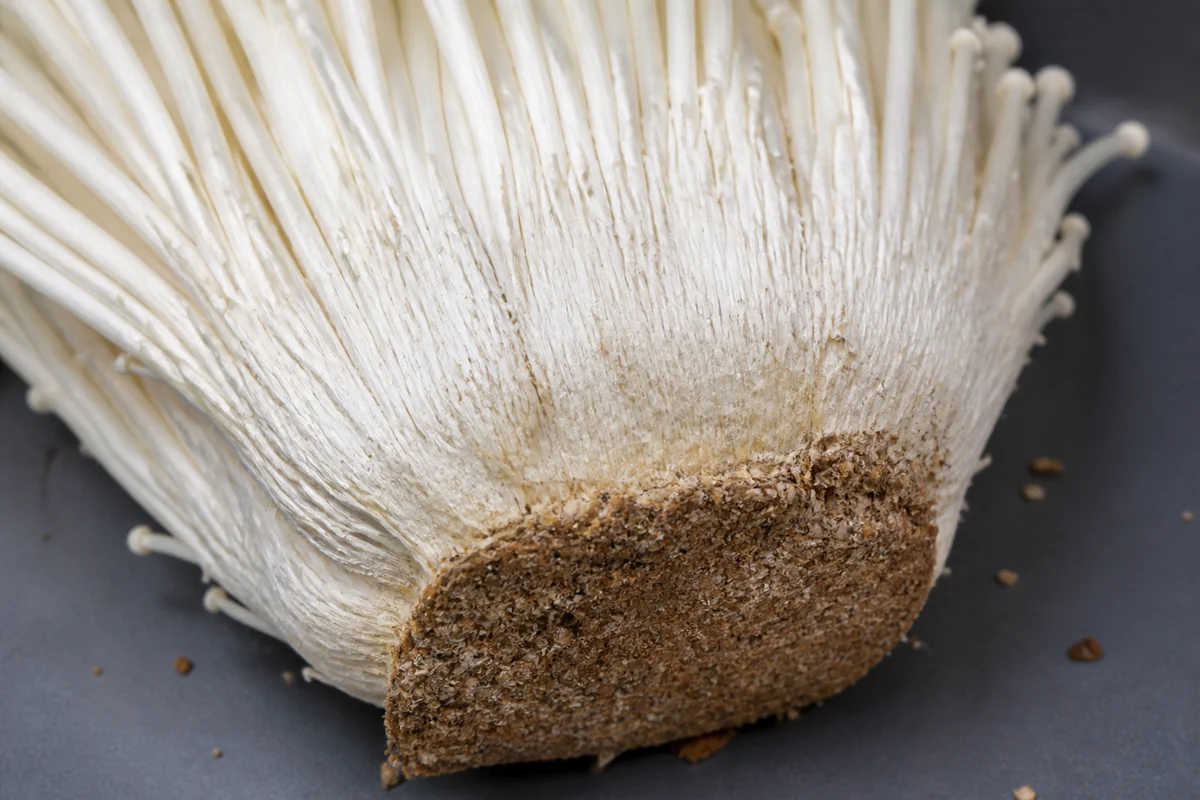
The sawdust plug at the base is worth recognizing. It is compressed growing substrate, it is not food, and the usual preparation is to cut the bottom two or three centimetres off and discard the whole fused end.
Once the packet is open the clock speeds up. Enoki dries out and browns within a couple of days in a fridge, and the usual advice is to keep it in its original bag with the top folded over rather than in a sealed box.
Nothing here is about telling one species from another. That work belongs to the wild mushroom, and it is a different job entirely.
Check the cultivated source and label before applying that distinction.
Every other profile here is largely about not confusing one organism with another, and this one is about a supply chain.
Is wild enoki the same mushroom?
Wild enoki is not a thing you can buy and it is not really a thing you can pick either, because the mushroom the name belongs to in a wood is a different species.
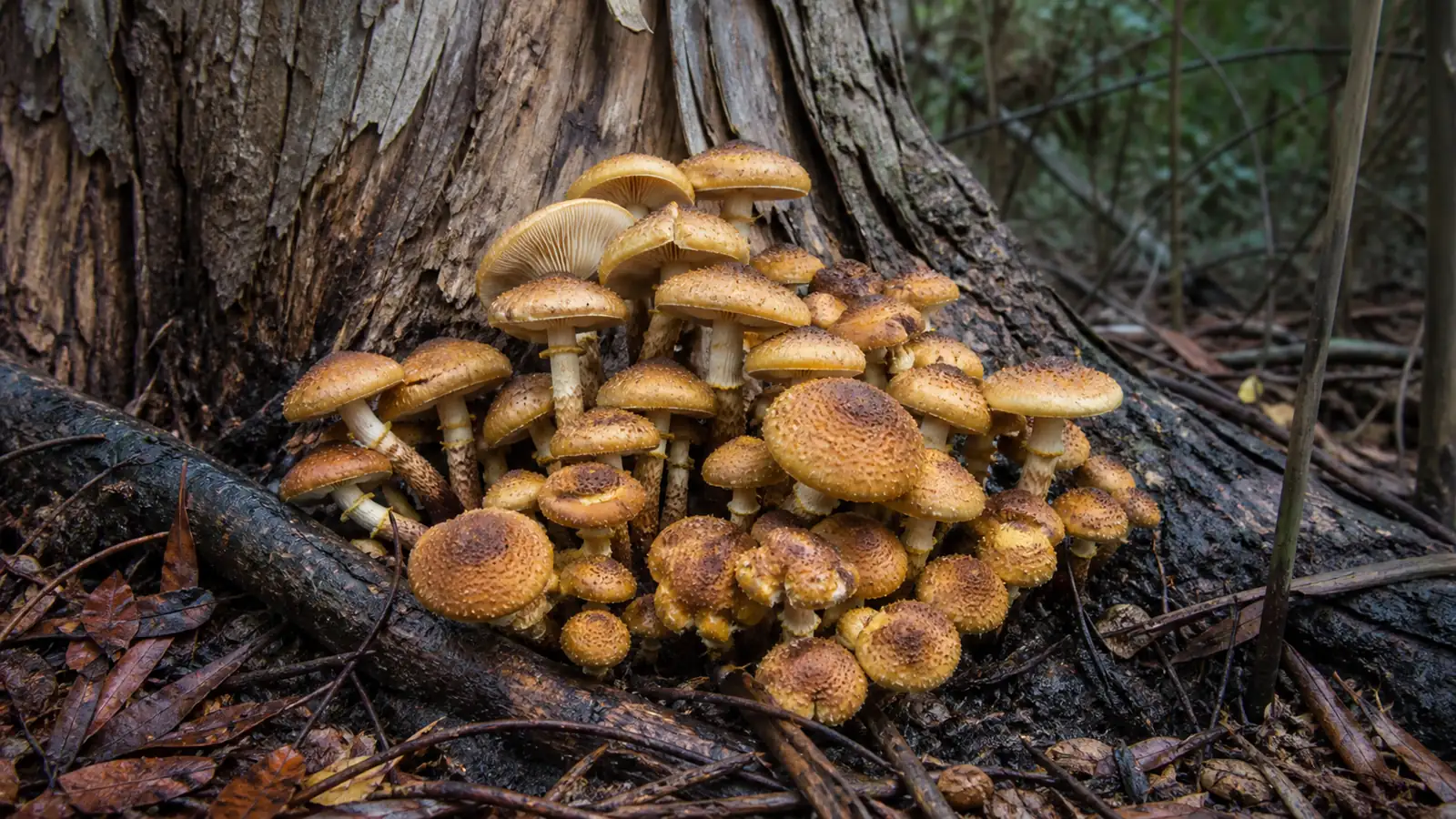
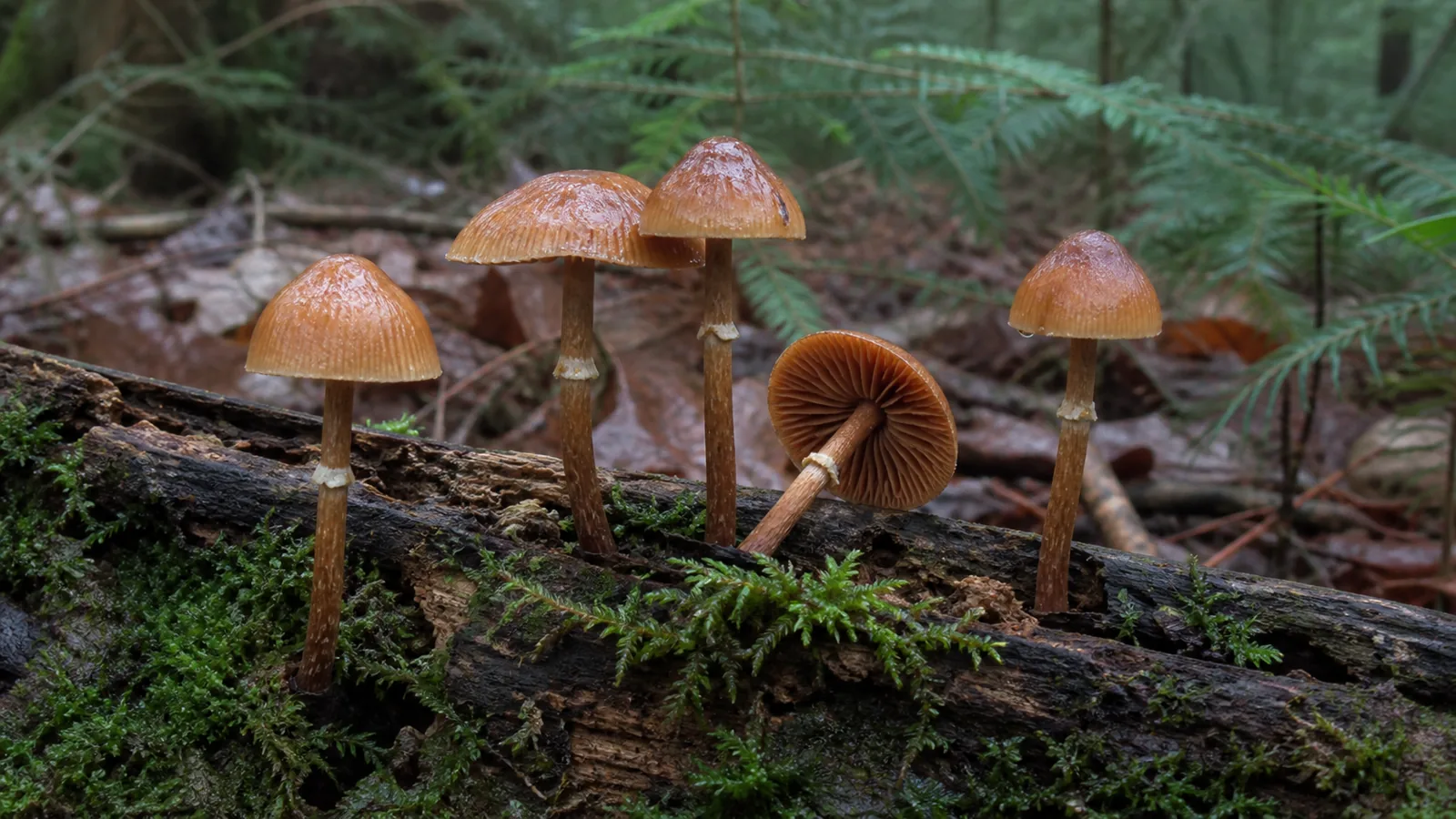
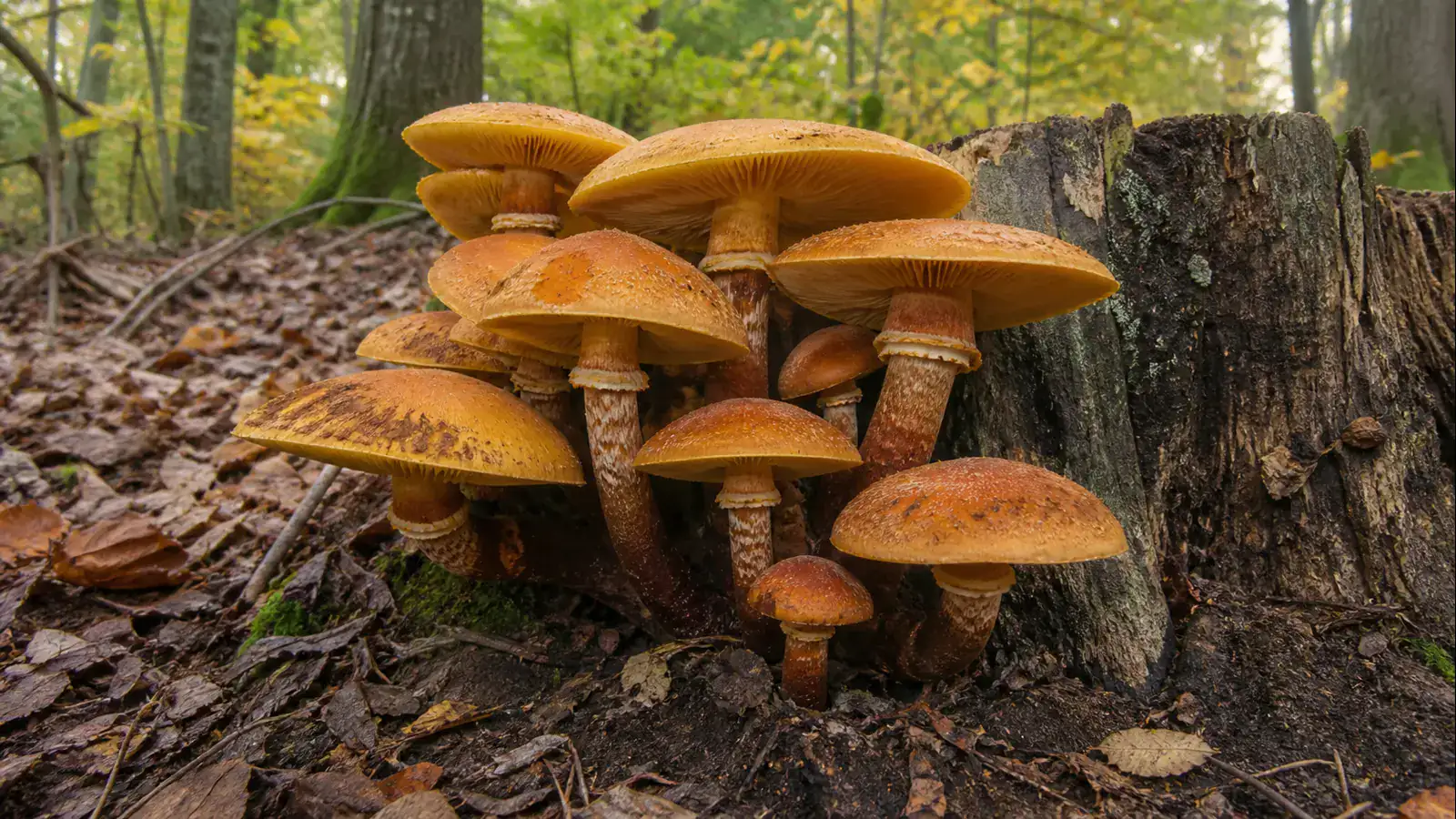
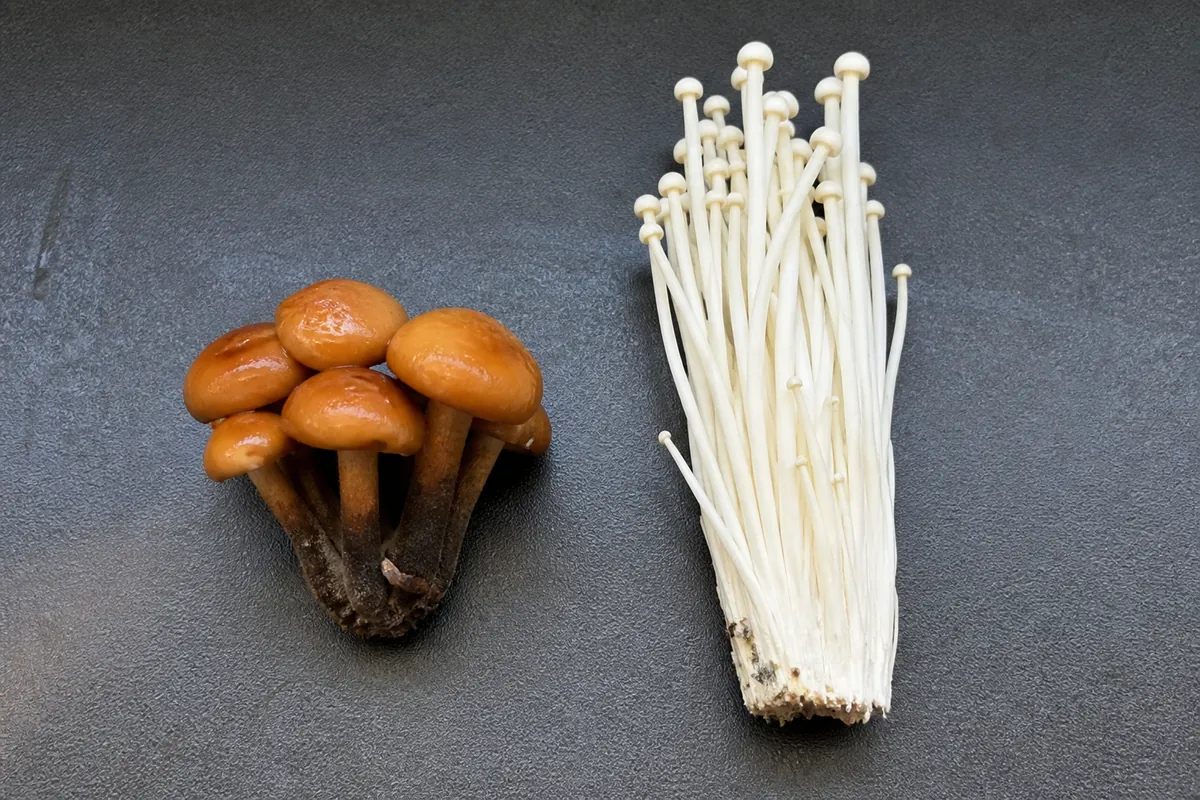
The velvet shank is the wild mushroom that gets called wild enoki. It has an orange brown sticky cap, a short dark velvety stem, and it grows in tight clusters on dead hardwood in winter.
Warning
Collecting the wild one is a genuine identification problem with a deadly lookalike, and the velvet shank page covers it. Nothing on this page transfers to a wild collection.
The two are also not the same species. Work separating East Asian Flammulina filiformis from European Flammulina velutipes means the cultivated crop is not a pale version of the woodland mushroom, whatever older books and packets say.
For a shopper none of that is a safety question. Packet enoki arrives through a commercial supply chain, and the questions worth asking about it are about that chain rather than about a species name.
Note
Nothing about buying enoki prepares somebody to pick a wild Flammulina. Those are two different activities with two different risks, and only one of them involves a mushroom that can kill you by being the wrong species.
Do you have to cook enoki?
Enoki should be cooked, and the reason is bacterial rather than fungal.
It is sold chilled, it is frequently eaten raw in salads, and Listeria contamination of imported packets has caused a documented outbreak with deaths.
Warning
In the 2020 outbreak in the United States, 36 people across 17 states were infected, 31 of the 33 with information available were hospitalized, and four people died. Six illnesses were pregnancy associated and two of those ended in fetal loss.
Listeria is the reason this matters more than an ordinary hygiene note. It grows at refrigerator temperatures, so chilling a contaminated packet slows nothing, and it is dangerous to pregnant people, older people and anybody immunocompromised.
In a healthy adult it usually causes fever, aching and stomach upset. In the groups above it can reach the bloodstream or the nervous system, and in pregnancy it can harm a pregnancy without making the pregnant person seriously ill at all.
The outbreak was also not a one-off. A second Listeria outbreak linked to enoki was reported in 2022, which points at the product category rather than at one bad supplier.
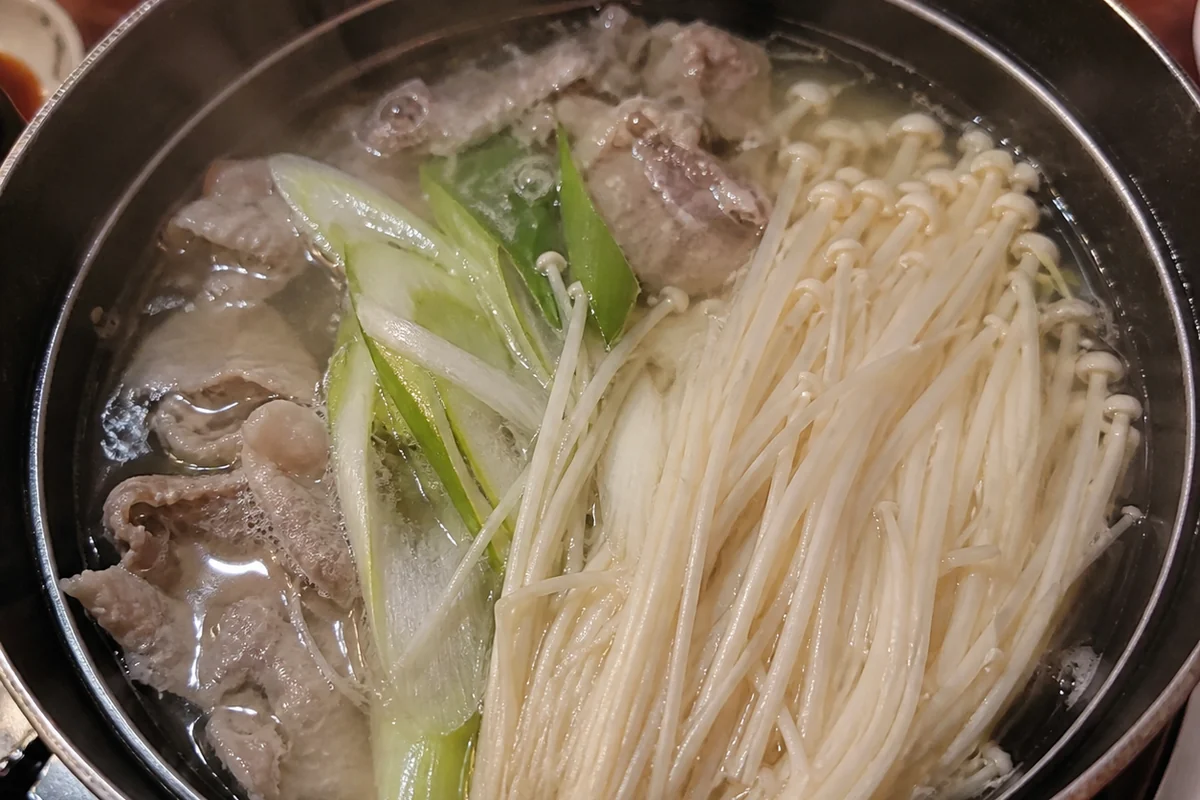
Cooking it thoroughly removes the problem entirely, and it costs almost nothing.
Enoki cooks in a minute or two and it keeps its crunch, so the trade against eating it raw is smaller than it is for most vegetables.
Tip
Cut the fused base off, separate the strands, and add them to a broth or a hot pan near the end. Long cooking turns them stringy without making them any safer than a couple of minutes already did.
In the kitchen they are used for texture rather than flavor, because the taste is mild and slightly fruity and the crunch is the point. They suit soups, hot pots, stir fries and anything where a tangle of something crisp is wanted, and they do not suit long braising.
The one preparation worth avoiding is the cold one. Raw enoki in a salad or as a garnish is exactly the use the outbreak reports describe, and it is the only common way of eating this mushroom that skips the step that makes it safe.
How is enoki grown?
The shape of the thing in the packet is a product of how it is grown, and it is worth knowing because it explains everything a shopper finds strange about it.
Spawn goes into bottles of sterilized sawdust and bran, the bottles go into a cool dark room, and the mushrooms are then grown under raised carbon dioxide with a collar around the top of each bottle.
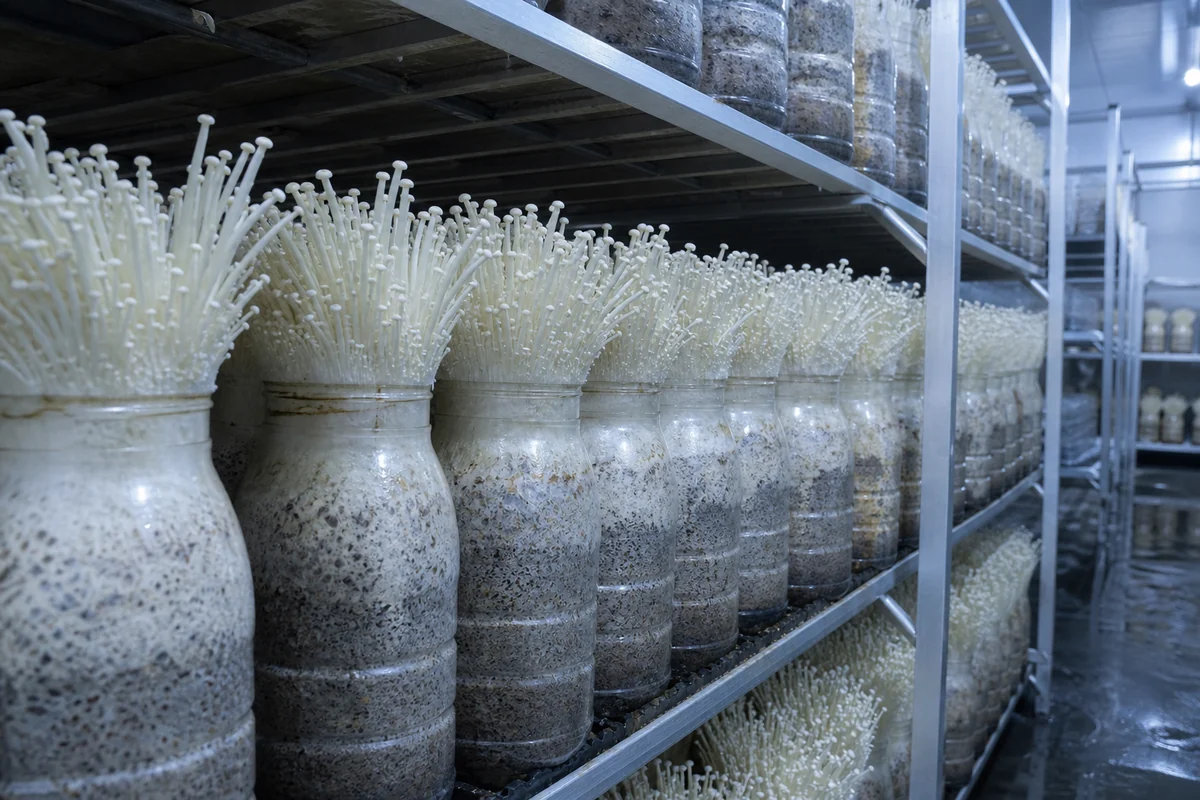
Each of those conditions does a specific job. Darkness keeps the caps small and pale, raised carbon dioxide pushes stem growth at the expense of cap growth, and the collar forces the stems to grow straight up in a tight bundle.
So the crop is stretched on purpose. A grower is not producing a mushroom that happens to look like this, they are producing this shape deliberately because it is what the market buys.
The bottles are worth a note of their own, because every other farmed mushroom on this site is grown in bags or on logs.
A rigid bottle can be filled, sterilized, inoculated, harvested and washed by machine, and the same bottle comes back round thousands of times. Enoki is one of the most heavily automated crops in food production, which is a large part of why it is cheap.
That automation also explains the shape of the risk. A crop handled almost entirely by machine, chilled, packed and shipped across an ocean has very few points where a person checks it, and contamination that gets in early travels a long way.
Home growing is possible and rarely produces the same thing. Without the bottle, the collar and the carbon dioxide, a home kit gives shorter stems and larger caps, which is closer to what the fungus does when left alone.
That comparison is the useful one to hold.
Shiitake and oyster mushrooms look much the same farmed as wild, and enoki does not, because only enoki is grown in a way designed to change its shape.
Is it worth eating for nutrition?
Enoki gives the usual mushroom profile of mostly water with a little protein, some B vitamins and a useful amount of fiber for very few calories. It is one of the lighter mushrooms by weight, because so much of the bundle is thin stem and air.
It is a straightforward edible with a handling caution rather than a species caution, which is a distinction worth keeping.
The reason to buy it is texture. A tangle of crisp strands does something in a bowl that a sliced button mushroom cannot, and that is a kitchen reason rather than a nutritional one.
Where does enoki grow in the wild?
In the wild this group is saprotrophic, living on dead and dying hardwood rather than partnering with living roots.
That habit is the reason the mushroom can be farmed at all. A fungus that eats dead wood will eat sterilized sawdust in a bottle, and one that needs a living tree will not.
- Wild substrate
- Dead and dying hardwood, often elm and hackberry
- Wild season
- Late autumn and winter, through frost
- Farmed substrate
- Sterilised sawdust and bran in bottles or bags
- Farmed season
- Year round, in climate controlled rooms

Fruiting in the cold is the useful trait the growers inherited. This group fruits when almost nothing else does, which means a growing room can be run cool and stay largely free of the competitors that plague warmer crops.
The Japanese name records the host. Enokitake means hackberry mushroom, and hackberry is one of the hardwoods the wild group commonly fruits on.
It is worth saying plainly that none of this describes the packet.
The wild ecology explains why the crop exists and it does not describe the thing on the shelf.
Is there any medicinal use?
Enoki appears in laboratory research on polysaccharide extracts, as most farmed mushrooms do.
None of that supports a medicinal claim. There is no clinical evidence base here, and enoki is food.
Why is enoki white when the wild one is brown?
Two separate things stack up to make the packet look nothing like the wood, and they are usually collapsed into one.
The first is the species. Work by Wang and colleagues separated East Asian Flammulina filiformis from European Flammulina velutipes on both structure and genetics, so the cultivated crop and the European woodland mushroom are relatives rather than the same organism.
Key takeaway
That separation is the reason packaged enoki should not be described as a velvet shank that grew up in the dark. It is a different species, and it was also grown in the dark.
The second is the growing conditions, which change the shape of any Flammulina dramatically.
So a photograph of a wild orange brown cluster and a photograph of a white packet differ for two reasons at once, and older books that show them as one species with two appearances are working from a taxonomy that has since moved.
The genus sits in Physalacriaceae, and the name Flammulina means little flame, which describes the wild orange cap rather than anything about the crop.
None of this changes what a shopper should do. It changes what a shopper should believe when a packet or a blog says the white threads are the same mushroom as the ones on the dead elm.
It is also a good example of the opposite case from matsutake. One mushroom on this site cannot be farmed at any price and the other is farmed so completely that the wild version has become a curiosity.
The difference between them is what they eat. A fungus that lives on dead wood can be moved into a bottle and a fungus that lives on living tree roots cannot, and almost every price in the mushroom aisle follows from that one line.
Frequently Asked Questions
Can you eat enoki raw?
Why was enoki recalled for Listeria?
Is enoki the same as velvet shank?
Why is enoki so long and white?
Do you eat the bottom of enoki?
How do you know if enoki has gone off?
Sources & References
- Outbreak Investigation of Listeria monocytogenes: Enoki Mushrooms (March 2020) Regulator investigation used for the recalls of imported enoki and for the whole genome sequencing match between import samples and the outbreak strain.
- 2020 Outbreak of Listeria Infections Linked to Enoki Mushrooms Public health outbreak report used for the case numbers, including 36 people infected across 17 states, 31 hospitalizations among the 33 with information available, four deaths, and six pregnancy associated illnesses of which two ended in fetal loss.
- Listeria Outbreak Linked to Enoki Mushrooms, November 2022 Later outbreak report used as evidence that the 2020 event was not an isolated failure of one supplier.