Is shiitake safe to eat?
Most readers meet shiitake in a grocery bag, not in the woods. That changes the safety job. The question is less, can I identify this wild mushroom, and more, did I cook it enough?
Shiitake grows on hardwood logs or sawdust blocks. That farmed supply makes it one of the safest mushrooms for beginners to buy, taste, and grow.
It still deserves a caution label. A small number of people develop a whip-like itchy rash after eating raw or undercooked shiitake.
Shiitake earns its place in the kitchen through flavor, not novelty. The caps carry a deep savory taste that grows even stronger when they are dried and later rehydrated.
Because almost all shiitake is farmed, the wild mix-up risk that haunts foragers barely applies here. Your main job is the pan, not the field guide.
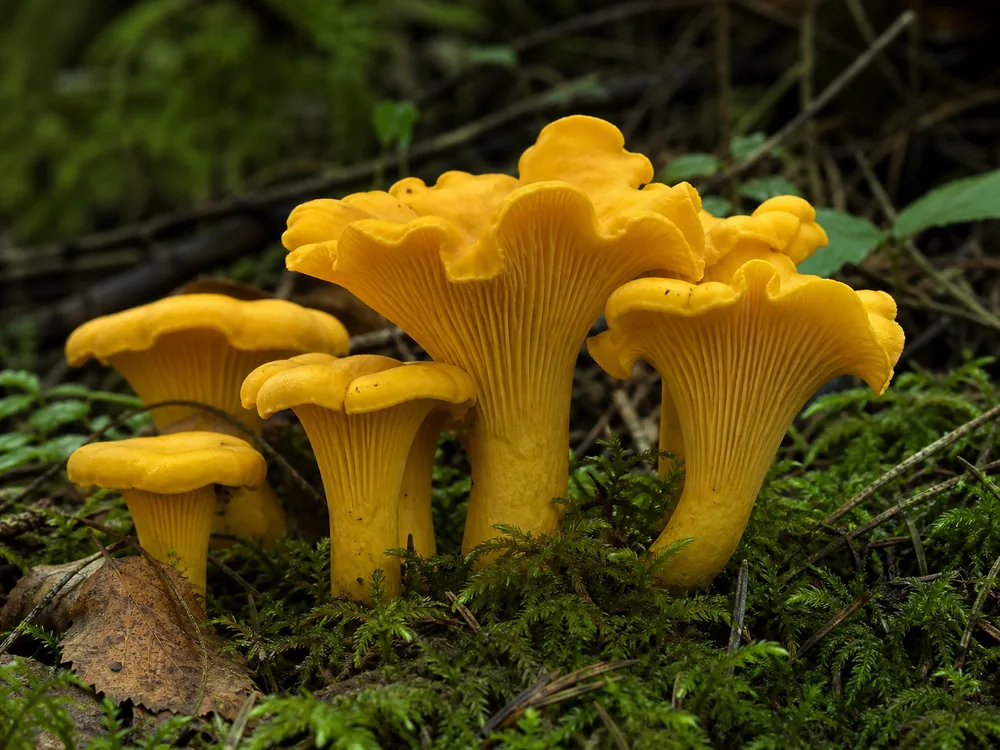
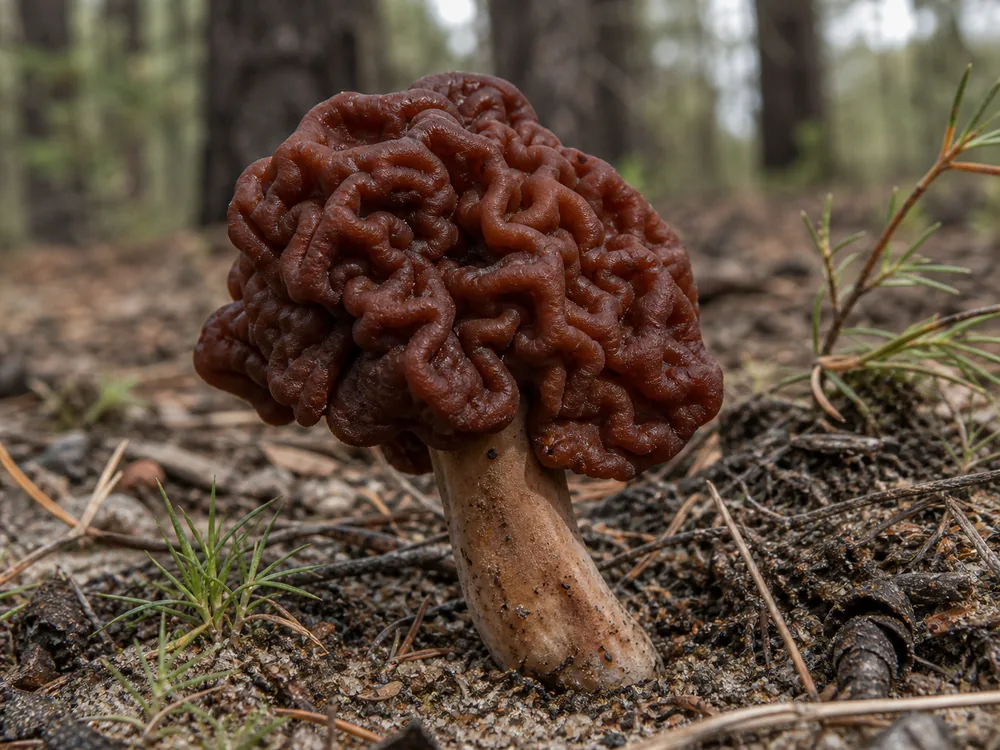
That makes shiitake different from spring morels and from wild golden chanterelles. You do not need a forest ID routine for a labeled cultivated box, but you do need to respect the raw-mushroom warning.
| Reader question | Practical answer |
|---|---|
| Is grocery shiitake edible? | Yes, when cooked through. |
| Is raw shiitake a good salad mushroom? | No, raw or lightly cooked caps can trigger shiitake dermatitis. |
| Is the stem worth eating? | Usually no, but clean stems make strong stock. |
| Is dried shiitake the same as fresh? | No, dried caps are stronger and better for broth. |
How do you recognize shiitake at the market or on logs?
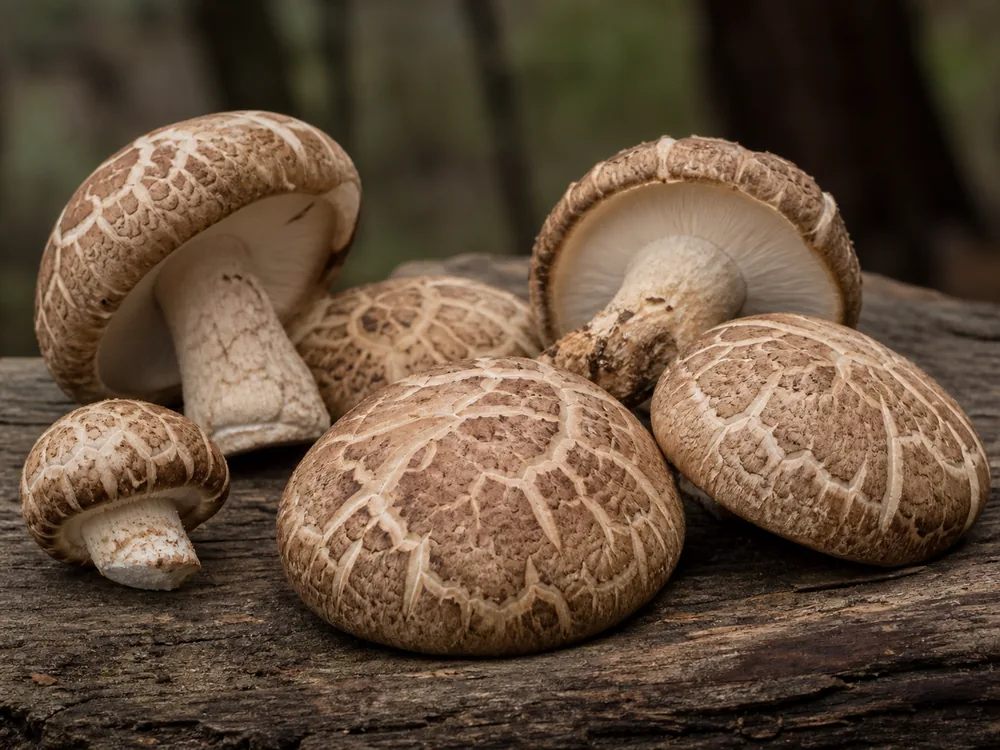
Tan to dark brown, 5 to 10 cm, often with a cracked pale surface pattern when mature.
White attached gills with edges that can look slightly ragged.
Fibrous and tough, usually removed before cooking.
Firm, white flesh with a rich savory (umami) smell.
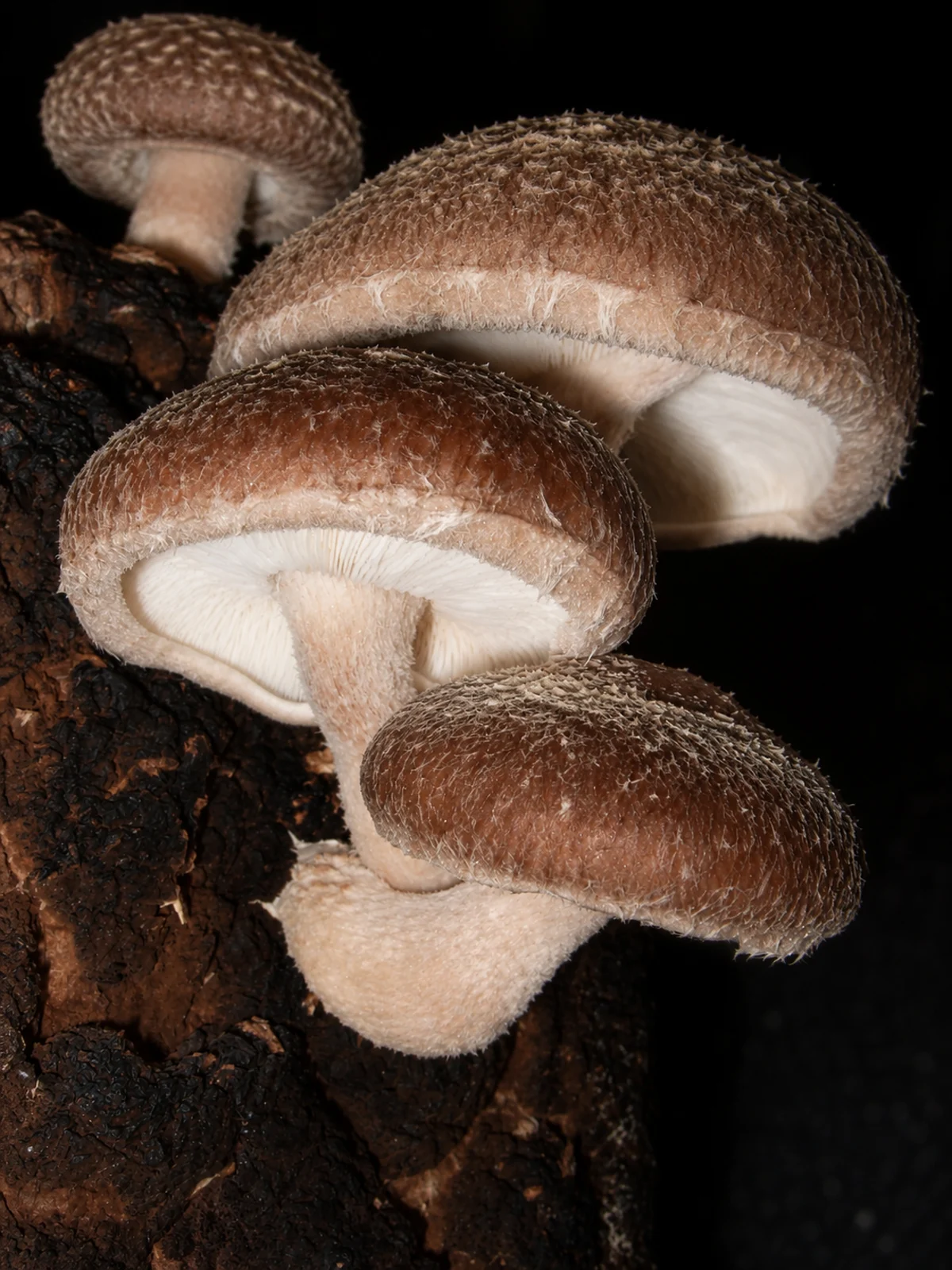
Market shiitake has a domed tan-to-dark-brown cap, white gills, and a tough fibrous stem. Fresh caps may show pale cracking as they mature.
If you are growing shiitake on logs, look for caps fruiting directly from inoculated hardwood after a long colonization period. The stems stay tougher than the caps, even when the mushrooms are young.
Mature caps often crack into a pale web across a darker brown surface. Growers prize that cracked look, sometimes sold as donko, because it signals slow cool-weather growth and firm flesh.
The cap edge usually curls under when the mushroom is young and flattens with age. The gills sit close and stay whitish until the cap opens fully.
Cook every shiitake cap through. Raw or lightly cooked caps are what trigger the itchy rash.
Why shiitake gets cooked
Almost every shiitake anyone eats was cultivated, so the practical question is usually what arrived on a log rather than what was found in the woods.
If something fruits on an inoculated log with a different cap colour, gill attachment, or spore colour, treat it as a wild coloniser that beat your spawn to the wood.
Outside East Asia there is no common wild shiitake to hunt. A brown-capped gilled mushroom on a hardwood log is far more likely to be something else entirely, so an inoculated log is evidence and an unknown log is not.
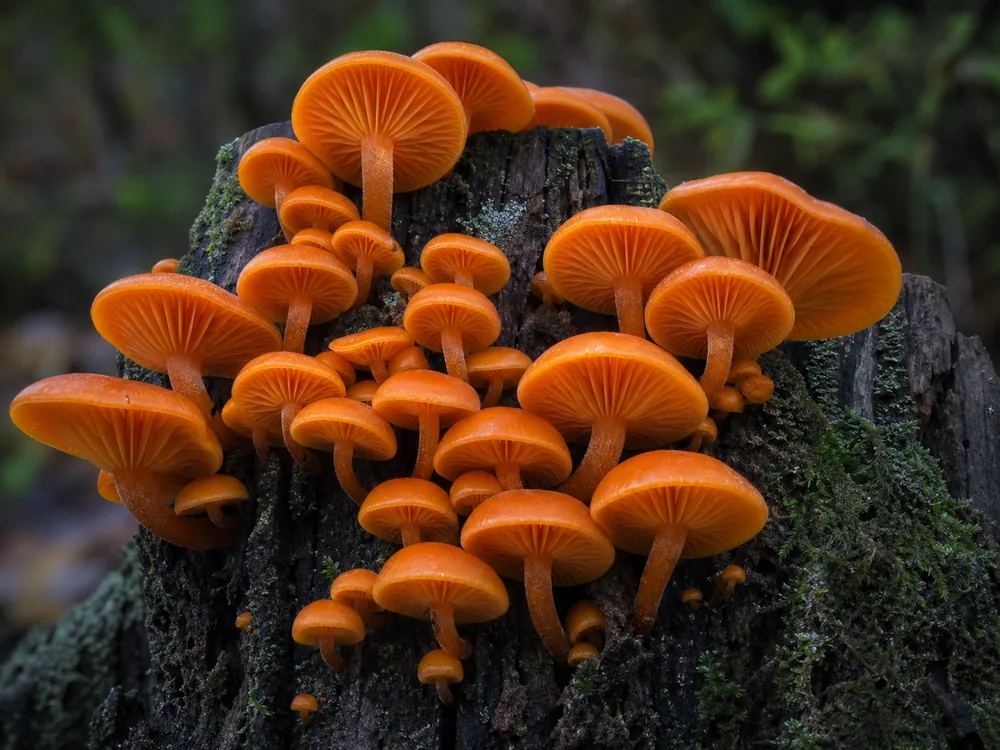
The genus keeps poisonous company. Omphalotus, the jack-o-lantern group, sits in the same family, which is a reminder that family membership never implies edibility.
How should you cook shiitake?
Remove the tough stems before cooking. Save them for stock if they are clean, because they give broth a strong savory base.
Brown the caps until they soften and lose their raw bite. Mushroom risotto uses shiitake well because the firm cap stays visible while the rice turns creamy.
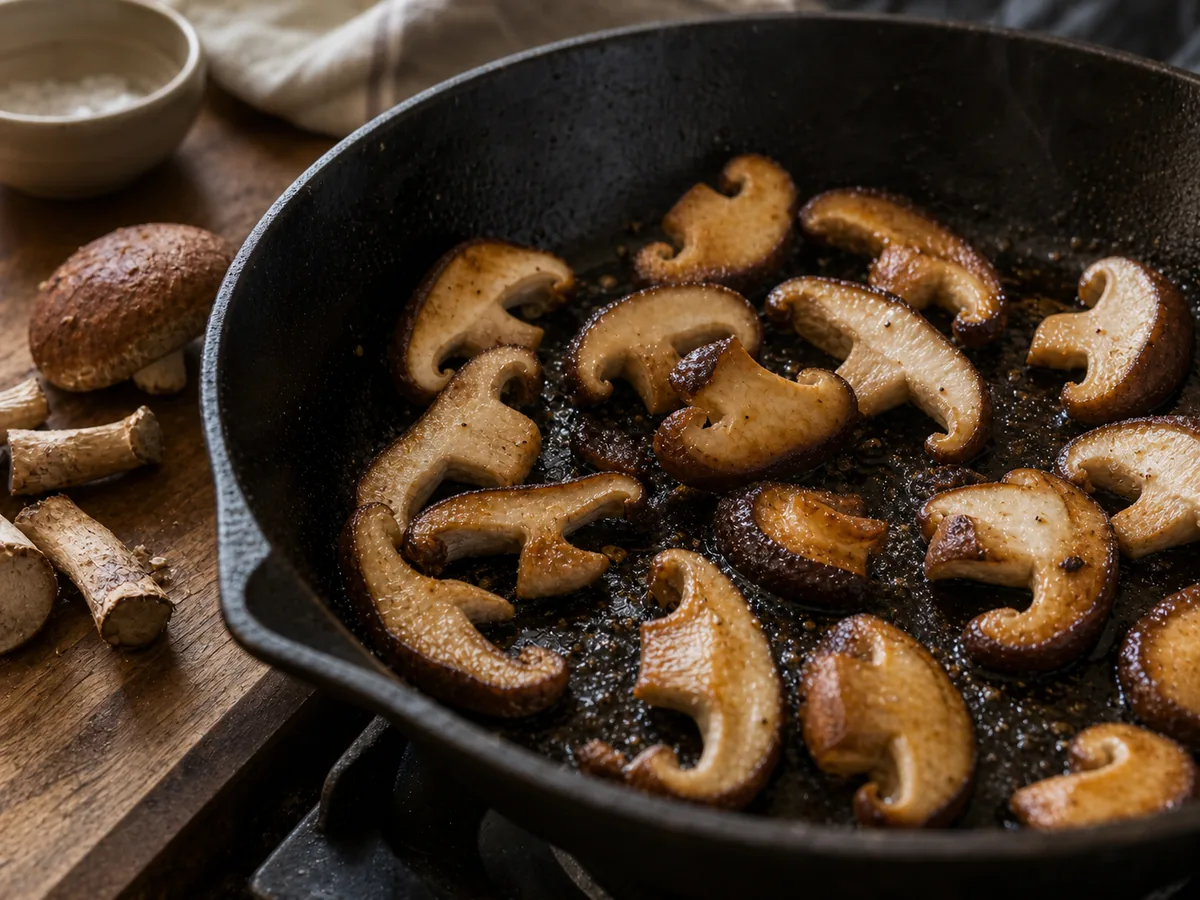
Dried shiitake is often stronger than fresh. Rehydrate it, strain the soaking liquid, and use that liquid where grit will not be carried into the dish. When fresh caps are unavailable, shiitake substitute choices should follow flavor depth.
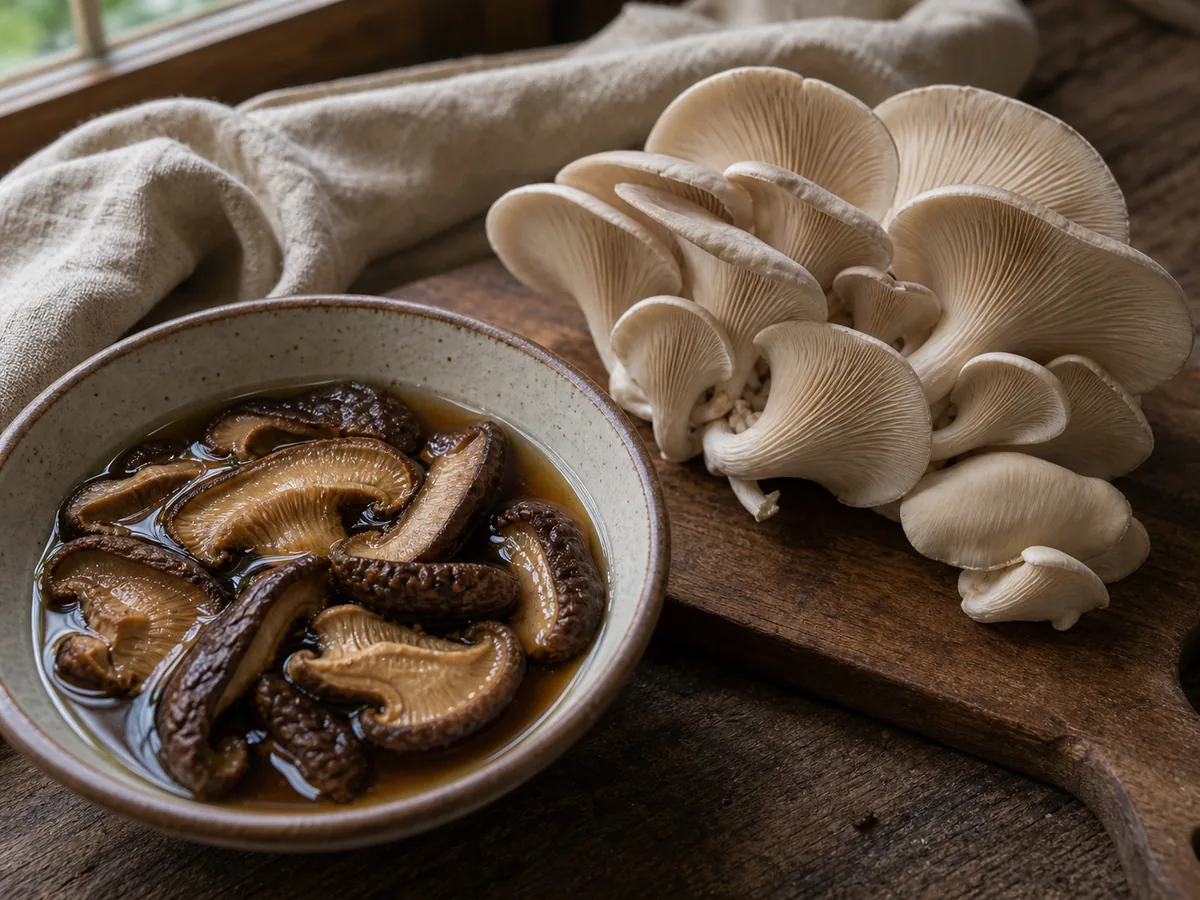
Slice the caps rather than leaving them whole, so heat and seasoning reach the middle. Thick caps can stay rubbery if they are crowded into a cold pan.
Shiitake pairs well with soy, garlic, ginger, and dark broths. A handful of dried caps deepens a stock more than a larger pile of fresh ones.
Tip
Freeze the strained shiitake soaking liquid in an ice cube tray. Drop a cube into soups or braises later for an instant savory lift.
Dried shiitake is a different ingredient from fresh, not a compromise. Drying converts the mushroom's nucleotides into guanylate, which is why the rehydrated cap and its soaking liquid taste far deeper than the fresh version.
Is shiitake a good mushroom to grow at home?
Shiitake is a patient grower. Logs usually take 6 to 18 months to colonize before a soak or weather change triggers mushrooms.
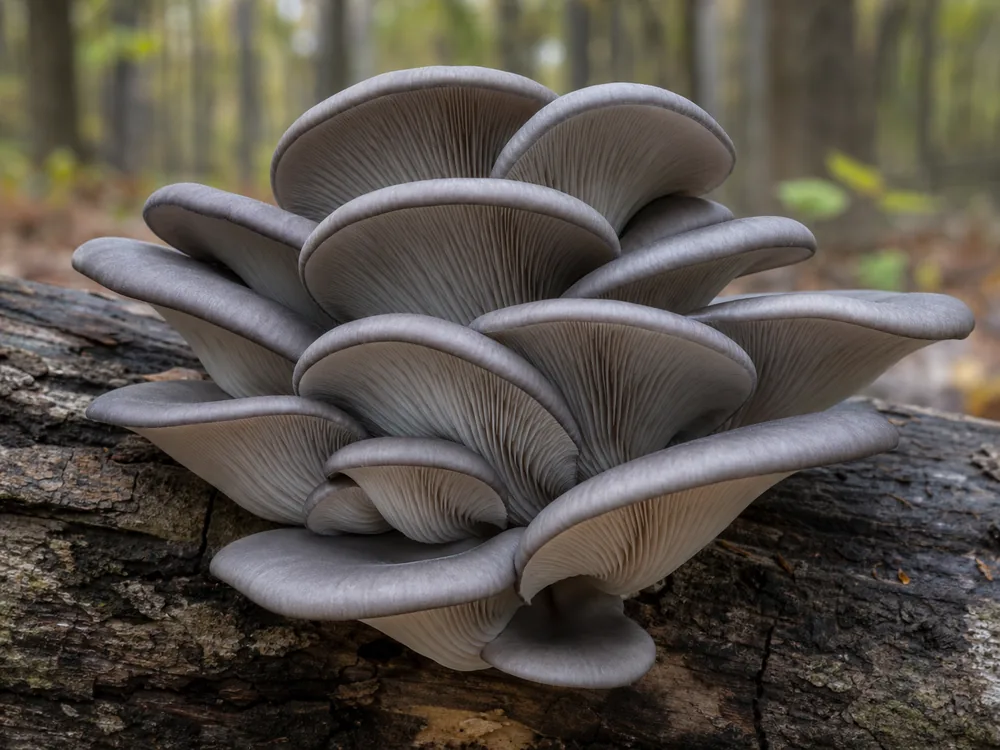
That wait can be worth it if you want multi-year outdoor harvests. If you want fast indoor results first, grow oyster mushrooms before shiitake logs.
Log growers usually drill holes in fresh oak, plug them with colonized spawn, and seal the holes with wax. Then the log rests in shade for the long colonization period.
Sawdust blocks fruit faster than logs but need a cleaner setup to keep mold out. Either way, a soak in cool water often triggers the next flush.
Shiitake is slower than oyster mushrooms because the wood needs a longer colonization period before fruiting. That slower rhythm is the reason logs can keep producing for years after the first flush.
Use fresh hardwood logs or clean supplemented sawdust blocks.
Keep colonizing logs shaded and off dry ground.
Expect a quick first harvest from new logs.
Eat caps from a contaminated block that smells sour or looks moldy.
If speed matters, compare the grow choice with oyster mushrooms before buying plugs. Oysters are better for a quick first flush, while shiitake rewards a longer outdoor log setup.
The slow timeline also changes storage planning. A good shiitake log can fruit in waves, so dried caps and frozen stock cubes help you use small harvests without wasting them.
What nutrition does cooked shiitake add?
Cooked shiitake adds B vitamins, copper, fiber, and savory depth without many calories. The nutrition benefit assumes the mushroom is cooked, not used raw as a salad topping.
Shiitake exposed to sunlight can build vitamin D, much like other mushrooms. Store-bought caps grown in the dark carry very little.
The savory taste comes partly from natural glutamates, the same family of compounds behind the umami in aged cheese and cured meat. That is why a few shiitake can make a whole dish taste fuller.
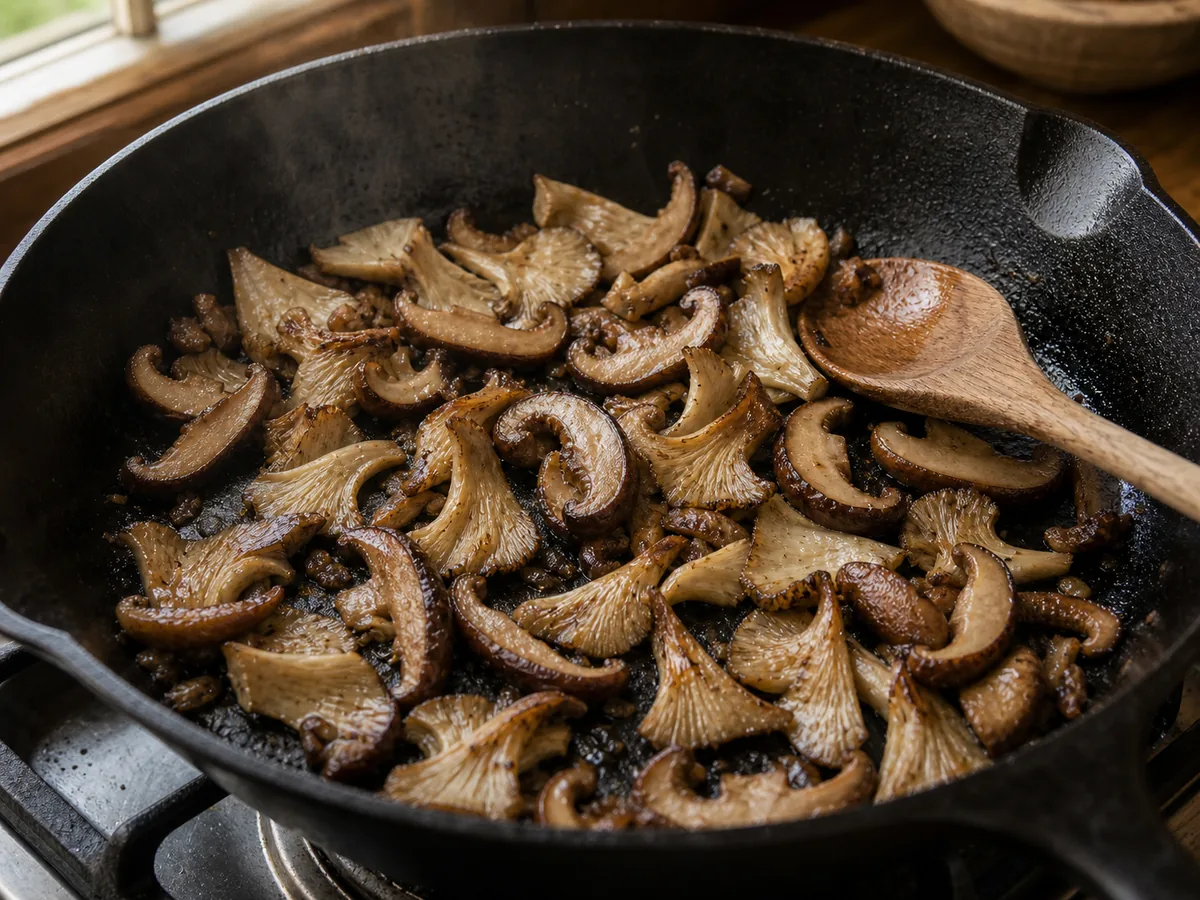
Think of shiitake as a seasoning mushroom as much as a vegetable. A small amount can change a pot of rice, beans, or soup because the flavor concentrates as the cap dries and browns.
If pets are part of the kitchen, keep the rule plain. Plain cooked shiitake is a different question from seasoned leftovers, and dog shiitake safety depends on that distinction.
For human meals, the final decision is easier. Cook the caps, trim or simmer the stems, and use dried shiitake when broth depth matters more than soft texture.
The final kitchen rule is heat plus texture. A cooked shiitake cap should bend, smell savory, and lose its raw sharpness. If the center is still rubbery and cool, give it more time.
For dried shiitake, the safety issue is less about raw texture and more about grit and concentration. Soak fully, trim any tough stem, strain the liquid, and use the broth where a deep savory base helps the dish.
For supplements, keep the claim separate from dinner. A bowl with shiitake can be a good meal without becoming a treatment plan.
Storage changes the cooking plan too. Fresh caps keep best in a paper bag in the fridge, while dried caps belong in a sealed jar away from heat and light.
If fresh caps wrinkle but still smell clean, use them in soup or stock. If they turn slimy or sour, throw them away instead of trying to hide the problem with sauce.
Do not stretch old shiitake because the mushroom was expensive. The safest flavor comes from clean caps, full cooking, and broth made from stems that still smell fresh.
When in doubt, use the younger caps for the plate and the older clean pieces for stock. Save the strongest dried caps for broth, not quick sauteing.
That split keeps texture and flavor working together instead of fighting each other.
Why does shiitake grow on hardwood?
Shiitake breaks down hardwood. Traditional log culture uses oak or similar hardwood, while commercial farms often use supplemented sawdust blocks.
The slow pace is the tradeoff. Logs can take many months before fruiting, then produce flushes after rain, soaking, or a temperature shift.
In the wild, shiitake breaks down fallen hardwood in the warm forests of East Asia. People have grown it in China and Japan for many centuries, long before anyone understood the biology behind it.
Modern farms speed that natural cycle up. A soaked, colonized log or block gets a cold shock, which mimics a temperature swing in the woods and pushes out a flush of caps.
In the wild it is an East Asian species, fruiting on dead hardwoods across Japan, Korea, China, and into Southeast Asia. Most shiitake outside that range exists because someone inoculated a log or a block.
The wood matters more than the climate. Oak carries the traditional crop, and the Japanese name comes from shii, a hardwood the fungus favours.
A log is a slow, finite food source. It supports fruiting for three to six years depending on diameter, then the wood is spent and the colony dies with it.
What should you know about shiitake medicinal claims?
Shiitake contains lentinan and other beta-glucans studied for immune effects. That does not turn dinner into treatment.
Use shiitake as food. If you are considering extracts or high-dose supplements, ask a clinician who knows your medications and health history.
Lentinan has been studied for years, mostly as a hospital treatment given alongside other care, not as something you eat off a plate. A dinner portion does not deliver that kind of dose.
Eating shiitake as part of a varied diet is a reasonable, low-risk choice. Chasing health claims through strong supplements is where the caution belongs.
Dermatology sources describe the rash as flagellate dermatitis, with itchy linear marks that can appear after raw or undercooked shiitake. That is a cooking issue, not a reason to fear properly cooked market mushrooms.
Taxonomy & Naming
Genus Lentinula, in the family Omphalotaceae.
Lentinula edodes carries the crop worldwide. The species name means edible, which is unusually direct for a mushroom binomial.
It has been moved more than once. Older labels and packaging still use Lentinus edodes, a genus it no longer belongs to, so a supplier using the old name is behind rather than wrong.
The family placement is the part worth noticing. Omphalotaceae also contains Omphalotus, the jack-o-lantern genus, which is a reminder that family membership says nothing about whether something is safe to eat.