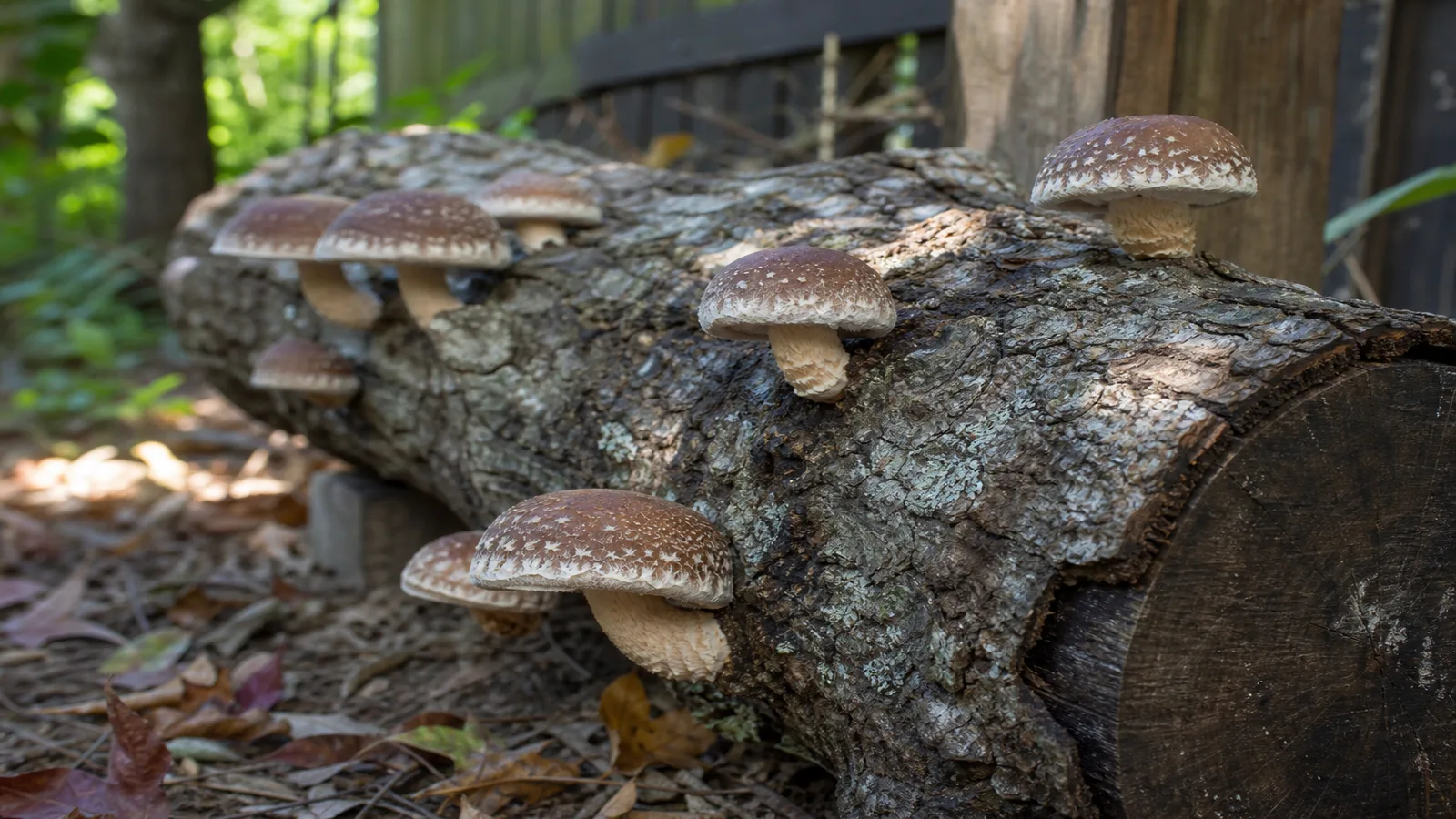
Shiitake grows best at home on hardwood logs or prepared hardwood sawdust blocks. Logs are low-tech and slow. Blocks fruit faster but need cleaner handling and better contamination control.
Shiitake is a slower grow than oyster mushrooms, so the main decision before buying spawn is whether you want a low-tech log project that may take a year or a faster sawdust block that asks for sterile technique.
Logs need patience, shade, and hardwood. Blocks need cleaner handling and usually cost more per harvest.
Both methods work at home when you match expectations to the timeline.
Which shiitake method fits your time and space?
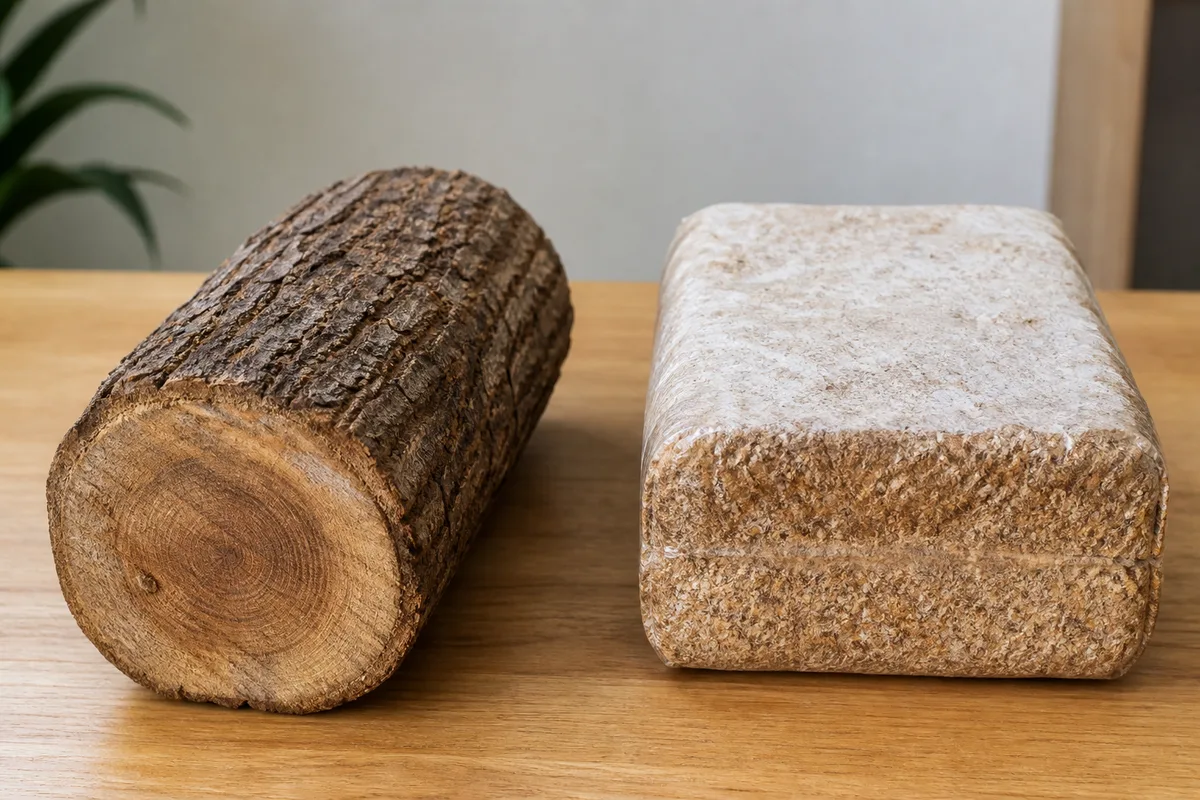
Logs are the best home method when you have shade, outdoor space, and patience. They cost less after setup because one inoculation can produce for several years when the wood stays moist and the bark stays intact.
Sawdust blocks are better when you want indoor control and a faster harvest. They usually fruit within weeks of full colonization, but the supplemented substrate must be sterilized or bought already prepared.
Each block is a single production cycle, so the cost per harvest is higher than a log that keeps fruiting season after season.
| Method | Best for | Main risk |
|---|---|---|
| Hardwood logs | Outdoor growers with shade and patience | Waiting months before the first fruiting |
| Ready-to-fruit block | First indoor shiitake harvest | Paying more per crop cycle |
| Sterile sawdust block | Learning full indoor cultivation | Contamination during mixing and sterilization |
| Garden wood chips | Experiments only | Unreliable production, poor colonization |
If this is your first mushroom grow, oyster mushroom growing is usually the easier classroom. Oysters show airflow and moisture mistakes within days, while shiitake exposes the same problems slowly over months.
Beyond the growing timeline, flavor and texture differences also separate the two species at the table.
Pick the right wood
Shiitake grows on hardwood. Oak is the classic choice, and maple, beech, sweetgum, ironwood, and similar hardwoods work when they are healthy and freshly cut.
Avoid conifers, rotten logs, bark that slips off, and wood that has dried hard in sun or wind. The shiitake mycelium needs clean sapwood, intact bark, and enough moisture to colonize before competitor fungi take over.
Cut logs during winter or early spring dormancy when stored carbohydrates remain in the wood and competing organisms are less active.
Let freshly cut wood rest for two to four weeks before inoculation. That rest period lets the tree's natural antifungal compounds fade while the bark is still tight.
Logs cut too green can resist colonization. Logs left too long attract competing fungi and insects before you add spawn.
Aim for logs between four and eight inches in diameter and about three to four feet long. Thinner logs colonize faster but dry out sooner.
Thicker logs hold moisture longer but take more time to colonize fully.
Growing MushroomsHow the Monotub Method Balances Humidity and Fresh AirChoose spawn for the method
Plug spawn is convenient for small log projects because each plug carries mycelium into a drilled hole. Sawdust spawn can colonize faster because it touches more wood surface, but it needs a tool to pack holes cleanly.
Grain spawn belongs in sterile block work, not in drilled outdoor logs. Grain is nutritious and attractive to insects, birds, rodents, bacteria, and molds.
Outdoors, that nutrition feeds competitors before shiitake can establish itself.
Buy spawn close to the inoculation date. Old spawn can still work, but weak spawn gives competitors more time to move into the wood first.
Before inoculation, inspect the spawn bag for clean white mycelium and reject it if green or black spots or a sour odor suggest contamination.
Many log growers cut and inoculate in late winter or spring, then let logs colonize through the warm months. The first meaningful fruiting may not come until the following autumn or even the next year.
Warm-weather and cool-weather strains behave differently, so supplier strain notes matter. They tell you which temperatures and forcing rhythm the mycelium was selected to handle.
Inoculate logs cleanly
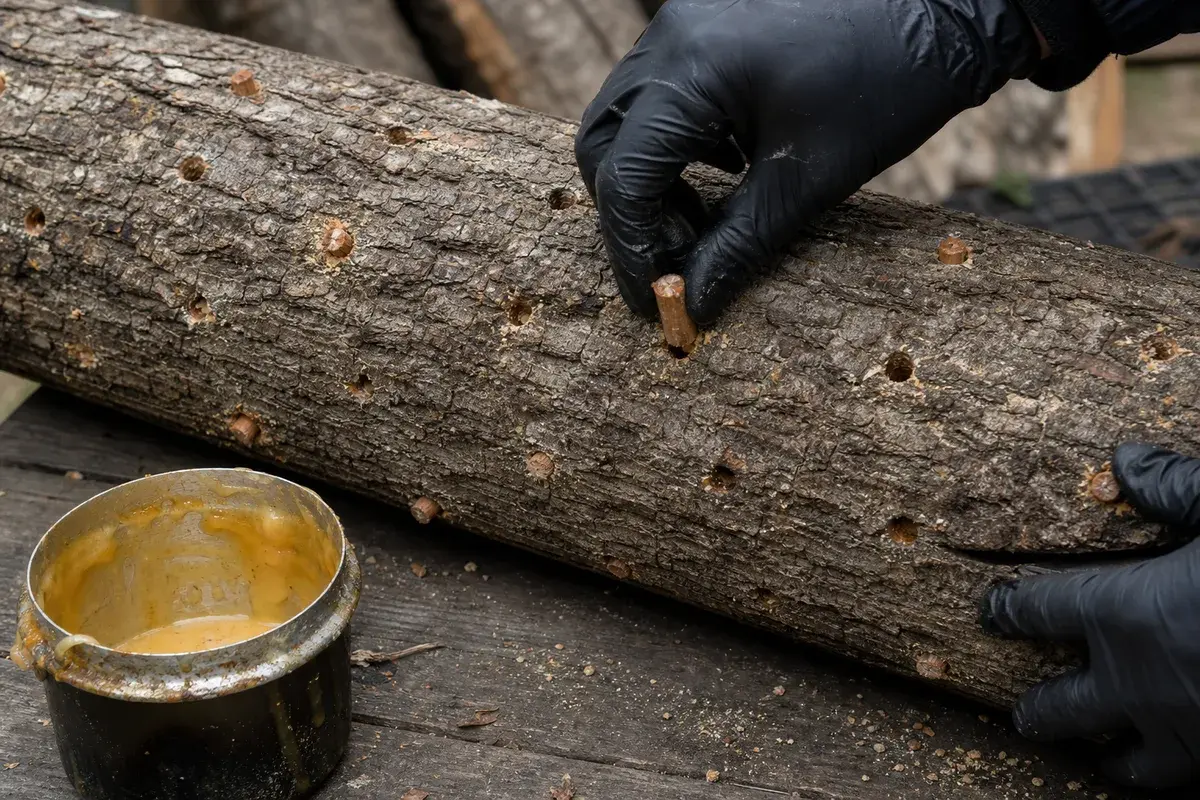
Drill holes about four inches apart in staggered diamond rows, fill each hole with plug or sawdust spawn, and seal every inoculation point with food-grade wax.
The wax is not decorative. It keeps spawn from drying out and blocks insects or competitor spores from entering the fresh hole.
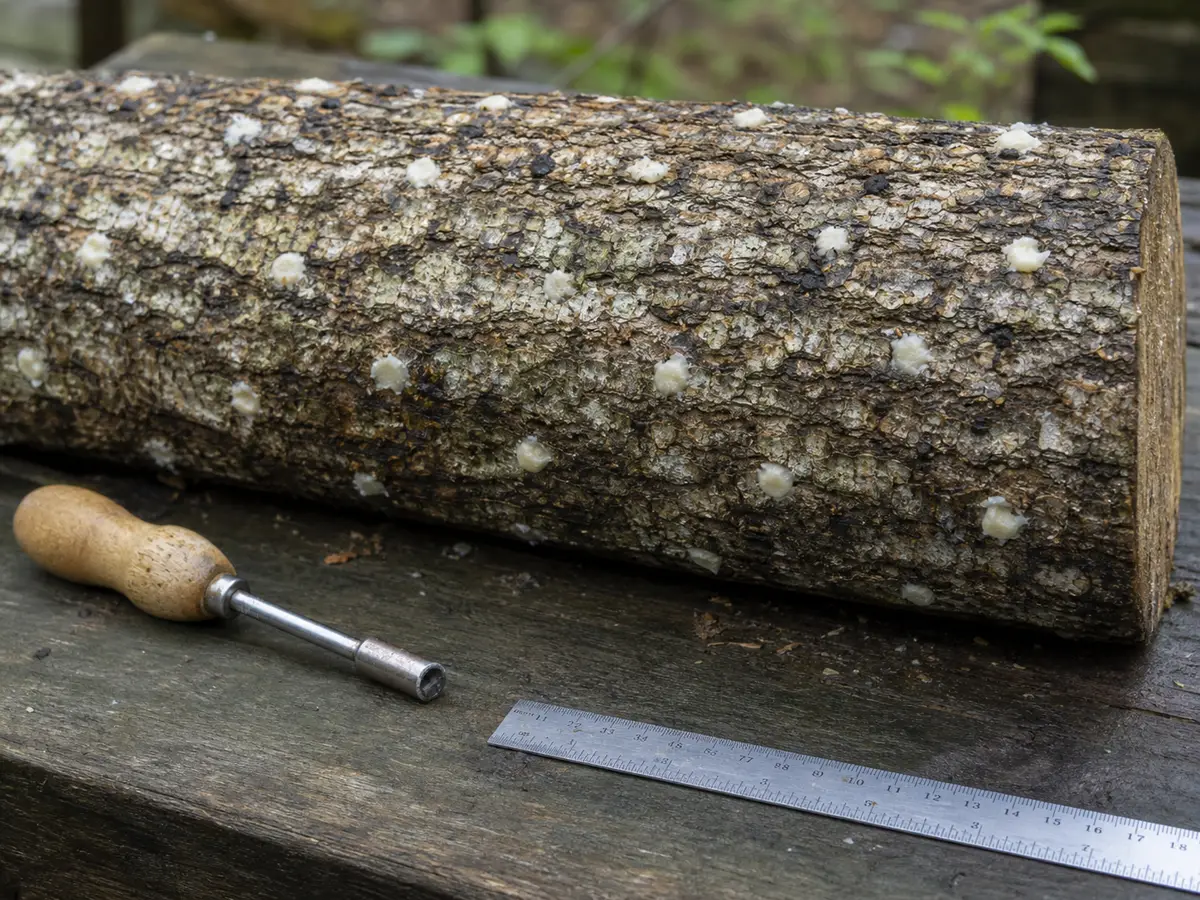
Seal any major bark damage or cut ends where the sapwood dries too fast.
Set up a shaded laying yard
A laying yard is the place where inoculated logs wait while shiitake colonizes the wood. It should be shaded, humid, easy to water, and protected from direct afternoon sun.
Stack logs so air can move around them. Crib stacks, lean-to stacks, and low rails all work, but logs should not sit flat in mud or standing water.
Keep the bottom row off bare ground with pallets or branches so moisture does not pool against the bark.
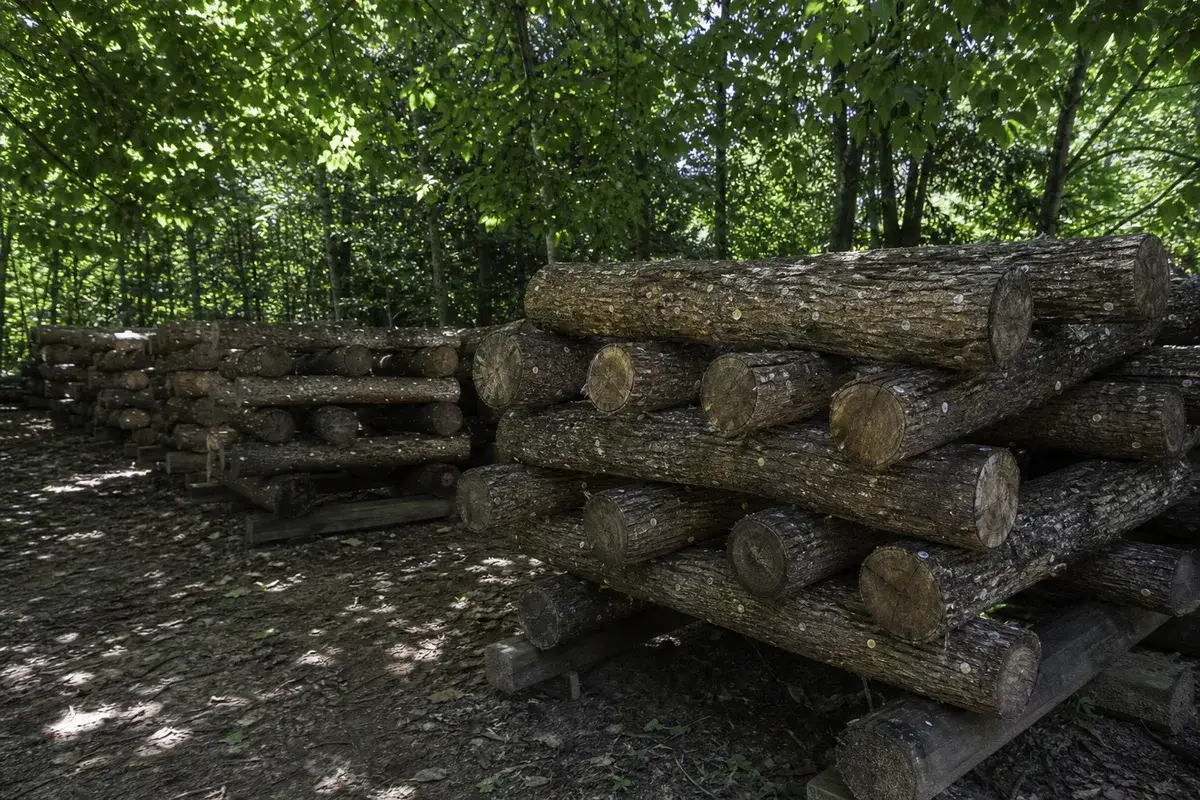
Moisture is the main production variable in a laying yard. Long dry spells can stall colonization, while constant soaking invites decay organisms.
During dry weather, protect the laying yard with leaf canopy or shade cloth and give the logs a ten-minute overhead watering when summer rain has been absent for more than two weeks.
Check the bark often. Bark protects moisture and keeps competitor fungi out.
If bark slips badly, dries deeply, or rots away, that log is less likely to produce well. Slugs, insects, squirrels, and birds can damage exposed spawn sites and emerging mushrooms.
Prompt harvest and intact bark reduce the easy losses.
Do not wrap logs in plastic for long storage. Plastic traps stale wet pockets and encourages other fungi.
Shade and airflow are safer than sealing the whole stack.
Manage the long quiet stage
Colonization is the stage most beginners underestimate. A shiitake log can look unchanged for months while mycelium moves slowly through the wood interior.
Keep the laying yard shaded, humid, and ventilated. Logs should not bake in direct sun, sit in standing water, or dry until the bark cracks deeply.
Use one colonizing shiitake log as a moisture reference by weighing it after rain or watering, then weighing it again during dry weather. A sharp weight loss confirms that the stack needs water before the bark cracks, while a rotten odor or loose bark signals a different failure.
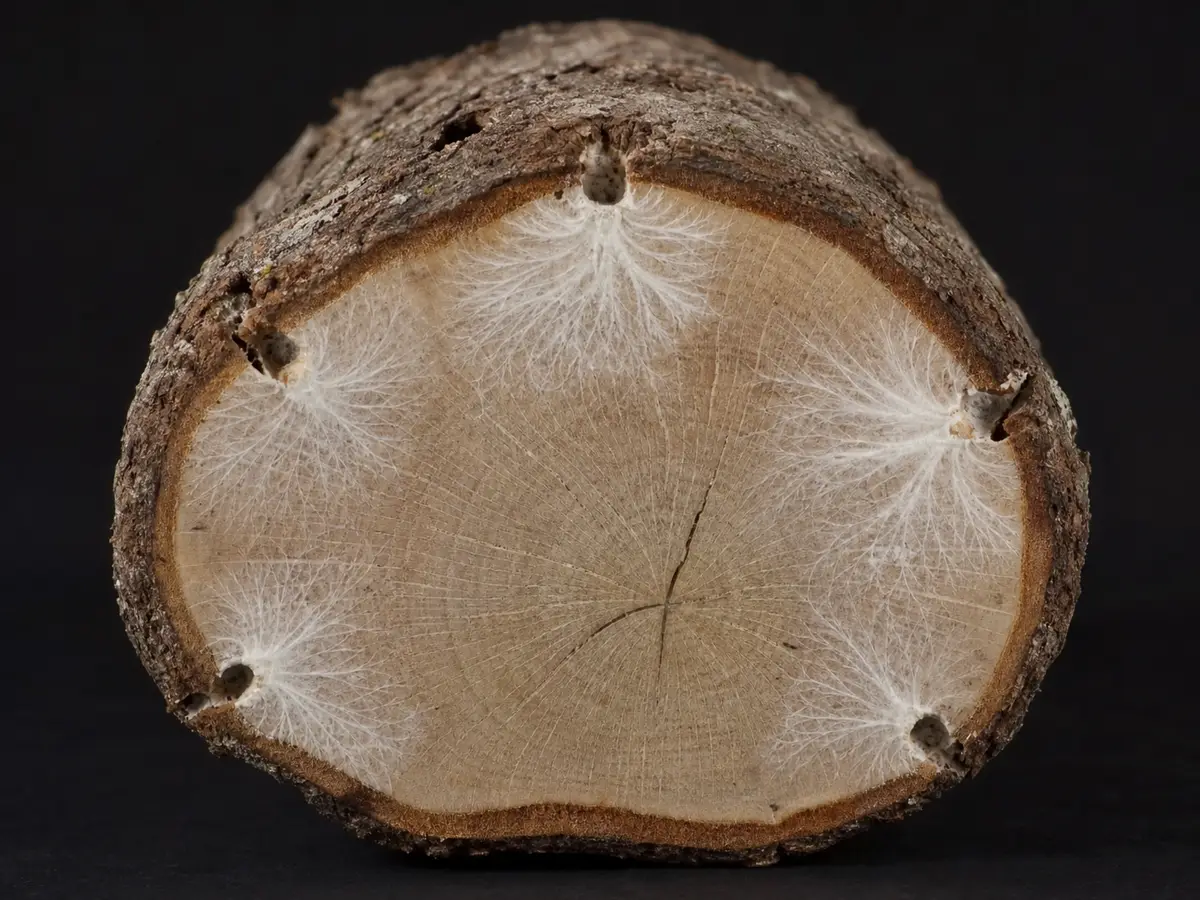
A log that smells rotten or loses bark in sheets is moving away from useful production.
- Healthy wood
- Bark stays tight and the log smells like sound hardwood.
- Useful progress
- White or tan growth at the cut end can support a colonization check.
- Stop signal
- Rotten odor, loose bark, or soft wet wood points away from production.
Some growers check colonization by looking at the cut ends of the log. White or tan mycelium visible on the end grain is a good sign.
If six months have passed without any visible growth and the bark is still intact, the spawn may have been too old or the wood may have been too dry at inoculation.
Do not force logs too early. A log that has not fully colonized will not fruit well, and repeated premature soaking can weaken it instead of helping.
Growing MushroomsMushroom Grow Contamination: What to Remove Right AwayWhen are shiitake logs ready to fruit?
A mature log may fruit naturally after rain, or it can be soaked in cold water for 12 to 24 hours to trigger a flush. The soak imitates a weather shock.
After soaking, lean the log in shade where mushrooms have room to grow and air can move around the caps.
Most log strains produce best between 50 and 70 degrees Fahrenheit during fruiting. Soaking during a heat wave often gives poor results because the temperature is too high for healthy pin formation.
Time each log soak for mild weather when possible, because the same log must fruit and recover before the next forcing cycle.
When the shiitake caps open but have not flattened fully, harvest the fruiting log. Cut or twist at the base, then let the log rest for at least six to eight weeks before soaking again.
Pushing the same log every week weakens it and reduces later production.
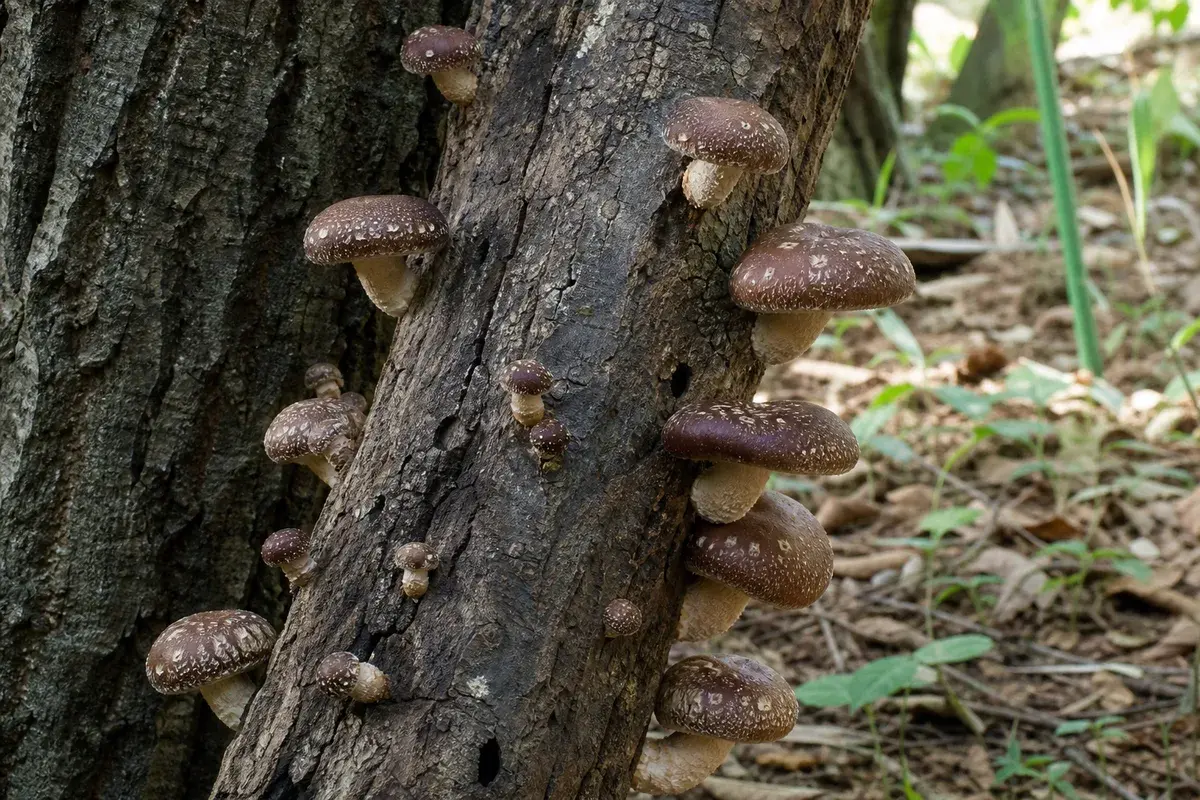
Shiitake grows in flushes, not daily harvests. A log fruits, rests, rebuilds, and fruits again later when weather or soaking gives the right signal.
A good home rhythm is to stagger soaks across part of the stack at a time, then let those logs rest while another group is ready.
Run sawdust blocks with cleaner technique
Sawdust blocks use hardwood sawdust, water, and often bran or another supplement. That supplement helps shiitake grow faster, but it also feeds contaminants.
The higher nutrition in a supplemented block means even small contamination gets a head start.
If you are not using a commercial ready-to-fruit block, sterilization matters. Pasteurization that works for straw substrate is usually not enough for supplemented sawdust.
A pressure cooker or autoclave cycle is the standard for sawdust blocks with bran.
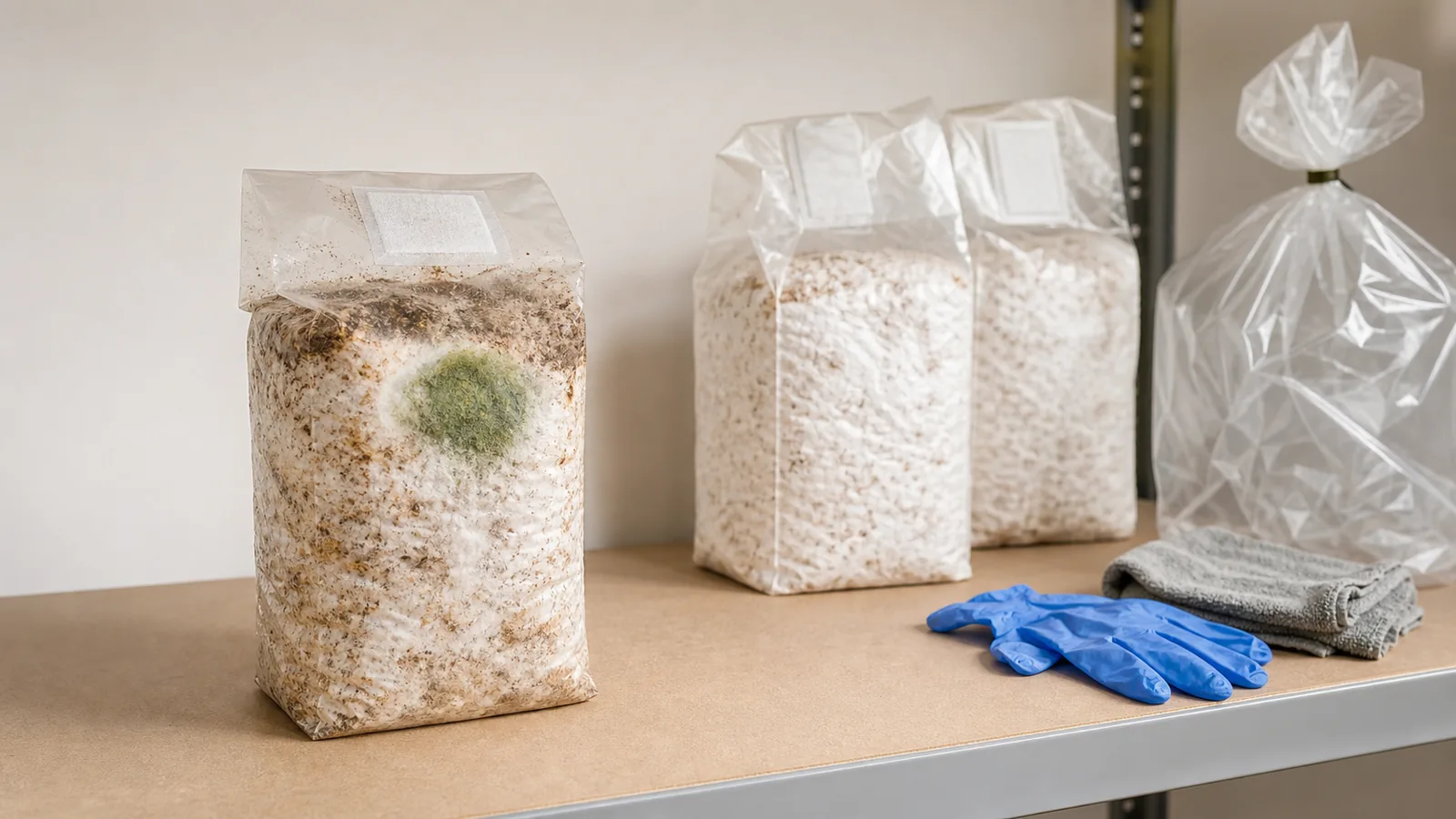
The block should colonize white to tan and smell clean. Browning on shiitake blocks can be normal as the block matures, but green mold, sour smell, and slimy patches mean the grow is in trouble.
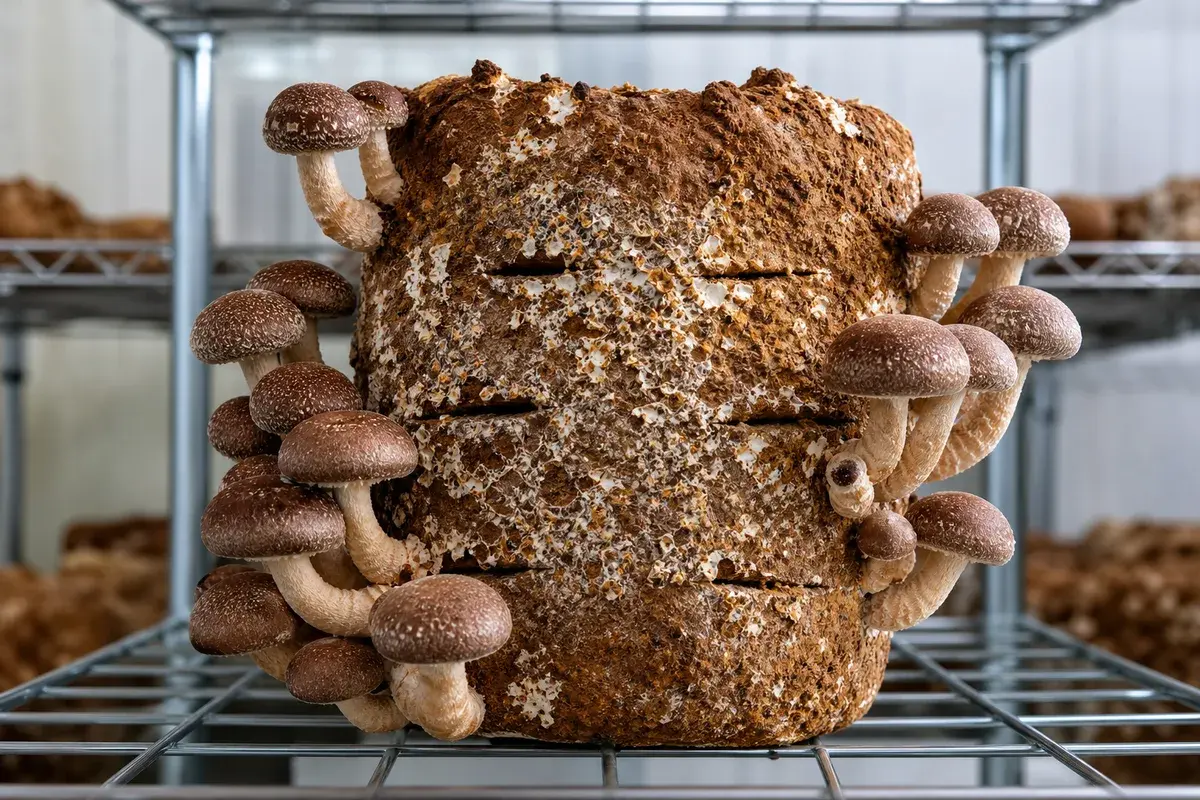
The contamination warning signs belong beside any block project. A bad block should leave the grow space before it spreads spores to clean containers nearby.
Give shiitake the right fruiting conditions
Shiitake needs humidity, fresh air, indirect light, and the strain-specific fruiting temperature supplied with the spawn or block.
Too little fresh air deforms caps into leggy stems with small tops. Too much dry air cracks the surface or stalls growth entirely.
Too much misting can waterlog the surface and make bacterial problems more likely.
Use hardwood logs or hardwood sawdust as the primary substrate
Keep logs shaded and moist during colonization
Let blocks mature before cutting them open for fruiting
Cook harvested shiitake thoroughly before eating
Use straw as the main shiitake substrate
Soak immature logs again and again hoping to force early pins
Eat from a block that smells sour or shows colored mold
Why is your shiitake crop fruiting poorly?
Weak fruiting usually comes from immature logs, dry wood, poor shade, old spawn, or a strain that does not match the season. Start with those before blaming the whole method.
Tiny cracked caps point toward dry air or dry logs. Soft, blotchy caps point toward too much surface moisture or poor air movement.
No mushrooms after a proper soak may mean the log was not yet fully colonized.
Check spawn age and storage history. Spawn stored too warm or too long before use may not colonize well.
If only one batch fails out of several, the problem is likely that specific log or block. If every batch struggles, look at the spawn source, the workspace temperature, or the water supply.
Colored mold on a sawdust block points to a sterile-handling failure, unlike the slow moisture or maturity problems that delay log fruiting.
Logs fail slowly through drying, bad wood, or poor placement. Oyster mushrooms show the same airflow and humidity mistakes faster, which is why many growers start there before committing to a shiitake project.
Cook and store the harvest safely
Shiitake is a cultivated edible that should always be cooked. Some people react to undercooked or raw shiitake with a painful skin rash called shiitake dermatitis, caused by lentinan compounds that break down only with thorough heating.
Warning
Never eat raw shiitake. Thorough cooking breaks down lentinan compounds that can trigger a painful flagellate skin rash in sensitive individuals. Cook until tender throughout.
Brush the caps, trim tough stems, and cook the shiitake until tender, reserving clean stems for stock because they are usually too fibrous for a quick saute.
Store fresh shiitake in a paper bag in the refrigerator and use within a week. A good harvest should smell savory and fresh.
Sour odor, slime, or fuzzy growth after storage means the mushrooms should be discarded.
Keep records and scale after one good cycle
Label each batch with wood species, cutting date, inoculation date, spawn strain, and first fruiting date. Without labels, every log looks like the same brown cylinder by the second season.
Record spore print color if you ever work from wild specimens, though most home shiitake projects start from commercial spawn.
Those records make the next purchase smarter. You may learn that oak lasted longer, a warm-weather strain fruited earlier, or one shady corner held moisture better than the fence line.
A shiitake log eventually stops producing as its stored food runs out, its bark breaks down, and other fungi occupy the wood.
Retire a log when it becomes soft, light, barkless, heavily colonized by other mushrooms, or consistently unproductive after proper rest and soaking. Old logs can go to a compost area if local rules allow, but keep them away from clean inoculation work so insects and spores do not migrate to the new batch.
Scale after one full cycle, not during the first attempt. A single successful log or block teaches the full rhythm: colonization, fruiting, harvest, rest, and cleanup.
More logs are useful only when you can keep them moist, labeled, and reachable for harvest.
Sources for shiitake growing
This growing framework follows Cornell and extension guidance on hardwood log production, laying yards, moisture management, inoculation, and the long wait before fruiting. Use spawn supplier directions for strain-specific temperature, timing, and the best species for beginners when comparing shiitake to easier first projects.
Sources & References
- Penn State Extension Shiitake log and sawdust block cultivation methods.
- University of Vermont Extension Shiitake growing timelines and inoculation guidance.
- USDA Forest Products Laboratory Wood species suitability and moisture retention for log culture.