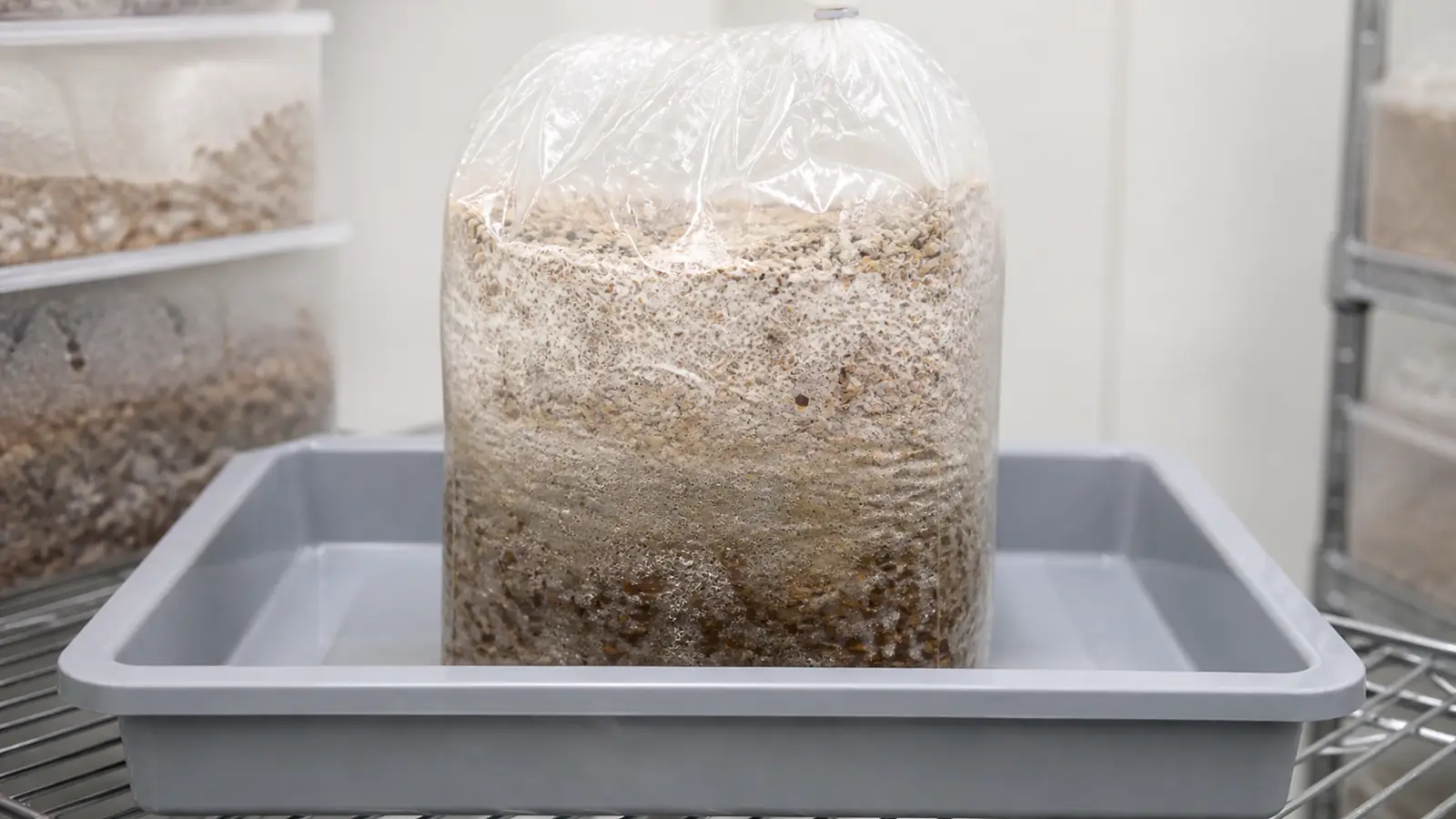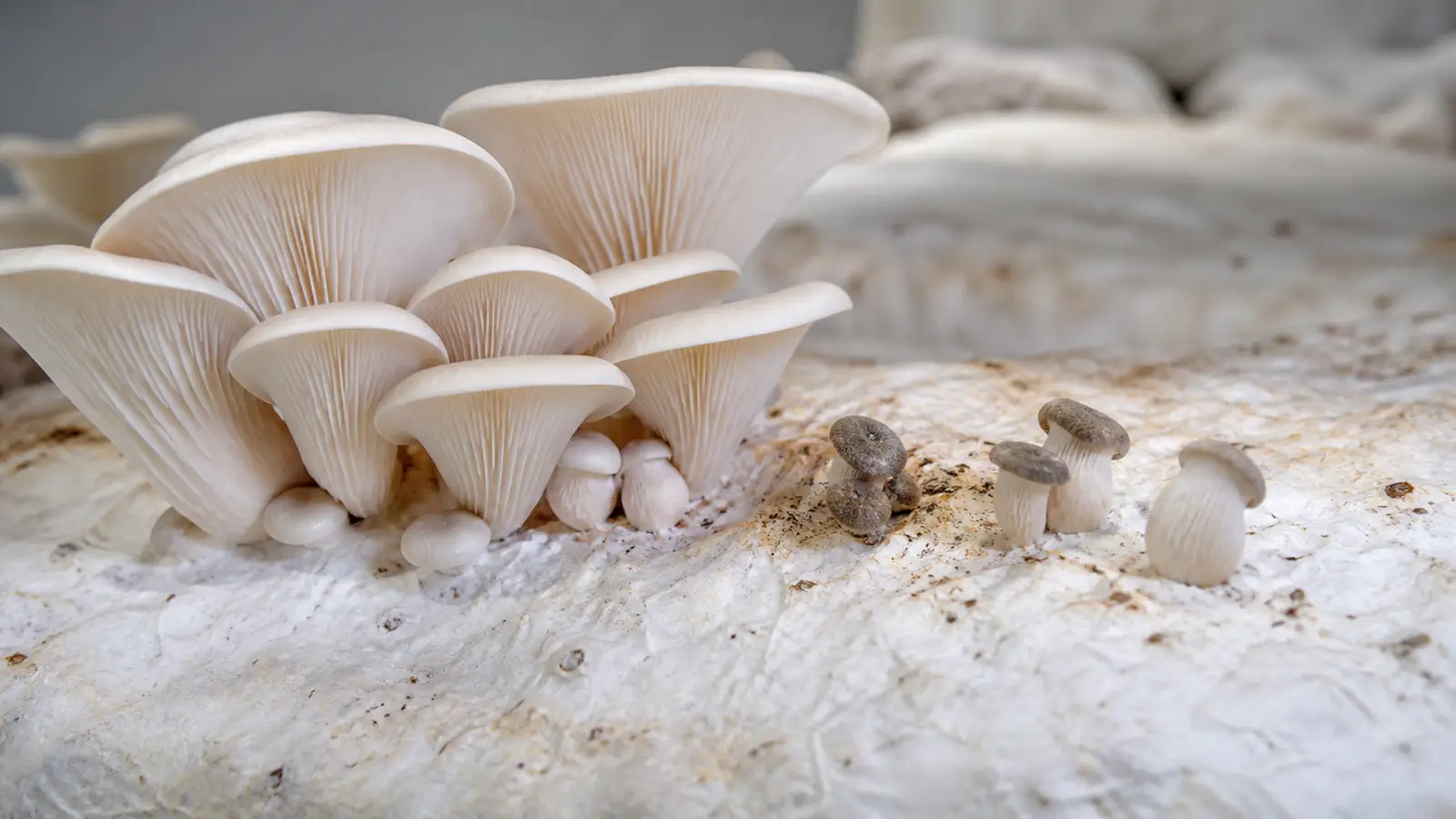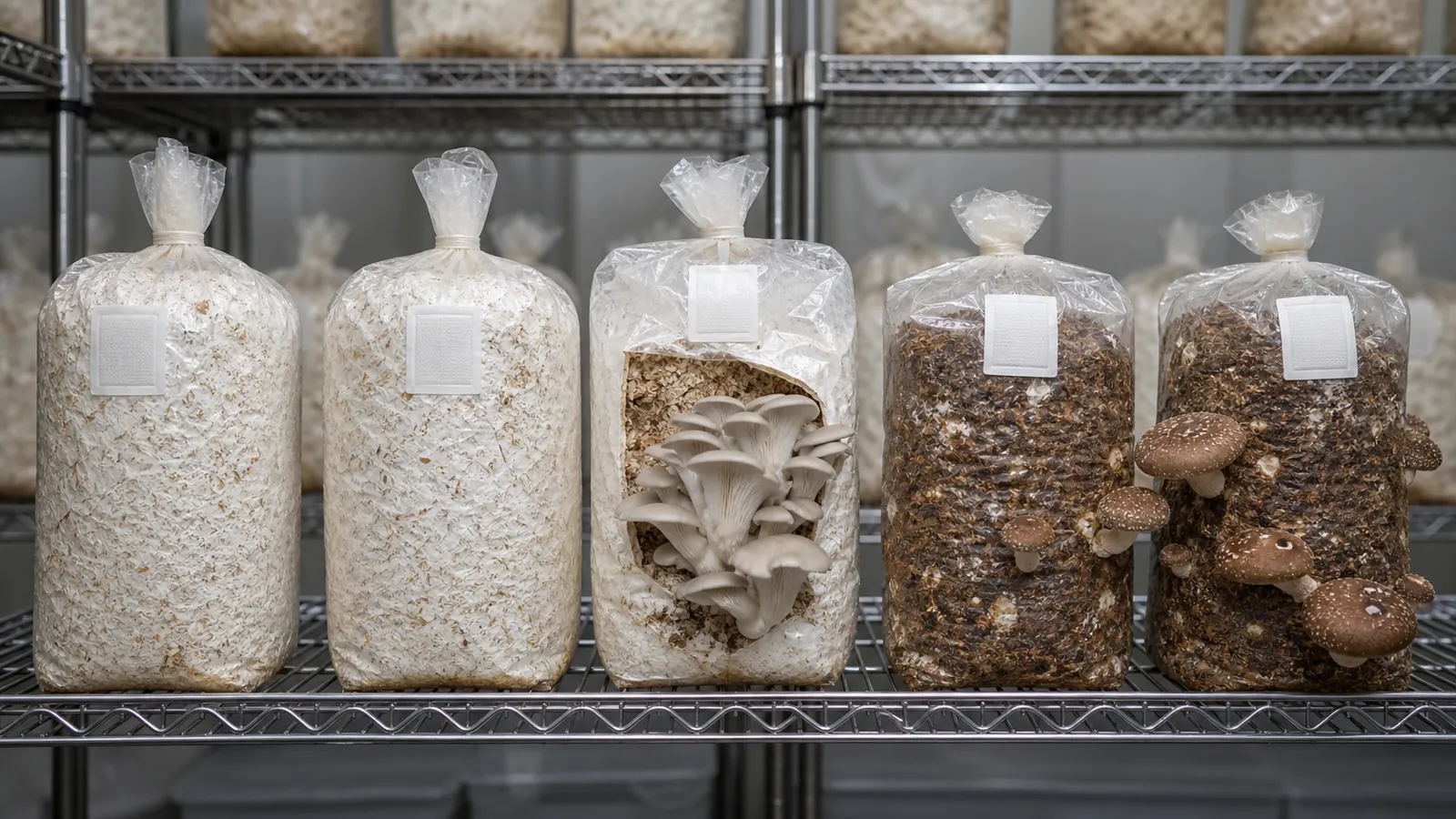
A sawdust block is a measured hardwood-based substrate sealed in a filter bag, heat-treated, inoculated under clean conditions and incubated until the culture binds it. Rich supplements raise production potential but also raise the treatment and transfer standard.
A hardwood sawdust block succeeds or fails as a batch before a mushroom appears. The pressure vessel, filter bags, clean-transfer space, and record keeping set the practical method, so choose those limits before copying an ingredient ratio.
Supplemented blocks can produce vigorous crops because they offer the fungus abundant water and nutrition. The same richness also supports competitors, which makes heat treatment and clean inoculation part of the formula rather than optional steps around it.
Should you make blocks or buy them ready?
- Batch limit
- Treatment vessel capacity and validated load geometry
- Formula basis
- Recorded dry matter, ingredient moisture, added water, and spawn mass
- Clean handoff
- Protected cooling, clean inoculation, intact filter, and sealed incubation
Making blocks gives you control over hardwood, supplement, hydration, bag mass, inoculation, and batch timing. It also makes you responsible for hot heavy loads, treatment validation, cooling, spawn handling, and every contaminated bag.
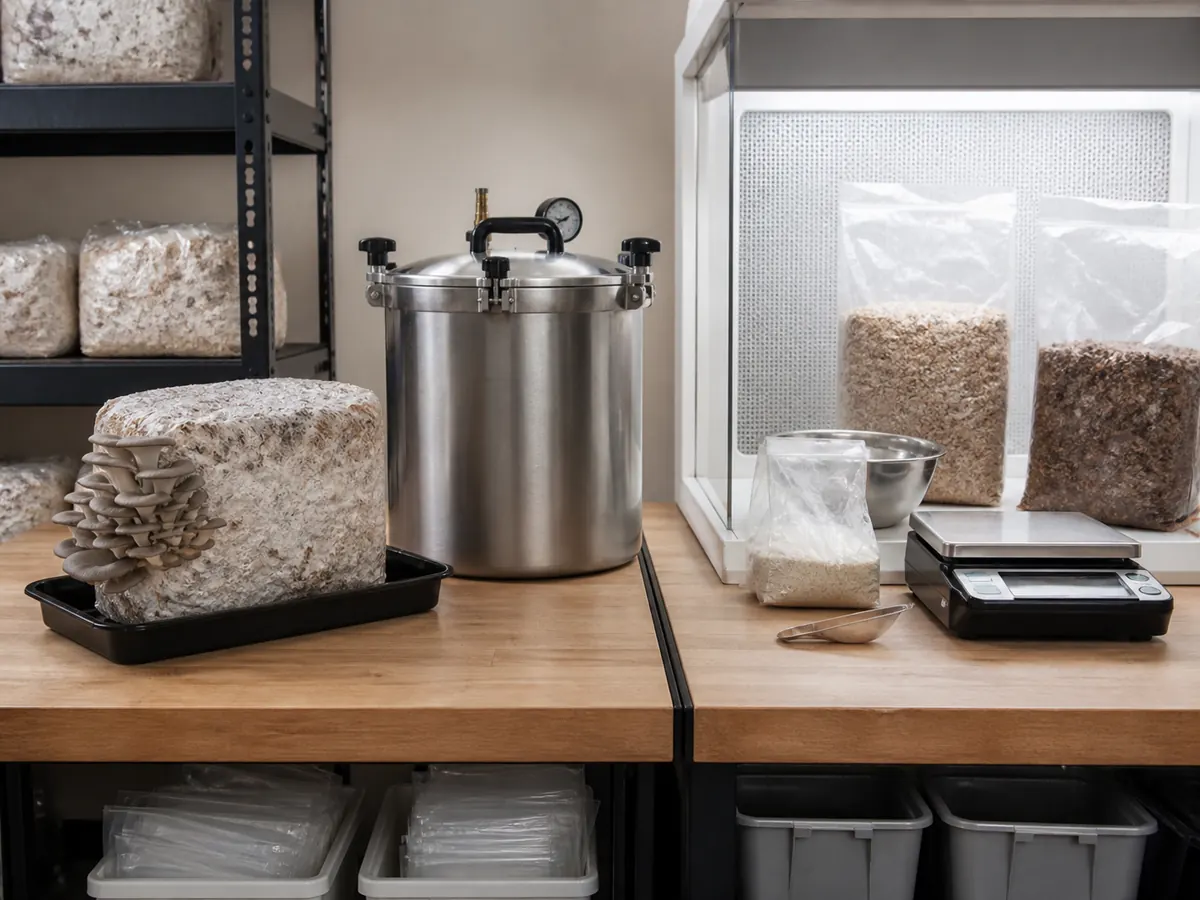
Start with the usable capacity of the pressure vessel.
A recipe for twenty bags is irrelevant when the vessel can treat only four evenly, and leaving hydrated bags waiting between loads changes their biological starting point.
Ready-to-fruit blocks are the better learning route when you want to study fruiting conditions without building a sterile production chain. They also give a small grower a benchmark for block density, colonization, maturity, and crop form.
| Route | You control | Main limitation |
|---|---|---|
| Ready block | Fruiting exposure, environment, harvest, reset | Formula and incubation history remain supplier-owned |
| Plain low-nutrient block | Base wood, water, treatment, inoculation | Lower supplement does not remove the need for a validated method |
| Supplemented DIY block | Entire batch from dry matter to fruiting | Rich substrate raises treatment and transfer demands |
Calculate energy, cooling space, bag handling, and disposal capacity as part of batch size.
A vessel that physically holds six compressed bags may not heat or vent them as the validated load configuration requires.
Pressure equipment can cause severe burns and mechanical injury. Use only equipment rated for the intended process, follow its manufacturer instructions, and obtain hands-on training rather than treating an article as an operating manual.
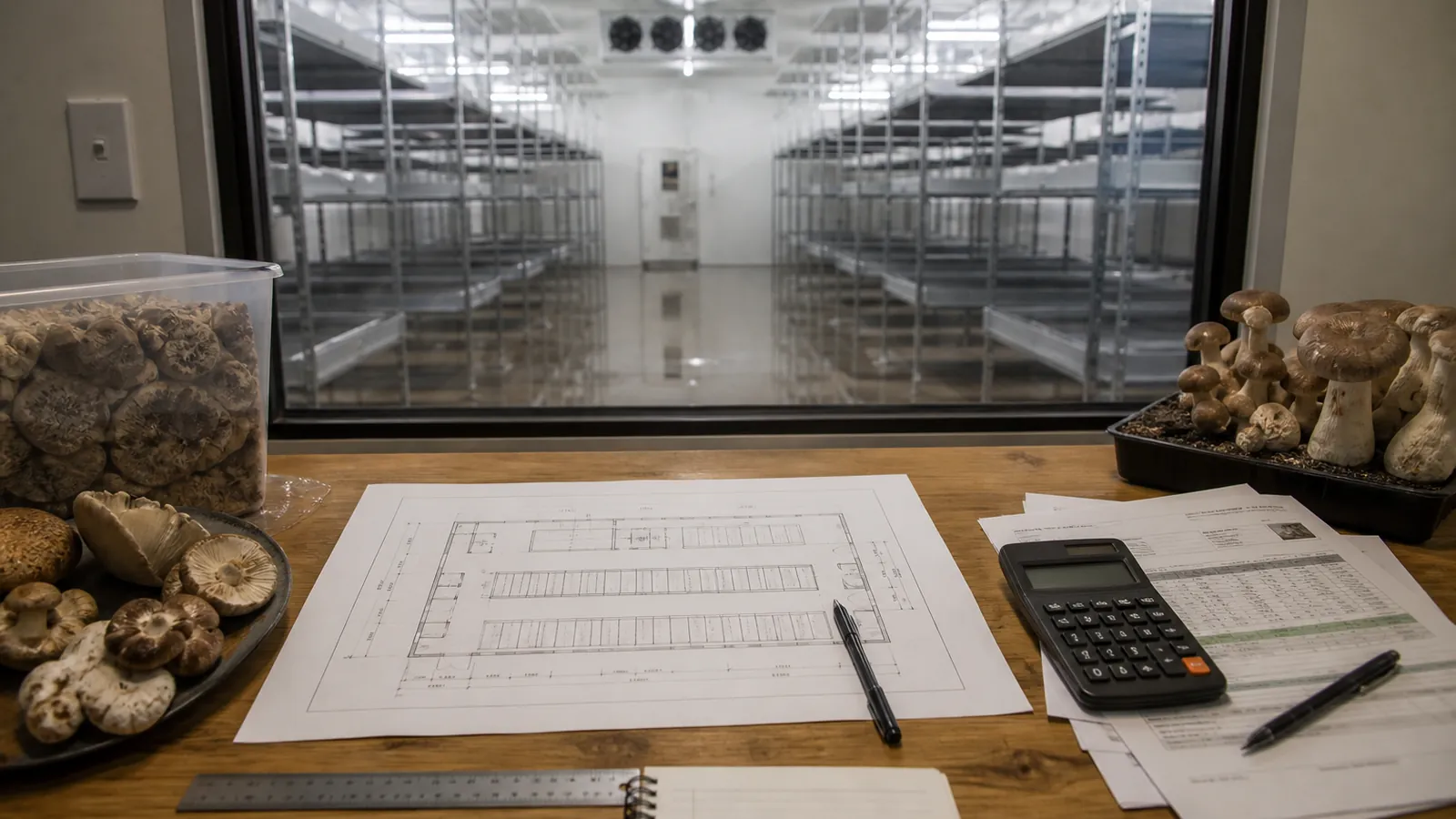
Run the workflow on paper before buying ingredients. The route should show where hydrated bags wait, where hot loads cool, how clean spawn reaches them, and where failed material leaves without crossing clean work.
Note
The recipe cannot outrun the process | If the treatment load or clean transfer cannot be executed consistently, reduce the batch or buy finished blocks before increasing supplement.
Which species and strain define the method?
A sawdust formula begins with a verified cultivated culture.
The supplier should name the species and strain, recommend a compatible hardwood base, describe supplement tolerance, and state the maturation and fruiting behavior it has actually tested.
Oyster mushrooms can fruit from a compact side opening, while many shiitake strains need a longer consolidation and browning stage before broader exposure. Lion's mane often benefits from a small opening that concentrates one dense fruit body.
These differences reach backward into the batch.
A strain that matures slowly occupies shelf space longer, a strain sensitive to rich supplementation may need a leaner formula, and a crop that fruits through one slit needs a block and bag shape that supports that surface.
Do not mix cultures sold under broad trade labels into one process trial. Two strains of the same species can differ in colonization speed, heat response, fruiting temperature, and yield, so the strain is part of the treatment record.
Spawn condition also defines the method.
Use vigorous, correctly stored spawn within its supplier window, and reject containers with damaged closures, sour leakage, unexplained wet collapse, or expanding foreign colors.
When a new strain enters production, run a small labeled batch beside a proven control. Changing culture, formula, bag mass, and treatment load at once may produce mushrooms, but it cannot tell you which decision caused the result.
Ask whether the culture was selected for commercial blocks, logs, or another medium. A species capable of growing on hardwood does not guarantee that every strain performs well in the same supplemented bag.
What belongs in the dry formula?
The hardwood fraction supplies the structural carbon base.
Species differ in wood preference, and mixed or unidentified pellets can hide conifer content, bark, binders, or moisture that makes one batch unlike the next.
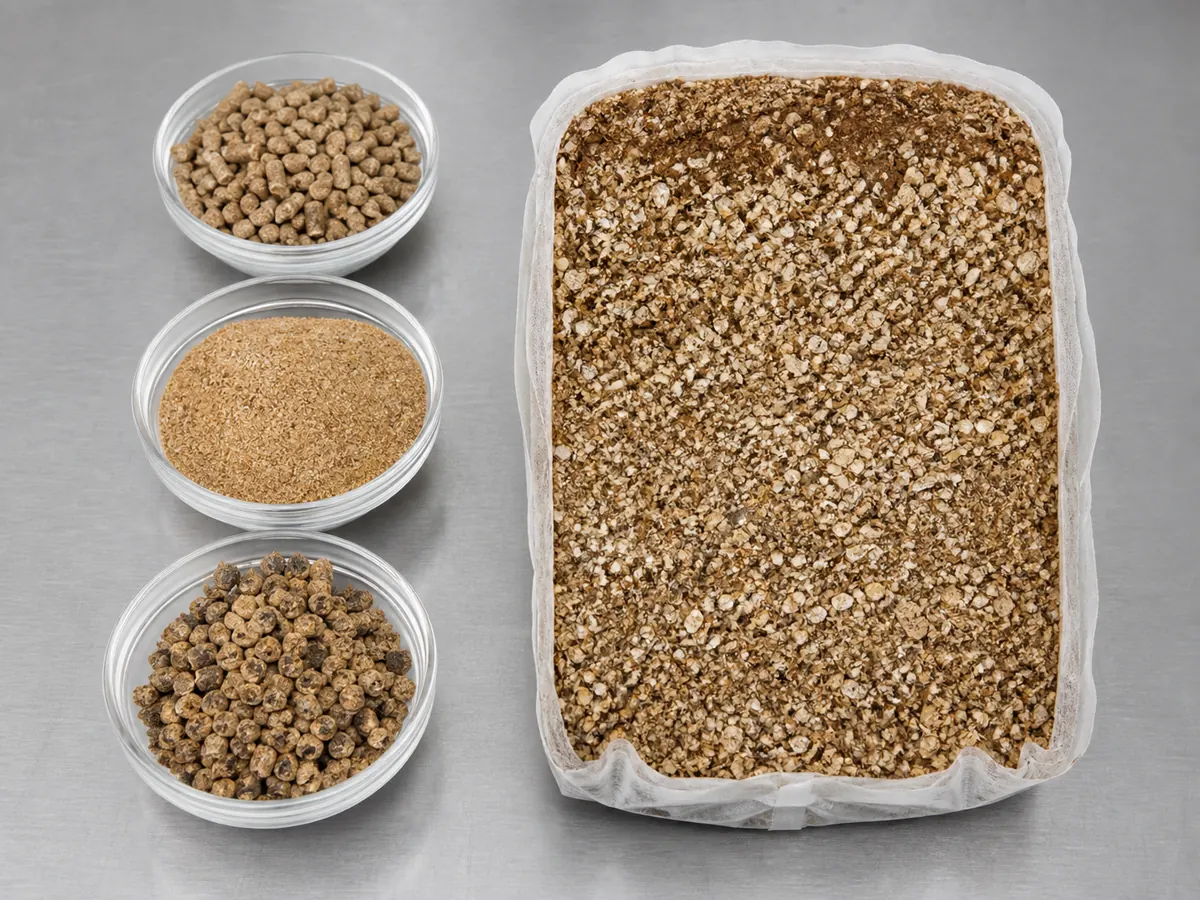
Buy a documented hardwood product or record the tree species and particle source. Pellets make storage and weighing convenient, but they still need a known composition and a repeatable rehydration period.
Bran, soybean hull, or another tested supplement can add nitrogen and accessible nutrients.
Increasing it may improve biological potential for a compatible strain, but it also makes the substrate more attractive to bacteria and molds.
Express the formula on a dry-matter basis so batches remain comparable. Water belongs in a separate calculation, because calling a wet mixture fifty percent sawdust does not reveal how much actual wood entered the bag.
| Ingredient role | What to record | Why it matters |
|---|---|---|
| Hardwood base | Species or product, lot, dry mass, particle form | Controls structure and the main carbon source |
| Supplement | Type, lot, dry mass, percentage of total dry matter | Changes nutrition and contamination pressure |
| Mineral addition | Product and dry mass | Prevents an unmeasured scoop from drifting between batches |
| Water | Source, added mass, starting ingredient moisture | Determines final hydration and heating behavior |
| Spawn | Culture lot and inoculation mass | Connects colonization rate to a known input |
A simple one-bag record might begin with 800 grams of total dry ingredients.
If the supplement is 160 grams, it represents 20 percent of dry matter, regardless of how much water will later be added.
That example is accounting, not a universal recipe. The correct percentage depends on species, strain, hardwood, particle size, bag, treatment, and the evidence from prior controlled batches.
Lock the dry side of the batch before water enters the mixer.
- Record every ingredient by product or species, lot, and dry mass.
- Label experimental bags separately and change only one planned variable at a time.
- Hold bag mass, water method, treatment load, spawn rate, and incubation conditions stable enough to make the comparison useful.
- Store ingredients above the floor in sealed labeled containers and rotate lots, since insects, humid clumping, or an undocumented pellet source can alter the batch before mixing.
How should water be measured?
Weigh water because volume measures drift and ingredients arrive with different moisture.
One liter of clean water is close to one kilogram under ordinary working conditions, which makes a scale the simplest batch control.
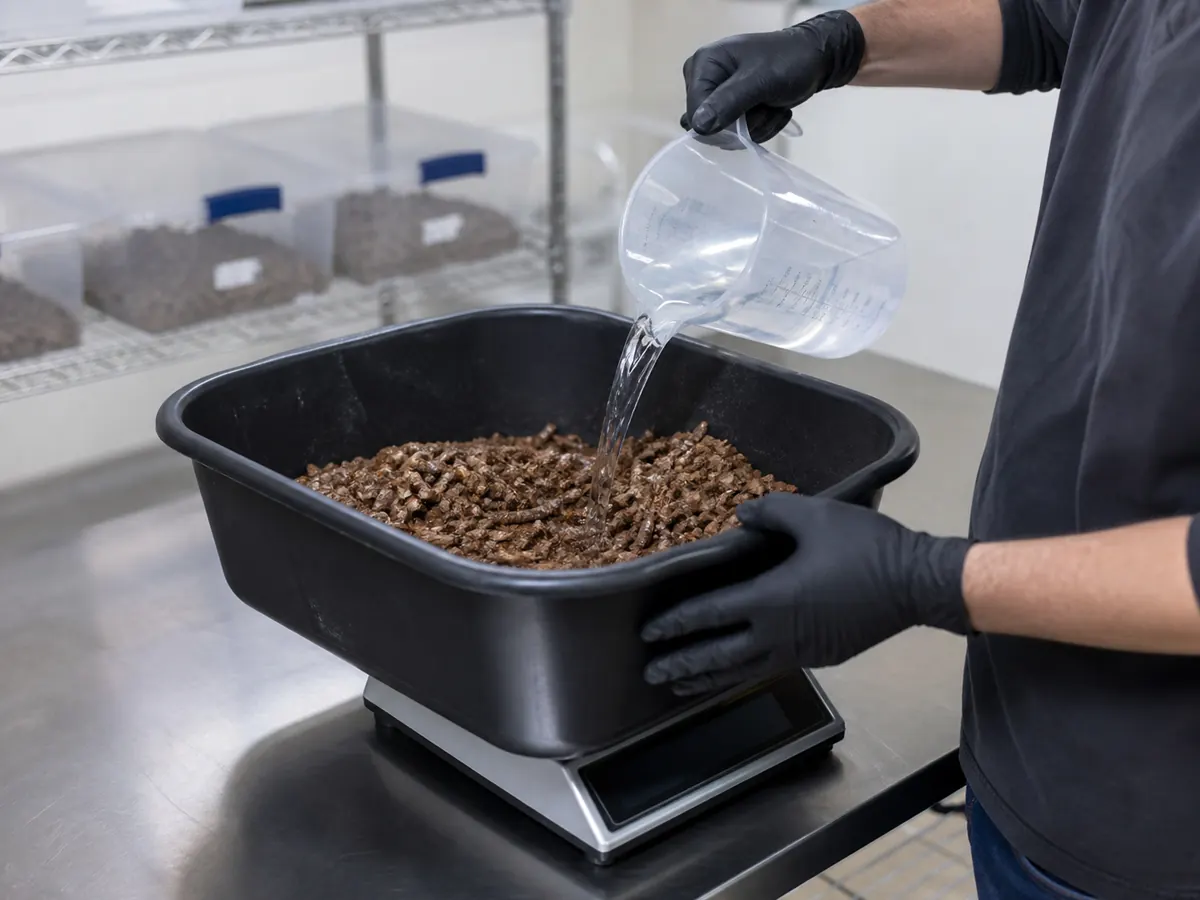
Account for moisture already present in loose sawdust or supplement. A material stored in humid air contributes water even when it feels dry, so serious comparison work uses supplier data or a measured moisture check.
For one bag, add the recorded dry matter, existing ingredient water, added water, and later spawn mass to predict the wet fill mass.
Weigh the dry matter
Record hardwood, supplement, and mineral additions before any water is added
Account for existing water
Use measured moisture or documented supplier data for ingredients that are not truly dry
Add water by mass
Distribute the calculated amount through the complete batch rather than correcting one wet or dry pocket by sight
Let particles equilibrate
Give pellets and fine material the documented time to absorb water, then break apart dry cores
Verify representative bags
Compare several filled bag masses with the predicted value before accepting the batch
The filled bag should reconcile closely enough to catch a missed ingredient, scale error, or uneven division across the batch.
- Dry matter
- Hardwood plus supplement plus measured mineral additions
- Existing water
- Moisture already carried by the ingredients
- Added water
- Potable water weighed during mixing
- Expected fill
- Dry matter plus all water before inoculation, divided by planned bag count
Pellets continue absorbing water after their surface first looks wet. Mix thoroughly, allow the documented equilibration time, then break apart dry cores before deciding that the batch needs more water.
The squeeze impression is a useful secondary observation, not a substitute for the measured formula.
A handful should bind according to the validated method without releasing free water, but hand strength and particle size make this test too variable to replace weights.
Pooling at the tub bottom or shiny saturated pockets in a bag show that water is not distributed through useful pore space. Adding dry material after the formula was locked changes both the nutrient percentage and treatment behavior, so document and recalculate any correction.
Measure a few filled bags rather than assuming the average is enough.
A correct total batch mass can still hide one wet bag and one dry bag when mixing or portioning was uneven.
Record water temperature and mixing order when they affect pellet breakdown. A repeatable mass balance can still produce different physical structure when one batch soaks for minutes and another sits overnight.
Growing MushroomsHow Do You Build an Outdoor Mushroom Bed That Lasts?How should filter bags be filled?
Use heat-rated polypropylene filter bags designed for mushroom substrate and compatible with the selected treatment process.
Ordinary storage bags can soften, split, or seal unpredictably under heat.
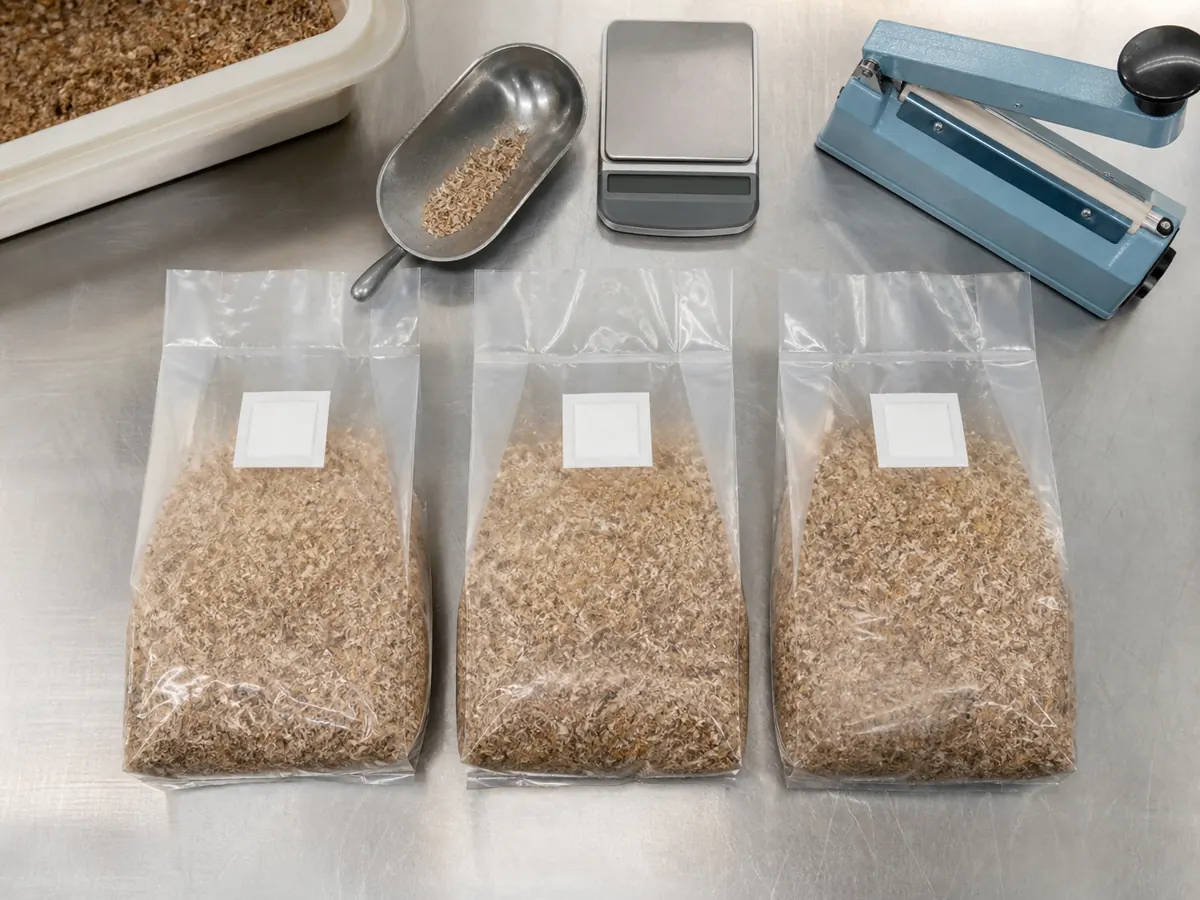
Fill each bag to the recorded wet mass and keep the filter patch above the substrate line. Substrate pressed against a wet filter can block exchange and create a pathway for contaminants during cooling.
Compression should be consistent enough to form a stable block while preserving the structure the culture needs.
A bag packed much harder than its neighbors changes heat penetration, gas movement, and later fruiting geometry.
Leave the headspace required for closing and later spawn mixing. Too little headspace can force substrate into the filter, while excessive loose plastic can trap condensate or interfere with load spacing.
Arrange bags in the vessel according to the validated load pattern.
Steam must move around the containers, and the coldest location must receive the intended process rather than being shielded by a dense central mass.
Weighing and labeling before treatment also creates traceability after the bags look identical. When a failure appears only on one shelf or vessel position, the bag number connects it to a load rather than leaving a vague room-wide mystery.
Keep a load map that connects each bag number to its vessel position.
Repeated failures in the same protected center or near one wall can reveal a heat-flow problem that the chamber gauge cannot localize.
Which heat treatment belongs to supplemented sawdust?
Cornell cultivation guidance maps pressurized steam to supplemented sawdust because nutrient-rich material gives competitors abundant food. Simple hot-water pasteurization is not an interchangeable shortcut for a formula designed around sterilization.
Treatment is a property of the complete load, not a timer copied from an isolated bag.
Bag mass, thickness, starting temperature, vessel size, air removal, arrangement, pressure, and cooling all affect what the coldest substrate receives.
| Process evidence | Record before accepting a load | Reject or investigate when |
|---|---|---|
| Equipment | Rated vessel, gauge condition, operating procedure | Equipment is damaged, unverified, or used outside its instructions |
| Load | Bag count, individual mass, arrangement, starting temperature | The pattern differs from the validated configuration |
| Cycle | Venting or air-removal stage, pressure, temperature evidence, hold | The target is unstable or the cycle is interrupted |
| Cooling | Protected location, filter condition, time to inoculation | Bags split, seals fail, or filters become wet |
The hold period begins only under the validated process conditions. Counting warm-up time as though every bag were already at the target can leave the center of a dense load underprocessed.
Do not improvise pressure settings or defeat safety devices to speed a batch.
Follow the equipment manufacturer and a validated mushroom-production procedure, and keep people away from the release path during operation and cooling.
Note
Validate the coldest bag, not the hottest gauge | A vessel reading describes the chamber. The batch record must also show that the chosen load geometry can deliver the process through the thickest, most shielded substrate.
If the only available setup cannot treat the full planned load, reduce bag count instead of increasing time by guesswork. A smaller repeatable load provides better evidence than a larger load with unknown internal conditions.
Do not compare cycles only by the peak gauge reading.
Venting, come-up behavior, hold stability, and the condition of filters and seals after cooling all belong to the accepted process.
Growing MushroomsHow Does a Mushroom Grow Kit Actually Work?What must remain clean after heat treatment?
Heat treatment creates a vulnerable nutrient-rich bag that has few established organisms competing for space. Every cooling leak, wet filter, dirty surface, and careless spawn transfer can reintroduce contaminants after the expensive step is complete.
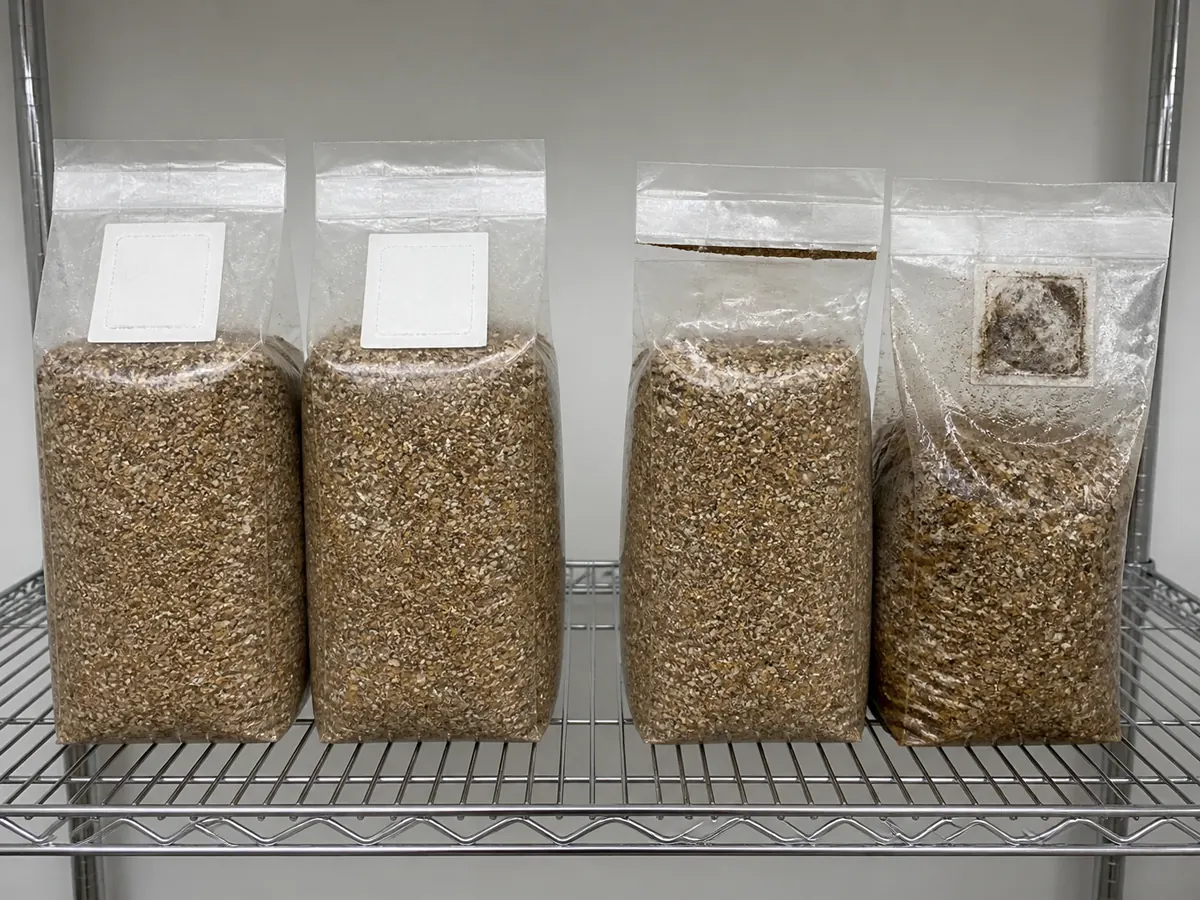
Move hot bags only as the process allows and cool them in a protected clean area.
Cooling gas contracts and draws room air toward the bag, which makes filter condition and seal integrity especially important.
Do not inoculate substrate that is still hot enough to injure the culture. Verify the internal or representative bag temperature with a clean method rather than judging only the outside plastic.
Clean the transfer surface, organize labeled bags and spawn, wash hands, wear appropriate clean clothing, and minimize unnecessary movement.
A still-air box or controlled clean workspace can reduce exposure, but no household area should be described as sterile.
Arrange tools, labels, spawn, and closures before opening a bag
Expose the treated substrate for the shortest practical time
Close the bag by the validated method, then distribute spawn without touching the filter
Do not tape over a failed filter and call the barrier restored
Do not add spawn before the substrate reaches the culture's safe temperature
Spawn rate should be weighed and recorded per bag. Uneven handfuls change both colonization speed and the amount of nutritious carrier entering each unit.
After inoculation, inspect closures and filters once more before moving the batch to incubation.
A clean transfer cannot protect a bag whose seam opens when the substrate is mixed.
Record transfer order and the person handling each bag. When failures cluster late in a session, fatigue, surface contamination, or spawn warming may be more informative than changing the formula.
What does the incubation pattern reveal?
Incubation should produce advancing species-normal mycelium through the intended block.
Inspect the same faces under steady light on dated intervals, because movement over time distinguishes a developing culture from a static pale patch.
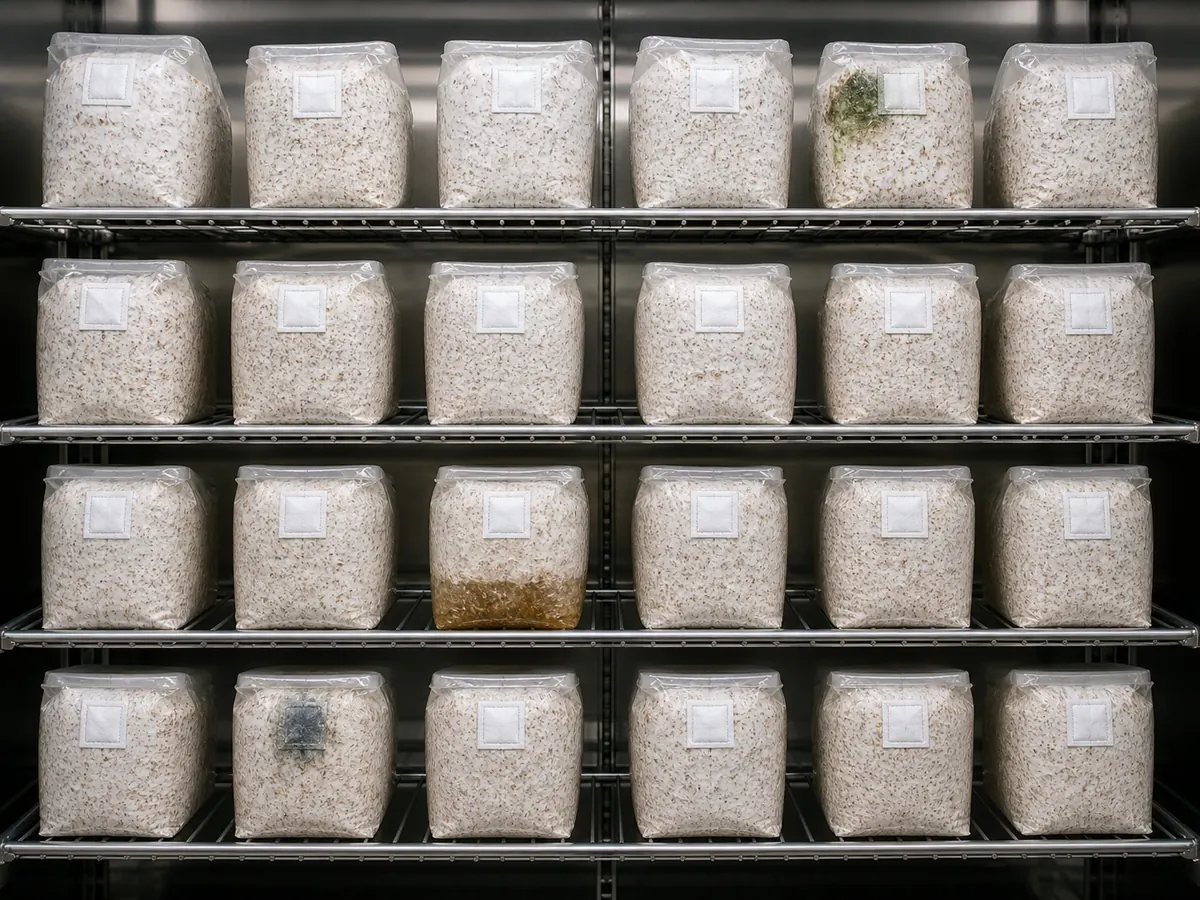
Read the batch before the individual bag. Repeated wet failures at the bottom suggest hydration, drainage, or load geometry, while several failures near filters point toward filter wetting, cooling air, or handling.
Random failures across otherwise comparable bags can implicate inconsistent closures, transfers, spawn distribution, or physical damage.
A whole load that stalls may point farther upstream to culture condition, formula, temperature, or treatment injury.
Keep control bags from a known formula in the same incubation room when testing a new batch. If both groups stall together, the shared environment deserves attention before the new ingredient is blamed.
| Pattern | Highest responsible stage to inspect | Evidence to compare |
|---|---|---|
| Wet uncolonized bottoms | Hydration, mixing, bag stance, heating | Fill masses, free water notes, vessel positions |
| Foreign growth beside filters | Bagging, cooling, filter handling | Filter contact, condensation, cooling location |
| Random isolated bags | Inoculation and closures | Transfer order, spawn lot, seal checks |
| Slow entire batch | Culture, formula, incubation temperature | Control culture, dry percentages, room and block readings |
| Healthy exterior with unfinished center | Bag density, treatment injury, spawn distribution | Cross-section only from a designated sacrificial sample |
Substrate temperature can exceed room temperature during active colonization.
Space bags as the method requires and monitor representative internal zones so a tightly packed rack does not create a hot center.
Isolate any bag with expanding green, black, pink, orange, or slimy growth while it remains sealed. Do not squeeze, smell, or open it in the incubation room to confirm a remote diagnosis.
Full white coverage may not be the final maturity gate.
Some species need additional consolidation, browning, or another documented developmental stage before exposure, so connect readiness to the culture record rather than a calendar alone.
How should a mature block be opened?
Confirm coherent colonization, species-specific maturity, intact barriers, and absence of foreign growth before fruiting. Fruiting conditions cannot repair a treatment or incubation failure.
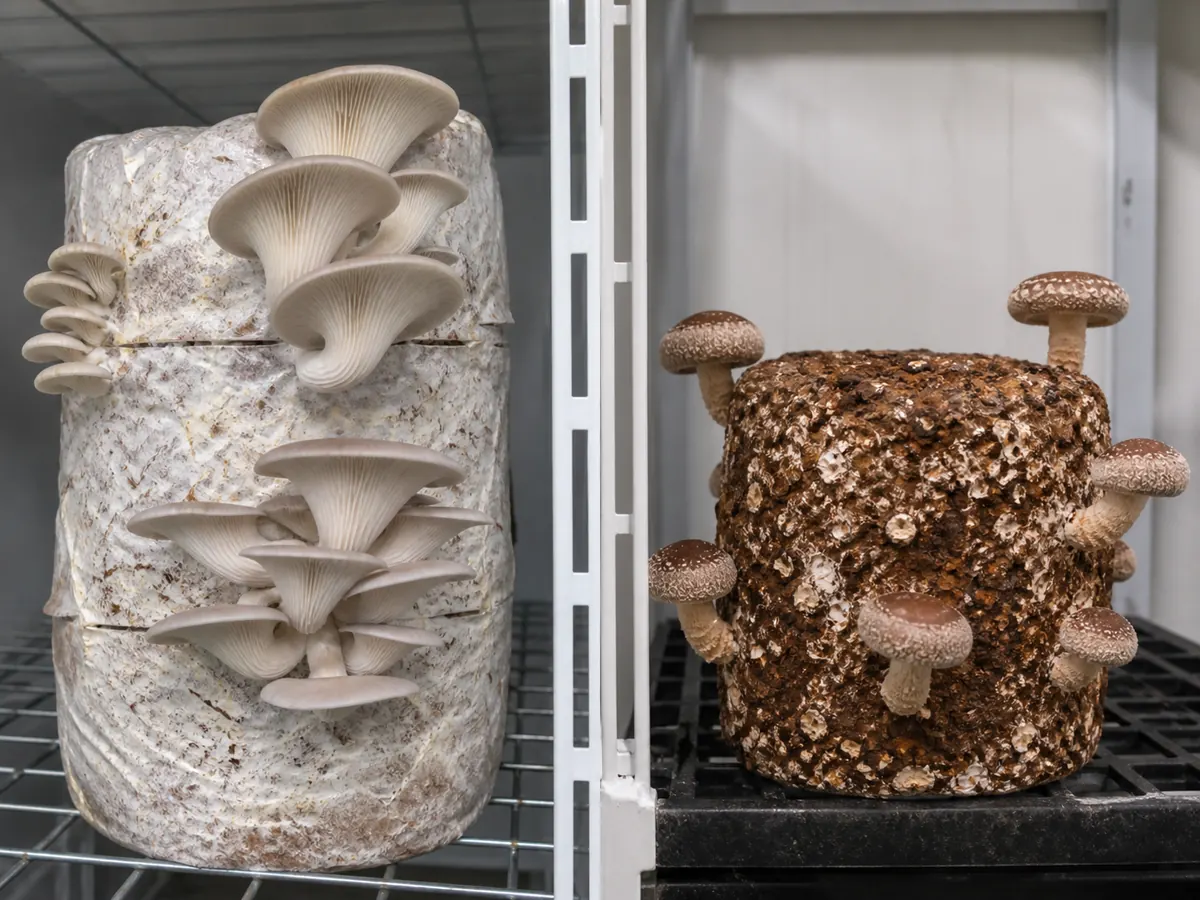
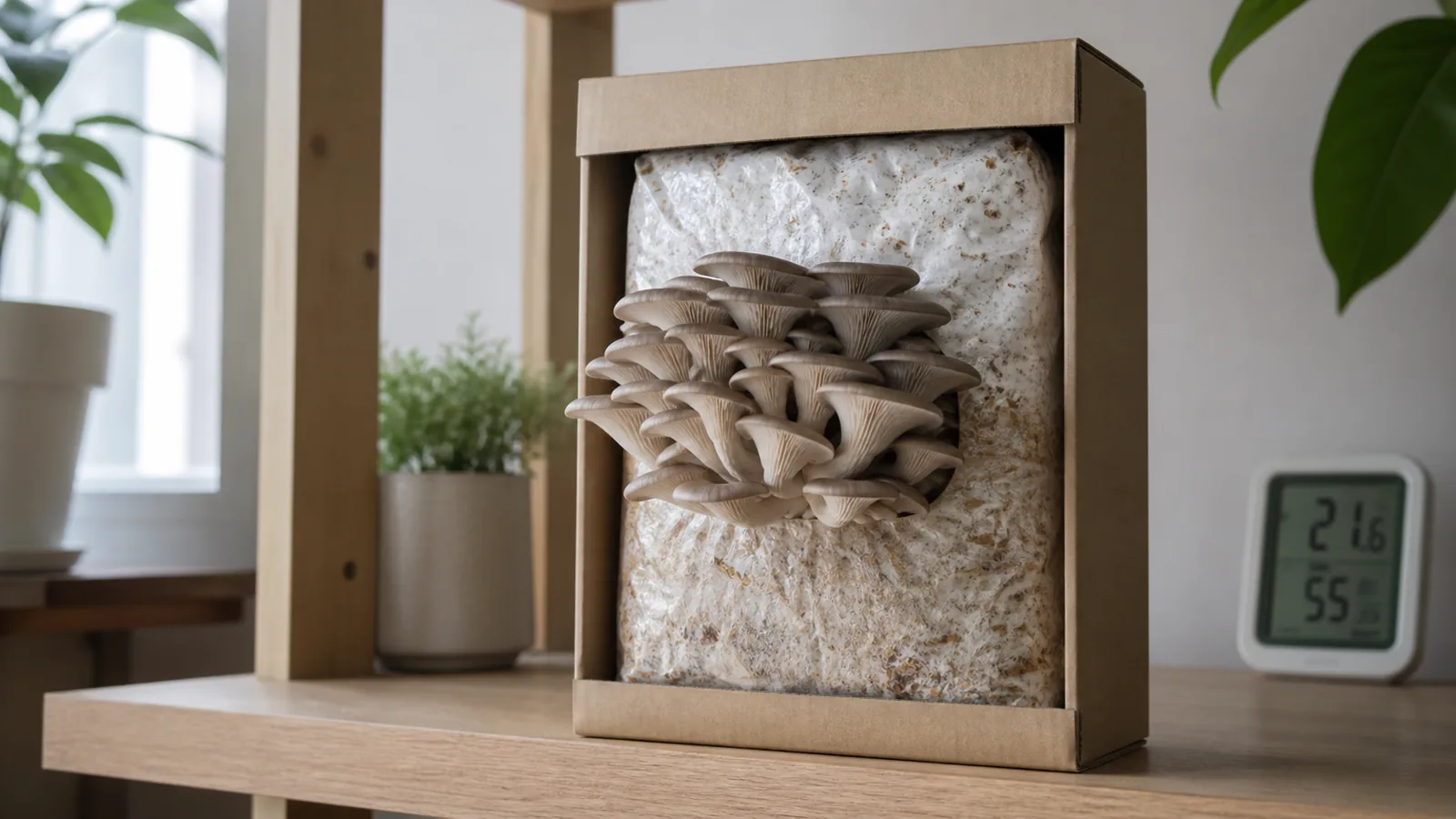
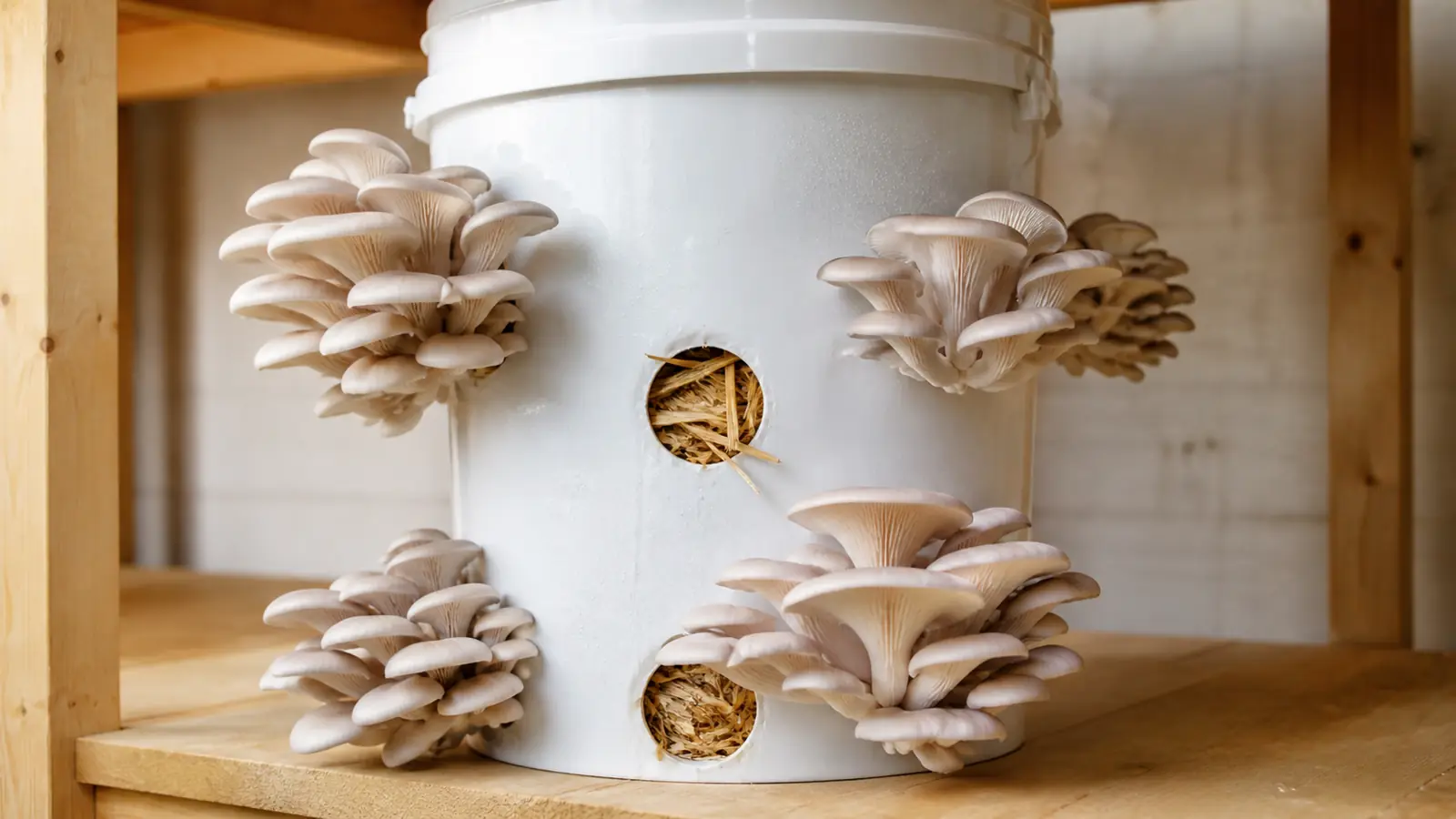
Side-fruiting oysters often use a compact slit or X that directs a cluster while the bag preserves block moisture.
Lion's mane also commonly uses a small opening, while mature shiitake blocks may follow a broader exposure and conditioning sequence.
More exposed area increases evaporation. Record the cut geometry, exposed surface, block mass, fruiting temperature, local humidity, replacement-air method, and dates so yield can be interpreted against actual water loss and environment.
After harvest, remove loose debris without excavating healthy substrate.
Rehydrate only a sound block by a documented species-specific method, because soaking a contaminated or structurally collapsed unit spreads a problem rather than restoring capacity.
Retire blocks that soften broadly, leak, smell foul without deliberate opening, or support expanding foreign growth. Clean spent substrate may enter an appropriate compost stream after plastic and labels are removed, while suspect material should remain contained under local disposal guidance.
Yield alone does not choose the next formula.
A rich batch with high harvest weight but frequent contamination, long labor, or many rejected bags may perform worse than a leaner repeatable batch.
Report biological efficiency only when dry substrate mass and usable fresh harvest were measured consistently. Comparing fresh yield against wet block mass answers a different question and should be labeled accordingly.
The strongest record closes the loop from dry matter to usable crop.
It shows which strain entered which formula, how every bag was hydrated and treated, where failures appeared, and whether the next change belongs to ingredients, process, transfer, incubation, or fruiting.
Note
Let the batch identify the next change | Fruiting is the final observation stage. Fix the earliest stage that owns a repeated pattern instead of asking humidity or misting to hide it.