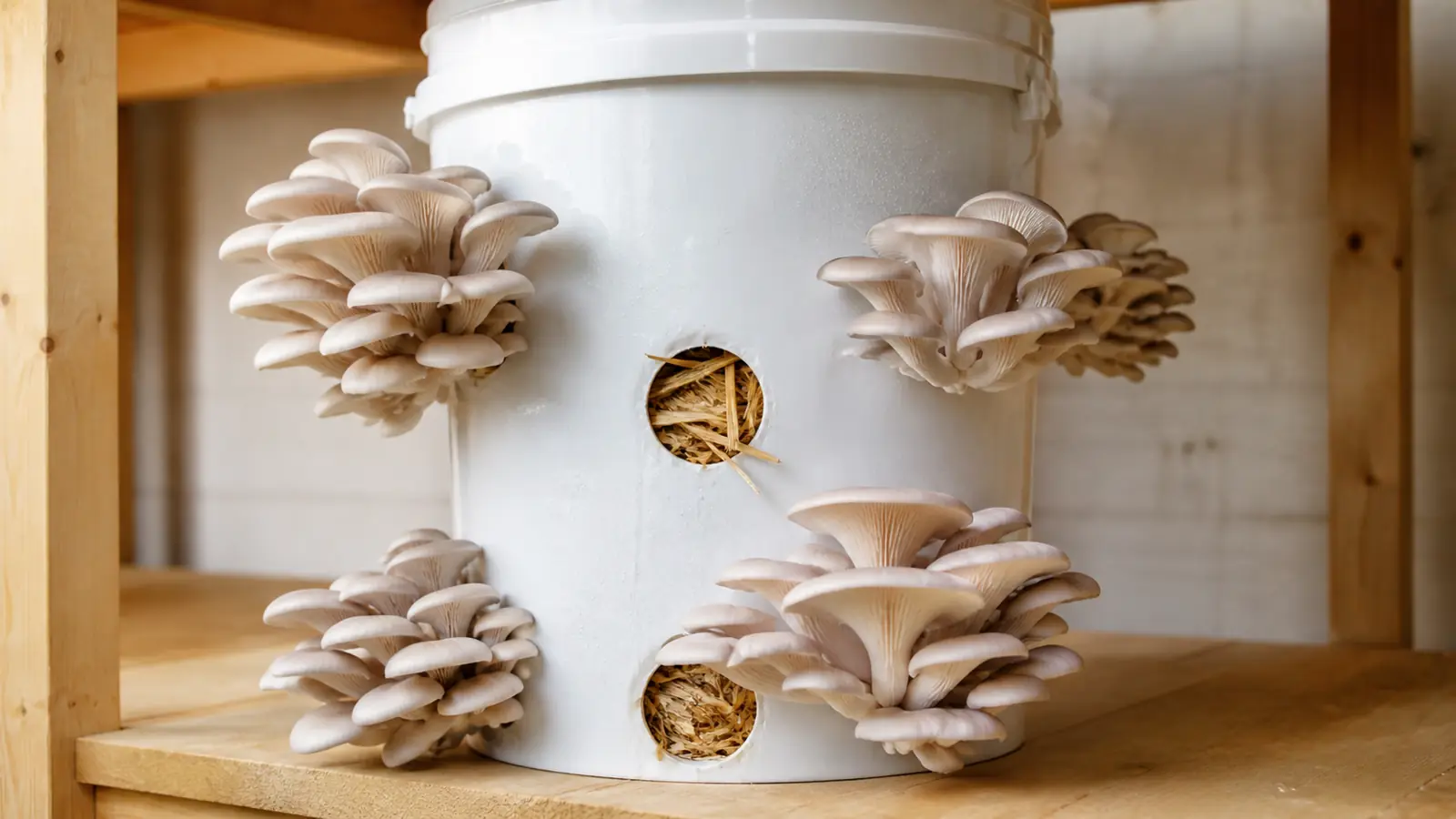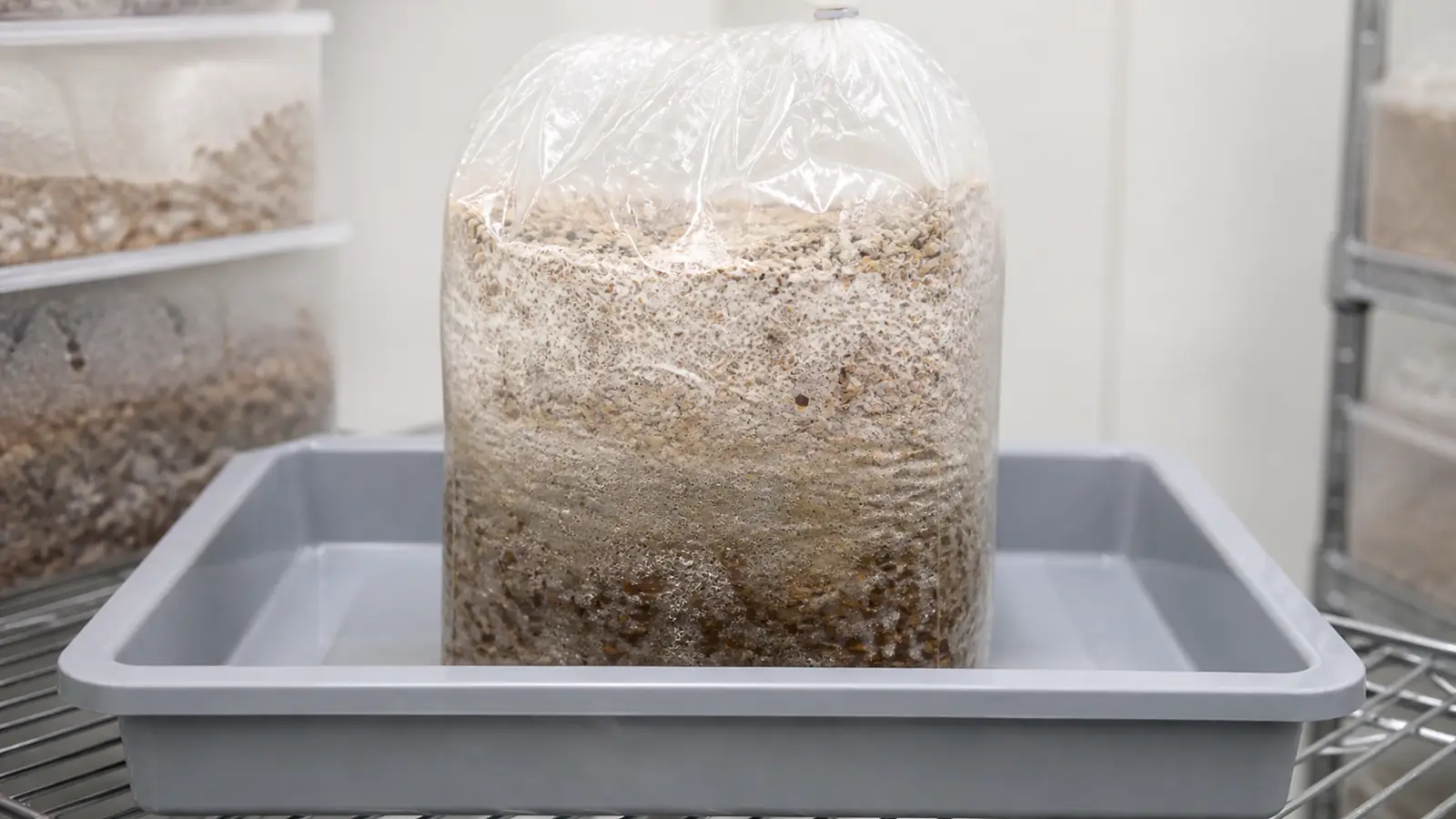
The nutrition arrives with the grain spawn, so a bulk substrate supplies water, volume and air rather than food. Mix to field capacity, meaning a hard squeeze yields a few drops and not a stream, and remember that coir keeps absorbing for about twenty minutes after it looks finished. Pasteurize plain coir and straw, because the surviving microbial community competes on your behalf, and sterilize anything supplemented with bran, because added nutrition lets a competitor win that fight. Spawn ratio buys speed rather than yield, one in five suits most home setups, and a bed of four to six inches avoids the anaerobic base that sours a deeper tub.
Two tubs went sour before they colonized, so the obvious next move is to change the recipe.
It is almost always the wrong move. The recipe is rarely what failed, and the thing that did fail has no number attached to it, which is why it goes unnoticed.
What is a bulk substrate actually for?
Water, volume and air rather than food.
The nutrition arrived with the grain. By the time spawn goes into a tub the mycelium has already eaten a jar of rye or millet, and what it needs next is somewhere to spread out and something to drink.
That single reframe settles a surprising number of arguments. If the bulk is not the meal, then comparing recipes on their nutritional content is comparing them on the one thing they were never doing.
There is one real exception worth naming immediately.
Supplemented sawdust for wood-loving species genuinely is food, which is why it behaves so differently from coir and why the treatment section below turns on it.
Growing MushroomsWhat Does a Mushroom Farm Actually Cost to Start?How wet should it be?
At field capacity. That is a texture rather than a percentage, which is why the test below matters more than any number would.
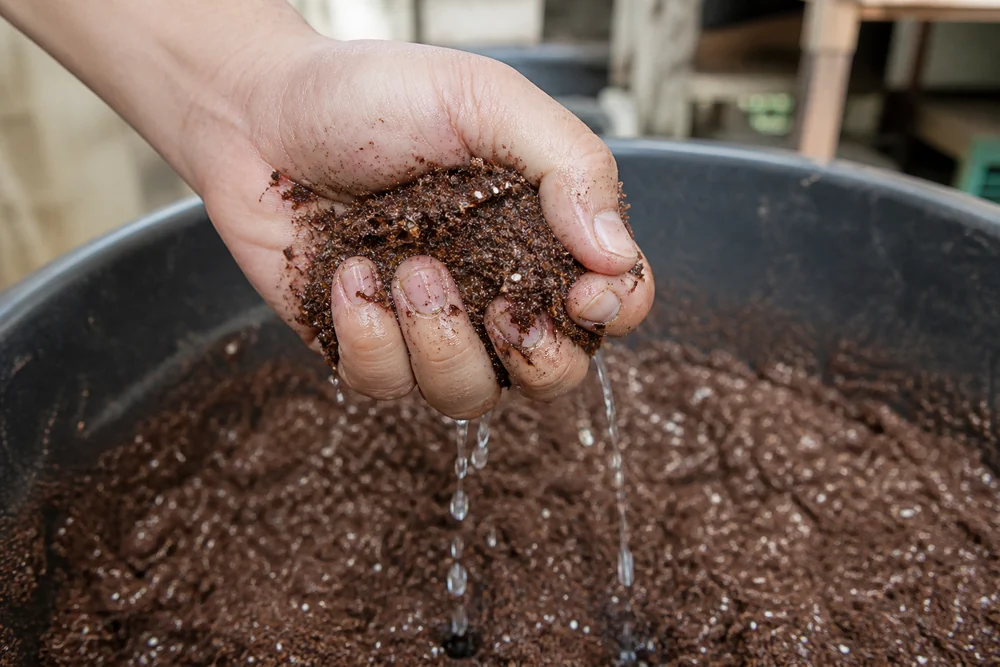
Squeeze a fistful as hard as you can and a few drops should run out, no more.
- The test
- A hard squeeze yields a few drops, not a trickle.
- Too wet
- Air is displaced, the base goes anaerobic and the mix smells sour.
- Too dry
- Colonisation stalls without necessarily contaminating.
- The correction
- Add water by the cup and mix fully between additions.
- The trap
- Coir keeps absorbing for twenty minutes after it looks done.
Correcting dry is easy and correcting wet is not. Water goes in by the cup with full mixing between additions, while a tub that is already too wet has to be spread out and air-dried.
The delay is what catches people out.
Coir absorbs slowly, so a mix that squeezes dry immediately after hydrating is often perfect half an hour later and soaked if you kept adding in the meantime.
Two habits remove most water trouble before it starts:
- Hydrate, wait twenty minutes, then test, rather than testing while you pour.
- Mix the whole batch between additions, because a dry pocket and a wet pocket average out on paper and never in a tub.
Temperature is the variable nobody mentions alongside water, and it interacts with it. A mix at field capacity in a cold room behaves like a wetter mix, because evaporation from the surface effectively stops and the moisture stays where it was.
Which materials are worth using?
Four materials cover almost everything. They differ on properties rather than on quality.
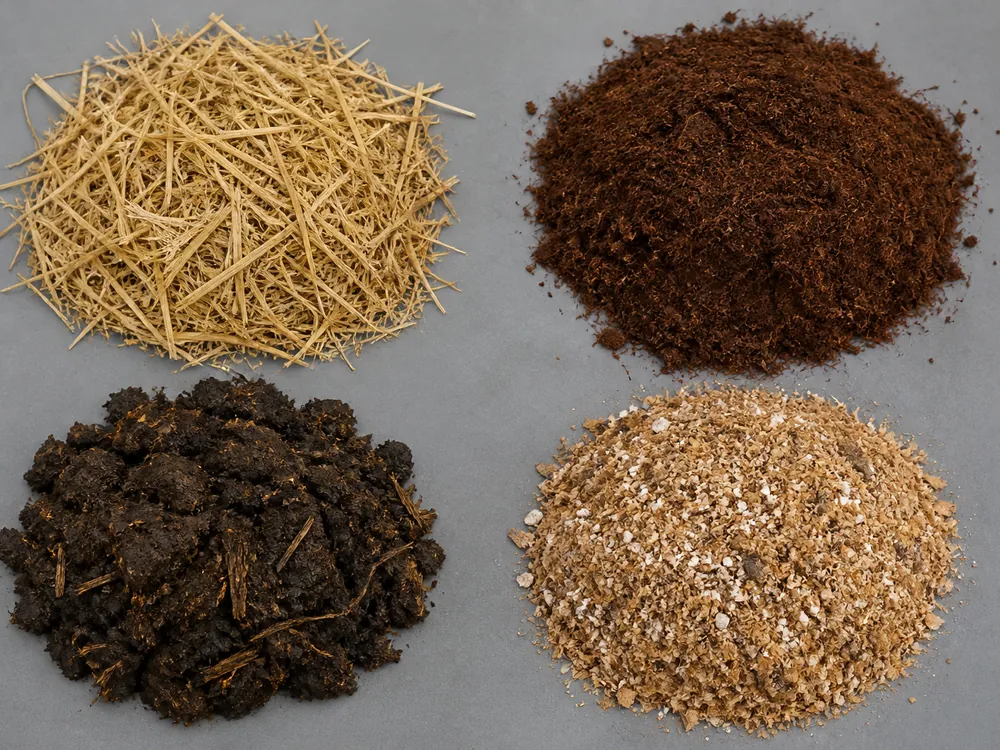
Judge them on four properties rather than on reputation.
| Material | Holds water | Structure | Nutrition | Treatment |
|---|---|---|---|---|
| Coir and vermiculite | Excellent | Poor alone | Almost none | Pasteurize |
| Straw beds | Good | Excellent | Low | Pasteurize |
| Manure blend | Very good | Moderate | High | Pasteurize carefully |
| Supplemented sawdust | Good | Good | High | Sterilize |
Coir is the default for a reason that has nothing to do with yield. It hydrates predictably, holds water for weeks and offers a competitor almost nothing to eat, which makes it forgiving of the mistakes a beginner will actually make.
Straw brings air instead, since its hollow stems keep a bed open in a way coir cannot manage alone.
Tip
Vermiculite is not a substrate and does not need to be treated as one. It is there to hold water and keep the mix loose, and a couple of quarts to a block of coir does that job without anybody needing a ratio debate.
Manure blends sit at the productive end and the risky end at once. They raise yields for the species that want them and hand a competitor a much better meal, which means every other decision on this page has to be tighter.
Should you pasteurize or sterilize?
Supplementation decides it, not preference.
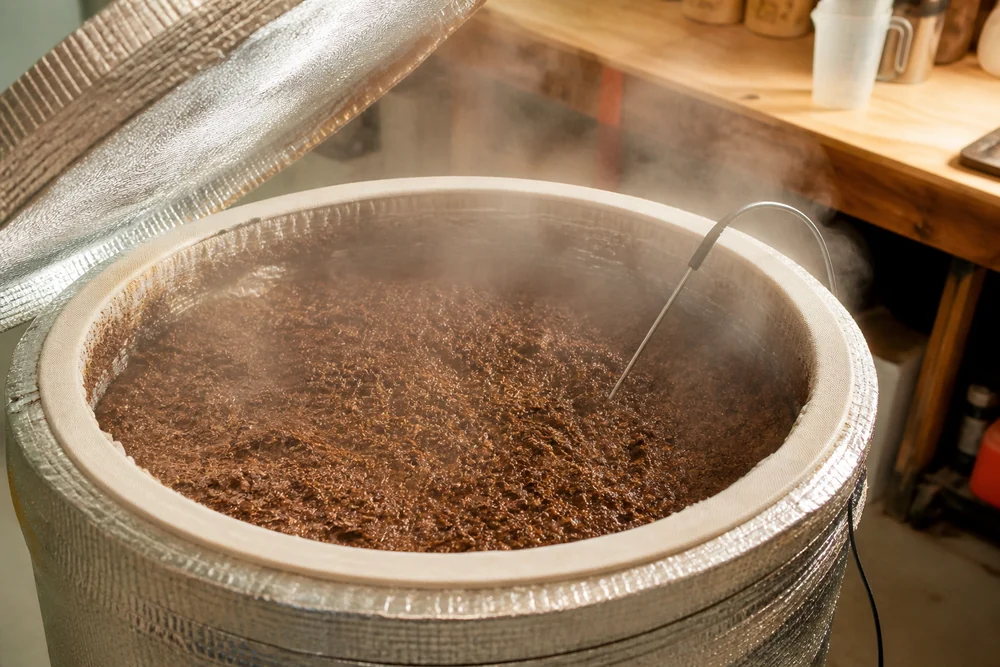
The two treatments do different things rather than the same thing at different strengths.
Pasteurization knocks the population back and leaves survivors, while sterilization removes essentially everything and leaves an empty field.
Key takeaway
An empty field belongs to whoever arrives first. That is fine when the first arrival is your spawn in a sealed bag, and it is a disaster when the substrate is open to a kitchen for ten minutes during loading.
Pasteurized coir carries a surviving community that competes against newcomers on your behalf. It is a weaker defence than sterility in theory and a stronger one in practice, because most home setups leak.
Then add bran, and everything changes.
A supplemented substrate holds nutrition a mold can use immediately, the surviving community stops being a match for what arrives, and pasteurization is no longer enough.
Pasteurize plain coir, straw and vermiculite mixes
Sterilize anything with bran, flour or grain added
Hold pasteurization temperature rather than boiling hard
Sterilize coir in a pressure cooker expecting an improvement
Supplement a substrate you plan to pasteurize
Judge treatment by the recipe's popularity
That single question is easier to answer material by material, and the four from the table above sort cleanly:
- Coir, straw and vermiculite hold almost nothing a competitor can use quickly, so pasteurization is enough.
- Manure blends hold more, so pasteurization has to be done properly rather than approximately.
- Anything with bran or flour in it holds a great deal, so only sterilization is honest.
- Grain itself is the extreme case, which is why it is always sterilized and never pasteurized.
The rule reduces to one question. If a competitor could eat this without help, sterilize it; if it could not, pasteurize it and keep the surviving community as an ally.
One practical note about equipment before the ratio question. Pasteurization needs a vessel that can hold a temperature for a couple of hours rather than one that can reach a high one, which is why an insulated tub and a heat source often beat a pan on a stove.
Growing MushroomsHow Do Mushroom Sawdust Blocks Work from Mix to Fruit?What spawn ratio actually buys you
Speed. That is the whole answer, and it explains every other part of the ratio argument.

Common ratios run from about one part grain spawn in four up to one in ten.
Every point along that line is a bet about how fast your mycelium can cover the surface before something else does.
More spawn means more starting points, less distance between them, and a faster join-up. A tub at one in four can close over in days where one in ten takes a fortnight, and a fortnight is a long time to stay lucky.
That last line matters more than the ratio itself, because spawn that has sat for two months is slower regardless of quantity and doubling a tired culture buys far less speed than the arithmetic suggests.
How much substrate do you need?
Container volume sets it. The temptation is always to make too much.
Aim for a bed of roughly four to six inches. That is deep enough to hold moisture through a flush and shallow enough that the base does not go anaerobic under its own weight.
Warning
Deeper is not better. A ten inch bed traps metabolic heat at the base, and the combination of heat and compaction is exactly the condition that turns a colonizing tub sour from underneath.
Multiply the tub's footprint by the depth you want and you have your volume. A standard sixty quart tub run at five inches wants roughly thirty to thirty five quarts of finished substrate, which is one large block of coir plus spawn.
Round down rather than up when you are unsure, since substrate left over is a mild annoyance and a bed pressed too deep is a lost tub.
Batch size has a second effect people underestimate. A large batch takes longer to load, and every extra minute the substrate spends open is another minute for something airborne to land in it.
Growing MushroomsHow Do You Build an Outdoor Mushroom Bed That Lasts?How do you mix and load a tub?
Break, mix, load, level. The errors live in the first and the last step.
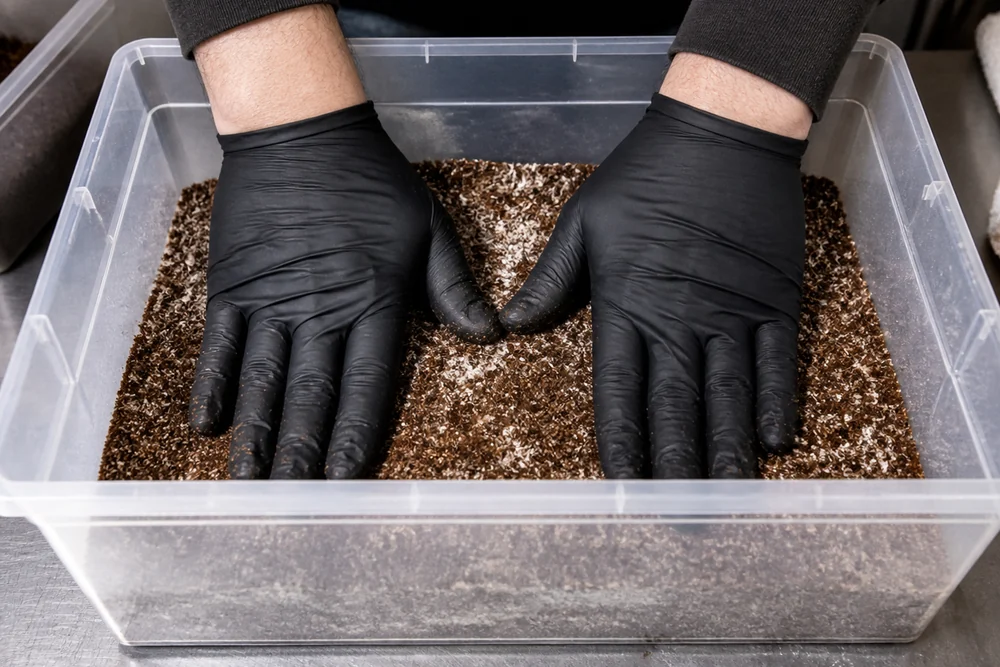
Break the spawn up completely before it meets the substrate. Grain that goes in as clumps colonizes as clumps, and the gaps between them are where a competitor gets its opening.
Levelling and compacting feel like the same action and are not.
A flat surface pins evenly, and a pressed one pins badly, because compacting squeezes out the air the mycelium needs at exactly the layer where it fruits.
Timing the load matters as much as the technique. Substrate that has cooled fully is safe to work with and substrate that is still warm is not, because warm material is still driving air currents out of itself and pulling room air back in as it cools.
Handling is the other half of that timing point. Clean hands are fine and clean gloves are better, though the real benefit of gloves is that they make people conscious of what they are touching.
That consciousness is most of what sterile technique amounts to at this scale.
Why do bulk substrates fail?
Water first, treatment second, ratio third. That order holds across almost every failed tub I have seen described.
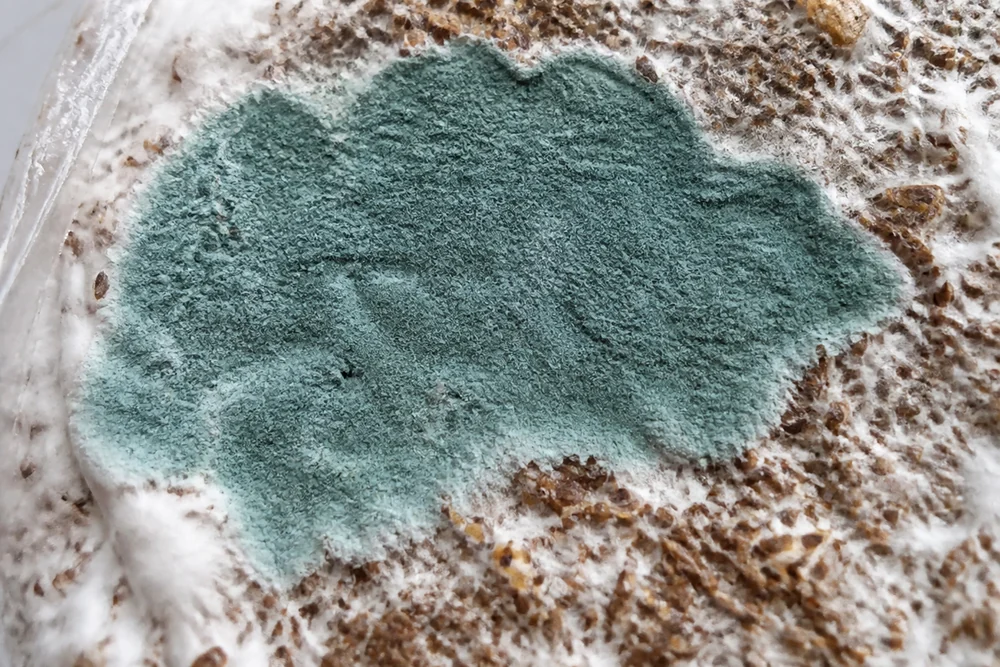
Excess water is the most common single cause and the least often blamed. It produces a sour smell rather than a visible mold, so growers watching for green miss it entirely until the tub is beyond saving.
Sour and moldy are different diagnoses. A sour smell with no visible growth points at anaerobic conditions at the base, while green mold arriving after slow colonization points at a race your spawn lost.
Change three variables at once after a failure
Assume every failure is airborne contamination
Reuse a failed substrate after treating it again
Smell the tub before looking at it
Note how long colonization had taken when the problem showed
Change one thing on the next run
Three patterns cover nearly every failed tub, and they are distinguishable by timing alone:
- Sour smell, no visible growth, base wetter than the top. That is water.
- Green appearing after unusually slow colonization. That is a lost race, usually a ratio or a spawn problem.
- Growth appearing everywhere within days of loading. That is under-treatment.
Under-treatment produces a third pattern worth recognizing. It shows early, often within days, and it shows everywhere at once rather than from a single point, because the competitor was already distributed through the material when you loaded it.
One failure is worth separating out because it is not really a failure. A tub that colonizes perfectly and then refuses to pin is an environment problem rather than a substrate one, and nothing on this page will fix it.
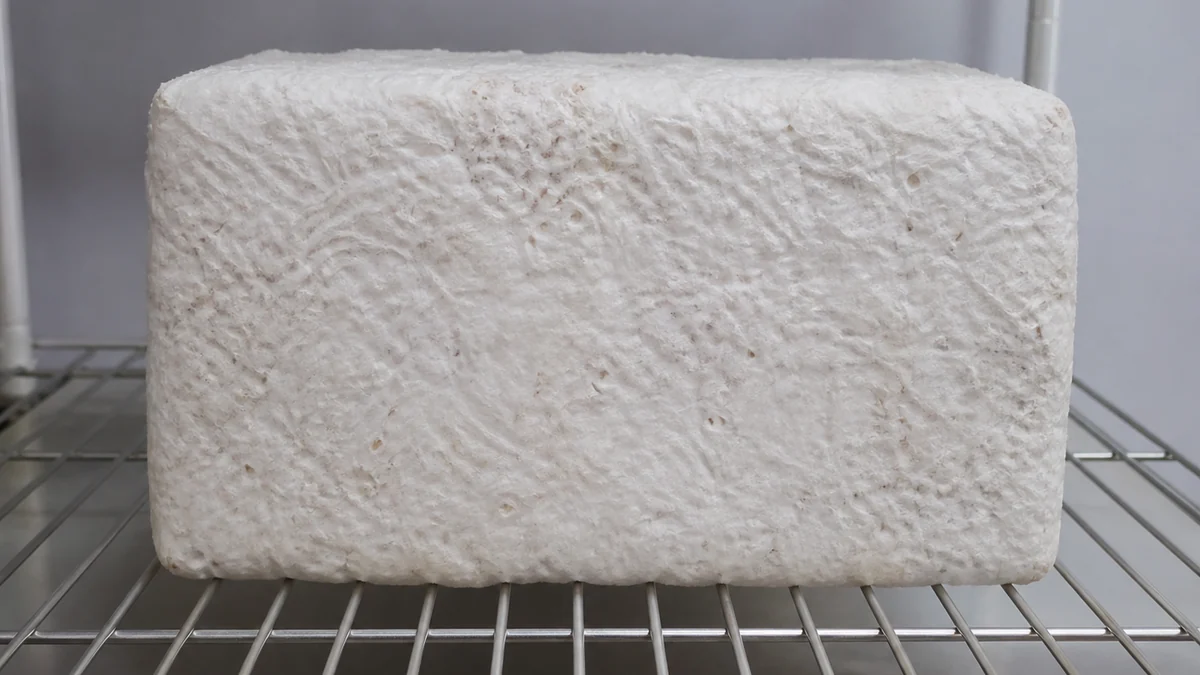
What does a finished block look like?
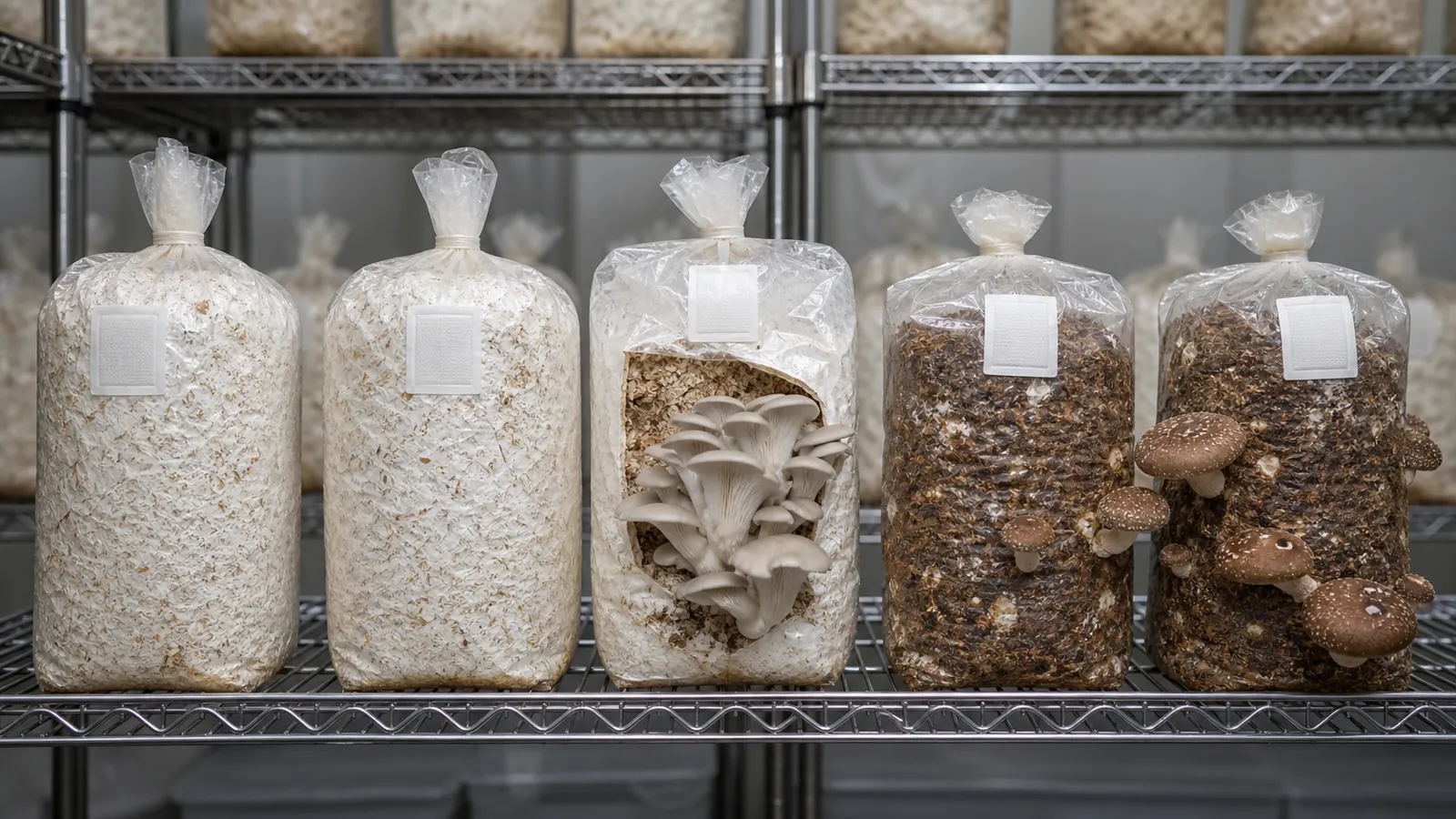
Solid white, with no substrate color showing through anywhere.
Oyster species are the fastest of the common bulk crops and the most forgiving of a mediocre mix, which is why almost every beginner guide starts there.
Most bulk species take one to three weeks depending on ratio, species and temperature. The range is wide because those three multiply rather than add, which is the same reason the ratio section refused to give one number.
The temptation at that point is to open the tub immediately.
Waiting a few days past apparent completion is usually worth it, because the mycelium consolidates rather than merely spreading and a consolidated block resists what arrives once the tub is opened.
Colonization time is also worth logging rather than remembering. Two tubs from the same batch that finish four days apart are telling you something about temperature or distribution that no single observation can.
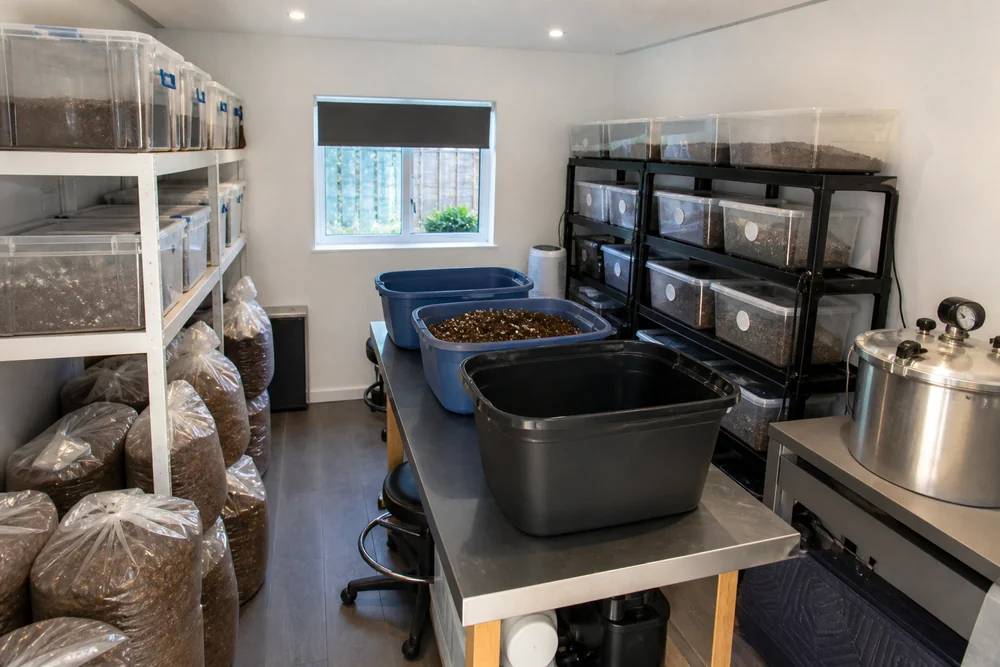
A finished block is also the point at which the kitchen becomes relevant again, since a heavy first flush is more mushrooms than most households eat fresh and drying the surplus is the usual answer.
From here the questions stop being substrate questions. Getting a colonized block to pin and fruit belongs to the fruiting chamber, and caps that mark after they form are a watering problem rather than a substrate one.
Sources & References
- Mushroom Substrate Preparation and Spawning (Penn State Extension) University extension material used for the relationship between substrate treatment, surviving microbial populations and competitor pressure, and for the principle that selectivity rather than sterility is what protects a pasteurized substrate.
- Cornell Small Farms specialty mushroom production resources Extension programme material used for supplemented sawdust practice, for the requirement to sterilize supplemented substrates rather than pasteurize them, and for typical colonization periods on bulk and block systems.
- Oyster Mushroom Cultivation, substrate preparation (FAO / MushWorld handbook) Reference handbook used for moisture content targets around field capacity, for the role of straw structure in maintaining air exchange within a bed, and for the effect of excessive bed depth on temperature and anaerobic conditions at the base.