Slow colonization is a pattern, not a calendar date. Compare the grow with its species and method, mark the advancing edge, measure substrate temperature, inspect moisture and spawn distribution, then change only the condition supported by evidence.
Slow mushroom colonization is not defined by one number of days. The useful question is whether clean mycelium is still gaining territory at a rate that fits the species, substrate, container, and temperature, because a shiitake log and an oyster-straw bag operate on entirely different clocks.
Before warming, watering, shaking, or opening anything, photograph every visible face and mark the clean growth edge. That record separates a culture that is moving steadily from one that has stopped, retreated, overheated, or met biological competition.
Is it actually slow, or still on schedule?
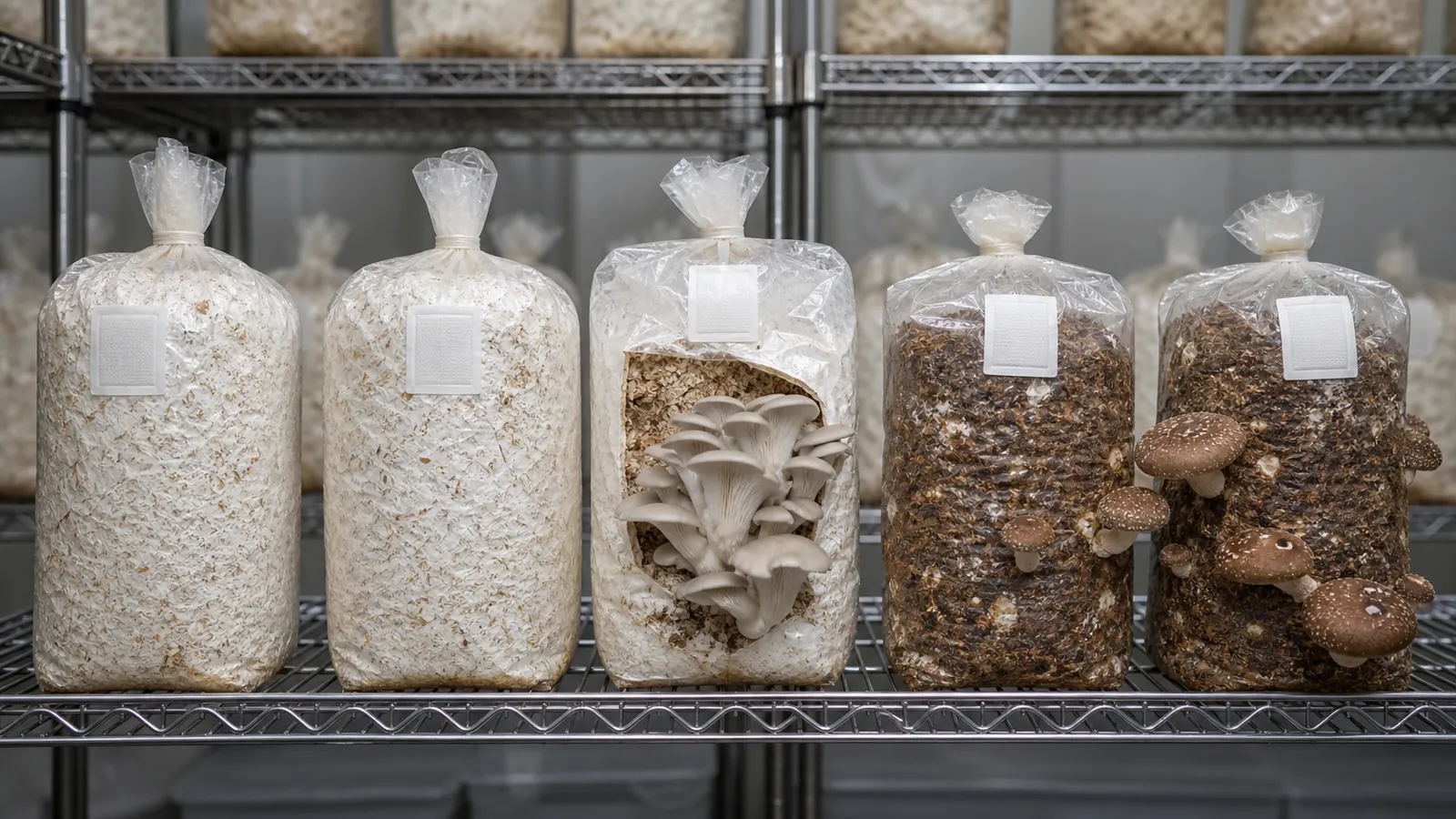
These are method examples, not interchangeable deadlines.
Start with the culture supplier's expected range for the exact strain, substrate, inoculation rate, container size, and incubation temperature, then compare your observations with that range.
Record when inoculation actually finished rather than when substrate preparation began. A bag that spent a day cooling or a log that waited several days before sealing should not borrow that earlier date to make the spawn run look longer.
If the supplier gives a range, note the conditions attached to it. A lower spawn rate, cooler room, denser block, or different container size can place a clean batch near the slow end without making it defective.
A fast oyster strain on pasteurized straw may deserve investigation when white growth barely moves for a week.
A dense hardwood log with a compatible shiitake strain may show little surface evidence while internal colonization continues, so opening or soaking it early would answer the wrong question.
| Grow system | Useful early evidence | Timing mistake to avoid |
|---|---|---|
| Oyster straw bag or bucket | White islands expand from many spawn points and begin connecting | Comparing it with a colonized kit that arrived almost ready to fruit |
| Supplemented sawdust block | Growth advances through a dense uniform mass without a hot center | Assuming room air equals substrate temperature |
| Bulk tub | Clean spawn reaches outward through prepared substrate across several zones | Treating surface whiteness as proof that the center is complete |
| Inoculated hardwood log | Spawn sites remain sealed, bolt moisture is protected, and the log follows its seasonal range | Expecting bag-like visibility or speed |
The useful comparison is the growth pattern inside the chosen system, not the fastest number in the table. Record that system before deciding that time alone proves a stall.
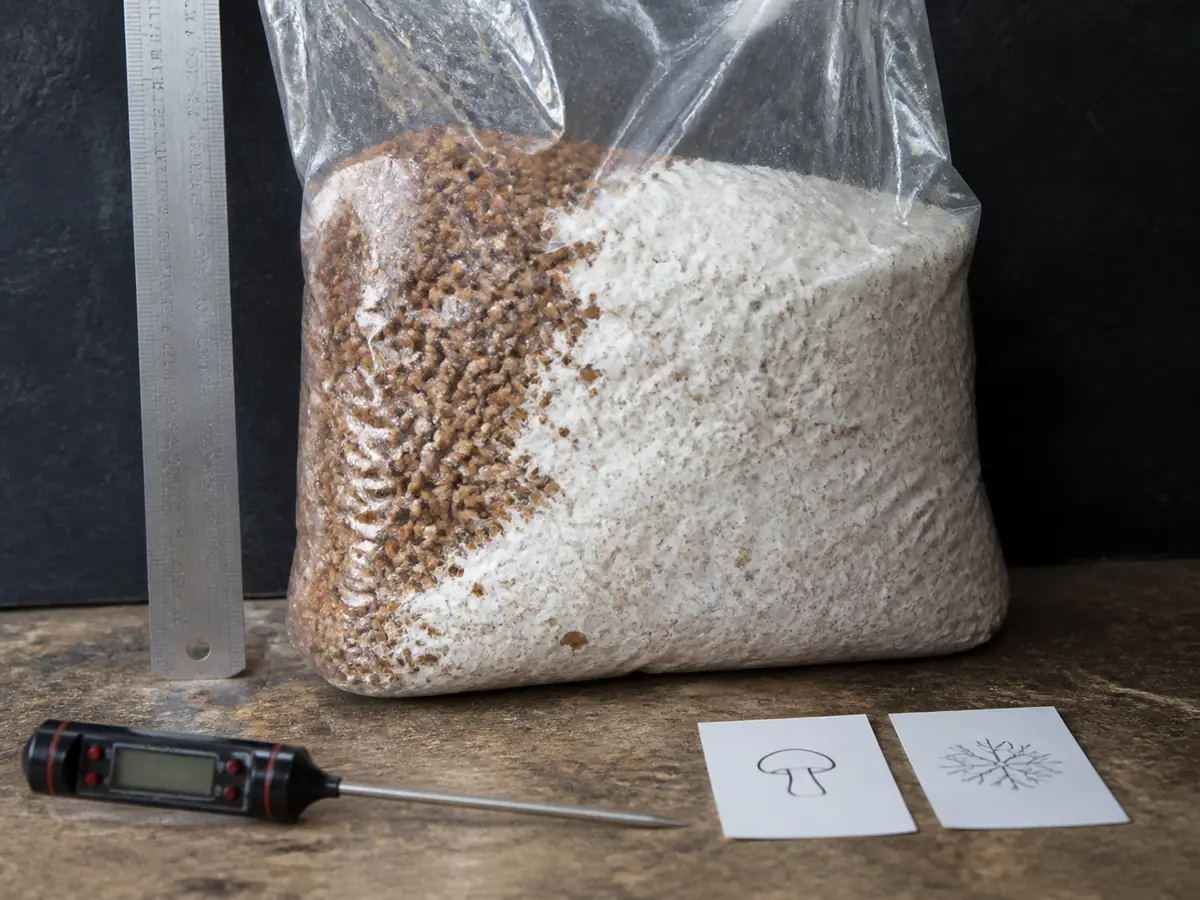
Where is the white growth still advancing?
Look for direction before estimating a percentage.
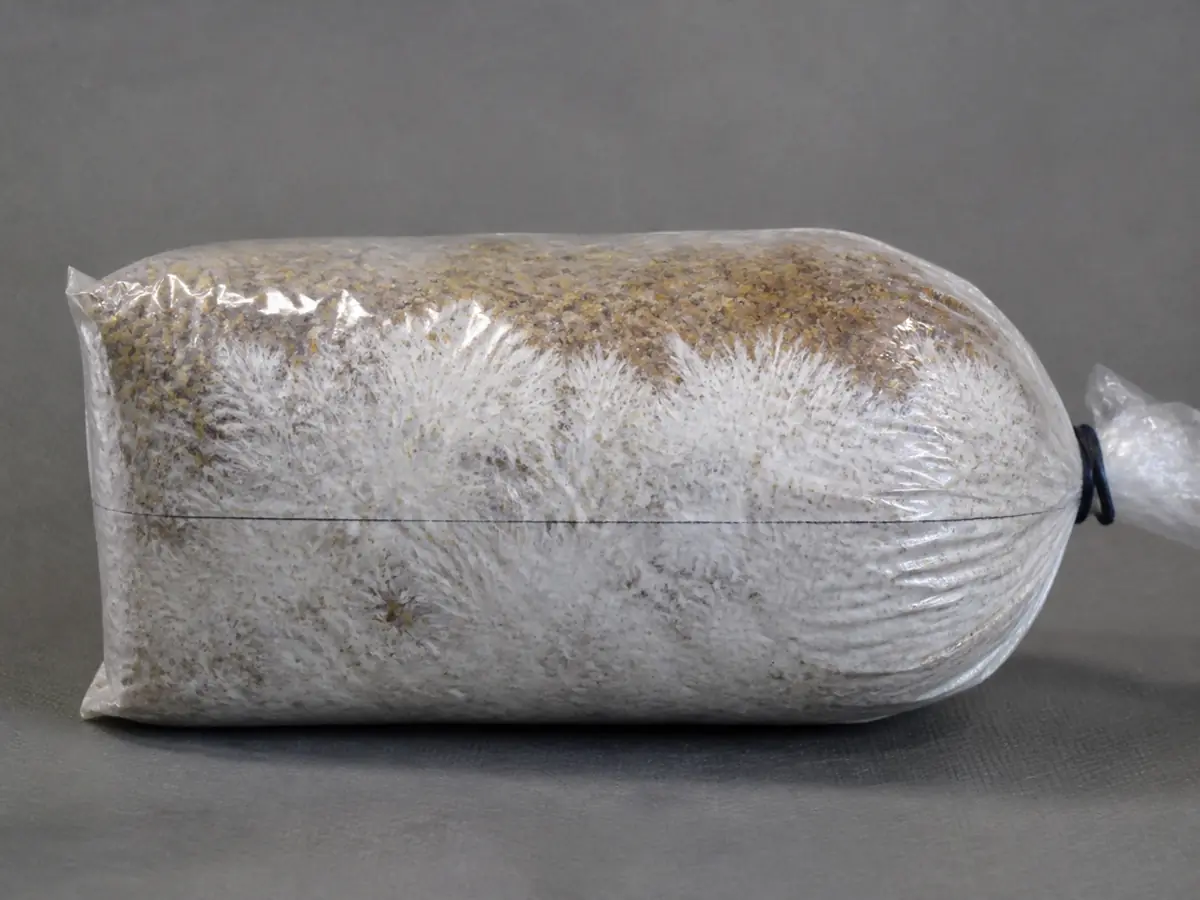
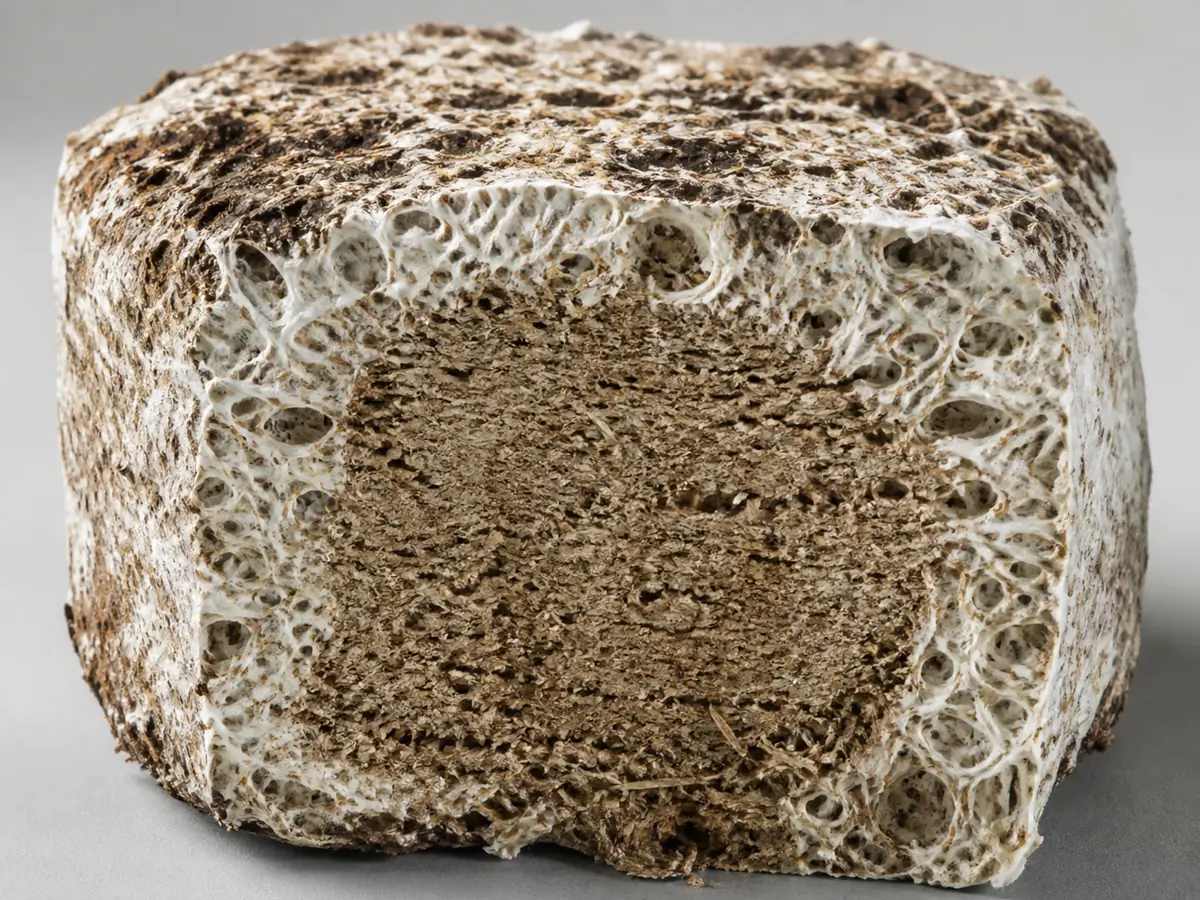
Healthy mycelium usually expands away from known spawn points, forming new fine threads and denser white zones that connect over time.
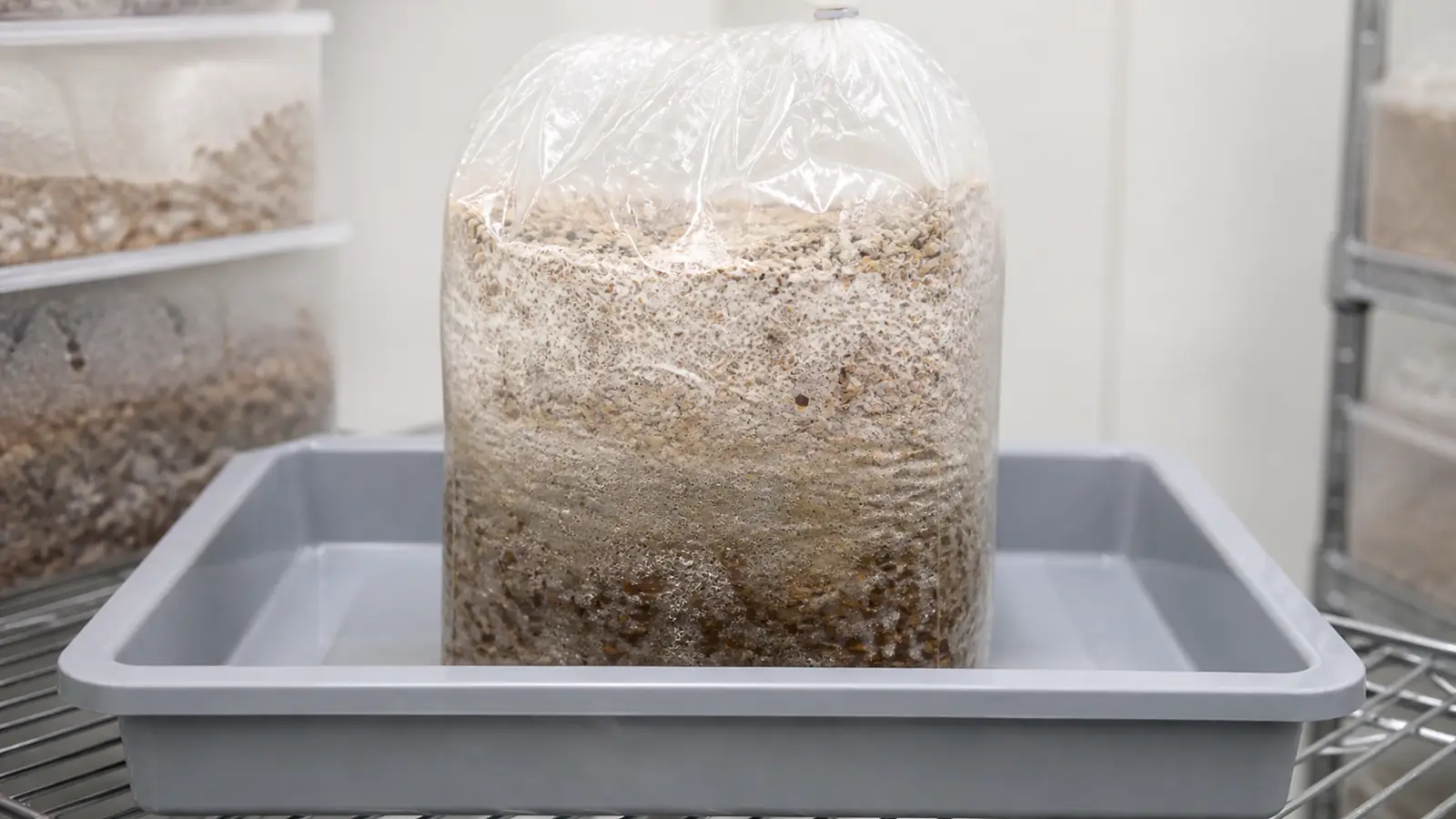
Mark the outer edge on the container with the date, then leave the culture closed and photograph it from the same angle several days later. Repeat this on more than one face because a warm shelf wall, compressed corner, dry top, or wet base can create different rates inside one container.
Note
White color alone is not proof of the intended mushroom. Judge whether growth began at known spawn, advances with the strain's expected texture, and remains free of unusual color, slime, odor, insects, or retreating margins.
A stationary outer edge with new density behind it can mean the mycelium is consolidating rather than expanding visibly. A sharp border that stops beside a wet or differently colored region suggests a physical or biological barrier and deserves isolation before further handling.
Read the checks as one pattern rather than treating a single white patch as a pass. A clean advancing edge should satisfy origin, direction, texture, and stability together.
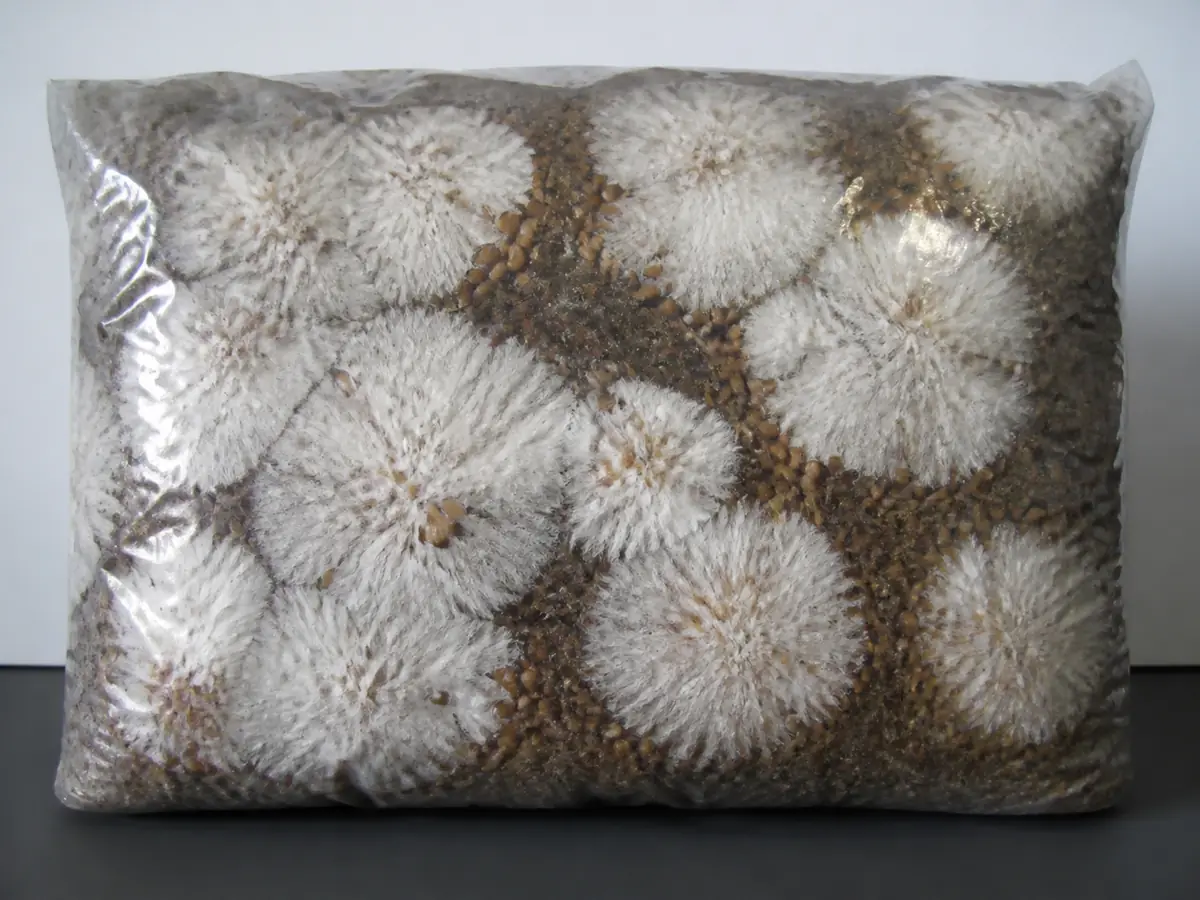
Is the substrate core too hot or too cold?
Mycelium releases heat while consuming substrate.
Cornell notes that the center of a large supplemented bag can run 10 to 15 F warmer than the surrounding air, which means a comfortable room can conceal a damaging core.
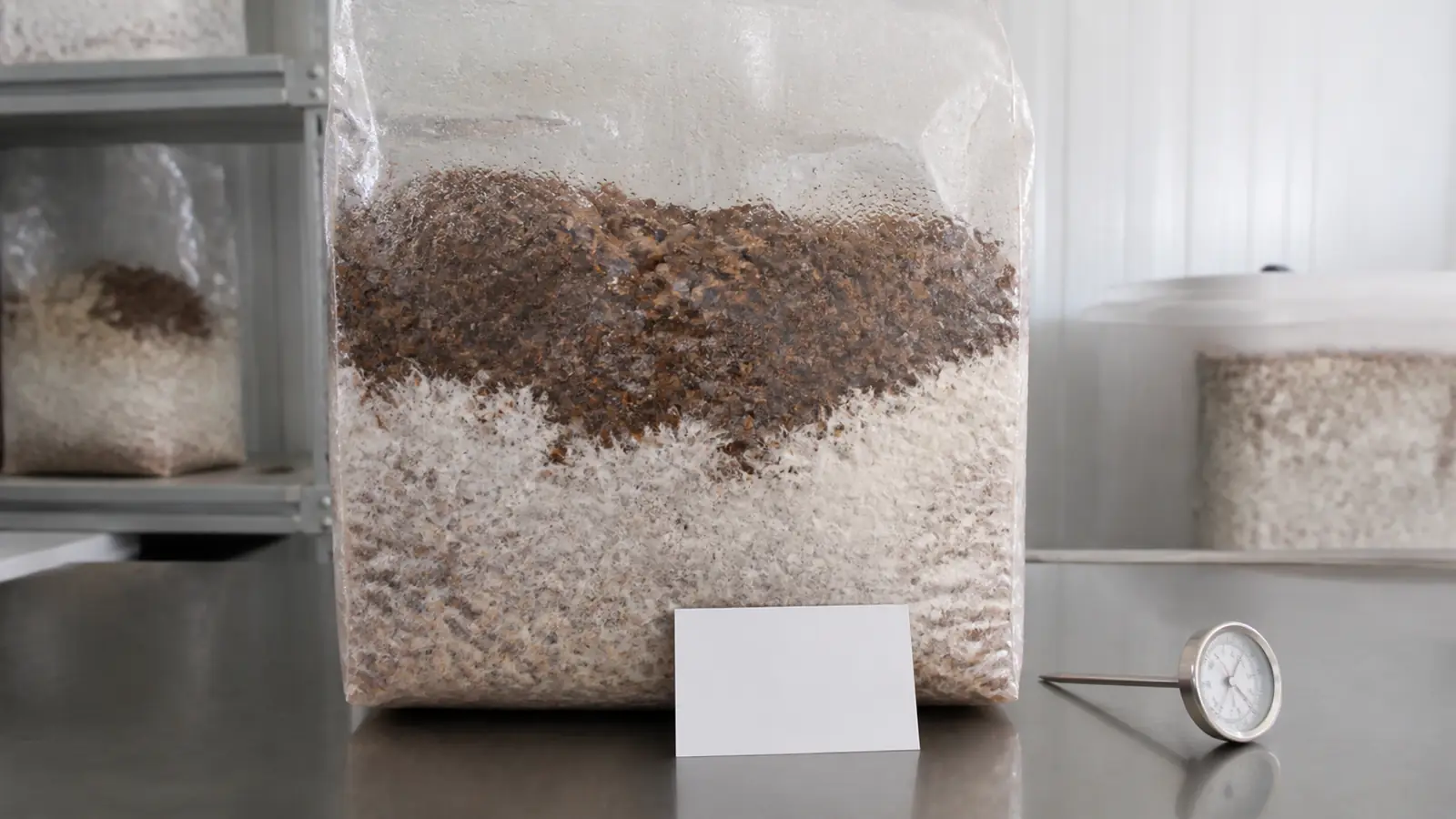
Measure the substrate core through a cleaned probe port or the method's intended temperature access point rather than repeatedly puncturing the container. Compare the core with room air at the same time and record both, since the difference can reveal active metabolism, poor spacing, or a mass too large to shed heat.
Cold conditions below the strain's useful range slow enzyme activity and extend the run. Raising the room aggressively is risky because the center may warm faster than the air, especially when containers touch each other or sit on an insulated surface.
- Space bags or blocks so air can move around each one.
- Move them away from direct sun, heaters, and warm appliance surfaces.
- Confirm the supplier's range before changing the room setpoint.
- Recheck the core after one change rather than stacking several adjustments.
Persistent excessive heat with weak or discolored growth can also indicate competing microbes using the substrate. Treat unexplained heat as diagnostic evidence, not as proof that the mushroom is thriving.

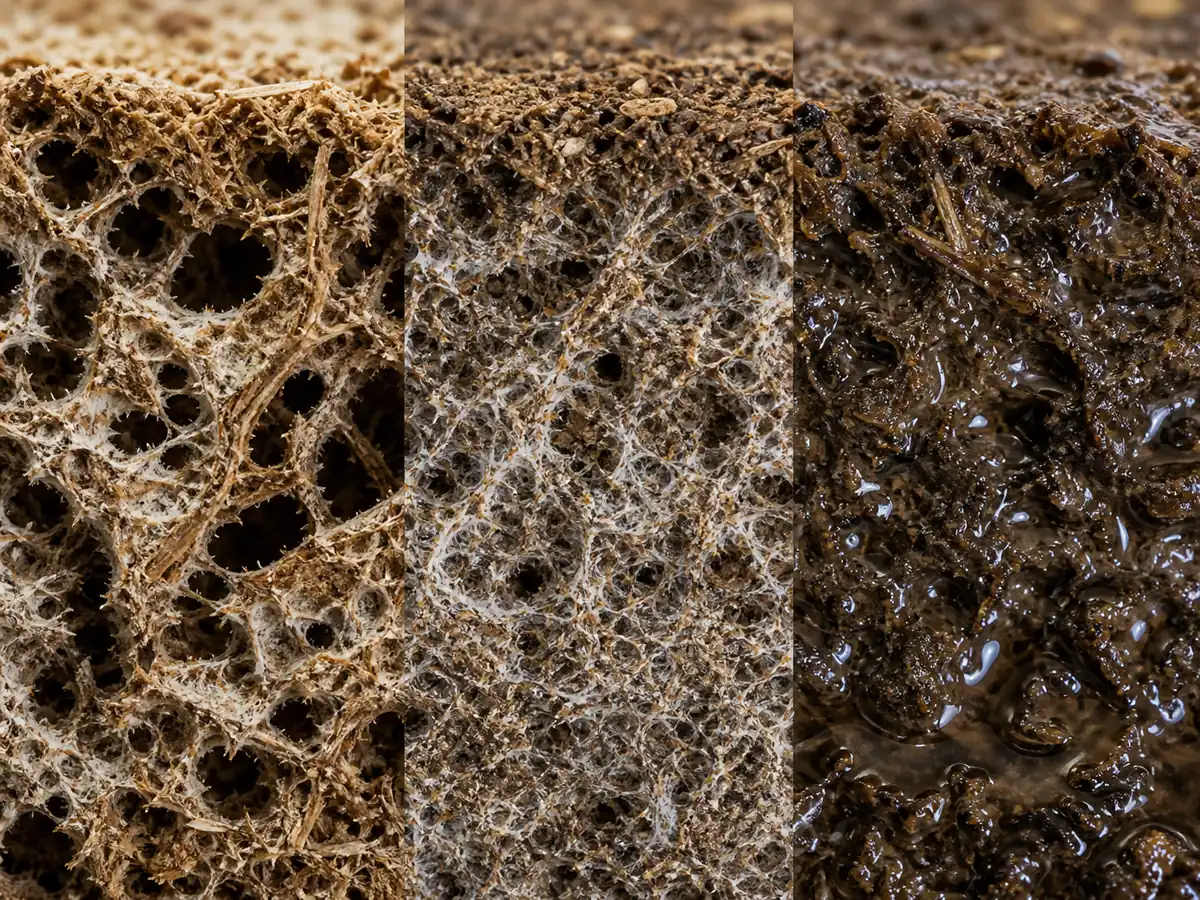
Is the substrate too wet or too dry?
Mycelium needs available water, but it also needs pore space.
Substrate that is too dry cannot support continuous expansion, while free water displaces air and creates conditions that favor bacterial growth. In a sealed bag or block, condensation shows that temperature and water vapor differ across the plastic.
It does not by itself prove correct hydration, because both a healthy warm block and a stressed wet block can fog the container.
- Dry pattern
- Substrate pulls from the wall, pale fibers remain uncolonized, and growth may stop at exposed edges.
- Balanced pattern
- The material stays evenly dark or hydrated, retains visible structure, and supports a clean advancing front.
- Wet pattern
- Water collects at the base, grains look greasy, pore spaces collapse, or a translucent wet boundary develops.
- Method limit
- A sealed sterile bag, pasteurized straw bucket, outdoor bed, and hardwood log require different safe ways to assess or restore moisture.
Do not inject tap water or add untreated wet substrate to a slow sealed culture. That action opens a new contamination path and cannot restore air space already lost inside a waterlogged mass.
For an outdoor log, WSU emphasizes maintaining bolt moisture during the long spawn run, especially through dry summers. For an indoor straw bag, the better correction may be restarting with properly drained substrate because opening the colonizing bag to adjust water sacrifices the clean boundary.
Did the spawn start everywhere it should?
Spawn rate and distribution determine how far mycelium must cross before the substrate becomes one connected culture. Many well-spaced inoculation points usually occupy food faster than one dense clump surrounded by long uncolonized distances.
Penn State notes that increasing spawn rate can speed colonization, but more spawn also produces more heat.
Use the rate supplied for the method and measure it consistently rather than adding an arbitrary extra handful as insurance. Check whether spawn was distributed broadly across the substrate, then compare the original spawn map with current growth.
Vigorous white islands around a few clumps support poor distribution, while weak starts at every spawn point make old, overheated, frozen, or otherwise damaged spawn more plausible.
| Pattern | Likely introduction point | Lesson for the next batch |
|---|---|---|
| Many clean islands with large blank gaps | Spawn was clumped or mixed unevenly | Break spawn into intact small pieces and distribute across the full mass |
| All spawn points begin weakly | Spawn vigor, storage, or unsuitable temperature may own the delay | Check lot condition and supplier guidance before using it again |
| Strong top and weak compressed base | Filling density or drainage differs by zone | Fill evenly without hard packing and prevent free water at the base |
| Growth begins, then stops everywhere | Temperature, moisture, substrate chemistry, or contamination changed after inoculation | Use the timeline to locate the stage when the condition shifted |
Adding fresh spawn to a questionable container rarely fixes the original problem. It opens the system, mixes new inoculum into the same bad condition, and makes the original pattern harder to interpret.
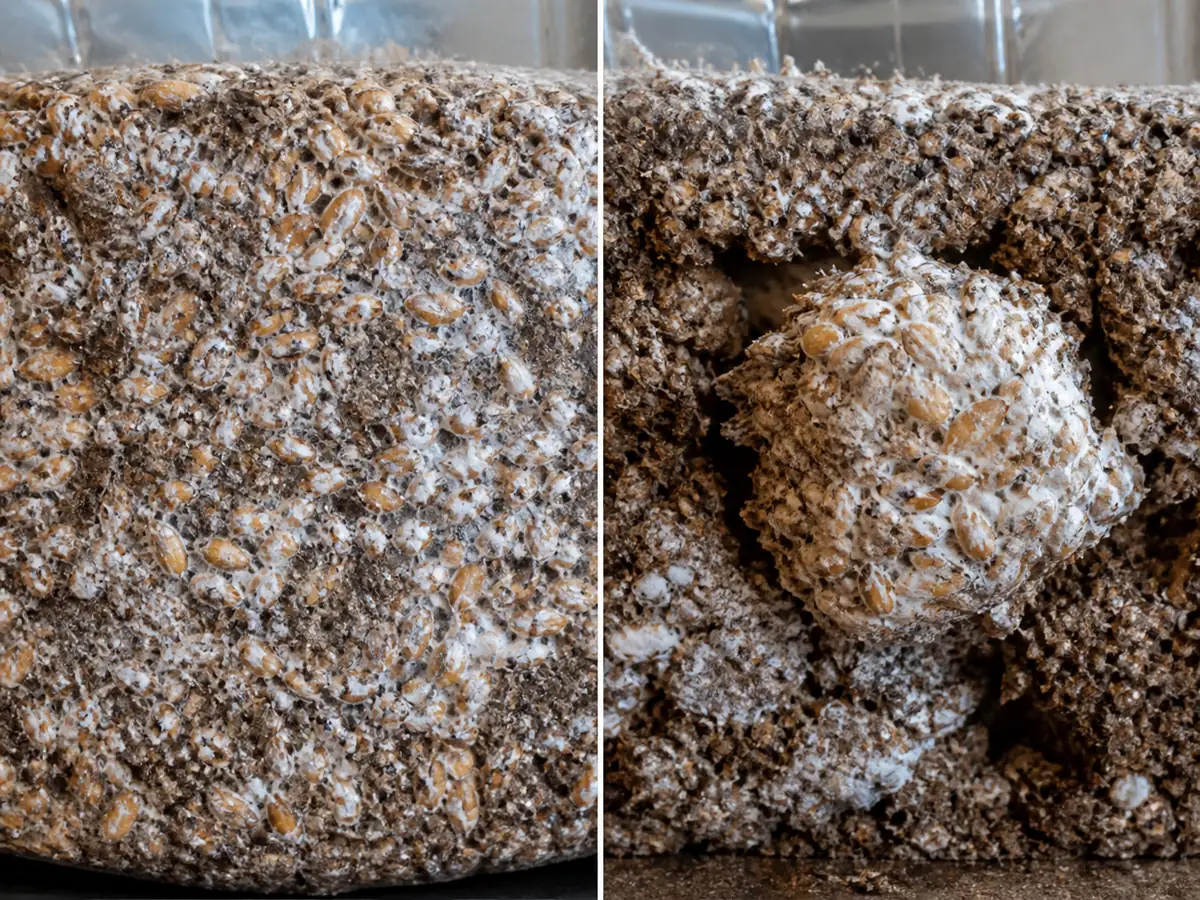
Is the substrate packed too tight?
A substrate must touch the spawn without becoming a solid block that traps heat and limits gas movement. Loose cavities leave dry unbridged spaces, while forceful compression removes the pores that support clean aerobic growth.
Container scale changes the balance. A small bag sheds heat quickly but can dry at a damaged filter, while a large block retains moisture and may develop a warm slow center even when its outer inch looks complete.
Inspect every place where structure or air exchange can change.
- Check around filters for drying or stalled growth.
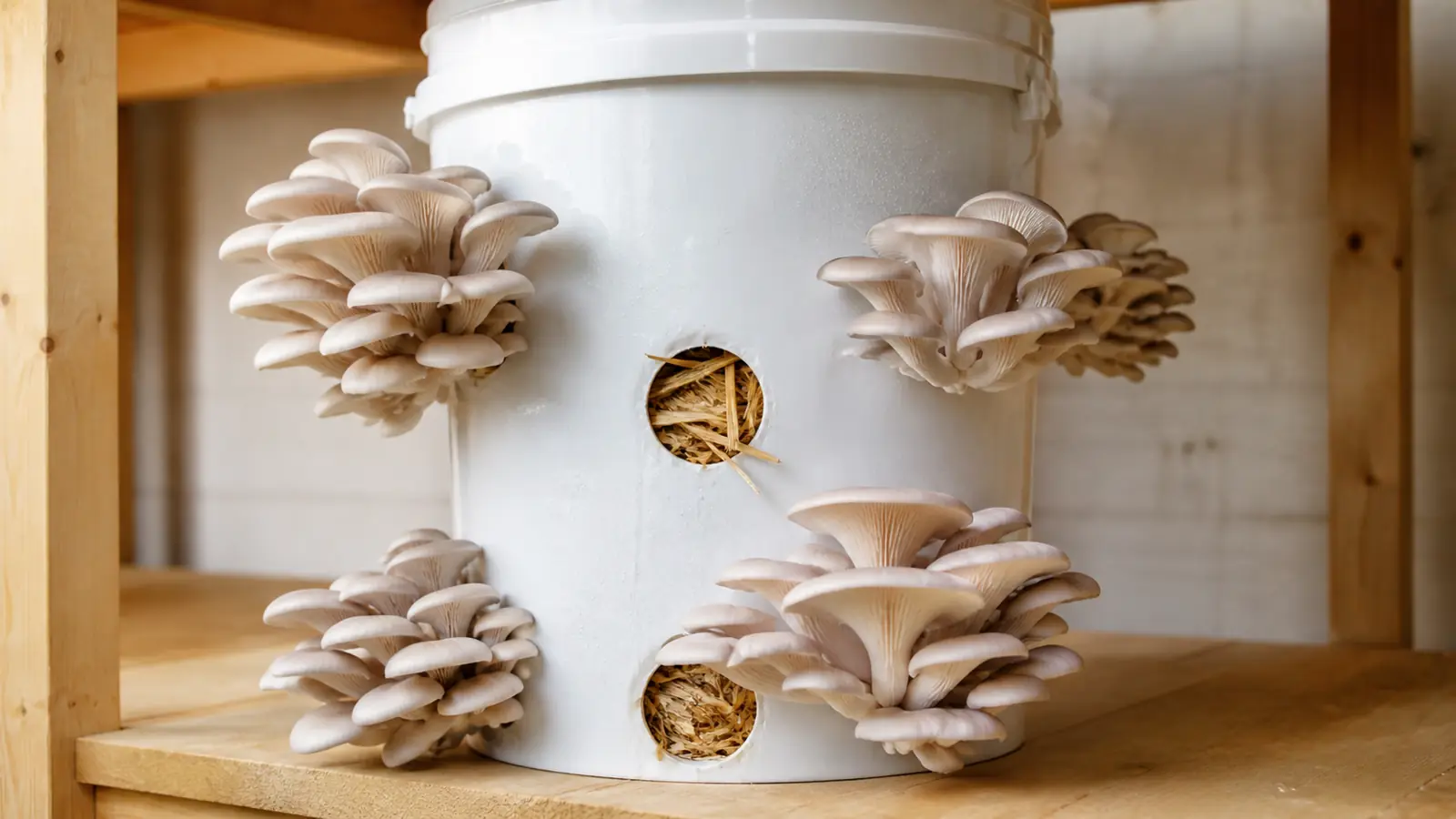
- Compare growth at bucket holes with the packed center.
- Inspect folds and dense corners for compressed substrate.
- Look at the base for free water or a repeated slow zone.
Growth that improves near available air but stalls in the packed center points toward structure, while drying beside a torn filter points toward excessive local exchange.
Do not automatically remix a colonizing container. A supplier-authorized break-and-shake can redistribute clean grain spawn at a planned stage, but crushing a stressed bulk substrate or shaking a contaminated bag spreads the problem and erases useful boundaries.
Is it a clean stall or contamination?
Clean slow growth remains consistent in color and texture, begins from intended spawn, and either advances or holds without developing destructive changes.
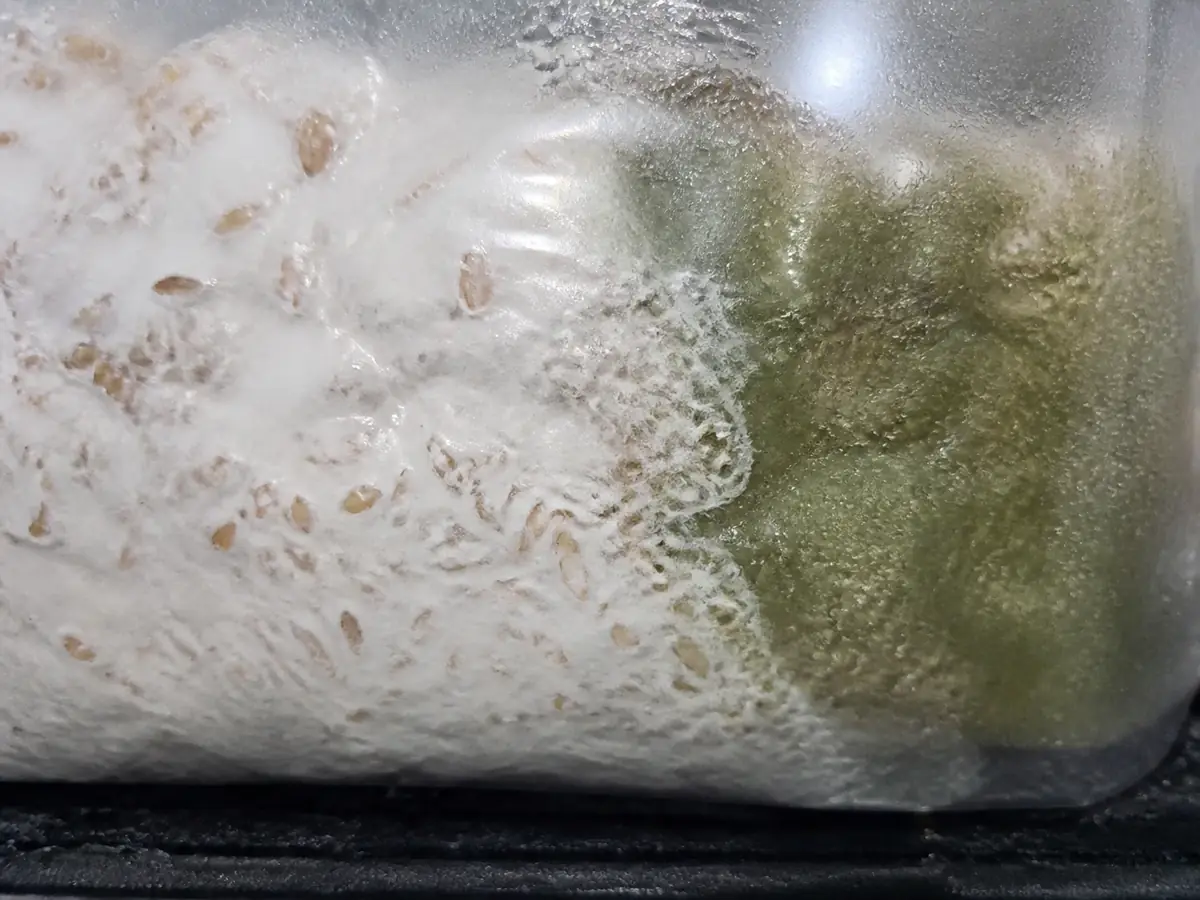
Biological competition adds new evidence such as colored sporulation, slime, sour or rotten odor, insect activity, unexpected heating, or mycelium retreat.
Warning
Isolate a questionable container while it remains closed. Do not place your face over a filter to smell it, and do not open a moldy bag in the incubation or fruiting room where spores and insects can reach healthy cultures.
Some contaminants begin white, so waiting for a dramatic green patch is not a complete safety plan. Fast wispy growth that races ahead of the intended culture, a sharp wet boundary, powdery texture, or an odor change can matter before mature color appears.
Once contamination evidence is convincing, correct the preparation process before starting a new batch. Review substrate treatment, cooling time, spawn condition, tool cleaning, filter integrity, water content, and the exact day the abnormal pattern first appeared.
Which single change should you make?
Choose the smallest reversible change supported by the observations.
A cold clean culture may need a modest room adjustment, touching hot bags need spacing, and a container drying beside a direct fan needs shelter from the draft.
Do not change temperature, airflow, moisture, and container position at once. If growth resumes, you will not know which action mattered, and one of the other changes may create a second problem.
- Record the dated edge, room temperature, core temperature, and visible moisture state.
- Write one diagnosis and the evidence that supports it.
- Make one allowed environmental change without opening the culture.
- Recheck at the same angle and time interval.
- Stop the test if color, slime, odor, insects, or dangerous heat appears.
The observation interval must fit the method. A fast oyster bag can show useful change within days, while a log adjustment is judged over a longer seasonal period and by moisture management rather than a daily white-front measurement.

How do you know it has really recovered?
Recovery means fresh clean growth extends beyond the dated mark while core temperature, moisture pattern, and odor remain acceptable.
More condensation, another elapsed week, or a warmer room does not count as recovery without territorial gain.
| Result after the observation interval | Decision |
|---|---|
| Clean edge advances and distribution begins to connect | Continue incubation within the method range |
| Growth holds but the method is long and every other sign remains clean | Extend the observation interval without adding interventions |
| One physical zone remains slow while others progress | Correct the documented geometry, temperature, or draft issue only if the method allows it |
| New color, slime, odor, insects, heat, or retreat appears | Isolate and discard rather than fruiting the batch |
| No clean progress after a supported correction and normal method window | Restart small with verified spawn and corrected substrate preparation |
Do not move incomplete substrate into fruiting conditions merely to force a response. Exposing unoccupied food to more air and handling gives competitors a larger opportunity and confuses a colonization failure with a fruiting failure.
A small restart is not wasted effort when it tests a specific correction. Label the new batch with spawn lot, substrate formula, water amount, treatment record, inoculation rate, core temperature, and photographs so the next delay has a usable history.
Keep one clean control when making repeated batches.
A control prepared with the proven formula and spawn lot can show whether the new variable changed colonization, while several experimental changes in every bag leave no stable comparison.