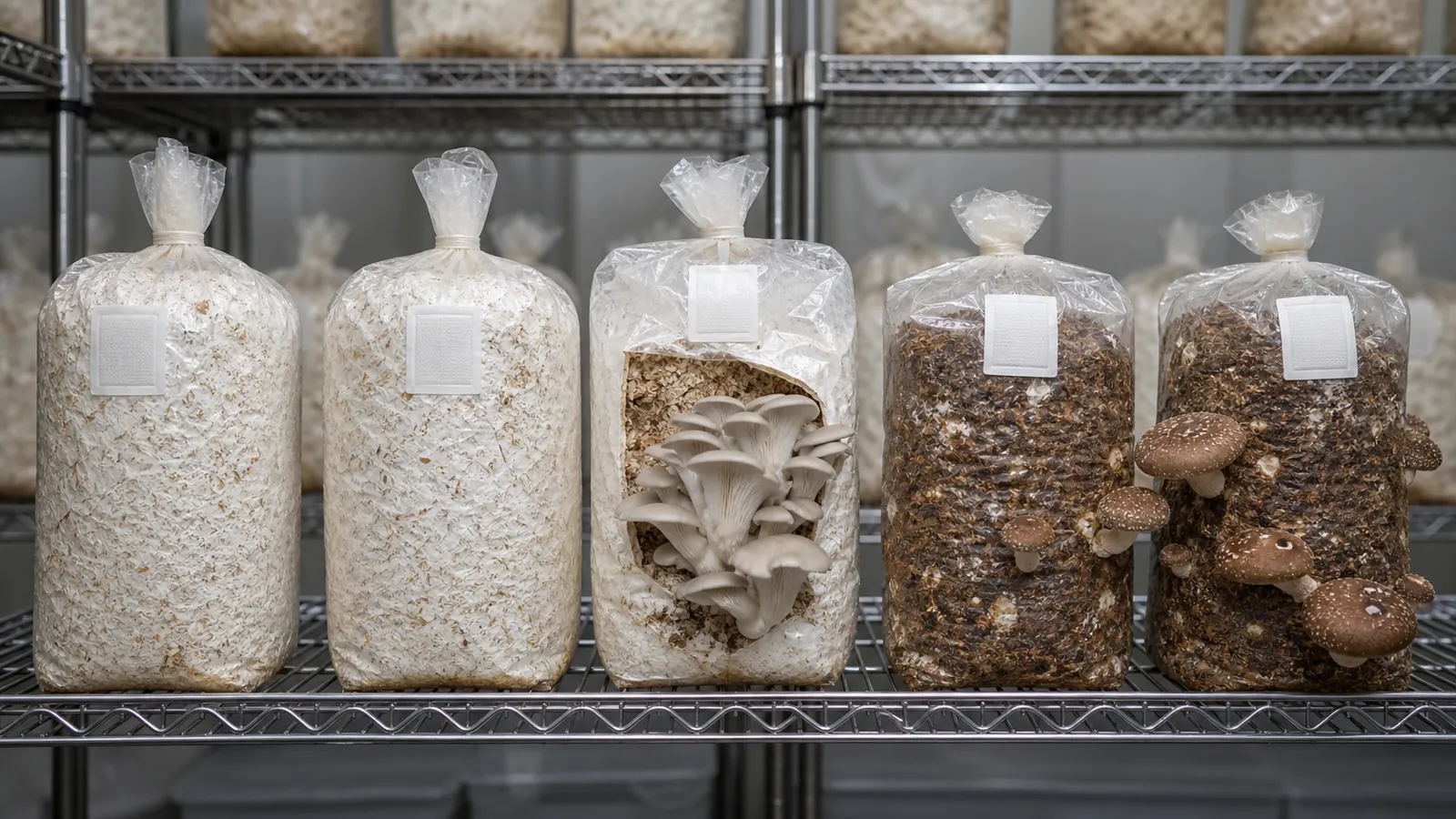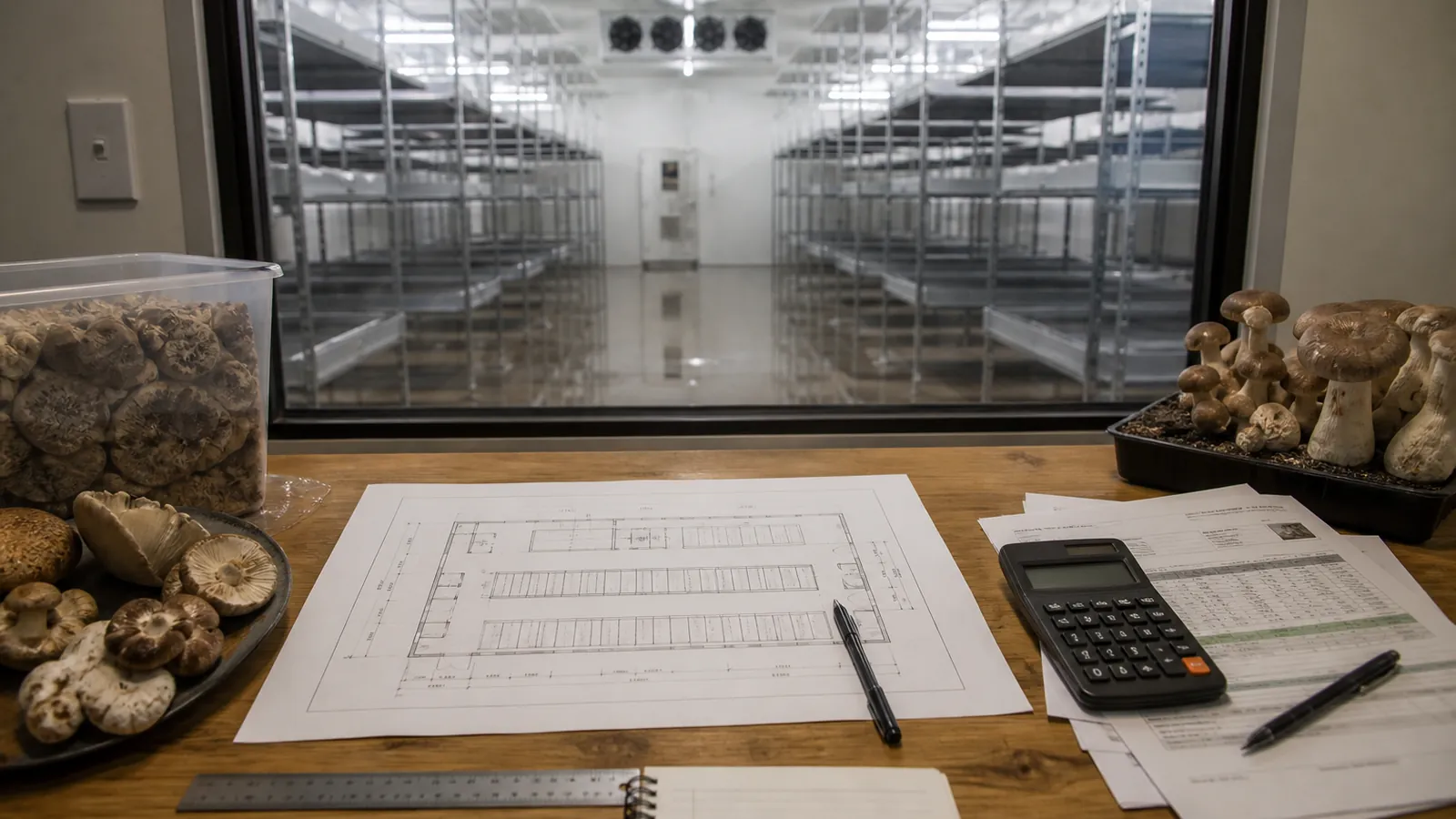
A fruiting-only pilot can avoid laboratory and substrate-processing equipment, while a farm that makes spawn and blocks needs clean work, mixing, heat treatment, cooling, and more utilities. Build your total from current local quotes, installation, compliance, contingency, and working capital rather than copying one universal number.
A mushroom farm startup cost can range from a compact fruiting pilot using purchased blocks to a purpose-built operation that makes spawn and substrate, but those totals describe different businesses. Define what the farm will produce, obtain current local installed quotes, and add working capital before trusting any headline number.
An online equipment price is not the cost of a functioning production system.
Freight, tax, electrical service, plumbing, drainage, refrigeration, ventilation, washable construction, permits, professional work, commissioning losses, and cash needed before customers pay can exceed the items that first appeared on the shopping list.
Which stages will the farm actually own?
Write a one-page scope that states every owned and purchased stage. A fruiting-only estimate should not quietly include a laboratory, and an integrated estimate should not assume that a household room and utility service can support commercial heat, moisture, and electrical loads.
Cornell Small Farms has described specialty mushroom businesses as separable sectors. That distinction controls the budget because each upstream stage requires equipment, space, training, sanitation, and quality evidence that the downstream farm can otherwise purchase from a supplier.
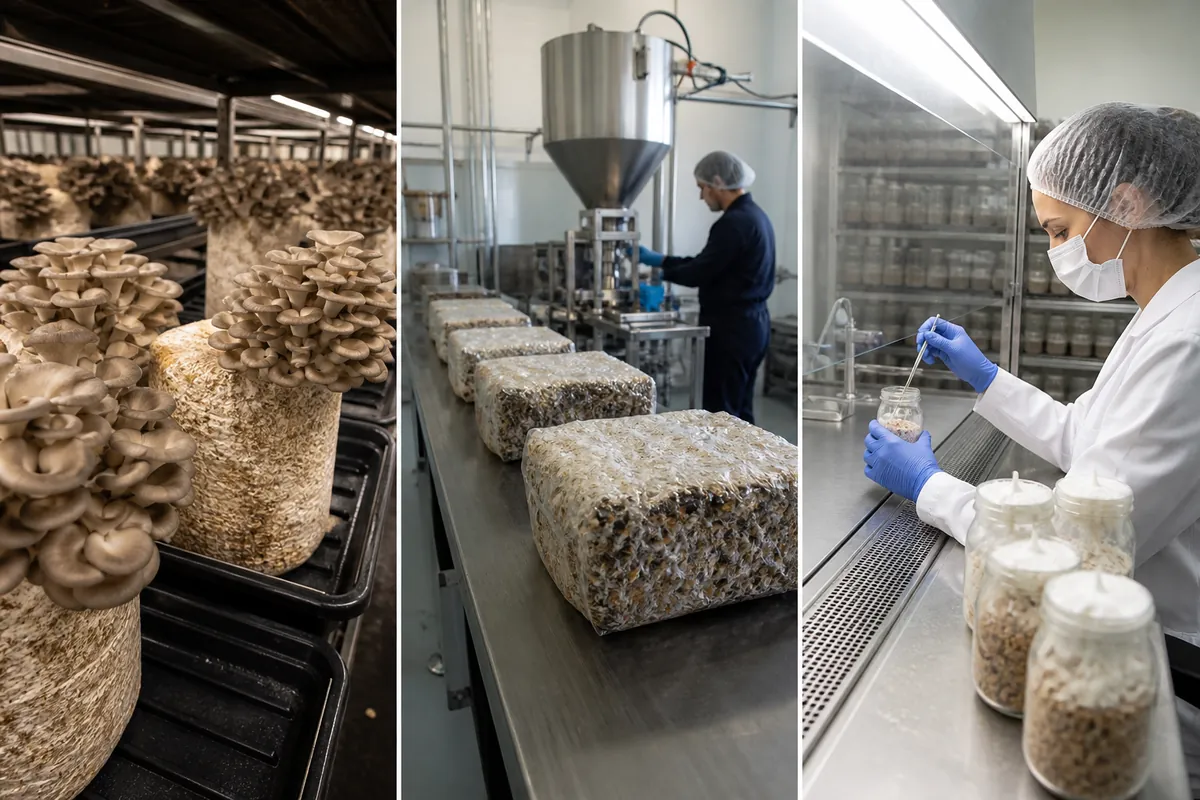
Scope creates an honest comparison.
- State the weekly number and type of inputs the farm will buy.
- State the weekly saleable output the farm intends to deliver.
- Exclude equipment for stages the farm will not own.
- Name the expansion trigger rather than including future capacity in the opening build.
Two quotes can differ by tenfold and both be reasonable when one prices a climate-controlled room and the other prices a full substrate and inoculation line.
Evaluate the site before fitting equipment into a floor plan. Confirm usable electrical capacity, water flow and quality, wastewater route, drainage elevations, structural loads, ceiling height, access for deliveries, fire separation, neighbor impacts, and space for waste to leave without crossing food handling.
A low rent can conceal an expensive service upgrade or a lease that prohibits the required use. Price the site correction and approval path before treating existing walls as free infrastructure.
Compare at least two viable sites using the same production scope.
Include rent or financing, deposits, permitted use, utility upgrades, drainage, delivery access, renovation, restoration, commute, expansion limits, and the schedule before lawful operation.
Time has a carrying cost when rent, insurance, loan interest, or storage begins before commissioning. Put design, approval, construction, startup, and first sale on a dated cash-flow line rather than assuming every asset becomes productive when purchased.
Keep property improvements and movable equipment separate in the budget. That distinction clarifies what remains with a landlord, what can secure financing, and what the business could recover if the site fails approval.
Growing MushroomsHow Do Mushroom Sawdust Blocks Work from Mix to Fruit?How do you size equipment to real demand?
Start with paid demand and a conservative saleable-yield assumption.
Divide weekly saleable pounds by saleable pounds per block or batch, then adjust for rejects and failed units to estimate how many inputs must enter each week.
Compare the most profitable mushrooms under the farm's actual room and buyer assumptions before fixing throughput. Species choice changes cycle time, yield range, climate zones, harvest labor, packaging, and peak cold-storage load.
The number entering weekly is smaller than the number occupying incubation and fruiting space. Multiply weekly inputs by the weeks spent in each stage, then add aisle access, quarantine, cleaning clearance, and room for the production pattern rather than filling every cubic foot with racks.
Warning
Do not use best-ever yield as the capacity assumption. Size the first system with ordinary recorded performance and test a lower-yield case, because extra blocks consume room, labor, cooling, packaging, and sales capacity even when the harvest disappoints.
Peak load matters more than average load for several assets.
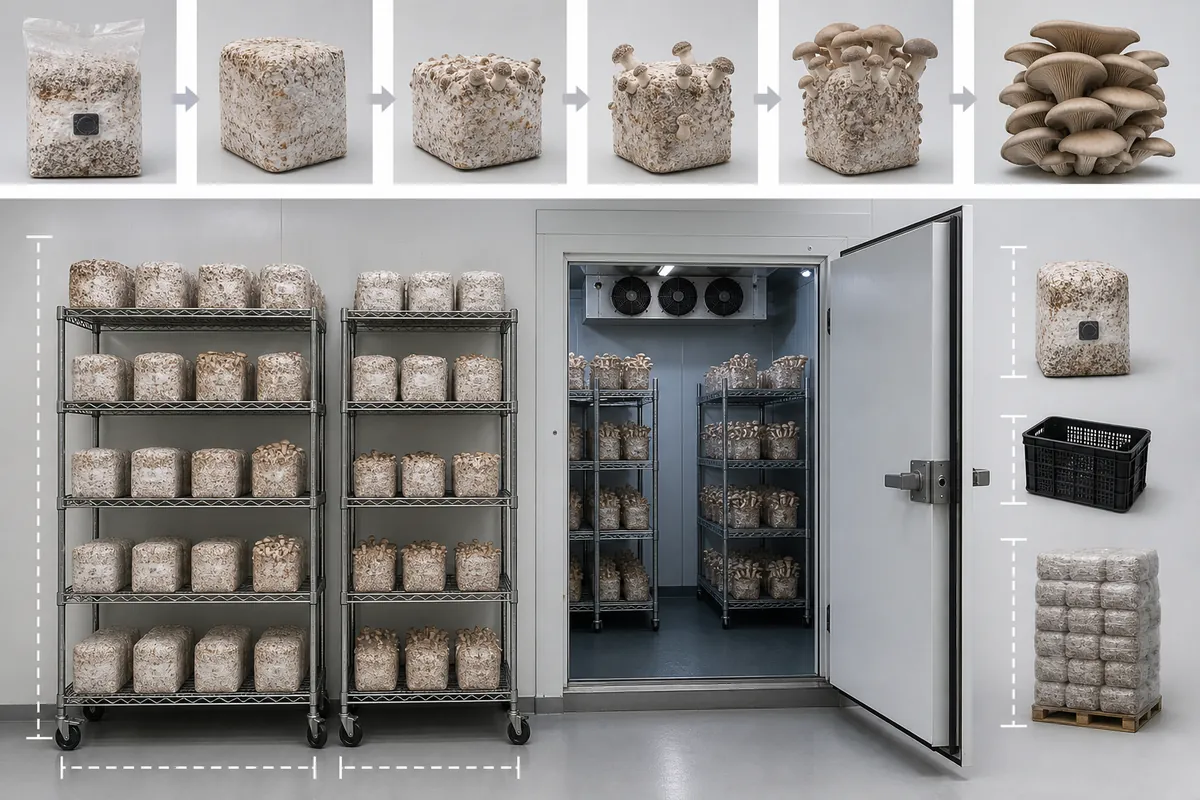
The cooler must accept a large harvest day, drainage must handle cleaning and humidification water, and packing space must function when multiple lots arrive together.
| Capacity question | Input needed | Cost exposed |
|---|---|---|
| Weekly blocks or bags | Demand, yield, reject rate | Purchasing, mixing, heat treatment, incubation |
| Occupied rack positions | Cycle time and flush strategy | Room area, racks, climate equipment |
| Peak harvest pounds | Crop schedule and flush timing | Cooler, packing benches, crates, labor |
| Delivery volume | Buyer orders and route schedule | Packaging, cold transport, vehicle time |
Keep one constraint visible. A larger fruiting room does not raise sales when the cooler, labor, block supply, or customer route already sets the weekly limit.
What does a fruiting room cost to install?
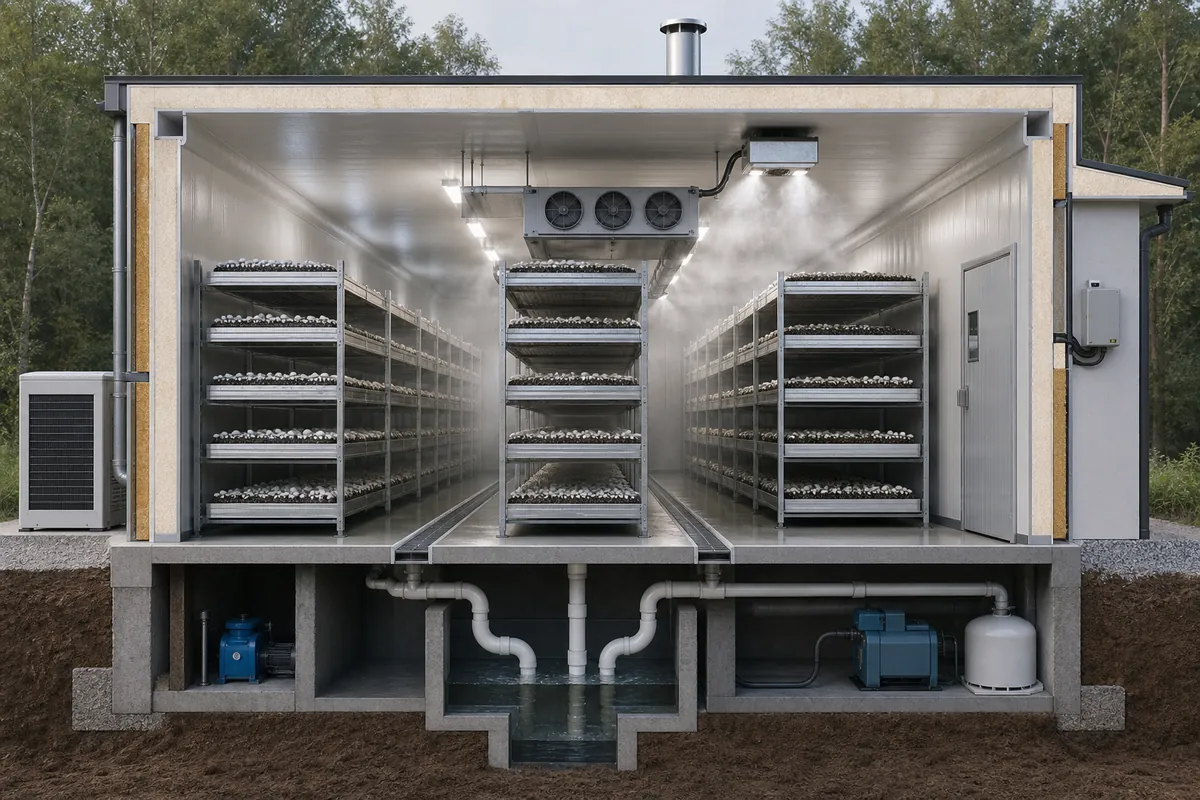
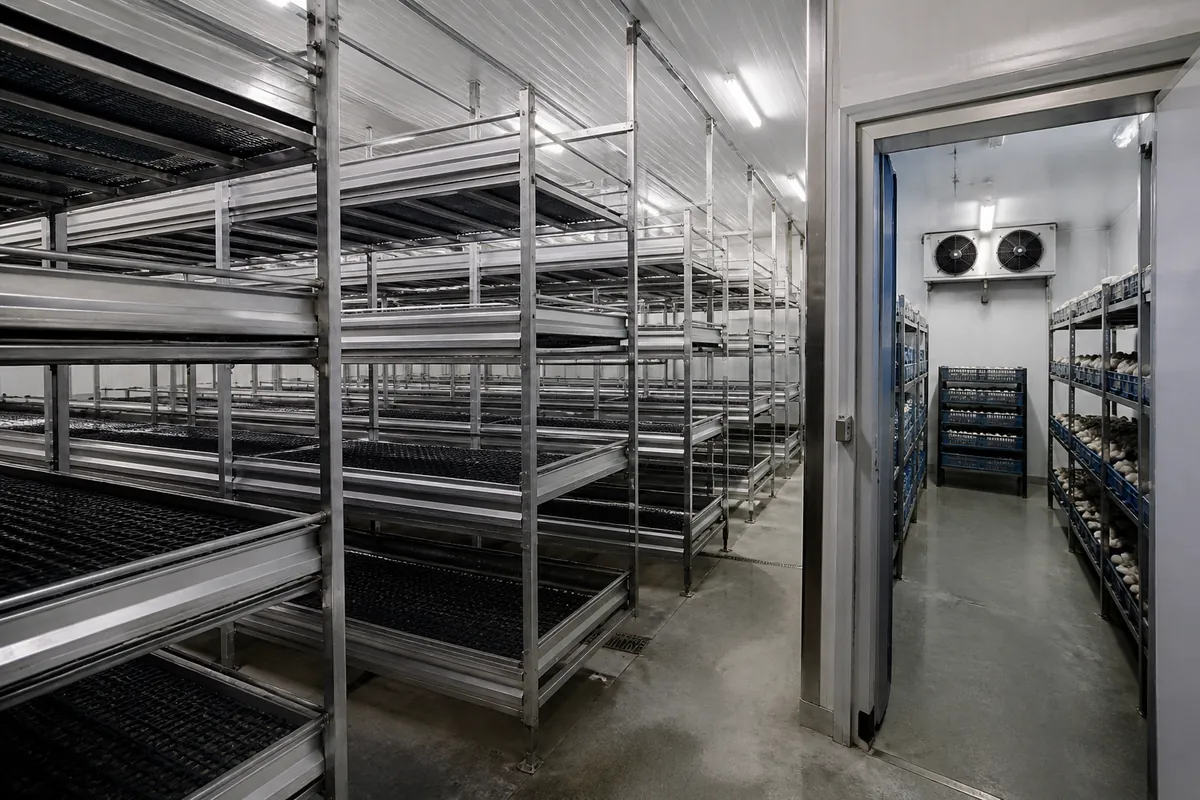
The fruiting room is an envelope plus interacting installed systems. Its enclosure needs cleanable surfaces and insulation appropriate to the climate.
The mechanical plan needs controlled fresh air, humidity delivery, temperature control, drainage or water management, lighting, sensors, safe power, access, and a sanitation plan.
Online humidifier and fan prices omit ducts, controls, wiring, water treatment, mounting, condensate management, and commissioning. Ask vendors or qualified installers to quote the specified duty at design conditions and state what the quote excludes.
Cooling equipment should be sized from room heat gain, outdoor conditions, equipment, lights, people, ventilation air, and biological heat where relevant. A seller's room-size rule cannot see the construction and climate that determine the actual load.
Use independent monitoring to verify installed controls.
Sensors drift, wet-bulb conditions can mislead cheap devices, and a controller that displays a number is not proof that the crop zone receives uniform air and moisture.
Request commissioning criteria in the quote. The system should demonstrate temperature, humidity, fresh-air behavior, drainage, alarm, and recovery under a defined load before final acceptance.
Keep retainage or final payment terms consistent with local contracting practice and qualified advice. Paying the full amount before documented startup can leave the farm funding corrections that belonged in the installation scope.
Do you need a clean room?
Producing blocks adds a chain whose parts must match through the same weekly flow.
Raw-material storage, size reduction where used, mixing, water measurement, filling, bagging, heat treatment, unloading, protected cooling, inoculation, and incubation each need capacity for the same weekly flow.
Owning spawn or cultures adds a tighter clean-work boundary. The farm may need appropriate sterilization, a validated clean-air workspace, culture storage, instruments, consumables, protected cooling, waste handling, and staff who can recognize and trace failures.
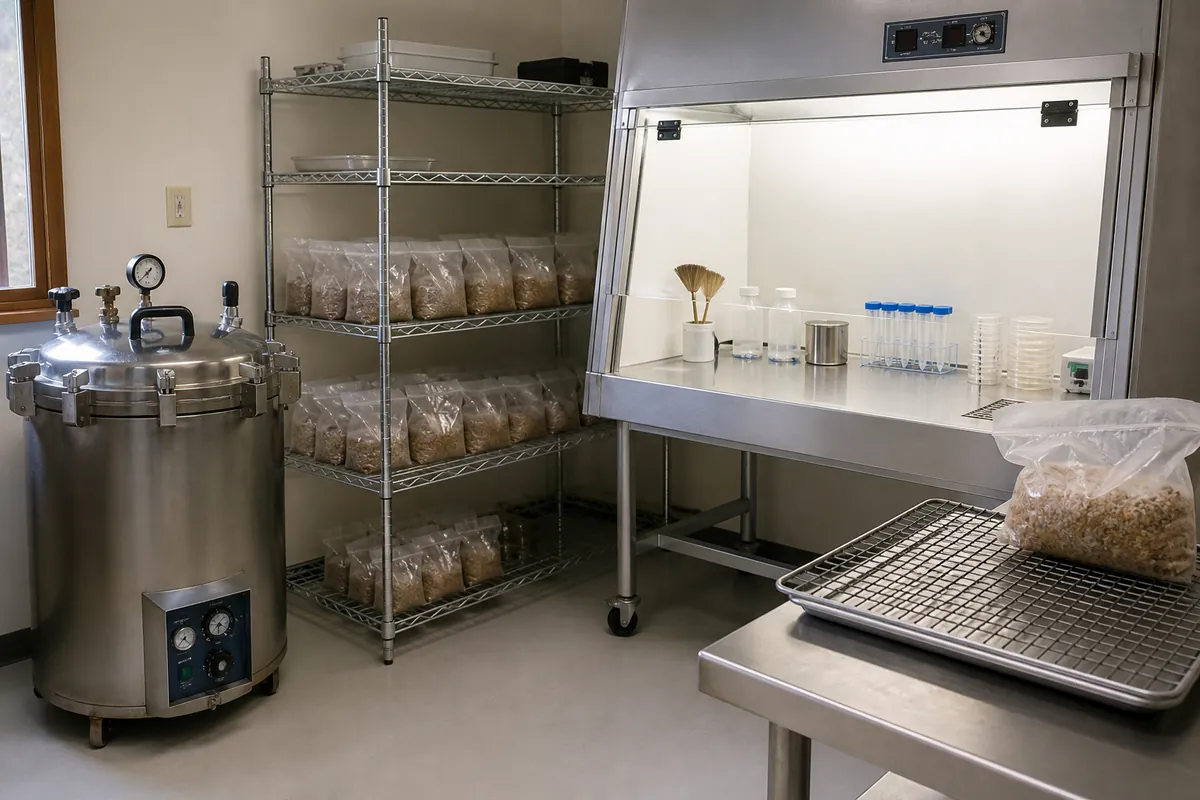
Pressure vessels, gas systems, steam, high-current electrical loads, and structural modifications require qualified design, installation, inspection, and operation. Used equipment should be evaluated for condition, documentation, cleanability, safeguards, parts, and legal installation before its price is treated as a saving.
- Quote the complete material path, including carts, sinks, racks, bins, and cleaning access.
- Match batch sizes across mixer, filler, heat treatment, cooling, and inoculation.
- Include test instruments, maintenance parts, and consumables.
- Price the rejects and idle time expected during commissioning.
Buying blocks can be more expensive per unit and still require less opening cash and fewer failure modes.
Integration earns its place only when the farm has enough stable demand and operating skill to use the upstream assets efficiently.
Growing MushroomsHow Do You Build an Outdoor Mushroom Bed That Lasts?What does the harvest and cold chain cost?
The crop acquires food-handling and customer-service costs at harvest. Washable tables, scales, knives or scissors, crates, packaging, labels, handwashing, cleaning supplies, refrigeration, thermometers, order assembly, and transport belong in the startup plan.
- Harvest station
- Food-contact surfaces, tools, lighting, ergonomics, handwashing access, and lot separation.
- Packaging
- Product containers, case materials, labels, date or lot information, and recurring inventory.
- Cold storage
- Installed refrigeration, shelving, monitoring, backup response, and capacity for peak harvest.
- Delivery
- Insulated or refrigerated holding, reusable totes, vehicle fit, route tools, and cleaning.
Do not size refrigeration from average inventory when two harvest days create the peak. The cooler must accept the peak harvest load without losing the required holding condition for product already inside.
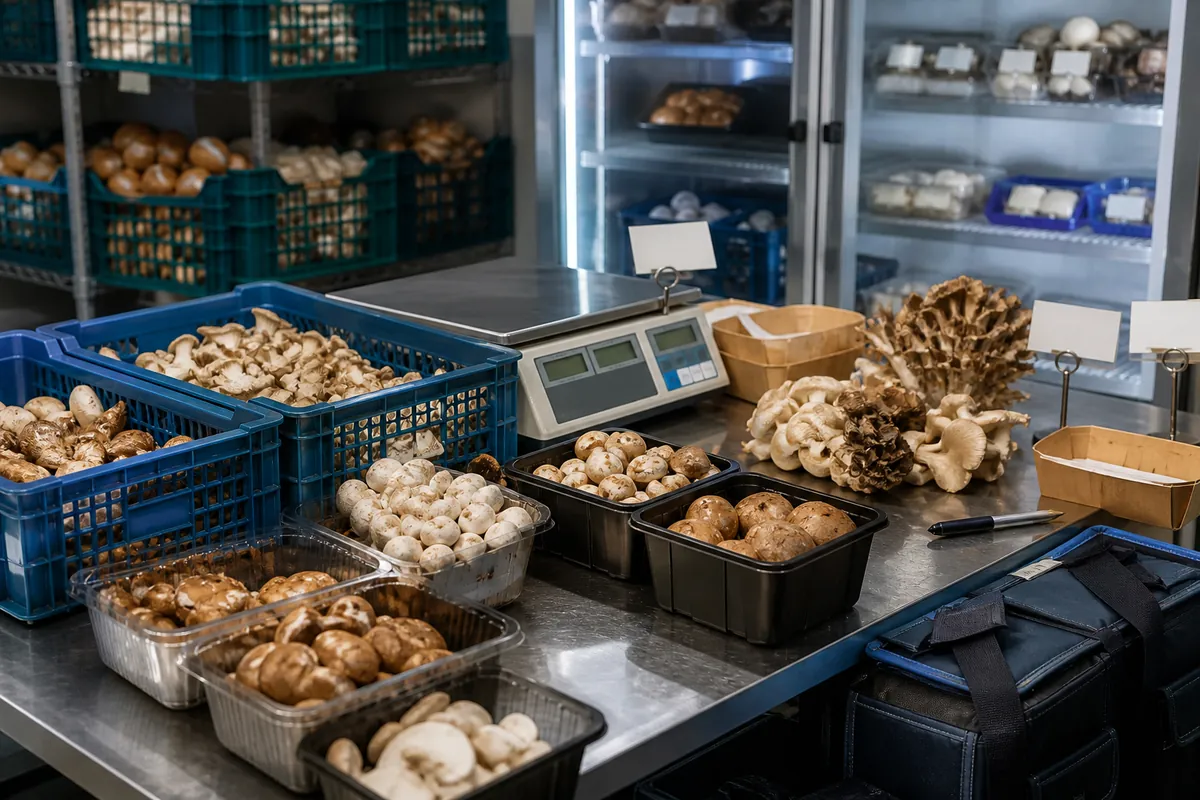
Packaging has both startup and recurring cost.
Printers, label design, approved claims, case configuration, storage space, and minimum order quantities can tie up cash before the first container is used.
Create a replacement reserve for assets whose failure stops harvest or damages inventory. Refrigeration, climate controls, pumps, sensors, and delivery equipment have different service lives, but their replacement cost should not arrive as a surprise after the startup budget is spent.
Price critical spares and service response separately. A spare sensor may be sensible inventory, while duplicating a large refrigeration system may be less practical than an emergency service agreement and a documented product-transfer plan.
Budget owner labor during design, purchasing, construction coordination, cleaning, commissioning, supplier setup, customer development, and training.
Even when it is unpaid, that time can prevent the owner from earning elsewhere and reveals whether the opening schedule is physically possible.
Separate depreciation from loan payments in the financial model. Loan principal affects cash flow, interest is a financing expense, and depreciation allocates asset cost over useful life, so one number cannot substitute for the others.
Ask an accountant familiar with farms and the jurisdiction how purchases, improvements, inventory, taxes, and business structure should be recorded. The equipment vendor's invoice does not decide tax treatment.
What will compliance and insurance cost?
The correct authority depends on location, building, water, wastewater, product, process, employees, and sales channel.
- Confirm permitted use, occupancy, structural work, and fire requirements with the relevant local offices.
- Confirm electrical, plumbing, refrigeration, drainage, and wastewater permits with the authorities that inspect that work.
- Ask food-safety, agricultural, environmental, tax, and labor offices which rules apply to the farm's exact products and sales channels.
Record each approval requirement in writing beside the responsible office, contact, submission, fee, inspection stage, and budget allowance.
Note
Keep allowance lines for design, permits, inspections, testing, and corrections until written requirements and contractor scope are known. A zero placeholder does not make those costs disappear.
Insurance quotes should describe premises, products, vehicle use, customers on site, employees, classes, grow kits, processing, and any products bought from other farms. Compare exclusions and limits as well as premiums.
Qualified electrical, refrigeration, plumbing, structural, and pressure-system work should be quoted as installed and commissioned. Ask whether demolition, disposal, freight, lifts, penetrations, patching, controls, startup, training, tax, and travel are included.
The lease or purchase agreement can create additional cost through use restrictions, restoration clauses, utility limitations, drainage responsibility, and landlord approval.
Review those conditions before designing around a site you cannot legally modify.
Growing MushroomsHow Does a Mushroom Grow Kit Actually Work?How much contingency and working capital?
Contingency covers uncertainty in the capital project, such as concealed building conditions, scope refinement, and quote gaps. Working capital pays routine operating obligations while crops move through production and customers move through payment terms.
Commissioning consumes both reserves when repairs coincide with failed or low-yield batches. Track construction corrections as capital contingency and crop losses as operating cash so the next forecast reveals which assumption failed.
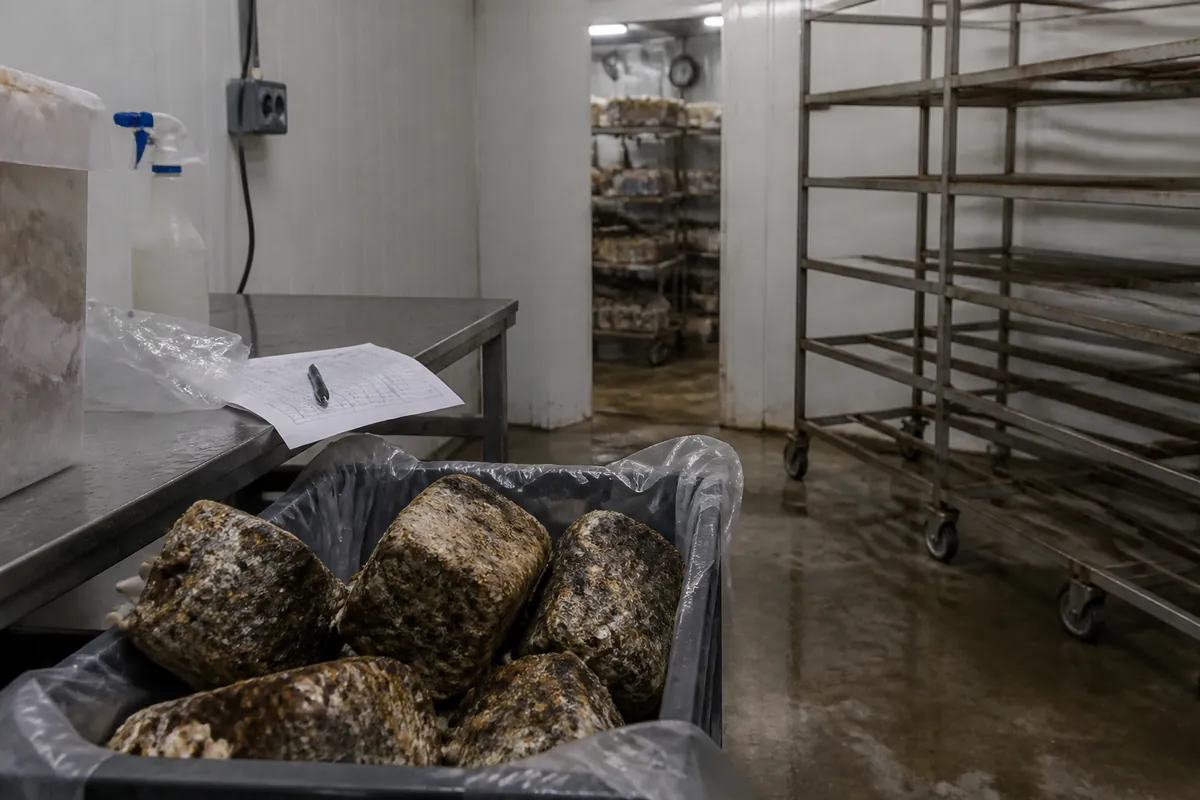
Budget diagnostic time and replacement inputs when slow colonization delays room entry.
A batch with no fruiting leaves conditioned capacity idle.
Wet rot forces a batch into disposal. Each failure consumes a different mix of inventory, rack-days, labor, cleaning, and lost sales.
Do not call a credit-card limit working capital without pricing interest, payment dates, and the consequences of a slower ramp. Match the financing source and term to the life and uncertainty of the asset or operating need.
What do three startup scenarios look like?
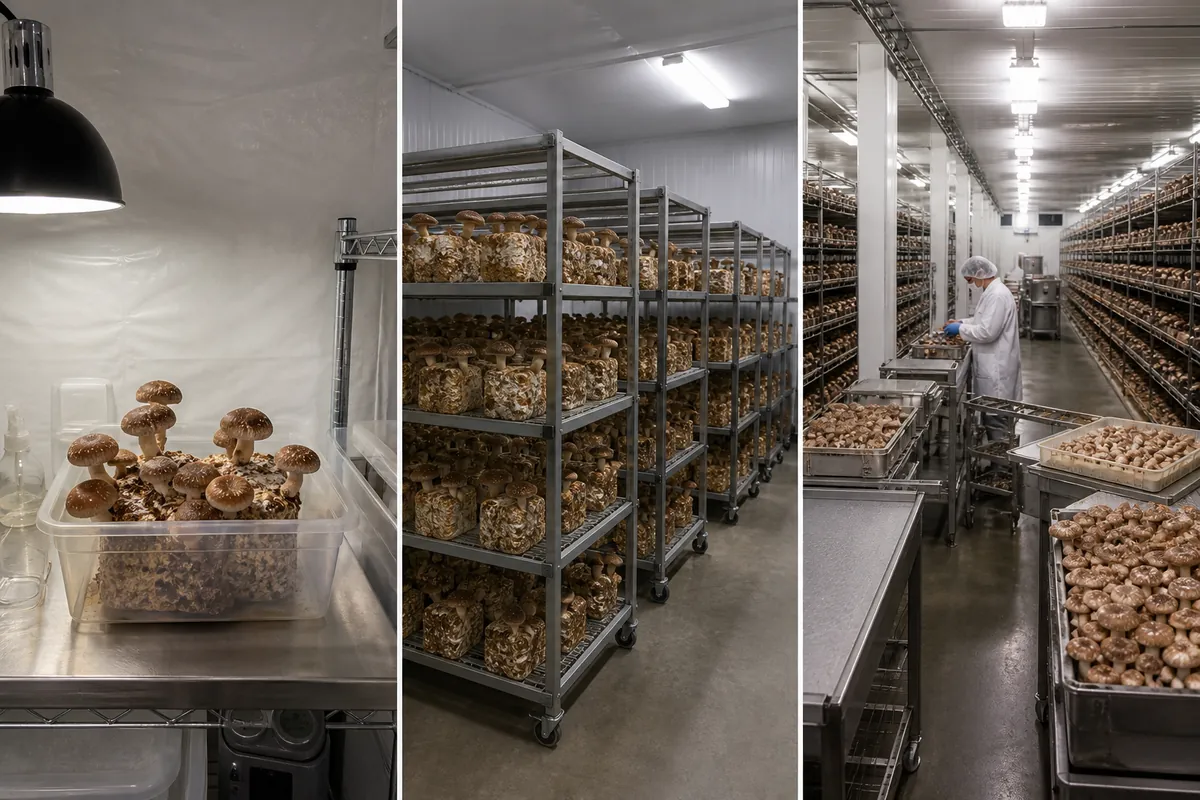
A micro fruiting pilot buys ready blocks and uses the smallest lawful operating setup that can complete a paid test.
Its dominant risks are weak demand, unsuitable room control, and undercounted labor rather than upstream production complexity.
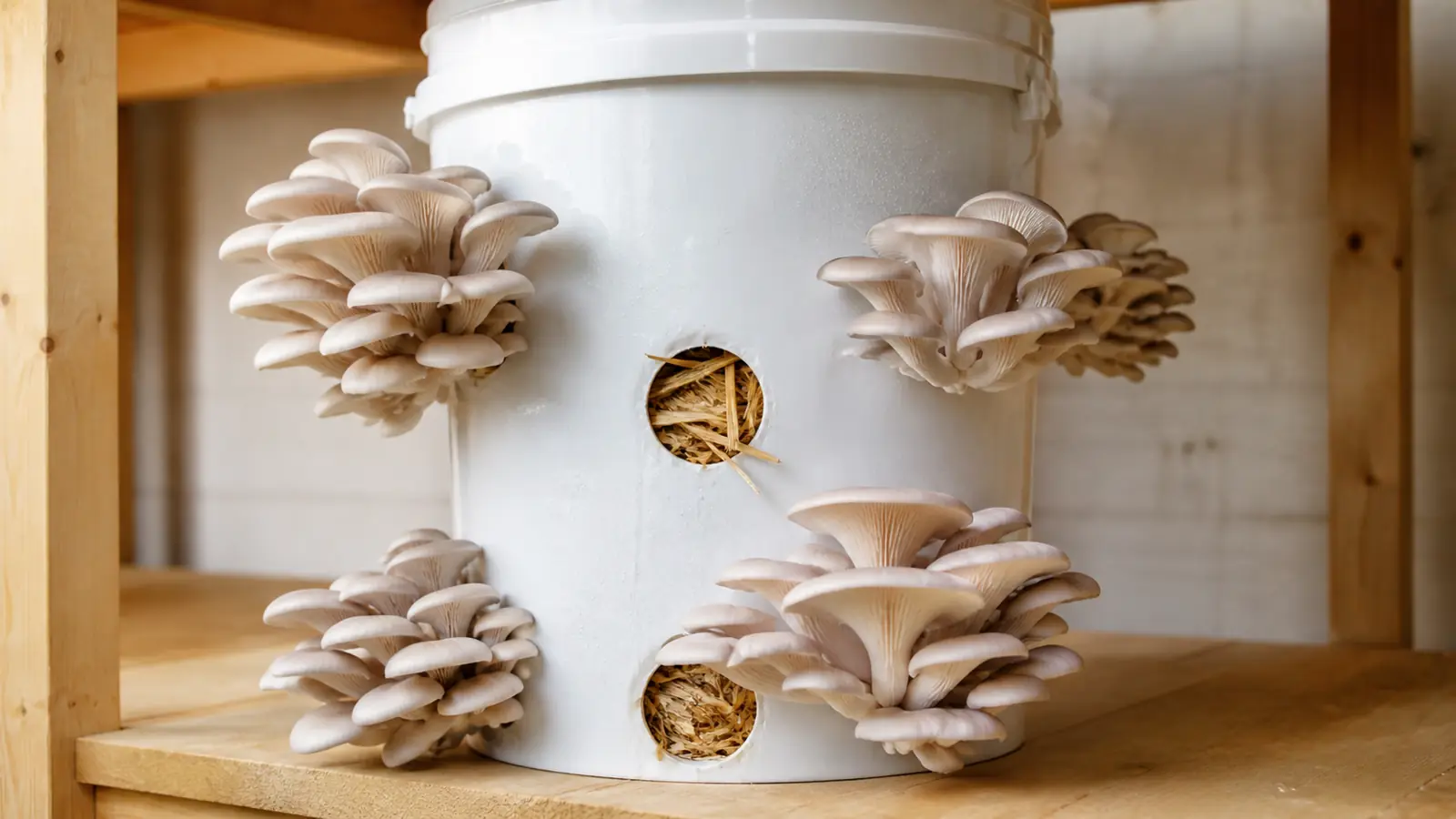
An oyster mushroom grow can shorten the pilot feedback cycle, but its fresh-air, humidity, harvest, spore, and fragility requirements still need installed capacity and buyer fit. Use the actual chosen strain and block specification in every equipment calculation.
A small ready-block farm adds commercial rack capacity, installed climate systems, receiving, quarantine, dependable cold storage, packaging inventory, delivery, and working capital for recurring block purchases. Supplier consistency and freight become material operating risks.
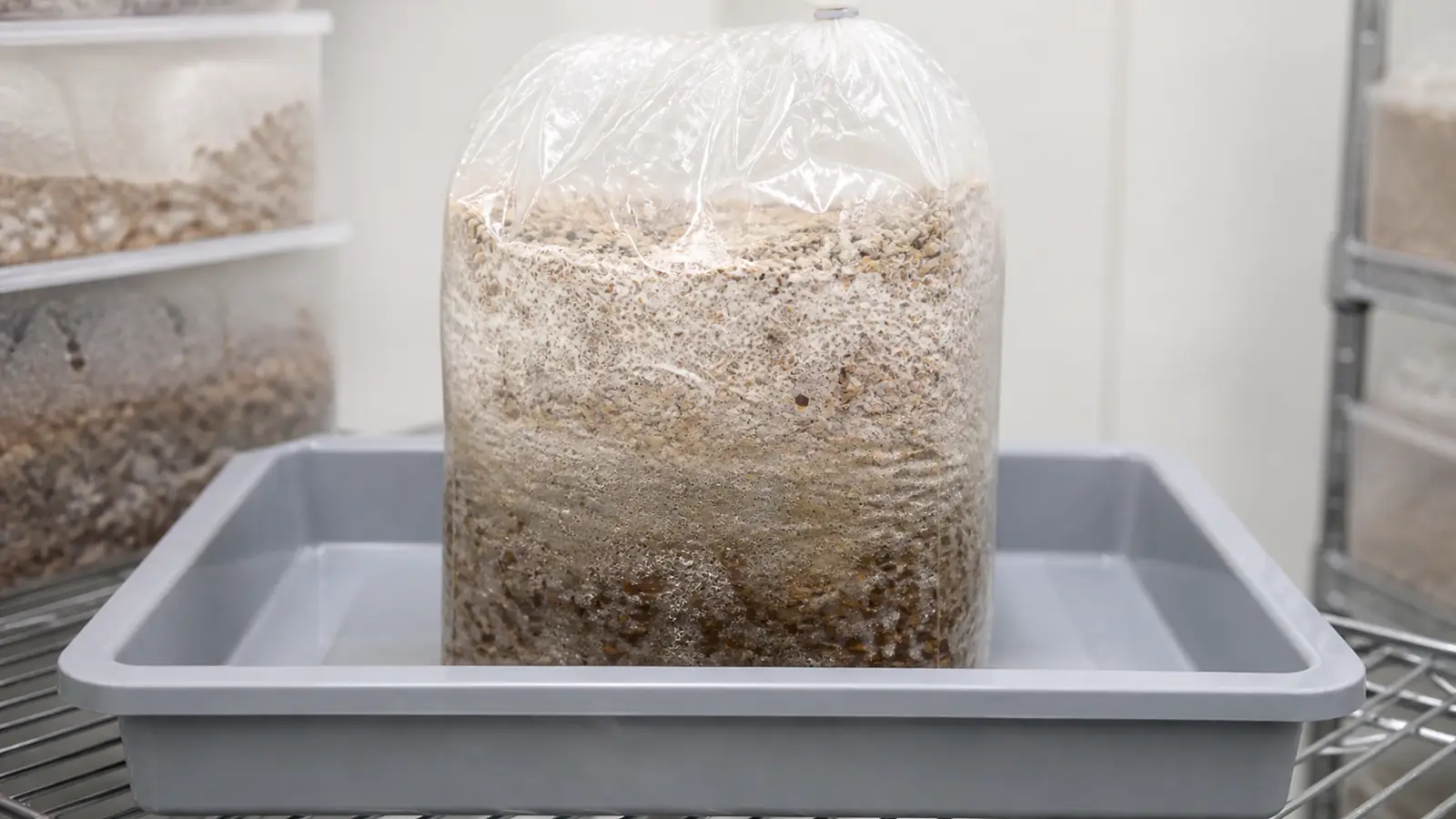
An integrated block-producing farm adds storage, processing, heat treatment, protected cooling, inoculation, incubation, larger utilities, maintenance, quality control, and more commissioning time.
Spawn production adds a further clean-work layer.
Historical examples can test whether a quote is wildly incomplete, but they should not be copied as a 2026 budget. Cornell's earlier grow-room and cooler figures describe a time, place, scope, and build choice, while current local labor, equipment, freight, code, and site conditions own your number.
| Scenario | Include | Exclude unless separately justified |
|---|---|---|
| Fruiting pilot | Climate, racks, monitoring, harvest, cooler, pack, sales | Lab, mixer, sterilizer, large incubation |
| Ready-block farm | Commercial fruiting, receiving, cold chain, delivery, working capital | Spawn and substrate line |
| Block producer | Processing, heat treatment, cooling, inoculation, incubation, fruiting or block sales | Culture lab when spawn remains purchased |
How do you build the quote sheet?
Give every line a quantity, specification, vendor or estimator, quote date, base price, freight, tax, installation, commissioning, lead time, useful life, and explicit exclusions. Mark estimates separately from firm quotes so uncertainty remains visible.
| Budget group | Examples | Normalization check |
|---|---|---|
| Site and envelope | Deposit, renovation, insulation, washable finishes, floor, doors | Same area, materials, demolition, and restoration scope |
| Environmental systems | Cooling, heat, humidity, air, controls, drainage | Same design conditions, duty, installation, and startup |
| Production assets | Racks, carts, processing, heat treatment, clean work | Same weekly throughput and safety scope |
| Postharvest | Tables, scales, cooler, packs, labels, delivery | Same peak harvest and route assumptions |
| Soft costs and cash | Design, permits, insurance, contingency, working capital | Separate capital uncertainty from operating runway |
Use the normalized rows to move from vendor prices to one opening decision.
Define the base case
Lock the production scope, weekly throughput, site, installed specifications, opening inventory, and payment timing used by every quote.
Normalize each quote
Put freight, tax, installation, commissioning, exclusions, lead time, and useful life on matching lines before comparing vendors.
Stress-test the total
Recalculate with lower saleable yield, slower customer payment, and higher installation or utility cost.
Approve the opening number
Add installed capital, opening inventory, contingency, and working capital while leaving untriggered expansion outside the total.
The sensitivity rows should show whether the quoted opening plan still funds safe operation and taxes under lower yield, slower payment, and higher installation cost.
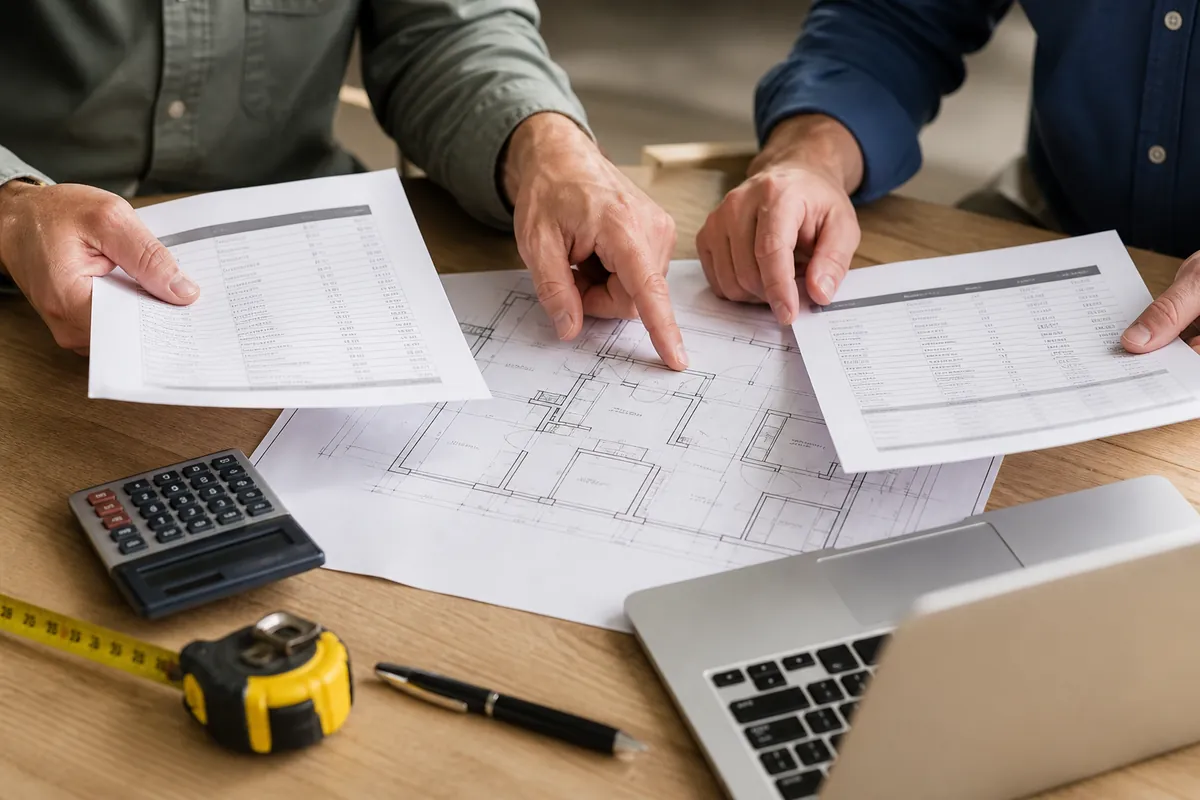
The final startup cost is the approved installed capital total plus opening inventory, contingency, and working capital. Keep future expansion outside that number until pilot records identify the bottleneck it will solve.