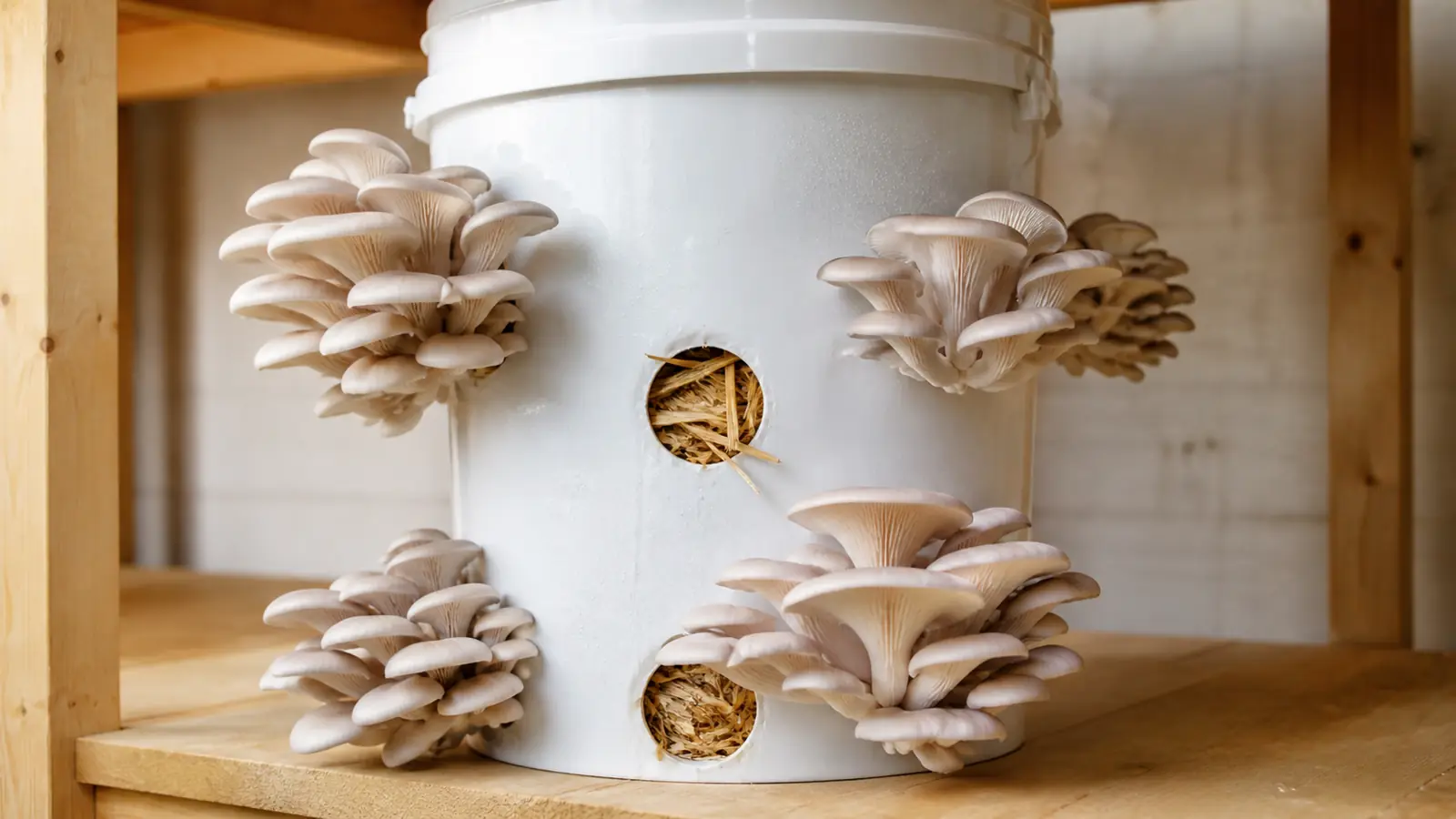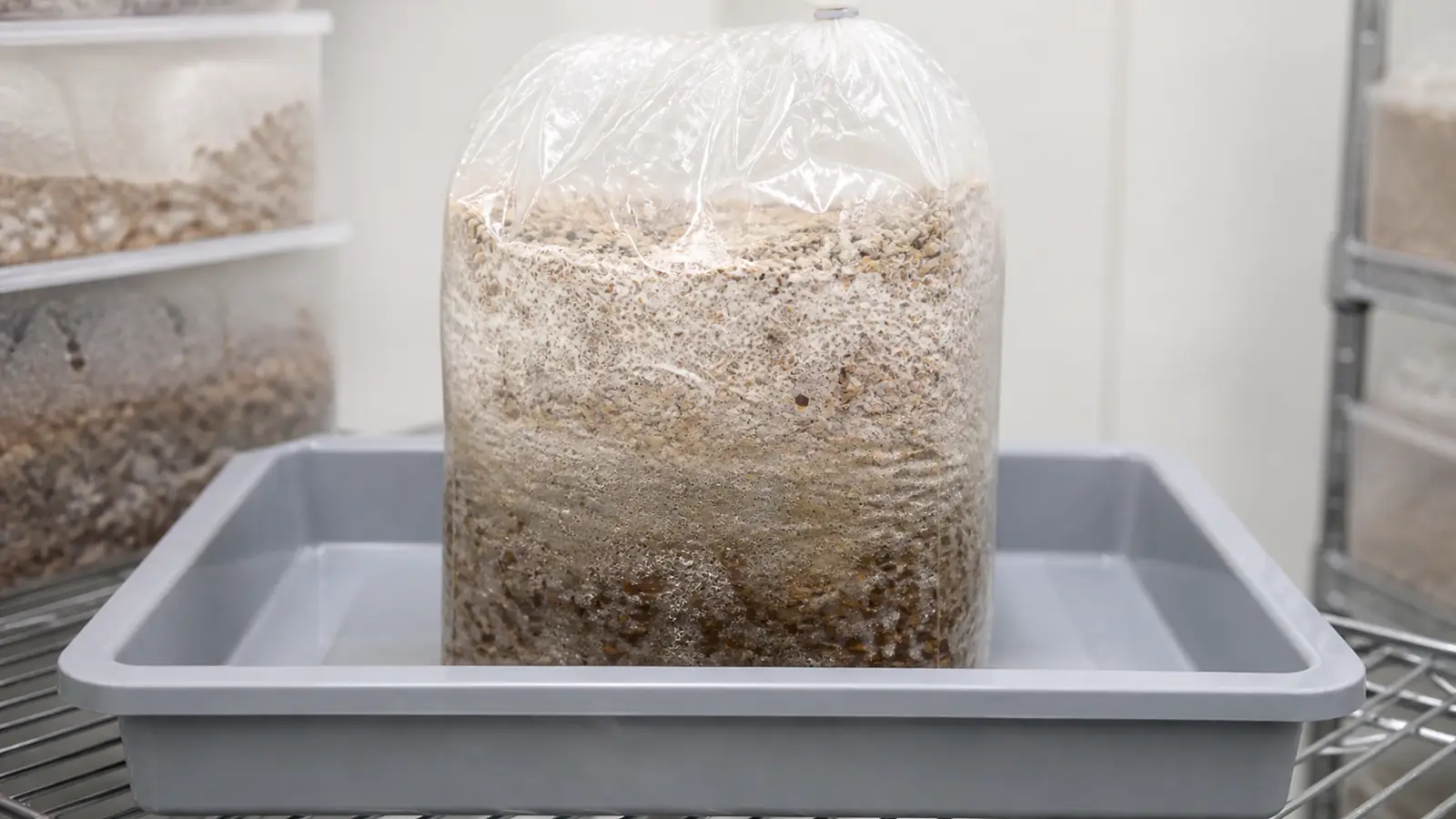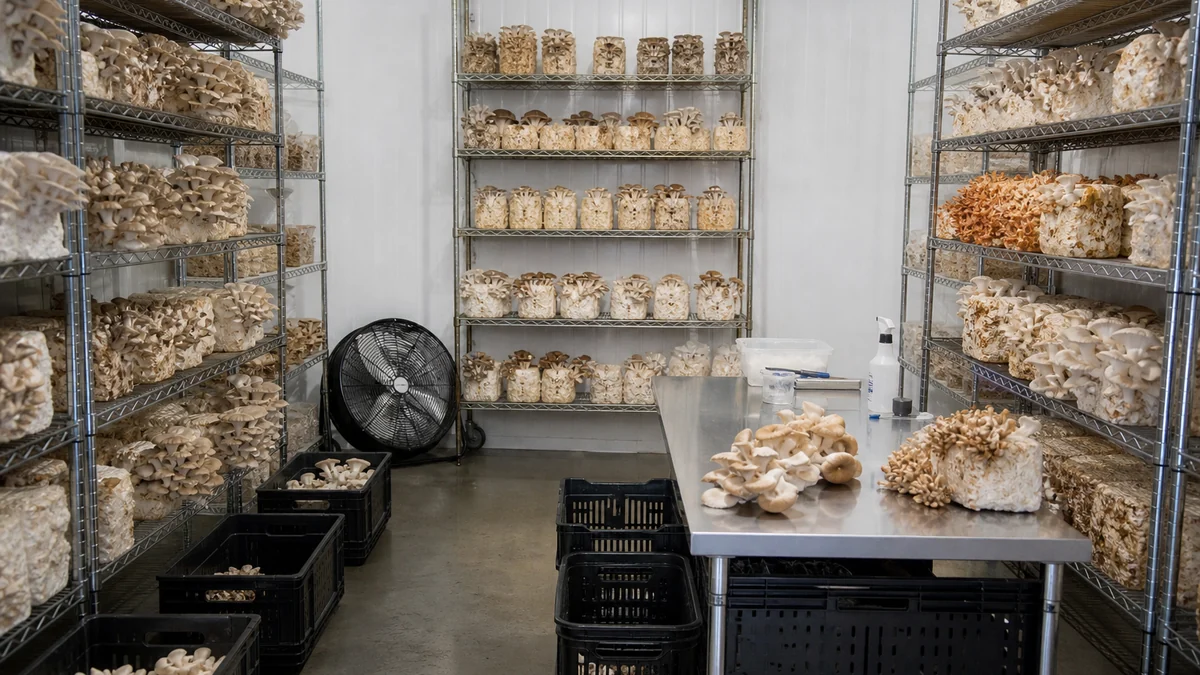
USDA put shiitake at $6.23 a pound and oyster at $5.18 for the 2024-25 season, a gap of about a fifth. Cornell's log shiitake study found profits from $1.39 to $11.88 per log across farms growing the same crop, an eightfold spread attributed to labour efficiency and expenditure choices, and fifty-three percent of that labour went on felling trees rather than on anything species-specific. Specialty prices then fell from $5.83 to $4.56 a pound in one season, which swallows any species premium. Secure a buyer, measure labour per pound, and choose the species last.
Shiitake averaged $6.23 a pound last season and oyster averaged $5.18.
Hold that gap of about a fifth against a second number, because the same crop grown by different farms in the same training programme returned anywhere from $1.39 to $11.88 of profit per log.
What is the most profitable mushroom to grow?
Shiitake, narrowly, on price per pound. That is the answer to the question as it is usually asked.
| Crop | 2024-25 average grower price | Notes |
|---|---|---|
| Shiitake | $6.23 per pound | Highest of the named specialty types |
| Oyster | $5.18 per pound | Fastest cycle, easiest to grow |
| Other specialty | $5.84 per pound | Includes lion's mane, maitake and others |
| All specialty | $5.83 per pound | Season average across the category |
That is the honest answer to the question as asked, and it is worth having before anything else.
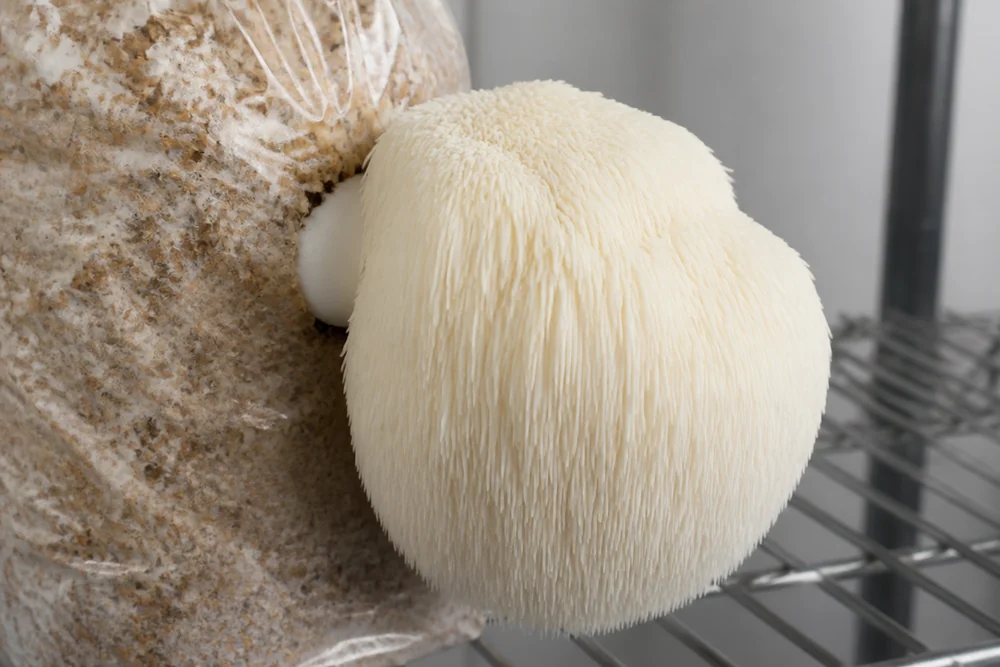
The gap between the top and the bottom of that table is about a dollar a pound, and everything that follows concerns numbers considerably larger than it.
Two things that table does not tell you are worth naming before it gets used. It is a national average across all growers and all channels, so a direct-sale grower at a market stall is usually above it and a wholesale supplier usually below it.
It also says nothing about yield per unit of input, which is where the species genuinely do differ. Oyster mushrooms convert substrate faster than shiitake does, so a dollar less per pound can still mean more dollars per week from the same shelf.
Growing MushroomsWhat Does a Mushroom Farm Actually Cost to Start?How much does the species actually matter?
Less than almost anything else you will decide.

A Cornell programme funded through SARE trained over 250 farmers in shiitake cultivation, fifteen of whom produced complete datasets from a hundred logs each, and profits ranged from $1.39 to $11.88 per log with the variation attributed largely to labour efficiency and expenditure choices.
Put the two spreads side by side. Roughly one fifth between species, and roughly eightfold between farms growing the same one.
That comparison has consequences, and none of them are about mushrooms:
- The ceiling on this business is set by how you work rather than by what you grow.
- A published ranking cannot tell you where in that range you will land.
- Copying a successful farm's species list copies the least important thing they did.
Fifteen farms is a small dataset and it is worth saying so plainly, though it is also the only one of its kind that reports the within-species range at all.
The practical consequence is an ordering in which species choice is a real decision but not the first one, and treating it as the business plan is the most common mistake in this category.
One caveat belongs with the study before it gets quoted further. It covered log-grown shiitake in the Northeast, so the exact percentages do not transfer to an indoor block operation in a different climate.
What does transfer is the shape of the finding. Wherever the hours actually go, they go somewhere that has very little to do with the species on the shelf, and the farms that differ most differ there.
Where does the labour actually go?
Into work that has nothing to do with which mushroom you chose, and on a log operation most of it happens before a single mushroom exists.
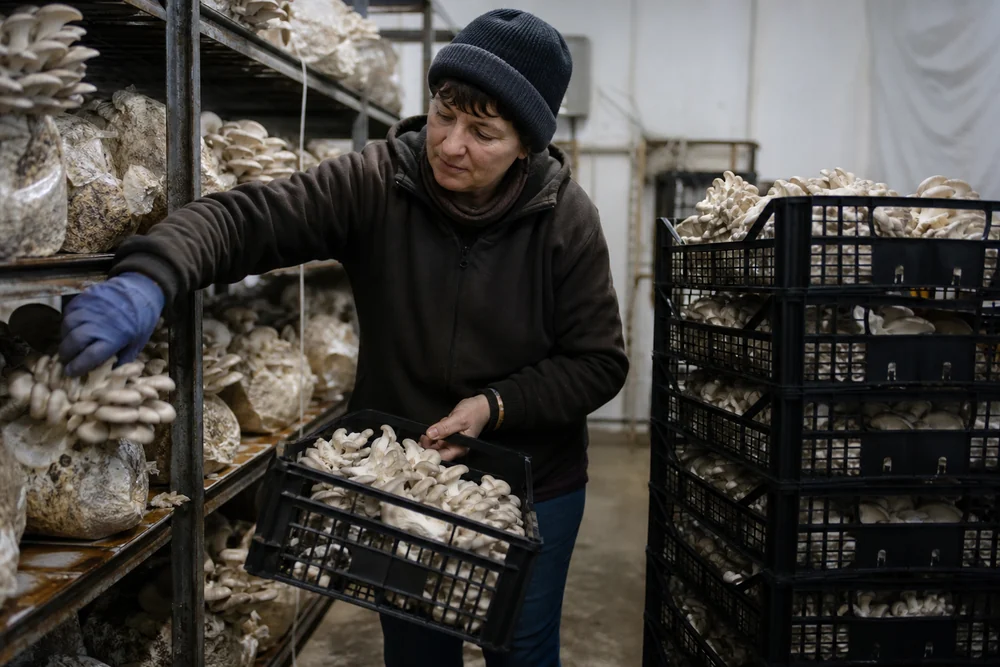
The same Cornell work broke the hours down on a log operation: fifty-three percent on felling trees for inoculating bolts, thirty-two percent on maintenance and harvesting, and fifteen percent on marketing.
Read the first figure again. Over half the labour was spent cutting wood, an activity entirely indifferent to whether the logs were destined for shiitake or anything else.
That is where the eightfold spread comes from, because a farm that fells efficiently, close to where the logs will be stacked and in the right season, runs a fundamentally cheaper operation and no species premium closes that gap.
Tip
If you want one number to work on, it is labour hours per pound harvested. Use the variation in the study to examine the part of the operation you can change.
The block equivalent is worth stating even though it was not in that study. On an indoor operation the felling line disappears and is replaced by substrate preparation, sterilization and the weekly discipline of keeping a clean room, which is a different fifty percent doing the same job in the accounts.
Growing MushroomsHow Do Mushroom Sawdust Blocks Work from Mix to Fruit?What do specialty mushrooms sell for?
Less than they did last year. That is the part the rankings never mention.
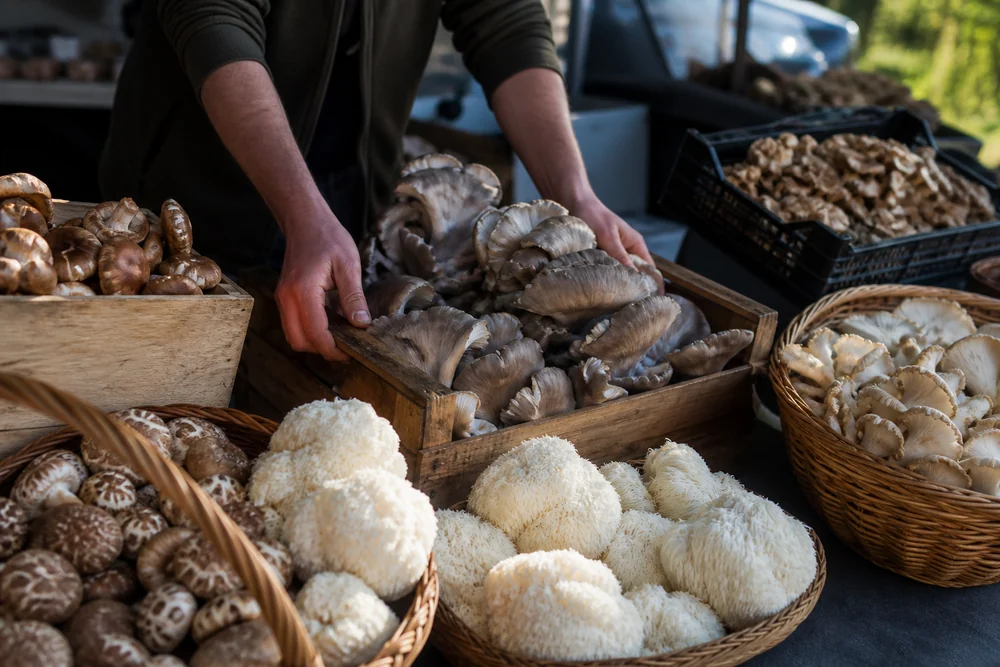
USDA put the specialty average at $5.83 a pound for the 2024-25 season, up 37 cents on the year before, and the following season it fell to $4.56.
Warning
That is a drop of about twenty-two percent in a single season, and total specialty sales value fell from $95.0 million to $75.0 million over the same period. A price move of that size swallows every species premium in the table above several times over.
Nobody choosing between shiitake and oyster in 2024 could have protected themselves from that. It is a market condition rather than a cultivation decision, and it belongs in a plan as a range rather than as a figure.
Plan against the lower number. A business that works at $4.56 works at $5.83, and a business that only works at $5.83 was never a business.
The one thing a grower can do about a falling market is not switching species but adding value, since mushroom powder and dried weight sell at margins that do not move with the fresh spot price.
That is a genuine hedge rather than a slogan. A wet-weather flush that would have been sold at a discount becomes inventory instead, and inventory can wait for a better week.
Direct sale is where the arithmetic changes most, because a national average is wholesale-weighted and a grower at a stall often gets well above it while doing considerably more work per pound.
That trade is worth pricing honestly. Every hour spent at a market is an hour not spent producing, and a channel that pays double for half your available time has not doubled anything.
Which species are easier to sell?
The ones people recognize, and that list is considerably shorter than the one people grow well.

Market access limits what you can profitably grow. A grower with a restaurant account and a market stall can sell whatever they produce well; a grower without either has a hobby with overheads.
Secure a channel before scaling production
Grow what your existing buyers already ask for
Treat consistency as the product, because restaurants do
Choose a species on national price data alone
Assume novelty sells itself at a market stall
Plan for wholesale prices while selling at retail volumes
Oysters carry a real advantage that price tables miss entirely. They fruit fast, they are recognizable, they photograph well, and they sell out at a stall in a way an unfamiliar species does not.
Three questions sort the candidates faster than any price table:
- Will a customer recognize it without an explanation at the stall?
- Does it survive the trip and the day it will spend on a table?
- Can you produce it every single week, or only when conditions cooperate?
A species that fails the third question is the worst of the three failures, because a restaurant that cannot rely on you stops calling.
Their weakness is the other half of the same trait. A soft, fast-growing mushroom keeps badly, so oysters suit direct sale on the day and suit distribution poorly, which is exactly the wrong shape for a wholesale plan.
Growing MushroomsHow Do You Build an Outdoor Mushroom Bed That Lasts?Should you grow on blocks or on logs?
Two different businesses that happen to produce the same product.
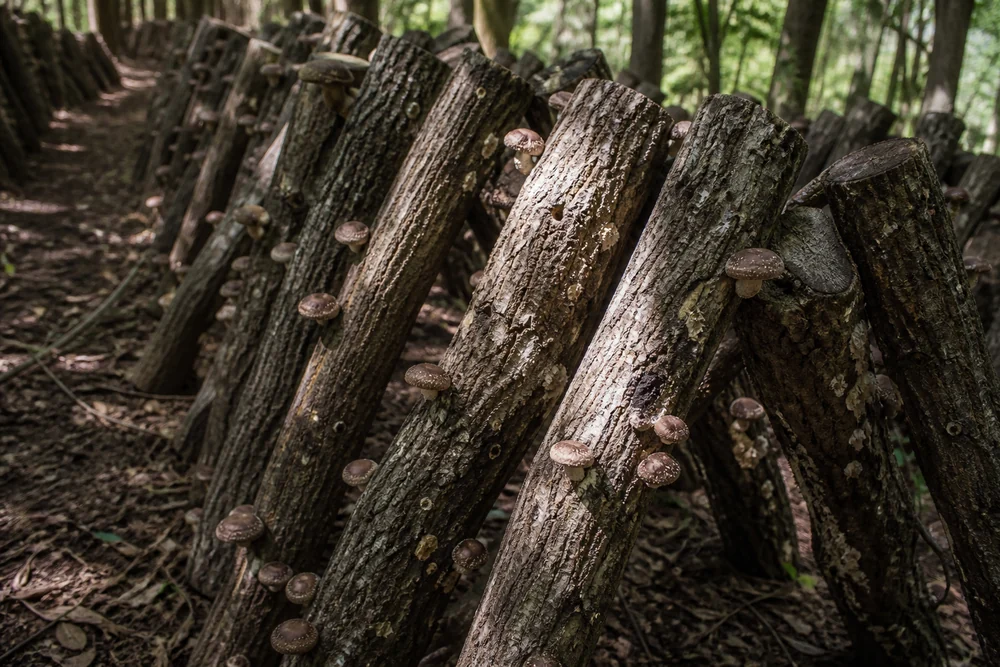
A log operation is slow and cheap in equipment terms. Cornell costed a thousand log operation at $4,740 to establish, with a first flush arriving a year or more after inoculating shiitake logs and a productive lifespan measured in seasons.
Key takeaway
The log model concentrates labour into a felling season and then asks very little of you for months. The block model spreads labour evenly across the year and asks for a sterile workflow every week. Choose against your calendar rather than against a yield figure.
Blocks are the opposite trade, with a first flush in weeks, capital going into sterilization and climate control, and the weekly discipline that sawdust block work demands.
The hybrid case is more common than either pure model. A woodlot owner running logs for shiitake and a small indoor room for blue oysters has a year-round product line and two independent failure modes, which is a considerably more robust position than either alone.
Neither is better in the abstract. A woodlot owner with winter labour available and no capital should be looking at logs, and somebody with a garage, a pressure cooker and no woodland should not.
What does a realistic first year look like?
Slower than the spreadsheet. It also fails on the wrong side of the business.
Cornell reported an average of around $5 per log per season across the study farms, or $15 to $20 per log across a productive lifespan, and those are the numbers a thousand-log operation should plan against.
Six steps cover a first year without anybody having to invent a projection.
Three things reliably take longer than planned in a first year:
- Building a customer list, which is slower than growing anything.
- Reaching consistent weekly output, as opposed to a good week followed by a bad one.
- Learning your own labour figure, which needs several cycles before it means anything.
First year operations fail on sales far more often than on production. Growing mushrooms is a solved problem with a large literature behind it, and selling forty pounds a week in a town that wants fifteen is not.
Account separately for setup costs, including the room, racks, and ventilation.
Two costs get underestimated in every first year plan I have seen described. Packaging is one, because a mushroom sold loose at a stall and a mushroom sold to a restaurant have very different presentation requirements and the second one costs money every week.
Waste is the other. A flush that arrives on a Tuesday when your market is Saturday is either dried, given away or thrown out, and the percentage that goes that way is the difference between a plan and an outcome.
What actually decides whether you make money?
Three things, in an order most people run backwards.
Sell first, which means securing the channel before anything is built. Learn what it will take and at what price, and let that determine how much you build rather than the other way around.
Systematise second, because the eightfold spread in the Cornell data is an efficiency spread and the highest-leverage work available is reducing the hours it takes to produce a pound, whether through a better fruiting chamber layout or simply not carrying logs uphill.
Choose the species last. By the time the first two are settled, the answer is usually obvious, because the buyer has already told you and the difference between the candidates is about a dollar a pound.
- The species gap
- About a dollar a pound between shiitake and oyster.
- The farm gap
- $1.39 to $11.88 per log on the same crop.
- The largest cost
- Labour, over half of it on work unrelated to species.
- The market risk
- A twenty-two percent price fall in one season.
- The order to work in
- Sell, systematise, then choose the species.
Use those figures together before comparing species by selling price alone. The last one is the only one that is a choice rather than a condition.
None of that is discouraging, and it is not meant to be. It says that the part of this business you control most directly is also the part that varies most between farms, which is a considerably better position than a fixed ranking would leave you in.
What you grow first is a smaller decision than what it costs, and both are smaller than whether anybody has agreed to buy it.
Sources & References
- Shiitake Mushrooms Turning a Profit for Forest Farmers in the Northeast (Cornell Small Farms) Extension programme report on a SARE-funded project that trained over 250 farmers and collected complete datasets from fifteen. Used for the range of $1.39 to $11.88 profit per log, for the attribution of that range to labour efficiency and expenditure choices, for the average of about $5 per log per season and $15 to $20 across a lifespan, and for the labour split of 53 percent felling, 32 percent maintenance and harvest, and 15 percent marketing.
- Mushrooms, August 2025 (USDA National Agricultural Statistics Service) Federal statistical report used for the 2024-25 specialty mushroom average grower price of $5.83 per pound, for the shiitake and oyster figures of $6.23 and $5.18, and for total specialty sales value of $95.0 million.
- Specialty Mushrooms on the Rise, insights from the USDA report (Penn State Extension) University extension analysis of the same federal data, used for the season-on-season comparison including the subsequent fall to $4.56 per pound and $75.0 million in specialty sales value.